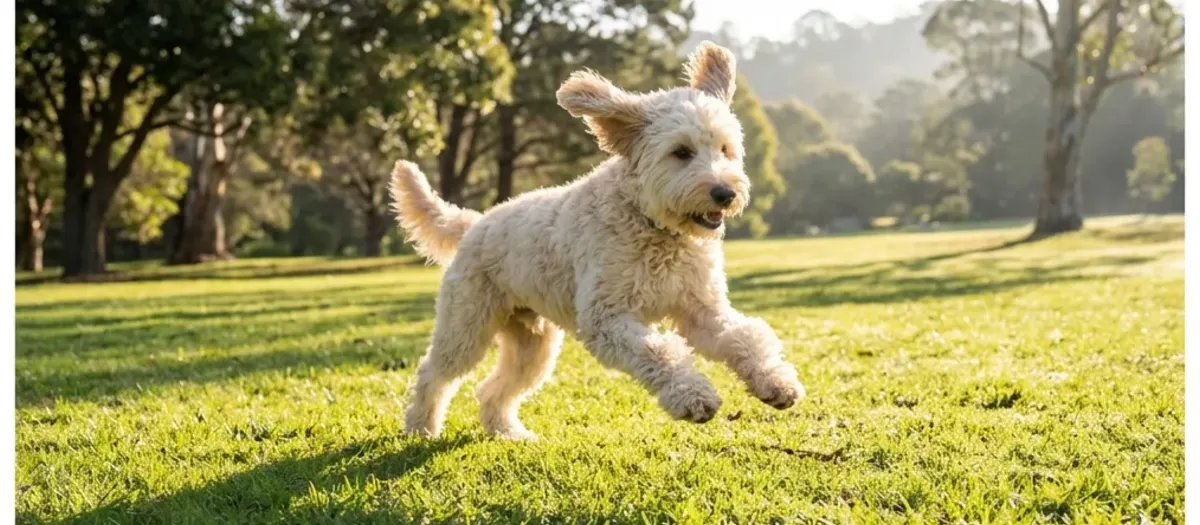
Quick answer: A groodle is a golden retriever and poodle cross. It isn't a recognised breed, so size depends on the poodle parent: mini groodles are commonly described as medium-small dogs and standard groodles as medium-large. Many are friendly, eager and active, and they suit families who can give daily exercise and regular coat care.
Groodles are one of the most talked-about cross-breeds in Australia, and the word covers dogs that look and behave quite differently. This guide covers size, temperament, exercise, grooming and health, then the gear that suits each size.
Groodle at a glance
A groodle has no breed standard, so every figure below is a typical range, not a promise. Two puppies from the same litter can end up different sizes and coats. Ask the breeder or rescue about both parents' size, and measure your own dog before buying gear.
| Mini groodle | Standard groodle | |
|---|---|---|
| Size category | Small to medium | Medium to large |
| Poodle parent | Miniature poodle | Standard poodle |
| Height at the shoulder | Commonly quoted at about 33 to 51 cm | Commonly quoted at about 51 to 66 cm |
| Adult weight | Commonly quoted at about 7 to 20 kg | Commonly quoted at about 23 to 40 kg |
| Lifespan | Often quoted at about 10 to 15 years | Often quoted at about 10 to 14 years |
| Coat and shedding | Wavy or curly, usually low to moderate shedding, varies by dog | Wavy or curly, usually low to moderate shedding, varies by dog |
| Energy | Moderate to high | Moderate to high |
| Good with kids and other pets | Often sociable with both, with supervision and training | Often sociable with both, with supervision and training |
| Grooming needs | Brushing several times a week, trims every 6 to 10 weeks | Brushing several times a week, trims every 6 to 10 weeks |
What is a groodle?
A groodle is a cross between a golden retriever and a poodle. The name is a blend of "golden" and "poodle", and it is also called a goldendoodle overseas. It is not a breed with a registered standard, so there's no official size or look. First-cross puppies vary, and dogs bred from two groodles can vary even more.
Groodles became popular as friendly family dogs with a coat that many owners find easier on allergies. That last part is a hope, not a guarantee: no dog is truly allergen-free, and coats differ from dog to dog.
How big do groodles get? Mini, standard and "toy"
Groodle size mostly follows the poodle parent. A standard poodle cross usually gives a medium to large dog, commonly quoted at about 23 to 40 kg, and a miniature poodle cross a smaller dog, commonly quoted at about 7 to 20 kg. No kennel club or vet body sets these figures, published guides differ, and some adults land outside them.
Full grown groodle: smaller groodles are often fully grown at about a year, and standard groodles can take closer to 18 months. Your vet can tell you when your dog has finished growing. Treat the weights in the table as a guide and ask your vet whether your dog's body shape looks right, since a healthy weight matters more than a number.
Toy groodle: this usually means a golden retriever crossed with a toy poodle or a very small miniature. Size is harder to predict, because the two parents are so different, and the smallest dogs can be more fragile. Be wary of any promise that a puppy will stay tiny. Ask to meet the parents and check how large the mother is.
Groodle vs labradoodle: what's the difference?
Both are poodle crosses, and the difference is the other parent. A labradoodle is a Labrador and poodle cross, and a groodle is a golden retriever and poodle cross. There's wide overlap in coat and nature, and no hard rule. Judge the individual dog and its parents, not the label.
Groodle vs cavoodle: which suits you?
A cavoodle is a cavalier King Charles spaniel and poodle cross, and it is a small dog of about 5 to 12 kg, usually smaller than a mini groodle, though the biggest cavoodles and smallest mini groodles overlap. A mini groodle needs more room and more exercise, while a cavoodle is easier to carry, crate and fit into a small home. If you want a smaller dog, read our cavoodle guide. If you want a bigger, more athletic companion for walks and beach trips, a groodle may fit better.
What is a groodle's temperament like?
Many groodles are friendly, social and eager to please, which reflects the golden retriever side, with the poodle side adding smarts and often a bit of mischief. Most love people and get along with visitors, children and other dogs when well socialised. Individual dogs vary, and temperament depends on genetics, early experiences and training.
The flip side is that many groodles are people dogs. Some find time alone hard, and bored dogs can chew, dig or bark. If that's a worry, see our guide to separation anxiety in dogs and plan some company or enrichment into the day.
How much exercise does a groodle need?
Plan on at least an hour of activity a day for most adult groodles, split into walks, play and a bit of training, and more for young, athletic standard-sized dogs. The Royal Kennel Club lists standard poodles at up to an hour a day and golden retrievers at more than two. Mini groodles still need daily exercise, even though they're smaller. Needs vary with age, fitness and health, so watch your own dog and ask your vet. Our guide to how much exercise a dog needs goes deeper.
Mental work counts too. Many groodles enjoy fetch, swimming, scent games and food puzzles. Try dog puzzle toys on days when the weather is too hot or wet for a long walk, and see our rainy day games for dogs.
How long do groodles live?
Groodles commonly live around 10 to 15 years, and smaller dogs generally tend to live longer than larger ones. Because there's no breed standard, no single figure applies to every dog. For comparison, the Royal Kennel Club lists golden retrievers at over 10 years and poodles at over 12. Healthy weight, regular vet care and good dental care all help.
How do you groom a groodle?
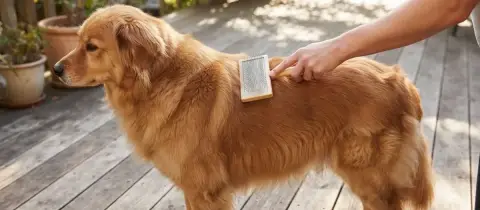
Brush most groodles several times a week, and daily if the coat is long or curly, then book a trim every 6 to 10 weeks or so. Groodle coats range from straight to wavy to tight curls, and the curlier the coat, the more likely it is to mat. Check behind the ears, under the legs and around the collar, where tangles start.
- Brush type: a slicker brush works through wavy coats, and a dematting comb helps with the start of a tangle. A detangler spray makes brushing gentler.
- Bathing: every few weeks to every couple of months suits most dogs. Our how often to wash a dog guide has detail, and a mild dog shampoo is usually enough. Dry the coat well, because a damp, matted coat can irritate the skin.
- Ears: floppy, hairy ears can trap moisture, so check them weekly. See dog ear cleaners and talk to your vet before cleaning if the ears look sore.
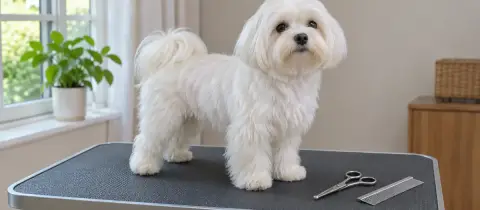
- Trim styles: a teddy-bear cut is popular, and a shorter all-over clip is easier in summer. A very short clip isn't automatically cooler, because the coat also protects against sunburn.
- Home grooming: our dog grooming kit guide lists what to have at home, and a pet hair remover helps with the fluff that does shed.
Left unbrushed, matting can pull on the skin and hide problems. If a mat is tight to the skin, ask a groomer or vet to deal with it instead of cutting it with scissors.
Common groodle health problems
Because groodles are a mix, they can inherit conditions seen in either parent. The Royal Kennel Club lists hip, elbow and eye screening for golden retrievers and hip and eye screening for standard poodles before breeding, which points to the joint and eye conditions a groodle can inherit. Ear and skin trouble can also crop up in dogs with hairy, floppy ears and dense coats. Not every groodle will have any of these.
What you can do:
- Ask for health-tested parents, including hip and elbow scores and eye tests, and check with your vet about other tests relevant to the parents.
- Keep your dog at a healthy weight, which is easier on joints. Our arthritis in dogs guide explains the signs of joint trouble.
- Watch for ear and skin problems. See dog itchy skin and dog licking paws.
- Start dental care early with a dog toothbrush and our guide to cleaning a dog's teeth.
Is a groodle right for you?
A groodle may suit you if you want a sociable dog, can walk and play daily, are home for much of the day and are happy to brush and groom regularly. It may be a poor fit if you're away long hours, want a dog that needs little coat care or have a household with serious allergies.
Think honestly about the cost in time, not just the dog. A groodle needs training, socialisation and a steady routine, and a bored young one can be a handful. Meet adult dogs of the size you're considering before you decide, and ask your vet about whether the breed's needs match your lifestyle.
Caring for a groodle in Australian weather
Thick, curly coats and active habits make heat the main risk in summer, and a fit, heavy-coated dog can overheat quickly on a warm day. Walk early or late, bring water, and never leave a dog in a parked car. Our guide to keeping your dog cool in summer has practical tips, and dog cooling mats can help at home.
- Ticks: in tick areas, check the coat daily after outdoor time, because a thick coat can hide them. Read our paralysis ticks guide and keep a tick remover handy.
- Snakes: groodles love exploring long grass in warmer months. See our snake bite guide so you know what to do.
- Beaches and swimming: many groodles love water. See our dog beach tips and rinse and dry the coat afterwards to prevent matting and skin irritation.
- Winter: most groodles cope with cooler weather, but a short clip, a small mini or an older dog may like a dog coat.
Gear that fits a groodle
Size gear to the dog in front of you, not the label. Measure chest girth, back length and height, and check the maker's size chart. Our measuring guide shows how.
- Harness: mini groodles usually fit small dog harnesses or general dog harnesses in the medium range, and standard groodles often need the large dog harness size. Pick by measured chest girth, and consider a front-clip harness if your dog pulls.
- Brush and comb: a slicker brush plus a dematting comb suits most wavy or curly coats.
- Bed: dog beds should be sized to the dog's length when stretched out, and a washable dog bed copes with a swimming, muddy dog. A large dog bed usually suits standard groodles.
- Crate: medium dog crates usually suit mini groodles, and a large dog crate suits many standard groodles. The dog should be able to stand, turn and lie down.
- Towel: a dog towel cuts drying time after swims and baths.
- Cooling: a cooling bandana or cooling vest can help on warm days, alongside shade and water.
- Car travel: a dog car harness or car barrier keeps a dog restrained and safer in a crash.
When to see a vet
See a vet promptly if your groodle:
- is limping, struggling to get up, or stiff after rest, which can point to joint problems
- shakes the head, scratches the ears, or has smelly ear discharge or redness
- has a swollen, hard or painful belly, retches without bringing anything up or seems restless. Treat this as an emergency and go to a vet straight away
- is itchy, has red or sore skin, or has hot, wet patches (see hot spots on dogs)
- has a cloudy, red or squinty eye, or bumps into things
- pants heavily, collapses or seems weak in the heat (this is an emergency)
- has a tick, or sudden weakness, wobbliness or vomiting after tick exposure, or may have been bitten by a snake (go to a vet straight away)
- drinks or urinates a lot more than usual (see drinking a lot of water)
Frequently asked questions
Do groodles shed?
Many groodles shed less than a golden retriever, but it varies a lot by coat. Wavy and curly coats tend to hold loose hair instead of dropping it, which is why regular brushing matters. Some groodles shed noticeably. If shedding matters to you, meet the parents or an adult dog first.
Are groodles hypoallergenic?
No dog is fully hypoallergenic. Some allergic people react less to low-shedding coats, but allergens also come from saliva and skin. If someone in your home has allergies, spend time with the actual dog before committing.
Are groodles good family dogs?
Many are, thanks to their friendly nature, but a good family dog is one that's trained, exercised and supervised around young children. Teach kids to be gentle and give the dog a quiet space. A bouncy standard groodle can knock over small children, so manage greetings.
Can groodles be left alone?
Some can manage a few hours, but many groodles are people-oriented and cope less well with long absences. Build up alone time gradually and provide exercise first and enrichment after. For longer days, consider a walker or daycare. See our guide to keeping a dog busy at work.
How much do groodles eat?
It depends on size, age, activity and the food itself, so follow the feeding guide on your dog's food and adjust to keep a healthy body shape. Ask your vet if you're unsure. Puppies need a food made for growth, and puppy food guides can help you choose.
Are groodles easy to train?
Many are, because they're clever and keen to please. Short, positive sessions with rewards work well, and an early puppy class helps with socialising. Their enthusiasm can also mean jumping and pulling, so start good manners early. See crate training a puppy and our puppy training schedule.
Do groodles bark a lot?
Groodles aren't known for constant barking, but individuals vary, and boredom or loneliness can lead to it. Exercise, enrichment and training usually help. If barking becomes a problem, see our guide on how to stop dog barking.
Do groodles like water?
Many do. The Royal Kennel Club says poodles were developed as water retrievers, and golden retrievers were bred to retrieve game. Introduce water gradually, and see our how to teach a dog to swim guide and dog life jackets if you plan to swim or boat.
Related guides
- Dog DNA tests: what they can and can't tell you
- Cavoodle guide
- Golden retriever guide
- Labrador guide
- Dog harness buying guide
- Dog brush buying guide
- Keep your dog cool in summer
- Paralysis ticks guide
- New puppy checklist
Sources
- Retriever (Golden), Royal Kennel Club (UK): https://www.royalkennelclub.com/search/breeds-a-to-z/breeds/gundog/retriever-golden/ (page read 25 November 2026)
- Poodle (Standard), Royal Kennel Club (UK): https://www.royalkennelclub.com/search/breeds-a-to-z/breeds/utility/poodle-standard/ (page read 25 November 2026)
- Poodle (Miniature), Royal Kennel Club (UK): https://www.royalkennelclub.com/search/breeds-a-to-z/breeds/utility/poodle-miniature/ (page read 25 November 2026)
This guide provides general information and isn't a substitute for veterinary advice. If you're concerned about your dog's health, speak with your vet.