Quick answer: The best way to clean your dog's teeth at home is to brush them with a soft dog toothbrush and a toothpaste made for dogs, ideally every day and at least three times a week. Start slowly with a finger and a taste of toothpaste, focus on the outside of the big back teeth, and keep sessions short and positive.
Dental disease is the most common health condition in pets, and RSPCA Australia says around 80% of dogs have some level of it by the age of three (RSPCA Australia, 2022). Brushing at home is the most effective way to help prevent it. This guide walks you through how to brush, what to use, what to do if your dog won't cooperate, and when it's time for the vet.
Quick picks
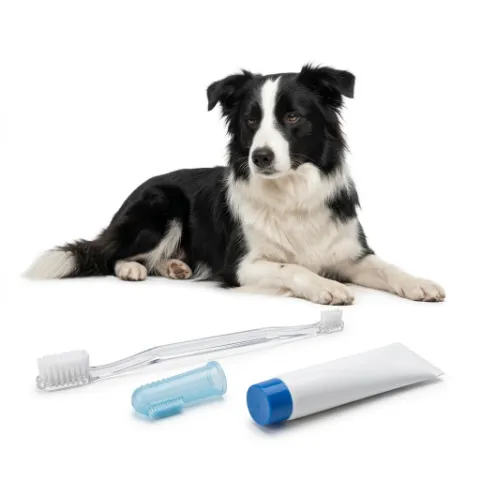
Virbac C.E.T. Oral Hygiene Kit
A dual-ended toothbrush, a finger brush and poultry toothpaste in one box
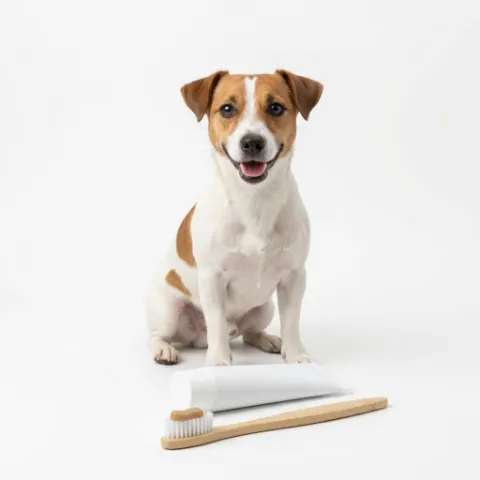
Virbac C.E.T. Enzymatic Toothpaste
Enzymatic, with no foaming agents, and labelled safe for pets to swallow
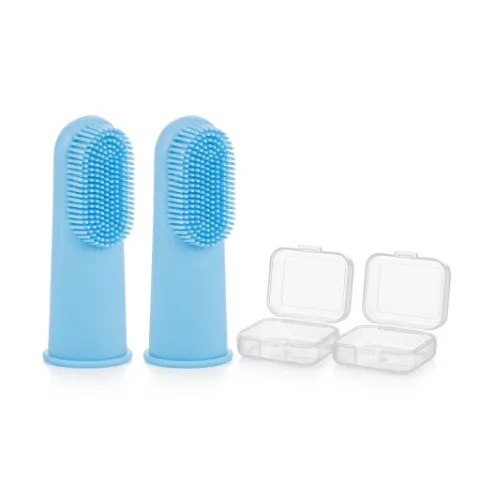
Jasper 360 Finger Toothbrush (2-pack)
Soft silicone bristles all the way around your fingertip
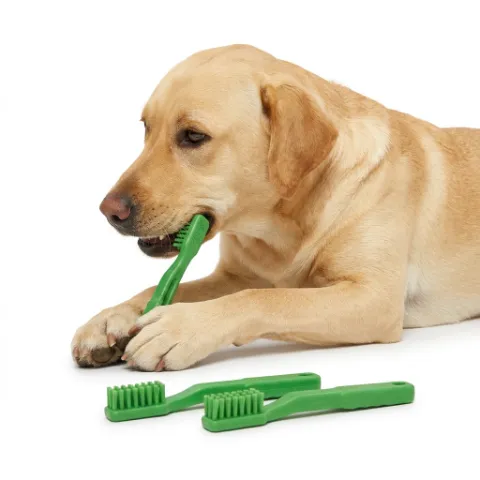
Greenies Original Dental Treats
VOHC accepted for plaque and tartar, in four sizes
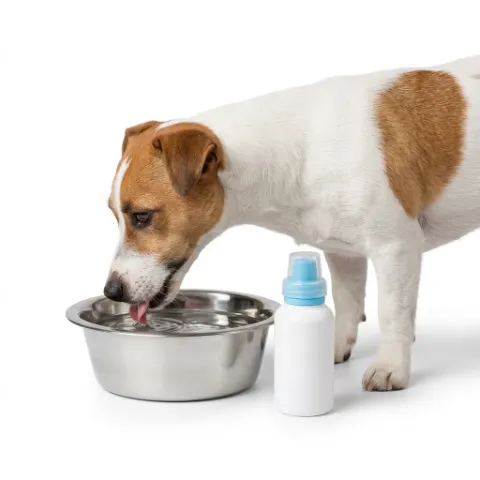
TropiClean Fresh Breath Water Additive
VOHC listed for plaque; you add it to the water bowl
Pictures are illustrations, not the actual products.
Compare more options in our guides to dog toothbrushes, dog toothpaste and dental chews.
Why does cleaning your dog's teeth matter?
Plaque builds up on your dog's teeth every day. If it isn't brushed away, it hardens into tartar, which irritates the gums and can lead to painful gum disease, infection and tooth loss. Brushing removes plaque before it hardens, and RSPCA Australia calls it the most effective thing you can do at home (RSPCA Australia, 2022).
Vets at VCA Animal Hospitals explain that plaque can combine with minerals in saliva and start turning into tartar within a day, and that untreated gum disease can reach the bone around the teeth (VCA Animal Hospitals).
What do you need to clean your dog's teeth?
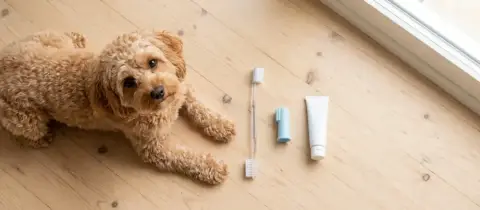
You need two things: a soft toothbrush or finger brush that suits the size of your dog's mouth, and a toothpaste made for dogs. Never use human toothpaste. A few small treats for rewards help too, along with somewhere quiet where your dog feels relaxed.
Our quick picks above cover a good starter kit. For more choice, see our guides to dog toothbrushes, dog toothpaste and dental chews.
Why not human toothpaste?
Human toothpaste isn't made to be swallowed and can upset a dog's stomach. Some contain a lot of sodium, and some contain xylitol, which is toxic to dogs (VCA Animal Hospitals; RSPCA Queensland). Dogs can't rinse and spit, so a dog toothpaste is the safe choice. VCA also advises against brushing with baking soda on its own, because it's very alkaline and tastes unpleasant to dogs. For the full list of foods and ingredients that are dangerous for dogs, see our toxic foods list.
How do you brush a dog's teeth step by step?
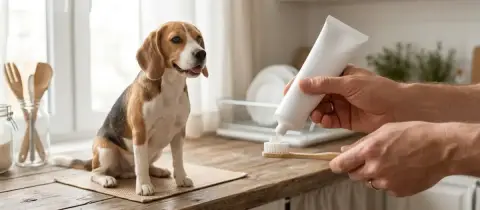
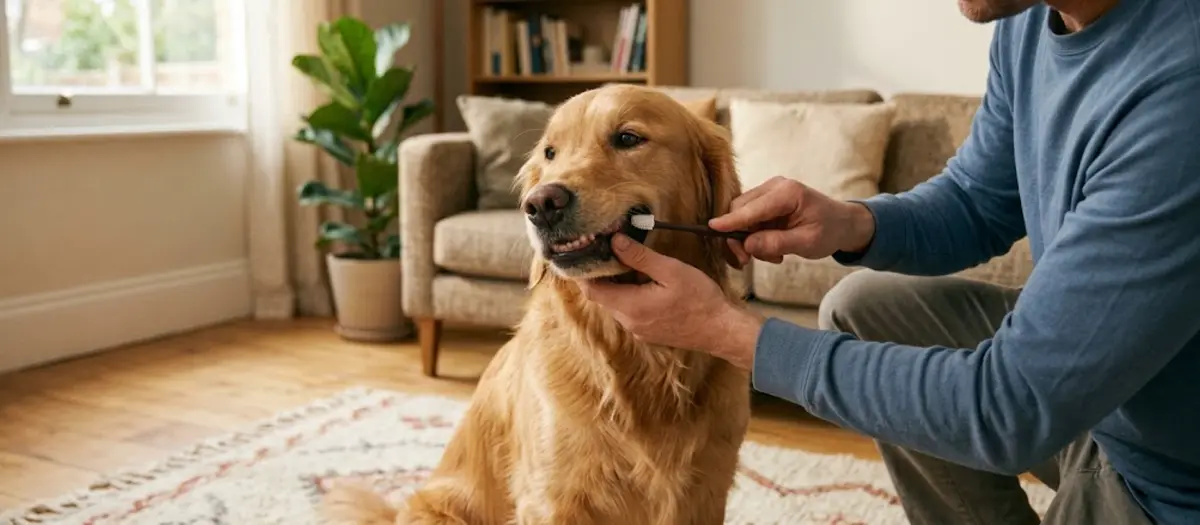
Brush in small steps over several days or weeks. Let your dog lick dog toothpaste from your finger, then rub a finger along the outer teeth, then move to a finger brush or soft toothbrush. Lift the lip, brush the outside of the teeth at the gumline in small circles, and praise your dog throughout.
This method follows the stages vets at VCA recommend (VCA Animal Hospitals):
- Pick a quiet time. Hold a small dog on your lap, or sit beside a bigger dog so you can reach their mouth comfortably.
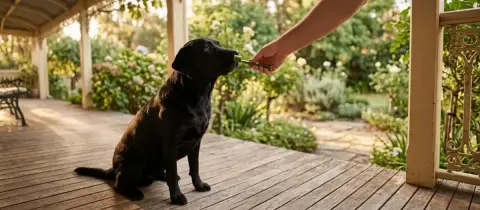
- Start with a taste. Let your dog lick a little dog toothpaste from your finger, and praise them.
- Touch the teeth. Rub a finger or a soft cloth along the outside of a few teeth at the gumline. Stop while your dog is still relaxed.
- Add toothpaste to the cloth or finger brush and rub a few more teeth each session.
- Move to a toothbrush once your dog is happy with the cloth or finger brush.
- Brush the right places. Lift one side of the lip and start with the big back teeth (the cheek teeth) and the canines, where plaque and tartar build up fastest. Brush the outer surfaces, at the gumline, in small gentle circles.
- Build up to about 30 seconds a side. VCA says the tongue cleans much of the inside surfaces, so focus on the outsides and only brush the insides if your dog is very cooperative.
- Finish with praise or a small treat, so the next session is easier.
Expect it to take several days to a few weeks to work up to brushing every tooth. Older dogs can learn too, but may need longer (VCA Animal Hospitals).
How often should you brush your dog's teeth?
Daily brushing is ideal. VCA's vets suggest brushing as often as we brush our own teeth, and say three times a week is the minimum to help keep plaque and tartar under control (VCA Animal Hospitals). Because plaque can start hardening into tartar within a day, a short daily brush does more than an occasional long one.
A routine helps. Try brushing at the same time each day, such as after the evening walk, or alongside other grooming like checking ears and trimming nails.
What if your dog won't let you brush their teeth?
Slow right down. Go back to the last step your dog was comfortable with, keep sessions to a minute or less, and reward generously. A finger brush or dental wipe can feel less strange than a toothbrush. Never pin your dog down or force their mouth open, as that makes the next try harder.
Things that can help:
- Use a finger brush. VCA notes finger brushes are often easiest for beginners (VCA Animal Hospitals). Our dog toothbrush guide compares finger brushes and handled brushes.
- Try a different flavour. Dog toothpastes come in poultry, beef, peanut butter and more. See our dog toothpaste guide.
- Do a few teeth at a time. Brushing the back teeth on one side today and the other side tomorrow still counts.
- Pick your moment. A calm, relaxed dog, such as after a walk, can be easier to brush than an excited one.
- Ask your vet clinic. Vet nurses can show you how to brush your own dog, and check for sore spots that might be making your dog head-shy.
If your dog pulls away suddenly, or seems sore when you touch one area, stop and book a vet check. A painful mouth is one of the signs of dental disease, and it can make brushing uncomfortable.
Can you clean a dog's teeth without brushing?
Not as well. Brushing is the most effective home care, but other products can help alongside it, or for dogs who truly won't accept a brush. Look for dental chews, water additives or diets that carry the VOHC seal, which means they were shown to reduce plaque or tartar (VOHC).
Options that can help:
- Dental chews with the VOHC seal, like Greenies Original or Whimzees Toothbrush chews, offered once a day. See our best dental chews for dogs.
- Dental diets your vet recommends. RSPCA Australia notes that special dental diets, chews and toys can help control plaque and tartar (RSPCA Australia, 2022).
- Water additives with the VOHC seal, added to the water bowl. See our dog water additive guide and our guide to dog bad breath.
- Kelp powders sprinkled on food, such as PlaqueOff. Our PlaqueOff for dogs guide covers what the evidence shows and the thyroid warning.
- Dental wipes, which you rub over the teeth with a finger (see our dog dental wipes guide). They're a useful stepping stone towards a brush.
The VOHC is a council of veterinary dentists and dental scientists. It doesn't test products itself; it reviews the trial results companies submit and awards its seal when a product meets its standards for reducing plaque, tartar or both (VOHC).
Dog dental care options compared
Listed in order of how much they help, with brushing first. RSPCA Australia calls brushing the most effective thing you can do at home (RSPCA Australia, 2022). VOHC status checked on the VOHC accepted products list on 18 October 2026.
| Option and our pick | What it does | Effort | VOHC seal | Best for |
|---|---|---|---|---|
| Toothbrush: Virbac C.E.T. Oral Hygiene Kit | Brushes plaque away before it hardens into tartar | About 30 seconds a side, ideally daily (VCA) | Soft flat-head toothbrushes are on the list as a general entry | Every dog that will accept brushing |
| Toothpaste: Virbac C.E.T. Enzymatic Toothpaste | Makes brushing taste good; the makers say its enzymes help slow plaque | Used with every brush | Not this paste (Petsmile is listed for plaque) | Every brushed dog |
| Finger brush: Jasper 360 Finger Toothbrush | Gentle brushing with your fingertip | Same as brushing | Not listed | Beginners and nervous dogs |
| Dental chew: Greenies Original | Chewing helps reduce plaque and tartar between brushes | Low: one chew a day | Yes, plaque and tartar | Extra help alongside brushing |
| Water additive: TropiClean Fresh Breath | Added to the water bowl to help with plaque | Very low: add at each refill | Yes, plaque | Dogs who won't accept a brush |
None of these can remove tartar that's already formed. Only a professional clean at the vet can do that.
How we chose
We searched Amazon Australia for dog toothbrushes, toothpastes, dental chews and water additives, then shortlisted products that met all of these checks:
- Well rated: a strong average rating with plenty of buyer reviews.
- No red flags: no pattern of poor reviews, safety complaints or listing problems.
- Available on Amazon Australia when we checked.
- Safe for dogs: made for pets, with no xylitol in the listed ingredients and no foaming agents in the toothpaste.
- Proof where possible: the VOHC seal for chews and water additives, and the thumbnail test for anything your dog chews.
These are researched picks, not products we've personally tested. We compared the specifications and ingredients shown on each Amazon Australia listing, and checked the VOHC accepted products list, on 18 Oct 2026. We didn't accept payment from any brand, and no brand saw this page before it was published. For more choice in each category, see our full guides to dog toothbrushes, dog toothpaste and dental chews.
Our picks in detail
1. Virbac C.E.T. Oral Hygiene Kit: best overall starter kit
Everything you need to start brushing, in one box. The kit has a long-handled toothbrush with a large head at one end and a small head at the other, a finger brush for the first few sessions, and a 2.5 oz tube of poultry-flavoured C.E.T. toothpaste. The listing describes the bristles as soft and the handle as reverse-angled for easier brushing, and says to brush daily.
- Pros: one purchase covers the brush, the finger brush and the paste; two head sizes suit small and big teeth; the finger brush makes the first steps easier
- Cons: premium price for a kit; the poultry paste isn't for dogs with a poultry allergy
- Best for: owners starting a brushing routine from scratch
- Skip it if: you already have a brush and just need toothpaste (see pick 2)
2. Virbac C.E.T. Enzymatic Toothpaste: best toothpaste
A poultry-flavoured dog toothpaste with an enzyme system that the listing says helps inhibit plaque. It has no foaming agents, so the listing describes it as safe for pets to swallow, which matters because dogs can't rinse and spit. The listed ingredients show no xylitol.
- Pros: labelled safe to swallow; a meaty flavour to make brushing feel like a treat; works with any soft dog brush
- Cons: not on the VOHC list (Petsmile Professional is, for plaque); a small tube for a premium price
- Best for: any dog you're brushing, from puppies up
- Skip it if: your dog has a poultry allergy (ask your vet which paste suits them)
3. Jasper 360 Finger Toothbrush (2-pack): best for nervous dogs
A soft silicone finger brush with bristles all the way around your fingertip, so it feels more like a gentle finger rub than a toothbrush. The listing says a few drops of water inside help it grip larger or smaller fingers, and the two-pack comes with cases. VCA notes that finger brushes are often the easiest option for beginners (VCA Animal Hospitals).
- Pros: gentle on gums; a natural first step for dogs who dislike brushes; two brushes with cases
- Cons: you need to be comfortable with your finger in your dog's mouth; the listing says it may not suit toy breeds; imported, so check the delivery details on Amazon before you order
- Best for: first-time brushers and dogs who pull away from a handled brush
- Skip it if: your dog mouths or nips (a long handle keeps your fingers clear)
4. Greenies Original Dental Treats: best dental chew
A chewy, toothbrush-shaped dental treat that's on the VOHC accepted list for plaque and tartar. The listing says daily use helps reduce plaque and tartar, and Greenies Australia suggests one a day. It comes in Teenie, Petite, Regular and Large sizes (our Greenies guide covers sizes).
- Pros: VOHC seal for plaque and tartar; chewy rather than hard; four sizes; doubles as a daily treat
- Cons: contains wheat and gelatin; an adult recipe; the listing warns to watch your dog chew, as gulping any treat can be harmful
- Best for: extra help between brushes for adult dogs
- Skip it if: your dog has a wheat allergy, or gulps treats whole (see our dental chews guide for other options)
5. TropiClean Fresh Breath Water Additive: best for dogs who won't be brushed
A liquid you add to your dog's water bowl each time you refill it. TropiClean's Fresh Breath Dental Water Additive for Dogs is on the VOHC accepted list for plaque. The listed ingredients include cetylpyridinium chloride, zinc gluconate and green tea leaf extract, with no xylitol listed. Full comparison in our dog water additive guide.
- Pros: VOHC listed for plaque; almost no effort; no brushing needed
- Cons: it helps with plaque but doesn't replace brushing; check your dog keeps drinking normally after you start, and stop if they drink less
- Best for: dogs who won't accept a brush yet, or as an extra layer of help
- Skip it if: your vet is monitoring your dog's water intake for a medical condition
Can you remove tartar from a dog's teeth at home?
No. Once plaque has hardened into tartar, RSPCA Australia says it can only be removed by a professional clean (RSPCA Australia, 2022). Don't try to scrape it off yourself. Scraping can hurt your dog's gums, and it can't reach the tartar below the gumline, where the damage happens.
The American Veterinary Dental College has a formal position against dental scaling without anaesthesia. It explains that the area below the gumline can't be properly cleaned, and a full mouth examination isn't possible, in an awake dog (AVDC). That's why "anaesthesia-free" teeth cleaning isn't a substitute for a vet dental.
What happens at a professional dental clean?
Your vet examines your dog's mouth under a general anaesthetic, cleans the teeth above and below the gumline, and may take dental x-rays and treat any problem teeth. RSPCA Australia recommends a health check with your vet at least once a year, including a look at the teeth (RSPCA Australia, 2022).
Costs vary a lot between clinics and depend on how much work your dog's mouth needs, especially if teeth need x-rays or extraction. Ask your vet for an estimate before booking, and check whether your pet insurance covers dental treatment. After a professional clean is a good time to start brushing, because you're starting with clean teeth.
Is it too late to start brushing an older dog's teeth?
It's not too late. Older dogs can learn to accept brushing, although it may take more patience (VCA Animal Hospitals). If your dog already has brown tartar, red gums or bad breath, book a vet check first. Brushing can't remove tartar, and brushing sore gums can hurt.
When should you start brushing a puppy's teeth?
As early as you can. Starting in puppyhood makes brushing a normal part of life. Puppies lose their baby teeth from about three and a half to four months, and most have all their adult teeth by six to seven months (VCA Animal Hospitals). Their mouths can be sore while teething, so keep early sessions very gentle and short.
Use a small, soft brush or finger brush and a toothpaste labelled for puppies. Our dog toothbrush guide has a small dog and puppy pick. For teething, safe chew toys like the softer KONG Puppy help too (see our puppy teething toys guide).
Safe chewing: the thumbnail test
Chewing can help keep teeth clean, but very hard chews can crack them. Cornell University's canine health centre says veterinary dentists use a simple "thumbnail test": if you can't make a dent in a chew with your fingernail, it's likely too hard (Cornell Riney Canine Health Center). Cornell advises avoiding antlers, hooves and bones.
Advice on raw bones differs in Australia. RSPCA Queensland suggests raw bones for some dogs (RSPCA Queensland), while veterinary dentists warn that bones are a common cause of broken teeth. We follow the thumbnail test and don't recommend bones, antlers, hooves or hard nylon bones. See our guide to safe toys for heavy chewers.
Signs of dental problems in dogs
RSPCA Queensland lists these signs of dental disease (RSPCA Queensland):
- bad breath
- yellow or brown tartar on the teeth
- red or bleeding gums
- a painful mouth, pawing or rubbing at the face
- difficulty eating or a reduced appetite
- drooling
- loose or missing teeth
Our guide to dog bad breath explains the common causes and what a change in smell can mean.
When to see your vet
Book a vet visit soon if your dog has:
- bad breath that doesn't improve, or a sudden change in breath smell
- red, swollen or bleeding gums, or brown tartar along the gumline
- a broken, loose or discoloured tooth
- pain when you touch their mouth, or a new reluctance to be brushed
- trouble chewing, dropping food, drooling or eating on one side
See a vet straight away if your dog has facial swelling, stops eating, or seems unwell. A yearly health check with your vet should include a look at the teeth.
Frequently asked questions
Can I use human toothpaste on my dog?
No. Human toothpaste isn't meant to be swallowed and can upset your dog's stomach, and some contain xylitol, which is toxic to dogs. Use a toothpaste made for dogs.
How do I get plaque off my dog's teeth?
Fresh plaque comes off with regular brushing, using a soft dog toothbrush and dog toothpaste. Once plaque hardens into brown tartar, only a professional clean at the vet can remove it.
What can I clean my dog's teeth with at home?
A soft dog toothbrush or finger brush with dog toothpaste is best. Dental wipes, VOHC-accepted dental chews and water additives can help as extras, but they don't replace brushing.
How long does it take a dog to get used to teeth brushing?
Usually several days to a few weeks of short, positive sessions. Older dogs may take longer. Go at your dog's pace and stop each session while they're still relaxed.
Should I wear gloves to brush my dog's teeth?
VCA suggests wearing gloves if you can, or washing your hands well with soap and water afterwards. Rinse the brush after each use and use a separate brush for each dog.
How often should I replace my dog's toothbrush?
VCA suggests replacing it about every three months, or sooner if the bristles are splayed or chewed.
How much does a dog dental clean cost?
It varies between clinics and depends on what your dog's mouth needs, especially x-rays or extractions. Ask your vet for an estimate before booking, and check what your pet insurance covers.
Related guides
- Best dog toothpaste
- Greenies dental treats: which size, and do they work?
- Best dog toothbrushes and finger brushes
- Best dental chews for dogs
- Best dog dental wipes
- PlaqueOff for dogs: does it work?
- Dog bad breath: causes, fixes and when to see a vet
- Safe toys for heavy chewers
- How to clean your cat's teeth
Sources
- RSPCA Australia: Importance of dental health (5 September 2022)
- RSPCA Queensland: Dog teeth cleaning and dental care (1 December 2020)
- VCA Animal Hospitals: Brushing your dog's teeth and Retained baby teeth in dogs
- Veterinary Oral Health Council (VOHC): about the seal and accepted products, read 18 October 2026
- American Veterinary Dental College: Dental scaling without anesthesia (position statement)
- Cornell Riney Canine Health Center: Risks from a fractured tooth
This guide provides general information and isn't a substitute for veterinary advice. If you're concerned about your dog's teeth, gums or breath, speak with your vet.