Best dog nail clippers in Australia (2026): picks by dog size
By Anish PuriUpdated 17 Oct 202613 min readResearched, not tested by us
Research guide. WhiskerFinds may earn a commission from links, at no extra cost to you.
Quick answer: For most dogs, the best dog nail clippers are a sharp scissor or plier style, which many vets prefer to guillotine clippers. Our pick is the Safari Professional Nail Trimmer. Trim about every three to four weeks, take small cuts so you don't reach the quick, and keep styptic powder nearby in case a nail bleeds.
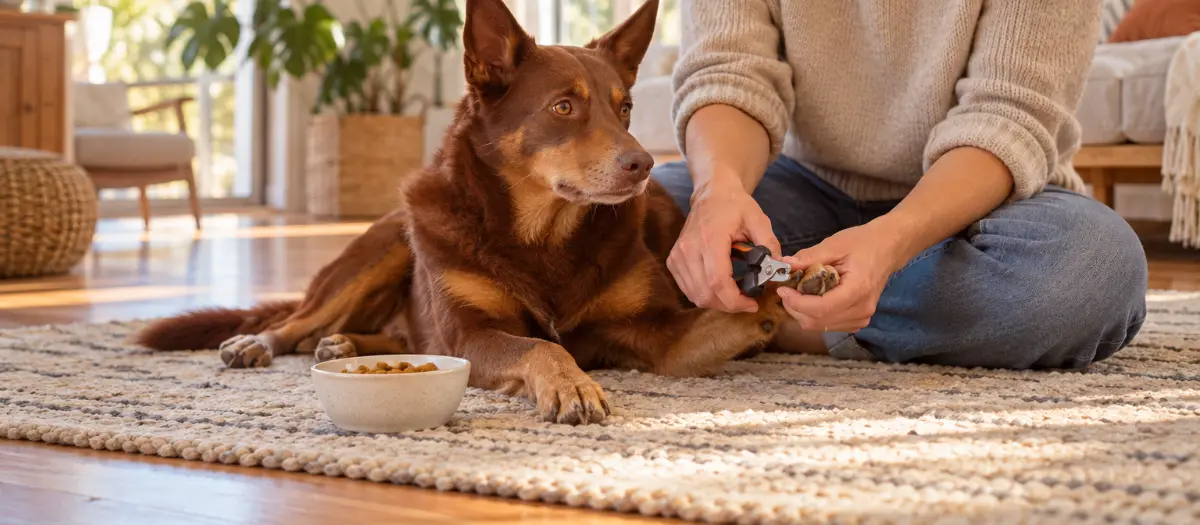
Long nails can make walking uncomfortable and may split or curl into the pad, but plenty of owners put off nail trims because they're worried about hurting their dog. The right clippers make it easier. This guide compares dog nail clippers by dog size, explains clippers versus grinders, and walks through a safe trim, including black nails and dogs who hate having their feet touched.
Quick picks
Our top pickBest overall
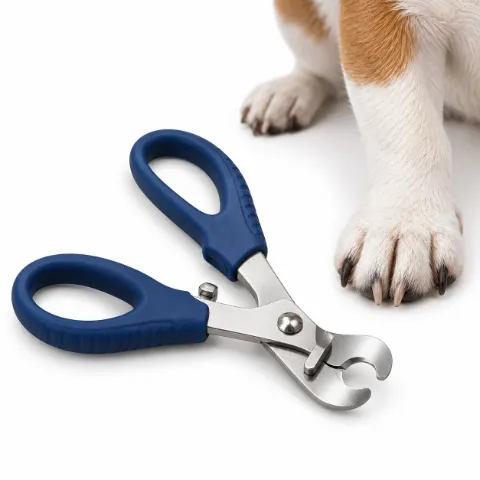
Safari Professional Nail Trimmer
Sharp stainless steel blades and a safety stop; suits small to medium-large dogs
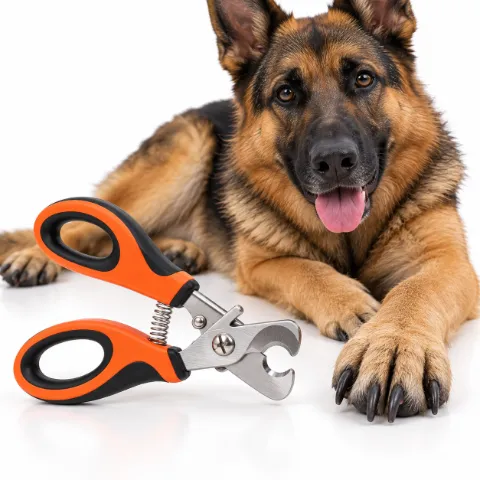
A scissor-style trimmer from Coastal's Safari range, with stainless steel double blades, a tension spring for a quick, clean cut and a safety stop that the listing says reduces the risk of cutting too far. The listing says it suits both professional groomers and grooming at home. This is the standard size, which suits small to medium-large dogs.
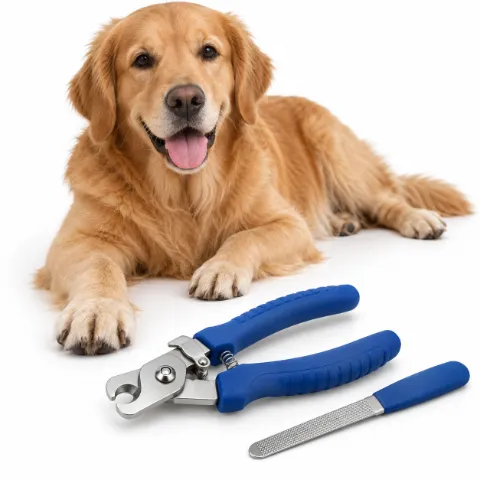
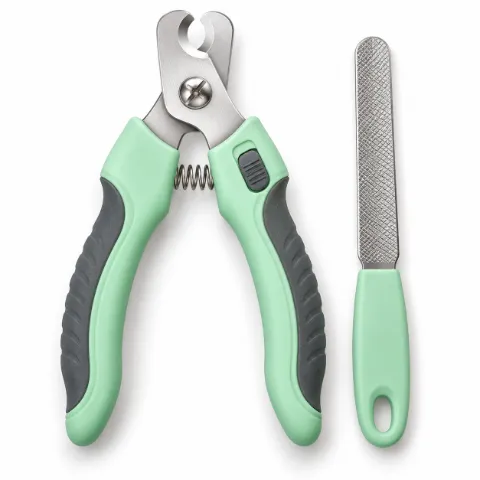
Plier-style clippers with 3.5 mm stainless steel blades, non-slip handles and a safety guard that helps stop you taking off too much nail in one go. A small nail file is included for smoothing rough edges.
Pros: safety guard for beginners; non-slip grip; nail file included
Cons: like any clippers, the blades dull with use, so replace them if they start squeezing rather than cutting; a guard limits the cut length but can't see the quick for you
Best for: owners trimming at home for the first time, on medium to large dogs
Skip it if: your dog is tiny (smaller clippers are easier to control)
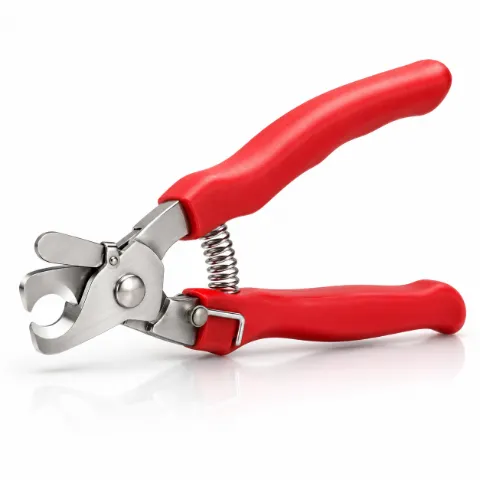
A simple plier-style clipper with stainless steel blades, red plastic grips and a spring-loaded cutting action. A guard can be moved into place to help prevent over-cutting, and a lock holds it closed for storage. The listing says it suits just about all sizes of dog except very large breeds.
Larger scissor-style clippers made for medium to large dogs. The semi-circular blade is designed to give you a clear view of the nail as you cut, and the stainless steel blades are precision-ground. A spring opens the blades after each cut, and there's a SoftGrip handle and a safety lock.
Pros: made for bigger dogs; good view of the nail; comfortable handle; safety lock
Cons: may still not be big enough for giant breeds with very thick nails; imported, so check the delivery details on Amazon before you order
Best for: Labradors, Kelpies, German Shepherds and other medium to large dogs
Skip it if: your dog is small (the Millers Forge or Safari are easier to control)
Low-cost plier-style clippers with a non-slip handle, a sliding lock that keeps the blades closed when not in use, and a nail file. The listing describes its blades as sharp enough to cut cleanly in one stroke.
Pros: budget price; sliding lock; nail file included
Cons: a lesser-known brand; the listing makes claims we couldn't verify (such as "clinical studies" and "vet-approved"), so judge it on its features
Best for: a spare pair, or owners on a tight budget
Skip it if: you'd rather pay a little more for a well-known brand
Which nail clippers suit your dog?
Small dogs and puppies
Smaller clippers are easier to control on tiny nails. The Millers Forge or Safari Professional suit small breeds. For puppies, start early: handling their paws and doing tiny trims while they're young helps them get used to it (VCA Animal Hospitals).
Large dogs and thick nails
Big dogs need larger, stronger clippers so you can cut in one clean squeeze rather than crushing the nail. The Fiskars Pet Large and the Boshel are made for medium to large dogs. Very thick nails on giant breeds may be easier with a grinder (see below).
Black nails
On black or dark nails you can't see the quick, so take very small cuts, one sliver at a time. Look at the cut surface after each cut: a grey to pink oval, or a dark dot in the centre, means you're getting close to the quick, so stop there (WSU Veterinary Teaching Hospital; PetMD). Shining a torch through the nail can sometimes help (Dogs Trust). A grinder is another good option for black nails.
Clippers or a dog nail grinder?
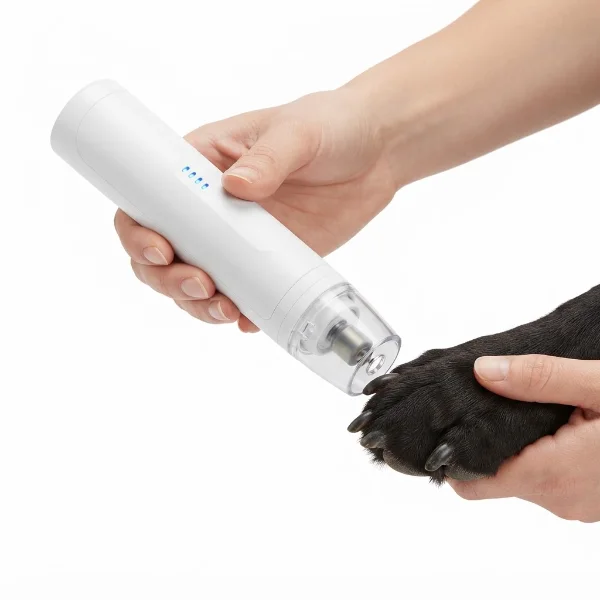
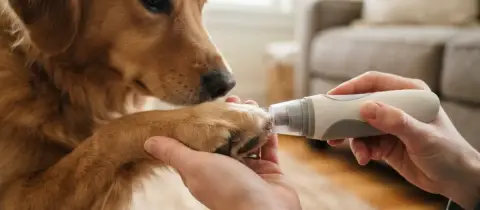
A dog nail grinder is a small rotary tool that files the nail down gradually instead of cutting it.
Grinders: good for dogs with black nails, because filing a little at a time makes it easier to avoid the quick. They may not suit jumpy dogs or dogs who aren't used to the noise (PetMD). Long hair can get caught, so keep it back from the grinder (American Kennel Club). Grinders can take longer and are louder than clippers (Dogs Trust). Grind each nail for a few seconds at a time, as friction can heat the nail.
Clippers: quick and quiet, and they don't need charging. Sharp scissor or plier styles cut cleanly; many vets prefer these to guillotine clippers, which can crush the nail when blunt (SPCA New Zealand).
Many owners use both: clippers for the main trim and a grinder or file to smooth the edges. We compare grinders, and how to get a nervous dog used to one, in our dog nail grinder guide.
How to trim your dog's nails
Get set up somewhere calm and well lit, with treats, your clippers and styptic powder within reach.
Find the quick. The quick is the living part of the nail with blood vessels and nerves. On light nails it shows as a pink area; stay a few millimetres in front of it (American Kennel Club; PDSA). On black nails, follow the small-cuts method above.
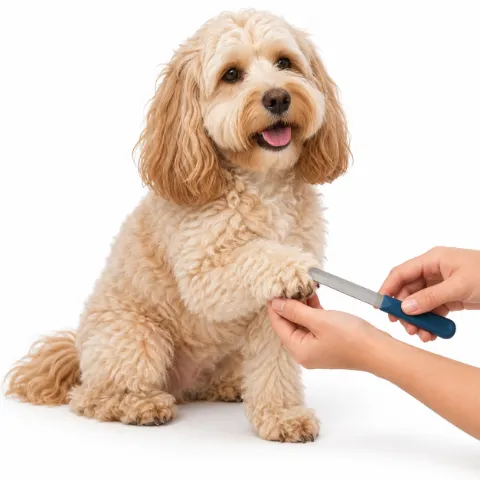
Hold the paw gently and press lightly on the toe pad to extend the nail.
Cut a little at a time. Vets differ slightly on the angle: some suggest cutting at about 45 degrees from underneath (WSU Veterinary Teaching Hospital), others say to clip just the tip straight across (American Kennel Club). Either way, small cuts are safest.
Don't forget the dewclaws. They sit higher on the leg, don't touch the ground and don't wear down, so they can curl around into the pad if they're left too long (VCA Animal Hospitals).
Smooth rough edges with a file if you like, and finish with a treat.
How often should you trim a dog's nails?
Most dogs need a trim about every three to four weeks (American Kennel Club; VCA Animal Hospitals). If your dog's nails touch the floor when they're standing, they're too long (VCA Animal Hospitals). Hearing the nails click on hard floors is another sign. Long nails can also make a dog slip on smooth floors (see dog socks with grip). Dogs who walk a lot on pavement or concrete may go longer between trims, because hard surfaces wear the nails down (VCA Animal Hospitals). Regular trims also help the quick recede, so the nails can be kept shorter over time (American Kennel Club).
If you cut the quick
It happens to most owners at some point. Stay calm and:
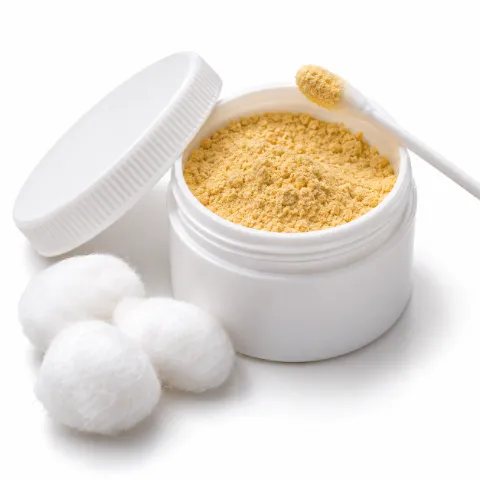
Apply styptic powder to the nail tip with light pressure. If you don't have any, flour or cornflour can help (VCA Animal Hospitals; PDSA).
Hold gentle pressure with a clean cloth or cotton wool. Without powder, bleeding may take about five minutes to stop (WSU Veterinary Teaching Hospital).
Call your vet if the bleeding continues for more than several minutes (PetMD).
If your dog hates nail trims
Go slowly. Keep sessions to a minute or two, and pair each touch of the paw with a tiny, tasty treat. Progress may take weeks or months (VCA Animal Hospitals).
Don't force it. Restraining a frightened dog, by hand or in a grooming hammock or sling, can make the fear worse (VCA Animal Hospitals).
Build up in small steps. Let your dog sniff the clippers, then touch a paw, then trim the very tip of one nail, then stop. The sound of the clippers can be practised by clipping dry pasta near your dog (Dogs Trust).
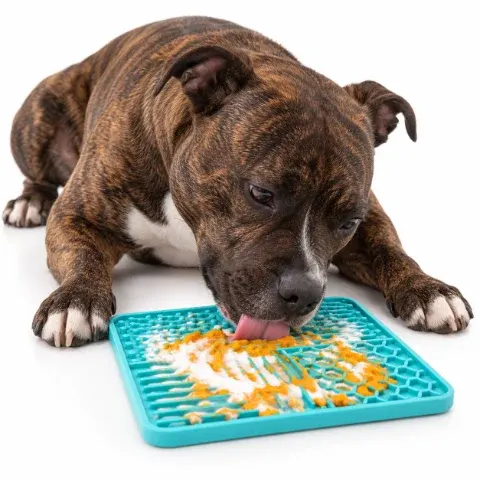
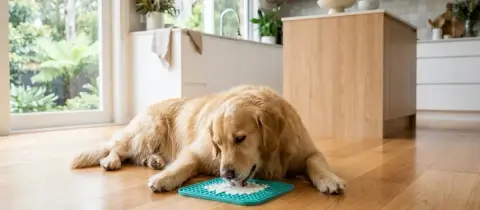
Use food as a reward, not a trick. Vets advise against distracting a dog with food and then rushing the trim, as it can make them more wary (VCA Animal Hospitals). A lick mat works well as a reward during slow training sessions.
Ask for help. Your vet clinic can trim nails, and for very anxious dogs your vet may suggest calming medication or light sedation (VCA Animal Hospitals).
What to avoid
Human nail clippers. They can squash a dog's nail and make it split (PDSA).
Blunt clippers, which crush the nail instead of cutting it. Replace or sharpen them.
Light-up clippers with unsafe batteries. Several LED nail clippers have been recalled in Australia, in 2023 and again in January 2026, over button batteries: loose batteries in the packaging, a battery compartment that wasn't properly secured, or missing warnings (Product Safety Australia: PETKIT; Pet Gravity). Button batteries are dangerous if a child swallows one, so if you buy a clipper with a light, check the battery compartment is screwed shut.
Relying on a "quick sensor" or guard alone. They're aids, not a guarantee. Small cuts and good light matter more.
Buying from a pet shop or supermarket?
The same checks apply: a sharp scissor or plier style that suits your dog's size, comfortable non-slip handles, a safety guard or stop if you're new to it, and a lock for safe storage. Pick up styptic powder at the same time.
Related gear
Kwik Stop Styptic Powder
A small tub of styptic powder for stopping minor bleeding from a nail cut too short. The listing says to apply it with a moistened cotton tip and moderate pressure for 5 to 10 seconds, and not to use it on deep wounds or body cavities. It contains benzocaine for pain relief, according to the listing.
Pros: made for nail bleeds; small tub lasts a long time
Cons: for minor nail bleeds only, not deep wounds; keep the lid tightly closed so the powder stays dry
Skip it if: you already keep styptic powder in your pet first aid kit
We searched Amazon Australia for dog nail clippers, then shortlisted clippers that met all of these checks:
Well rated: a strong average rating with plenty of buyer reviews.
No red flags: no pattern of poor reviews, safety complaints, or blades or locks failing.
Available on Amazon Australia when we checked.
Scissor or plier style, which many vets prefer, with sharp stainless steel blades.
Safety features: a guard, stop or lock, and a size range we could match to dog size.
These are researched picks, not products we've personally tested. We compared the specifications and features shown on each Amazon Australia listing, checked on 17 Oct 2026. We searched Product Safety Australia for recalls of these brands and found none. Availability and prices can change. We didn't accept payment from any brand, and no brand saw this page before it was published.
Left out this time: light-up clippers, given recent battery recalls and listings that didn't pass our checks; a "quick sensor" clipper that was unavailable; guillotine clippers, which vets are divided on; grooming hammocks, since vets warn that restraining a fearful dog can make things worse; and listings with mixed feedback on blade sharpness or durability.
When to see your vet
Call your vet straight away if:
a nail is still bleeding after several minutes of pressure and styptic powder
a nail is torn, broken or hanging, or your dog won't put weight on the foot
a nail or dewclaw has grown into the pad
Book a check-up if you notice swelling, redness, discharge or a smell around a nail, limping, or a dog who is too frightened to have their feet handled at home. Your vet clinic can trim nails and help with a plan for nervous dogs.
Frequently asked questions
What type of nail clippers is best for dogs?
Sharp scissor or plier-style clippers suit most dogs and are preferred by many vets over guillotine clippers. Choose a size that matches your dog: smaller clippers for small dogs, larger ones for big dogs and thick nails.
Is it better to cut or grind dog nails?
Both work. Clippers are quick and quiet; grinders take off a little at a time, which helps with black nails, but they're noisier and can take longer. Many owners clip first and then smooth with a grinder or file.
What nail clippers do vets recommend?
Many vets recommend sharp scissor or plier-style clippers over guillotine styles. Vet sources focus on sharpness, size and technique rather than one brand.
Can I use human nail clippers on my dog?
No. Human clippers can squash a dog's nail and make it split. Use clippers made for dogs.
How do I trim my dog's black nails?
Take very small cuts and check the cut surface each time. When a grey to pink oval or a dark dot appears in the centre, stop, because the quick is close. A grinder can make black nails easier.
Do you cut dog nails straight or at an angle?
Sources differ: some vets suggest about 45 degrees from underneath, others say to clip just the tip straight across. The most important thing is to take small cuts and stay in front of the quick.
How often should I trim my dog's nails?
About every three to four weeks for most dogs. If the nails touch the floor when your dog is standing, they're too long.
What should I do if I cut the quick?
Press styptic powder (or flour or cornflour) onto the nail with gentle pressure. Call your vet if it's still bleeding after several minutes.
What if my dog hates having their nails cut?
Go slowly with short sessions and tiny treats, never force it, and build up one small step at a time. Your vet clinic can trim nails and can help with very anxious dogs.
When should puppies start having their nails trimmed?
Early. Handling a puppy's paws and doing tiny trims helps them get used to it for life.
Product details and sizes from each linked Amazon Australia listing, checked on 17 Oct 2026.
This guide provides general information and isn't a substitute for veterinary advice. If you're concerned about your dog's nails, paws or comfort, speak with your vet.