Best cat nail clippers in Australia (2026): how to trim
By Anish PuriUpdated 13 Nov 202610 min readResearched, not tested by us
Research guide. WhiskerFinds may earn a commission from links, at no extra cost to you.
Quick answer: The best cat nail clippers are small, scissor-style clippers made for cats, with sharp stainless blades and a grip that won't slip. Our pick is the Pet Republique cat nail clipper. If you struggle to see the pink quick, try the Necoichi Purrcision. Most cats don't need routine trims, so check first whether yours does.
This guide compares three cat nail clippers on Amazon Australia, shows which clipper type suits which cat, then walks through a trim step by step. Nails are one part of a wider routine, so our how to groom a cat guide is a good companion.
Quick picks
Our top pickBest overall
Pet Republique cat nail clipper
Scissor style with stainless blades and a larger soft grip
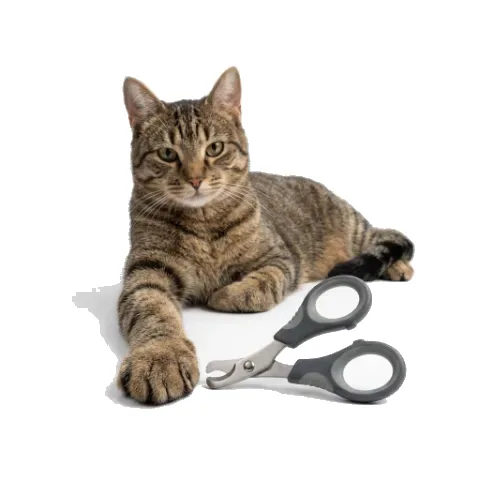
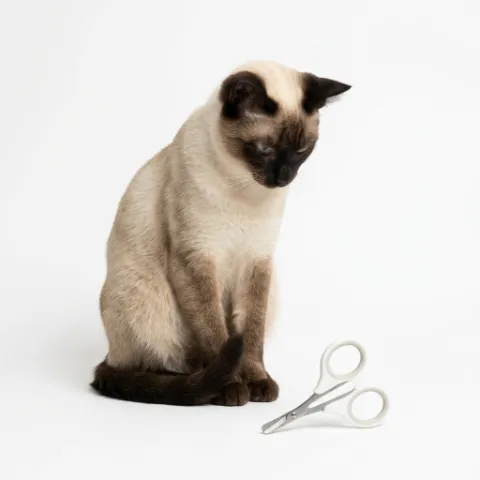
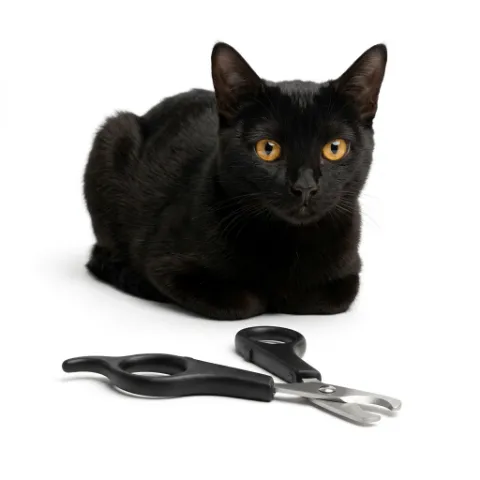
Pictures are illustrations, not the actual products.
Do vets recommend trimming cats' nails?
Not routinely. International Cat Care says routine trimming isn't advisable for most cats, because they keep claws short by scratching. A trim helps when claws catch on bedding or carpet, tap on hard floors, or stay visible on a resting cat. Older, arthritic cats may need extra help (International Cat Care, updated 26 September 2025).
Overgrown claws can curl into the toe pads, which is painful and can cause open wounds (PetMD). Your vet can trim claws and show you how to do it safely at home.
Is it okay to never trim a cat's nails?
For many cats, yes. Cats that scratch freely on a sturdy post, and outdoor cats, often wear claws down themselves (VCA Animal Hospitals). Indoor, senior and less active cats are the ones most likely to need help. Check the claws every couple of weeks and trim only when needed.
A scissor-style clipper with thick stainless steel blades, sized for cats, kittens and other small pets. The listing describes a larger soft grip, which helps if your hands tire during a longer session. Its tip for overgrown nails is to trim a small amount and wait a week before trimming more, which fits the "little and often" approach vets describe.
Pros: stainless blades; larger soft grip; suits cats and kittens
Cons: the listing doesn't say it helps you see the quick
Best for: most cat owners trimming at home
Skip it if: you have trouble seeing the quick and want a clipper designed around that
2. Necoichi Purrcision Feline Nail Clippers: best for seeing the quick
A Japanese-made clipper, made in Seki City from stainless steel. The listing says the blades are 30% thinner than conventional clippers, so the quick is easier to see as you trim. It has cushioned, non-slip handles.
Pros: thinner blades per the listing; Japanese stainless steel; cushioned non-slip handles
Cons: a premium pick compared with basic clippers; a small clipper, so check the handle size if you have large hands
Best for: owners who worry about cutting too close
Skip it if: you have large hands or want a basic, lower-cost clipper
3. HIBINO cat nail clippers: best for a steady grip
A scissor-style clipper in Japanese stainless steel, with a finger rest to help you hold it steady. The listing calls it quiet to use. Its directions suggest trimming every 1 to 2 weeks, which is more often than the 2 to 4 weeks VCA gives for indoor cats, so check your cat's nails and ask your vet what suits them.
Pros: finger rest for control; Japanese stainless steel; quiet to use per the listing
Cons: the listed trimming schedule is more frequent than most vet guidance
Best for: owners who want extra control while trimming
Skip it if: your cat only needs an occasional trim and you want the simplest clipper (the Pet Republique)
What type of nail clipper or claw trimmer is best for cats?
For most owners, small scissor-style clippers made for cats are easiest to control. VCA says scissor and guillotine styles are both safe for cats, and many people prefer small scissor-style ones. PetMD also lists plier-style clippers, which have a spring and suit thick nails (PetMD, updated June 2025). Avoid human clippers: PDSA says they can squash the claw and make it split (PDSA).
Swipe sideways to see every column
Clipper type
How it works
Trade-off
Suits
Scissor
Two small blades with a notch that holds the claw
Easy to line up; all three of our picks are this style
Most cats, kittens, first-timers
Guillotine
The claw goes through a hole and a blade slides across
Can be harder to position the claw
Owners who already find it comfortable
Plier
Spring-loaded, with a stronger cut
More force than most cats need; we haven't included one
Thick claws, if your vet suggests it
Grinder
Files the claw down gradually
The noise may stress some cats
Cats that accept the sound, introduced slowly
Whatever you choose, replace clippers once they start to crush the claw instead of cutting cleanly.
Is it better to cut or grind cat nails?
Clipping is the simpler place to start. A grinder files claws gradually, but PetMD notes the sound can stress some cats. The electric grinders we checked were made with dogs in mind, so we haven't picked one for cats. If you want to try a grinder, ask your vet and introduce the noise slowly with treats.
Which cat nail clippers suit which cat?
Swipe sideways to see every column
Your cat
Pick this
Why
Calm, easy to handle
Pet Republique
A larger soft grip makes longer sessions easier on the hands
Kitten
Pet Republique
The listing says it suits cats and kittens
Pale claws, but you're nervous
Necoichi Purrcision
The listing says thinner blades make the quick easier to see
Wriggly or senior cat, and you want more control
HIBINO
A finger rest helps hold the clipper steady
Dark claws
Any of the three
Colour decides what you can see, not the clipper; use the curve method below
How we chose
We searched Amazon Australia for cat nail clippers, then shortlisted clippers that met all of these checks:
Well rated: a strong average rating with plenty of buyer reviews.
No red flags: no pattern of poor reviews, safety complaints or listing problems.
Available on Amazon Australia when we checked.
Made for cat claws: a small scissor-style clipper sized for cats and kittens.
Stainless steel blades and a non-slip grip.
These are researched picks, not products we've used ourselves. We compared the specifications and features shown on each Amazon Australia listing, checked on 13 Nov 2026. We didn't accept payment from any brand, and no brand saw this page before it was published.
Left out this time: electric nail grinders, because the ones we checked were made with dogs in mind and the noise may upset many cats; styptic powders that contain benzocaine, because cats are more sensitive to some local anaesthetics (ASPCA toxicology brief); and several clippers that didn't pass our red flags check.
How do you trim a cat's nails and avoid the quick?
The quick is the pink or red part inside the claw, with blood vessels and nerves, so cutting it hurts and bleeds. PDSA says to cut a couple of millimetres short of it (PDSA). International Cat Care says to snip off just the transparent tip (International Cat Care).
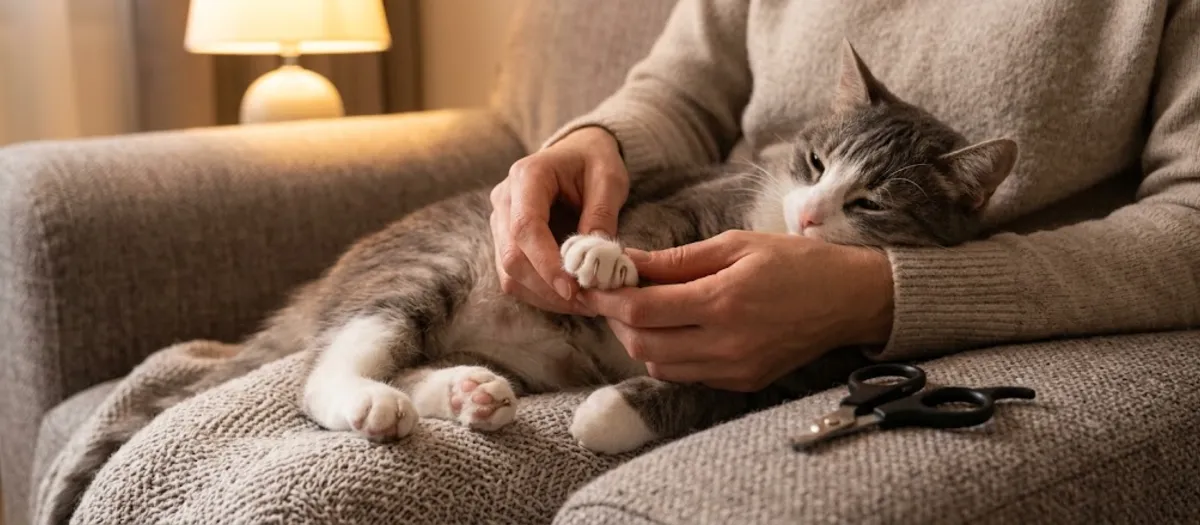
Get set up. Pick a relaxed moment in good light. Sit your cat on your lap facing away from you, or wrap them in a towel with one leg free (International Cat Care).
Extend the claw. Gently press the middle pad between your thumb and forefinger to push the claw out (VCA Animal Hospitals).
Find the quick. On pale claws it shows as a pink core. Cut only the clear tip beyond it.
Dark claws. If you can't see the quick, VCA says to cut where the claw starts to curve downward, in several small snips rather than one big one. PetMD says to keep the trim very short.
Hold the clipper top to bottom. VCA says this reduces splintering.
Do the claws you can. PDSA includes the dewclaws on the front paws; most cats have 18 claws in total.
Reward and stop early. Give a treat (a lickable treat such as Churu works well for a cat that won't take a biscuit mid-trim), and end on something nice like play. A few claws per session is fine. Stop if your cat gets stressed, and never force it.
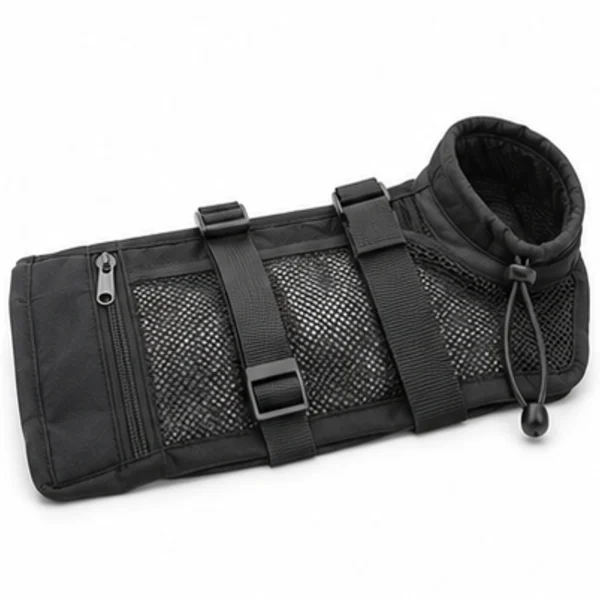
If your cat won't keep still, a cat grooming bag or wrap can help for a few minutes, as long as the head stays free and you stop if your cat panics.
How often should you trim a cat's nails?
Sources differ, and cats vary. VCA says indoor cats usually need a trim every two to four weeks, while outdoor cats often wear their claws down. PetMD suggests checking every two to four weeks. International Cat Care says to trim when signs appear instead of on a fixed schedule. A simple approach: look at the claws every couple of weeks and trim only when the tips are sharp, hooked or catching.
What if you cut the quick?
Stay calm, because it happens to nearly everyone. Hold a clean towel or cotton wool around the claw until it stops. PDSA suggests dipping the claw in cornflour to help it clot, and VCA says flour or cornflour also works if you have no styptic powder.
Check the ingredients if you buy a styptic product, and skip any that contain benzocaine. The ASPCA Animal Poison Control Center advises against topical benzocaine products on cats, because cats are prone to a blood problem called methaemoglobinaemia (ASPCA toxicology brief, September 2000). Kwik Stop, which appears in our dog nail clippers guide, contains benzocaine according to its listing, so keep it for the dog. If bleeding doesn't stop after several minutes of pressure, see your vet.
What are the best kitten nail clippers?
The same small scissor-style clippers suit kittens, as long as you only take the tip. Pet Republique's listing says it suits cats and kittens. VCA says starting routine trims early helps cats accept them as adults. Get your kitten used to having their paws touched first, then trim one claw, then more. For a cat that hates it, go slowly over several weeks, and if they strongly resist, ask your vet for a demonstration.
Nail caps and scratching posts
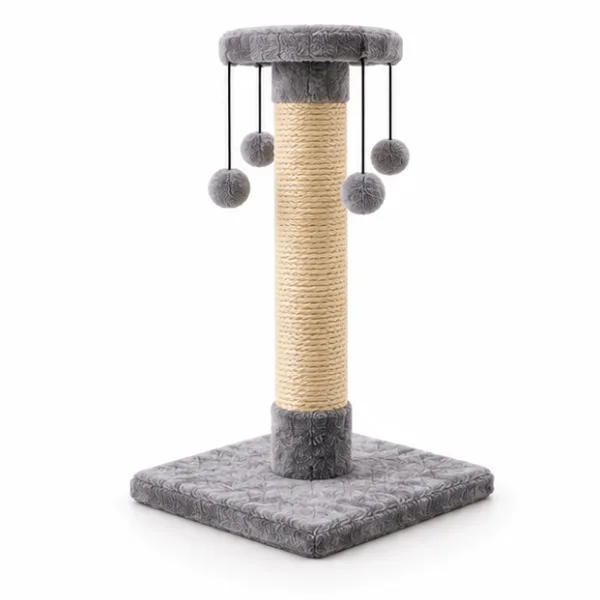
Soft nail caps are glued over trimmed claws. International Cat Care advises against them, because they can distress cats and cause problem behaviours, so we haven't included a pick; our nail caps for cats guide explains the risks and what to do instead. A sturdy scratching post lets your cat stretch and wear their claws naturally; see our best cat trees guide.
When to see a vet
See your vet if bleeding doesn't stop after several minutes of gentle pressure, if a claw is growing into the pad, or if you notice swelling, pus or limping after a trim.
Ask for help if your cat won't let you near their paws. A vet nurse can trim for you and show you how. Older cats with thick, overgrown claws are also best checked by a vet.
Frequently asked questions
Can I use human nail clippers on cats?
PDSA advises against it, because human clippers can squash a cat's claw and cause it to split. VCA says they can be used, but separate tools are better. Cat clippers are designed for the curved claw, so they're the safer choice.
Do vets recommend a particular cat nail clipper?
The vet sources we read recommend a type, not a brand: a small scissor-style or guillotine clipper made for cats, with sharp blades, and never human clippers. VCA and PDSA both describe the technique rather than a product. Any of the three clippers here fits that description, so choose by grip and how well you can see the quick.
How much does it cost to have a cat's nails trimmed?
It varies by clinic and groomer, and many vet nurses do it as a short appointment or add it to a check-up, so ask when you book. A trim at the clinic is also a chance to be shown the technique, which makes doing it at home with your own clippers far less daunting.
Which nails do you cut on a cat?
All the claws if your cat allows, including the dewclaws on the front paws, according to PDSA. Most cats have 18 claws: five on each front paw and four on each back paw. A few per session is fine.
What do I do if my cat's nail bleeds?
Press with a clean towel or dip the claw in cornflour, and skip styptic products with benzocaine. Steps and when to call the vet are in what if you cut the quick.
Product details from each linked Amazon Australia listing, checked on 13 Nov 2026.
This guide provides general information and isn't a substitute for veterinary advice. If you're concerned about your cat's claws or paws, speak with your vet.