Best cat brush and grooming tools in Australia (2026): by coat type
By Anish PuriUpdated 13 Nov 202613 min readResearched, not tested by us
Research guide. WhiskerFinds may earn a commission from links, at no extra cost to you.
Quick answer: The best cat brush depends on your cat's coat, and most cats need one or two grooming tools, not a drawer full. Our pick is the aumuca self-cleaning slicker brush for short, medium and long hair. Heavy shedders with short coats suit the FURminator, nervous cats the KONG ZoomGroom, and tangled long hair the Andis steel comb.
Coat type, and how your cat feels about being touched, decide which brush works. This guide compares four cat brushes on Amazon Australia, explains how each type differs, and covers how often to brush and what to do if your cat hates it. For the whole routine, see our guide on how to groom a cat.
Quick picks
Our top pickBest overall
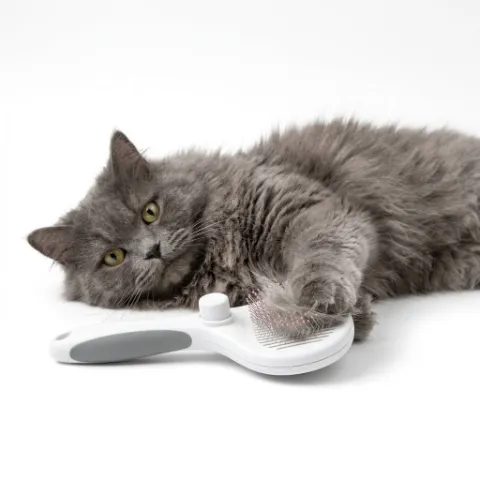
aumuca Self-Cleaning Slicker Brush
Rubber-tipped pins and a release button, for short, medium and long coats
Match the brush to the coat. Short coats do well with a rubber brush or a deshedding tool. Medium and long coats suit a slicker brush followed by a steel comb. Vet sources suggest bristle brushes for short coats and long-toothed metal combs for longer ones (VCA Animal Hospitals).
Short hair (for example a domestic shorthair): a rubber brush, or a deshedding tool during heavy shedding.
Medium hair: a slicker brush, with a comb to check for tangles behind the ears and on the back legs.
Long hair (Persians, Ragdolls, Maine Coons and similar): a slicker brush, then a steel comb through the whole coat, right down to the skin.
Long, silky or curly coats tangle more easily, which is why they need the most regular attention (VCA Animal Hospitals). If you're choosing a cat brush for long hair, a comb matters as much as the brush.
What are the best grooming tools for a long-haired cat?
Two tools: a slicker brush for the daily once-over and a steel comb to work right down to the skin behind the ears, under the arms and on the back legs, where Persians, Ragdolls and Maine Coons mat first. International Cat Care says long coats need at least daily grooming. For a tight mat, see our cat hair clippers guide.
Our picks in detail
1. aumuca Self-Cleaning Slicker Brush: best overall
A slicker brush with rubber-tipped pins and a release button that pushes the collected hair off the head, so cleaning takes seconds. The listing says it suits short, medium and long coats and suggests using it 3 to 4 times a week.
Pros: rubber-tipped pins; release button makes cleaning easy; suits all coat lengths
Cons: a slicker needs a light hand on thin-skinned areas such as the belly and behind the legs; it lifts less loose hair from very short coats than a deshedding tool; not a substitute for a comb on long coats
Best for: most cats, and owners who want one everyday brush
Skip it if: your cat is sensitive to bristles (try the KONG ZoomGroom), or has tight mats
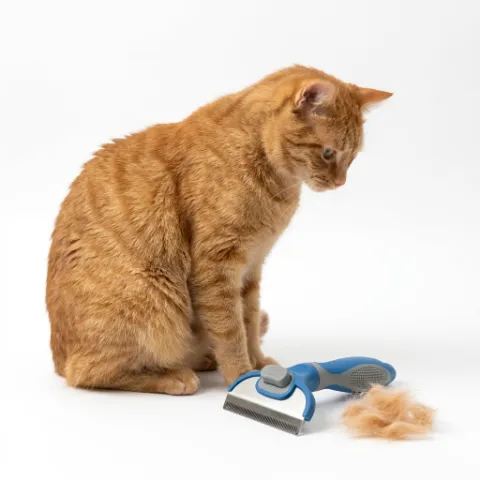
2. FURminator Undercoat deShedding Tool, Short Hair Cats: best for heavy shedders with short coats
A deshedding tool for medium and large short-haired cats. The listing describes a stainless steel edge that reaches through the topcoat to remove loose undercoat, a skin guard, a curved edge, an edge guard and a button that ejects the hair. The label includes the safety note "Avoid over-brushing".
Use it gently and not often. Our cautious suggestion is no more than a short session about once a week during heavy shedding, and the label comes first. This is the short-hair version only. FURminator also sells a long-hair version, but we only checked this one. Our FURminator guide covers the cat sizes, including the small long-hair tool.
Pros: reaches the undercoat; skin guard; edge guard for storage; easy hair release
Cons: can remove a lot of hair, and overuse can damage the topcoat; not for long coats in this version; needs gentle pressure
Best for: short-haired cats that shed heavily
Skip it if: your cat has long hair, a thin coat, sore or irritated skin, or tolerates little handling
3. KONG Cat ZoomGroom: best for nervous or sensitive cats
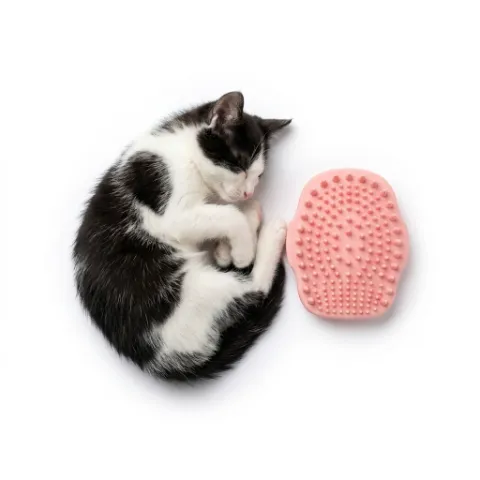
A flexible rubber brush with soft nubs that grip loose hair while giving a massage-style stroke. The listing says it can be used when grooming, bathing and massaging, and that it "helps prevent hairball formation". Treat that as the listing's claim.
Pros: soft and flexible; gentle on skin; can be used in the bath; a friendly first brush
Cons: lifts less hair than a metal brush; does not reach deep undercoat or tangles
Best for: nervous cats, kittens, sensitive skin, and cats that dislike bristles
Skip it if: your cat has a long, thick or tangle-prone coat
4. Andis Steel Comb, 190 mm: best for long hair and tangles
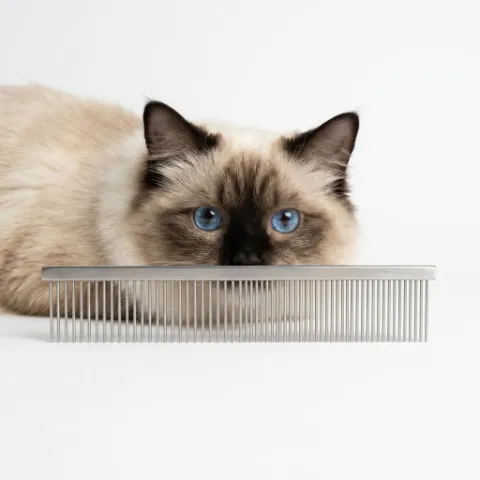
A 190 mm stainless steel comb. The listing says it removes tangles and works as a finishing comb for cats and dogs. A comb shows you whether your brushing has reached the skin, which makes it useful for Persians, Ragdolls, Maine Coons and other long-coated cats.
Pros: smooth steel teeth; long enough to reach through thick coats; works as a finishing tool
Cons: teeth can catch on tight mats; not a shedding tool
Best for: long-haired cats and finishing after a slicker
Skip it if: your cat has a short coat or tight mats (see a groomer or vet)
Which cat grooming tools help with shedding?
A slicker brush used a few times a week lifts most loose hair, and a deshedding tool such as the FURminator reaches the undercoat during heavy shedding, used gently and no more than about once a week. A rubber brush suits a cat who won't tolerate metal. Hair on the couch is a job for a pet hair remover, not more brushing.
Slicker, deshedding tool, rubber brush or comb: what's the difference?
A slicker brush has fine pins that lift loose hair and smooth the coat. A deshedding tool has a fine metal edge that pulls out loose undercoat. A rubber brush grips loose hair gently, and a comb finishes the coat and finds tangles. Each does a different job.
Slicker brush: a flat head of fine pins. Good for everyday brushing of short, medium and long coats. Choose rounded or rubber-tipped pins.
Pin brush: wider-spaced pins with rounded tips, a gentler feel, but they tend to lift less fine loose hair. A slicker has finer, closer pins, so use light pressure.
Deshedding tool: a comb-like edge that reaches the undercoat. Powerful, so use it sparingly.
Rubber brush: soft nubs or fingers that pick up loose hair while massaging. A good first brush for cats that dislike bristles.
Steel comb: smooth teeth that glide through the coat. Best for long hair, and for checking your brushing has reached the skin.
Cat brushes compared
Details from each Amazon Australia listing, checked on 13 Nov 2026.
Long-haired and medium-haired cats generally need brushing daily, while short-haired cats usually need it about once a week. Older cats, cats with arthritis and all cats during shedding seasons may need more help (RSPCA Australia knowledge base, updated 12 October 2022). International Cat Care gives the same advice: at least weekly for short coats and at least daily for long coats (International Cat Care, updated 26 September 2025).
Daily brushing can also cut down on loose hair and hairballs, according to VCA (VCA Animal Hospitals). Our hairball guide covers what else helps. Powerful tools such as a deshedding tool need their own, lighter schedule. Follow the label on the tool, and use a gentle touch.
How to brush a cat, and what to do if yours hates it
Brush in short, calm sessions, go with the lie of the coat, and stop before your cat gets fed up. RSPCA Australia suggests stroking first, then a few gentle strokes on areas your cat already likes, with treats, building up slowly (RSPCA Australia).
Pick a quiet time when your cat is relaxed, such as after a meal or a nap.
Let your cat sniff the brush first. Stroke with your hand, then a few gentle brushstrokes on the back or shoulders.
Work with the lie of the coat, using light pressure. Slow strokes are better than fast ones.
Use the comb last on long coats, working in small sections down to the skin.
Finish with a treat and some praise, so brushing ends on a good note.
If your cat dislikes brushing, never force it or hold them down. Increase the time and the areas you cover a little at a time, and try a different tool or less pressure if your cat seems uncomfortable (RSPCA Australia). A soft rubber brush, like the KONG ZoomGroom, is often a gentler start than a metal brush. For other ways to settle a stressed cat, see our cat enrichment guide.
When should you stop brushing a cat?
Stop when your cat shows signs they've had enough. RSPCA Australia lists a swishing tail, flattened or flicking ears, a tense body, growling, hissing, or sudden short bursts of intense self-grooming. End the session calmly and try again later (RSPCA Australia). International Cat Care's list is similar and adds skin rippling or twitching and lip licking or swallowing, and it says a cat should never be forcibly groomed (International Cat Care, updated 26 September 2025).
Also stop if you hit a tight tangle. Pulling hurts. With deshedding tools in particular, more isn't better: the FURminator label warns to avoid over-brushing, so use it on short coats, with gentle pressure, and follow the label.
Brushing, shedding and hairballs
Brushing removes loose hair before your cat swallows it while grooming, which is why regular brushing is a sensible part of hairball care. Cornell Feline Health Center says a cat groomed regularly will ingest less hair and have fewer problems with hairballs, and that brushing also helps you monitor the skin for parasites and signs of disease (Cornell Feline Health Center, updated May 2017). It won't solve every hairball problem. Our hairball guide covers other causes and when to see a vet.
The KONG ZoomGroom listing says it "helps prevent hairball formation". That's the maker's claim, so think of it as a tool that removes loose hair, not a treatment.
What if your cat's fur is matted?
Small tangles can often be teased apart gently with your fingers or a comb. Never pull, since mats can be painful. Don't cut a mat out with scissors either: the skin is hard to see under a mat and is easily cut (International Cat Care, updated 26 September 2025). Tight mats, mats close to the skin, or very large ones should go to a vet clinic or groomer (RSPCA Australia).
We searched Amazon Australia for cat brushes, then shortlisted brushes that met all of these checks:
Well rated: a strong average rating with plenty of buyer reviews.
No red flags: no pattern of poor reviews, safety complaints or listing problems.
Available on Amazon Australia when we checked.
Suits cats: labelled for cats, or for cats and dogs.
Gentle on skin: rubber-tipped or rounded pins, a skin guard, or smooth comb teeth.
These are researched picks, not products we've personally tested. We compared the specifications and features shown on each Amazon Australia listing, checked on 13 Nov 2026. We didn't accept payment from any brand, and no brand saw this page before it was published.
Left out this time: two self-cleaning slicker brushes that didn't pass our red flags check; a grooming glove that wasn't available and another whose listing didn't match its description; and dematting blades and rakes. We'd rather a groomer handles tight mats, since the blades are easy to misuse near skin.
Check for skin changes while you brush
Brushing is a good chance to run your hands over your cat. VCA suggests checking for tangles under the armpits, in the groin and behind the ears, and for lumps, fleas, ticks and sore spots (VCA Animal Hospitals). In tick season, a quick check while you brush is a habit worth building. See our paralysis ticks guide. Explore more in our cat care section.
When to see your vet
Book a vet check if you find skin redness, scabs, sores or bald patches, flea dirt, or lumps while brushing. Sudden heavy shedding, or a cat that keeps licking or overgrooming one spot, can have many causes, so it's worth asking.
Stop brushing and see your vet if your cat cries out when touched in one place. Excessive shedding, dandruff or greasiness can signal a health problem rather than a grooming issue (VCA Animal Hospitals).
Frequently asked questions
What is the best brush for a cat?
It depends on the coat. A slicker brush like the aumuca suits most short, medium and long coats. A rubber brush suits sensitive cats, a deshedding tool suits heavy shedders with short hair, and a steel comb suits long hair. See the quick picks.
Should I brush my cat every day?
Long-haired and medium-haired cats generally need daily brushing, while short-haired cats usually need it about once a week (RSPCA Australia). If your cat sheds heavily, is older or has arthritis, more frequent short sessions help. Daily brushing also means less swallowed hair, which is why it's the main prevention advice in our hairball guide.
Are slicker brushes good for cats?
Yes, if the pins are rounded or rubber-tipped and you use light pressure. A slicker lifts loose hair from short, medium and long coats. Avoid pressing hard against the skin, and stop if your cat flinches or the skin looks pink.
Are deshedding brushes good for cats?
They can help short-haired cats that shed heavily, but they're strong tools. Use gentle pressure, follow the label, and avoid over-brushing, which the FURminator label warns against. Skip them on irritated skin, thin coats or tangled fur. If your cat has a long coat, use a comb and slicker instead, or the long-hair version of the tool.
How often should you use a deshedding brush on your cat?
The listing we checked warns against over-brushing but we didn't find a set frequency on it. Our cautious suggestion, not a vet rule, is a short session about once a week during heavy shedding, and less if the coat looks thin. Follow the label if it gives a number, and check your cat's skin as you go.
Do grooming gloves work on cats?
They can for a cat who hates brushes, because the glove feels like stroking, but they lift less hair than a slicker or deshedding tool and don't reach tangles. We left gloves out this time: one wasn't available and another's listing didn't match its description. The KONG ZoomGroom does a similar gentle job. Our grooming gloves guide covers gloves whose labels name cats too.
What is the difference between a slicker brush and a deshedding brush?
A slicker has fine pins that smooth the coat and lift loose hair from the surface. A deshedding tool has a metal edge that reaches the undercoat and removes much more hair. Use a slicker regularly and a deshedding tool sparingly.
Product details from each linked Amazon Australia listing, checked on 13 Nov 2026.
This guide provides general information and isn't a substitute for veterinary advice. If you're concerned about your cat's coat or skin, speak with your vet.