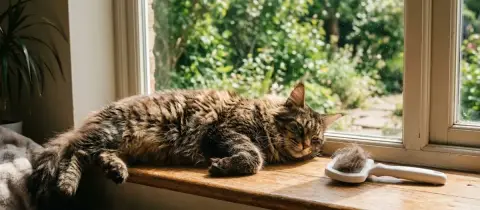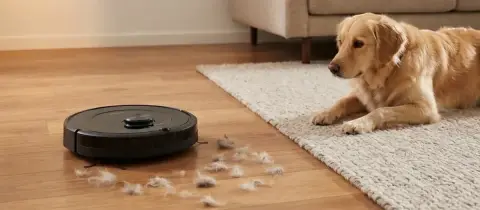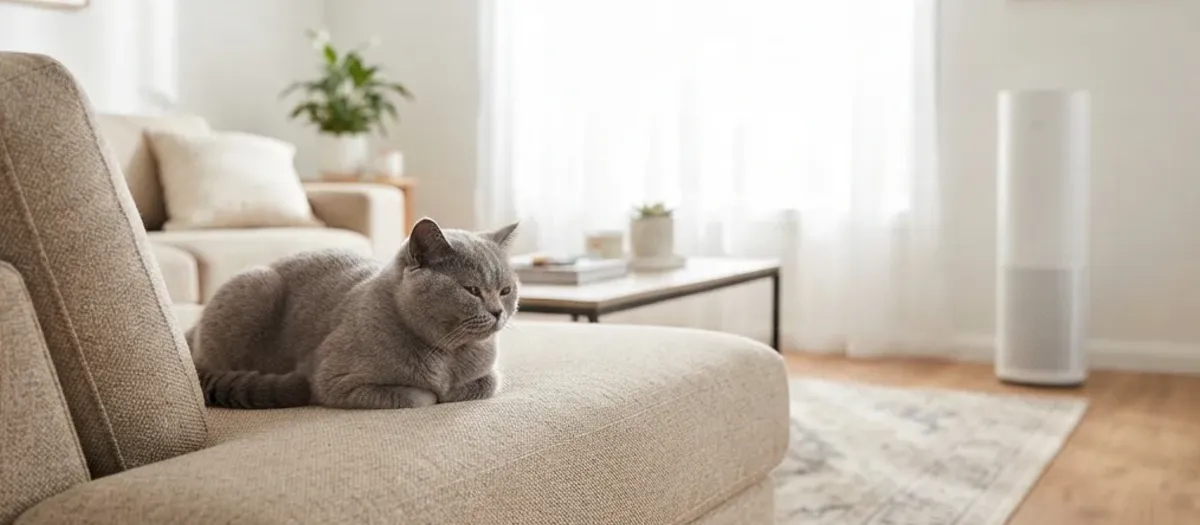
Quick answer: Cat allergies are caused by a sticky substance from a cat's skin, not by the fur itself, and every cat breed can trigger them. Symptoms include sneezing, itching, hives and asthma flare-ups. Avoiding exposure works best. If that isn't possible, home changes may help, but haven't been proven. See a GP first.
Living with a cat when your nose, eyes or chest disagree is a real dilemma, and you're far from alone. This guide covers what causes cat allergies, the symptoms, a room-by-room plan, and where products fit. If you're also fighting hair on the floor, our vacuum for pet hair guide is a good companion.
This guide is about people who react to cats. If it's your cat who's itchy or sneezy, see allergies in cats.
Quick picks
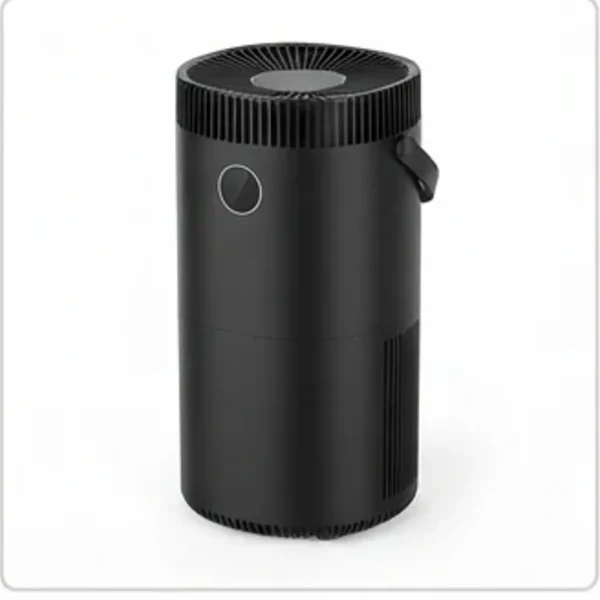
Winix Zero 4-stage air purifier
Washable pre-filter, activated carbon and true HEPA, listed for areas up to 79 m².
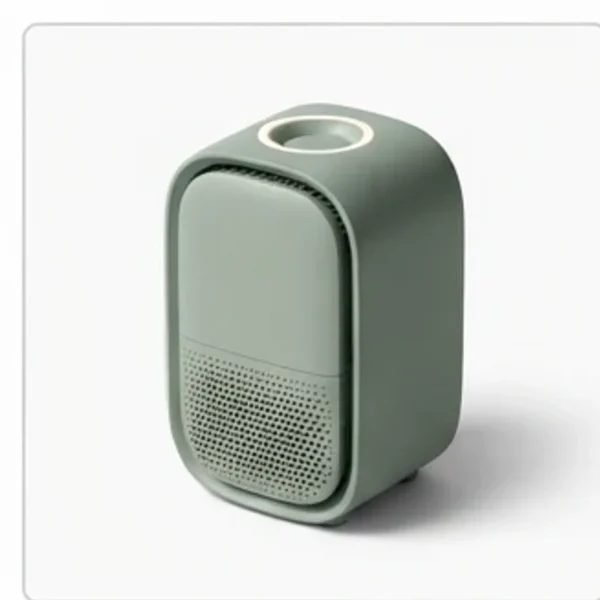
Coway Airmega 150
Compact HEPA unit that suits a bedroom, listed for up to 73 m².
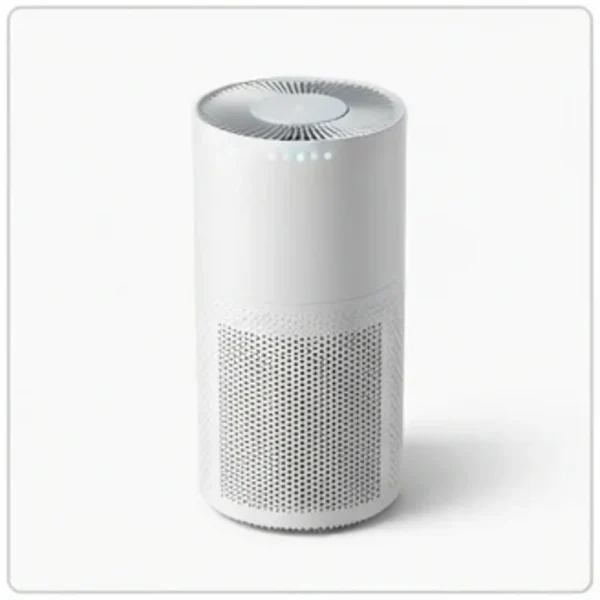
Levoit Core 600S-P
Compared in our air purifier guide alongside the two above.
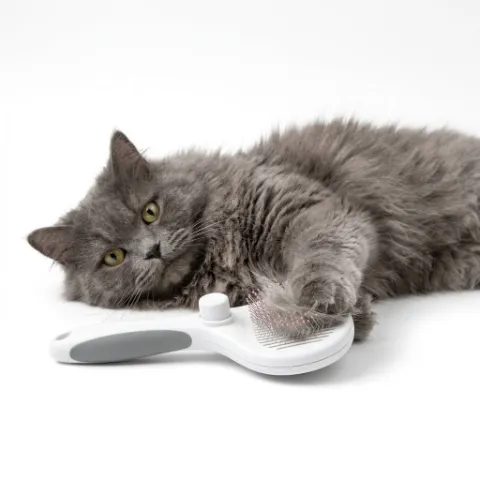
aumuca Self-Cleaning Slicker Brush
A slicker from our cat brushes guide; healthdirect suggests someone else does the brushing.
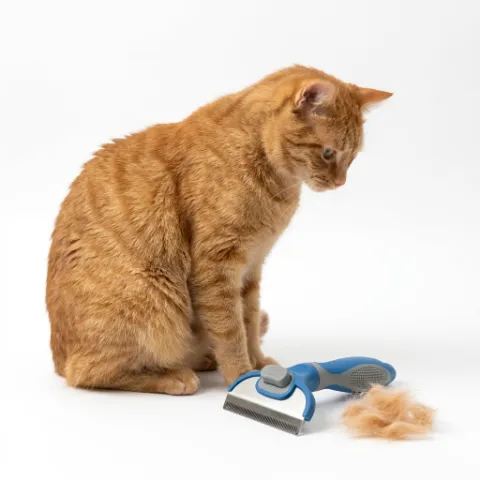
FURminator Undercoat deShedding Tool, Short Hair Cats
Has its own guide on our site; again, ideally the non-allergic person brushes.
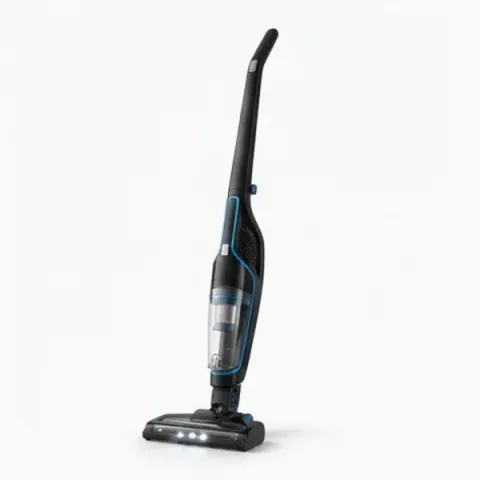
BISSELL PowerClean FurGuard 280W cordless
A cordless pick from our pet hair vacuum guide; floors are one part of the plan.
Levoit Core 600S-P
Another purifier we compare in our air purifier guide if the two above don't suit your room.
aumuca Self-Cleaning Slicker Brush
A slicker brush from our cat brushes guide, for whoever does the brushing, which healthdirect suggests shouldn't be the allergic person.
FURminator Undercoat deShedding Tool, Short Hair Cats
A deshedding tool with its own page in our FURminator guide, for the same job of regular brushing by someone else.
BISSELL PowerClean FurGuard 280W cordless
Floors are part of the plan, and this is one of the vacuums in our pet hair vacuum guide.
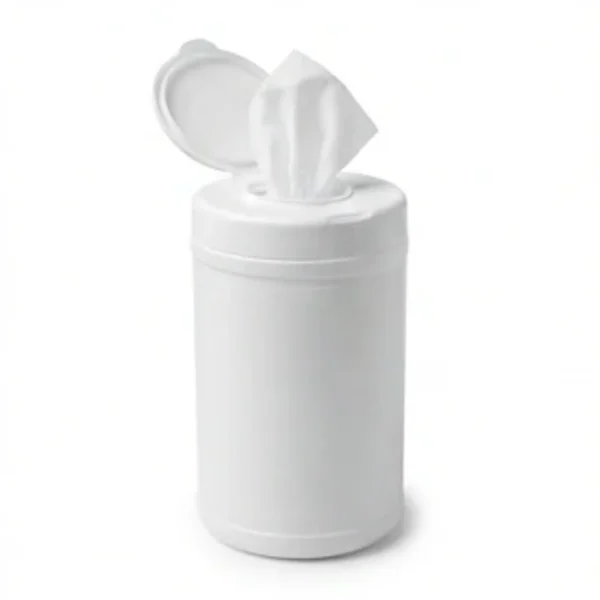
Burt's Bees for Pets Cat Dander Wipes
Wipes are a quick way to take dander off a cat's coat between brushing sessions, ideally done by someone other than the allergic person.
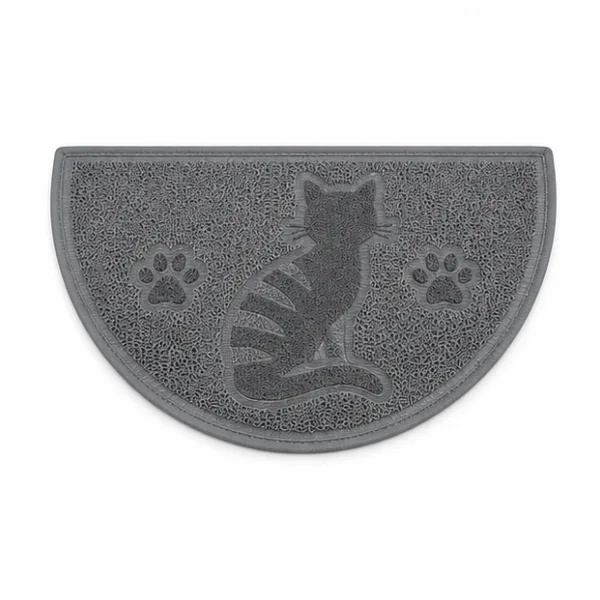
Lukamoo Cat Litter Mat, XL
A large mat catches litter that gets kicked out of the tray, which makes the floor around it easier to keep clean.
Pictures are illustrations, not the actual products.
More detail is in Useful gear below. These are tools within the plan, not a fix for an allergy, so see your GP first.
What causes a cat allergy?
A cat allergy is caused by a sticky substance made by the sebaceous (oil) glands in a cat's skin, not by the fur itself. It clings to dander, dust and every surface in the home, and licking helps spread it. ASCIA (the Australasian Society of Clinical Immunology and Allergy) says all cat breeds can cause allergies (ASCIA, content updated August 2024).
ASCIA also says cat allergen can stay in a home for up to six months, even after the cat has gone, and that it spreads to homes that have never had a cat. healthdirect describes pet allergens as sticky, lasting months or years, and says cat allergy is the second most common indoor breathing allergy after dust mites (healthdirect, last reviewed October 2023).
What are the symptoms of a cat allergy?
healthdirect lists sneezing, hay fever-like symptoms, itching, hives (a rash), and wheezing or asthma flare-ups, and says pet allergies are rarely life-threatening. About 1 in 5 people have a pet allergy, it says. Some symptoms overlap with colds, dust mites and pollen, so a doctor needs to sort out the cause.
Timing can fool you. ASCIA says up to 50% of people who are allergic to animals don't get symptoms straight away, and healthdirect says symptoms can be delayed. A cat that seems fine for an hour may still be the trigger by bedtime.
Are any cat breeds hypoallergenic?
No. ASCIA says all cat breeds can cause allergies, so a breeder's "hypoallergenic" label is marketing, not a guarantee. Some people do react to one cat and not another, as Cats Protection notes (Cats Protection, 23 April 2018), but that's a personal pattern, not a breed rule.
Can you live with a cat if you're allergic?
Some people do, but ASCIA says avoiding animals is the way to prevent symptoms, and healthdirect says finding a pet a new home is often the best way to improve the allergy. If that isn't possible, ASCIA lists changes that "may help, but have not been proven". Talk to your GP or an allergy specialist first.
Those changes are: keeping the cat out of the allergic person's bedroom, removing bedroom carpet, restricting the cat to one area, using a high efficiency vacuum, and washing pets weekly. We'd add that results vary a lot between households. A GP or pharmacist can talk through treatment options, and allergen immunotherapy should only be started by a specialist (see the FAQs).
How do I reduce cat allergens at home?
Work through the home one area at a time, starting with the bedroom. None of these steps is proven to fix an allergy, and ASCIA frames them as things that may help. This table pulls the suggestions from ASCIA, healthdirect and Cats Protection into one plan.
| Area | What to do | Source | Our guide |
|---|---|---|---|
| Bedroom | Keep it cat-free, and keep the cat's bed away from air vents | ASCIA, healthdirect, Cats Protection | |
| Living areas | Keep the cat to one area of the home | ASCIA | |
| Floors | Use a high efficiency or HEPA vacuum, and vacuum rather than dry-sweep | ASCIA, healthdirect, Cats Protection | Robot vacuums, pet hair brooms |
| Air | Use an air filter and air the house | Cats Protection, US EPA | Air purifiers |
| Cat bedding and throws | Wash often | Cats Protection | Pet hair in the washing machine |
| Grooming | Have someone else brush the cat regularly | healthdirect | Cat brushes, FURminator |
| Hands | Wash after handling your cat | healthdirect, Cats Protection |
Bedding deserves special attention. ASCIA says cat allergen can stay in a cat's bedding for up to four years, so washing it matters. International Cat Care says cats like a familiar scent and advises not washing bedding too often unless it's soiled (International Cat Care, updated 26 September 2025). If your cat has several beds, wash one at a time so there's always a familiar one.
Skip essential oils and scented air fresheners in a cat home. Pet Poison Helpline says cats have difficulty metabolising and eliminating certain toxins like essential oils, and it advises caution with diffusers (Pet Poison Helpline, "Essential Oils and Cats"). Our pet odour eliminator guide covers cat-safe options.
Does an air purifier help with cat allergies?
It may reduce airborne allergen, but it hasn't been proven to fix a cat allergy. A purifier catches particles floating in the air. It does nothing about allergen that has already settled on the couch, carpet and bedding. The US EPA ranks source control first, ventilation second and air cleaning third, and says air cleaning isn't generally enough on its own.
Here is what the words on the box mean. The US EPA says a HEPA filter can theoretically remove at least 99.97% of particles at 0.3 microns, the most penetrating size, and catches larger and smaller particles even more efficiently (US EPA, What is a HEPA filter?, updated 13 January 2026).
Skip ozone generators: the US EPA says ozone can damage the lungs and worsen asthma (US EPA, updated 19 February 2026). Our air purifier guide covers ionisers, CADR, room sizes and filters.
Which tool handles hair, and which handles allergen?
Hair and allergen aren't the same job. This table is our own general reasoning, not proven, and nothing here stops an allergy.
| Tool | Removes hair | Airborne allergen | Settled allergen | Notes |
|---|---|---|---|---|
| Air purifier with HEPA | Only fine fur in the air | May reduce | No | Place it where the allergic person spends most time |
| HEPA vacuum | Yes | No | May reduce, on floors and upholstery | Look for a sealed HEPA filter |
| Robot vacuum | Yes, on floors | No | Some, on floors | A top-up between proper vacuums |
| Rubber broom or rake | Yes, gathers hair | No | Little | Gather first, then vacuum |
| Hot wash of bedding | Loosens hair | No | May reduce, on washable fabrics | Follow the care label |
Thinking of getting a cat when you're allergic?
Spend time with cats first, and see a doctor before you commit. Cats Protection suggests confirming that cats really are the trigger and spending time with cats before adopting. A short visit can mislead, because up to 50% of allergic people don't react straight away.
Rehoming a cat later is hard on everyone, the cat most of all. So get advice from your GP or an allergy specialist before you bring a kitten home. Some households choose a visit or foster period at a rescue to see how everyone copes over a few weeks. If a cat does join you, our kitten proofing checklist and litter smell guide help the home run smoothly.
What if it's your cat that has allergies?
Cats can itch too, but itching and over-grooming have many possible causes, so don't guess. Fleas and ear mites are two common ones, and a vet can work out what's going on. MSD Veterinary Manual says shedding is abnormal when it causes obvious coat loss and bald spots (MSD Veterinary Manual).
Start with the basics. Our flea treatment for cats guide covers prevention, and our ear mites guide explains the signs. Fleas also mean more cleaning: Greencross Vets suggests vacuuming two to three times a week and washing bedding weekly (Greencross Vets).
Useful gear
Gear is a tool within the plan above, never a cure. Both purifiers below have their own comparison in our air purifier guide.
- Winix Zero 4-stage air purifier: the listing says it has a washable pre-filter, activated carbon and true HEPA, for areas up to 79 m². A good fit for the main living area.
- Coway Airmega 150: a compact HEPA unit that suits a bedroom, up to 73 m² per the listing.
For the rest of the plan, see our guides to robot vacuums for pet hair, pet hair in the washing machine (for cat bedding), pet hair brooms, cat brushes and the FURminator. healthdirect suggests having someone else do the brushing.
When to see a doctor or a vet
See your GP if you have any of these around cats:
- wheezing, a tight chest or asthma that flares up
- symptoms that keep coming back or don't settle
Call 000 straight away for difficulty breathing, or swelling of the face or throat, and start anaphylaxis first aid. For advice, healthdirect is on 1800 022 222 and Allergy & Anaphylaxis Australia is on 1300 728 000.
See your vet if your cat has bald patches or sores, scratches constantly, over-grooms, or scratches at its ears with dark debris. See our ear mites guide.
Frequently asked questions
How long does cat allergen stay in a house?
ASCIA says cat allergen can stay in a home for up to six months and in a cat's bedding for up to four years. It also spreads to homes without cats. That's why moving a cat out doesn't clear symptoms overnight, and why washing bedding matters.
Why am I allergic to some cats but not others?
Some people react to certain cats and not others, as Cats Protection notes. The reason isn't clear from our sources, and ASCIA says all breeds can cause allergies. A cat that seems fine for a short visit may still trigger symptoms later, because reactions can be delayed.
Do short-haired cats cause fewer allergies?
No breed or coat type is allergy-free. The allergen comes from the skin glands, not the hair itself, so short-haired, hairless and long-haired cats can all cause symptoms. ASCIA says all cat breeds can cause allergies. Your own reaction to a particular cat is the guide.
Can a cat allergy cause asthma?
It can. ASCIA says pet allergy is a common cause of hay fever and asthma, and healthdirect lists wheezing and asthma flare-ups as symptoms. If you wheeze or your chest tightens around cats, see your GP. Call 000 for breathing difficulty or swelling of the face or throat.
How is a cat allergy diagnosed?
A doctor asks about your symptoms and triggers, examines you, and may refer you to an allergy specialist, who diagnoses pet allergy with skin or blood tests, according to ASCIA and healthdirect. Testing matters because dust mites and pollen can cause the same symptoms.
Is immunotherapy an option for cat allergy?
Possibly. ASCIA says allergen immunotherapy should only be started by a specialist, and healthdirect says it's offered by immunologists and takes 3 to 5 years. It isn't right for everyone, so ask a GP for a referral. Results vary, and it isn't a quick fix.
Should I bathe my cat to reduce allergens?
ASCIA lists weekly pet washing among measures that may help but haven't been proven. Many cats find baths stressful, so ask your vet first and never force a bath. Brushing by someone who isn't allergic is gentler. See our cat shampoo guide if your vet agrees.
Can I be allergic to dogs but not cats?
Yes. ASCIA says the main source of dog allergen is saliva, while cat allergen comes mainly from the skin glands, so the triggers differ. Someone can react to one animal and not the other, and tests show which. All dog breeds can cause allergies too.
Related guides
- Best vacuum for pet hair
- Best robot vacuum for pet hair
- Air purifiers for pet hair and dander
- Pet hair in the washing machine
- Pet hair brooms and carpet rakes
- Best cat brushes
- FURminator guide
- Allergies in cats
- Pet odour eliminators
- Litter box smell: causes and how to get rid of it
- Kitten proofing your home
Sources
- ASCIA: Pet Allergy Frequently Asked Questions, content updated August 2024
- healthdirect: Cat and dog allergy, last reviewed October 2023, page read 21 November 2026
- US EPA: What is a HEPA filter?, updated 13 January 2026, page read 21 November 2026
- US EPA: Ozone generators that are sold as air cleaners, updated 19 February 2026, page read 21 November 2026
- Cats Protection: How to manage your cat allergy, 23 April 2018, page read 21 November 2026
- International Cat Care: Making your home cat friendly, updated 26 September 2025
- Pet Poison Helpline: Essential Oils and Cats, page read 21 November 2026
- MSD Veterinary Manual: Shedding, page read 21 November 2026
- Greencross Vets: Fleas on dogs and cats
This guide provides general information and isn't a substitute for veterinary or medical advice. If you're concerned about your cat's skin or itching, speak with your vet, and see your GP about your own allergy symptoms.