Best flea treatment for cats: spot-ons, a collar and a tablet compared
By Anish PuriUpdated 25 Nov 202615 min readResearched, not tested by us
Research guide. WhiskerFinds may earn a commission from links, at no extra cost to you.
Quick answer: The best flea treatment for cats is usually a monthly spot-on your vet agrees with, and Revolution Plus is our top pick: its Australian label lists fleas, paralysis ticks, ear mites, roundworm, hookworm and heartworm, from 8 weeks and 1.25 kg. Never use a dog flea product on a cat. Check your cat's weight band first.
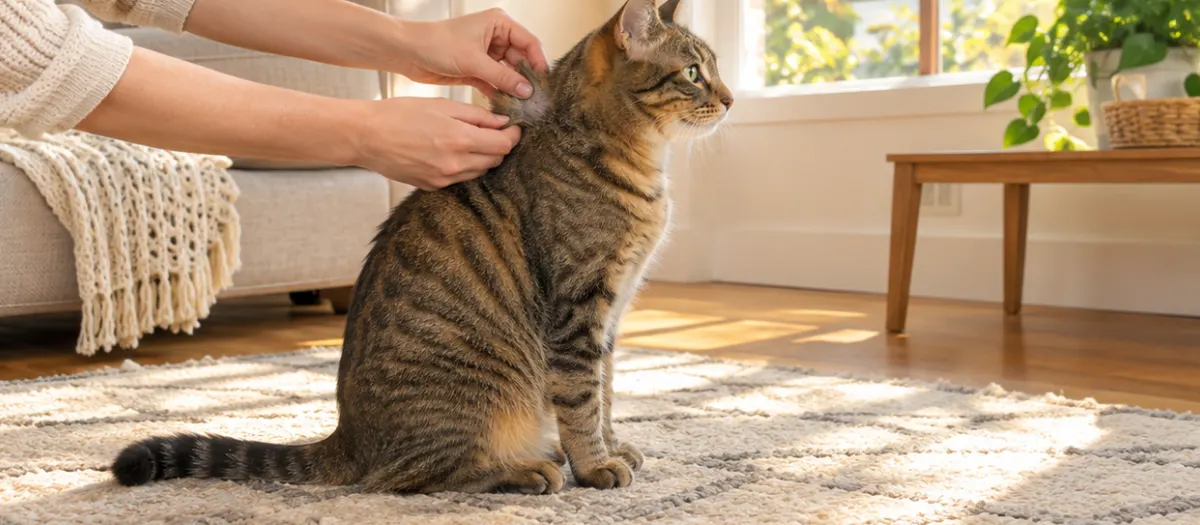
Illustration, not the actual product
Our top pickRevolution Plus for medium cats 2.6 to 5 kg, 3 pack
Never use a dog flea product on a cat.Here is why.
Choosing a cat flea treatment starts with one safety point and two numbers: your cat's age and weight. This guide compares five cat products sold on Amazon Australia, by what each label covers, how long it lasts, and the age and weight your cat needs to be. It shows which product is the only one here to list tapeworm and lungworm. For the dog side, see our flea treatment for dogs guide.
Quick picks
Our top pickBest overall
Revolution Plus for medium cats 2.6 to 5 kg, 3 pack
Fleas, paralysis ticks, ear mites, worms and heartworm on one monthly label
Contact counts too. If you have a dog treated with a permethrin product, International Cat Care advises keeping the two animals apart for 72 hours. Our flea dirt guide has the longer safety section.
Every product below is labelled for cats. Check the pack says "cats" and matches your cat's weight band before you apply it.
Some cats are allergic to flea saliva, which can cause an intense itch. Our allergies in cats guide explains the signs and why strict flea control comes first.
Cat flea treatments compared
Specs from each Amazon Australia listing, checked on 25 November 2026, and the maker's Australian page, read on 18 November 2026. "Not stated" means the sources we read don't say.
Swipe sideways to see every column
Product
Active ingredients
Form
Interval
Minimum age and weight
Weight band on this listing
Revolution Plus
Selamectin and sarolaner
Spot-on, back of neck
Monthly
8 weeks and 1.25 kg
2.6 to 5 kg (large pack: 5.1 to 10 kg)
NexGard Spectra for cats
Esafoxolaner, eprinomectin and praziquantel
Applicator, midline of neck
Monthly
8 weeks and 0.8 kg
2.5 to 7.5 kg
Bravecto Plus
Fluralaner and moxidectin
Spot-on drops
2 to 3 months, see below
The listing says 11 weeks and 1.2 kg
2.8 to 6.25 kg (larger pack: 6.25 to 12.5 kg)
Seresto cat collar
Imidacloprid and flumethrin
Collar
Up to 8 months
10 weeks; weight not stated
One size
Capstar
Nitenpyram
Tablet
One tablet on any day fleas are seen, no more than one a day
4 weeks and 0.5 kg
0.5 to 11 kg, cats and small dogs
Our picks in detail
1. Revolution Plus for medium cats 2.6 to 5 kg: best overall
Revolution Plus is a monthly spot-on with selamectin and sarolaner. The Zoetis Australia page lists it for treating and controlling fleas, paralysis ticks, roundworm, hookworm, ear mites and biting lice, and for preventing heartworm. It suits cats from 8 weeks and 1.25 kg, with bands of 1.25 to 2.5 kg (kitten), 2.6 to 5 kg (medium) and 5.1 to 10 kg (large). Over 10 kg, the maker says to use a combination of tubes. For cats of 5.1 to 10 kg, the large pack is here.
Some listing titles misspell the name and print a 2.5 to 5 kg band. The maker's name is Revolution Plus, and we print the maker's bands. The maker says safety hasn't been established in pregnancy, lactation or breeding animals, so ask your vet. It also covers ear mites, but a vet should confirm those first; our ear mites in cats guide explains why. The product is an isoxazoline (see the safety note below).
Pros: names paralysis ticks, ear mites, lice, worms and heartworm; low minimum weight; one monthly routine
Cons: no tapeworm or lungworm; monthly; mild itch at the site is listed
Best for: most cats from 8 weeks and 1.25 kg, including outdoor cats in tick areas
Skip it if: your vet wants tapeworm or lungworm covered in the same product
2. NexGard Spectra Spot-On for large cats 2.5 to 7.5 kg: broadest cover
This is the only product here that names lungworm and tapeworms. The listing and nexgard.com.au list fleas treated and prevented for at least 5 weeks, paralysis, bush and brown dog ticks, ear mites and notoedric mange, heartworm, roundworm, hookworm, lungworm and tapeworms. It uses esafoxolaner, eprinomectin and praziquantel and is applied monthly to the midline of the neck.
It starts at 8 weeks and 0.8 kg, the lowest minimum weight of the monthly spot-ons. The bands are 0.8 to 2.4 kg and 2.5 to 7.5 kg, and over 7.5 kg means combining applicators. The maker's page says safety has been demonstrated in breeding, pregnant and lactating queens; still tell your vet if your cat is pregnant or feeding kittens before you start.
Pros: longest parasite list; lowest minimum weight of the monthly products; clear weight bands
Cons: monthly; two bands only, so a cat over 7.5 kg needs two applicators; isoxazoline class
Best for: cats that hunt, or where your vet wants tapeworm and lungworm covered
Skip it if: your cat is over 7.5 kg and you'd rather not combine applicators
3. Bravecto Plus for cats 2.8 to 6.25 kg: fewest applications
One spot-on instead of a monthly routine. The listing says it treats fleas for 3 months, controls paralysis ticks for 10 weeks, prevents heartworm for 2 months, and controls roundworm, hookworm and ear mites for 3 months. It contains fluralaner and moxidectin. The MSD Animal Health Australia brand page describes it as a broader range of protection for cats in one long-lasting application.
That mixed timing is the catch: heartworm cover runs 2 months and fleas 3, so the schedule depends on what you need. Follow the label and your vet. The description text on this listing also describes the 1.2 to 2.8 kg small pack while the title says 2.8 to 6.25 kg, so check the colour and weight band on the pack in your cart. For cats of 6.25 to 12.5 kg, the purple pack is here. The listing says kittens from 11 weeks and 1.2 kg.
Pros: the fewest applications; fleas covered for 3 months per the listing
Cons: mixed 2 and 3 month timings are easy to get wrong; listing text and title describe different packs; isoxazoline class
Best for: cats that are hard to handle every month
Skip it if: you want the simplest same-date monthly routine, or your kitten is under 1.2 kg
4. Seresto collar for kittens and cats: best for no monthly routine
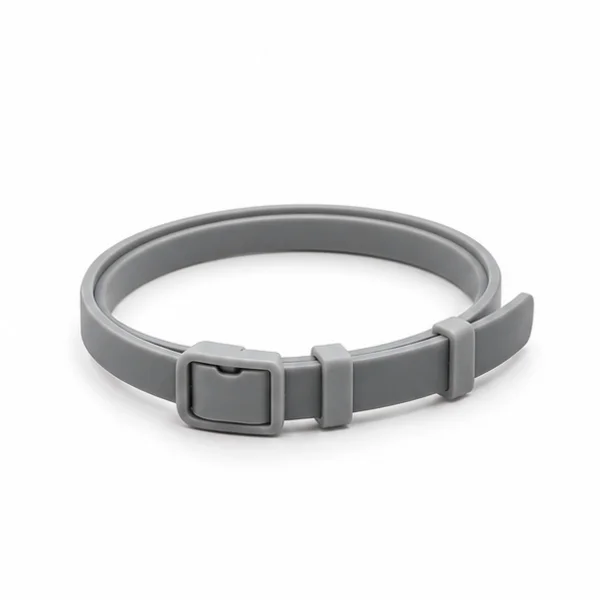
A polymer collar with imidacloprid and flumethrin. The Elanco Australia page lists fleas and paralysis ticks for 8 months, and brown dog and bush ticks for 4 months. It starts from 10 weeks, is water resistant (see the label) and has a predetermined breaking point so a snagged collar can come off. Leave extra length on a kitten so it can grow.
Elanco says it isn't recommended for pregnant or lactating cats, and mild irritation under the collar is possible in the first one to two weeks. Check the neck often. Take the collar off and call your vet if the skin looks red or sore. It names nothing for worms, so ask your vet about a separate wormer; our cat worming tablets guide compares them.
Pros: up to 8 months without dosing; no applicator to fight; water resistant
Cons: nothing for worms or heartworm; not recommended in pregnancy or lactation; some cats won't tolerate a collar
Best for: cats that dislike spot-ons, with a vet-agreed plan for worms
Skip it if: your cat won't wear a collar, or you need worms covered
5. Capstar tablets for cats and small dogs 0.5 to 11 kg: best fast knock-down
A tablet with nitenpyram that the listing says starts killing adult fleas within 30 minutes. It suits animals from 4 weeks and 0.5 kg, can be given with or without food on any day fleas are seen, and no more than one tablet should be given a day.
It has no lasting protection. It clears adult fleas on the pet, so it isn't a replacement for a monthly product and does nothing for the eggs and pupae in your home. It can suit a kitten too young or light for the spot-ons, on your vet's advice. Don't split a tablet between pets.
Pros: fast; lowest age and weight limits here; no applicator
Cons: no lasting protection; no ticks, worms or heartworm; adult fleas only
Best for: a flea outbreak, or a young kitten, on your vet's advice
Skip it if: you want ongoing protection from one product
Which parasites does each product cover?
All four long-acting products name fleas and paralysis ticks. The three spot-ons also cover heartworm, roundworm and hookworm; only NexGard Spectra for cats names lungworm and tapeworm; the Seresto collar covers fleas and ticks only; Capstar kills adult fleas. "Yes" means the maker's page or the listing names it. "No" or "Not named" means it isn't listed, which isn't the same as "doesn't work", so ask your vet.
Swipe sideways to see every column
Parasite
Revolution Plus
NexGard Spectra cat
Bravecto Plus
Seresto cat
Capstar
Fleas
Yes, monthly
Yes, at least 5 weeks
Yes, 3 months
Yes, 8 months
Adult fleas only, no lasting cover
Paralysis ticks
Yes, monthly
Yes, monthly
Yes, 10 weeks
Yes, 8 months
No
Brown dog and bush ticks
Not named
Yes (brown dog and bush)
Not named
Yes, 4 months
No
Ear mites
Yes
Yes
Yes, 3 months
Not named
No
Biting lice
Yes
Not named
Not named
Not named
No
Heartworm
Prevents
Prevents
Prevents, 2 months
No
No
Roundworm and hookworm
Yes
Yes
Yes, 3 months
No
No
Lungworm
No
Yes
No
No
No
Tapeworm
No
Yes
No
No
No
If your cat hunts or has had tapeworm, raise it with your vet before choosing. A flea product also isn't a dedicated wormer, so see our cat worming tablets guide for tablets that name tapeworm. And no product here replaces a daily tick check where paralysis ticks are active; our paralysis tick guide explains how to search.
How old and heavy does a kitten need to be?
Between 4 and 11 weeks and from 0.5 to 1.25 kg, depending on the product. Capstar has the lowest limits, the monthly spot-ons start at 8 weeks, Seresto at 10 and Bravecto Plus at 11 weeks per its listing. These minimums come from the maker pages, or the listing where we say so, and a kitten under them needs your vet's advice, not a trimmed-down adult pack. Our kitten flea treatment guide goes through kitten options in more detail, and our kitten wormer guide covers worming, which is a separate product.
Swipe sideways to see every column
Product
Minimum age
Minimum weight
Capstar
4 weeks
0.5 kg
NexGard Spectra for cats
8 weeks
0.8 kg
Revolution Plus
8 weeks
1.25 kg
Seresto cat collar
10 weeks
Not stated
Bravecto Plus
11 weeks, per the listing
1.2 kg
Never split a pipette or applicator between cats, or give a kitten part of an adult pack. A kitten under 4 weeks, or under the weight for every product here, needs a vet.
How is each product applied?
Three of the five are spot-ons applied to the skin at the back of the neck, where your cat can't lick: Revolution Plus and Bravecto Plus from a tube, NexGard Spectra from an applicator with a plunger. Seresto is a collar fitted with a two-finger gap, and Capstar is a tablet given by mouth. Keep other pets from licking the spot while it dries.
Swipe sideways to see every column
Product
How you use it
Watch for
Revolution Plus
Part the fur and apply one tube to the skin at the back of the neck
Don't apply to a wet coat; Zoetis lists mild temporary itch at the site and, rarely, hair loss, redness or drooling
NexGard Spectra for cats
Twist off the cap and push the plunger with the tip on the skin at the midline of the neck, between the skull and shoulder blades
Pick the pack by weight
Bravecto Plus
Spot-on to the skin, follow the label
Check the colour band on the pack for your cat's weight
Seresto cat collar
Fit with two fingers' gap, cut the spare length to about 2 cm past the second loop
Mild irritation under the collar is possible in the first one to two weeks
Capstar
Tablet by mouth, with or without food
One a day at most
Ask your vet how to handle a cat that fights the applicator. If your cat fights tablets, see how to give a cat a pill.
Choose by situation
Swipe sideways to see every column
Your situation
What to look for
Our pick
Indoor cat, fleas only so far
A monthly cat spot-on your vet is happy with
Revolution Plus (1)
Outdoor cat in paralysis tick country
Tick cover on the label, plus daily checks
Revolution Plus (1), NexGard Spectra (2) or Seresto (4)
Cat that hunts or has had tapeworm
A product that names tapeworm
NexGard Spectra (2), after asking your vet
Multi-cat home
The same product, same day, each cat's own weight band
Revolution Plus (1) or NexGard Spectra (2)
Cat hates handling
Fewer applications, or a collar
Bravecto Plus (3) or Seresto (4), if your cat accepts a collar
A cat product for the cat, a dog product for the dog, never swapped
See the dog guide and the safety section above
How we chose
We searched Amazon Australia for cat flea treatments, then checked the maker's Australian page for each one. We checked each product against these:
Well rated: a strong average rating with plenty of buyer reviews.
No red flags: no pattern of poor reviews, safety complaints or listing problems.
Available on Amazon Australia when we checked, on 25 November 2026.
Labelled for cats, not a dog product.
Listed on the maker's Australian page or label for the claims we print.
Weight bands and minimum ages taken from the maker, not the listing title.
Several listing titles are sloppy, so where they differ from the maker we print the maker's figures. These are researched picks, not products we've personally tested. We compared the specifications on each Amazon Australia listing, checked on 25 November 2026, and we didn't accept payment from any brand.
Left out this time: two cat spot-ons whose listings gave different strengths for the same product, and anything labelled for dogs.
What should you know about the isoxazoline class?
Revolution Plus, Bravecto Plus and NexGard Spectra for cats (listed by the FDA under its US name, NexGard Combo) belong to the isoxazoline class. The US FDA says it considers the class safe and effective for dogs and cats, but it has been associated with muscle tremors, loss of coordination and seizures in some animals, including animals with no history of seizures, so talk to your vet about your pet's medical history first (US FDA fact sheet, content current 8 August 2023). Seresto and Capstar are different classes.
Ask your vet before starting a product if your cat is pregnant, breeding, sick, old, or has had a seizure, and before switching products.
Where else can you buy a cat flea treatment?
Vet clinics and pet shops sell these same products and can match the pack to your cat's weight on the spot. A vet can also check your cat over and advise on tick risk where you live. Pharmacies stock some cat flea products too. Wherever you buy, check the pack says cats.
When to see a vet
Go to a vet or emergency clinic straight away if your cat is drooling, twitching, trembling, wobbly or unusually sensitive to touch or sound after any flea product, or if a dog product has touched your cat. Don't wait to see if it passes. Call your vet or the Animal Poisons Helpline (1300 869 738, 24/7). See the International Cat Care page on permethrin poisoning.
See your vet promptly if your cat has red, sore or hairless skin under a collar, keeps scratching despite treatment, has pale gums, or is a kitten, pregnant, old or unwell and has fleas. Fleas feed on blood, and Greencross Vets lists anaemia among the problems fleas can cause, which matters most in a small kitten; our flea dirt guide covers kitten warning signs. Watch for tick signs such as wobbly back legs, a change in breathing or a changed voice, and see our paralysis tick guide.
Frequently asked questions
Can I use dog flea treatment on my cat if I use less?
No. Using less doesn't make a dog product safe for a cat. The permethrin in some dog spot-ons is toxic to cats at very small amounts, and RSPCA Australia warns that dog flea products can be fatal to cats. Only use products labelled for cats, in the right weight band, and call your vet straight away if a dog product reaches your cat.
How soon after flea treatment can I pat or wash my cat?
Follow the label on your product, because the waiting time differs. For Revolution Plus, Zoetis says to avoid contact with the treated cat until the application area is dry, and not to apply it to a wet coat. The other makers' pages we read give no bathing time, so ask your vet before washing a cat soon after any spot-on.
Why am I still seeing fleas on my cat after treatment?
Most of the flea life cycle is in your home, and RSPCA Australia says eggs, larvae and pupae can survive for weeks to months, so new fleas keep emerging after you treat. Keep treating every pet on schedule and clean the home. A flea shampoo or rinse kills fleas on the cat but gives no lasting protection (Greencross Vets).
Which flea treatment can a kitten under 8 weeks have?
Only your vet can say. Of the products here, Capstar starts at 4 weeks and 0.5 kg, while the monthly products need 8 weeks or more, and Seresto needs 10. A kitten that is younger or lighter than the label minimum needs a vet's advice. Never cut down an adult pack. Washing bedding and combing help meanwhile. See our kitten flea treatment guide for more.
Do indoor cats need flea treatment all year?
Often yes. Indoor cats can still get fleas from other pets, visitors or clothing, and our flea dirt guide covers how to check. The University of Sydney vet hospital recommends year-round prevention in Australia because fleas can survive all year in many places. Your vet can tailor a plan to your cat.
Can I put a flea collar on a cat that goes outside?
Seresto's maker page describes a predetermined breaking point on its cat collar, which is there so a snagged collar can come off. Check the fit often, and ask your vet whether a collar suits your cat's outdoor routine. Our cat collar guide covers breakaway collars in general.
How do I treat the house for cat fleas?
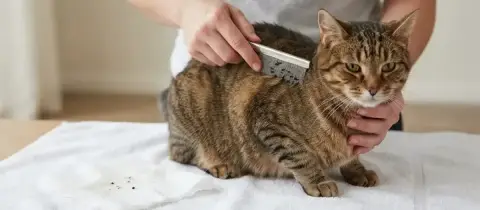
Treat every pet in the home on the same day, then clean up. Greencross Vets suggests vacuuming two to three times a week and washing bedding weekly. RSPCA Australia says there's no evidence that home alternatives such as tea leaves or citronella work. A flea comb can help you check your cat, but it doesn't clear an infestation.
Can flea treatment make my cat sick?
It can. Possible effects include skin irritation at the site or under a collar, and the FDA notes isoxazoline products have been linked to tremors and seizures in some animals. Most cats cope well, but watch your cat after each application and call your vet if anything seems off. Never mix products without asking.
Product details from each linked Amazon Australia listing, checked on 25 November 2026.
This guide provides general information and isn't a substitute for veterinary advice. If you're concerned about your cat's fleas or parasite protection, speak with your vet.