Quick answer: Allergies in cats usually show up as itchy skin, and sometimes as sneezing, runny eyes or an upset tummy. The main types are flea, food, environmental and contact allergy, and the signs overlap with other conditions. A vet can work out the cause, so book a check rather than guessing at home.
If your cat is scratching, overgrooming or sneezing more than usual, an allergy is one possible explanation, not the only one. This guide covers the signs, the four main types, how vets find the cause and what you can do while you wait. If it's you who sneezes around your cat, see allergic to cats? instead.
What are the signs of allergies in cats?
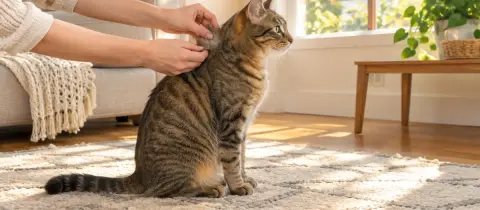
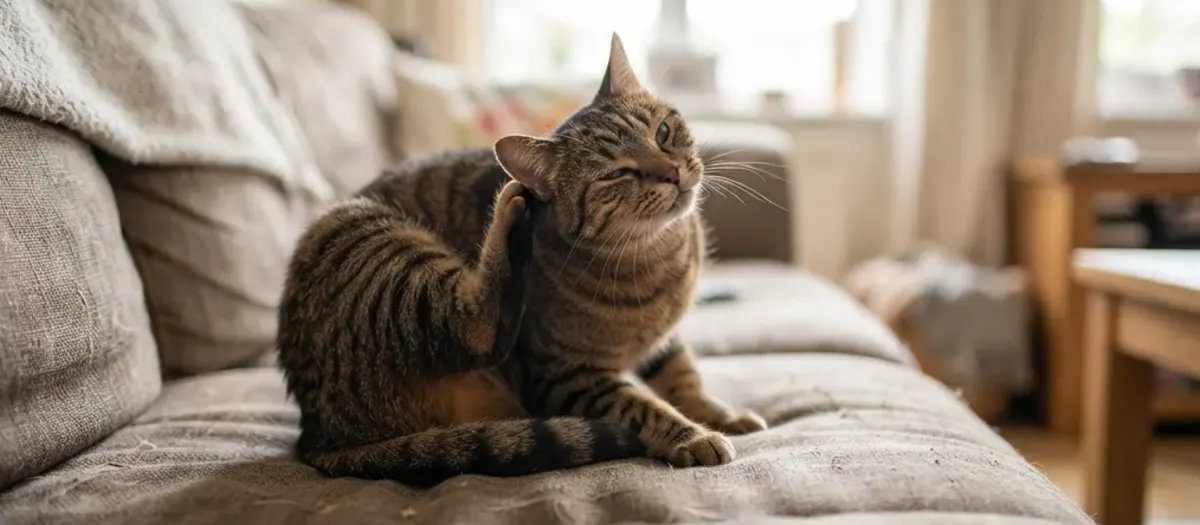
Itchy skin is the most common sign of allergy in cats, according to VCA Animal Hospitals. You may see scratching, overgrooming, hair loss, scabs or sore patches. Some cats also have nasal or eye discharge, sneezing, coughing, wheezing, or vomiting, gas and diarrhoea. The same signs can have other causes.
A cat that licks a patch bare, or a belly that looks thin and sore, is worth a closer look. Patterns matter more than any one sign, so note where the itch is, how often it happens and whether it comes and goes with the seasons.
What causes allergies in cats?
Vet sources describe four types: flea allergy, environmental allergy (atopy), food allergy and contact allergy. Flea saliva is the main insect trigger, while MSD Veterinary Manual says food allergy is about as common as airborne allergy. The table sets out each type. No single sign tells them apart.
| Type | Usual triggers | Signs the sources list | How a vet confirms it | What helps |
|---|---|---|---|---|
| Flea allergy | Flea saliva, mainly (VCA) | Intense itch, scabs, hair loss | Exam, flea comb and ruling out other causes | Strict flea prevention |
| Environmental (atopy) | Pollens, moulds, mildew, house dust mites. Some seasonal, some year-round | Itchy skin, sometimes sneezing, eye or nose discharge, or asthma | Ruling out other causes. No test diagnoses it alone (MSD) | Vet-prescribed medicines, fatty acid supplements, allergy shots after testing (VCA) |
| Food allergy | Usually proteins such as beef, chicken, fish or dairy. Grains and additives sometimes | Itch, plus vomiting, gas or diarrhoea in some cats | A strict vet-led diet trial. Blood and skin tests are unreliable (MSD) | Avoiding the trigger, as the vet's trial shows |
| Contact allergy | Pesticides, certain fabrics, grooming and laundry products. The least common type | Skin signs where the cat touched the trigger | Working out what changed, with your vet | Avoiding the substance |
Sources: VCA Animal Hospitals and MSD Veterinary Manual, pages read 24 November 2026.
Is it an allergy or something else?
Many allergy signs can also come from other conditions, so an itchy or sneezy cat isn't automatically allergic. VCA says a full vet evaluation rules out fleas, mites, fungal infections and certain cancers before an allergy is settled on. The table pairs each sign with other things it can mean.
| What you see | It can also be caused by | Where to go next |
|---|---|---|
| Scratching, scabs, overgrooming | Fleas, mites, a fungal infection | Flea comb check, then your vet |
| Sneezing, nasal discharge | Cat flu, irritants such as dust | Our cat sneezing guide |
| Eye discharge, squinting | Infection or irritants such as dust or airborne chemicals (Cornell Feline Health Center) | Our cat eye infection guide |
| Vomiting, gas, diarrhoea | Many digestive problems | Your vet |
| Cough or wheeze | Asthma and other airway problems | Your vet, the same day |
Cornell also notes that allergic conjunctivitis can follow contact with certain outdoor plants, so some eye signs may fit an allergy. Only a vet can say which it is.
How do vets find the cause?
Vets start by ruling out other causes, then work through the likely type. Food allergy is confirmed with a strict diet trial, not a blood or skin test. For airborne allergy, MSD says no test can diagnose it on its own, though allergy testing can point to likely triggers.
A food trial only works if it is followed exactly. These are the rules the sources give:
- Only the trial food. VCA says no treats, table food or flavoured medicines. MSD says any earlier ingredient can spoil the result.
- Length. VCA gives 8 to 12 weeks and MSD up to 3 months. Results vary from cat to cat.
- Never starve a cat. MSD warns that a cat going off its food for a prolonged time can lead to serious liver damage. A cat that won't eat the trial food needs a vet.
- Reintroduce one ingredient at a time. MSD says to add old ingredients back singly, for up to 14 days each, to find the culprit.
Only a vet should choose the diet and run the trial. Grain-free food isn't a shortcut, and we don't name diets here.
What helps while you wait for the vet?
Strict flea control comes first, because every source puts it first. Beyond that, keep a record of the itch, don't change foods or add treats, and use a cone only if your vet agrees. Don't give human medicines, creams or supplements, as some are dangerous for cats.
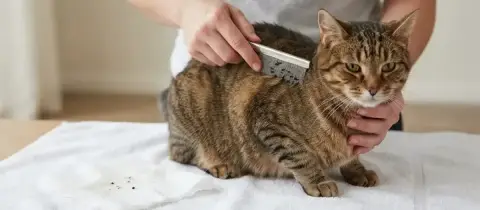
Our flea treatment for cats guide compares options, and a flea comb shows whether fleas or flea dirt are present. Our flea dirt guide explains what to look for. Products support the vet's plan. They don't treat an allergy.
What should you bring to the vet?
A record helps your vet far more than memory does. Bring photos of the itch over several days, what the flea comb picked up, and a full list of everything your cat eats and takes. The table below shows what to gather.
| Bring | Why it helps |
|---|---|
| Photos or a short diary of the itch, with dates | Shows patterns, such as seasons or after a new product |
| Flea comb results | Shows whether fleas or flea dirt are involved |
| Everything your cat eats, including treats and flavoured medicines | A food trial needs the full list |
| Current flea and worm products | Rules out a reaction or a gap in protection |
| New cleaning, laundry or litter products | Contact allergies can follow a change |
Useful guides
Gear supports your vet's plan and doesn't treat an allergy. These guides may help:
- Best flea treatment for cats, because flea control comes first
- Best flea comb, to check for fleas and flea dirt
- Best cat cone, only to stop scratching damage while your vet's plan works
- Fish oil for cats, because VCA lists fatty acid supplements among the options a vet may use for atopy. Ask your vet first
When to see a vet
Book a vet visit if your cat has any of these:
- constant scratching, or sore, scabby or hairless skin
- sneezing that keeps coming back, or nasal discharge (see our cat sneezing guide)
- squinting or eye discharge (see our cat eye infection guide)
- vomiting or diarrhoea that keeps recurring
- a cat that stops eating, including one on a food trial that refuses the trial food
Breathing trouble (open mouth, blue or pale gums, collapse) is an emergency, and a cough or wheeze needs a vet the same day. Don't wait.
Frequently asked questions
Can cats have seasonal allergies?
Yes. VCA says environmental allergies to pollens, moulds, mildew and house dust mites can be seasonal or year-round, and MSD says airborne allergy may be seasonal or not. Fleas can add to flare-ups. A diary of when the itch appears helps your vet spot the pattern.
What can I give my cat for allergies?
Nothing from the medicine cabinet. Some human medicines are dangerous for cats, so ask your vet before giving anything. Vets sometimes prescribe medicines to calm itch, and treatment depends on the type. The safe first steps are strict flea control and booking a check.
Should I change my cat's food if I think it's allergic?
Not on your own. A food allergy is confirmed with a strict vet-led trial, and MSD says any earlier ingredient can spoil it. Swapping foods or adding treats at random muddies the answer. Ask your vet to set up a proper trial if they suspect food.
How long does a food allergy trial take for cats?
VCA gives 8 to 12 weeks, and MSD says up to 3 months, with a response taking 1 to 9 weeks to appear. Only the trial food is allowed. Never starve a cat. If yours refuses the food, call your vet, because MSD warns that a prolonged poor appetite can lead to serious liver damage.
Do allergy tests for cats work?
They have limits. MSD says blood and skin tests aren't reliable for food allergy, and no test positively identifies airborne allergy. Allergy testing can point to likely triggers, and VCA says allergy shots are based on it. Your vet weighs results against the history and signs.
Can cats be cured of allergies?
Usually not for atopy. VCA says a permanent cure isn't typically possible, but signs can be controlled, and MSD says allergy shots reduce symptoms rather than cure. Flea and contact allergy improve when the trigger is controlled or avoided. Ask your vet what to expect.
Which cats are more likely to have allergies?
MSD says atopy often starts before age 5 and is more common in purebred cats. Food allergy can start anywhere from 3 months to 11 years, though MSD cites one study in which most affected cats showed signs before age 2. Any cat can be allergic, so a cat outside these groups still deserves a check.
Can allergies make a cat sneeze or have a runny nose?
Yes, in some cats. VCA lists sneezing, coughing, wheezing and nasal or eye discharge among allergy signs, and MSD says nasal inflammation and asthma occur in about 15% of atopic cats. Sneezing has other causes too, so see our cat sneezing guide.
Related guides
- Cat sneezing: causes, cat flu and when to see a vet
- Cat eye infection and conjunctivitis
- Cat eye drops and washes
- Allergic to cats? Symptoms and how to live with a cat anyway
- Best flea treatment for cats
- Best flea comb for cats and dogs
- Fish oil for cats
- Low-dust cat litter
- Flea dirt on dogs and cats
Sources
- VCA Animal Hospitals: Allergies in Cats, page updated 24 April 2026, read 24 November 2026
- MSD Veterinary Manual (cat owners): Allergies of Cats, read 24 November 2026
- Cornell Feline Health Center: Conjunctivitis, read 24 November 2026
This guide provides general information and isn't a substitute for veterinary advice. If you're concerned about your cat's skin, sneezing or health, speak with your vet.