Quick answer: Cat sneezing is often a one-off caused by dust or a tickle in the nose. Frequent sneezing, discharge, a cat that won't eat, blood or breathing trouble can point to cat flu or something else a vet needs to check. Cat flu spreads between cats, but not to people.
An occasional sneeze is rarely worth a worry, but a run of them can be. This guide covers the usual causes, whether it's catching, how to tell a sneeze from a cough or wheeze, and what to do at home while you decide. If your cat's eyes are also weepy, see our cat eye infection guide.
Why is my cat sneezing?
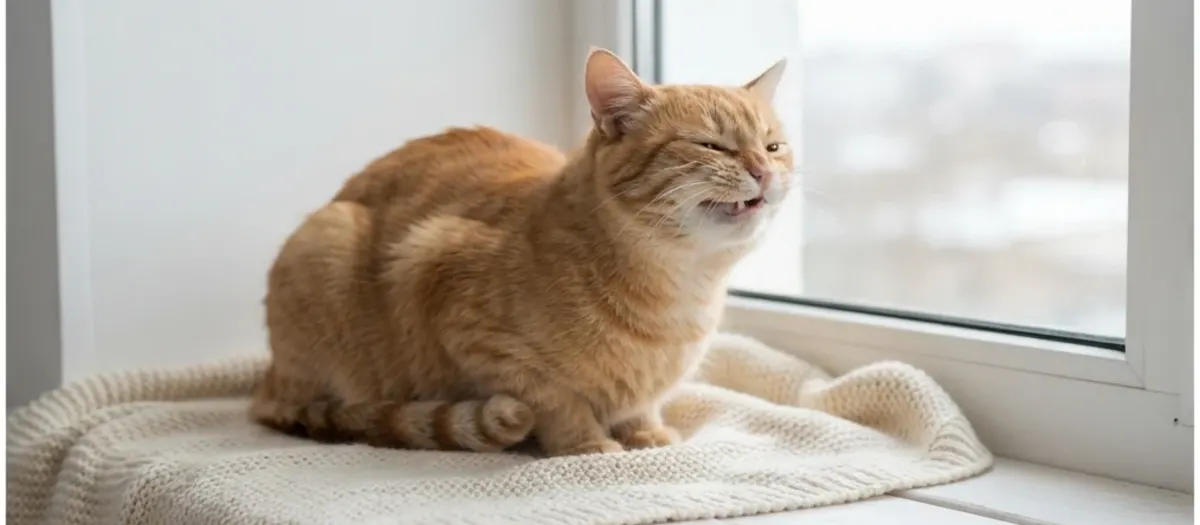
Cats sneeze when something irritates the nose, and most of the time it's minor. PDSA, a UK pet charity, lists cat flu, other airway infections, irritants such as perfume, dust and smoke, dental disease, a foreign object such as a blade of grass, and growths in the nose as possible causes. The table pairs each with what you might see.
| Possible cause | What you might notice | Where to read more |
|---|---|---|
| Irritants (dust, smoke, perfume, litter dust) | Sneezing that follows a trigger, no other signs | Dust section below |
| Cat flu | Sneezing with runny nose, weepy eyes, low appetite, tiredness | Cat flu section below |
| Allergy | Sneezing with itch, nasal or eye discharge | Allergies in cats |
| Foreign object (such as grass) | Sudden, violent sneezing, pawing at the face | Vet box below |
| Dental disease | Nasal discharge, sometimes bad breath or a sore mouth | Cleaning your cat's teeth |
| Growth in the nose | Ongoing discharge, sneezing that keeps coming back | A vet visit |
One sign on its own doesn't tell you the cause. A vet looks at the whole picture: age, vaccination, other cats, discharge and appetite.
Is it cat flu?
Cat flu may be the cause when sneezing comes with a runny nose, weepy eyes or a cat that seems flat. RSPCA Australia says it is a highly contagious upper airway disease, usually caused by feline herpesvirus 1 (FHV1) or feline calicivirus (FCV), and that signs resemble a human cold (RSPCA Australia Knowledgebase, updated 7 March 2023, page read 23 November 2026).
| Cat flu at a glance | |
|---|---|
| Cause | Usually FHV1 or FCV. Bacteria such as Bordetella bronchiseptica and Chlamydophila felis can also be involved |
| Signs | Sneezing, coughing, breathing problems, eye or nose discharge, tiredness, fever, low appetite, mouth or eye ulcers |
| How it spreads | Directly through saliva, tears and eye or nose discharge. Indirectly through shared bowls, bedding, litter trays and human hands |
| Higher risk | Kittens and older cats, and cats with weaker immune systems |
| Prevention | The F3 vaccine, as your vet advises (see the prevention section below) |
| Home basics | Keep the sick cat apart from other cats, usually about two weeks but possibly longer. Wash its bowls, tray and bedding separately |
RSPCA Australia says untreated cat flu can cause permanent damage or even death, particularly in very young or old cats and those with weaker immune systems, so it advises prompt vet care if you suspect it. A vet decides what treatment your cat needs.
It also says many cats that recover stay lifelong carriers and can shed the virus when stressed, for example in a cattery or shelter. A carrier may look well most of the time, which is one reason sneezing can come and go.
The CDC says cat flu from calicivirus or herpesvirus isn't related to influenza viruses and can't spread to people. That's a separate question from actual influenza, which the CDC covers elsewhere.
When should I worry about cat sneezing?
Worry when sneezing is frequent, won't stop, or comes with other signs. PDSA says sneezing from time to time is nothing to worry about, to contact your vet if your cat starts sneezing often, and to contact them urgently if your cat can't stop sneezing, sneezes blood or seems to be in pain. The table is a guide, not a diagnosis.
| What you see | It may be more consistent with | What to do |
|---|---|---|
| A sneeze now and then, cat eating and playing | A passing irritant | Watch, and note any trigger |
| Frequent sneezing | Infection, irritant or allergy | Book a vet visit |
| Sneezing with eye or nose discharge | Cat flu or another airway infection | Vet soon, and keep the cat apart from other cats |
| Sneezing with low appetite or low energy | Cat flu or illness | Vet promptly, as RSPCA Australia advises |
| Sneezing blood | A foreign object, injury or something in the nose | Vet today |
| Sudden, violent sneezing and pawing at the face | A foreign object such as grass | Vet today. Don't try to remove anything yourself |
| Open-mouth breathing, blue or pale gums, collapse | Breathing emergency | Vet now |
Kittens, senior cats and cats with other illnesses can go downhill quickly, so don't wait and see with them.
Why is my cat sneezing but acting normal?
A cat that sneezes but eats, plays and breathes normally is more likely reacting to an irritant or a tickle than to illness. PDSA says cats sneeze when something irritates the nose. Keep a note of how often it happens and whether it follows something, such as a new product.
If the sneezing becomes frequent or other signs appear, move to the table above.
Could it be dust, smoke or an allergy?
Yes. PDSA lists perfume, dust and smoke as irritants, and VCA Animal Hospitals lists sneezing and nasal or eye discharge among common allergy signs in cats, while noting other conditions can cause the same signs, so a vet needs to rule them out. Our allergies in cats guide covers the types and how vets find the cause.
If you suspect an irritant, look at what's new or constant in the room: a fragranced spray, smoke, a scented product or a dusty litter. Dust isn't a diagnosis, and swapping products won't treat an infection.
Low dust is a relative term, not a promise. Our low-dust cat litter guide compares maker claims, and our cat litter guide covers the types. Never use essential oils or diffusers around cats. VCA lists them among possible triggers for cats with asthma.
Could it be asthma?
It could, if you're seeing coughing or wheezing rather than sneezing. VCA says feline asthma shows as a dry or harsh cough, wheezing and sometimes open-mouth breathing, and that litter dust, smoke, perfumes and mould are possible triggers (VCA Animal Hospitals, updated 10 October 2025, page read 23 November 2026).
| Sound | What it looks like | Worth knowing |
|---|---|---|
| Sneeze | A sudden burst of air through the nose | Often an irritant, but can come with cat flu |
| Cough | VCA describes a dry or harsh cough, often with the cat crouched and neck stretched out, and sometimes mistaken for a hairball or vomiting | Coughing is a reason to call your vet |
| Wheeze | A whistling or noisy sound, often when the cat breathes out | Call your vet. Open-mouth breathing or blue gums is an emergency |
Breathing trouble (open mouth, blue or pale gums, collapse) is an emergency.
How do I help a sneezing cat at home?
Keep your cat comfortable and watch closely, while arranging a vet check if any warning sign appears. Home care supports what your vet advises; it doesn't treat an infection.
- Separate sick cats. RSPCA Australia advises isolating a cat with suspected cat flu, usually for about two weeks but possibly longer, and washing its bowls, tray and bedding apart from the others.
- Wash your hands between cats, since hands can carry the virus.
- Offer food and fresh water. A cat that stops eating needs a vet.
- Keep your cat warm, quiet and calm.
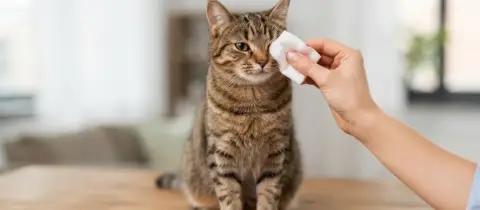
- Wipe crusty discharge gently from the nose with a clean, damp cloth. For the eyes, see our cat eye infection guide.
- Skip supplements, essential oils, steam products and human medicines. Some human medicines are dangerous for cats, so ask your vet before giving anything.
If your cat dislikes the trip, our guide to getting a cat into a carrier can make the vet visit easier.
How can I prevent cat flu?
Vaccination is the main protection. The F3 vaccine covers panleukopaenia, calicivirus and herpesvirus, and RSPCA Australia says vaccinated cats either stay well or are less likely to become seriously ill (RSPCA Australia Knowledgebase, updated 30 April 2025, page read 23 November 2026). It doesn't guarantee a cat won't catch it.
| Age | RSPCA Australia's schedule, as your vet advises |
|---|---|
| Kitten | First dose at 6 to 8 weeks, then every 3 to 4 weeks until 16 to 20 weeks |
| About 6 months | A booster |
| Adult | Boosters generally every 1 to 3 years |
| New cat, history unknown | Two core doses 2 to 4 weeks apart, finished at least a week before the cat comes home to other animals |
Cat flu is also a reason to be careful when a new cat arrives. Our guide to introducing a kitten to an older cat explains how to go slowly.
Useful guides
These help with irritants around the home. They don't treat cat flu or any other cause of sneezing.
- Low-dust cat litter: compares maker dust claims, scent and material. Dust is an irritant, not a diagnosis.
- Best cat litter: the main types side by side.
- Air purifiers for pet hair and dander: may help with airborne irritants, but a purifier can't treat cat flu.
When to see a vet
Emergency, don't wait: open-mouth breathing, blue or pale gums, or collapse. Go to your nearest vet or emergency clinic now and phone ahead.
See a vet promptly if your cat's sneezing comes with any of these:
- not eating (RSPCA Australia advises prompt care)
- blood from the nose
- thick yellow or green discharge
- sneezing that won't stop
- sudden, violent sneezing and pawing at the face
- eye ulcers or squinting (see our cat eye infection guide)
- a kitten, a senior cat or a cat with other illness that is sneezing
- sneezing or a cough that lasts or keeps coming back
Itchy skin as well as sneezing may point to allergy; see our allergies in cats guide.
Frequently asked questions
Is cat sneezing contagious to other cats?
It can be, when the cause is cat flu or another infection. RSPCA Australia says it spreads through saliva, tears, discharge and shared bowls, bedding and trays. Sneezing from dust or an irritant isn't catching. If another cat in the home is also sneezing, call your vet.
Can people catch cat flu?
No. The CDC says the calicivirus and herpesvirus behind cat flu are unrelated to influenza viruses and can't spread to people. Wash your hands between cats anyway, because hands can carry the viruses from one cat to another.
How long does cat flu last?
It varies, and a vet should guide you. The only timeframe RSPCA Australia gives is for isolation: usually about two weeks but sometimes longer. Because many recovered cats stay carriers, signs can return during stress. Don't assume it's over just because your cat looks brighter.
Can a vaccinated cat still get cat flu?
Yes, it's possible. RSPCA Australia says vaccinated cats either don't get sick or are less likely to become seriously ill, which isn't the same as never catching it. Keeping boosters up to date, as your vet advises, gives the best protection.
Can dust, perfume or smoke make a cat sneeze?
Yes. PDSA lists dust, perfume and smoke as irritants, and VCA lists litter dust, smoke and perfumes among possible triggers for cats with asthma. Try to spot what's new in the room. If sneezing keeps happening, a vet can check for other causes.
Do cats carry cat flu for life?
Many do. RSPCA Australia says many cats that recover from cat flu stay lifelong carriers and sometimes shed the virus during stress, such as a stay in a cattery or shelter. Ask your vet how to manage a carrier, especially in a multi-cat home.
How do I stop cat flu spreading in a multi-cat home?
Keep the sick cat in its own room until your vet says it has recovered, which RSPCA Australia says is usually about two weeks but can be longer. Wash its bowls, tray and bedding separately, and wash your hands between cats. Ask your vet whether the others need a booster.
Related guides
- Allergies in cats: signs, common causes and what helps
- Cat eye infection: signs of conjunctivitis and what to do
- Low-dust cat litter: dust-free and unscented picks
- Best cat litter
- Air purifiers for pet hair and dander
- Allergic to cats? Symptoms and how to live with a cat anyway
- How to introduce a kitten to an older cat
- How to get a cat into a carrier for the vet
- Ear mites in cats
Sources
- RSPCA Australia Knowledgebase: What is cat flu and how is it managed?, updated 7 March 2023, read 23 November 2026
- RSPCA Australia Knowledgebase: What vaccinations should my cat receive?, updated 30 April 2025, read 23 November 2026
- PDSA: Sneezing in cats, read 23 November 2026
- CDC: About cat flu, read 23 November 2026
- VCA Animal Hospitals: Asthma and bronchitis in cats, updated 10 October 2025, read 23 November 2026
- VCA Animal Hospitals: Allergies in cats, read 23 November 2026
This guide provides general information and isn't a substitute for veterinary advice. If you're concerned about your cat's sneezing or breathing, speak with your vet.