Quick answer: Ear mite treatment for cats starts with a vet confirming the mites, because itchy ears, head shaking and dark, crumbly debris can also come from wax or an ear infection. Don't put anything in the ear until then. Treatment is usually a vet-chosen medicine, and every cat and dog in contact may need treating too.
If your cat has started scratching at an ear, this guide covers what ear mites look like, what the vet checks, which monthly spot-ons list ear mites on the label, and what to keep out of the ear. For the cleaning side of ear care, see our cat ear cleaner guide.
Quick picks
Revolution Plus for large cats 5.1 to 10 kg, 6 pack
Maker page lists ear mites with other parasites; ask your vet first

Revolution Plus medium pack for 2.6 to 5 kg cats
The pack for cats in the 2.6 to 5 kg band; ask your vet first
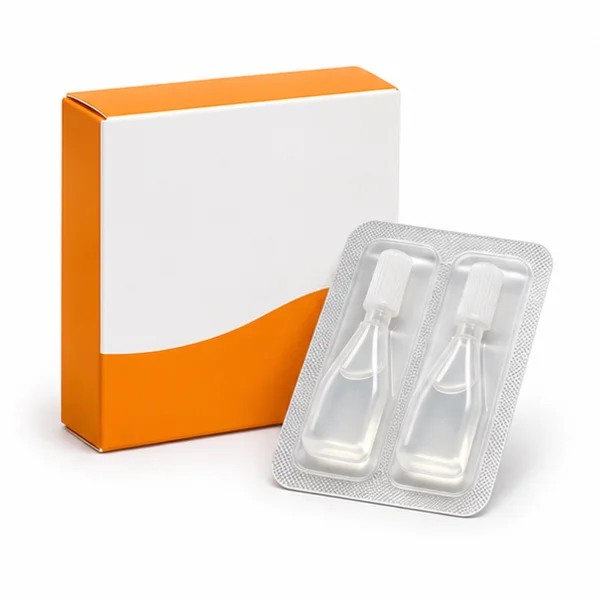
NexGard Spectra Spot-On for cats 2.5 to 7.5 kg, 3 pack
Lists ear mites, from 8 weeks and 0.8 kg; ask your vet first
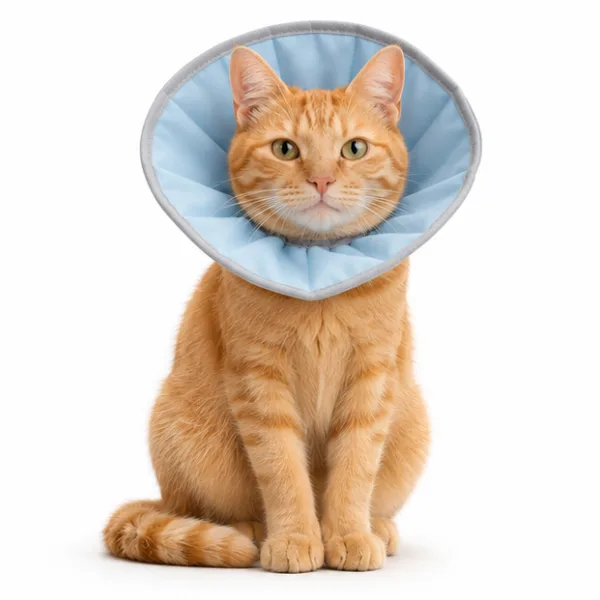
Soft waterproof cat cone collar (H HIDREAM, size L)
Light soft collar with a buckle; only if your vet agrees
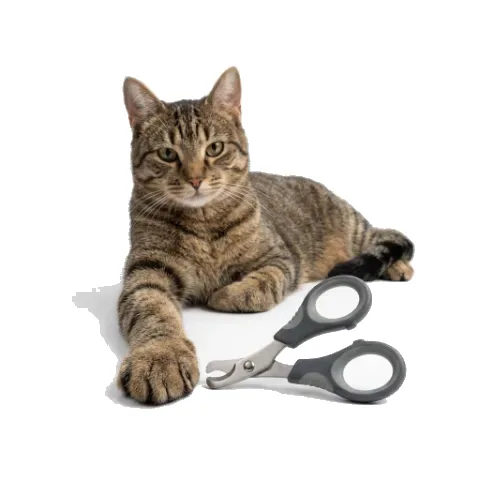
Pet Republique cat nail clipper
Stainless blades and a larger soft grip, if your cat tolerates trimming

BELLA & PAL Cat Carrier, large
Mesh windows, a washable base and a zip that opens from outside only
Soft waterproof cat cone collar (H HIDREAM, size L)
A light soft collar with a buckle and adjustable elastic, for a cat scratching its ears raw, but only if your vet agrees.
Pet Republique cat nail clipper
A scissor-style clipper with stainless blades and a larger soft grip, so you can trim nails to limit scratch damage if your cat tolerates it.
BELLA & PAL Cat Carrier, large
A soft carrier with mesh windows, a washable base and a zip that opens from the outside only, for the trip to the vet.

DownyPaws felt cat cave, 58 x 33 x 30 cm
A cosy spare resting spot while the usual bedding goes through the wash.

ANWA cat recovery suit, 2 pack
A soft alternative to a cone for a cat who scratches at their ears, but only if your vet agrees.
Pictures are illustrations, not the actual products.
More detail on the spot-ons is in Useful gear below. A vet confirms ear mites and chooses the medicine, so these only support that visit.
What do ear mites look like in a cat's ear?
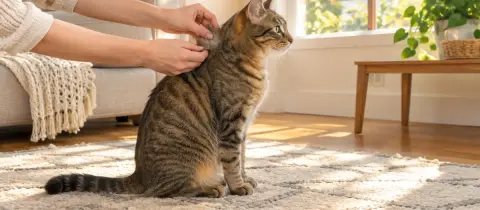
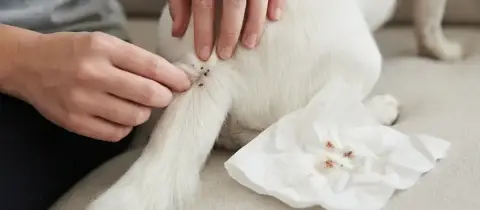
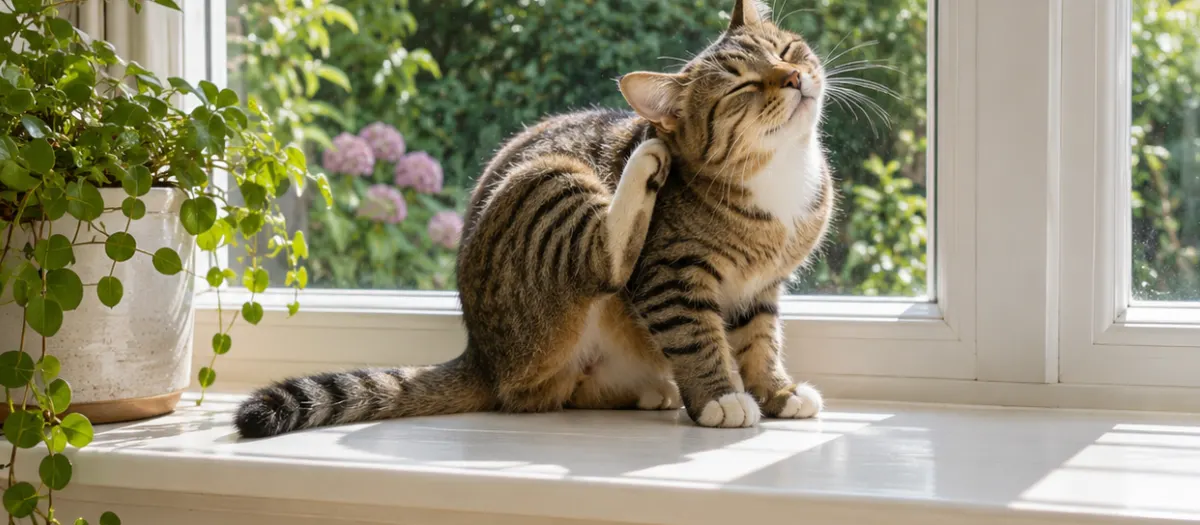
Ear mites usually show up as an itchy cat with dark, crumbly or sticky debris in the ear. Cornell Feline Health Center describes an inflamed outer ear, ears held flat, frequent scratching and head shaking, and dark, foul-smelling wax. Those signs are more consistent with mites, but they are not proof.
Cornell says ear problems are uncommon in cats overall, but when one turns up, ear mites are frequently the diagnosis, and that they are most common in outdoor cats, including those that fight or cuddle closely with other cats. The Merck Veterinary Manual adds that a drooping ear is possible and that the itching varies and may be severe (Cornell Feline Health Center; Merck Veterinary Manual).
Use this table to see why looking isn't enough. It pairs what you may see with what it may be more consistent with. It is not a diagnosis.
| What you see | May be more consistent with | Who can confirm |
|---|---|---|
| Dark, dry, crumbly debris, scratching, head shaking | Ear mites | A vet, with an otoscope or microscope |
| A little light brown wax, no scratching | Normal ear wax | A vet, if you are unsure |
| Yellow or green discharge, a smell, a red or swollen ear | A yeast or bacterial infection (sometimes alongside mites) | A vet, who may take a swab |
| One ear only, head tilted, pain when touched | Something stuck in the ear, a growth, or a deeper ear problem | A vet, promptly |
Why does a vet need to confirm ear mites first?
Because several ear problems look alike, and the right medicine depends on which one it is. VCA Animal Hospitals says a vet confirms mites by seeing them with an otoscope or under a microscope, and that other ear conditions must be ruled out. Secondary yeast or bacterial infections are common and need treating too (VCA Animal Hospitals, updated 28 March 2025, page read 18 November 2026).
The vet also checks the eardrum. The Merck Veterinary Manual says severe cases can produce pus and a torn eardrum, which is a reason to use only what your vet advises.
Waiting has a cost. Cornell says untreated outer ear infection can spread to the middle and inner ear and affect the eardrum, hearing and balance, and that constant scratching can injure the ears and face.
What does ear mite treatment for cats involve?
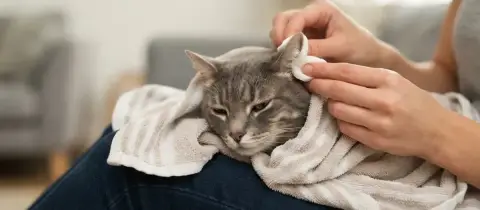
Treatment usually has two parts: cleaning out the debris, then medicine for the mites. Cornell says the ears are cleaned first because the wax and debris shield the mites. VCA says thorough cleaning improves any treatment, and that the vet picks from licensed products, several of which are single-use.
Mite eggs and pupae are not killed by medicine, according to VCA, so the vet may want to re-examine your cat or repeat treatment. VCA says the life cycle takes about three weeks and adults live about two months. Results vary, so follow your vet's schedule rather than a fixed timeline.
Some vets choose a monthly spot-on that also covers fleas and worms. That is the one place a shop-bought product can fit, as a vet's choice rather than a home experiment.
Which spot-ons list ear mites on the label?
Two cat spot-ons sold in Australia list ear mites on the maker's own page, and these are the two we checked: Revolution Plus and NexGard Spectra Spot-On for cats. Both are monthly, from 8 weeks of age, and both cover other parasites too. Ask your vet whether either suits your cat before you buy. A third cat spot-on, Bravecto Plus, lists ear mites on its Amazon listing rather than on a maker page we could open, so it isn't in the table; our flea treatment for cats guide covers it.
| Product | Actives | Form and interval | Minimum age and weight | Weight bands |
|---|---|---|---|---|
| Revolution Plus (Zoetis) | Selamectin and sarolaner | Spot-on to the skin at the neck, monthly | 8 weeks and 1.25 kg | 1.25 to 2.5 kg, 2.6 to 5 kg, 5.1 to 10 kg; over 10 kg a combination of tubes |
| NexGard Spectra Spot-On for cats | Esafoxolaner, eprinomectin and praziquantel | Applicator to the skin at the neck, monthly | 8 weeks and 0.8 kg | 0.8 to 2.4 kg (purple), 2.5 to 7.5 kg (yellow); over 7.5 kg a combination of applicators |
The Zoetis page lists ear mites (Otodectes cynotis) among the parasites the product is for, and the NexGard page says the monthly treatment "treats and controls ear mite infestations and notoedric mange" (Zoetis Australia, Revolution Plus; NexGard Spectra for cats, both read 18 November 2026).
Some points to know before you ask your vet:
- Weigh your cat first. Pick the pack for your cat's weight band, as the label directs, and never split a tube or share one between cats.
- Kittens under the minimum. Under 8 weeks, or under the weight limit, ask your vet. Don't guess.
- Pregnant or breeding cats. The Revolution Plus page says safety hasn't been established during pregnancy, lactation or in animals intended for breeding. The NexGard page states safety has been demonstrated in breeding, pregnant and lactating queens. Ask your vet either way.
- Wet coat. The Zoetis page says not to apply Revolution Plus when the coat is wet.
- Isoxazoline note. Both products belong to the isoxazoline class (the FDA's list names Revolution Plus and the cat Spectra spot-on under its US name, NexGard Combo). The US FDA says it considers the class safe and effective for dogs and cats, but it has been associated with muscle tremors, loss of coordination and seizures in some animals, including animals with no history of seizures, so talk to your vet about your pet's medical history first (FDA fact sheet, content current 8 August 2023).
- Never use a dog product on a cat. International Cat Care says permethrin, found in some spot-on dog flea products, is highly toxic to cats and can cause serious illness and even death (International Cat Care, updated 26 September 2025). Our flea dirt guide explains the warning in full.
For the full flea comparison, see our flea treatment for cats guide.
What should I not put in my cat's ear?
Nothing, until your vet says what. PDSA says cleaning may remove some mites, but treating them properly needs medication as well (PDSA, January 2023). The same Merck article on cat mites says not to use an insecticide on your cat without your vet's approval. The list below is our own reading of the vet sources on this page.
| Don't use | Why |
|---|---|
| Cotton buds or swabs | PDSA says they can push dirt in and pop the eardrum if pushed too far |
| A dog ear product | Dog and cat products differ, and some insecticides poison cats |
| Essential oils, tea tree or garlic | They can poison cats and can irritate a sore ear |
| Oils from the kitchen or bathroom | Cornell mentions oils as an older remedy, but we don't recommend them: they are slow, messy and can hide the real problem |
| Human ear drops or creams | Some are unsafe for cats, and the eardrum may not be intact |
| Hydrogen peroxide, vinegar or alcohol | They can sting and irritate an inflamed ear |
| A flea spot-on bought for another pet | A wrong product can be dangerous, and a vet should pick it |
If your vet has asked you to clean at home, our cat ear cleaner guide covers what to look for. Use only the product your vet names.
What can I do while waiting for the vet appointment?
Keep your hands out of the ear, book the visit, and stop other pets sharing bedding until the vet has looked. Don't clean deep or try drops. Gently trim your cat's nails if it tolerates that, because scratching can cause cuts and swelling.
A soft cone may help if your cat is scratching its ears raw, but only if your vet agrees. See our cat cone guide. Our nail clipper guide and how to get a cat into a carrier can make the trip easier.
Do other pets and the home need treating?
Yes, other pets in contact may need checking or treating. The Merck Veterinary Manual says animals in contact with an infested cat should also be treated, and VCA says mites spread by direct contact between cats, dogs and ferrets. Your vet will advise on each animal.
Treatment is aimed at the animals. VCA says no product is licensed for treating the house for ear mites, though flea-control products are often effective, so ask your vet whether anything is needed at home and treat the bedding wash below as a sensible extra. Use this plan:
| Step | What to do |
|---|---|
| 1 | Book one visit and mention every pet in contact |
| 2 | Treat all pets as your vet directs, each with its own product for its species |
| 3 | Wash bedding, blankets and soft toys in hot water, as a sensible extra |
| 4 | Keep a new or sick cat apart until a vet has checked its ears |
| 5 | Go back for the recheck if your vet asks for one |
Useful gear
Gear only supports what your vet advises. Both products below list ear mites on the maker's page, so they are options to talk through with your vet, not a do-it-yourself cure.
- Revolution Plus for large cats 5.1 to 10 kg, 6 pack: a monthly spot-on whose maker page lists ear mites alongside fleas, paralysis ticks, heartworm, roundworm, hookworm and lice. Choose the pack for your cat's weight band, and ask your vet first; there is also a medium pack for 2.6 to 5 kg cats. Compare it with other options in our flea treatment for cats guide.
- NexGard Spectra Spot-On for cats 2.5 to 7.5 kg, 3 pack: a monthly spot-on that lists ear mites, notoedric mange and several internal parasites, from 8 weeks and 0.8 kg. Our flea treatment for cats guide compares it too.
Vet clinics and pet shops also sell cat parasite treatments, and your vet can supply the right product and weight band.
When to see a vet
Book a vet visit if your cat has any of these:
- scratching at the ears, head shaking or ears held flat
- dark, crumbly or smelly debris in the ear
- a red, swollen or sore ear, or a swelling on the ear flap
- scratches or scabs around the ears and face
- a kitten with any of these signs
Go the same day for a head tilt, wobbling, loss of balance, apparent deafness, pus, bleeding or obvious pain. If your cat has licked or been given an essential oil or another toxin, call your vet and the Animal Poisons Helpline on 1300 869 738 (24/7). See our cat guides for more.
Frequently asked questions
How long does it take to get rid of ear mites in cats?
It varies, and there's no fixed timeline. VCA says no medicine kills the eggs or pupae, so treatment targets the adult and larval mites and your vet may re-examine your cat to make sure they have gone. Some products are single-use and others are repeated, so follow your vet's schedule and go back if the signs return.
Can humans get ear mites from cats?
Rarely. Ear mites live on cats, dogs and ferrets, not people. VCA says someone living with an infested pet may get a temporary, itchy rash, and that it clears once the mites are gone from the pets. See your doctor about any rash, and your vet about the cat.
Why does my cat's ear still look dirty after treatment?
Debris can take time to clear, and an infection may still be present. VCA says yeast or bacterial infections are common alongside mites and need treating too. If the ear looks dark, smells or your cat is still scratching, go back to your vet.
Can a kitten have ear mite treatment?
Only on your vet's advice. The Zoetis page says Revolution Plus isn't recommended for kittens under 8 weeks or 1.25 kg, and the NexGard page says Spectra for cats is for kittens from 8 weeks and at least 0.8 kg. A younger or lighter kitten needs a vet to choose something suitable, and never a split tube.
Are ear mites painful for cats?
They are very itchy and can become sore. Cornell says constant scratching can injure the ears and face and lead to infection. Cats may shake their heads or hold their ears flat. Your vet can treat the mites and soothe the ear.
Can ear mites cause deafness?
Untreated, they can contribute to it. Cornell says an outer ear infection left alone can progress to the middle and inner ear, damage the eardrum and permanently affect hearing and balance, and it advises seeking veterinary care without delay. Treated early, most cats recover well, but results vary, so follow your vet's plan.
How did my indoor cat get ear mites?
Ear mites spread by close contact, so a new kitten, a visiting cat or a dog with mites may be the source. Cornell says outdoor cats are the most commonly affected, so indoor cases are less common, but not impossible.
Related guides
- Best cat ear cleaner
- Best flea treatment for cats
- Cat cone: soft, plastic and donut cones
- Flea dirt on dogs and cats
- Cat grooming at home
- Best cat nail clippers
- Best flea comb for cats and dogs
Sources
- Cornell Feline Health Center: Ear mites, tiny critters that can pose a major threat, read 18 November 2026
- VCA Animal Hospitals: Ear mites in cats and dogs, updated 28 March 2025, read 18 November 2026
- Merck Veterinary Manual: Mite infestation in cats, read 18 November 2026
- International Cat Care: Permethrin poisoning, updated 26 September 2025, read 19 November 2026
- PDSA: How to clean your cat's ears, January 2023, read 19 November 2026
- Zoetis Australia: Revolution Plus, read 18 November 2026
- NexGard Spectra for cats, read 18 November 2026
- US FDA: isoxazoline fact sheet, content current 8 August 2023
This guide provides general information and isn't a substitute for veterinary advice. If you're concerned about your cat's ears or health, speak with your vet.