Best cat carriers in Australia (2026): top opening, large cats and nervous cats
By Anish PuriUpdated 13 Nov 202616 min readResearched, not tested by us
Research guide. WhiskerFinds may earn a commission from links, at no extra cost to you.
Quick answer: The best cat carrier for most cats, nervous ones included, is a sturdy carrier that opens from the top as well as the front. Our top pick is the Amazon Basics 2-Door Top Load Hard-Sided Carrier. For a large cat up to 10 kg, the AUSSIE FURBABY soft carrier opens from the top and the side.
Illustration, not the actual product
Our top pickAmazon Basics 2-Door Top Load Hard-Sided Carrier, 58 cm
A nervous cat does better when the carrier is easy to load, easy to open at the vet and feels like part of home. This guide compares four carriers on Amazon Australia and explains how to pick the right type and size. For the training side, see our guide on how to get a cat into a carrier. Bringing a cat home after surgery? Our cat cone guide covers the first days.
Quick picks
Our top pickBest overall
Amazon Basics 2-Door Top Load Hard-Sided Carrier, 58 cm
Pictures are illustrations, not the actual products.
Pet shops, vets and discount department stores sell cat carriers too. Wherever you buy, look for a top opening and a listed size and weight limit. If you'd like to add a calming product to the routine, our Feliway for cats guide covers what the evidence says.
What makes a good cat carrier for an anxious cat?
A good cat carrier for an anxious cat is strong, well ventilated and opens from the top as well as the front. VCA Animal Hospitals suggests a carrier that opens from the top or the front, and says taking the top half off lets the vet reach your cat while they stay in the bottom half (VCA Animal Hospitals, updated 7 November 2025).
What to look for:
Top opening: you can lower a cat in rather than push them through a small front door. RSPCA Victoria also suggests a top-loading carrier if getting a cat in is a struggle (RSPCA Victoria, page undated, checked 22 October 2026).
A top half that comes off: RSPCA Victoria notes that many front-loading carriers have a screw-on top that can be removed. International Cat Care recommends a solid plastic carrier with a secure door, ventilation slats and a removable top half, so your vet can examine your cat more easily (International Cat Care, updated 26 September 2025). Always check how a carrier comes apart before you buy.
Strong and easy to clean: the British Veterinary Nursing Association recommends a strong carrier and warns against flimsy cardboard ones (BVNA, Alex Taylor RVN, 20 July 2020).
Familiar bedding: a soft towel or blanket that smells of home makes the carrier more reassuring, according to VCA.
A hard carrier is usually the safer first choice for vet trips, because it holds its shape and often opens from the top. A soft carrier is lighter and easier to carry, and can suit a calm cat or a short trip. RSPCA Victoria notes that soft-sided carriers are lighter than hard-sided ones. If you want a soft carrier that packs flat, see our collapsible pet carrier guide.
Swipe sideways to see every column
Type
Good for
Watch out for
Hard-sided
Car trips, vet visits, a carrier that stays out as a den
Bulkier to store; check whether the top comes off
Soft-sided
Larger cats on short trips, easy carrying, storage
Less rigid in a car; check for a stiff base and good mesh
We wouldn't use one for the car or the vet: there's no rigid base or secure door
As a rule of thumb, a sturdy hard-sided carrier suits regular car trips, and a soft carrier suits air travel in the cabin, where airlines set the size. If you want a carrier you wear on your back, see our best cat backpack carriers guide.
Our picks in detail
1. Amazon Basics 2-Door Top Load Hard-Sided Carrier, 58 cm: best overall
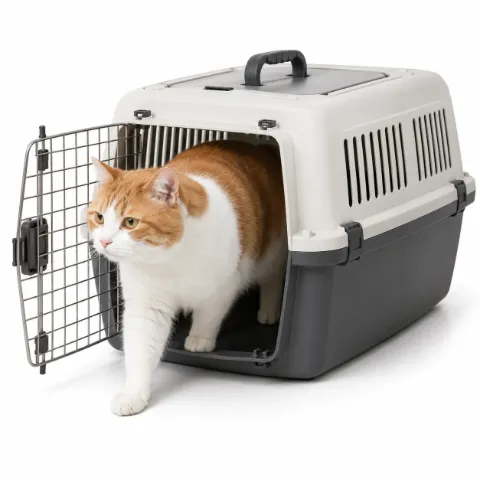
A plastic carrier with steel wire doors, a door on the front and another on top. The top door swings open to the left or right, and there's a handle on top. The top and bottom are held together with screws, and the listing shows ventilation on the sides, top and back with spring latches on the doors. It measures 58 x 38 x 33 cm. The listing gives a weight range of 5.44 to 9.07 kg (about 5.5 to 9 kg).
Pros: front and top doors; top door can swing either way; ventilation on several sides
Cons: the listing doesn't say the top half comes off, so check before relying on that; the weight range suggests it's meant for average-sized cats
Best for: most cats, first-time carrier buyers and nervous cats who are easier to lower in from above
Skip it if: your cat is very large, or you want something soft to carry on a shoulder
2. Petmate Two Door Top Load Kennel, 19 in: best for kittens and small cats
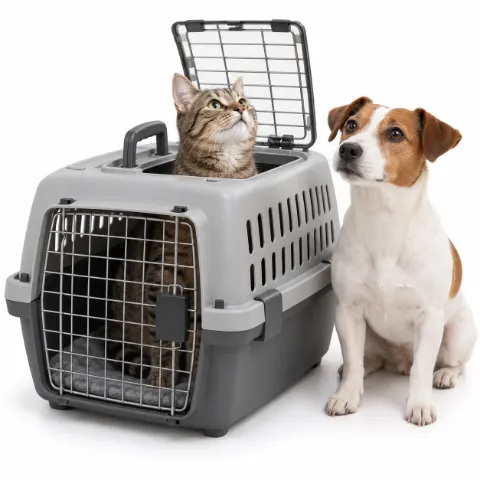
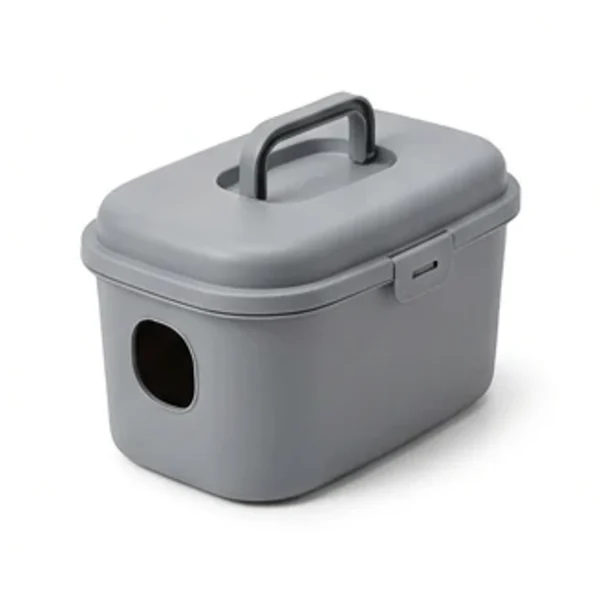
A hard carrier that loads from the top or the front, about 49 x 48 x 25 cm per the listing, with a top door that lets you lower a cat in with both hands. The listing says both doors are steel with easy-squeeze latches, that it has ventilation on all sides and a comfort-grip handle, and that it suits pets up to about 4.5 kg (10 lb). It comes in assorted colours, so the one you receive may differ from the picture. The listing says it meets most airline cargo specifications; if you plan to fly, check with your airline.
Pros: top and front doors; steel doors with squeeze latches; ventilation on all sides
Cons: listed for pets up to about 4.5 kg, so most adult cats outgrow it; about 25 cm high, so a tall cat may feel cramped; you don't choose the colour
Best for: kittens and small cats, and a first carrier that doubles as a den at home
Skip it if: your cat is heavier than about 4.5 kg, or you want one carrier for life
3. BELLA & PAL Cat Carrier, large: best soft carrier
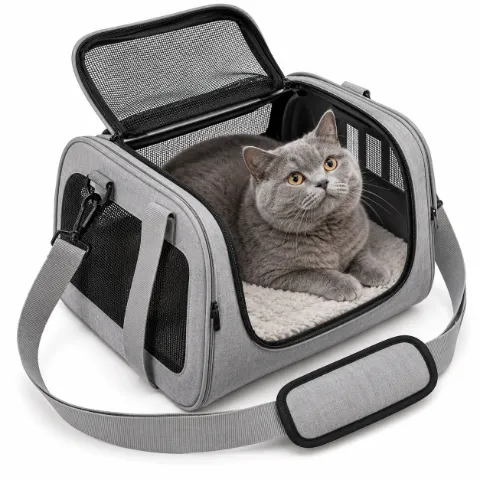
A polyester carrier, 50 x 31 x 31 cm, with mesh on the top and sides. The listing says it suits cats and dogs under 10 kg. It has a padded strap and handle, a removable washable base with a faux lambskin side, and side and ID pockets. The zip is self-locking and only opens from outside, and an inner leash clips to your cat's harness (never a collar). The listing says this large size is not airline approved.
Pros: washable base; mesh on the top and sides; zip opens only from the outside; inner leash for a harness; light to carry
Cons: the listing says this size isn't airline approved; not as rigid as a hard carrier; the listing says "waterproof" but we can't verify it
Best for: calm cats on short trips, and owners who want something light to carry
Skip it if: your cat is big, or you'd prefer a hard shell that can come apart at the vet
4. AUSSIE FURBABY Cat Carrier for Large Cats: best for large cats
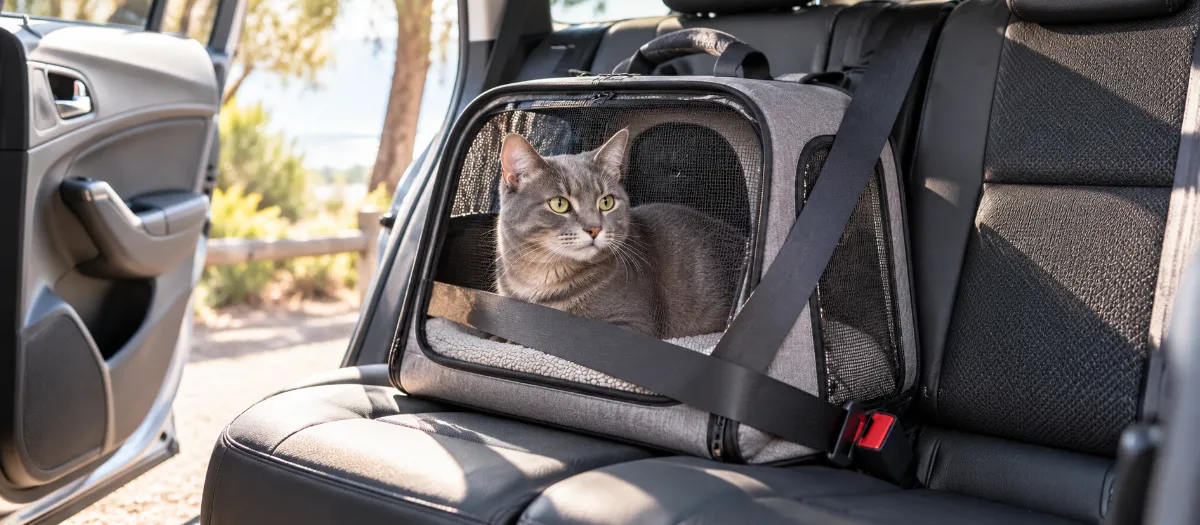
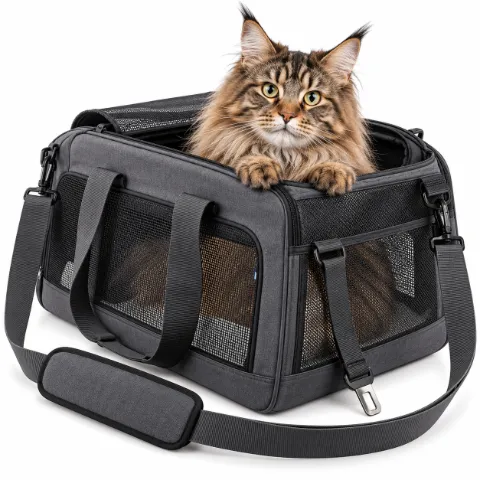
A soft carrier for larger cats, 51 x 33 x 33 cm and up to 10 kg on the listing. It opens on the top and the side, has mesh sides, and the listing says it holds its shape. There are seat belt safety straps, carry and shoulder straps, and a padded, removable, washable base. It's collapsible for storage.
Pros: opens top and side; seat belt straps; padded washable base; collapsible
Cons: soft sides are less rigid than a hard shell; the carrier is only 33 cm high, so a very tall cat may need more room
Best for: large or heavy cats who need a carrier that's secured with a seat belt
Skip it if: your cat is over 10 kg, or you want a plastic carrier that wipes clean
What is the best top opening cat carrier?
The Amazon Basics 2-Door Top Load is the top-opening carrier we'd buy first: a 58 cm hard shell with a top door that swings either way, listed for cats of about 5.5 to 9 kg. For a kitten or small cat under about 4.5 kg, the Petmate 19 in kennel also loads from the top.
What size cat carrier does my cat need?
Your cat should be able to stand, turn around and lie flat in the carrier, without so much room that they slide around. Measure your cat's height and length before you buy, and compare them with the carrier's inside size.
Then check the weight limit on the listing. Go by your cat's real size and weight, because a carrier's length and its stated weight limit don't always match. The Petmate 19 in is only about 49 cm long and listed for pets up to about 4.5 kg, so it suits kittens and small cats, not a big cat. For a large cat, the AUSSIE FURBABY lists up to 10 kg.
To measure, have your cat standing: length from the nose to the base of the tail, and height from the floor to the top of the head. Then match their weight to the listed limits:
Swipe sideways to see every column
Your cat's weight
Picks whose listed limit covers it
Check
Under 4.5 kg
All four (the Amazon Basics lists about 5.5 kg as its lower figure, so a small cat may slide about in it)
Length still matters: your cat should be able to turn around
4.5 to 9 kg
Amazon Basics (about 5.5 to 9 kg), BELLA & PAL (under 10 kg), AUSSIE FURBABY (up to 10 kg)
Not the Petmate
9 to 10 kg
BELLA & PAL (under 10 kg), AUSSIE FURBABY (up to 10 kg)
Not the Amazon Basics or the Petmate
Over 10 kg
None of our picks
Look for a larger hard kennel with a stated limit above your cat's weight
Weight limits are taken from each Amazon Australia listing, checked on 13 Nov 2026.
Cat carriers compared
Details from each Amazon Australia listing, checked on 13 Nov 2026.
We searched Amazon Australia for cat carriers, then shortlisted ones that met all of these checks:
Well rated: a strong average rating with plenty of buyer reviews.
No red flags: no pattern of poor reviews, safety complaints or listing problems.
Available on Amazon Australia when we checked.
Opens from the top as well as the front or side.
Size and weight limit shown on the listing.
Ventilation on more than one side.
These are researched picks, not products we've personally tested. We compared the specifications and features shown on each Amazon Australia listing, checked on 13 Nov 2026. We didn't accept payment from any brand, and no brand saw this page before it was published.
Left out this time: carriers we've already featured elsewhere as the main pick, a hard carrier that wasn't available on Amazon Australia when we checked, and small soft bags made for kittens or toy dogs.
How do I get my cat used to the carrier?
Leave the carrier out at home so it becomes a familiar bed, with a towel your cat already knows, and add treats and play near and inside it. Go slowly. RSPCA Victoria advises against yelling at or chasing a cat into a carrier, because they learn to link it with fear (RSPCA Victoria, checked 22 October 2026).
VCA also suggests keeping the carrier out so your cat can sleep and eat in it, with treats or toys to build comfort. Short practice trips help too. Our carrier guide walks through the steps. A hiding spot at home, such as a cave bed, can help a cat feel safe, and our cat enrichment guide has ideas.
How do I use a cat carrier in the car?
Never let a cat loose in the car. Put the carrier on the back seat and secure it with the seat belt, or place it in the footwell behind a front seat. BVNA says the footwell behind the passenger seat has less movement than the front seat, and that if a carrier has to go on a seat, the belt should go through the handle rather than around the front so it can't crush the carrier (BVNA, 20 July 2020).
If a carrier ever has to go on the front seat, BVNA says to turn off the airbag. We'd avoid that if you can. A light towel over part of the carrier can help a cat who settles better unseen, and BVNA suggests leaving gaps so air reaches them.
Never leave a cat in a parked car, even briefly. RSPCA Australia says never to leave a pet in a car, that parking in the shade or leaving the windows open doesn't really help, and that an animal can die in a hot car in as little as six minutes (RSPCA Australia, 20 January 2021). PDSA says cats most often get heatstroke when shut in hot, poorly ventilated places such as cars, and that this applies even with the windows open (PDSA, published September 2023). RSPCA Queensland says pets can still overheat with the windows down or in the shade (RSPCA Queensland, 24 March 2026). For more on heat, see how to keep your cat cool in summer.
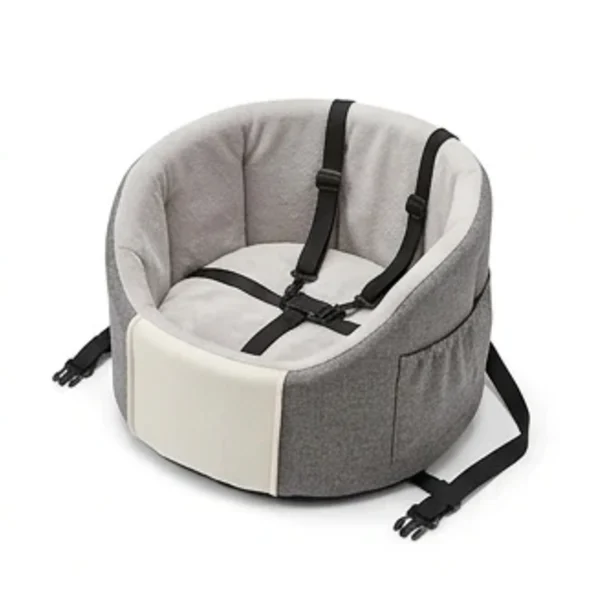
A cat car seat is no substitute for a belted carrier; our cat car seat guide explains why.
Can I fly with my cat in Australia?
For carriers sized to the airline rules, see our airline approved pet carriers guide. Yes, but how depends on the airline, and the rules are strict. Virgin Australia carries small cats and dogs in the cabin on some domestic routes, in a soft carrier under the seat. Qantas carries pets in a special area of the hold, booked through Qantas Freight. Check the airline's own page before you buy a carrier.
Virgin Australia's Pets in Cabin page, read on 15 November 2026, lists flights from Melbourne, Sunshine Coast, Gold Coast, Adelaide and Cairns. It says:
Weight: your cat and the carrier together must weigh no more than 8 kg.
Carrier: it must be soft-sided, well ventilated, escape-proof and leak-proof, no bigger than 44 x 28 x 28 cm, and lined with an absorbent mat. Virgin measures carriers at the airport and turns away ones that don't fit.
Vet certificate: needed for some pets, including flat-faced breeds, kittens aged 8 to 12 weeks, cats over 12 and cats with a medical condition.
The four carriers on this page are all longer than 44 cm, so none of them meets Virgin's cabin limit. Virgin also says the risks of flying can be higher for some animals because of changes in altitude, cabin pressure and temperature, and suggests a vet visit before you travel.
Qantas says pets travel in an area of the hold where the temperature and noise are similar to the cabin, and that you should book your pet's flight before your own (Qantas, page read 15 November 2026). Ask Qantas Freight which carrier it accepts; the Petmate listing says it meets most airline cargo specifications.
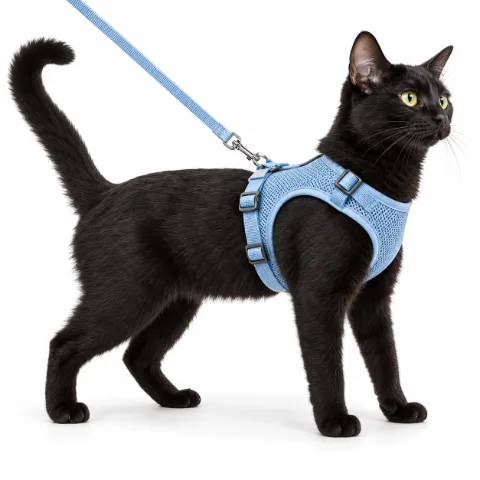
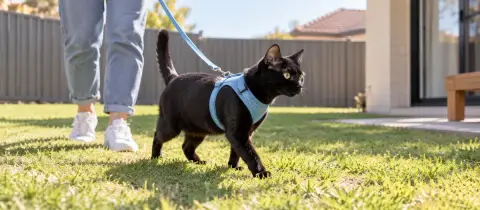
If your cat will also walk on a lead one day, a harness is the safe option. Our best cat harness guide explains why.
When to see your vet
Book a vet check first if a cat suddenly starts hiding, stops eating, becomes aggressive or pees outside the tray. These can have medical causes. International Cat Care, updated 26 September 2025, says a cat that starts soiling indoors will likely need a vet examination to rule out medical causes, and Cornell advises a thorough physical examination for a cat that starts going outside the tray (Cornell Feline Health Center, updated January 2015). A calming product is not a substitute for that check.
Call your vet straight away if your cat has been in a hot car or carrier and is panting, restless, drooling, lethargic, wobbly or collapses. These can be signs of heatstroke, which is an emergency. RSPCA Australia, 20 January 2021, lists relentless panting, drooling, agitation or restlessness, very red or pale gums, vomiting, lethargy and weakness among the signs. Move them somewhere cool and shaded on the way. Also seek help for any injury after a fall or a crash.
Frequently asked questions
What is the best type of carrier for a cat?
A sturdy carrier that opens from the top as well as the front suits most cats, especially nervous ones. A top half that can be removed helps at the vet. Hard carriers hold their shape in the car. Soft ones are lighter. Choose by your cat's size and temperament.
Are top-loading cat carriers better?
For many cats, yes. VCA suggests a carrier that opens from the top or the front. Lowering a cat in from above can be easier and calmer than pushing them through a small door. It also helps at the clinic. See what makes a good carrier.
Hard or soft carrier for the vet?
A hard carrier is usually the easier choice for vet visits, as it often has a top door or a top half that comes off. A soft carrier can work for calm cats and short trips. Check the opening and the base. The table in hard or soft cat carrier compares them.
What size carrier for a large cat?
Pick a carrier where your cat can stand, turn around and lie down, then check the listing's weight limit. For large cats, the AUSSIE FURBABY lists up to 10 kg. Measure your cat's height and length first. Our size section has more.
What kind of carrier is best for kittens?
A hard carrier with a top door, lined with a towel from home, so you can lower a wriggly kitten in rather than push them through a front door. The Petmate 19 in suits kittens and small cats; if you'd rather buy once, the Amazon Basics 58 cm will still fit the adult cat. Leave it out as a bed from day one.
How long can a cat stay in a carrier?
The sources we read don't give a fixed limit, so treat it as a car-trip tool, not a crate. On a longer drive, stop every couple of hours in a safe spot to offer water and check on your cat without opening the door in traffic, and never leave the carrier in a parked car. For flights, follow the airline.
Is a backpack or a carrier better for a cat?
For vet visits and car trips, a sturdy carrier that opens from the top is usually the better choice, because the vet can examine your cat in the base. A backpack suits a calm cat on a short outing when a hard carrier isn't practical. Our cat backpack guide compares the two.
Can two cats share a carrier?
We'd use one carrier per cat, so each has room and can be handled separately. Even cats who get along can behave differently when stressed. Two carriers also mean one upset cat can't set the other off.
How do I make my cat like the carrier?
Leave it out at home as a bed with familiar bedding, and put treats and play near and inside it. Go slowly and never chase or force your cat in. Results vary from cat to cat. Our step-by-step guide covers the whole routine.
Product details from each linked Amazon Australia listing, checked on 13 Nov 2026.
This guide provides general information and isn't a substitute for veterinary advice. If you're concerned about your cat's travel or vet visits, speak with your vet.