Pet carriers with wheels: rolling carriers for cats and small dogs
By Anish PuriUpdated 23 Nov 202611 min readResearched, not tested by us
Research guide. WhiskerFinds may earn a commission from links, at no extra cost to you.
Quick answer: A pet carrier with wheels is a soft carrier on a trolley base with a telescopic handle, and the Morpilot is our top pick for a small cat or dog on smooth ground. Weight limits are small, from 2.7 kg to 7.3 kg on the listings that state a believable one, so size by your pet's measurements first. Carry it over steps and kerbs.
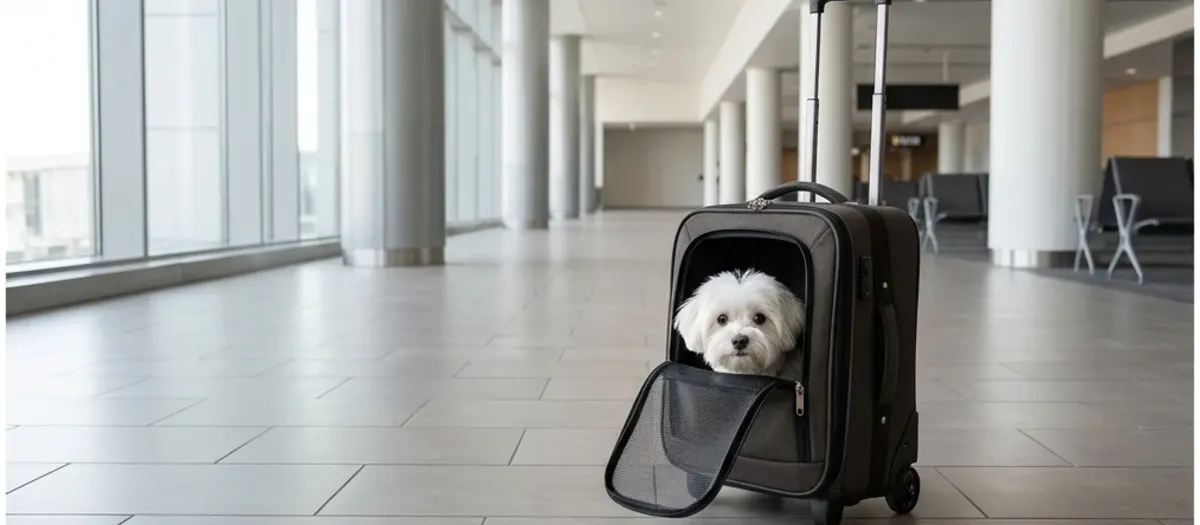
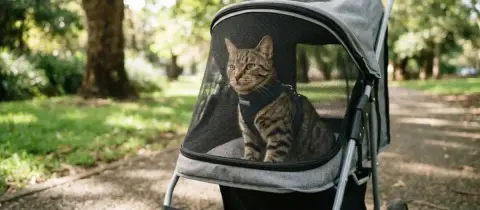
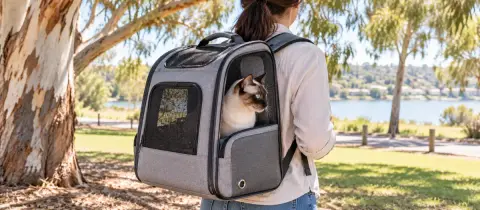
Illustration, not the actual product
Our top pickMorpilot Cat Carrier with Wheels, dark grey
Rolling carriers take the strain off your arm on a long walk to the vet or through an airport. They also have real limits: wheels need smooth ground, the weight limits are low, and Cats Protection, a UK cat charity, prefers a sturdy handheld carrier. This guide compares four wheeled carriers on Amazon Australia by size in cm, weight limit in kg and whether the trolley comes off. If you want a plain hard carrier, start with our cat carrier guide.
Only four true wheeled listings passed our checks, so this is a short list on purpose. Four-wheel strollers are a different tool, and our cat pram guide and dog pram guide cover them.
Quick picks
Our top pickBest overall
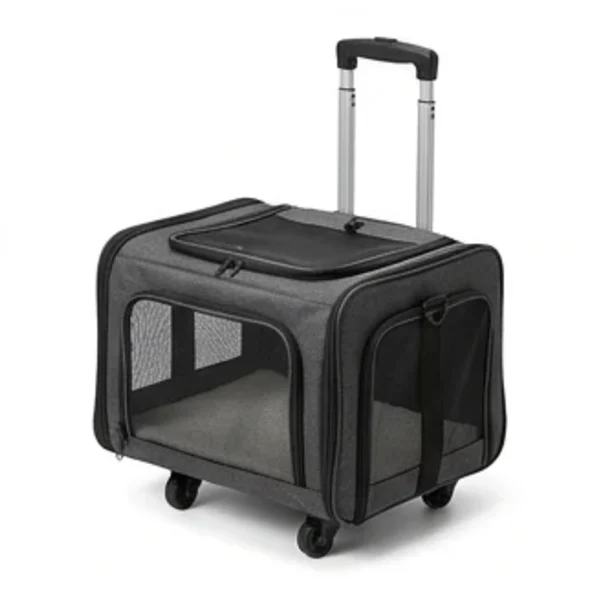
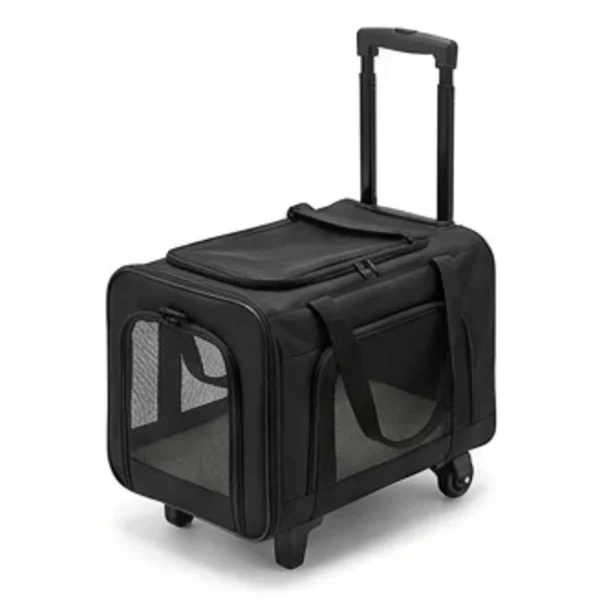
Morpilot Cat Carrier with Wheels, dark grey
Three-stage handle, swivel wheels, and a base that detaches into a plain bag
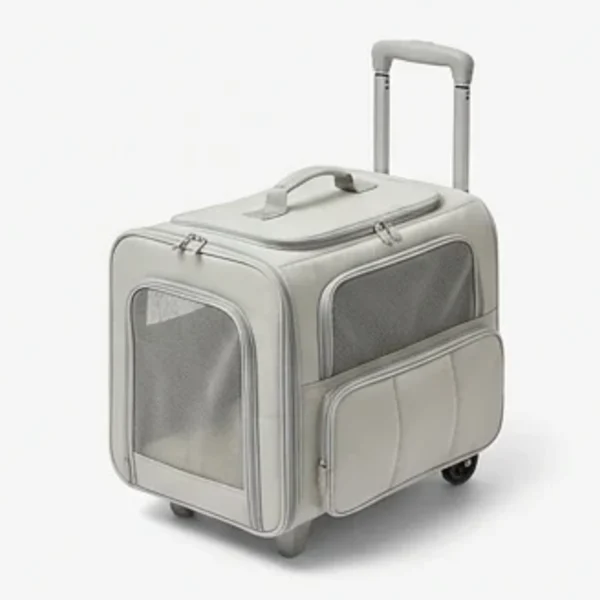
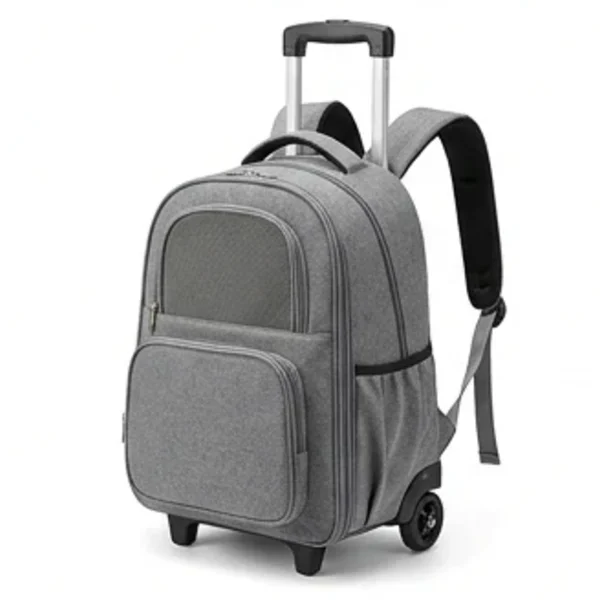
Pictures are illustrations, not the actual products.
Are carriers with wheels good for cats?
They can be, for short, smooth routes with a calm cat. Cats Protection, a UK cat charity, prefers a larger, sturdy handheld carrier and says cats shouldn't be carried for long periods or taken somewhere unfamiliar unless their health requires it (Cats Protection, "How to choose and use a cat carrier", page read 24 November 2026).
It recommends a sturdy plastic or metal wire model, and every pick here is a soft bag, so see our cat carrier guide if you want a hard one. A rolling carrier suits an essential trip, such as the vet, better than a day out. The same page wants openings on at least two sides. Three of the four listings state two or more; the Morpilot listing doesn't say, so check its pictures. None of the listings claims that wheels calm a cat, and we make no such claim either. The Morpilot listing calls the ride "stable, quiet"; that is the maker's wording.
Measure your pet, not just its weight. Sherpa's listing says the same: pick the size on your pet's measurements first, then check the weight limit. Measure from nose to the base of the tail, and from floor to the top of the head or shoulder, then compare with the sizes in the table below. These are the listings' outside sizes, so the inside is a little smaller. The Morpilot size field is marked "wheeled", but it matches the 17 x 11 x 11 in bag size in the listing text, so expect the trolley to add height on top.
The listing says a double-bar trolley handle with a three-stage push-button telescopic handle, 360-degree swivel wheels, an independent metal base and a removable chassis. Once the chassis comes off, the bag works as a separate carrier. It also lists a safety strap, a lockable zipper, a rear pocket, and a shoulder strap and cushion in the box.
Size is 43 x 28 x 28 cm (17 x 11 x 11 in) wheeled per the size field, 2 kg, and a limit of 14 lb (6.4 kg). The listing says it fits under front cabin seats once the wheels or bottom panel are removed, and to confirm with the airline. It's the pick with the most stated trolley detail, and the one that works best as a plain bag when you take the base off.
Pros: three-stage handle; swivel wheels; base detaches into a bag; shoulder strap and cushion included
Cons: 6.4 kg limit; the wheels add to the size, so airline fit is without them; entries aren't stated
Best for: a small cat or dog on a longer walk over smooth ground, such as to the vet
Skip it if: your pet is over 6.4 kg, or your route has lots of steps
2. BELLA & PAL Pet Carrier with Wheels, Sky Sailor: best for swapping between rolling and carrying
A soft carrier with a detachable trolley base. The listing says 45 x 28 x 28 cm (17.7 x 11 x 11 in) without the trolley base, and five carry modes: roll, hand, shoulder strap, suitcase strap and car seat. It lists top, front and side entry with auto-lock zippers, an interior tether for a harness, a steel frame with fibreglass rods, and 600D water-repellent fabric. The listing says it folds after the trolley comes off.
This model is also on our airline approved pet carrier guide, where we measure it against Virgin Australia's limit. Remember the 15 kg weight field we flagged on this page: it doesn't match the size, so go by your pet's measurements and ask the maker if you're unsure.
Pros: three entries; frame stated; five carry modes; folds after the base comes off
Cons: the weight field says 15 kg and doesn't match the carrier's size; handle stages aren't stated
Best for: vet trips and errands where you swap between rolling and carrying
Skip it if: you want a clear weight limit from the listing
3. Lollimeow Pet Rolling Carrier: best wheels plus backpack
The listing says it converts between a backpack, a wheeled carrier, a car seat and a bed. It has three-sided mesh, roll-down window shades, a strap storage layer and a telescopic handle with side pouches. Size is 39.4 x 27.9 x 43.2 cm (15.5 x 11 x 17 in), the rod extends to about 51 cm, and the limit is 16 lb (7.3 kg). It lists the item at 0.45 kg.
It is tall and narrow, so check your pet can lie down in it. Cats Protection generally doesn't recommend backpack carriers, other than a sturdy, mesh-sided one for short essential trips, so treat the backpack mode as a short-trip option. Our cat backpack carrier guide goes into it.
Pros: highest limit here, 7.3 kg; mesh on three sides; window shades; converts for stairs
Cons: tall and narrow shape; charity guidance is cautious about backpack carriers; no detachable base stated
Best for: a small cat or dog who needs both a roller and a backpack
Skip it if: your pet won't settle in a tall, narrow space
4. Sherpa on Wheels Pet Carrier: best for a very small pet
The listing says recessed wheels, a shoulder strap that converts to a padded pull handle, an inside leash ring, four mesh panels, roll-down privacy flaps, and top and side entry with locking zippers. There is a machine-washable faux lambswool liner and a "Pet on Board" flag.
Size is 53.3 x 31.1 x 26.7 cm (21 x 12.25 x 10.5 in), 2.5 kg, with a weight field of 6 lb (2.7 kg). The description says the pet won't have room to move around, stand or sit up with the top closed, so this is a short-trip carrier. It doesn't match the "lie down, stand and turn around" test on this page for a bigger cat.
Pros: recessed wheels; liner washes; two entries; leash ring inside
Cons: 2.7 kg limit; snug by the listing's own description; no detachable trolley
Best for: a kitten or very small pet on a short trip
Skip it if: your pet is over 2.7 kg or needs room to stand
Pet carriers with wheels compared
Specs from each Amazon Australia listing, checked on 23 Nov 2026. "Not stated" means the listing doesn't say.
Swipe sideways to see every column
Carrier
Size (cm)
Weight limit (kg)
Handle
Trolley detaches
Entries stated
Morpilot
43 x 28 x 28 wheeled (listing field); 43.2 x 27.9 x 27.9 item size
6.4
Three-stage telescopic
Yes, chassis and wheels
Not stated
BELLA & PAL
45 x 28 x 28 without the trolley base
See the note below
Telescopic
Yes
Top, front, side
Lollimeow
39.4 x 27.9 x 43.2; rod extends to about 51
7.3
Multi-stage telescopic
Not stated
Front and side
Sherpa on Wheels
53.3 x 31.1 x 26.7
2.7
Shoulder strap converts to a pull handle
No, recessed wheels
Top and side
The weight limits come from the listings' limit fields. Inches converted to cm from the listing text where the listing gives both.
What do the listings leave unclear?
Three listings need a closer read before you buy.
BELLA & PAL: the weight field says 15 kg. That doesn't fit a 45 x 28 x 28 cm soft carrier, and the listing text gives no other limit. Don't rely on 15 kg. Go by the size and your pet's measurements, and ask the maker if you're close to the limit.
Sherpa on Wheels: the weight field says 6 lb (2.7 kg), and the description says the pet won't have room to move around, stand or sit up with the top closed. It is a snug, short-trip carrier for a small pet. The 6 lb figure also looks low for a carrier 53 cm long, so confirm the limit with the maker if your pet is heavier.
Morpilot: the size field says "wheeled", but the text says it fits under front cabin seats once the wheels or bottom panel are removed. That means the airline size is the bag alone, not the rolling size.
Wheels, carrying or a pram?
A trolley saves your arm on flat ground, but it is the wrong tool where the route has steps. Use this to choose.
Swipe sideways to see every column
Your route
Best tool
Why
Short, smooth walk to the vet
Wheeled carrier
Less arm strain, still a closed carrier
Steps, kerbs, gravel or stairs
Carry it by the handles or a strap
Wheels bump and tip on rough ground
Airport
Wheeled carrier with a detachable base
Remove the trolley before the under-seat check
Two pets, or a pet that can't walk far
Pram
Room for more weight and a wider body
Heavy cat or a dog over the limit
Pram or hard carrier
The highest limit we'd rely on here is 7.3 kg
Long trips on foot in warm weather
Neither
Heat and long carrying times are the risks
Will a wheeled carrier fit under an airline seat?
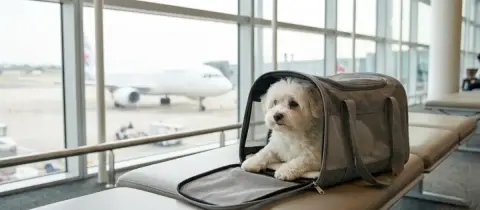
Only the bag alone does, and only if it meets the airline's size. Our airline guide records Virgin Australia's cabin limit as 44 x 28 x 28 cm, with the pet and carrier together up to 8 kg on some routes, and says Qantas takes pets in the hold only (figures read on 15 November 2026). See our airline approved pet carrier guide for the details.
"Airline approved" on a listing is the seller's phrase, not an airline's. Both Morpilot and BELLA & PAL use it, and both say to check with your airline. On the listing figures the BELLA & PAL's 45 cm length is 1 cm over Virgin's 44 cm, so measure the bag and the airline rules before you book. Rules vary by airline, so confirm yours.
Can you use a wheeled carrier in the car?
Yes, but belt the carrier, not the trolley. Keep the carrier upright on the back seat with the seatbelt through it, or in the footwell behind a front seat, so it can't slide when you brake. Never put it in the boot, and never on the front seat with an airbag.
International Cat Care says the carrier should sit where it stays secure if you brake hard, in a footwell behind a front seat or belted on the back seat, not in the boot, and with care in the back of a hatchback, where airflow can be poor (International Cat Care, "Travelling with your cat", updated 26 September 2025, page read 24 November 2026). Remove the trolley base first where the maker allows it, because a detached bag sits lower and straps down more easily.
A tether inside a carrier clips to a harness, never a collar; see our cat harness guide. For a seat on the back seat instead, read our cat car seat guide.
Are rolling carriers OK in hot weather?
Only for short trips with shade and water nearby. RSPCA NSW warns that a pet left in a parked car can suffer severe heat stress or death in as little as six minutes, even on an overcast day or with the windows slightly open. International Cat Care says shade and cracked windows aren't enough, and ideally someone stays with the cat.
Never leave a carrier in a parked car, and don't wheel one for long over hot pavement. Mesh panels help airflow, but a closed bag in full sun still heats up. Our dog in a hot car guide has the Australian detail.
How do you get a cat used to a rolling carrier?
Practise at home first. Leave the carrier out with the door open and a blanket inside, add treats, then roll it a few metres on the floor with your cat inside for a few seconds. Build up slowly. Wheels make a noise some cats dislike, so try the roll before the day of the trip. Our guide to getting a cat into a carrier walks through the steps.
Where else can you buy a wheeled carrier?
Some pet shops and vet clinics stock soft carriers, and a few carry trolley versions, so it is worth asking in store. Whatever you buy, measure your pet and compare the inside size, as above. Vet clinics can also advise on the right size for your cat or small dog.
We searched Amazon Australia for pet carriers with wheels and shortlisted those that met all of these checks:
Well rated: a strong average rating with plenty of buyer reviews.
No red flags: no pattern of poor reviews, safety complaints or listing problems.
Available on Amazon Australia when we checked.
Wheels on the listing: trolley wheels, not just a bag with a strap.
Size and weight limit stated on the listing, in a form we could convert to cm and kg.
How the trolley works described, including whether it detaches.
Where a listing contradicts itself, we say so in the cons. These are researched picks, not products we've personally tested. We compared the specifications and features on each Amazon Australia listing, checked on 23 Nov 2026, and we didn't accept payment from any brand.
Left out this time: carriers with no wheels (the soft and hard carriers that turned up in the same search), and the four-wheel i.Pet stroller, which is on our pram guides.
When to see a vet
Book a vet visit if your pet is distressed by every trip, pants or drools in the carrier, hides for hours afterwards, or has trouble moving or breathing. Anxiety, pain and illness can all play a part, and a vet can work out which. A carrier is a tool, not a treatment, so ask your vet about help for pets that find travel hard.
Go to a vet or emergency clinic straight away if your pet shows signs of heat stress after time in a car or carrier, such as heavy panting, drooling, weakness or collapse. See our dog in a hot car guide and our guide to keeping cats cool in summer.
Frequently asked questions
Can a large cat use a wheeled carrier?
Often not. The highest weight limit we'd rely on here is 7.3 kg, on the Lollimeow, and the bags are about 39 to 53 cm long on the outside. Measure your cat from nose to the base of the tail and weigh them first. For a bigger cat, see our cat pram guide or cat carrier guide.
How much weight can a wheeled pet carrier take?
On these listings, 6.4 kg for the Morpilot, 7.3 kg for the Lollimeow and 2.7 kg for the Sherpa. The BELLA & PAL listing's figure doesn't match its size, so check it with the maker. Measure your pet as well, since a carrier can be too small before it is too heavy.
What's the difference between a rolling carrier and a pet pram?
A rolling carrier is a soft bag on wheels with a pull handle, and it still carries a small, light pet. A pram is a four-wheel stroller with more room and a higher weight allowance. See our cat pram guide and dog pram guide.
Can small dogs use these too?
Yes. The listings say cats and small dogs, with limits of about 2.7 to 7.3 kg. Check your dog's measurements and weight against the carrier, and remember the dog needs room to stand and turn. For other options, see our dog carrier guide.
Is a wheeled carrier safe for stairs?
Not on its wheels. Carry it by the handles or a strap, keep it level and avoid bumping it down steps. None of the listings says the trolley is meant for stairs, and the Lollimeow backpack mode is its stairs option.
Can I take a wheeled carrier on a plane?
Only the bag alone, and only if it meets your airline's size rule. Virgin Australia's cabin limit is on our airline guide. The listings' "airline approved" wording is the seller's, so check with your airline before you book.
Does a wheeled carrier fold flat?
Some do. The BELLA & PAL listing says it folds once the trolley base is off, but none of the others states a folded size. For carriers that pack flat, see our collapsible pet carrier guide.
Can I leave my pet in the carrier in a parked car?
No. RSPCA NSW says never leave a pet alone in a car, even for a few minutes, because it can heat up fast. Take your pet with you, or stay in the car with the air on.
Airline figures via our airline approved pet carrier guide, read 15 November 2026.
Product details from each linked Amazon Australia listing, checked on 23 Nov 2026.
This guide provides general information and isn't a substitute for veterinary advice. If you're concerned about your cat's health or how they cope with travel, speak with your vet.