By Anish PuriUpdated 19 Nov 202613 min readResearched, not tested by us
Research guide. WhiskerFinds may earn a commission from links, at no extra cost to you.
Quick answer: The best dog water bottle for most walks is the Cibaabo 300 ml, which fills its own built-in bowl with one hand and has a small treat compartment. For hot days or longer trails, the LumoLeaf insulated 800 ml carries more water and, per its listing, keeps it cool. Always carry more than you think you'll need.
A good bottle means your dog can drink at any stop without you balancing a bowl and a water bottle. This guide compares five on Amazon Australia, then covers how much to carry, how to offer water on hot days and how to keep a bottle clean. It's the main guide in our walking gear set, alongside the treat pouch, poop bag holder, walking bag and collapsible dog bowl guides.
Quick picks
Our top pickBest overall
Cibaabo dog water bottle 300 ml
One-hand lock and release, a built-in bowl and a detachable treat container
Pictures are illustrations, not the actual products.
Not sure which shape suits you? The comparison table and the sizing section below show how capacity changes things.
How much water should I carry for my dog?
There's no single figure, because it depends on your dog's size, the weather and how hard they're working. One vet-written guide puts a dog's daily needs at roughly 50 to 90 ml per kilo of body weight, and says needs can nearly double on a strenuous, warm hike (Preventive Vet, page read 1 November 2026).
So a bottle is a drink-break supply, not a day's water. Treat 300 ml as a short walk for a small dog, and step up to 750 ml or more for big dogs, long walks or hot days. The same guide says to pack more than you think you'll need.
How often should a dog drink on a walk?
Offer water at every stop rather than waiting for your dog to ask. The vet-written guide above gives no fixed schedule. It says to stop often and offer fresh, clean water, and that frequent stopping or lying down can be a sign a dog is hot or tired and needs a rest (Preventive Vet, page read 1 November 2026).
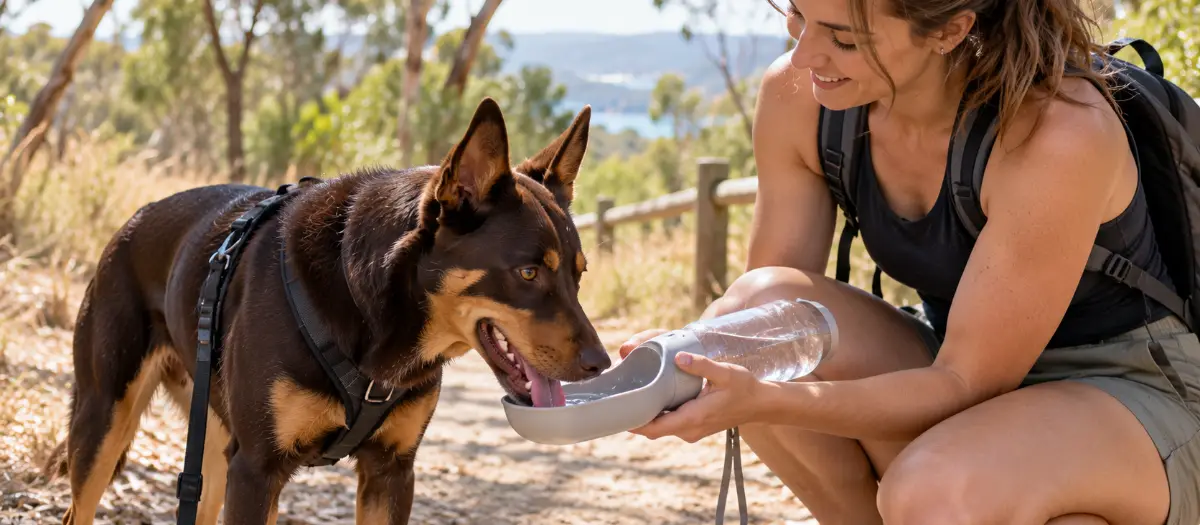
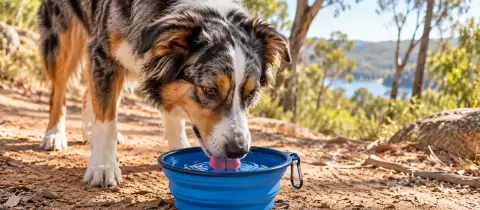
On warm days, make the stops more frequent and do them in shade. A few laps of a bowl at the start, the middle and the end is a sensible habit for a normal walk, and a hot day calls for more breaks and a shorter route. Results vary from dog to dog, so watch how yours responds.
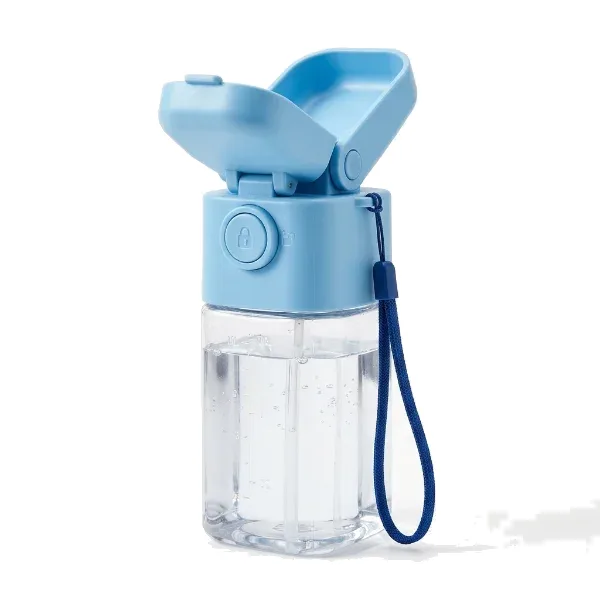
A compact bottle with a bowl attached to the top. You turn the lock, press the button and water flows into the bowl, then flows back when you release it, so little is wasted. The listing says all of this can be done with one hand, and that it has a silicone loop to stop leaks, with a reminder to turn the lock back after use. A detachable container holds about 100 g of treats on a separate lanyard, and the listing says a carbon filter sits inside. The listing also mentions a 560 ml size and a pink colour option.
Pros: one-hand use per the listing; built-in bowl; treat container; lists dishwasher safe
Cons: the 300 ml size is small for big dogs or hot days; the listing is inconsistent about materials (ABS and PET in the bullets, ABS and polycarbonate in the details); you must remember to relock it before it goes in your bag
Best for: short walks and small dogs, or a dog who gets treats at each stop
Skip it if: you walk a large dog for more than a short loop, or you want insulation
2. LumoLeaf stainless steel dog water bottle: best stainless steel
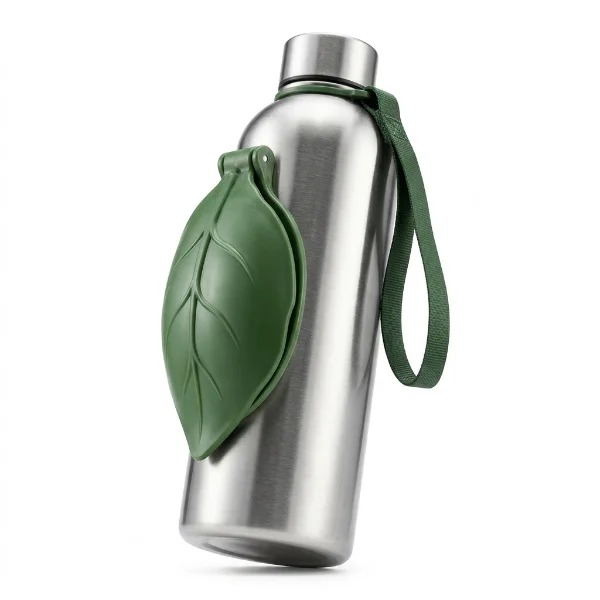
A 27 oz stainless steel bottle with a silicone bowl you flip over to drink from. Quick release buttons let water flow out or back into the bottle. The listing says the mouth is 1.8 inches wide, so it fits ice cubes and fills easily. A wrist strap and a removable aluminium carabiner let you carry it or hook it to a bag. The listing describes a single-layer stainless body and a silicone lid, lists a one year manufacturer warranty and says every part washes with running water.
Pros: sturdy stainless steel body; wide mouth for filling; wrist strap and carabiner; listed warranty
Cons: single layer, so it isn't insulated; about 410 g, heavier than a silicone sack; the listing's size tag says small while the text says it suits all sizes
Best for: everyday walks where you want a durable bottle with a bowl
Skip it if: you want water to stay cold for hours
3. LumoLeaf insulated dog water bottle 800 ml: best for hot days
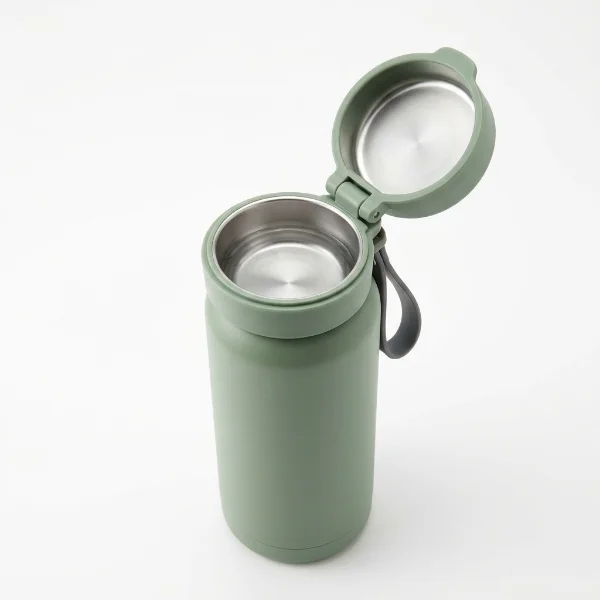
An insulated stainless steel bottle. The listing says double wall insulation keeps water cool in summer and warm in winter, and that the wide opening takes ice. A hinged lid doubles as a bowl, and leftover water flows back into the bottle. A D-ring clip attaches it to a bag, belt or harness. The listing describes a leakproof design with a secure cap, and an 800 ml capacity for dogs of all sizes. It weighs about 0.57 kg.
Pros: insulated per the listing; larger capacity; ice fits through the wide mouth; D-ring clip
Cons: heavier than the silicone and plastic options; the listing's detail field says "Pack of 2" while the title describes one bottle, so check what arrives; leak-proof is a brand claim
Best for: hot days, longer walks and bigger dogs
Skip it if: you want the lightest thing in your bag
4. SÄKER collapsible dog water bottle: best collapsible
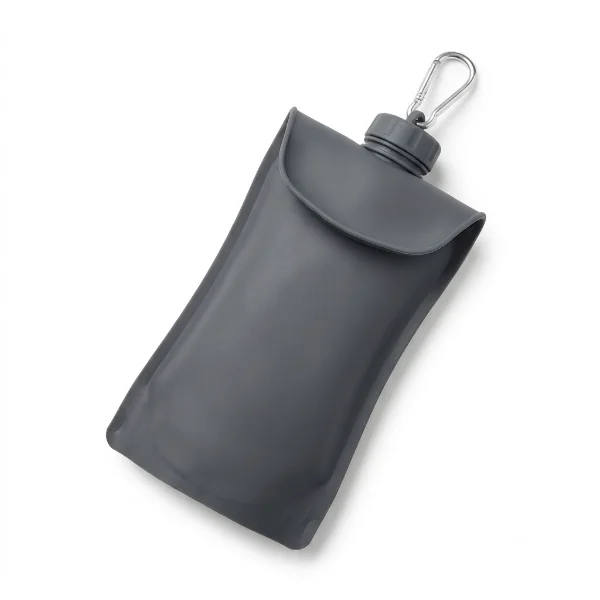
A 750 ml silicone sack with a fold-over lip that turns into a drinking bowl. Quick release buttons control the water flow out or back. The listing says it folds to about the size of a banana when empty, so it can go in a backpack or treat pouch, and that the neck is 1.5 inches wide for ice cubes. It's described as BPA free. It weighs about 0.2 kg.
Pros: very light; packs small once empty; wide neck; large capacity for its weight
Cons: soft sides with no base or stand listed, so it may not stand up when it's part full; the listing doesn't mention insulation or give a leak-proof claim, so check the closure before packing it; no strap or clip is listed
Best for: hikers and anyone who wants a bottle that packs away
Skip it if: you want cold water or a bottle that stands up on its own
5. GrandTies insulated bottle with 2 bowls: best for two dogs
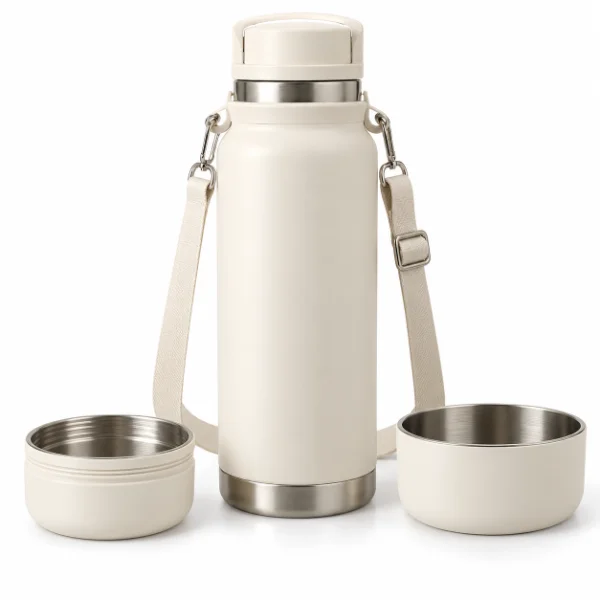
A 946 ml (32 oz) double-walled stainless steel bottle with two detachable screw-on bowls. The listing says it keeps water cold for up to 24 hours and warm for 12, and calls it leak-proof. The bowls can hold water or food, which helps with two dogs or a drink and a snack. It has a strap and weighs about 535 g. The listing says it suits dogs, cats and other pets.
Pros: largest capacity here; two bowls; insulated per the listing; strap
Cons: a long bottle at about 25 cm, and at about 535 g one of the two heaviest; insulation and leak-proof times are the brand's claims; bowls are separate pieces to keep track of
Best for: two dogs, or a dog who needs water and a snack on a long outing
Skip it if: you walk one small dog on short loops
Are stainless steel dog water bottles better?
Not always better, but they suit different jobs. Stainless steel is rigid, easy to wipe and can be insulated, which helps on hot days. Silicone and plastic bottles are lighter and some squash flat. Your choice comes down to weight, whether you want cool water and how you carry it.
Here's how the picks line up:
Stainless steel, single layer: the LumoLeaf 27 oz. The listing says nothing about insulation.
Stainless steel, double wall: the LumoLeaf insulated 800 ml and the GrandTies, both described as insulated.
Silicone, folds flat: the SÄKER.
ABS plastic body: the Cibaabo, which has a lighter, smaller shape.
Can dogs share a human water bottle?
It's better to give your dog their own bottle or bowl and keep yours separate. Dogs tend to mouth and lick a bottle's opening, so sharing is mostly a hygiene question. We didn't find a vet source that sets a rule, so this is a practical suggestion rather than a health claim.
One listing here (the SÄKER) says its silicone sack is BPA free and safe for anyone to drink from. That's the brand's own claim. If you want a bottle that doubles as a bowl, a dedicated dog bottle is simpler, and you can wash it between walks.
What is the best dog water bottle for hiking?
For hiking, choose a bottle that carries enough water and clips to your pack. The LumoLeaf insulated 800 ml and the GrandTies 946 ml both hold the most here, and both have insulation per their listings. The SÄKER folds small for a pack when empty. Bring all the water from home. For planning the walk itself, see our guide to hiking with a dog.
The same vet-written guide says ponds, streams and puddles are often contaminated with giardia and leptospirosis, and that dogs go looking for them when no fresh water is offered (Preventive Vet, page read 1 November 2026). A bottle from home gets around that. A bigger bottle also means fewer stops to refill, which matters on longer loops.
Dog water bottles compared
Details from each Amazon Australia listing, checked on 19 Nov 2026.
We searched Amazon Australia for dog water bottles and portable travel bottles, then shortlisted bottles that met all of these checks:
Well rated: a strong average rating with plenty of buyer reviews.
No red flags: no pattern of poor reviews, safety complaints or listing problems.
Available on Amazon Australia when we checked.
Clear capacity on the listing.
Leak-proof claims attributed: we say "the listing says" and never promise a bottle won't leak.
A named material (stainless steel, silicone or plastic).
Easy to use with one hand where the listing describes it.
Easy to clean, with a wide opening or parts that wash simply.
These are researched picks, not products we've personally tested. We compared the specifications and features shown on each Amazon Australia listing, checked on 19 Nov 2026. We didn't accept payment from any brand, and no brand saw this page before it was published.
Left out this time: bottles made of materials the listing doesn't name.
How do I pick the right size?
Match the bottle to the walk and the dog. A small dog on a 20 minute loop needs just a drink break, so the 300 ml suits. A big dog, a long trail or a warm day needs 750 ml or more. If two dogs share, the GrandTies or a bottle plus a collapsible dog bowl saves refills.
Weight matters too. Water is heavy, and the stainless bottles weigh more empty than the silicone one. Consider where it will sit: the carabiner and D-ring pick clip to a bag, and a dog walking bag can hold the bottle, a treat pouch and a poop bag holder together.
Using a bottle on hot days
Water on its own doesn't make a hot walk safe. In summer, walk early or late, test the footpath with the back of your hand for 5 seconds, and skip the walk if it's too hot for you. Flat-faced breeds are at higher risk. Our summer cool-down guide has the full routine.
RSPCA Australia suggests adding ice cubes to a water bowl to keep it cold at home (RSPCA Australia, page read 1 November 2026), and a wide-mouth insulated bottle lets you do the same on the go. If your dog starts heavy panting, staggers or collapses, cool them with cool, not ice-cold, tap water and go to the vet, even if they seem better.
Setting up and caring for a bottle
First, fill it with fresh water from home and test the closure before putting it in a bag. Then teach your dog by pouring a little into the bowl, letting them drink, and tipping the rest back. Some dogs ignore a new shape at first, so try it at home before the first walk.
For cleaning, empty it after each walk and wash it with warm water and mild soap, leaving it open to dry. The listings describe wide openings for cleaning, and the Cibaabo lists dishwasher safe, but check the maker's instructions for every part. Don't leave water sitting in a bottle for days.
When to see a vet
Go to a vet straight away if your dog is panting heavily and can't settle, drools, vomits, staggers or collapses after exercise. Start cooling with cool, not ice-cold, tap water on the way. Excess tiredness or lying down often on a hot walk can be an early sign that a dog is overheating (Preventive Vet, page read 1 November 2026).
Also see your vet if your dog is drinking much more than usual or refuses water altogether. A bottle makes drinking easier, but it can't fix an illness. See our guide to a dog drinking a lot of water.
Frequently asked questions
How much water should I carry for my dog?
It depends on size, weather and effort. One vet-written guide gives roughly 50 to 90 ml per kilo of body weight a day, and says needs can nearly double on a hard, warm hike. Pack more than you think you'll need, and offer it at each stop.
How do I teach my dog to drink from a water bottle?
Start at home. Fill the bowl part of the bottle, hold it low and let your dog sniff and lap. Praise and let them finish, then tip the rest back. Repeat over a few days before the first walk. Some dogs ignore a new shape at first, so give it time and watch how yours responds.
Are stainless steel dog water bottles better?
They're sturdy, easy to wipe and can be double-walled to help keep water cool. Silicone bottles are lighter and pack flat. For hot days, pick an insulated stainless one like the LumoLeaf 800 ml. For packing small, the SÄKER fits better.
Is a dog water bottle with a bowl better than a bottle and a separate bowl?
A bottle with a built-in bowl is one item to carry and fill, which suits short walks. A bottle plus a collapsible dog bowl holds more and lets two dogs drink at once, but it's two things to clean and clip on. Pick the all-in-one for daily walks and the pair for long days out.
What is the best dog water bottle for hiking?
For a pack, the LumoLeaf insulated 800 ml and the GrandTies 946 ml hold the most water and are insulated per their listings. The SÄKER folds small once empty. Carry water from home, since a vet-written guide warns that ponds, streams and puddles can carry parasites and bacteria.
How do I clean a dog water bottle?
Empty it after each walk, wash it with warm water and mild soap, and let it dry open. Check the maker's instructions for each part. The Cibaabo listing says it's dishwasher safe. Wide openings, as on the LumoLeaf bottles, make scrubbing easier.
Can I put ice cubes in my dog's water bottle?
Ice cubes in water are generally fine on a hot day, and RSPCA Australia suggests ice in water bowls. The LumoLeaf and SÄKER listings say their wide mouths take ice cubes. Skip ice and use cool water if your dog may have heatstroke, and go to a vet.
Product details from each linked Amazon Australia listing, checked on 19 Nov 2026.
This guide provides general information and isn't a substitute for veterinary advice. If you're concerned about your dog in the heat, speak with your vet.