Best dog cooling vest in Australia: do they work in our heat?
By Anish PuriUpdated 19 Nov 202612 min readResearched, not tested by us
Research guide. WhiskerFinds may earn a commission from links, at no extra cost to you.
Quick answer: A dog cooling vest can help in dry heat, but it does less in humid weather and never replaces shade, water or skipping the heat of the day. Our pick is the LUCOLOVE two-layer microfibre vest. For sticky days, the ice pack vest is worth a look.
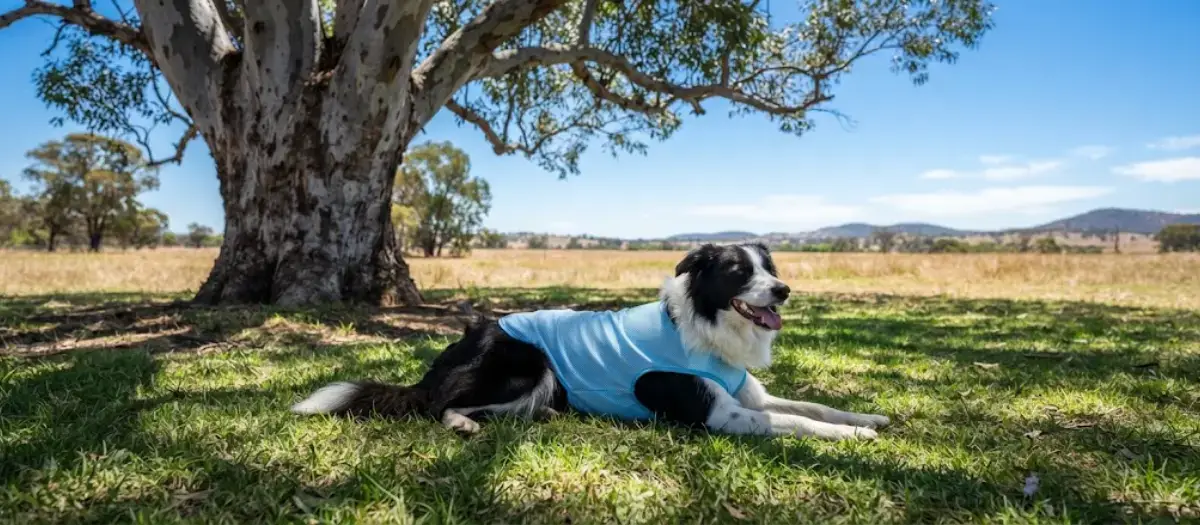
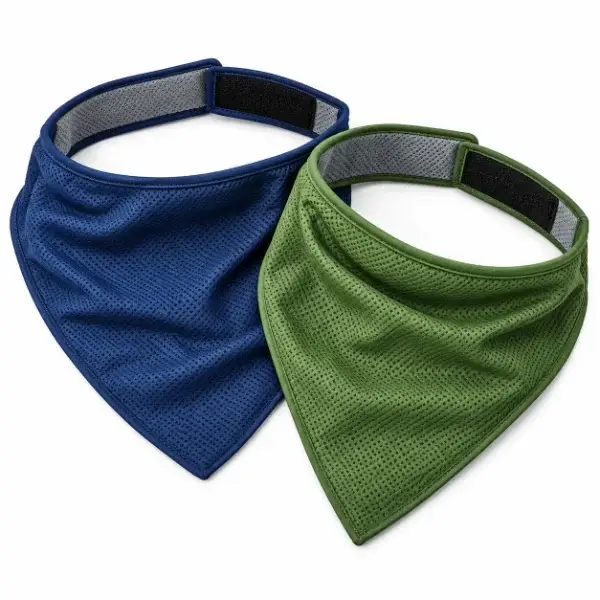
Illustration, not the actual product
Our top pickLUCOLOVE 2-layer microfiber cooling vest
Cooling vests are an extra for hot days, not a fix. This guide compares three on Amazon Australia, explains how they work and why humidity matters, and covers fit and safe use. For the basics that matter more, see our guide on how to keep your dog cool in summer.
Quick picks
Our top pickBest overall
LUCOLOVE 2-layer microfiber cooling vest
Two layers you wet before use; light enough to wear under a harness; sizes by chest and neck
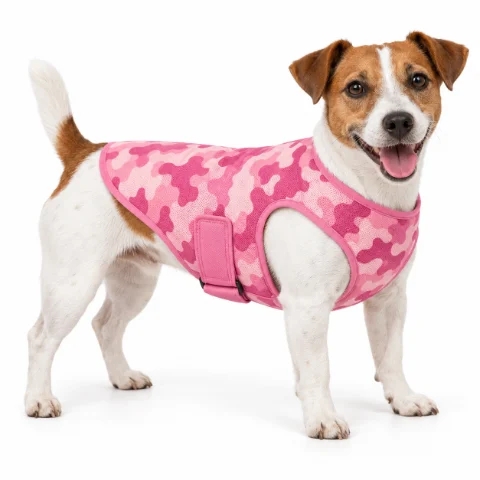
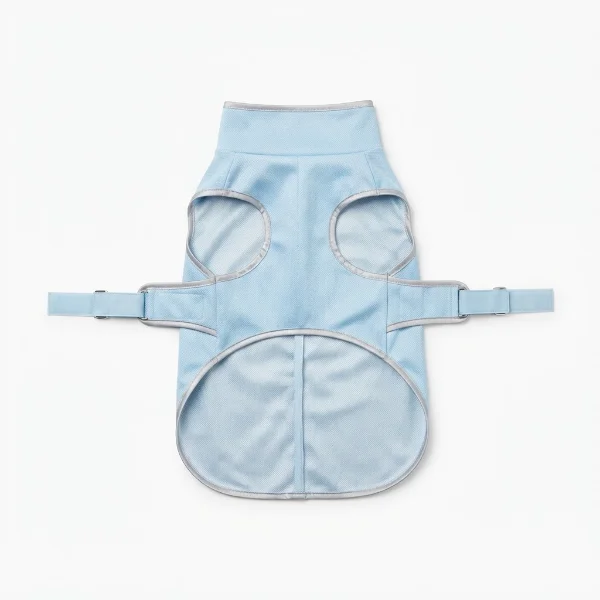
Pictures are illustrations, not the actual products.
Not sure whether a vest suits your dog? Read the next three sections first.
Do dog cooling vests work?
They can, in the right conditions. An evaporative vest cools as the water in the fabric evaporates and carries heat away. That works well in dry air and poorly in humid air, and no vest makes a hot walk safe. Think of it as a small help on top of shade, water and good timing.
One small study put numbers on the dry-heat benefit. Researchers in Valencia, Spain, ran 13 military working dogs for 20 minutes in August, at about 28 to 31°C and roughly 46 to 53% humidity. Dogs wearing a soaked evaporative vest had core temperatures about 0.6°C lower on average than with no vest, and about 0.8°C lower 15 minutes after the run, though they were still hot (Benito et al., Animals, 2022). It was a small group of fit working dogs, and the authors didn't test how humidity changed the result, so it can't tell us how a pet dog fares on a muggy Brisbane afternoon.
Humidity is the catch. Ruffwear, a vest maker, explains that humid air can't take up much more moisture. Its own explainer estimates a drop of about 8°C at 30% relative humidity but only about 3°C at 70%, and says no cooling happens at 100% humidity (Ruffwear, page read 31 October 2026). That's a brand source, so treat the figures as a guide only. For Australian summers, it's a good reason to be realistic on humid coastal days, and to keep walks early or late.
Evaporative or ice pack: which cools better?
Neither wins everywhere. Evaporative vests are light and simple but depend on dry air and need re-wetting. Ice pack vests add a cold source that doesn't rely on evaporation, but they take more preparation and need care so a frozen pack doesn't sit against bare skin.
In the same Spanish study, a vest with pre-chilled rigid pads made no significant difference overall, though dogs were about 0.5°C cooler 15 minutes after the run, and the authors weren't sure why it did less than the wet vest (Benito et al., 2022). That vest was a different design from the one in our third pick, and the study was small, so it isn't a verdict on ice packs. It does show that "colder" doesn't automatically mean "better", and coverage matters.
In practice:
Evaporative only: a good fit for dry heat, short outings and beach or park trips with water to re-wet.
Evaporative plus ice pack: the listing for our third pick describes both, so you can use it wet, or with a frozen pack in the pocket on a sticky day. It's more to prepare before a walk.
Our picks in detail
1. LUCOLOVE 2-layer microfiber cooling vest: best overall
Two layers of microfibre that you wet before use, with adjustable hook-and-loop chest straps. The listing says it's light enough to wear under a walking harness and gives UPF50+ sun protection over the back and chest. Sizes are by chest and neck, so measure your dog before you choose. This is the same vest we mention in our summer guide.
Pros: simple to use; adjustable straps; wearable under a harness per the listing; sun cover over back and chest
Cons: evaporative, so it needs re-wetting and works less well in humid weather
Best for: early walks and park or beach trips in dry heat, for dogs that already wear a harness
Skip it if: you mostly walk in humid weather, or your dog chews gear
2. Kurgo Core cooling vest: best light reflective coat
An evaporative coat that covers the neck, back and chest. The listing says the light colour and reflective material help deflect the sun, and you wet it with cool water. It also says this vest runs smaller on the chest than other Kurgo coats, so check the size chart carefully (Medium is about 46 cm neck and 66 to 89 cm chest).
Pros: covers neck, back and chest; light colour to reflect sun; clear size chart
Cons: needs re-wetting; cooling time depends on the weather; the listing says it runs small on the chest
Best for: dogs that spend time in full sun and suit a coat-style fit
Skip it if: your dog is between sizes and you can't measure the chest properly
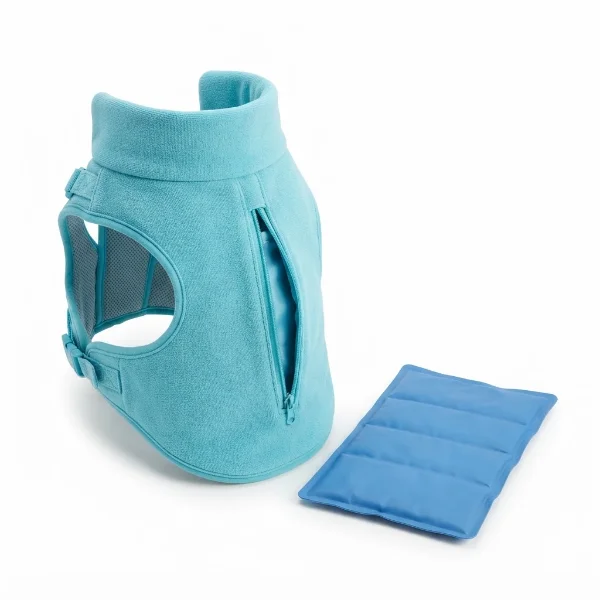
3. Dog cooling vest with ice pack and cooling collar: best for humid days
A double-layer microfibre evaporative vest with a pocket for a size-matched reusable ice pack and a high collar over a full torso. The listing says UPF50+ sun protection. You soak the vest, slot in the frozen pack and fasten it. We've put it under "humid days" because the pack doesn't rely on evaporation, but that's our reasoning from how it works, not something we've measured.
Pros: a cold source that doesn't depend on evaporation; full torso and collar coverage; sun protection per the listing
Cons: more to prepare before a walk; check the pocket and your dog's skin, and don't let a frozen pack sit against bare skin; the pack warms up over time
Best for: short outings on warm, sticky days, and dogs that tolerate a snug, full-coverage vest
Skip it if: you want something quick to grab, or your dog dislikes cold or snug gear
Which dogs benefit most from a cooling vest?
Dogs at higher risk of overheating are the ones to think about first. RSPCA Australia lists flat-faced breeds, overweight dogs, dogs with thick or long coats, very young and very old dogs, dogs that exercise hard, and dogs with breathing, heart or nerve problems (RSPCA Australia, Warm weather worries).
For those dogs, a vest is a small extra at best. Flat-faced dogs, for example, have short airways that make panting less effective (our summer guide has the research), and a wet vest doesn't change that. Their safest plan is staying in the cool: inside, in shade, with air moving. Ask your vet about a summer plan, especially for older dogs or any dog with a health condition.
Fit and temperament matter too. A vest can suit a fit dog on an early walk or a dog who sits in the shade at a market stall. It won't suit a dog who hates wearing things, chews them, or overheats within minutes of leaving the house.
Dog cooling vests compared
Details from each Amazon Australia listing, checked on 19 Nov 2026.
We searched Amazon Australia for dog cooling vests and coats, then shortlisted vests that met all of these checks:
Well rated: a strong average rating with plenty of buyer reviews.
No red flags: no pattern of poor reviews, safety complaints or listing problems.
Available on Amazon Australia when we checked.
Size chart by chest and neck on the listing.
Adjustable fit.
Works under a harness, or has clear instructions for use.
These are researched picks, based on specifications rather than use in our own homes. We compared the features shown on each Amazon Australia listing, checked on 19 Nov 2026. We didn't accept payment from any brand, and no brand saw this page before it was published.
Left out this time: vests with a pattern of fit or durability complaints, and cooling products that claim to prevent heatstroke.
How to use a dog cooling vest safely
Fit it by the listing's size chart, introduce it indoors with treats, and use it as one part of a hot-day plan. Never leave your dog alone in a vest, and don't treat it as a reason to walk at midday.
Measure your dog at the neck and the widest part of the chest, and match the size chart. Straps should be snug but let you slide a finger under.
Introduce it slowly. Let your dog sniff it, then wear it dry indoors for a few minutes with treats.
Wet it with cool water and wring it out (not ice-cold), then fasten it.
Re-wet as it dries. Once dry it has stopped cooling, so re-wet it or take it off.
Check your dog during and after use: heavy panting that doesn't settle, lagging behind, or lying down means stop, move to shade and cool them.
Take it off after the outing, and check the skin under the straps for rubbing or redness. Rinse and air dry it.
Supervise. A dog that chews it shouldn't be left with it.
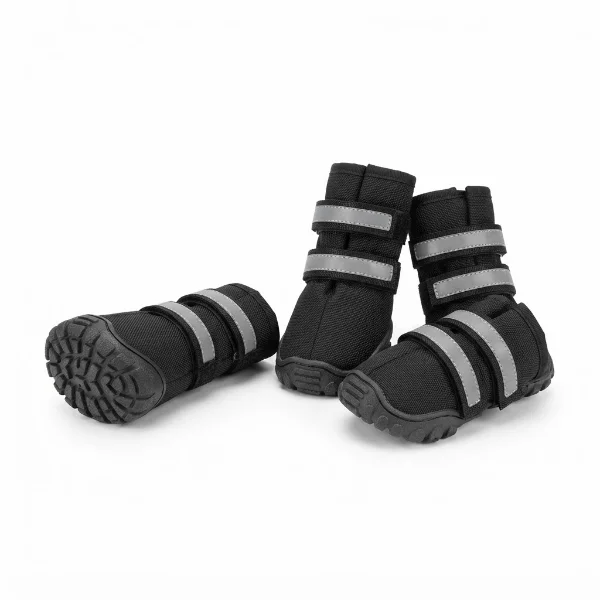
A vest only cools the body. It does nothing for paws. Before any walk, put the back of your hand on the footpath for 5 seconds. If it's too hot for your hand, it's too hot for your dog's paws (RSPCA Australia, 4 ways to keep your dog cool this summer, published 7 December 2022). Hot sand can burn paws too. See burnt dog paws and how hot is too hot for signs and first aid, and dog boots for hot pavement if you can't avoid the walk. Walk early or after sunset, and stay on grass and shade. There's no single safe temperature, because humidity, breed, age, fitness and coat all matter.
Cooling vest or cooling mat?
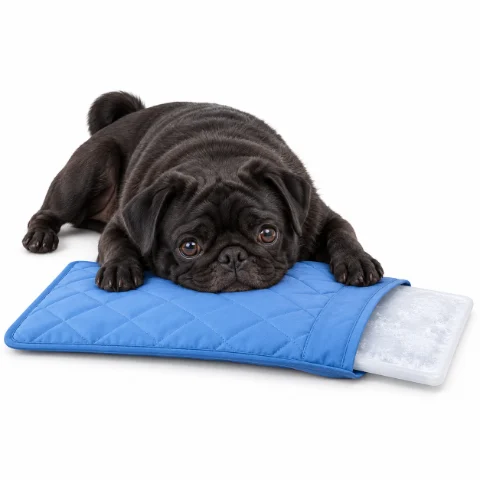
A mat gives your dog a cool place to rest; a vest goes with them. Mats don't depend on evaporation, so they suit humid days at home. Vests suit short outings. Neither replaces shade and water. Our guide on whether cooling mats work explains the types, and the best dog cooling mats and beds compares them. Looking for a warm vest for winter instead? See best dog winter vests.
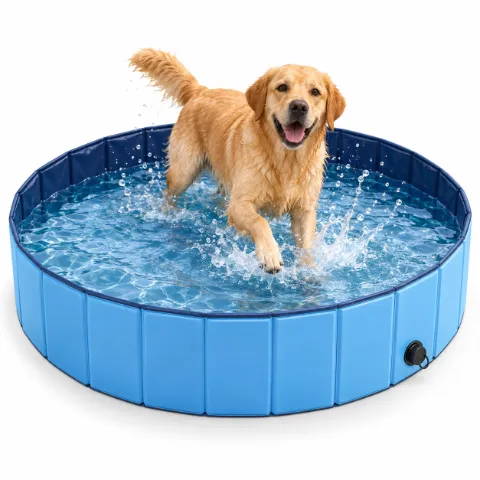
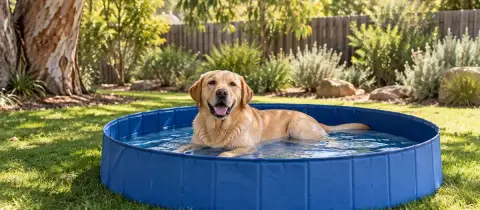
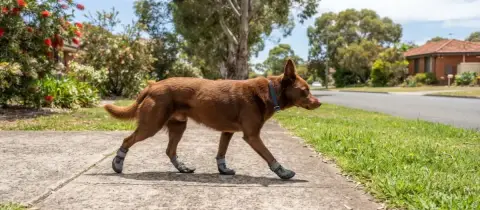
A shallow, supervised dog pool in the shade is another way to cool paws and belly. If your older dog slips on tiles while cooling off indoors, dog socks with grip may help, and so can trimmed nails. Slipping that is new or getting worse is worth a vet check. If you use paw balm on dry pads, choose a lick-safe one from our paw balm guide. Balm is not for burns.
When to get help
Heatstroke is an emergency. Heavy panting, drooling, weakness, vomiting or collapse need action now. Cool first with cool (not ice-cold) tap water over the body, neck, belly and legs, keep air moving, then call your vet and go straight there, even if your dog seems better (Animal Referral & Emergency Network). A cooling vest is not heatstroke treatment. Our dog cooling guide has the full steps.
See your vet if the skin under a vest is red, sore or rubbed, or if your dog struggles in the heat on short, easy outings.
Frequently asked questions
Do dog cooling vests really work?
They can help in dry heat, because water evaporating from the fabric draws heat away. In humid air they do much less. A small study of working dogs found a soaked evaporative vest left dogs about 0.6°C cooler on average (Benito et al., 2022). They're an extra, not a safety measure.
Do dog cooling vests work in humid weather?
Much less well. Evaporation slows when the air is already full of moisture, and one maker's own explainer says no cooling happens at 100% humidity (Ruffwear). On humid days, favour shade, a cool room and a mat, and keep walks short and early.
Can I leave a cooling vest on my dog all day?
No. Once dry, a vest has stopped cooling, and nobody is watching for rubbing, chewing or overheating. Use it for supervised outings, re-wet it as it dries, and take it off afterwards. Never leave your dog alone in one, and keep a chewer away from it.
What size cooling vest does my dog need?
Measure around the neck and the widest part of the chest, and match the listing's chart. Sizing differs by brand. For example, the Kurgo listing says its Core vest runs smaller on the chest than other Kurgo coats, so check before you buy.
Do cooling vests work for dogs in cars?
A vest is no reason to leave a dog in a car, ever. RSPCA Australia says it can take just six minutes for an animal to die in a hot car (RSPCA Australia). Our summer guide covers cars and what to do if you see a dog inside one.
Can I use a cooling vest with a harness?
Some can. The LUCOLOVE listing says it's light enough to wear under a walking harness. Check that straps don't rub where the harness sits, and look at your no-pull harness options for how a harness should fit. If your dog rubs or fidgets, stop and check the skin.
Is a cooling vest better than a cooling mat?
They do different jobs. A mat gives a cool spot to rest, and doesn't depend on evaporation. A vest goes on walks and works best in dry air. Neither replaces shade and water. See cooling vest or cooling mat above.
Can a cooling vest prevent heatstroke?
No product can promise that. Heatstroke risk depends on heat, humidity, breed, age, fitness and how hard your dog works. A vest may take a little heat off, but timing, shade, water and rest matter far more. If you see signs of heatstroke, cool your dog and go straight to a vet.
Product details from each linked Amazon Australia listing, checked on 19 Nov 2026.
This guide provides general information and isn't a substitute for veterinary advice. If you're concerned about your dog in the heat, speak with your vet.