Research guide. WhiskerFinds may earn a commission from links, at no extra cost to you.
Quick answer: A no-pull dog harness with a front clip that doesn't tighten can make pulling much easier to manage, because it turns your dog back towards you when they lunge forward. It works best alongside reward-based lead training and doesn't fix pulling on its own. Our pick is the PoyPet No Pull Vest Harness.
If walks feel like waterskiing behind your dog, you're not alone. RSPCA Australia points out that loose-lead walking can be a tricky skill to teach, because dogs want to explore the world much faster than we do (RSPCA Australia). This guide explains how no-pull harnesses work, compares five front-clip harnesses for small dogs, big strong pullers and escape artists, explains where the well-known PetSafe Easy Walk and 2 Hounds Freedom fit, and covers fitting and the training that actually teaches a dog to walk nicely. EzyDog's X-Link and Crosscheck are covered in our EzyDog harness guide. For every harness type in one place, start with our dog harness buying guide, and for fitting steps, how to put on a dog harness.
Quick picks
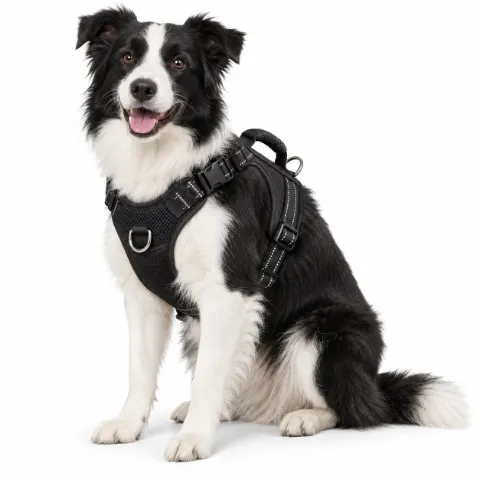
PoyPet No Pull Vest Harness
Padded vest with metal front and back clips and a quick-release neck buckle
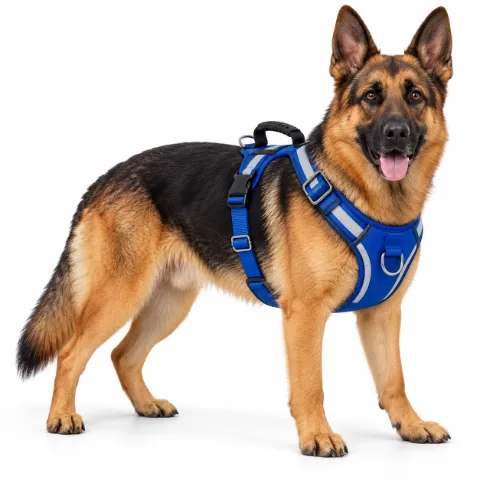
BARKBAY No Pull Front Clip Harness
Metal chest ring, top handle and reflective strips
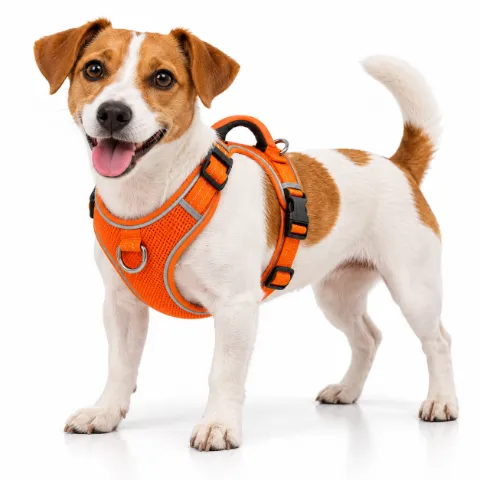
PHOEPET No Pull Harness
Light, with small sizes, two metal rings and buckles so it doesn't go over the head
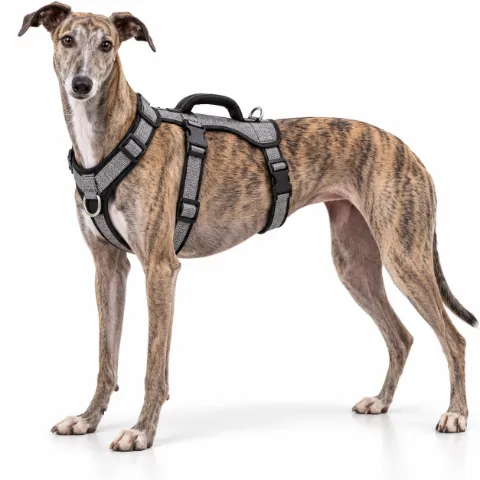
Huntboo Escape Proof Harness
Straps at the neck, chest and belly to make backing out harder, plus a front clip
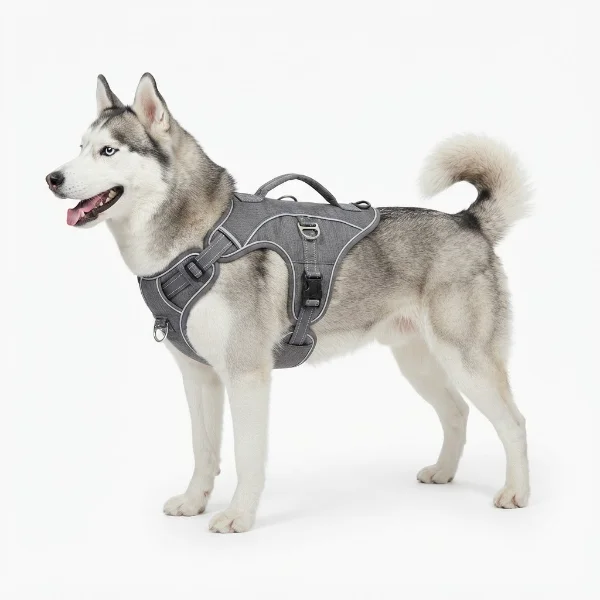
Rabbitgoo No-Pull Dog Harness
Padded vest with metal front and back rings, a top handle and reflective strips
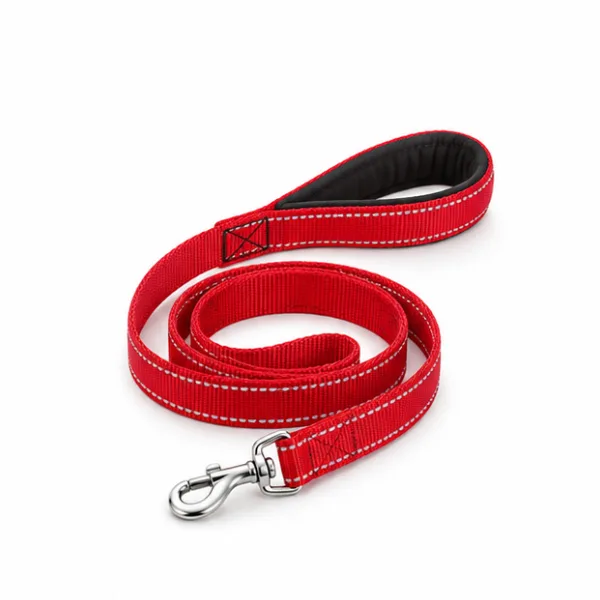
FunTags reflective padded dog lead
A comfortable, reflective lead to pair with your harness for everyday walks.
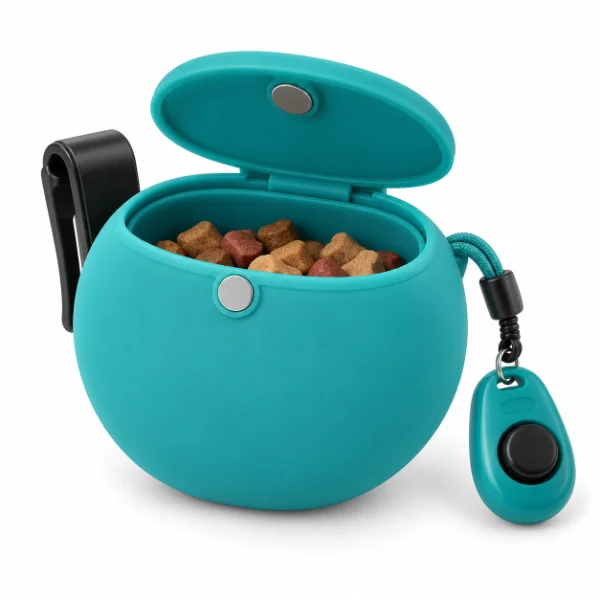
AUDWUD silicone treat pouch with clicker
Keeps rewards close so you can mark and reward walking beside you.
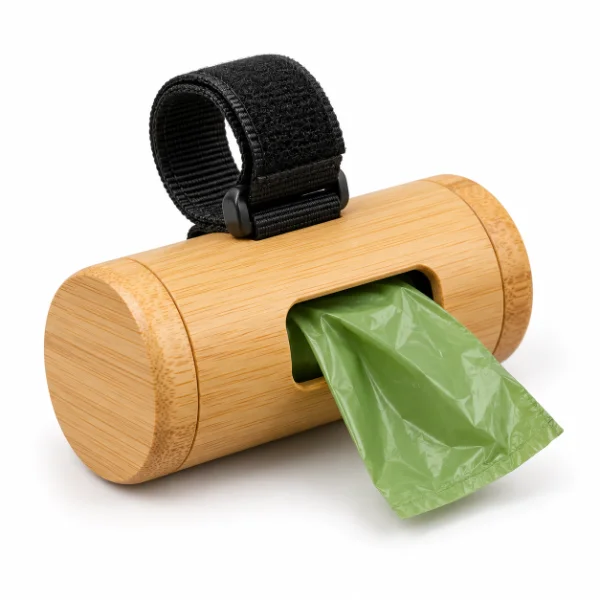
Tuff Pets bamboo poop bag holder
Clips onto the lead so bags are always on hand and your hands stay free for the lead and the treats.
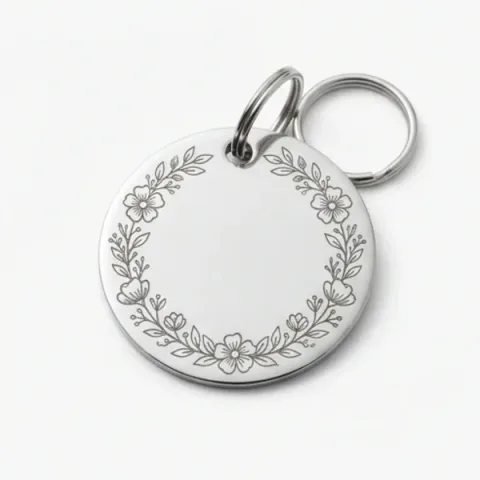
Meow the Woof stainless steel ID tag
A deep-engraved tag with your contact details to clip on the harness or collar.
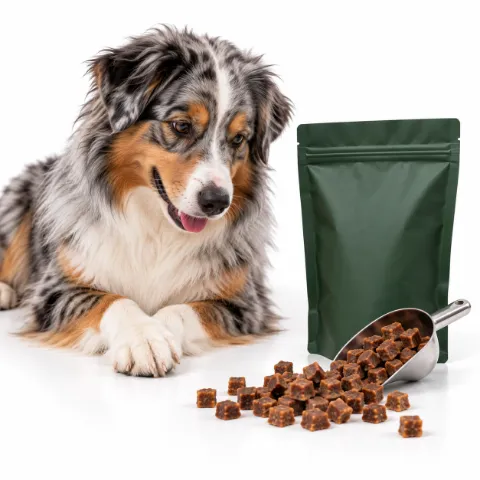
love'em kangaroo training treats
Small, easy-to-carry rewards for marking each step your dog takes beside you.
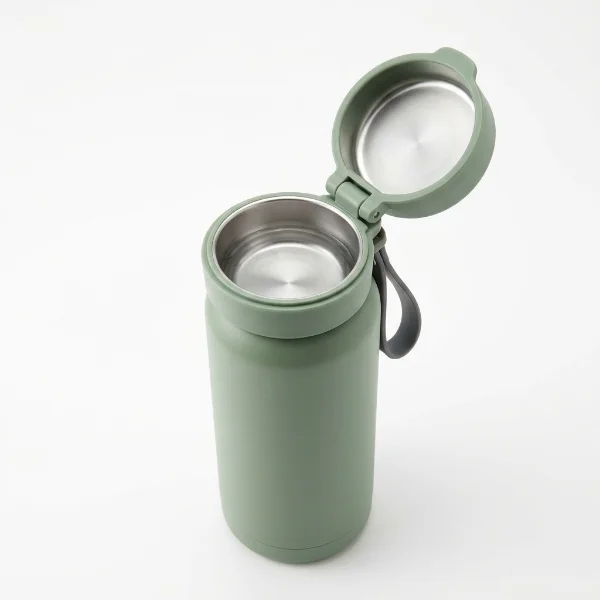
LumoLeaf insulated dog water bottle
A bottle with a built-in drinking spot so your dog can have a drink on longer walks.
Pictures are illustrations, not the actual products.
Also in this guide: a double-ended training lead and a treat pouch for lead training. For more leads to pair with a harness, see our dog lead guide, and for recall practice, long lines.
Do no-pull harnesses work?
For most dogs, yes, as a management tool. A front clip sits on your dog's chest, so when they pull, the lead turns them sideways and back towards you instead of letting them lean into the harness and tow you along.
The research backs this up, with some caveats:
- A 2025 review of studies on collars, harnesses and head collars concluded that non-tightening front-clip harnesses seem to strike a good balance between comfort and reducing pulling. It suggests trying them first, together with training, and puts tightening harnesses and head collars further down the list (Cavalli & Protopopova, Animals, 2025).
- One study of 52 shelter dogs, covered in that review, found dogs pulled harder on the lead in a back-clip harness than in a collar. That's why a harness with only a back ring isn't a no-pull harness, however comfy it looks.
- RSPCA Australia calls a front-attach harness a gentle training aid and the most suitable management tool for most dogs that keep pulling (RSPCA Australia). RSPCA South Australia lists a front-attaching harness with a lead as its top recommendation for walking dogs (RSPCA SA).
What a harness doesn't do is teach your dog to walk on a loose lead. Think of it as making walks safer and calmer while you train. Results vary from dog to dog, so watch how your dog responds and keep up the lead training below. Back-clip walking harnesses such as the Julius-K9 are not no-pull tools, however sturdy: our Julius-K9 guide explains what they are for.
Types of no-pull harness
Front-clip and dual-clip harnesses
A front clip dog harness has a ring on the chest plate. Dual-clip harnesses, like all five of our picks, add a ring on the back too, so you can clip the lead to the front while you're training, use the back ring on relaxed walks, or clip a double-ended lead to both. For how a front ring changes steering, where the chest ring should sit and why it can tangle a small dog's legs, see our front clip dog harness guide.
Tightening and under-leg harnesses
Some anti-pull dog harnesses work by tightening around the chest or putting pressure under the front legs when your dog pulls. The 2025 review rates tightening designs below non-tightening front-clip harnesses, so we left them out (Cavalli & Protopopova, 2025).
Head halters
A head halter (such as the Halti Headcollar, the original design, or a Gentle Leader) has a loop around the muzzle and gives more control over a strong dog's head. But dogs need to be introduced to one slowly, you must never jerk the lead, and halters shouldn't be used with a long line or retractable lead (VCA Animal Hospitals). RSPCA Australia says many dogs find head collars uncomfortable, and that loose-lead training and a front-attach harness should come first (RSPCA Australia). RSPCA South Australia goes further and lists head collars as gear to avoid, because they can jerk a dog's head to the side (RSPCA SA). If you're thinking about one, get help from a reward-based trainer first. We compare the Halti, Gentle Leader and Canny designs, with sizing and a step-by-step introduction, in our dog head collar guide. Halti's body harnesses are compared in our Halti harness guide.
Why not prong, choke or shock collars? RSPCA Australia says check chains (choke or slip collars) and prong collars must not be used, because they cause pain and distress and can damage the neck (RSPCA Australia). Prong collars are illegal to import into Australia, and using one is banned in Victoria, Tasmania and Queensland (RSPCA Australia). The NSW Government has also announced plans to ban them (NSW Government). The RSPCA also opposes shock collars (RSPCA Australia).
Our picks in detail
1. PoyPet No Pull Vest Harness: best overall
A padded mesh vest with two metal lead rings: one on the chest to discourage pulling and one on the back for relaxed walks. A lockable quick-release buckle at the neck and two buckles on the belly straps mean you don't have to pull it over your dog's head. It adjusts in four places, has elastic in the belly straps, a padded handle that the listing says also works as a car seatbelt loop, and reflective stitching. Sizes from small to extra large were listed when we checked.
- Pros: non-tightening front clip; metal rings; easy on and off without going over the head; padded handle
- Cons: the size chart labels its numbers as centimetres, but they match the inch measurements in the listing's description, so measure your dog in inches and compare carefully; a padded vest is warmer than a strappy harness on hot days
- Best for: most dogs that pull, from small to large breeds
- Skip it if: your dog backs out of harnesses (see the Huntboo)
2. BARKBAY No Pull Front Clip Harness: best for big, strong pullers
A heavy-duty nylon harness with a metal ring on the chest and another on the back, a padded chest plate, four points of adjustment and a top handle for extra control. Reflective strips help at night. The listing describes the nylon as rip-resistant, with soft padding on the chest and belly.
- Pros: metal front ring; top handle for quick control; comes in five sizes
- Cons: it goes on over the head, so check your dog's neck measurement as well as the chest; stock varies by size and colour; some sizes are imported, so check the delivery details on Amazon before you order
- Best for: Labradors, Kelpies, German Shepherds and other medium to large dogs that pull hard
- Skip it if: your dog hates things going over their head (try the PoyPet or PHOEPET)
3. PHOEPET No Pull Harness: best for small dogs
A lightweight vest harness with two metal rings (front and back), a soft handle, 3M reflective material and three buckles: a lockable one at the neck and two on the chest, so it doesn't need to go over your dog's head. The design is similar to the PoyPet; we include it because the small sizes are light. If one doesn't come in your size, the other is a good swap.
- Pros: light for small dogs; sizes go down to extra small; buckles mean no fuss over the head
- Cons: like the PoyPet, measure both neck and chest before ordering, and allow time to adjust each strap the first time you fit it
- Best for: small breeds, dachshunds, terriers and puppies
- Skip it if: you have a big, strong dog (the BARKBAY has a sturdier build)
Medium size: PHOEPET No Pull Harness, medium.
4. Huntboo Escape Proof Harness: best for escape artists
A harness with three straps (neck, chest, and a belly strap behind the ribcage), so it's harder for a dog to back out of than a two-strap design. It has five adjustment points, four quick-release buckles, metal D-rings on the chest and back, a padded handle and full-body reflective fabric. The listing's size chart is in centimetres, which makes measuring easier.
- Pros: the extra belly strap makes slipping out harder; front clip for pulling; handle; very reflective
- Cons: costs more than the vest picks; more straps and buckles take longer to fit; no harness is completely escape-proof, so check the fit regularly
- Best for: greyhounds, whippets, nervous dogs and any dog that has wriggled out of a harness before
- Skip it if: you want something quick to put on for a calm dog (the PoyPet is simpler)
5. Rabbitgoo No-Pull Dog Harness: best simple vest for medium and large dogs
A padded vest in Oxford nylon with two metal lead rings: one on the chest to discourage pulling and one on the back for casual walks, jogging or hiking. It slips over the head and closes with two quick-release buckles, then adjusts at four straps, two at the neck and two at the chest. It has a top handle, breathable air mesh and reflective strips. The size linked here is large, which the listing gives as a neck of 18 to 26 inches and a chest of 17 to 34 inches, for dogs such as Golden Retrievers, Labradors and German Shepherds; other sizes are on the same listing.
- Pros: front ring for pulling, and the listing says it's no pull, no choke; metal rings; quick to fit once adjusted; top handle
- Cons: it goes on over the head; the large size covers a wide chest range, so measure and adjust each strap carefully; a padded vest is warmer than a strappy harness on hot days
- Best for: medium to large dogs that pull and don't mind a harness going over the head
- Skip it if: your dog hates things over the head (the PoyPet and PHOEPET buckle on), or backs out of harnesses (see the Huntboo)
What about the PetSafe Easy Walk and 2 Hounds Freedom?
Both are well-known front-clip harnesses, and both include a loop that tightens a little when your dog pulls: on the chest strap of the Easy Walk and on the back of the Freedom. Our picks don't tighten, because the 2025 review rates non-tightening front-clip harnesses first. If you already own one, fit it carefully and train as below.
- PetSafe Easy Walk. The listing says it was created by a veterinary behaviourist, sits across the chest rather than the throat, fits with quick-snap shoulder and belly straps and has a front chest ring. It also describes a patented martingale loop on the chest piece, which the brand says gives relaxed control and stops twisting. See the PetSafe Easy Walk on Amazon.
- 2 Hounds Design Freedom. The listing describes a Swiss velvet-lined chest strap, four adjustment points, a front ring and a back connection point, and this listing comes with a matching lead. The brand's own page says the back loop tightens gently when your dog pulls (2 Hounds Design, page read 31 October 2026). See the 2 Hounds Freedom on Amazon.
If you use either, the same fit checks apply: two fingers under the straps, no rubbing behind the front legs, and a normal stride. For a dog who pulls hard, we'd start with one of the non-tightening picks above.
No-pull harnesses compared
Details from each Amazon Australia listing, checked on 18 Oct 2026 (Rabbitgoo on 31 Oct 2026).
| Harness | Lead rings | Adjustment | Handle | Reflective | Sizes | Price band |
|---|---|---|---|---|---|---|
| PoyPet | Metal, front and back | 4 points | Yes | Stitching | S to XL | Budget |
| BARKBAY | Metal, front and back | 4 points | Yes | Strips | XS to XL | Premium |
| PHOEPET | Metal, front and back | Neck and chest | Yes | 3M material | XS to XL | Budget |
| Huntboo | Metal, front and back | 5 points | Yes | Full body | XS to XL | Mid |
| Rabbitgoo | Metal, front and back | 4 straps | Yes | Strips | Small to large | Budget |
Price bands compare these five harnesses with each other, based on prices shown on 31 Oct 2026 for the sizes linked. Prices vary by size and colour, so tap "Check price on Amazon" for today's price.
No-pull harnesses by dog type
Large dogs and German Shepherds
Strong dogs need metal rings, sturdy webbing and a handle, like the BARKBAY or Huntboo. Pair the harness with a double-ended lead clipped to both rings (see Related gear). If your dog is too strong for you to hold safely, talk to a reward-based trainer before something goes wrong.
Small dogs and dachshunds
Choose a light harness with small sizes, such as the PHOEPET or the PoyPet in small. Pick a light lead too: RSPCA Australia warns that thick leads with large clips are often too heavy for small dogs and can put pressure on the neck and spine (RSPCA Australia). For long-bodied dogs like dachshunds, measure the chest at its widest point and check the harness doesn't twist or slide to one side as they walk. Our dachshund harness guide covers measuring a long body and armpit rubbing.
Greyhounds, whippets and dogs that slip out
RSPCA Australia says a harness is important for dogs whose neck isn't much narrower than their head, such as greyhounds and whippets, and for any dog that might slip a collar (RSPCA Australia). A harness with an extra belly strap, like the Huntboo, makes backing out harder.
French Bulldogs and pugs
A harness is a better choice than a collar for flat-faced breeds. In a small 2025 study, just wearing a collar raised eye pressure in flat-faced dogs even while standing still, and walking in a collar raised it in all dogs, while walking in a harness didn't (Bailey et al., Veterinary Medicine and Science, 2025). Short necks and deep chests can make sizing tricky, so measure both the neck and the chest and choose a harness that adjusts at the neck, like the PoyPet. French Bulldogs, pugs and bulldogs are also at higher risk of heatstroke (RVC VetCompass), so walk them early or late on warm days, and see our guide to keeping your dog cool in summer.
Puppies
A no-pull harness is a gentle way to start lead training. Puppies grow fast, so RSPCA Australia suggests checking the fit a few times a week, and medium or large breed puppies will outgrow their first harness (RSPCA Australia). Make the harness a good thing by giving a treat as you put it on (RSPCA SA). For a first harness and a sizing chart, see our puppy harness guide.
How to measure and fit a no-pull harness
- Measure standing up. Wrap a soft tape around the widest part of the ribcage, just behind the front legs, for the chest girth, then measure around the neck where a collar sits (American Kennel Club).
- Check each brand's chart. Sizes vary between brands, so compare your measurements with the chart on the listing. If your dog is between sizes, the AKC suggests going up a size (American Kennel Club).
- Use the two-finger check. Once it's on, you should be able to fit two fingers under the straps. Too loose, and a dog can slip an elbow through and back out (RSPCA SA).
- Watch them walk. A well-fitted harness shouldn't change the way your dog moves, and they should still take full strides with their front legs. If they walk differently, adjust the straps (RSPCA SA).
- Check the skin behind the front legs and under the straps after the first few walks for redness or rubbing.
How to stop your dog pulling on the lead
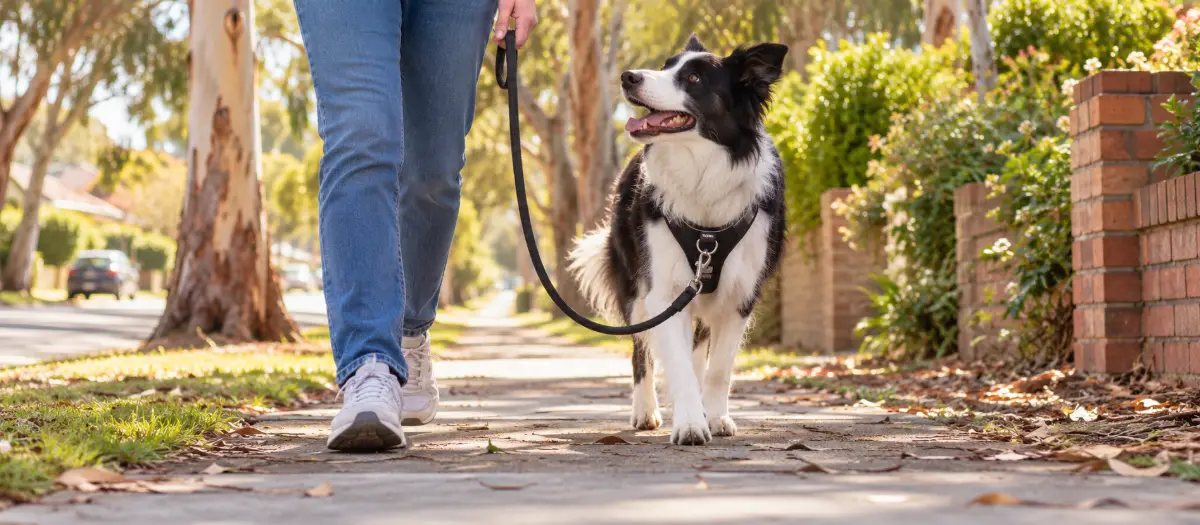
A harness makes pulling easier to handle, but training is what changes the habit. RSPCA Australia recommends reward-based loose-lead walking (RSPCA Australia):
- Stand still like a tree. When your dog pulls, stop. When the lead goes slack, walk on. Your dog learns that pulling doesn't get them anywhere.
- Reward often. Give small, tasty treats every few steps while your dog walks next to you with a loose lead.
- Use a double-ended lead. Clip one end to the front ring and the other to the back ring. Lead from the back, and use the front to turn your dog if they start to pull.
- Choose the right lead. About 2 metres gives your dog room to sniff; a short lead can set them up to pull. RSPCA Australia doesn't recommend retractable or bungee leads.
- Don't jerk the lead. RSPCA Australia warns that a sudden jerk on the lead could damage a dog's neck, and jerks aren't part of reward-based training.
Progress varies a lot between dogs. Excited young dogs and dogs that pull towards other dogs may take longer, so keep sessions short and celebrate the good bits. A dog with plenty of sniffing and brain games at home may also find walks less overwhelming; see our dog enrichment ideas. If pulling doesn't improve, a reward-based trainer can help.
Are no-pull harnesses safe?
A well-fitted, non-tightening harness is a safe, comfortable choice for most dogs. A few things to know:
- The research on movement is mixed. Several small studies found that harnesses can slightly reduce shoulder movement, but they disagree on which design restricts least. One found a Y-shaped harness restricted more than a chest-strap harness, and another found no difference between harnesses at all (Lafuente et al., Veterinary Record, 2019; Cavalli & Protopopova, 2025). No design is proven best, so focus on fit and watch how your dog moves.
- Fit matters most. A loose harness can be backed out of; a tight one can rub. Use the two-finger check and recheck growing puppies often.
- Take it off at home. We'd keep the harness for walks so straps can't catch on things, and so you can check the skin underneath. A flat collar can carry your dog's ID tag the rest of the time; our dog collar guide covers fit and sizing.
- Check for ticks. After walks in bushland or long grass, take the harness off and check underneath as part of your daily paralysis tick search.
- Test the footpath in summer. Put the back of your hand on the footpath for 5 seconds. If it's too hot for your hand, it's too hot for your dog's paws (RSPCA Australia).
- Be careful with light-up leads and collars. A dog lead with a built-in torch was recalled in 2025 because it didn't meet the mandatory button battery standards (Product Safety Australia). Button batteries are dangerous if a child swallows one.
Related gear
Halti Training Lead
A double-ended lead with a trigger clip at each end, which the listing says can be used in seven different ways. It comes in small and large; the large is 2 metres. Clip one end to the front ring of your harness and the other to the back ring for the two-point control RSPCA Australia recommends with a front-attach harness.
- Pros: two clips for two-point control; well-known brand
- Cons: takes a little practice to handle two connection points; check the size suits your dog, as a heavy clip is too much for a tiny dog
- Skip it if: you already have a double-ended lead, or you can thread two ordinary leads together
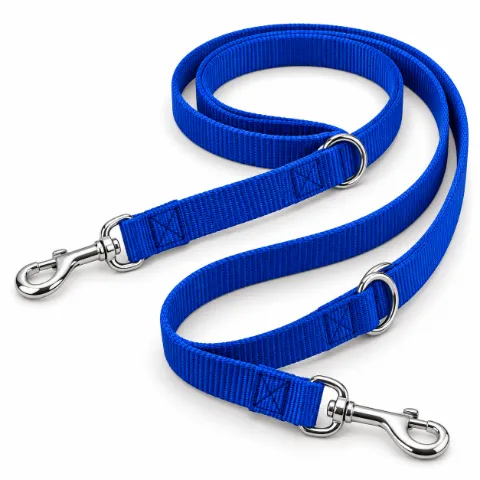
Pet N Pet Dog Treat Pouch
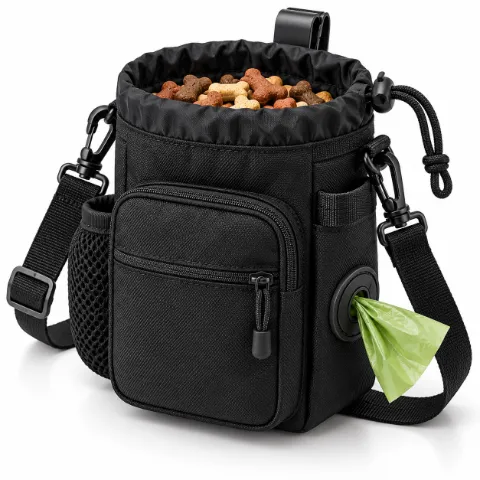
A nylon treat pouch with a drawstring main compartment, a built-in poo bag dispenser and an extra pocket for your phone or keys. It comes with a removable waistband, a removable shoulder strap and a metal belt clip, so you can wear it whichever way suits you. Handy for the frequent rewards that loose-lead training needs.
- Pros: quick one-handed access to treats; poo bag dispenser; three ways to wear it
- Cons: a drawstring isn't as quick to close as a magnetic pouch; wash it regularly if you carry soft treats
- Skip it if: you'd rather use a pocket or a small container
How we chose
We searched Amazon Australia for no-pull dog harnesses, then shortlisted harnesses that met all of these checks:
- Well rated: a strong average rating with plenty of buyer reviews.
- No red flags: no pattern of poor reviews, safety complaints, or straps, rings or buckles failing.
- Available on Amazon Australia when we checked.
- Front attachment: a ring on the chest, which RSPCA Australia recommends for dogs that pull.
- No tightening loop: the harness adjusts with buckles and doesn't tighten when the dog pulls.
- Adjustable, with a clear size range we could match to different dogs.
These are researched picks, not products we've personally tested. We compared the specifications and features shown on each Amazon Australia listing, checked on 18 Oct 2026, with the Rabbitgoo, Easy Walk and Freedom listings checked on 31 Oct 2026. On 18 Oct 2026 we searched Product Safety Australia for recalls of the first four brands and found none. Availability and prices can change. We didn't accept payment from any brand, and no brand saw this page before it was published.
Left out this time: tightening and under-leg harnesses, which the 2025 review rates lower; head halters, which need careful training and are best used with a trainer's help; harnesses with only a back ring; and listings with a pattern of poor reviews or durability complaints. We never include prong, choke or shock collars.
When to see a vet or trainer
See your vet if your dog:
- starts limping, seems stiff or sore, or is suddenly reluctant to walk
- has redness, sores or hair loss where the harness or collar sits
- coughs, gags or breathes noisily on walks, especially after pulling on a collar
- has an eye condition such as glaucoma, since pressure from a collar can raise pressure in the eyes and a harness is a better choice (Pauli et al., JAAHA, 2006)
Talk to a reward-based trainer or behaviour vet if your dog lunges, barks or pulls hard towards other dogs, people or traffic, or if you can't hold them safely on walks.
Frequently asked questions
What is the best harness to stop a dog pulling?
A non-tightening harness with a front clip on the chest, used with reward-based training. Our top pick is the PoyPet No Pull Vest Harness; for big, strong dogs, look at the BARKBAY.
Is a harness better than a collar for a dog that pulls?
For most dogs, yes. A harness takes pressure off the neck, and a front clip helps turn a dog that pulls. RSPCA Australia says a harness is ideal for walking and training because it stops a dog pulling on and potentially hurting their neck.
Front clip or back clip: which is better for pulling?
Front clip. A back clip lets a dog lean into the harness and pull, while a front clip turns them back towards you. A dual-clip harness gives you both.
What harness can a dog not pull out of?
No harness is completely escape-proof, but a well-fitted harness with a third strap around the belly, behind the ribcage, like the Huntboo, makes backing out much harder. Use the two-finger check and recheck the fit regularly.
Are no-pull harnesses cruel?
A well-fitted, non-tightening front-clip harness isn't cruel, and RSPCA Australia recommends one for dogs that pull. Harnesses that tighten when the dog pulls are rated lower by researchers, and prong and choke collars should never be used.
Is a Halti or a no-pull harness better?
Most dogs should try a front-clip harness first. A Halti headcollar gives more control, but many dogs find a muzzle loop uncomfortable and need slow introduction, so RSPCA Australia suggests a head collar only after loose-lead training and a front-attach harness, with a trainer's help. RSPCA South Australia advises avoiding head collars altogether. If you've done that and still need one, our dog head collar guide compares the three main designs. A head halter isn't a muzzle; if your dog needs one, see our dog muzzle guide.
Can a puppy wear a no-pull harness?
Yes. A light, well-fitted harness is a gentle way to start lead training. Check the fit a few times a week, because puppies grow quickly.
Should my dog wear a harness all day?
We'd take it off at home. Keep the harness for walks so straps can't catch on things, and check the skin underneath regularly.
How long does it take to stop a dog pulling?
It varies a lot. Some dogs improve quickly with a front-clip harness and consistent reward-based training; others take much longer. Keep sessions short and watch how your dog responds.
Do pet shops and department stores sell no-pull harnesses?
Many pet and general stores sell harnesses, and stock changes. Wherever you buy, look for a ring on the chest, no tightening loop, adjustable straps and a size chart you can match to your dog's neck and chest measurements.
Related guides
- Best dog harnesses: which type suits your dog
- Front clip dog harness: how it works
- Halti harness guide
- Rogz harness guide
- How to put on a dog harness
- Julius-K9 harness guide
- EzyDog harness guide
- Kennel cough in dogs
- Best dog prams and pet strollers
- Best escape proof dog harnesses
- Best large dog harnesses
- Best small dog harnesses
- Best dog coats and jackets
- Dog enrichment ideas
- Best snuffle mats for dogs
- How to keep your dog cool in summer
- Paralysis ticks: how to check your dog
- Is my dog bored?
- Best dog car harnesses
- Best dog head collars: Halti, Gentle Leader and Canny compared
- Personalised dog harnesses
- Leather dog harnesses
Sources
- 2 Hounds Design: Freedom No-Pull Dog Harness (page read 31 October 2026)
- Cavalli & Protopopova (2025): Review of collars, harnesses and head collars for walking dogs, Animals
- RSPCA Australia: What equipment should I use when teaching my dog to walk on a leash?
- RSPCA Australia: Are pronged collars illegal in Australia? and Is the use of electronic dog collars legal?
- NSW Government: animal welfare law announcement (January 2026)
- RSPCA South Australia: The best-ever walking harness for your dog (and the must-avoid collars and leads) and How to fit your dog's walking harness
- VCA Animal Hospitals: Head halter training for dogs
- American Kennel Club: How to measure your dog for clothes and gear
- Lafuente et al. (2019): Effects of restrictive and non-restrictive harnesses on shoulder extension in dogs at walk and trot, Veterinary Record
- Pauli et al. (2006): Effects of the application of neck pressure by a collar or harness on intraocular pressure in dogs, JAAHA
- Bailey et al. (2025): Effect of a collar and harness on intraocular pressure and respiration rate of brachycephalic and dolichocephalic dogs, Veterinary Medicine and Science
- RVC VetCompass: Flat-faced dogs at increased risk of heatstroke
- RSPCA Australia: 4 ways to keep your dog cool in summer
- Product Safety Australia: Paws For Life LED Dog Lead recall (2025)
- Product details and sizes from each linked Amazon Australia listing, checked on 18 Oct 2026.
This guide provides general information and isn't a substitute for veterinary advice. If you're concerned about your dog's walking, pulling or comfort in a harness, speak with your vet.