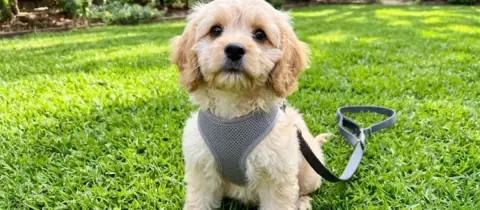
Best dachshund harness: back-friendly fits for sausage dogs
By Anish PuriUpdated 5 Nov 202613 min readResearched, not tested by us
Research guide. WhiskerFinds may earn a commission from links, at no extra cost to you.
Quick answer: The best dachshund harness is a soft, adjustable one that sits behind the front legs and keeps lead pressure off the neck. Our top pick is the Curli Vest Air-Mesh Harness. Measure your dog's chest first, check for armpit rubbing, and see your vet about any back pain, because dachshunds are prone to disc disease.
A dachshund's long body and deep chest make harness fit trickier than it is for most small dogs. This guide compares four harnesses on Amazon Australia, shows how to measure a sausage dog and explains what to do about rubbing under the arms. For a growing pup, start with our puppy harness guide; for a dog who pulls, see our no-pull dog harness guide. To learn more about the breed itself, see our dachshund guide.
Quick picks
Our top pickBest overall
Curli Vest Air-Mesh Harness, 3X-Small
Step-in air-mesh vest with safety D-rings, a one-button click-lock and reflective elements
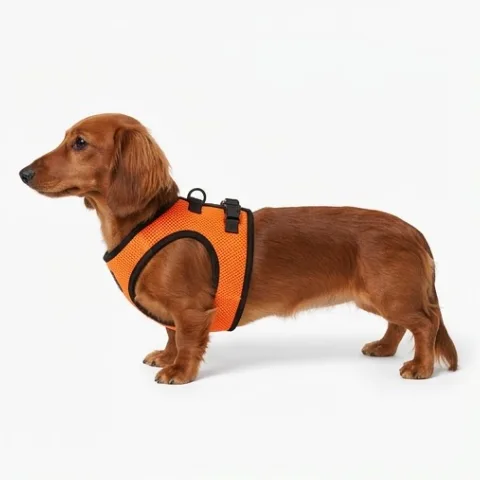
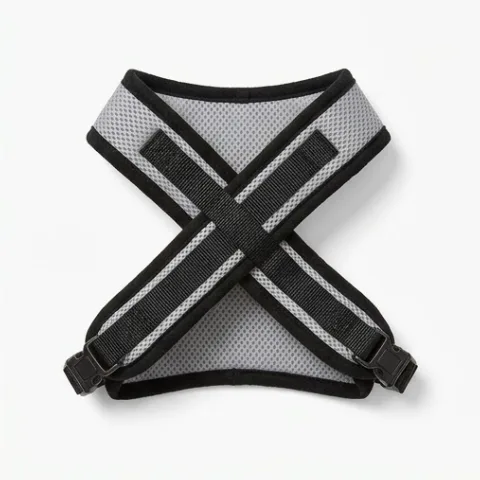
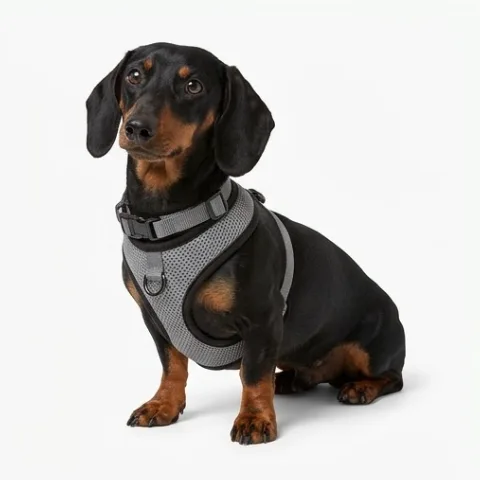
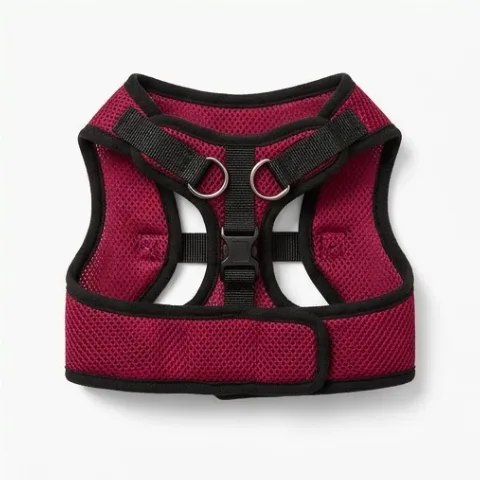
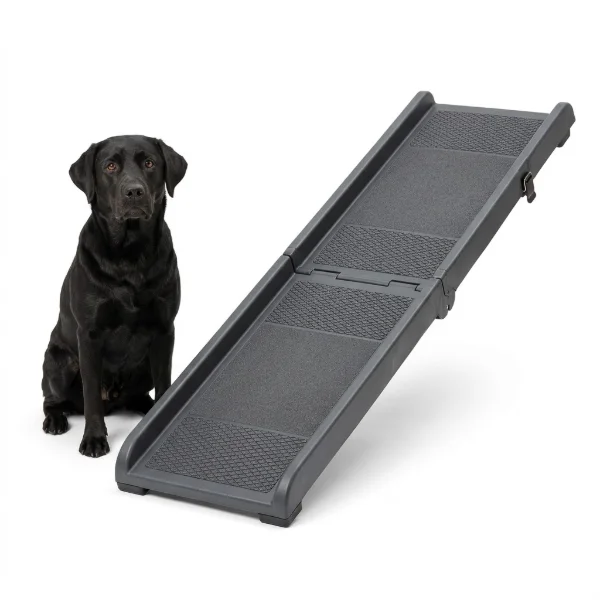
Pictures are illustrations, not the actual products.
Pet shops, vets and specialist dachshund harness makers also sell harnesses, so you can try one on your dog before you commit to a size.
What is the best harness for a dachshund's back?
A harness that spreads pressure across the chest instead of the neck, fits snugly without squeezing, and doesn't restrict your dog's stride. Dachshunds are prone to disc disease, so keeping lead pulls off the neck matters. No harness prevents back problems, and the right fit counts more than the label.
VCA Animal Hospitals notes that dachshunds are among the breeds most affected by the common type of disc disease, linked to their long backs and short legs, and says affected dogs should wear a harness rather than a collar for walks (VCA Animal Hospitals, page read 5 November 2026). Cornell's vet school says a low-stress front clip harness may be suggested for these breeds, and that steps or ramps can cut down on jumping (Cornell University College of Veterinary Medicine, page read 5 November 2026).
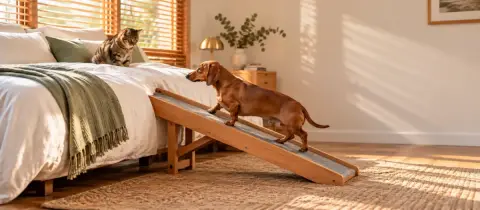
Research on harness design and shoulder movement is mixed, and no design is proven best, so we focus on fit (the no-pull guide covers the studies). The AKC also lists jumping and a hard landing as things that can injure a disc, and stairs and furniture jumps as warning signs (AKC, page read 5 November 2026). Our dog stairs for bed guide and dog car ramp guide cover easier ways up and into the car.
Harness or collar for a dachshund?
Use both: a harness for lead walks and a flat collar that carries the ID tag. RSPCA Australia prefers a harness for walking because it avoids pulling on the neck, and says you should be able to slide two fingers under a collar. For a dachshund, a harness is the sensible walking choice.
RSPCA Australia also says a harness stops a dog pulling on and hurting its neck, suggests a front-attach harness for a dog that keeps pulling, and says check chains, choke chains, slip collars and prong or pinch collars must not be used because they cause pain and can damage the neck (RSPCA Australia, page read 5 November 2026). We never recommend them. For the collar side, see our dog collar guide and dog lead guide.
Our picks in detail
1. Curli Vest Air-Mesh Harness, 3X-Small: best overall
A step-in air-mesh vest designed in Switzerland, with safety D-rings, a one-button click-lock, reflective elements and an adjustable fit. The listing describes it as lightweight, for small and medium dogs, and says its air-mesh technology keeps a dog cool (the brand's claim). It's nylon and hand wash only. The listing also says the design gives an "optimal distribution of pressure and tension points", which is Curli's claim, so judge it by how it fits. Other sizes are on the same listing.
Pros: step-in, so nothing goes over the head; one-button click-lock; reflective elements; adjustable
Cons: no measurements on the listing, and it doesn't name the adjustment points; hand wash only
Best for: dachshunds who dislike a harness going over the head
Skip it if: you can't confirm the size from Curli's chart, or you want machine-washable gear
2. Gooby Comfort X Head-in Harness, Small: best for armpit rubbing
A harness made for small breeds, with a patented X design the listing says sits below the neck and a D-ring on the back, plus micro suede trimming. The Small covers a chest of 23 to 33 cm (9 to 13 in) and is listed for 2.3 to 4 kg (5 to 9 lb). The listing says the largest size fits up to 13.6 kg (30 lb) and to measure the largest part of the chest. The mesh is polyester. The care field lists both hand wash and machine wash, so check the label. Other sizes are on the same listing.
"Choke free" is the brand's claim. A harness can still cause trouble if it fits badly.
Pros: soft trimming; chest measurements on the listing; light mesh; a back D-ring the listing says lowers the pull angle
Cons: head-in, so it goes over the head; the Small suits dogs up to about 4 kg, so many miniatures will need the next size; care instructions are mixed
Best for: small dachshunds who rub under the arms in other harnesses
Skip it if: your dog dislikes anything over the head, or is above the Small's range
3. Puppia Ritefit Soft Mesh Harness, Small: best for a deep chest and a fitted neck
Soft polyester mesh with an inner filler, an adjustable neck with buckles and a hook and loop fastener, and an adjustable chest belt. The Small is listed for 4.5 to 9 kg (10 to 20 lb), and the listing calls it good for casual walks, hiking and training. Care is hand wash only. The listing doesn't say how the harness goes on, so check the photos. Other sizes are on the same listing.
Pros: neck and chest both adjust; padded inner filler; soft mesh
Cons: no chest measurements on the listing, just a weight range; the listing doesn't explain how it goes on; hand wash only
Best for: deep-chested dogs with a narrower neck, and miniatures from 4.5 kg
Skip it if: your dog is a standard dachshund above 9 kg, or you want chest numbers before you order
4. Puppia Soft Vest Harness B, Medium: best simple vest
A polyester air-mesh vest with an inner filler, a hook and loop and clip closure at the chest, and two D-rings. The listing says it is very adjustable, leaves the neck "risk-free" (the brand's claim) and suits hard-to-fit dogs or dogs between sizes. It says to follow the sizing chart, that measurements are of the actual product, and to leave room in the chest and neck. Care is hand wash only.
The weight range field says 1 to 25 kg, which is too broad to size from, and the listing doesn't say whether the neck adjusts. Measure and use Puppia's chart. Other sizes are on the same listing.
Pros: simple vest; padded; two D-rings; closes at the chest
Cons: the weight field is too broad to use; no chest numbers; the neck may not adjust; hand wash only
Best for: owners who want a plain, soft vest and will measure carefully
Skip it if: you need a clear size from the listing alone
How to measure a dachshund for a harness
Measure around the widest part of the chest, just behind the front legs, and around the neck where a collar sits. Keep the tape snug, with room for two fingers. Match your numbers to each listing's chest range, not to breed or weight, and size up if you fall between sizes.
That is the AKC's method, and it adds that adjustable harnesses help when your dog falls between sizes (AKC, page read 5 November 2026). A dachshund adds a third check: look at the length of the body behind the chest. A long dog needs straps that sit just behind the front legs and stay there, rather than sliding back or riding forward into the armpits. The same long back and deep chest break clothing size charts too; our small dog clothes guide has a dachshund section. For step-by-step fitting by harness type, see how to put on a dog harness, and for the full range of types, our dog harness buying guide.
Miniature or standard: which size are you?
Dachshunds come in two sizes, and the ANKC breed standard sets different ideal weights. Weight is just a rough guide, because chest shape varies between dogs. Use the table to see which of our linked sizes could suit, then confirm with a tape measure.
Swipe sideways to see every column
Dachshund
Ideal weight (breed standard)
Where to start
Miniature
4.5 kg, desired maximum 5 kg
The small sizes: Gooby Small or Medium by chest (Small lists chest 23 to 33 cm and 2.3 to 4 kg), Puppia Ritefit Small (lists 4.5 to 9 kg), or Curli's smallest sizes by Curli's chart
Standard
9 to 12 kg
A medium or large size on the same listings, chosen by chest measurement
Choose the size from the menu on each Amazon listing; the link opens one size.
These weights come from the Dogs Australia copy of the ANKC breed standard (Dogs Australia, page read 5 November 2026). The page gives no chest measurement, so we don't give one either.
Only the Gooby listing gives chest numbers for the size we link: Small, chest 23 to 33 cm (9 to 13 in). The Curli listing gives no measurements at all, so check Curli's size chart before you order the 3XS. The Puppia Vest B listing points to a sizing chart and says to leave room in the chest and neck, with no numbers.
Why does my dachshund's harness rub under the arms?
Rubbing under the front legs usually means the straps sit too far forward, are too tight, or are loose enough to slide and chafe. Deep-chested dogs with short legs can show it fast. Our reading is that fit is the usual cause, so adjust the straps first and check the skin.
Try this:
Slide two fingers under every strap. RSPCA South Australia describes the right fit as secure but not too tight, and says a loose harness lets a dog slip an elbow through (RSPCA South Australia, page read 5 November 2026).
Watch your dog walk. RSPCA South Australia says a well-fitted harness shouldn't restrict movement, and your dog should take full strides in front. If the gait changes, readjust.
Look under the front legs after each walk for redness, bare patches or sore skin, and take the harness off at home.
Pick soft edging or a wider chest panel. The Gooby listing mentions micro suede trimming (the listing doesn't say where) and the Puppia listings mention an inner filler.
A softer harness isn't a fix for a bad fit. If rubbing carries on after you adjust, try a different style.
Choose by situation
Swipe sideways to see every column
Your situation
What to look for
Our pick
Rubbing under the arms
Soft trims, a chest strap that sits clear of the legs
We searched Amazon Australia for dachshund harnesses and small-dog harnesses, then shortlisted ones that met all of these checks:
Well rated: a strong average rating with plenty of buyer reviews.
No red flags: no pattern of poor reviews, safety complaints or listing problems.
Available on Amazon Australia when we checked.
A vest or Y-front style that sits clear of the neck.
Adjustable, or sized for long, deep-chested dogs.
Soft edging or padding where the straps meet the front legs.
Washable, with care instructions stated.
These are researched picks, not products we've personally tried. We compared the specifications and features shown on each Amazon Australia listing, checked on 5 Nov 2026. We didn't accept payment from any brand, and no brand saw this page before it was published.
Left out this time: head halters, no-pull training tools, and harnesses already featured on our puppy harness and no-pull dog harness guides.
Can I lift my dachshund by the harness handle?
No, don't lift your dachshund by the harness. None of our four picks lists a handle, and we couldn't find a vet source that covers harness handles. Support the chest and the back end together so the spine stays level, and ask your vet to show you the safest way.
The reason is caution: Cornell notes that dogs with back pain may resist being lifted, and the AKC says a vet may ask you to support your dog's belly with your arm to see whether they can walk (Cornell, page read 5 November 2026; AKC, page read 5 November 2026). The handle technique itself is our own caution, not a vet rule. A walking harness is also not a car restraint; use a crash-designed one from our dog car harness guide, and see our dog car restraint guide for the rules.
When to see a vet
See your vet now if your dachshund is reluctant to jump or use stairs, yelps, stands hunched or with an arched back, won't walk, has wobbly or weak back legs, or seems stiff or sore when touched or lifted. The AKC and Cornell list these as signs of possible back pain.
Sudden weakness, dragging back legs or being unable to walk is an emergency: go to a vet straight away, because the AKC says being unable to walk is the most urgent sign. Also see your vet if you find redness, bare patches or sores under the straps. Our itchy skin guide covers skin signs.
Frequently asked questions
What size harness for a miniature dachshund?
Measure the chest just behind the front legs and match it to the listing's chest range. The ANKC standard gives a miniature an ideal weight of 4.5 kg, but weight is a rough guide. Of our picks, Gooby gives chest numbers and Puppia Ritefit Small lists 4.5 to 9 kg.
Do dachshunds need a no-pull harness?
Not necessarily. Pulling is a training job, and no harness fixes it on its own. If your dachshund pulls hard, reward-based lead training and a front-clip harness may help. Our no-pull dog harness guide compares those options, and a poor fit matters more than a label.
Is a harness and lead set a good idea?
It can be, if the harness fits first. None of the four listings mentions a lead in the box, so you'd likely buy one separately. Choose a light lead that doesn't tug at the harness, and see our dog lead guide for options.
How tight should a dachshund harness be?
Snug but not tight: you should fit two fingers under every strap, and your dog should walk with full strides. Too loose lets a front leg slip through, and too tight can rub under the arms. Recheck often, especially if your dog's weight changes.
Should my dachshund wear the harness at home?
No. Take it off when you're home and when you can't supervise, so straps can't catch and your dog can't chew them. A flat collar carries the ID tag. Taking it off also lets you check the skin under the front legs, and check for ticks after bush walks (see our paralysis tick guide).
Is a dachshund harness with a handle worth it?
A handle can help you steady your dog at a kerb or guide them onto a ramp, but it isn't for lifting: never lift a dachshund by the handle, and support the chest and back end together instead. None of our four picks lists a handle, so judge any handled harness by its fit first.
Product details from each linked Amazon Australia listing, checked on 5 Nov 2026.
This guide provides general information and isn't a substitute for veterinary advice. If you're concerned about your dog's back or how a harness fits, speak with your vet.