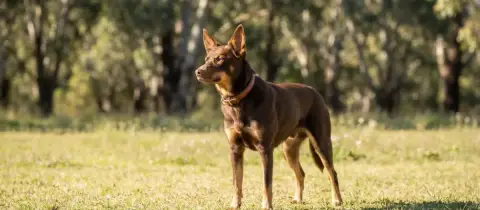
Best dog collars: budget, cute and everyday collars compared
By Anish PuriUpdated 18 Nov 202615 min readResearched, not tested by us
Research guide. WhiskerFinds may earn a commission from links, at no extra cost to you.
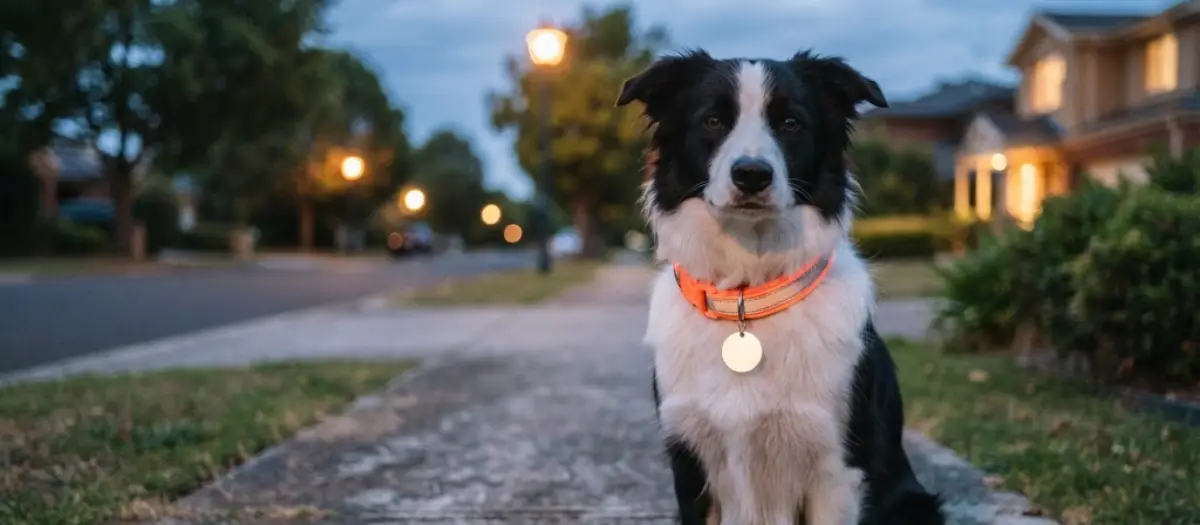
Quick answer: The best dog collar for most dogs is a flat, padded, reflective one that fits with two fingers under it and carries an ID tag. Our top pick is the reflective padded neoprene collar. For a name on it, see the personalised pick. If your dog pulls, use a harness. Never use prong, choke or shock collars.
A collar is where your dog's ID tag lives, so it matters even if you walk in a harness. This guide compares five collars on Amazon Australia, explains fit and ID rules, and covers why we leave out training collars. If your dog pulls, start with our no-pull dog harness guide or, to choose a harness type first, our dog harness buying guide. If your dog swims or lives at the beach, our waterproof dog collar guide compares coated collars that wipe clean.
Quick picks
Our top pickBest overall
Reflective padded neoprene dog collar
Soft padding, 360 degree reflective strap and a quick release buckle
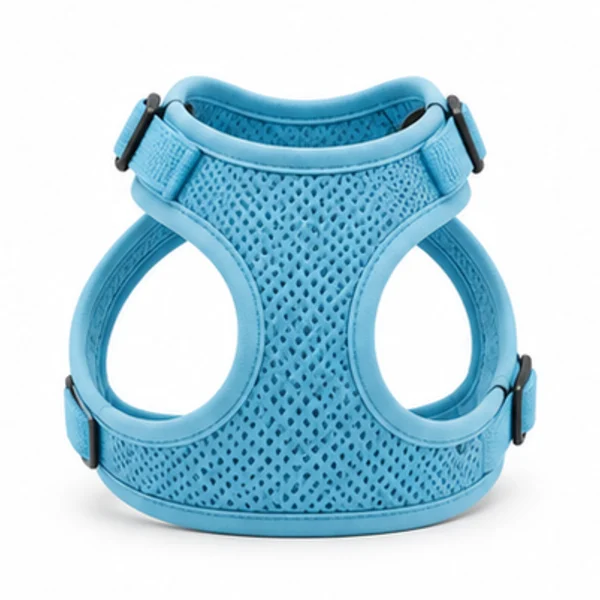
Pictures are illustrations, not the actual products.
We don't recommend martingale (limited slip) collars, so there's no martingale pick. The martingale section below explains why, and what to use instead.
What type of collar does your dog need?
Most dogs do well in a plain flat collar that is comfortable and holds an ID tag. Padded and reflective collars add comfort and visibility, and personalised collars carry contact details. Prong, choke, slip, martingale and shock collars are not on the list. If you want a lead to match, our collar and lead set guide compares six sets by neck size in cm.
No dog. We never recommend them; a dog that slips a collar needs a well-fitted harness
RSPCA Australia says collars are fine if they are in good condition, fitted correctly and comfortable, and that choke chains, slip collars and pronged collars must not be used because they cause pain and distress and can damage the neck (RSPCA Australia, page read 1 November 2026).
For a first collar on a growing pup, see our puppy collar guide, which covers soft collars and resizing as they grow.
How tight should a dog collar be?
You should be able to slide two fingers comfortably under the collar once it's on. Any tighter and it can rub or restrict your dog, and any looser and it can slip over the head. Check the fit often, because coats, weight and growth all change it. The same thumb test applies to a bandana tied over the collar; see best dog bandanas.
RSPCA Australia says puppies grow quickly, so check the fit of their collar at least a few times a week (RSPCA Australia, page read 1 November 2026). The American Kennel Club suggests measuring around the neck where the collar sits, allowing two fingers of room, and sizing up if your dog is between sizes (AKC, page read 1 November 2026). Compare your numbers with each listing's size chart, because sizes differ between brands.
Take the collar off in the crate. The AKC advises removing the collar before a dog goes in, for safety (AKC, page read 1 November 2026), as our puppy crate training guide explains. The same goes for any time your dog is unsupervised.
Our picks in detail
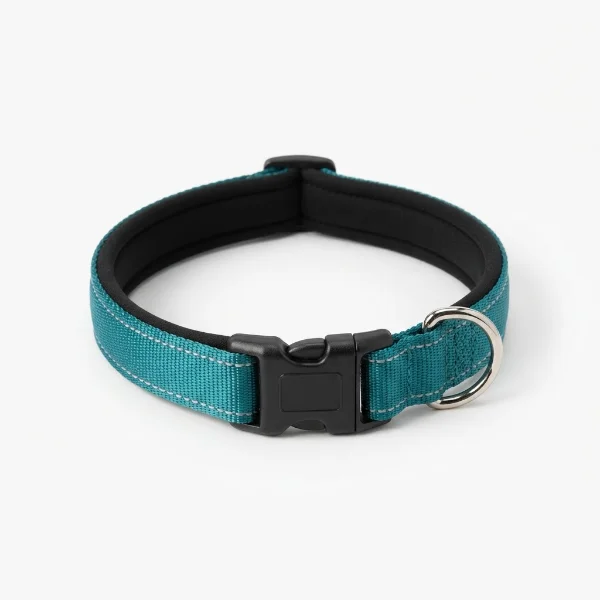
1. Reflective padded neoprene dog collar: best overall
A nylon collar with a soft neoprene padded lining, which the listing says prevents irritation on the neck. The straps are reflective all the way round, so a driver or you can spot your dog at night. It has a quick release buckle, a separate loop for tags and leads, and comes in 14 colours and five sizes. The listing says it's machine washable, and our teal medium example is the size the listing shows.
Pros: padded lining; reflective all round; tag loop; machine washable
Cons: the listing doesn't give the neck range in the text we saw, so check the size chart; the listing claims it's waterproof, so dry it well anyway; for a collar made for swims, see our waterproof dog collars
Best for: an everyday collar for walks at dusk and dawn
Skip it if: you need a metal buckle, or you want a personalised plate
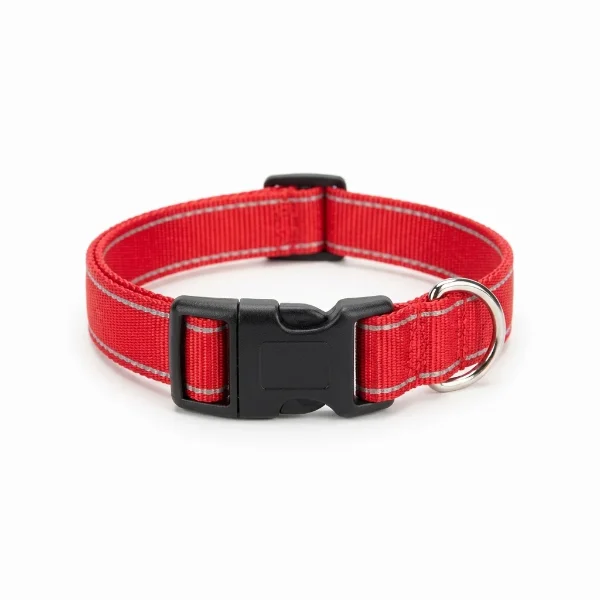
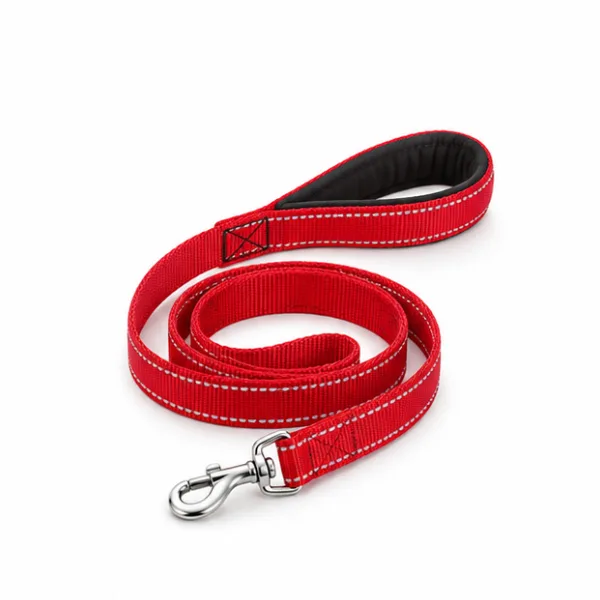
2. Rogz Classic reflective dog collar: best for night walks
Soft, durable webbing with a reflective stitch woven in, a die cast ring and a buckle. The medium adjusts from 26 to 40 cm and is 16 mm wide, and the listing shows a size range from small (11 mm wide) to extra extra large (40 mm wide). The listing suggests pugs, Jack Russells and terriers for the medium. Care is wipe clean. Reflective stitching only shows when a light hits it. For a collar that lights up on its own, see our light up dog collars guide. Rogz harnesses are compared in our Rogz harness guide.
Pros: reflective stitching; wide size range; strong ring
Cons: the listing's details field lists a leash as included, which looks like a data error, so don't count on one; wipe clean only; the breed examples are a guide, so measure your dog
Best for: dogs walked in the evening or early morning
Skip it if: you want padding
3. Mihqy patterned soft dog collar: best patterned collar
A lightweight polyester collar in boho floral and geometric prints, with a metal D-ring and a quick release plastic buckle. The small fits necks from 25 to 40 cm and is 1.5 cm wide, and the listing notes the main photos show the large size. It's machine washable in cold water, and the listing says to keep the plastic buckle away from high heat.
Pros: many prints; light; metal ring; machine washable
Cons: no reflective material listed; plastic buckle; the listing says it's strong for pullers, but pulling is a job for a harness
Best for: a pretty, light collar for a calm walker
Skip it if: your dog pulls hard, or you need a collar that shows up at night
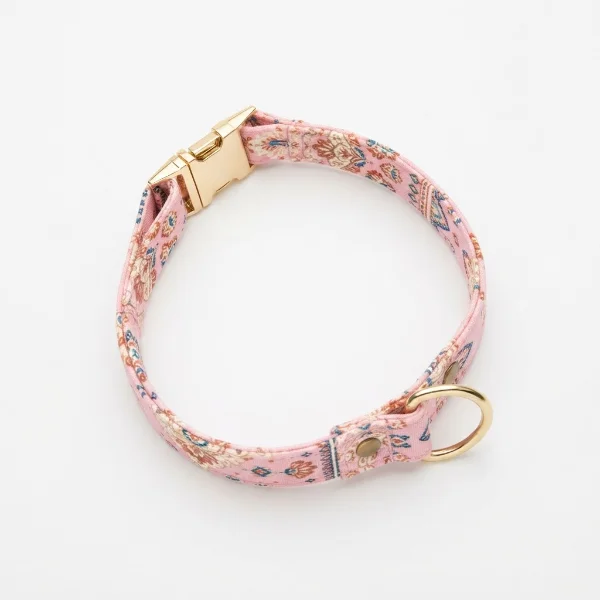
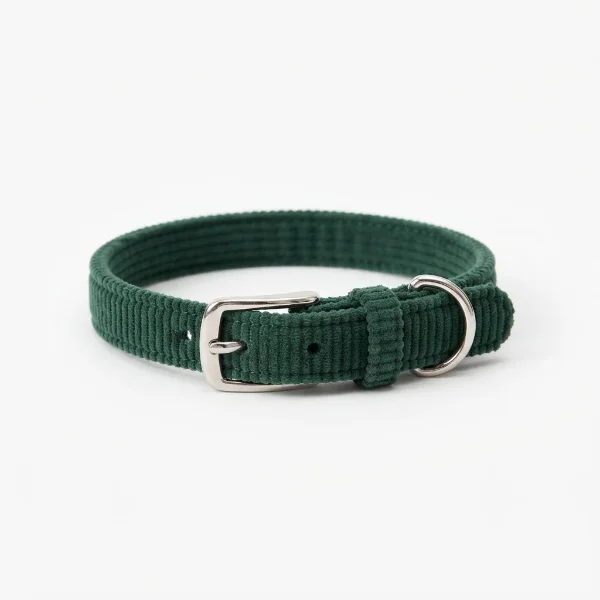
4. Ultra-soft cotton corduroy collar: best for small dogs and sensitive skin
A cotton corduroy collar made for small dogs, with rose gold plated hardware and a metal quick release clasp. The small fits necks from 25 to 38 cm and is 1.5 cm wide. The listing says corduroy is hypo-allergenic and has no hard stitching on the inside. Treat that as a maker claim, and see your vet if your dog's neck is sore.
Pros: soft fabric; metal clasp; wash by machine or hand in cold water
Cons: small size is the one we checked, so bigger dogs need a different listing; no reflective strip; hang to dry
Best for: small dogs and dogs with a sensitive neck
Skip it if: you walk at night, or your dog is a strong puller
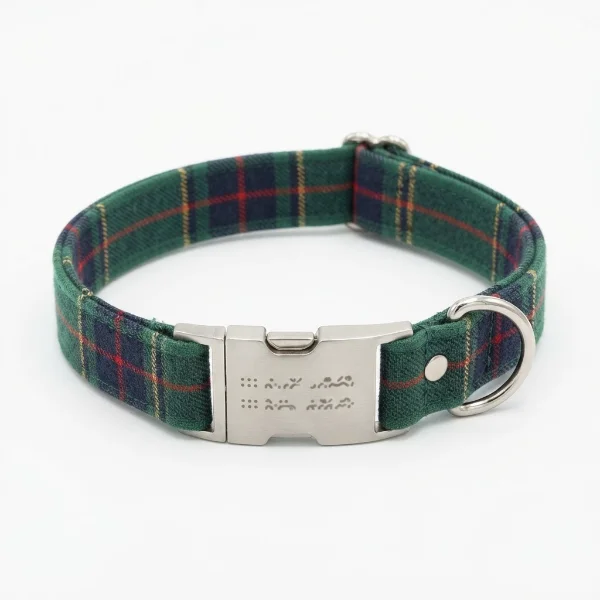
5. Custom engraved dog collar: best personalised collar
A polyester collar with a stainless steel buckle and D-ring. The listing says your dog's name and phone number are laser engraved, and that you give the details under gift options at checkout or by message after ordering. The size we checked is the extra large, for necks from 37 to 60 cm, in green plaid. Bow tie and leash are sold separately.
Pros: details engraved on the collar; metal buckle and ring; adjustable
Cons: made to order, so check the spelling and phone number carefully before ordering; the listing says no extra tag is needed, but councils require a registration tag in some areas, so check yours
Best for: a dog who wanders on walks and needs a name and number on the collar
Skip it if: you need it in a hurry, or you'd rather swap details easily on a tag
Does your dog need to wear ID in Australia?
Yes, in most places. Dogs need a microchip and council registration. In NSW a dog away from home must wear a collar and tag with its name and your address and phone number, and in Victoria registered dogs wear their council registration tag. Rules differ by state and council, so check yours. A tracker doesn't replace a microchip or tag.
In NSW, Campbelltown City Council says all dogs except working dogs must wear an identification collar and tag engraved with the dog's name and the owner's address and phone number, and that a pet must be microchipped before it can be registered (Campbelltown City Council, page read 1 November 2026). In Victoria, Hume City Council says pets must wear their council-issued registration tag, that dogs over three months need a microchip and registration, and that lost tags can be replaced for free (Hume City Council, page read 1 November 2026).
Those are two councils, not the whole country. For your own suburb, use your council's pet registration page.
Dog collars compared
Details from each Amazon Australia listing, checked on 15 Nov 2026.
Price bands compare the five collars at the sizes we link, checked on 15 Nov 2026. Tap Check price on Amazon for today's price.
Which cheap dog collars are worth buying?
A budget dog collar is fine if the buckle locks, the D-ring is metal, the stitching is even where the ring sits and the size range is printed. Our Budget labels above mark the lower-cost picks on this page. Skip any collar listed as a choke or check collar, whatever it costs, and fit it with two fingers of room.
What you give up at the budget end is usually extras such as a pattern or a name on the collar, not safety. Both Budget picks here, the padded neoprene collar and the Rogz, have reflective stitching for dusk walks. The corduroy collar (Mid) suits small dogs with sensitive necks, and the engraved collar (Premium) puts your number on the collar itself.
What makes a cute dog collar safe?
A cute dog collar still needs a quick-release buckle, a metal D-ring and nothing dangling that a dog could chew off. On this page the Mihqy patterned collar and the cotton corduroy collar are the pretty picks, both with a metal D-ring. For festive looks, see our Christmas dog collar and dog bow tie guides.
How we chose
We searched Amazon Australia for dog collars and shortlisted collars that met all of these checks:
Well rated: a strong average rating with plenty of buyer reviews.
No red flags: no pattern of poor reviews, safety complaints or listing problems.
Available on Amazon Australia when we checked.
Adjustable, with the size range listed.
A secure buckle and a ring for an ID tag.
Comfortable material.
Reflective or high-visibility where the listing claims it.
These are researched picks, not products we've personally tested. We compared the specifications and features shown on each Amazon Australia listing, checked on 15 Nov 2026. We didn't accept payment from any brand, and no brand saw this page before it was published.
Left out this time: prong, choke and shock collars (we never recommend them), bark collars, collars listed as choke or check collars, and collars with a pattern of buckles breaking.
Personalised dog collars and ID tags
A personalised collar puts your dog's name and number where a finder will look. It's useful, but it doesn't replace the microchip or council tag. Keep your microchip details up to date and check what your council requires on the tag. We compare engraved buckles, name plates and embroidery in our personalised dog collars guide.
A few things to check before ordering:
Spelling and phone number. Made to order means no easy returns for typos.
Where the details sit. Engraved plates, embroidery and hanging tags all work, but plates can wear.
Keep a tag on too, where your council wants a registration tag.
Related gear: the THAIN personalised engraved collar is a second personalised option. The listing says it's cotton with a metal buckle, has a detachable bow tie, and takes one to two lines of laser engraved text sent after purchase. The listing admits the metal hardware makes it a little heavy, so it suits bigger dogs better than tiny ones.
A martingale, or limited slip, collar is a strap with a small control loop that tightens around the neck when the lead pulls. It's sold for dogs with necks as wide as their heads, such as greyhounds and whippets, who can back out of a plain collar. Because it works by tightening on the neck, we don't recommend it.
RSPCA Australia says a harness is recommended for dogs whose necks are not much narrower than their heads, such as greyhounds and whippets, and warns against slip collars (RSPCA Australia, page read 1 November 2026). So for a sighthound, or any dog that backs out of a collar, use a well-fitted harness for the lead and a flat collar for the ID tag. Our greyhound harness guide covers sighthound fits, and the escape proof harness guide covers dogs that wriggle free.
Collar or harness?
A collar suits ID and everyday wear. A harness is the better choice for walking, especially if your dog pulls, has a flat face, or can slip a collar. Many dogs wear both: a collar for the tag, and a harness for the lead.
Why we don't recommend bark, prong or choke collars
RSPCA Australia opposes prong collars, which it says can cause injury, pain and distress, and it advises reward-based training instead. They are illegal to import into Australia and illegal to use in Victoria, Tasmania and Queensland. The RSPCA also opposes shock and other bark collars.
On prong collars, RSPCA Australia links them to stress, aggression and physical harm, and says the import is illegal and use is banned in Victoria, Tasmania and Queensland (page last updated 3 June 2024, RSPCA Australia). Its state-by-state table for shock collars shows they're banned in some places and allowed with conditions in others, so legal doesn't mean safe (RSPCA Australia, information current to 19 December 2022).
Barking is a signal. The RSPCA says dogs bark from boredom, excitement, distress, territorial defence, fear or anxiety, and it advises seeing your vet first, then working on the cause with a reward-based behaviourist (RSPCA Australia, page read 1 November 2026). If boredom may be a factor, start with is my dog bored?. If the noise is fear of storms or fireworks, see our storms and fireworks guide. If you want to watch what's happening while you're out, our pet camera guide is a start, though cameras don't treat anxiety.
When to see a vet
See your vet if your dog has hair loss, redness, sores or scabs under the collar, or keeps scratching at the neck. Coughing or gagging when the collar tightens is also worth a check, and a harness may suit better.
For a dog that barks a lot, a vet can rule out pain or other causes before you start training. See our itchy skin guide for skin signs, and use a reward-based behaviour professional rather than a bark collar.
Frequently asked questions
What is the best type of collar for a dog?
For most dogs, a flat collar that fits well, feels comfortable and holds an ID tag is the best type. Padding and reflective thread are useful extras. Sighthounds and dogs that slip collars may do better in a harness, so check what suits your dog.
How do I check my dog's collar fits?
You should be able to slide two fingers comfortably under the collar. If you can't, it's too tight, and if it slips over the head, it's too loose. RSPCA Australia says to check a puppy's collar at least a few times a week as they grow.
Should my dog wear a collar or a harness?
Both can be useful. A collar holds the ID tag, while a harness is a better choice for walking, especially if your dog pulls or can slip a collar. RSPCA Australia describes a harness as ideal for walking and training. Many dogs wear both.
Does my dog have to wear a collar with ID in Australia?
Often, yes. In NSW, councils say a dog away from home must wear a collar and tag with its name and your address and phone number, and in Victoria registered dogs wear their council registration tag. Dogs need a microchip too. Rules differ by state and council, so check yours before relying on a general answer.
Does my greyhound or whippet need a martingale collar?
No. A martingale is a limited slip collar that tightens on the neck when the lead pulls, and we don't recommend it. RSPCA Australia recommends a harness for dogs whose necks are not much narrower than their heads, such as greyhounds and whippets. Clip the lead to a greyhound harness and keep a flat collar for the ID tag.
When should I replace my dog's collar?
Replace it when the webbing frays, the buckle no longer clicks shut, the D-ring bends or your dog has outgrown the size range. RSPCA Australia says to check a puppy's collar fit at least a few times a week, so build a quick buckle and ring check into that habit.
Are bark collars cruel?
RSPCA Australia opposes anti-bark collars that use shocks, high-pitched sounds or citronella, and says training shouldn't involve punishment, which tends to make barking worse. Barking has many causes, from boredom to fear, so see your vet and a reward-based behaviourist instead of reaching for a bark collar.
Should I take my dog's collar off at night?
Take it off in the crate, and whenever your dog is unsupervised. The AKC advises removing the collar before a dog goes into a crate, for safety. If your dog sleeps loose in the house with you nearby, many owners keep it on, but it's your call.
Can I use a collar with a tracker instead of a microchip?
No. A tracker can help you find a lost dog, but it doesn't replace a microchip, registration or an ID tag. A battery can run flat or the tracker can fall off. Keep your microchip details current and carry a tag where your council requires one.
Product details from each linked Amazon Australia listing, checked on 15 Nov 2026.
This guide provides general information and isn't a substitute for veterinary advice. If you're concerned about your dog's neck, skin or behaviour, speak with your vet.