Best dog crate in Australia (2026): wire, soft and furniture
By Anish PuriUpdated 31 Oct 202613 min readResearched, not tested by us
Research guide. WhiskerFinds may earn a commission from links, at no extra cost to you.
Quick answer: The best dog crate for most dogs and puppies is a folding wire crate sized so your dog can stand, turn around and lie down comfortably. Our top pick is the Amazon Basics double door wire crate, which has a divider for growing puppies. Soft and furniture-style crates suit calmer dogs who won't chew or force their way out.
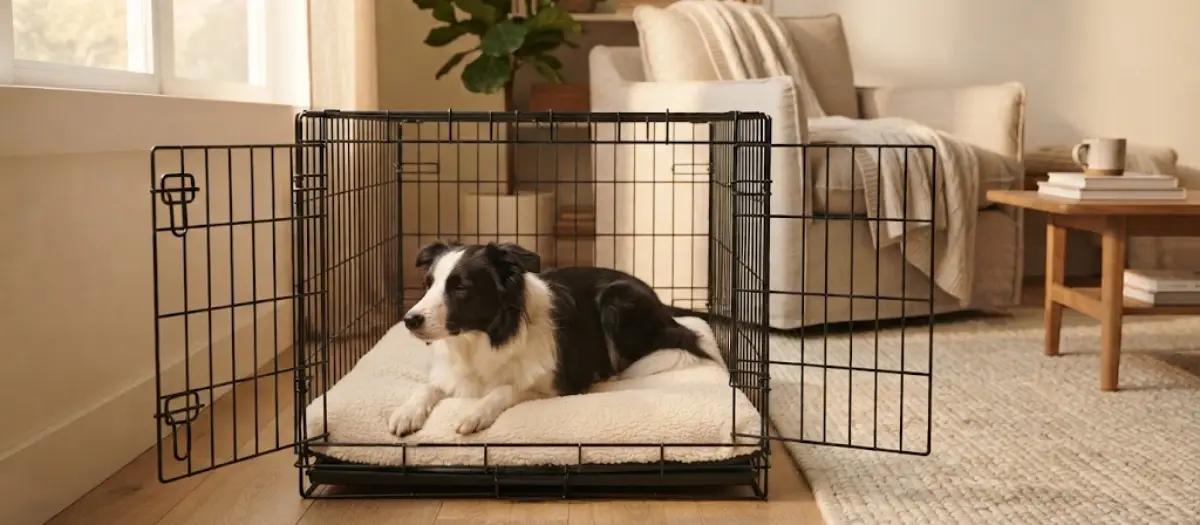
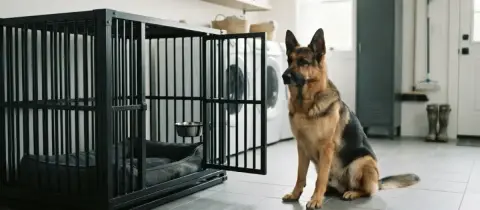
Illustration, not the actual product
Our top pickAmazon Basics folding wire crate, double door
A crate can be a quiet, safe spot for short stays when it's introduced slowly and kindly. This guide compares three crate types on Amazon Australia, shows how to measure your dog, and covers where to put the crate. New to the idea? Start with our guide to crate training a puppy.
Quick picks
Our top pickBest overall
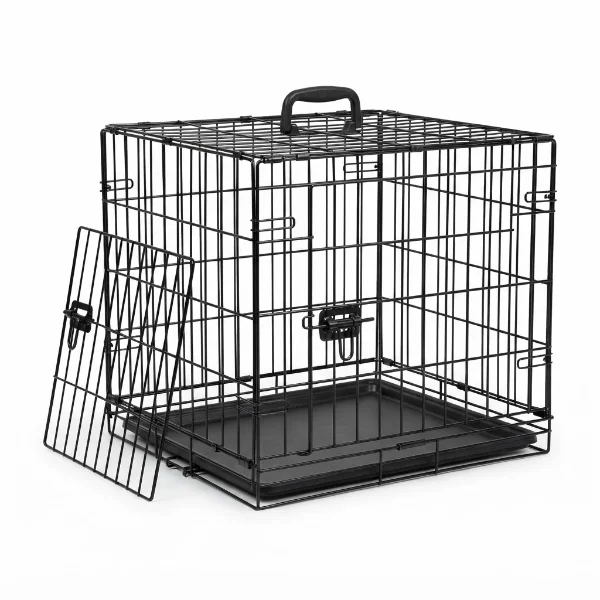
Amazon Basics folding wire crate, double door
Front and side doors, a divider and a removable tray, in several sizes
Pictures are illustrations, not the actual products.
Weighing up a crate for a dog of about 32 kg or heavier? See our large dog crate guide. For toy and small breeds, see our small dog crate guide. For a Staffy, Kelpie or Border Collie-sized dog, see our medium dog crate guide. Not sure a crate is right at all? A dog playpen may suit you better, and we explain why below.
What size crate does your dog need?
Your dog should be able to stand, turn around and lie down comfortably. SPCA New Zealand adds that they should be able to sit at full height and stretch out naturally (SPCA New Zealand, page read 31 October 2026). A crate that is too small is uncomfortable, and one that is far too big loses the cosy, den-like feel. For a puppy, our puppy crate guide has the growth table in kg and what to put inside.
Measure your dog like this:
Length: with your dog standing, measure from the nose to the base of the tail. The Amazon Basics listing uses this method.
Height: measure from the floor to the top of the head. Then sit your dog down and check that ears and head have room too.
Add room: the Amazon Basics listing says to add 10 cm to both measurements. The AKC says to add 3 to 4 inches (about 8 to 10 cm) (AKC, page read 31 October 2026). Note that the AKC measures to the tail tip, so you may land on a slightly longer number. When in doubt, follow the maker's own sizing advice for the crate you're buying.
Puppies: buy for the likely adult size and use a divider panel to shrink the space for now. The AKC suggests moving the divider as your puppy grows. It also notes that a much bigger crate may let a dog toilet at one end and rest at the other.
Here is a rough guide to crate length. It's our own general guide, not a standard, so always check your dog's measurements and the listing.
Rough crate length
Example dogs (check your dog)
About 55 cm
Toy breeds such as a Toy Poodle or Yorkshire Terrier, per the Amazon Basics listing
About 60 to 75 cm
Small dogs such as a Maltese or a Cavalier King Charles Spaniel
About 75 to 95 cm
Medium dogs such as a Border Collie or a Staffy, depending on build
Dogs of the same breed vary a lot in build, and a growing puppy changes week to week. If your dog sits between two sizes, measure again before buying.
Wire, soft, plastic or furniture crate?
Each crate type suits a different dog and home. A wire crate is the most flexible choice for most households. Soft crates suit calm dogs who don't chew, and furniture crates suit people who want the crate to blend into the room. Plastic airline-style crates are mostly a travel option.
Swipe sideways to see every column
Type
Good for
Not for
Folding wire
Most dogs and puppies, with airflow and a divider
Homes wanting a hidden crate
Soft
Calm dogs, travel, short stays
Chewers, escape artists and dogs still toilet training
Are soft crates safe? Soft crates can be fine for calm dogs, but they don't suit every dog. The AKC says they suit small breeds that won't chew, and they're harder to clean after accidents. A dog who chews or digs at fabric, or tries hard to get out, can break through zips or mesh, so choose wire for these dogs.
Furniture crates and chewing. Yes. Furniture-style crates are built to sit in a living room or bedroom, often with a flat top for a lamp or plant. Check that your dog won't chew the wood or boards, and that the top is steady. Most dogs still need the same sizing and slow introduction as any crate. We compare six furniture crates by inside size in our wooden dog crate guide.
Our picks in detail
1. Amazon Basics folding wire crate, double door: best overall
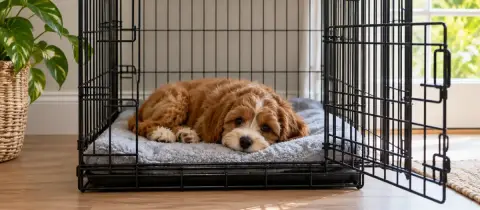
A black metal wire crate with a front door and a side door, so you can fit it into different corners of the room. The listing says it has a manual door locking mechanism, a divider to adjust the inside space and a removable plastic base tray for cleaning. It folds flat and has a top handle. The link goes to the 55 cm size, which the listing says suits pets under 45 x 29 cm, like a Toy Poodle or Yorkshire Terrier. Choose your size on the listing, and check that your size includes the divider.
Pros: two doors; divider to size the space for a growing puppy; removable tray; folds flat
Cons: the linked 55 cm size suits just very small dogs, so pick your size carefully; the open wire sides give little privacy unless you add a cover
Best for: puppies and most family dogs who are learning to relax in a crate
Skip it if: you mainly need a crate for the car (see our dog car crate guide), or you want the crate to look like furniture
2. Feandrea collapsible soft dog crate, 91 cm: best soft crate
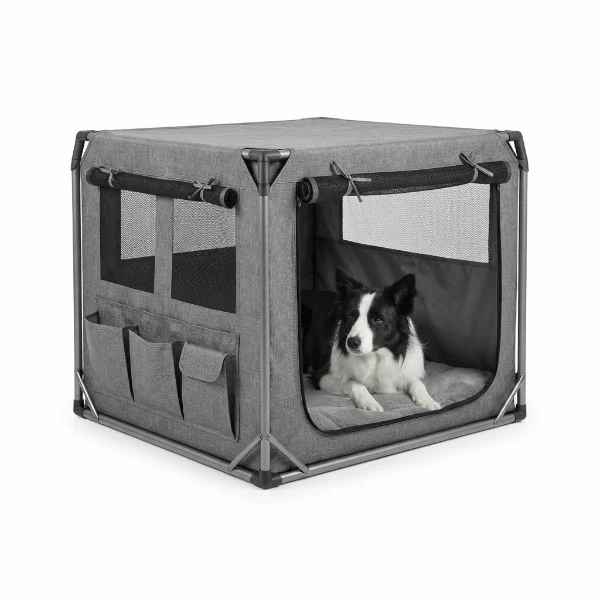
A soft-sided crate with a steel frame and 600D Oxford fabric. The listing says it measures 91 x 63 x 63 cm and is meant for dogs between 23 and 32 kg. It has mesh doors and windows, safety zips, side pockets and an easy-to-clean mat. It folds flat to about 8 cm deep, and the listing suggests it for camping, hotel stays or at home.
Pros: light and easy to carry; mesh windows for airflow and a view; folds flat for storage
Cons: the listing gives conflicting dimensions (91 x 63 x 63 cm in the text and 91 x 91 x 63 cm in the details), so check before you buy; fabric and zips are not made for chewers
Best for: a calm, adult dog who is already comfortable resting in a crate, or for trips away
Skip it if: your dog chews, digs or pushes at the sides, or you're toilet training a puppy
3. Hzuaneri dog crate furniture with barn door: best furniture-style crate
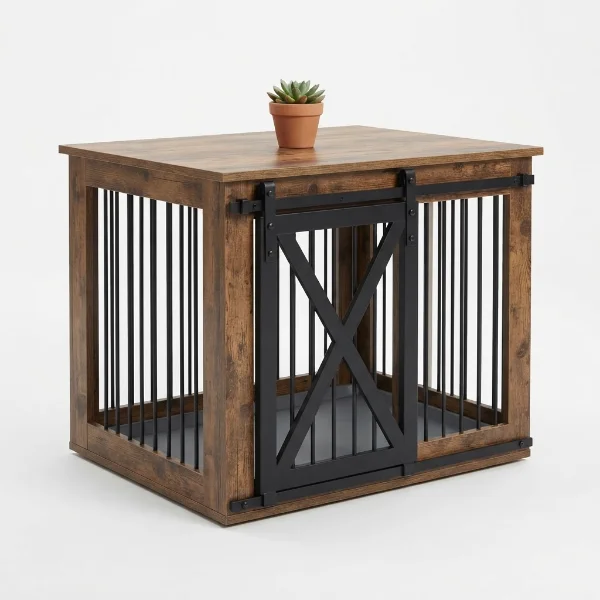
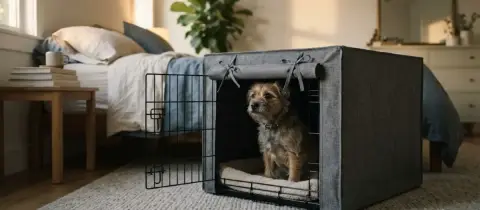
A wood-look crate with a sliding barn door and a second side door with a multi-lock. The listing gives the inside size as 37 x 21.7 x 22.6 inches (about 94 x 55 x 57 cm) and says it fits medium dogs such as a Border Collie or Shiba Inu. The top is meant to work as a side table or TV stand. The listing says the board edges are covered and that it has 0.4 inch steel tubes. It calls the crate "anti-chew", which is the brand's claim, so keep an eye on your dog.
Pros: looks like furniture; two doors; steel tubes inside the frame per the listing; wipeable chipboard surface
Cons: the listing is inconsistent (the bullets say medium dogs, but the details list a large breed size and a different ASIN), so check the inside measurements; heavy and hard to move once built; assembly needed
Best for: a medium dog in a living room or bedroom who is relaxed in a crate
Skip it if: your dog chews wood, or you need to move the crate often
Dog crates compared
Details from each Amazon Australia listing, checked on 31 Oct 2026.
Inside about 94 x 55 x 57 cm (37 x 21.7 x 22.6 inches)
Medium dogs in a living area
How we chose
We searched Amazon Australia for dog crates in each type, then shortlisted crates that met all of these checks:
Well rated: a strong average rating with plenty of buyer reviews.
No red flags: no pattern of poor reviews, safety complaints or listing problems.
Available on Amazon Australia when we checked.
Size options and inside measurements listed.
Secure latches.
A removable tray (wire) or washable cover (soft).
A divider for growing puppies where offered.
These are researched picks, not products we've personally tested. We compared the specifications and features shown on each Amazon Australia listing, checked on 31 Oct 2026. We didn't accept payment from any brand, and no brand saw this page before it was published.
Left out this time: crates with a pattern of latches failing or dogs escaping in buyer feedback, soft crates sold as suitable for anxious or chewing dogs, and very large heavy-duty crates (see our large dog crate guide).
When is a playpen a better choice?
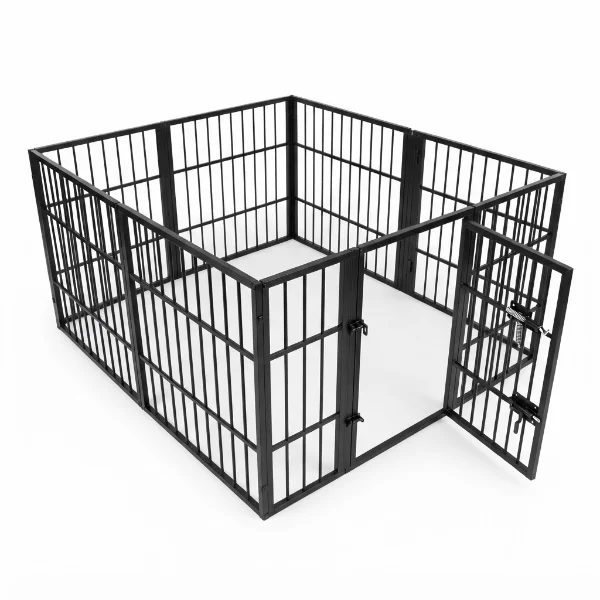
A playpen suits you better if you want a larger, open area rather than a snug den. A puppy who needs room to play, a dog learning where to toilet, or a dog who doesn't settle in a small space may do better with a pen. Compare options in our dog playpen guide.
Where should you put a dog crate?
Put the crate where your family spends time, such as the living room, so your dog can stay close to people. The AKC and SPCA New Zealand both suggest a busy area, and SPCA NZ says you can move it later once your dog sleeps well. Keep it out of direct sun, away from heaters and draughts, and with air moving around it.
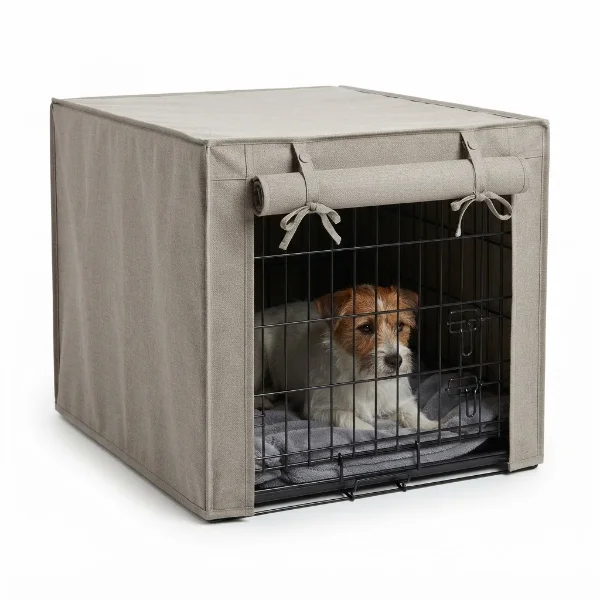
Never leave a dog in a crate in the sun or a hot room, because dogs overheat quickly. Provide shade, airflow and water, and read our guide to keeping your dog cool in summer. A cover can make a crate feel like a cosy den, but it must not block airflow on hot days. See our dog crate cover guide for choices.
Is it cruel to crate a dog?
A crate isn't cruel when it's used kindly, for short stays and as a comfortable spot. It becomes a problem when a dog is shut in for long stretches or as punishment. SPCA New Zealand says it's never acceptable to shut a dog in a crate all day while you go to work (SPCA New Zealand).
There is no single number of hours that suits every dog. Puppies, older dogs and anxious dogs cope with much less. See how to keep a dog busy while you're at work for more.
A crate also doesn't treat separation anxiety. SPCA NZ notes that a dog may hurt themselves trying to escape, and that it needs counterconditioning and desensitisation. If your dog is distressed when alone, a crate can make that worse. See is my dog bored? and talk to your vet first.
Making the crate comfortable
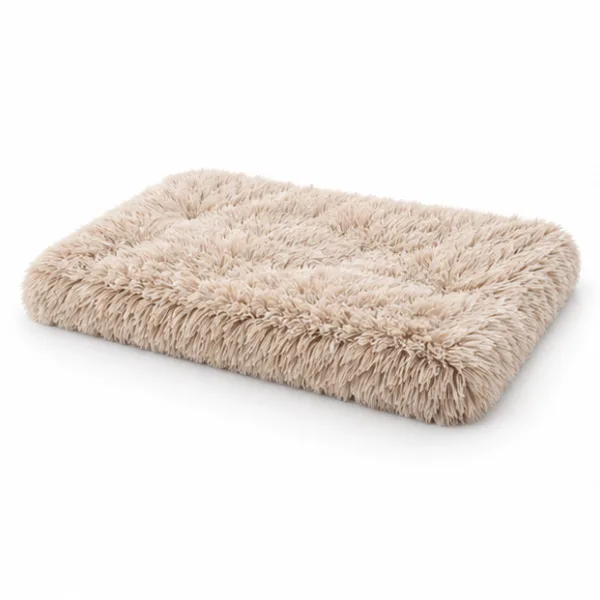
Make the crate somewhere your dog wants to go. Add a washable bed that fits the floor, and offer treats and calm praise when they step in. Never use it for punishment, and let your dog come and go during the day while they learn.
Bed and cover: a flat, washable bed is enough. Skip anything your dog shreds.
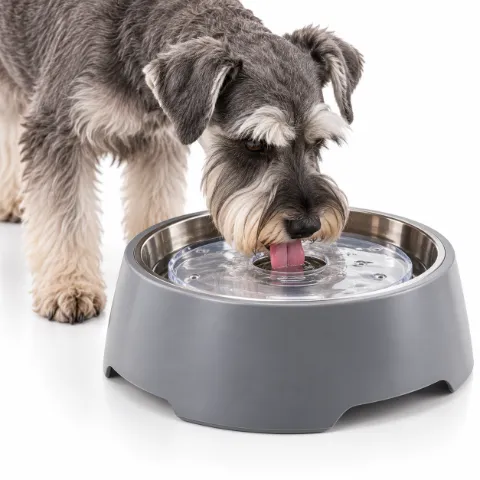
Water: offer water for longer stays, in a spill-proof bowl that clips to the side.
Collar and tags: consider taking off your dog's collar in the crate. PetMD notes that hanging tags can catch on crates and cause a choking risk, and a vet quoted there recommends letting a dog sleep without a collar, so microchipping helps with identification (PetMD, page read 31 October 2026).
Summer: a cooling mat can help in warm weather, but never replaces shade and airflow. See our dog cooling mats guide.
When to get help
Stop using the crate and see your vet if your dog panics, pants heavily, drools, tries hard to escape or hurts themselves on the crate. These signs may be more consistent with distress or overheating than with a dog who needs more practice. Cool a hot dog with cool, not ice-cold, tap water and go to the vet even if they seem better.
A crate won't treat separation anxiety. If your dog is upset when alone, talk to your vet and then a qualified, reward-based behaviour professional. SPCA New Zealand also warns against yelling at a dog or banging on the crate (SPCA New Zealand, page read 31 October 2026). Our guide is my dog bored? explains the signs.
Frequently asked questions
How do I measure my dog for a crate?
Choose a crate where your dog can stand, turn around and lie down comfortably. Measure from nose to base of tail and from the floor to the top of the head, then add about 10 cm to both, as the Amazon Basics listing advises. For puppies, buy for adult size and use a divider.
Is a wire or plastic crate better?
Wire crates have open sides for airflow and a view, and often fold flat with a divider, so they suit most homes. Plastic crates are more enclosed and mostly suit travel. Whichever you pick, watch airflow on warm days and never leave your dog in a hot room.
Should a dog crate have a divider?
A divider is useful for a growing puppy. It shrinks the space now and can be moved as your puppy grows. The AKC suggests buying for adult size and using a divider, because a crate that is too big may let a dog toilet at one end. The Amazon Basics crate has one per its listing.
Where should I put my dog's crate?
Choose a family area such as the living room, so your dog feels part of things. Keep it out of the sun, away from heaters and with air moving around it. A cover can add a cosy feel, but must never block airflow on hot days.
Are soft dog crates safe?
They can be safe for calm dogs who won't chew or push their way out. The AKC says they suit small breeds that won't chew. Dogs who chew, dig or try hard to escape can damage zips and fabric, so wire is the safer pick for them, and soft crates aren't ideal for toilet training.
How long is too long in a dog crate?
There's no single number of hours that suits every dog. A crate should be a comfortable place for short stays, never punishment, and never somewhere a dog is shut in all day. Puppies, older dogs and anxious dogs cope with much less, and a crate doesn't treat separation anxiety.
Can a dog crate double as furniture?
Yes. Furniture-style crates have a flat top that can work as a side table or TV stand. Check the inside measurements for your dog, and think about chewing, because a dog who chews wood may damage it. Our pick lists a barn door and a second side door.
Product details from each linked Amazon Australia listing, checked on 31 Oct 2026.
This guide provides general information and isn't a substitute for veterinary advice. If you're concerned about your dog's behaviour or comfort in a crate, speak with your vet.