Best puppy crate: which size for a growing puppy, dividers and what goes inside
By Anish PuriUpdated 19 Nov 202616 min readResearched, not tested by us
Research guide. WhiskerFinds may earn a commission from links, at no extra cost to you.
Quick answer: The best puppy crate is a wire crate bought for your puppy's expected adult size, with a divider to shrink it while they're small. For a puppy growing to about 11 to 18 kg, our top pick is the MidWest iCrate 30 inch with divider. A crate is a tool for a routine, not a fix for toileting, barking or anxiety.
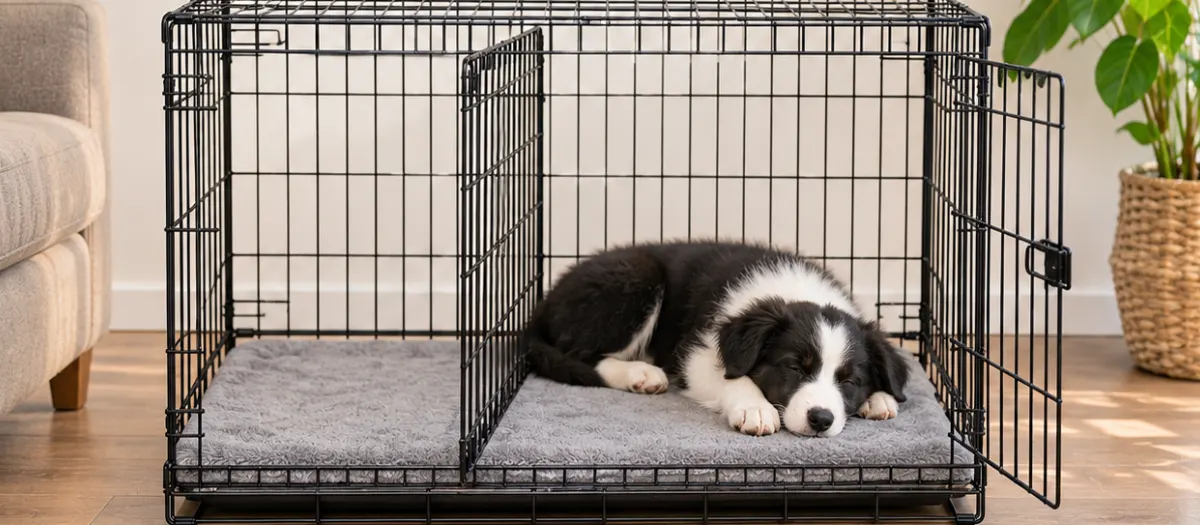
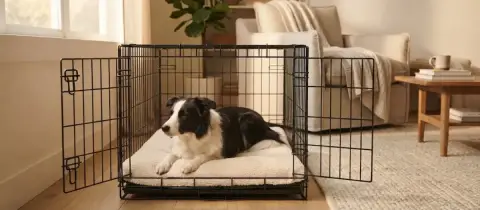
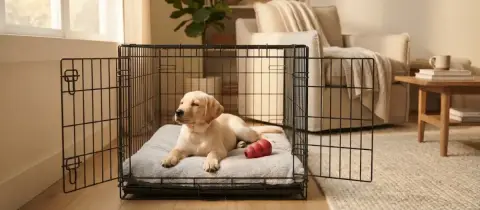
Illustration, not the actual product
Our top pickMidWest iCrate 30 inch with divider panel
"Puppy crate" isn't really a product on Amazon Australia. Crates are sold by adult size, so the smart buy is one crate that fits the dog your puppy will become, plus a divider. This guide gives you a size table in centimetres and kilograms, five crates compared on their listings, and a plain list of what goes inside. For the how-to, see our crate training guide. Weeks away from walks? Our puppy vaccination schedule explains the timing, and the puppy bed guide covers what lies on the crate floor.
Quick picks
Our top pickBest overall
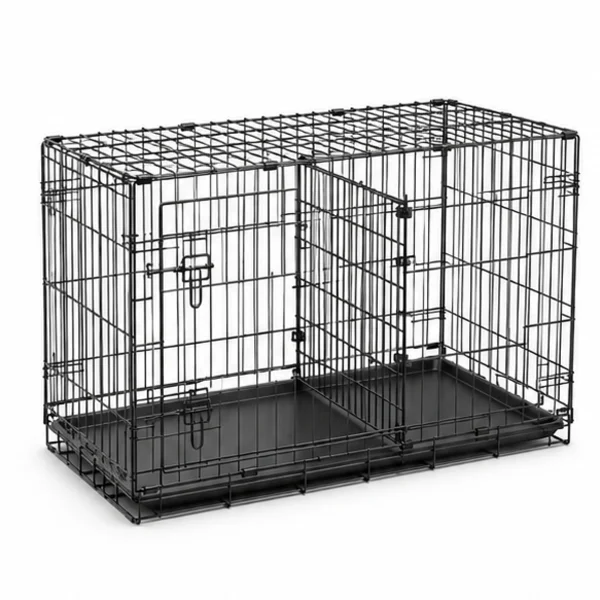
MidWest iCrate 30 inch with divider panel
Divider included and an adult weight range printed, about 11 to 18 kg
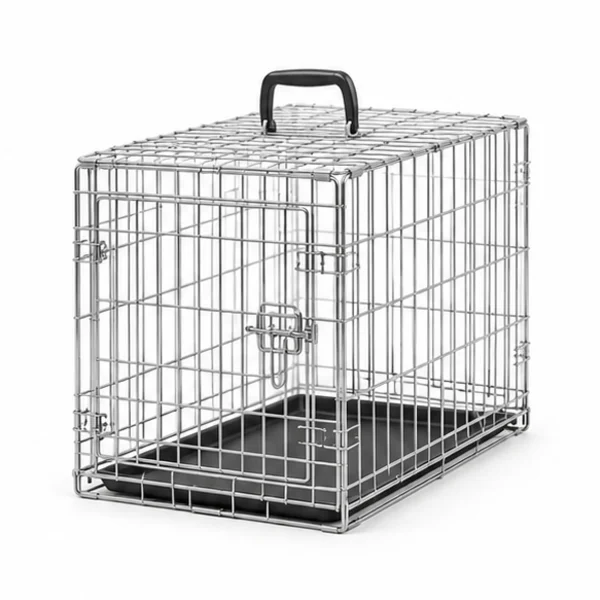
Pictures are illustrations, not the actual products.
What size crate does a puppy need?
Buy for the adult size, not the puppy in front of you. PetMD says to size a crate by your dog's measurements, not weight or breed alone, so your puppy can stand, turn around and stretch out on their side, with at least 5 cm (2 inches) above the head when sitting. Mats and beds use up space, so count them in.
PetMD's chart, converted to centimetres and kilograms (the original is in inches and pounds). Breeds are PetMD's examples, so measure your own dog.
If you don't know the adult size (a mixed-breed or rescue puppy), PetMD suggests buying another crate as your puppy grows, rather than guessing high. A 24 inch crate bought for an 8-week-old Labrador is a wasted purchase: they'll outgrow it in months.
Should I buy a crate for my puppy's adult size and use a divider?
Yes, for most puppies. PetMD says a removable divider can be moved back as the puppy grows, and an oversized crate can lead to accidents inside it during house training.
Our view: set the divider, then check the fit about once a week, because puppies grow in bursts (the last FAQ says what to look for).
Only the MidWest iCrate in this guide comes with a divider. Dividers sold separately are made for specific crate models, so match the maker and size. Amazon Basics also lists a divider crate with two doors, covered on our best dog crate guide.
Our picks in detail
1. MidWest iCrate 30 inch with divider panel: best overall
The crate that grows with a puppy heading for about 11 to 18 kg. The listing says 30 x 19 x 21 inches (about 76 x 48 x 53 cm), for adult dogs of 25 to 40 pounds (about 11 to 18 kg), with a divider panel, leak-proof plastic pan, rubber feet and a carry handle. It sets up without tools and folds flat, with a slide-bolt latch and rounded side clips. It's the only crate here with a divider and a printed weight range. The listing says to buy the next size up if your dog is on the higher side.
It's also our top pick on the medium dog crate guide and the growing-puppy pick on the small dog crate guide, which explain the 30 inch range further. No crate is escape proof, so latch it and supervise.
Pros: divider included; adult weight range printed; tray, handle and rubber feet; folds flat
Cons: imported, so check the delivery details on Amazon before you order; one door only; 53 cm high inside the box, so check it against the standing-height column on this page
Best for: puppies growing to about 11 to 18 kg
Skip it if: your puppy will pass 18 kg (see the 36 and 42 inch rows on this page), or you want two doors (our best dog crate guide covers a double-door crate)
2. lionto small folding wire transport cage: best for toy-breed puppies
A light wire den for a puppy whose adult weight stays under about 5 kg. The listing says coated iron wire, one door with a safety lock, a removable plastic tray and a fold-flat design, for small dogs, cats and small animals. The title says 45 x 31 x 36 cm and the bullet says about 50 x 36 x 41 cm, so measure the inside on arrival. It's also pick 2 on our small dog crate guide.
Pros: light and folds flat; tray for cleaning; suits PetMD's 18 and 22 inch rows
Cons: the listing gives two sizes; no divider; no handle stated
Best for: toy-breed puppies with an adult weight under about 5 kg
Skip it if: your puppy will pass 5 kg, since with no divider you'd buy twice
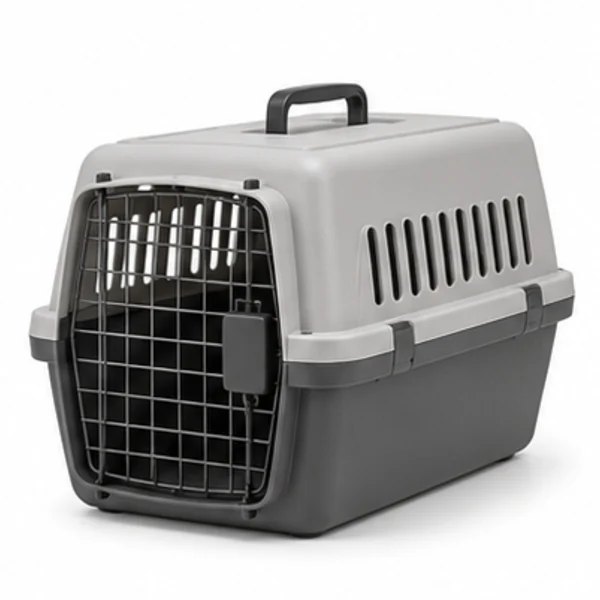
3. ZOMISIA 19 inch collapsible hard crate: best for vet trips and the car seat
A carrier with a top lid, so you can lift a wriggly puppy out instead of pulling them through the front door. The listing says reinforced hard plastic and metal wire, two sizes (about 48 x 30 x 32 cm and 58 x 32 x 36 cm), squeeze latches on the door and lid, a top handle, and it folds flat. It says it "fits nicely on car seats", and calls the build "escape-proof", which is the brand's claim; no crate is.
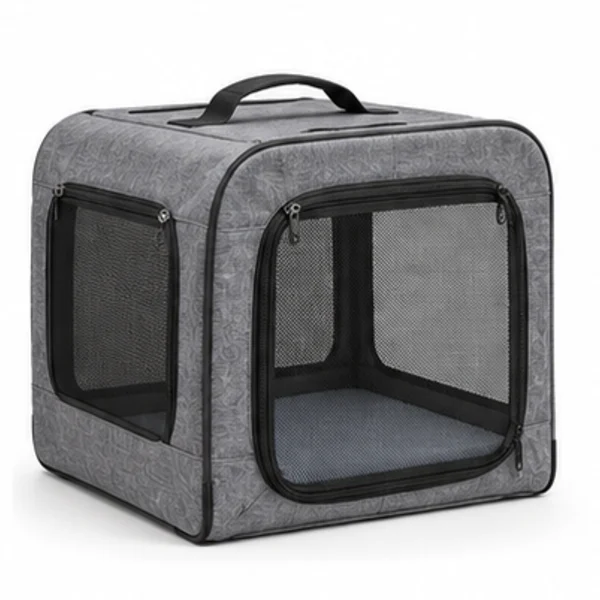
A fabric crate for a puppy who is past chewing and accidents. The listing says 600D Oxford fabric, scratch-resistant mesh, lockable metal zips, a waterproof base, a steel frame, a removable machine-washable cover and a carry handle, in four sizes from S (26 inch, about 66 cm) up. The size and breed examples are the brand's, not ours.
The limitation: the details field gives 49 x 46 x 66 cm, which doesn't read as a 26 inch (66 cm) long crate, so check the listing's size chart image before you order. And fabric is for a calm puppy, never the first weeks (PDSA, AKC).
Pros: light; washable cover; waterproof base; four sizes
Cons: the listed size doesn't match its own label; zips and fabric can be chewed or clawed; no divider
Best for: a calm, toilet-trained older puppy on trips
Skip it if: your puppy chews, digs or has accidents (picks 1 to 3)
5. ALLSOPETS portable fabric playpen: best fold-flat pen for travel and camping with a small puppy
A pen rather than a crate. The listing says 600D Oxford fabric on a galvanised steel frame, six mesh windows, two doors, a removable mesh top and a carry case, and it measures 70 x 55 x 45 cm. It says to wipe clean and not to machine wash. The listing calls it "bite-resistant and tear-resistant", which is a brand claim we don't repeat as fact, and it suggests a thick mat or weights on the floor for active pets. The same pen in another colour is listed separately.
The limitation: at 45 cm high it's for supervised use with a small puppy, not for toilet training or time alone, and mesh isn't for chewers. For wire pens, see our playpen guide.
Pros: folds flat into a carry case; two doors; removable top; good airflow
Cons: low walls; fabric and mesh can be chewed; not a crate for sleeping
Best for: supervised time with a small puppy at camp or on holiday
Skip it if: you need a pen a puppy can't climb or chew, or a crate for sleeping (pick 1)
Add-ons for a puppy crate
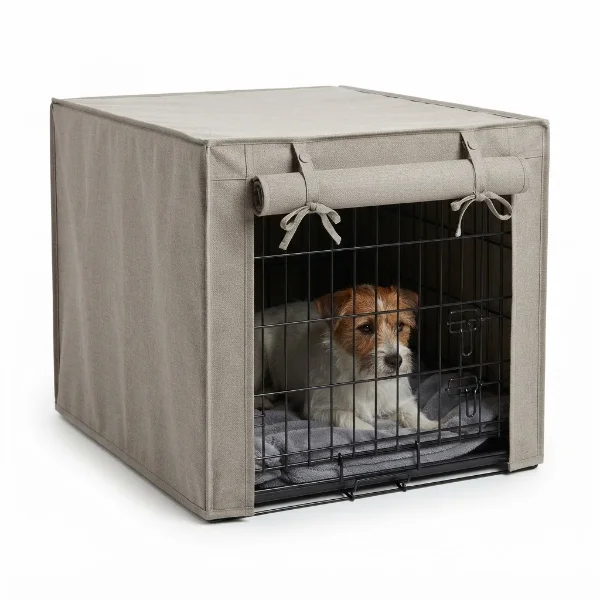
Explore Land crate cover, 36 inch, tan. The listing says 600D polyester Oxford with a windproof coating, two zipped doors, a mesh window with a flap, a top zip for the handle and four buttons that attach to the crate. It lists seven sizes from XS to 2XL for 24 to 54 inch wire crates (covers about 61 to 137 cm long, two of them for a 36 inch crate), so measure your crate and match the cover to it. Open the flap for airflow in warm weather. More on covers in our crate cover guide.
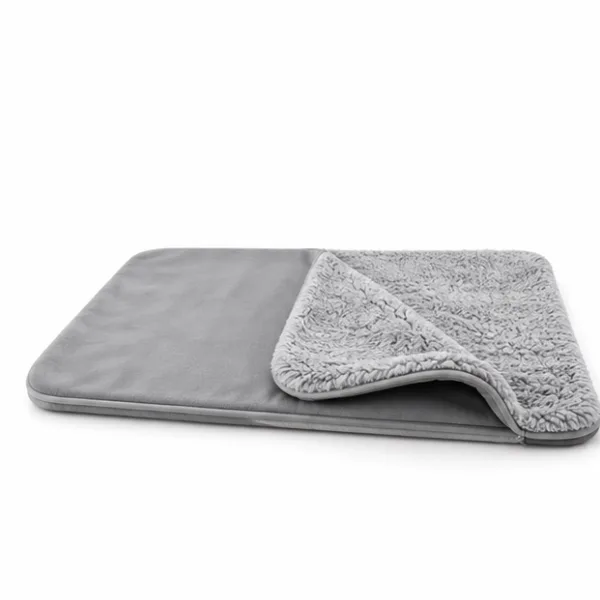
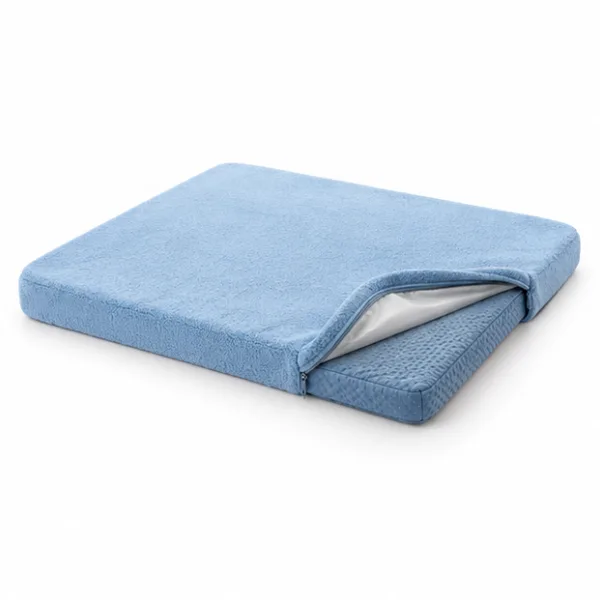
Balance crate bed with waterproof liner, 36 x 23 x 1.6 inch, powder blue. The listing says egg-crate foam, a waterproof foam liner, OEKO-TEX certified faux wool (the brand's claim), a non-skid base and machine washable, at 91.4 x 58.4 x 4.1 cm. That fits a 36 inch crate, not a divided 30 inch one. Foam isn't for a puppy who chews bedding; see our puppy bed guide and crate bed guide.
Wire first. Wire gives airflow, folds flat and has a tray for cleaning, and PetMD recommends coated steel wire for durability, ventilation and visibility. Soft crates and fabric pens suit calm, toilet-trained puppies and trips, not the first weeks.
PDSA says fabric crates are not suitable for puppies or dogs who like to chew, and the AKC says the same in different words: fabric for small dogs that won't chew, metal for chewers. A zip that gets pulled or a seam that gets torn is a swallowing risk as well as an escape route.
Toilet training needs a small space and regular breaks
Teething, 4 to 7 months
Yes
Supervised
Not unless calm
Chewing tests fabric and zips
6 months on
Yes, divider out as they grow
Supervised
Calm, trained dogs
Fabric is an option if there's no chewing and no accidents
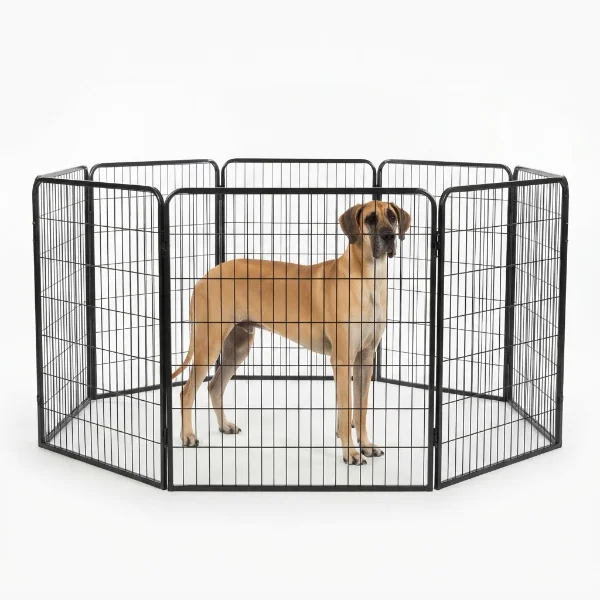
Many puppies do better in a pen when they're alone for longer: a crate for sleep, a pen for the rest. Our playpen guide covers wire pens, and nothing here is for a puppy left alone unsupervised if they climb or chew.
What should go in a puppy's crate, and what shouldn't?
A flat, washable mat goes in. Plush and foam beds, loose blankets and anything chewable stay out while your puppy is teething or having accidents. Take the collar and tags off in the crate, and never use it as punishment, as our crate training page explains.
Swipe sideways to see every column
Item
In or out
When that changes
Our view or source
Flat washable mat
In
Keep it while toilet training
Flat mats don't eat crate space (PetMD), and wash easily; see our puppy bed guide
Plush or foam bed
Out at first
Once chewing settles and accidents stop
Our view; remove any torn bed
Water
In
Always: PDSA says to always provide water in the crate
PDSA; a heavy or clip-on bowl is our suggestion so it isn't tipped
PDSA; RSPCA Australia advises a cool, shaded, well-ventilated area at all times
In an Australian summer, put the crate in the coolest room, never in sun or a closed-up car or sunroom. See our keep your dog cool guide.
How long can a puppy stay in the crate?
PDSA says not more than three hours at a time, and less for a dog who isn't used to it. SPCA New Zealand, cited on our crate training guide, says puppies under six months need a toilet and play break at least every two to three hours. VCA says sleeping in the crate at night is fine, but too much daytime confinement can lead to pent-up energy.
RSPCA Australia lists being comfortable alone, for example in a crate, as a life skill to build gradually, starting with very short absences. A crate won't treat separation anxiety: VCA and PDSA both say to get professional help instead, and our separation anxiety guide covers the signs.
Puppy crates compared
Details from each Amazon Australia listing, checked on 19 Nov 2026, with inches converted to centimetres. Listings often mix inside and outside sizes, so measure on arrival.
Swipe sideways to see every column
Crate
Type and doors
Size per listing (cm)
Divider
Tray or base
Folds
Carry handle
MidWest iCrate 30 inch
Wire, 1 door
About 76 x 48 x 53 (details field 77.9 x 49 x 54.5)
Yes
Leak-proof plastic pan
Flat, no tools
Yes
lionto small
Wire, 1 door
About 45 to 50 long; the listing gives two sizes
No
Removable plastic tray
Yes
Not stated
ZOMISIA 19 inch
Hard plastic and wire; door plus top lid
About 48 x 30 x 32 (a second size is about 58 x 32 x 36)
No
Not stated
Flat
Top handle
A 4 Pet soft crate, S
Soft, zips
Details field 49 x 46 x 66; check the size chart on the listing
No
Waterproof base
Yes
Yes
ALLSOPETS pen
Soft, 2 doors, mesh roof
70 x 55 x 45
No
Not stated
Flat, with carry case
Carry case
The MidWest's bar gap is 37.5 mm per the listing. The other listings give no gap, so keep the collar off whichever you pick.
We searched Amazon Australia for puppy and small-to-medium crates, then shortlisted those that met all of these checks:
Well rated: a strong average rating with plenty of buyer reviews.
No red flags: no pattern of poor reviews, safety complaints or listing problems.
Available on Amazon Australia when we checked.
Size stated in cm or inches on the listing, so it can be matched to PetMD's chart.
A divider or a weight range where the listing gives one.
The material and door type described on the listing.
Where a listing is imported, new or contradicts itself, we say so in the cons. These are researched picks, not products we've personally tested. We compared the specifications and features on each Amazon Australia listing, checked on 19 Nov 2026, and we didn't accept payment from any brand.
Left out this time: a 24 inch soft travel crate whose title and bullet points disagree on dog size, a thin machine-translated soft crate with no puppy fit, and chew-proof or escape-proof claims we can't verify.
Where else can you buy a crate?
Wire and hard crates are sold in pet shops and some hardware and department stores, and vet clinics can advise on sizing. Wherever you buy, measure the inside and check that a divider fits.
When to see a vet
Book a vet visit if your puppy cries or pants hard when shut in and doesn't settle, injures themselves trying to get out, or starts having accidents after being reliable. These can have many causes, such as stress or a health problem, and a vet can work out which. VCA says a crate isn't the best solution for destruction caused by separation anxiety, because dogs may hurt themselves trying to escape. Our separation anxiety guide has more.
Go to a vet or emergency clinic straight away if your puppy is panting heavily, drooling, wobbly or collapsing in a hot crate, or has swallowed a piece of bedding, fabric or a zip and is vomiting or in pain. Heatstroke and blockages are emergencies.
Frequently asked questions
Should I put water in my puppy's crate?
Yes. PDSA says to always provide water so your dog can drink in the crate, and to leave room for bowls. A heavy or clip-on bowl is our suggestion, because a light bowl gets tipped. If overnight water seems to be making toilet training harder, ask your vet rather than withholding it.
What size crate does a Labrador puppy need?
PetMD lists Labradors in the 42 inch (107 cm) row, for adults of about 32 to 41 kg. Buy that size with a divider rather than a small crate they'll outgrow in months, and measure your puppy as they grow. See our large dog crate guide.
What size crate does a cavoodle or other small-breed puppy need?
Probably a 24 or 30 inch crate, depending on the adult size, which varies with the cavoodle's parents. Measure rather than guess: stand, turn, lie down and 5 cm above the head sitting. Our small dog crate guide covers the sizes in more detail.
Do I need a crate at all, or will a playpen do?
A pen can work for a puppy who's alone for longer, with a bed at one end and a toilet spot at the other. A crate gives a small, den-like sleeping space. Neither fixes separation anxiety, and each needs supervision with a puppy who chews. See our playpen guide.
How do I stop my puppy crying in the crate?
Build it up slowly: short stays, a chew or toy, and a calm routine, as RSPCA Australia describes for being left alone. Never use the crate as punishment. If the crying is distressed and doesn't ease, talk to your vet. See our crate training guide.
Should I put a bed in the crate while my puppy is teething?
A flat, washable mat is fine, but not plush or foam while your puppy is chewing bedding. Remove any bed that's been torn, because swallowed stuffing is a risk. Our view: add a thicker bed once chewing and accidents settle. See our puppy bed guide.
Is a soft crate OK for a puppy?
Only for a calm, toilet-trained puppy who isn't chewing, and usually for trips. PDSA says fabric crates aren't suitable for puppies or dogs who like to chew. For the first weeks and teething, stay with wire.
How do I know when to move the divider back?
Check weekly. If your puppy can't stand, turn around or stretch out on their side, or sits with their head touching the top, move it back. If your puppy is wetting one end and sleeping at the other, it may be too big. Re-check as they grow.
Product details from each linked Amazon Australia listing, checked on 19 Nov 2026.
This guide provides general information and isn't a substitute for veterinary advice. If you're concerned about your puppy's comfort, behaviour or health in the crate, speak with your vet.