Best small dog crates: the right size for toy and small breeds
By Anish PuriUpdated 18 Nov 202615 min readResearched, not tested by us
Research guide. WhiskerFinds may earn a commission from links, at no extra cost to you.
Quick answer: The best small dog crate is sized to your dog's measurements, not breed alone. For most small dogs that's a 24 inch (61 cm) crate, with 18 and 22 inch for toy breeds and 30 inch for sturdier small breeds. Our best overall pick is the Advwin 24 inch wire crate. No crate fixes a dog who panics when shut in.
The size charts online are nearly all in inches and pounds, so this guide gives you one in centimetres and kilograms, six crates compared by the numbers on their listings, and straight talk on what a crate can't do. Bigger dog? See our large dog crate guide; for dogs of about 12 to 32 kg, our medium dog crate guide covers 30 and 36 inch crates; for the basics, our best dog crate guide; for a puppy, crate training a puppy comes first.
Quick picks
Our top pickBest overall
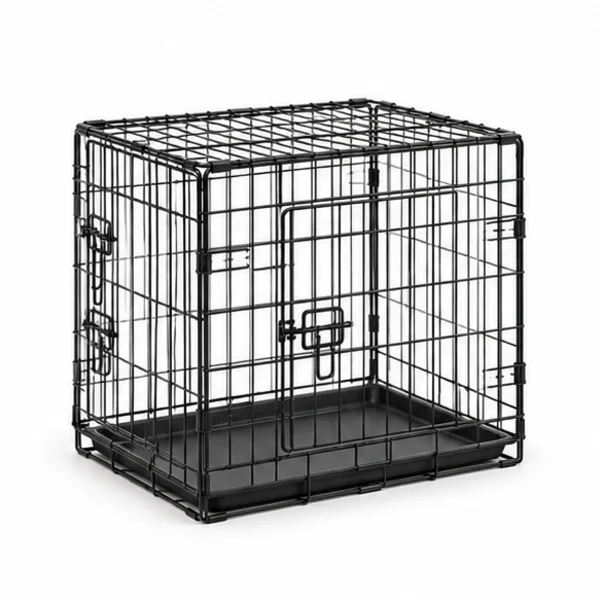
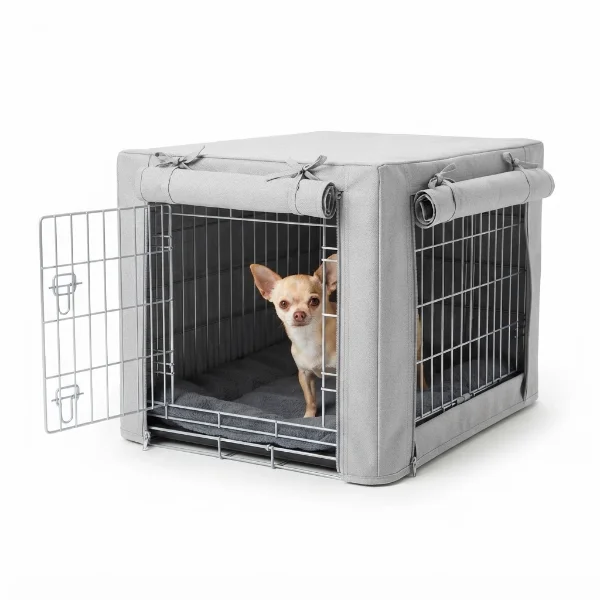
Advwin 24 inch dog cage, 2 doors
63 x 44 x 50.5 cm wire crate with front and side doors and a removable tray
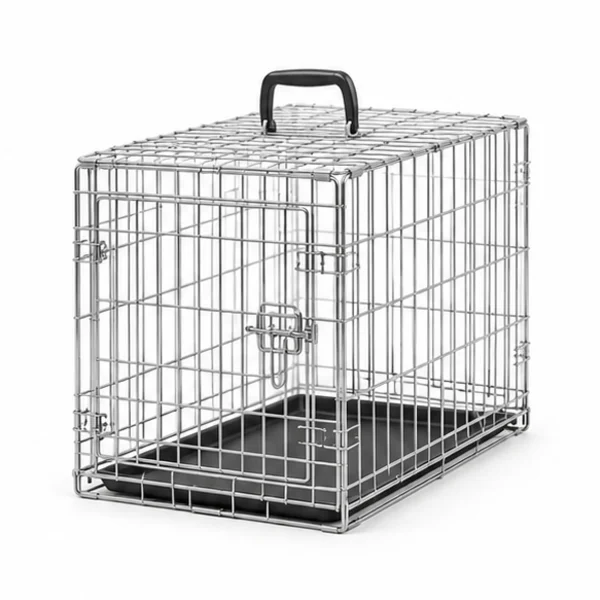
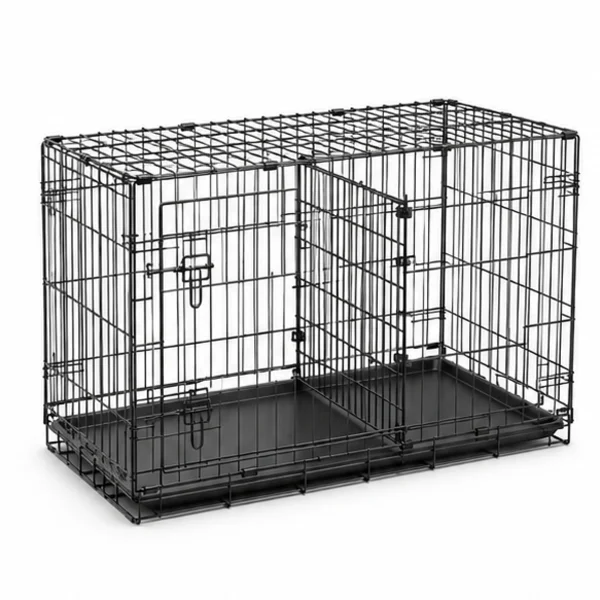
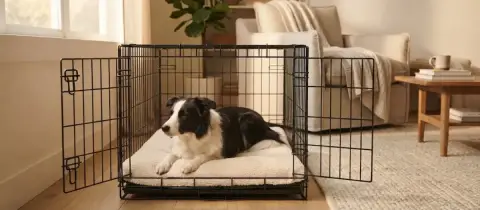
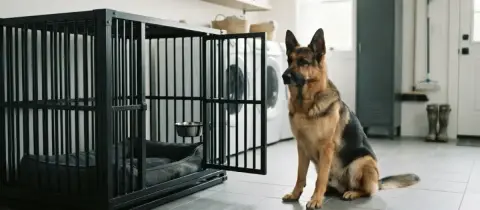
Pictures are illustrations, not the actual products.
What size small dog crate does my dog need?
Measure first, then check the chart. PetMD says to base crate size on measurements, "not their weight or breed alone": your dog should stand with about 2 inches (5 cm) above their head when sitting, turn around easily and stretch out on their side (PetMD, page read 18 November 2026). If a check is tight, go up a size.
Stand your dog on a hard floor. Measure nose to the base of the tail for length, and floor to the top of the head or ears (whichever is taller) for height. Our best dog crate guide shows the add-10-cm method, and the American Kennel Club suggests adding 3 to 4 inches to each measurement, measuring length to the tail tip (AKC, page read 18 November 2026).
PetMD's chart, converted to centimetres and kilograms (the original is in inches and pounds):
Swipe sideways to see every column
Crate length
Typical dog weight
Example breeds on PetMD's chart
18 inch (46 cm)
Up to about 3 kg
Toy breed puppies
22 inch (56 cm)
Up to about 5 kg
Chihuahua, Maltese, Yorkshire Terrier, Pomeranian
24 inch (61 cm)
About 6 to 11 kg
Shih Tzu, Bichon Frise, Havanese
30 inch (76 cm)
About 12 to 18 kg
Beagle, French Bulldog, Boston Terrier, Corgi
36 inch (91 cm)
About 19 to 32 kg
Medium dogs such as the Australian Cattle Dog
It's a guide, not a promise. Cavoodles, Maltese crosses, Jack Russells and Dachshunds aren't on PetMD's chart, and crossbreeds vary a lot, so go by your dog's weight band and measurements. Dachshunds and other long-bodied dogs usually need the length check first.
Is a 24 inch crate too small?
A 24 inch crate is too small if your dog fails any of these checks, and too big if a puppy can toilet in one corner and sleep in the other. Run through it with your dog standing in the open crate, or with a tape measure against the listing's inside size.
Can your dog stand with about 5 cm of space above their head?
Can they turn a full circle without bumping the sides?
Can they lie on their side with their legs fully stretched?
Will their head and shoulders fit through the door?
Is the weight on the listing in range for your dog (only the MidWest and New World listings give one)?
Say no to any of them and go up a size. A French Bulldog sits in PetMD's 30 inch row, which is why the 24 inch picks below are for the lighter small breeds. PDSA says too big is better than too small, but PetMD warns that an oversized crate can cause toileting accidents, so use a divider for a puppy.
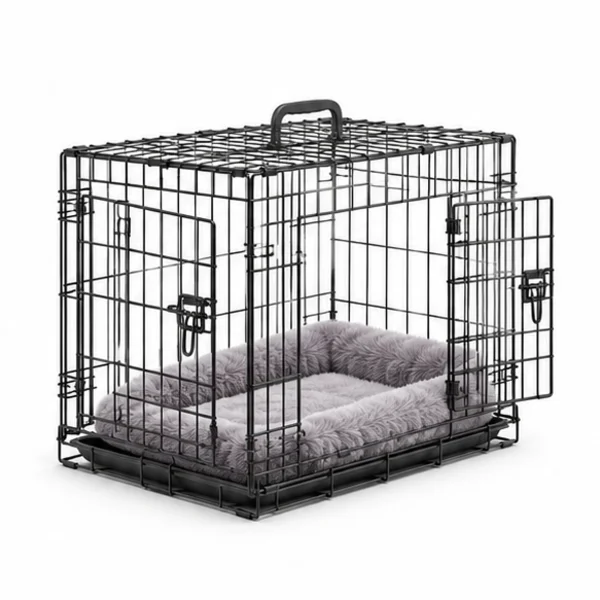
A black wire crate at 63 x 44 x 50.5 cm, with a front door and a side door, each with two slide-bolt latches, plus a removable plastic tray. It folds flat and needs no tools. The listing sells 24 to 48 inch sizes under one page, so choose the size option carefully.
Pros: two doors for placing the crate against a wall or sofa; folds flat; tray slides out
Cons: no divider; no weight range on the listing; the details field gives an 8.5 cm bar gap, which looks wrong for a 24 inch crate, so check before you buy
Best for: a small adult dog or a puppy near adult size
Skip it if: you need a divider for a growing puppy, or your dog bends wire
2. lionto small folding transport cage: best for toy breeds and short trips
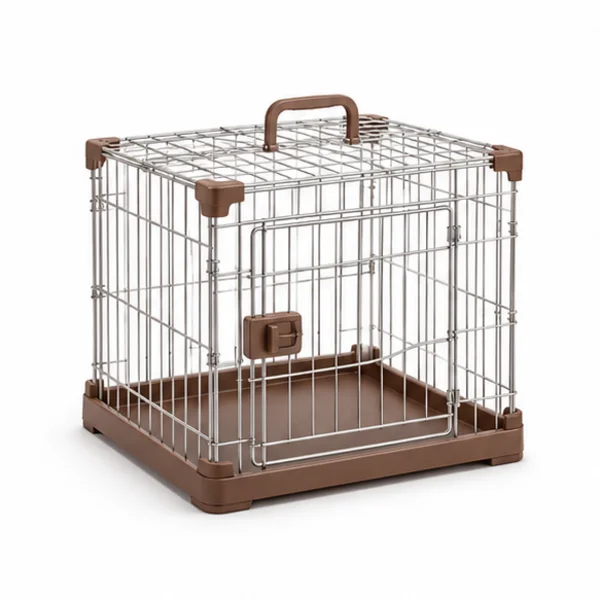
A coated iron wire cage with one door and a safety lock, a removable tray and a fold-flat design. The listing is inconsistent: the title and details say 45 x 31 x 36 cm, while the bullets say about 50 x 36 x 41 cm, and the material field wrongly says plastic. Allow for the smaller figure. The listing calls it a transport cage, so it suits car trips and short stays more than a full-time den.
Pros: light; folds; tray removes for cleaning
Cons: inconsistent size on the listing; one door; imported, so check the delivery details on Amazon before you order
Best for: toy breeds and very small dogs on trips
Skip it if: your dog is over toy size, or you want a crate for daily use
3. MidWest iCrate 30 inch with divider: best for growing puppies
A single-door wire crate at 30 x 19 x 21 inches (about 76 x 48 x 53 cm), listed for adult dogs of 25 to 40 pounds (about 11 to 18 kg). It's the only pick with a divider panel, so you can buy for the adult size and shrink the space while your puppy grows, as PetMD suggests. It also has a leak-proof pan, rubber feet, a carry handle and a slide-bolt latch, and its 37.5 mm bar gap is the only believable gap figure on the page. Our puppy crate guide has the growth table in kg and what to put inside.
Pros: divider; weight range stated; handle and floor-protecting feet
Cons: an imported listing whose details page carries US shipping text, so check delivery to your address and stock before you buy; one door
Best for: a puppy whose adult weight lands in PetMD's 30 inch row (measure first)
Skip it if: your dog will stay toy-sized, because the crate will be roomy even with the divider in
4. Pet Scene soft dog crate: best soft crate for a calm small dog
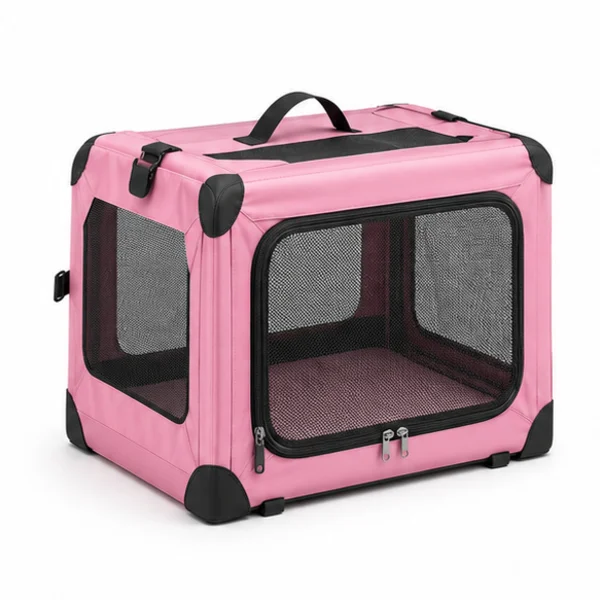
A 60 x 42 x 42 cm fabric crate with a steel frame, 600D water-resistant fabric, three doors with locking zips, side pockets and a removable pad. The listing says it suits medium and large cats or small dogs, and that damage caused by bites isn't covered. The listing doesn't give door sizes, so check the photos against your dog's shoulders. Pink is the colour we saw, so check the other colours on the listing.
Pros: light and quiet; three doors; folds without tools
Cons: a short record so far; not for chewers or for toilet training; zips are the weak point
Best for: a calm, crate-trained dog on trips or in a quiet corner
Skip it if: your dog chews, scratches or has tried to escape a crate
5. Iris Ohyama folding cage: best extra-small crate
A 47 x 34 x 38.5 cm folding cage for ultra-small dogs and cats, weighing 3.7 kg and folding to about 10 cm (4 inches) deep. The tray lifts out and washes, and the entry is about 26 cm wide. The listing says it suits all life stages. The details field says "outdoor", but the description is of a simple indoor cage, so treat it as indoor.
Pros: very light; folds almost flat; washable tray
Cons: 38.5 cm tall suits only toy breeds and cats; imported, so check the delivery details on Amazon before you order
Best for: Chihuahua-sized dogs and small cats
Skip it if: your dog is over about 5 kg (PetMD's 22 inch row) or too tall for a 38.5 cm roof
6. New World 24 inch double door crate with bed: best crate-and-bed kit
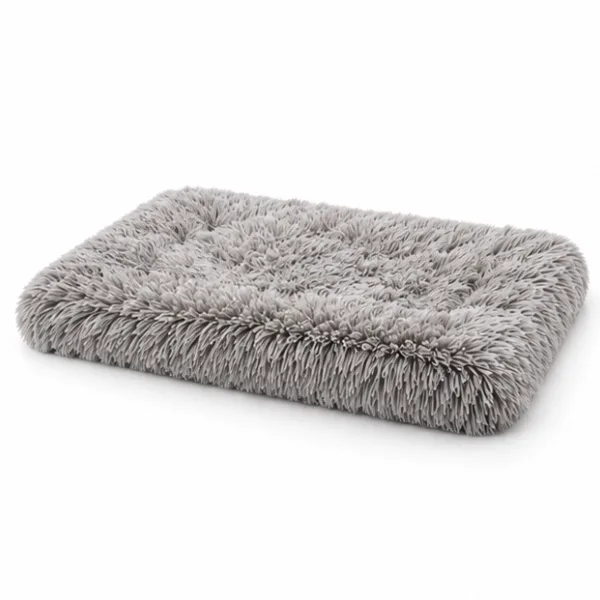
A two-door wire crate at 24 x 18 x 19 inches (about 61 x 46 x 48 cm), listed for dogs of 11 to 25 pounds (about 5 to 11 kg). The box includes a bolster bed with a synthetic-fur surface, and the crate has a leak-proof pan, a slide-bolt latch and a one-year warranty.
Pros: bed included; weight range stated; two doors
Cons: a listing that is new to Amazon Australia, so check recent feedback before you buy; no divider
Best for: a first crate for a small dog when you want the bed in the same box
Skip it if: your dog chews bedding, because the bed will need to come out
Add-ons that help
A crate bed in the right size makes the crate more comfortable, and you can skip it for a dog who chews bedding.
A crate cover suits wire crates and can make a den feel calmer, but it must never block airflow on warm days.
Wire, soft or travel crate for a small dog?
Wire suits most small dogs at home, soft crates suit calm dogs on the move, and a light travel cage suits toy breeds and short stays. Apartments work with any of them because a small crate sits beside a bed or sofa. Pick for your dog's habits first.
Swipe sideways to see every column
Type
Strengths
Watch for
Suits
Wire (Advwin, MidWest, New World)
Airflow, folds flat, tray for easy cleaning, a divider on some
Wire can be bent by a determined dog; a bare crate can feel exposed
Most small dogs and puppies
Soft (Pet Scene)
Light, quiet, easy to store
Zips and fabric can be chewed or clawed; not for toilet training
Calm, crate-trained dogs
Travel cage (lionto, Iris Ohyama)
Very light, folds small
Smaller inside, often one door, not a full-time home
Toy breeds, short stays, vet visits
The AKC suggests fabric crates only for a small breed that isn't going to chew on it (AKC). If your dog chews or digs at the crate, stay with wire and read the distress section below first. A dog playpen can suit a puppy better than a crate.
Small dog crates compared
Details from each Amazon Australia listing, checked on 18 Nov 2026. Where a listing gives inches, we've converted to centimetres. Some listings mix up inside and outside sizes, so allow a few centimetres either way.
The MidWest's details field gives 77.9 x 49 x 54.5 cm, so allow a couple of centimetres. Only the MidWest gives a believable bar gap; the Advwin's 8.5 cm figure looks like a listing error, so check the photos or ask a question on the listing. Small heads and tags can still catch, which is why collars come off in the crate.
Choose by situation
Your situation
Best fit
Adult small dog, home crate
Advwin 24 inch
Toy breed, car trips and short stays
lionto
Puppy who'll grow to the top of "small"
MidWest iCrate 30 inch with divider
Calm, crate-trained dog, light and quiet
Pet Scene soft crate
Chihuahua-sized dog or a cat as well
Iris Ohyama
Crate plus bed in one box
New World (new to Amazon Australia)
Dog who chews or escapes
Wire only, and talk to your vet first
How we chose
We searched Amazon Australia for small, toy and 18 to 30 inch crates and shortlisted ones that met all of these checks:
Well rated: a strong average rating with plenty of buyer reviews.
No red flags: no pattern of poor reviews, safety complaints or listing problems.
Available on Amazon Australia when we checked.
A stated size in cm or inches, so you can compare it with your dog.
A tray or pad and a lockable door described on the listing.
A clear fit for small dogs: the size we link is in the 30 inch class or smaller, and the listing says plainly which size it is.
These are researched picks, not products we've personally tested. We compared the specifications and features on each Amazon Australia listing, checked on 18 Nov 2026. We didn't accept payment from any brand, and no brand saw this page before it was published.
Left out this time: a 24 inch collapsible crate whose title and bullets disagree about dog size, pop-up tents with no rigid frame, soft divider panels, and crate pads sold as "indestructible", which no pad is. Pens are a different job, so see our playpen guide.
Wire and soft crates are also sold in pet shops and some vet clinics. Wherever you buy, check the inside size against your dog's measurements, not the size name.
Is a small dog crate escape proof?
No. A crate gives a calm dog a safe spot, not a fix for a dog trying hard to get out: a panicking dog can force zips and wire joins and injure their teeth, claws and mouth. VCA Hospitals say a crate isn't the best answer where destructive behaviour comes from separation anxiety, and that pets may harm themselves trying to escape (VCA, page read 18 November 2026). PDSA says crates shouldn't be used to manage separation anxiety without professional guidance (PDSA, page read 18 November 2026).
A crate doesn't treat separation anxiety, and no crate fixes a dog who panics when shut in. See our separation anxiety guide and, for boredom, is my dog bored?. Never use the crate as punishment.
How long can a small dog stay in a crate?
There's no single number of hours that suits every dog. Puppies, older dogs and anxious dogs cope with much less, and crates are for short, positive stays. PDSA gives three hours at a time as a ceiling, and less if a dog isn't used to it. VCA says sleeping in the crate at night is fine, but too much daytime confinement can lead to pent-up energy and a lack of mental stimulation. A workday isn't the same as a night's sleep, so see keeping a dog busy while you're at work.
Setting up a small crate
Spot: somewhere shaded and draught-free, near you at first.
Nothing heavy on top: a small crate can tip, and covers or stacked items can block airflow.
Toileting: use the divider or a smaller crate for puppies, and follow our toilet training guide.
When to see a vet
See your vet if your dog scratches or bites at the crate, drools, pants heavily, injures their paws or mouth, toilets in the crate after being reliable, or cries for long stretches. A vet can check for pain or illness and refer you to a qualified, reward-based behaviour professional.
Heatstroke is an emergency. RSPCA Australia lists heavy constant panting, pale or red gums, drooling, vomiting, weakness, tremors and collapse among the signs, and says to start cooling with cool water and get a vet immediately (RSPCA Australia, page read 18 November 2026).
Frequently asked questions
What size crate for a Cavoodle?
Measure your Cavoodle first, because sizes vary a lot. PetMD's chart doesn't list Cavoodles, so use their weight band: about 6 to 11 kg suits a 24 inch (61 cm) crate and about 12 to 18 kg suits a 30 inch (76 cm) crate. For a puppy, buy for the adult size and use a divider.
What size crate for a Chihuahua?
PetMD lists Chihuahuas in its 22 inch (56 cm) row, for dogs up to about 5 kg, and toy puppies in 18 inch (46 cm). Check by measuring: your dog should stand, turn and stretch out. The Iris Ohyama and lionto cages in this guide are the smallest options.
What size crate for a Dachshund?
Length matters more than height. Measure nose to the base of the tail, then add a few centimetres. By weight, Dachshunds span PetMD's 24 inch (61 cm) and 30 inch (76 cm) rows, so measure before you buy. Check the roof clears their head when they sit.
Should a small dog sleep in a crate at night?
Yes, if your dog is comfortable. VCA says sleeping in the crate at night is fine. Keep the crate near you at first, take the collar off and make sure they've been toileted. If your dog cries or panics, go back a step. See crate training a puppy.
Can a small dog crate be used in the car?
A folding wire or soft crate isn't a crash-tested car restraint, so don't treat it as one. For a dog travelling by car, see our dog car crate guide and dog car restraint laws.
Should I take my dog's collar off in the crate?
Yes. PetMD says hanging tags can catch on crates and cause choking, and a vet quoted there recommends sleeping without a collar, so microchipping helps with identification (PetMD, page read 18 November 2026). Take a harness off too. Only the MidWest gives a believable bar gap, 37.5 mm, so small heads and tags can still catch.
How do I stop my small dog crying in the crate?
Go back a step: shorter stays, with you in the room, treats and a favourite blanket. Never punish crying or use the crate as a punishment, as PDSA warns. If crying is intense or comes with panting or drooling, speak with your vet. See crate training a puppy.
Can two small dogs share a crate?
No. Each dog needs their own crate, with room to stand, turn and stretch out. Two dogs in one crate is cramped, can get hot and can lead to fights. If your dogs are bonded, place two crates side by side.
Product details from each linked Amazon Australia listing, checked on 18 Nov 2026.
This guide provides general information and isn't a substitute for veterinary advice. If you're concerned about your dog's crate training, toileting or anxiety, speak with your vet.