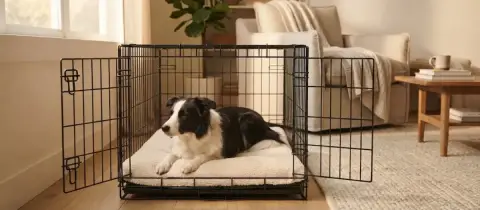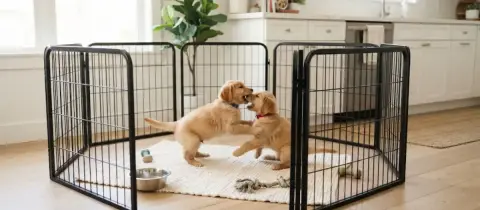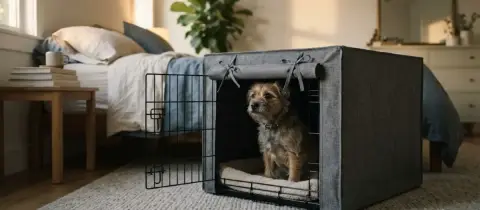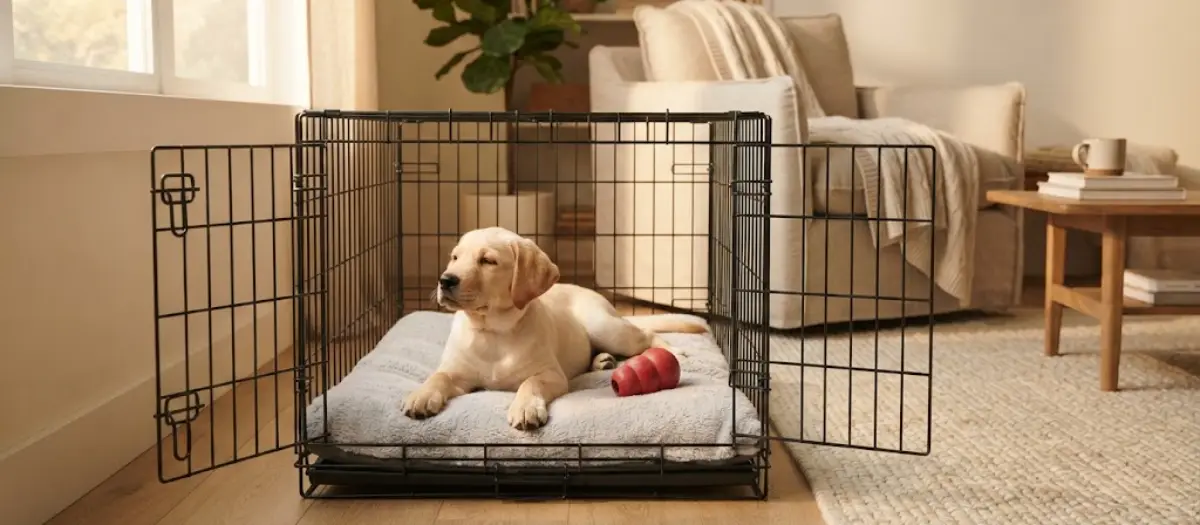
Quick answer: Crate training a puppy means turning the crate into a calm, comfortable den. Pair it with treats and meals, leave the door open at first, then build up closed-door time in small steps. Keep stays short, never use the crate as punishment, and slow down if your puppy seems stressed.
A crate can make toilet training, sleep and safe downtime much easier, but it works best when your puppy learns to like it. This guide walks through size, gear, a step-by-step plan, the first nights and the mistakes that cause trouble. It sits alongside our puppy training schedule, which covers the rest of the day.
Quick picks
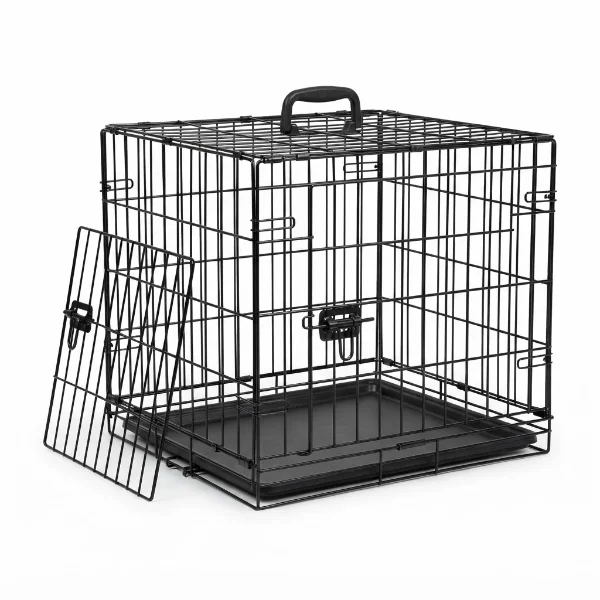
Amazon Basics double door folding wire crate, 55 cm
Folds flat, has a divider, and suits small breeds. Check other sizes for bigger puppies.
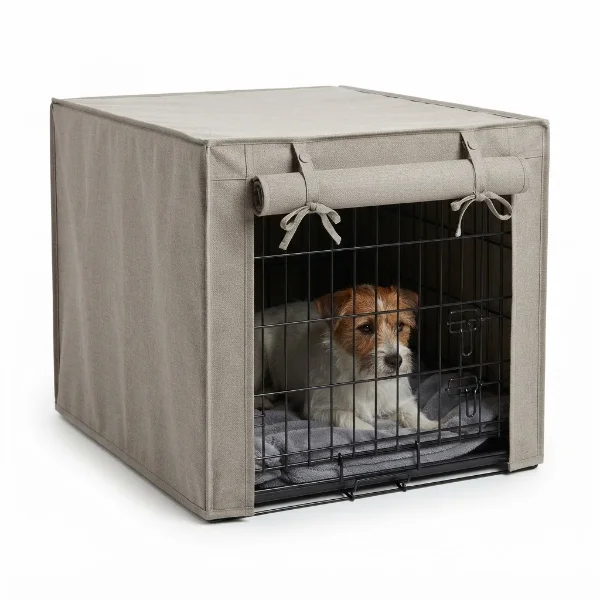
MidWest Quiet Time crate cover
Machine washable, creates a den-like feel. Never block airflow on a hot day.
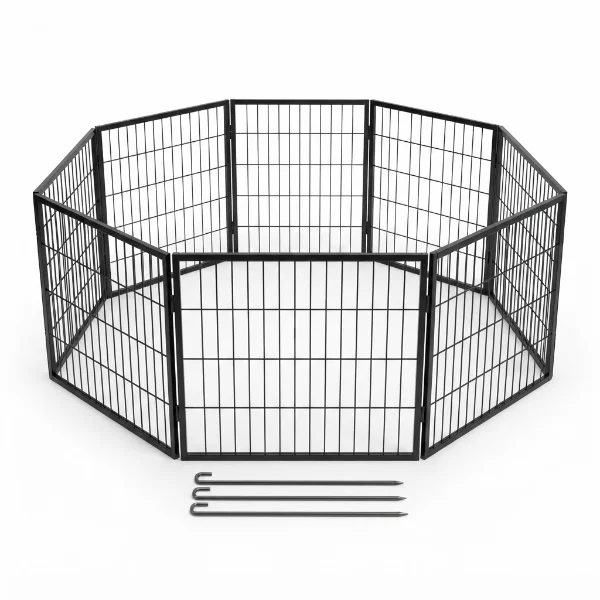
New World folding metal pen
Folds flat and encloses 16 square feet, but at 76 cm it is low for jumpers.
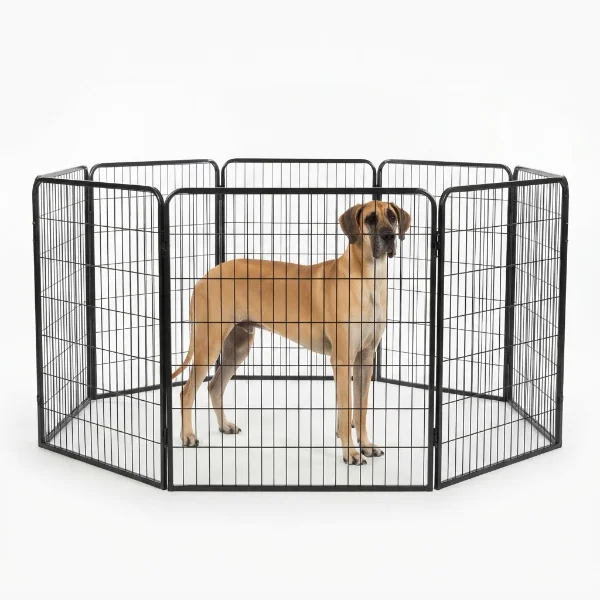
Amazon Basics Foldable Metal Exercise Pen, 107 cm
A taller pen for a puppy who can jump or climb. See our playpen guide.
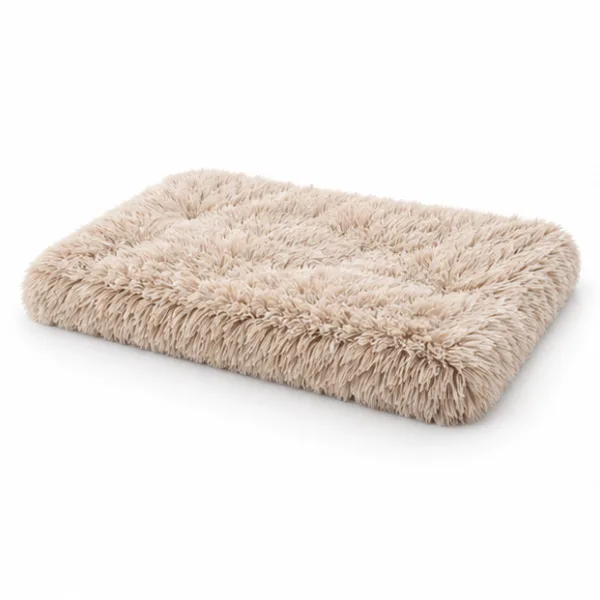
BFPETHOME plush crate bed
A flat, comfortable bed once your puppy is past the chewing stage.
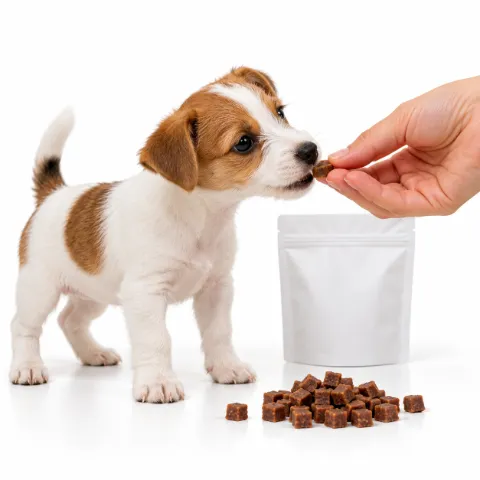
SavourLife Puppy Training Treats, Australian Chicken, 165 g
Small, soft rewards to tuck near the front of the crate.
Amazon Basics Foldable Metal Exercise Pen, 107 cm
A taller pen suits a puppy who can jump or climb past the 76 cm pen above.
BFPETHOME plush crate bed
A flat, comfortable bed for the crate once your puppy is past the chewing stage.
SavourLife Puppy Training Treats, Australian Chicken, 165 g
Small, soft rewards that suit crate practice.
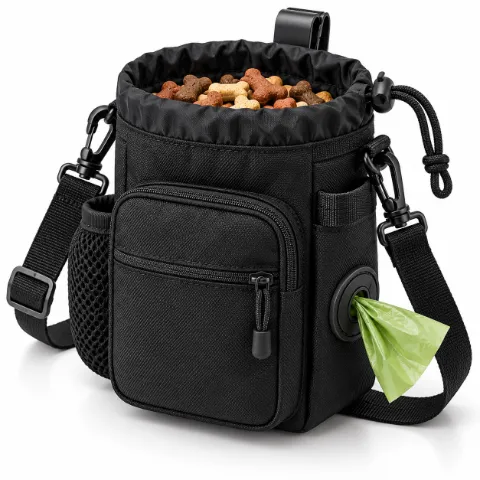
Pet N Pet treat pouch
Keeps rewards at hand so you can pay your puppy the moment they step into the crate.
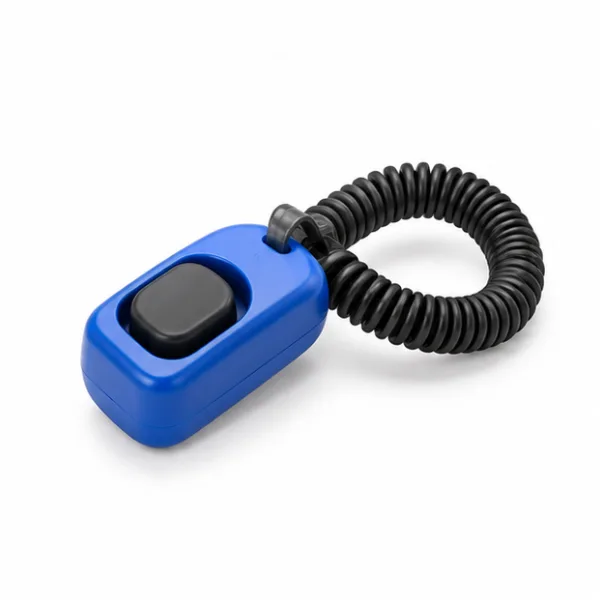
PetSafe Clik-R Training Clicker
A clicker can mark the exact moment your puppy goes in or settles.
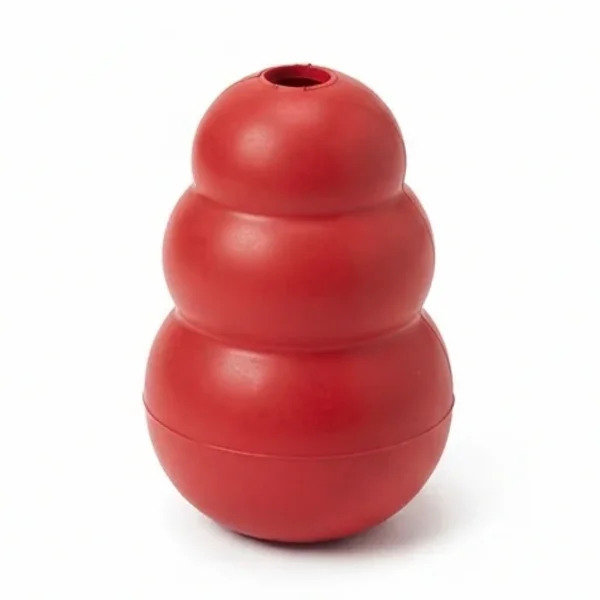
KONG Classic, Medium
A stuffable toy for a calm moment near the crate.
Pictures are illustrations, not the actual products.
More detail on each is in What you need for crate training below. These support the routine, and a crate isn't a fix for separation-related distress.
Is crate training good for puppies?
It can be. A crate gives a puppy a quiet, safe place to rest and helps you manage toileting and chewing when you can't watch them. It works best as a positive space used for short stays. It is a tool within a routine, not a fix for problem behaviour.
AKC describes the crate as something your dog should see as a positive space, never as a punishment or a place they are kept too long (AKC, page read 31 October 2026). SPCA New Zealand says crate training takes days or weeks, and that the crate should always be linked with something pleasant (SPCA New Zealand, page read 31 October 2026).
Some puppies take to it within days. Others need a slower start. Results vary, so watch how your puppy responds rather than following a fixed timetable.
What size crate does a puppy need?
Pick a crate your puppy can stand up in, turn around in and lie down in comfortably. Too small is cramped, and too big lets a puppy toilet at one end and sleep at the other. A crate with a divider lets you buy once and adjust as your puppy grows. Our medium dog crate guide shows the 30 and 36 inch sizes most puppies grow into. For crates chosen by your puppy's expected adult weight, with a divider plan, see our puppy crate guide.
AKC gives the same stand, turn and lie down guide, and notes that an adult-size crate with a divider can grow with your dog (AKC, page read 31 October 2026). SPCA New Zealand adds that a collapsible metal crate is easy to move around.
To measure, the Amazon Basics listing below suggests measuring nose to base of tail and head to floor, then adding 10 cm to each. For a quick comparison of wire, soft and furniture-style crates, see our best dog crate guide. If you have a large or giant breed, check the best large dog crate guide, because crates for big dogs need to be sturdier and the sizing is different. Small or toy breed? Our small dog crate guide has a cm and kg chart.
What you need for crate training
You don't need much: a suitable crate, a flat comfortable bed or mat once your puppy is past the chewing stage, water, a few treats and a safe chew. Skip the collar and tags inside the crate, because AKC advises taking your dog's collar off before they go in, for safety.
A starter crate. The Amazon Basics double door folding wire crate comes in a 55 cm length with a divider, and the listing says it suits pets under 45 x 29 cm, like a Toy Poodle or Yorkshire Terrier. It folds flat, has a removable plastic tray, and has a front and a side door. That size suits small breeds, so check the listing for other sizes if you have a bigger puppy. More options are in our best dog crate guide.
A cover for a den feel. The MidWest Quiet Time crate cover is listed for small crates and uses hook and loop tabs to stay in place. The listing says it is machine washable and that it creates a cosy, den-like feel. AKC notes that some dogs settle better in a darker, den-like crate, while others prefer to see out. On hot days a cover must never block airflow, so see the heat notes below and our best dog crate cover guide.
A pen for longer stretches. The New World folding metal pen has eight panels 24 inches wide and 30 inches high (about 76 cm), with no door. The listing says it folds flat, encloses 16 square feet, and includes ground anchors and thumb-snaps. At 76 cm it is too low for a pup that can jump or climb that high. Our best dog playpen guide compares pens by size and height.
For chews, choose something made for puppies and sized to your dog, and take it away if it starts to break apart. Our puppy teething toys guide has picks, and our dog training treats guide covers small, soft rewards.
How to crate train a puppy, step by step
Move through the stages at your puppy's pace. Move to the next one when your puppy is relaxed at the current one. If your puppy seems worried, go back a step. This plan draws on AKC and SPCA New Zealand, and the stage names are ours.
- Meet the crate. Leave the door open and make it comfortable. Sit nearby, toss treats in when your puppy goes near, and let them wander in and out. Add water.
- Make it rewarding. Hide a few smelly treats near the front and let your puppy find them. Give a food-stuffed chew whenever they go in. AKC suggests freezing it for a longer challenge.
- Meals in the crate. Feed meals near the crate, then just inside, then further back. Once your puppy walks in happily, close the door for the length of the meal and open it before they finish.
- Short closed-door stays while you're home. Close the door for a minute or two, stay close, then open it while your puppy is calm. Build up slowly, and add distance and time out of sight in small steps.
- Short stays while you go out. Once your puppy settles for a while (SPCA New Zealand says about 30 minutes), try brief trips out. Keep your goodbyes and hellos low-key.
- Nights. Move on to sleeping in the crate, covered below.
If your puppy is reluctant at any stage, AKC suggests pausing, tossing treats in with the door open and extending the closed-door time more gradually. Don't force them in.
Crate training at night
Put the crate near your bed for the first nights so your puppy can hear and smell you, and take them out for a toilet break before bed and when they wake. Stay calm and boring during night trips. Moving the crate to its permanent spot can come later, once your puppy sleeps well.
SPCA New Zealand describes crating at night, then moving the crate to your preferred spot once your puppy sleeps well. It also says puppies under six months need a toilet and play break at least every two to three hours during the day. SPCA New Zealand says healthy puppies can have their water taken away a few hours before bedtime to cut down on night trips. We'd check with your vet before doing that, and leave water available on hot nights. Young puppies often can't last a full night, so expect to get up.
What about crying on the first night? Crying is normal when a puppy leaves their litter. Check the basics first: toilet, warmth, a comfortable bed. AKC says crying within minutes of going in usually points to stress, and advises never to force a puppy in or leave them to cry it out. SPCA New Zealand suggests waiting a few minutes, then offering a quiet toilet trip, and not rewarding whining with play or fuss. A middle path is to stay calm, meet real needs, and go back a step in training if your puppy is clearly distressed.
Should you put a puppy pad in the crate? Our suggestion is to keep pads out of the crate itself. The crate is for sleeping, and a pad in there can blur that line. Neither AKC nor SPCA New Zealand covers pads in the crate, so we've kept this as our own view. If you need pads for an overnight area, put them in a pen next to the crate. See our best puppy pads guide.
RSPCA Australia advises offering plenty of chances to toilet outside and responding to accidents with no reaction, then rewarding the right spot straight away (RSPCA Australia, 22 May 2023). Never scold a puppy for an accident in or out of the crate.
How long can a puppy stay in a crate?
There is no single number of hours that suits every dog. Puppies, older dogs and anxious dogs cope with much less. Start with minutes, build up slowly, and never crate a puppy for a whole workday. Crates are for short, positive stays.
SPCA New Zealand says puppies under six months need a toilet and play break at least every two to three hours, and that adult dogs can usually manage about three hours in the crate during the day, never all day while you're at work. AKC says never leave your dog longer than they can comfortably hold their bladder or tolerate, and suggests a sitter or walker if you'll be gone a long time.
If your days are long, a crate isn't the answer on its own. See keeping your dog busy while you're at work for ideas.
Heat matters. RSPCA Australia says never to leave a pet in a car or vehicle, and notes that animals cool down by panting, which needs airflow, along with shade and plenty of fresh water (RSPCA Australia, 20 January 2021). Never leave a puppy in a crate in the sun or a hot room. Keep it in a shaded, well-ventilated spot, don't cover it in a way that blocks airflow on a hot day, and see our keeping your dog cool in summer guide.
Crate training mistakes to avoid
Most crate problems come from going too fast. These are the common ones:
- Using it as punishment. AKC says the crate should never be a punishment. Sending a puppy to the crate when you're cross teaches the wrong lesson.
- Leaving them too long. A puppy that is crated beyond what they can manage may toilet in the crate or become frustrated.
- A crate that is too big or too small. Use the stand, turn and lie down check, and use a divider as your puppy grows.
- Forcing your puppy in. AKC advises against forcing a dog inside. Lure with treats instead.
- Letting them out only when they cry. SPCA New Zealand warns that this teaches your puppy that whining works. Open the door when your puppy is calm.
- Yelling or banging on the crate. SPCA New Zealand says not to do this.
- Leaving a collar and tags on. AKC advises taking the collar off for safety.
- Heat and covers. Don't crate a puppy in a hot room, and keep airflow open.
What if your puppy panics in the crate?
Stop and go back a step. Signs of distress can include frantic barking, scratching, drooling, trying to escape or refusing to settle after a long time. Fear or anxiety means you should slow down, and a crate won't fix separation-related distress. Confining a dog that is panicking can make it worse.
SPCA New Zealand says a crate isn't a fix for separation anxiety, that dogs can injure themselves trying to escape, and that the problem needs counterconditioning and desensitisation. Our is my dog bored? guide covers signs of boredom and anxiety and when to get help. See your vet first to rule out health problems, then a qualified, reward-based behaviour professional. Avoid anyone who suggests punishment.
Crate or playpen?
Use a crate for sleeping and short settled stays, and a playpen when your puppy needs more room, such as a longer stretch while you're busy at home. A pen gives space to stretch, a bed, water and a toilet area. Many puppies use both.
Some puppies find a closed crate stressful but cope well in a pen. Others the opposite. Our best dog playpen guide covers sizes and heights, and the pen we pick is 76 cm tall, so check the panel height against what your dog can jump or climb. Whatever you use, the heat and time-alone notes above still apply.
When to get help
See your vet if your puppy:
- panics, pants hard, drools heavily or tries to break out of the crate
- hurts themselves trying to escape, such as sore paws, broken nails or cuts on the mouth
- toilets in the crate every time, which may be a health problem or distress
- cries or seems upset whenever you leave, which is more consistent with separation-related distress than a crate problem
Stop crate training for now and ask for help. A qualified, reward-based behaviour professional can guide the next steps. Avoid anyone who suggests punishment.
Heat emergency: if your puppy is panting hard, drooling, restless, weak or vomiting in warm weather, move them somewhere cool and cool them with cool (not ice-cold) tap water while you call your vet. Go to the vet even if your puppy seems better. RSPCA Australia lists relentless panting, drooling, agitation, very red or pale gums, vomiting and weakness as heatstroke signs (RSPCA Australia, 20 January 2021). See our summer guide.
Frequently asked questions
How do you start crate training a puppy?
Leave the crate open somewhere your family spends time, make it comfortable and toss treats inside. Let your puppy walk in and out, feed meals near and then inside it, and close the door briefly once they're relaxed. Build time up slowly, and never force them in.
Can you leave a puppy in a crate for 4 hours?
There is no single number. Very young puppies need breaks every couple of hours, and SPCA New Zealand says puppies under six months need a toilet and play break at least every two to three hours. Start with minutes, build up gradually, and never crate a puppy for a whole workday.
Should I let my puppy cry in the crate at night?
Check the basics first: a toilet trip, warmth and comfort. SPCA New Zealand suggests waiting a few minutes before a quiet toilet trip, while AKC says never to leave a puppy to cry it out. If your puppy is clearly distressed, go back a step in training and keep the crate close to your bed.
Should you put a puppy pad in the crate?
We suggest keeping pads out of the crate, because the crate is for resting and a pad can confuse that. Use a pen or a separate toilet area instead. This is our own view, as the sources we read don't cover it. A puppy that toilets in the crate every time may need a vet check.
Where should a puppy crate go at night?
Near your bed for the first nights, so your puppy can hear and smell you and you can hear them if they need the toilet. SPCA New Zealand describes moving the crate to your preferred spot later, once your puppy is sleeping well. Keep it out of the sun and away from heaters.
Is crate training cruel?
Not when it's done kindly. AKC says the crate should be a positive space, never a punishment or a place your dog stays too long. It becomes unkind when it's used for long stays, as punishment or with a dog that panics. If your puppy is distressed, stop and get help.
Should I buy a crate for my puppy's adult size?
One your puppy can stand up in, turn around in and lie down in comfortably, as described by AKC. For a growing puppy, choose an adult-size crate with a divider and move it back as they grow. See our best dog crate and best large dog crate guides.
Should I cover my puppy's crate?
It depends on the puppy. AKC notes some dogs settle better in a darker, den-like crate, while others prefer to see out. Try a cover over part of the crate, leave one side open, and never block airflow on a hot day. See our best dog crate cover guide.
Related guides
- Best puppy crates
- Best puppy beds
- Puppy vaccination schedule in Australia
- Best puppy food
- Best small dog crates
- Best dog potty bells
- How to toilet train a puppy
- New puppy checklist
- Best dog crate beds
- Best dog crate
- Best large dog crate
- Best dog crate cover
- Best dog playpen
- Puppy training schedule
- How to stop puppy biting
- Best puppy pads
- Best puppy pad holders
- Best puppy teething toys
- Best dog training treats
- Keeping your dog busy while you're at work
- Best dog car crate
- All our dog guides
Sources
- AKC, How to crate train your dog in 9 easy steps, page read 31 October 2026 (https://www.akc.org/expert-advice/training/how-to-crate-train-your-dog-in-9-easy-steps/)
- SPCA New Zealand, How to crate train your dog, page read 31 October 2026 (https://www.spca.nz/advice-and-welfare/article/how-to-crate-train-your-dog?cat=pets)
- RSPCA Australia, How to toilet train your puppy, 22 May 2023 (https://rspca.org.au/blog/2023/how-toilet-train-your-puppy)
- RSPCA Australia, Keeping your pet safe during heat, 20 January 2021 (https://rspca.org.au/blog/2021/keeping-your-pet-safe-during-heat)
This guide provides general information and isn't a substitute for veterinary advice. If you're concerned about your puppy's behaviour or training, speak with your vet.