Best dog potty bells: hanging, press and wireless doorbells compared
By Anish PuriUpdated 15 Nov 202613 min readResearched, not tested by us
Research guide. WhiskerFinds may earn a commission from links, at no extra cost to you.
Quick answer: For most homes, the best dog potty bells are the Luckyiren hanging door bells: seven 3.8 cm bells on a strap that adjusts from 72 to 82 cm and hangs from the door handle with no screws. For a tiny puppy, a wall-mounted press bell at nose height suits better. A bell is a signal you teach, not a shortcut.
This guide compares five bells on Amazon Australia: a hanging strap, three press bells and one wireless bell, with strap lengths and bell sizes in centimetres. It also covers the training steps from the AKC, VCA Animal Hospitals and RSPCA Australia, when bells backfire, and how to fit one to a sliding door. If your puppy is still having accidents inside, start with our puppy toilet training guide and come back when going outside is the habit.
Quick picks
Our top pickBest overall
Luckyiren hanging door bells, 7 bells
Seven 3.8 cm bells on a strap that adjusts from 72 to 82 cm, no screws needed
Pictures are illustrations, not the actual products.
Hanging, press or wireless: which potty bell should you buy?
Choose a hanging strap if you rent or want the simplest fit, a wall-mounted or floor press bell if you want it to ring only when your dog means it, and a wireless bell if you can't hear a door from the rest of the house. All three do the same job: they give your dog a clear way to say "I need to go out".
The AKC lists the same three options: hanging bells, wireless receivers and recordable buttons (AKC, page read 15 November 2026). If the button route appeals, our dog talking buttons guide covers the sets and what the research shows. Here is how the five picks differ.
Hanging strap. It loops over a door handle, so there are no screws. It rings whenever the door moves, including when a person opens it, and a puppy can chew the strap.
Press bell. Your dog nudges or presses it. It stays silent when someone walks past, but it needs a screw, a flat floor spot or a door knob to sit on.
Wireless bell. The dog touches a small bell and a receiver chimes elsewhere. The bell needs a battery, and there is pairing to set up.
Dog potty bells compared
Specs from each Amazon Australia listing, checked on 15 Nov 2026. Brand claims are the listings' own, so we say "the listing says".
Swipe sideways to see every column
Pick
Type and mounting
Size (cm)
Power
Rings when the door opens
Suits renters
Luckyiren hanging
Strap over the door handle
7 bells of 3.8 cm; strap 104 cm, adjusts 72 to 82 cm
None
Yes
Yes
GoGo Bell
Screws to door or wall, any height
15.75 x 9.02 x 1.91
None (no batteries)
No
Only if you can drill
SlowTon, 2 pack
Free-standing, three rubber feet
7.2 across
None
No
Yes
Halo Paw
Wireless touch bell plus receiver
Package 12.6 x 7.2 x 6.4
One alkaline battery in the bell; receiver power not stated
No
Yes
Proxima Direct, 2 pack
Free-standing, or sits over a door knob
7.2 x 5
None
No
Yes
Weights from the listings: Luckyiren 109 g, GoGo Bell 32 g, Proxima Direct 150 g for the pair, Halo Paw 120 g for the package. We haven't printed the SlowTon weight because the listing's figure doesn't look right for a pair of metal bells.
Our picks in detail
1. Luckyiren hanging door bells, 7 bells: best overall
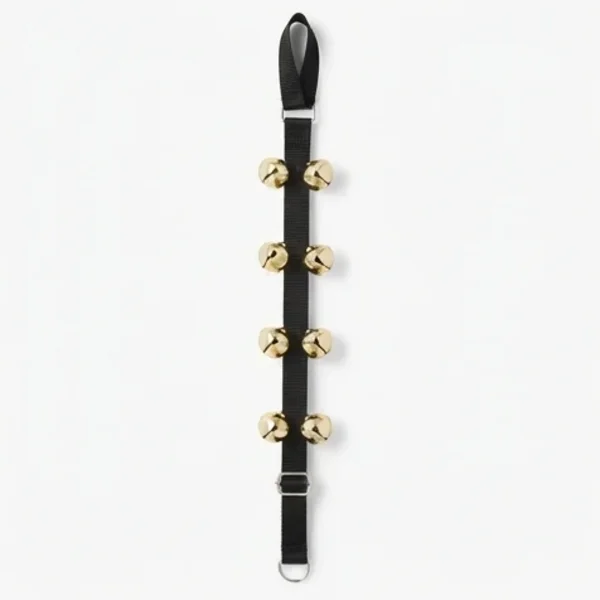
A nylon strap with seven plated bells, each 3.8 cm across. The listing gives the strap as 104 cm long, adjusted by three snaps to 72 to 82 cm, with a weight of 109 g. It loops over any door handle and needs no screws, and the listing says the bells have a stainless steel ball inside.
The listing says the strap is made to withstand bites, but a puppy can still chew it, so supervise and retire it if it frays. It also notes your dog has to complete the training for it to work. See the training steps on this page.
Pros: biggest bells and the longest adjustment range of the hanging straps we compared; no drilling, so it suits renters; adjustable at the snaps to suit your dog's nose height
Cons: it jingles whenever the door opens, not only when your dog rings it; a puppy can chew the strap, so it needs supervision; hangs from a handle, so it's a poor fit for some sliding doors
Best for: renters and most doors, with a dog who isn't a strap chewer
Skip it if: you want a bell on the wall at nose height, or a silent door
2. GoGo Bell wall-mounted press bell: best for puppies and small dogs
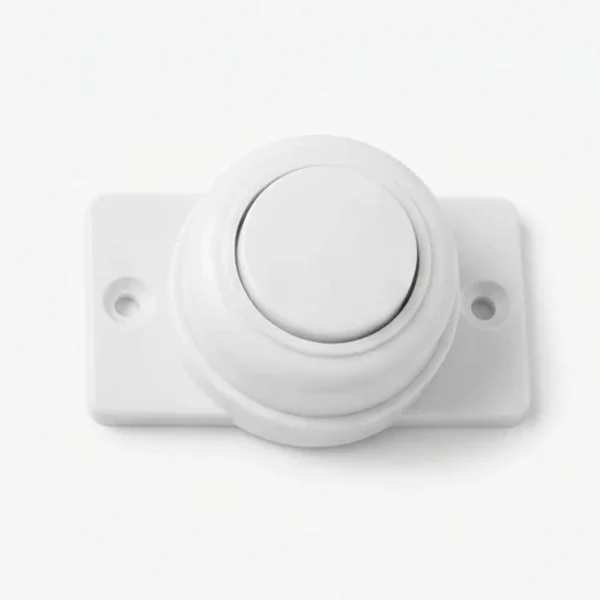
A solid metal bell, 15.75 x 9.02 x 1.91 cm and 32 g, that screws to a door or wall at any height. You set the height, so a tiny puppy can reach it. It needs no batteries, and it only rings when pressed.
The listing says it sits a short distance out from the door (it says "a few inches") so a dog is less likely to scratch the paint, and that the bell has no slots a claw could catch in. We haven't printed the listing's other safety and success claims.
Pros: mounts at any height, so small dogs can reach it; rings only when pressed; no batteries
Cons: needs two screw holes, so ask before drilling in a rental; one bell per unit, so a second door needs a second one
Best for: puppies and small dogs
Skip it if: you rent and can't drill, or want a bell that moves house easily
3. SlowTon metal press bells, 2 pack: best floor bells for one inside and one outside
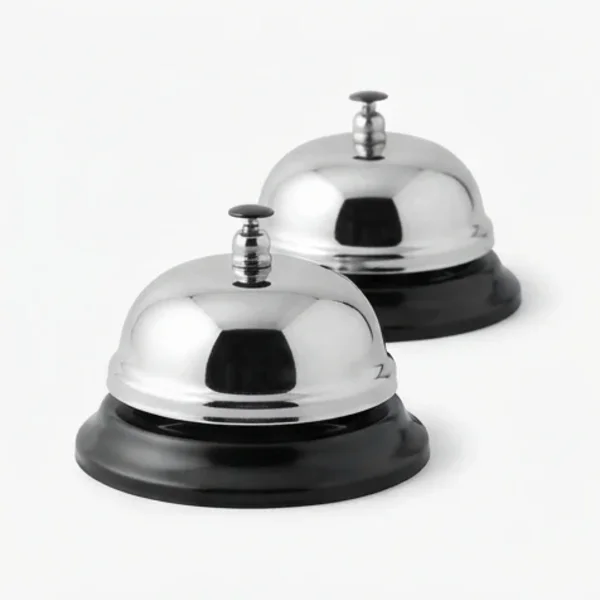
Two palm-sized press bells, 7.2 cm across, with a stainless steel body and an ABS plastic button with a paw print. Three rubber feet keep them from skating on tiles and floorboards. The listing sells them for small dogs and cats.
With two in the pack, one can go inside the door so your dog asks to go out, and one outside so they can ask to come back in. See our puppy toilet training guide for how to do that without confusing the routine.
Pros: rubber feet keep it in place on hard floors; two bells, so one can go on each side of the door; no batteries or screws
Cons: a floor bell is easy to kick across the room; the listing's own training timeline is a maker's claim, so we haven't printed it
Best for: small dogs, renters and sliding doors
Skip it if: your dog treats small objects as toys to carry off
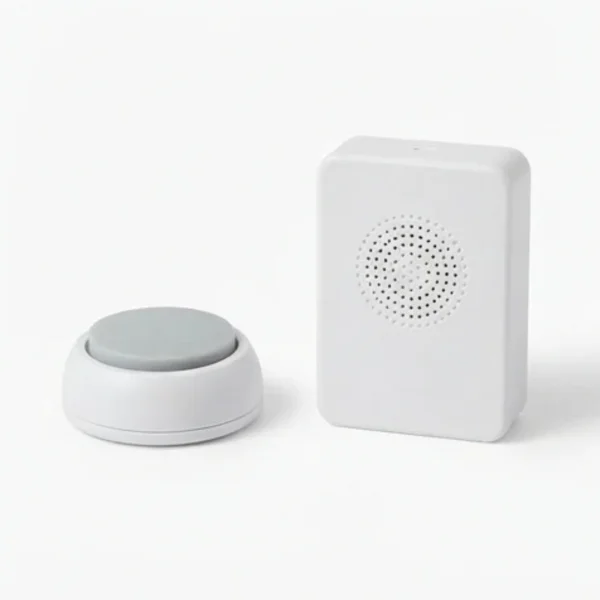
4. Halo Paw smart wireless dog bell with receiver: best wireless bell for big homes
A touch bell with a separate receiver. The listing says it rings on a light nose or paw tap, with a range up to about 300 m (it says 1000 ft), 60 melodies, 5 volume levels and a blue LED flash on the receiver. Several bells can pair with several receivers. The package is 12.6 x 7.2 x 6.4 cm and 120 g, and the listing says it resists rain and dust.
Power, from the listing: the bell part runs on one alkaline battery. The listing doesn't say how the receiver is powered. It also warns that alkaline batteries perform badly in sustained extreme heat and suggests using it indoors in hot weather in northern and central Australia. The melody count and range are the maker's claims.
If your dog chews small plastic things, don't use it. A punctured or swallowed battery can leak and burn the mouth. Pet Poison Helpline says to treat it as an emergency and not to make your dog vomit (Pet Poison Helpline, "Batteries", page read 13 November 2026). In Australia, call the Animal Poisons Helpline on 1300 869 738 (24 hours) or your vet at once.
Pros: you can hear it from another room or a granny flat; several bells can pair with several receivers, which suits a home with more than one door; light and sound alert together
Cons: battery powered, and the listing doesn't say how the receiver is powered; pairing and battery changes give more to go wrong than a plain metal bell; only listed since December 2025, so it has a short track record
Best for: big houses and granny flats where a bell wouldn't be heard
Skip it if: you want something that never needs a battery, or your dog chews small plastic things
5. Proxima Direct metal press bells, 2 pack: best press bells for a verandah or courtyard door
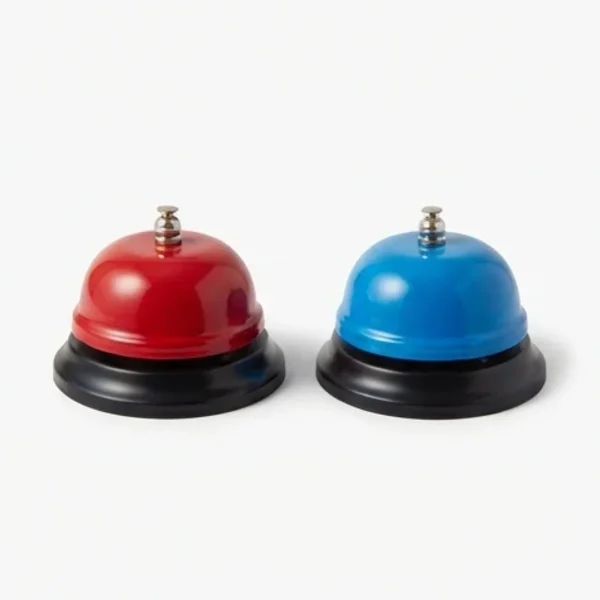
Two press bells, one red and one blue, each 7.2 x 5 cm, weighing 150 g for the pair. The listing says the base is smooth with a hollow underside that can sit over a door knob, and that the bells are waterproof and can be left outside.
The listing contradicts itself on the material, calling it a metal body in one place and listing plastic in the specification. Its training text is identical to the SlowTon listing, so treat the two as near-equivalents: pick SlowTon for the rubber feet, or this one for use outside.
Pros: the listing says it can be left outside; can sit over a door knob; two bells in the pack
Cons: the listing's material details don't agree; no rubber feet, so it may slide on smooth floors even though the listing says the smooth base stays put
Best for: a verandah or courtyard door
Skip it if: you want rubber feet
Add-ons for bell training
Two extras that suit bell training. Both have their own guides.
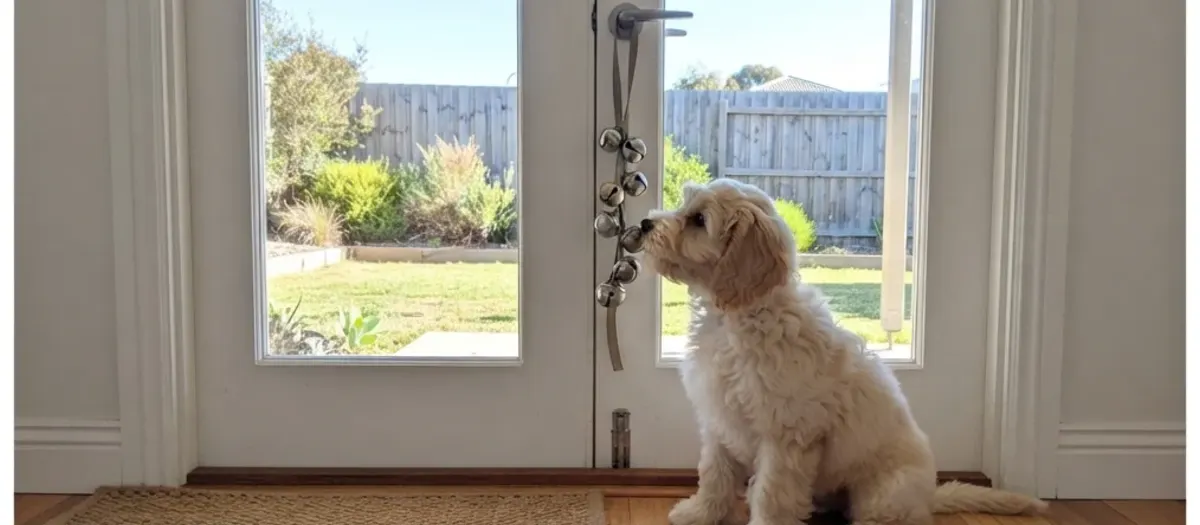
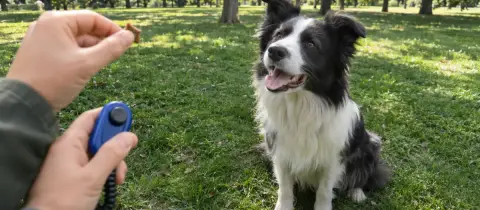
Hang or place the bell by the door you use for toilet trips, ring it yourself every time you take your dog out, reward your dog for touching it, and keep repeating until they ring it on their own. Then praise and go out straight away. The AKC says consistency is the key.
The AKC says a bell suits dogs of all ages and is particularly helpful during toilet training. It makes sense to teach it once your dog already prefers going outside, because the bell tells you when to open the door. It doesn't replace the routine, and no source says it speeds up toilet training. Our puppy toilet training guide covers the routine itself.
Swipe sideways to see every column
Step
What to do
Source
1. Introduce it
Let your dog sniff the bell and reward any interest
AKC
2. Pair it with the door
Hang or place it at the door you use for toilet trips
AKC
3. Ring it every time
Ring it yourself, every single time you go out
AKC
4. Keep your usual cues
First thing in the morning, after a nap and after a meal
RSPCA Australia
5. Watch for signs
Sniffing, circling, pausing to squat, restlessness
VCA
6. Reward quickly
Within a second or two of your dog going outside
RSPCA Australia
7. Praise the unprompted ring
When your dog rings alone, praise and open the door at once
AKC
8. Never punish accidents
Don't rub a nose in it or strike a puppy; clean up with a non-ammonia cleaner
VCA, RSPCA Australia
VCA says puppies need to go after meals or drinks, after naps, every half hour in active play, and every 1 to 2 hours while awake. VCA also says to always go out with your puppy. Results vary, because every dog learns at their own pace (RSPCA Australia, page read 15 November 2026).
The main way a bell backfires is when your dog learns that ringing makes the door open and starts ringing for fun. VCA says some dogs ring it just to play in the yard (VCA Animal Hospitals, page read 15 November 2026). A bell also won't help a dog who can't yet hold on.
Things to watch for:
Ringing for the garden, not the toilet. If your dog rings and then plays, take them out on a lead to the toilet spot and go back in if they don't go. Answer only a ring that is followed by a toilet trip.
Teaching it too early. If your puppy is still having regular accidents inside, the routine comes first, as in the step-by-step guide.
Strap chewing. A hanging strap hangs at puppy chewing height. Supervise, and retire the strap if it frays.
Bells on the move. A free-standing bell can be knocked over or carried off, so check it is still where your dog expects it.
Soiling after a dog was reliable. VCA says to see a vet if a trained dog starts soiling in the house.
How do you fit a potty bell to a sliding door or screen door?
Hang a strap from the handle on the fixed side of a sliding door, or place a press bell beside the door so your dog can nudge it without brushing past. Check that the door still opens fully and that nothing catches in the track. This is our practical advice, not a rule from a source.
Sliding glass door. A hanging strap from the handle works if the door's handle is where the dog stands. Otherwise put a free-standing press bell on the floor beside the door.
Security screen or flyscreen door. A strap can swing loose and catch in the frame, so a floor bell is usually easier.
Door that opens outwards. Put the bell where it won't be crushed when the door swings.
Rental. The Luckyiren strap and the free-standing press bells need no screws. The GoGo Bell needs two screw holes, so ask before drilling.
We searched Amazon Australia for dog potty bells and shortlisted bells that met all of these checks:
Well rated: a strong average rating with plenty of buyer reviews.
No red flags: no pattern of poor reviews, safety complaints or listing problems.
Available on Amazon Australia when we checked.
Sizes stated in the listing, so we could compare bell diameters, strap lengths and button sizes in centimetres.
How it is powered and mounted, so renters and battery-averse owners can choose.
Training steps from vet and animal-welfare sources to match to each type of bell.
These are researched picks, not products we've personally tried. We compared the specifications and features on each Amazon Australia listing, checked on 15 Nov 2026. We didn't accept payment from any brand.
Left out this time: a hanging strap with a short track record and thinner bells, press bells with a thin listing, and a second hanging strap that is close to our top pick with a narrower adjustment range (we may swap it in at a later check).
Where else can you buy a potty bell?
Dog door bells are also sold in pet shops and some vet clinics. A shop can let you see how big the bell or strap is before you choose. Check the size against the table above, wherever you buy it.
When to see a vet
A bell is a tool, not a treatment. See your vet if a toilet-trained dog starts soiling in the house, strains, passes urine more often than usual, or seems to be in pain. A vet can work out whether a medical cause is behind it. See our guide to a dog drinking a lot of water.
If your dog chews a bell or strap: take it away. If a piece or a battery may have been swallowed, call your vet straight away.
If a battery may have been chewed or swallowed: treat it as an emergency, don't try to make your dog vomit, and call your vet or the Animal Poisons Helpline on 1300 869 738 (24/7).
Frequently asked questions
Do dog potty bells work?
They can, as a clearer signal that your dog needs to go out. The AKC says bells suit dogs of all ages and are particularly helpful during toilet training. VCA notes some dogs ring just to play outside. A bell is a tool within a routine, so keep taking your dog out as usual.
What age can a puppy start bell training?
The AKC says a bell is useful for dogs of any age. VCA says a dog signals once it can hold its bladder. In practice, start once your puppy already prefers going outside, because the bell tells you when to open the door, not when to go to the toilet.
How high should the bells hang?
Low enough for your dog to reach with a nose or paw, standing on all four feet. Use the snaps on the strap to adjust the height, or mount a press bell at nose level. This is practical advice rather than a sourced rule, so adjust it as your puppy grows.
Should the bell go inside or outside, and do I need one on every door?
Start with one bell on the door you use for toilet trips, which fits the AKC's point about consistency. A second bell outside lets your dog ask to come back in. You don't need one on every door. Add more only once your dog rings reliably at the first one.
What if my puppy chews the hanging strap?
Take the strap down when you can't watch, and retire it if it frays, because swallowed fabric or metal can be dangerous. Or switch to a wall-mounted or floor press bell. The Luckyiren listing says its strap is made for bites, but supervision still applies.
Is a wireless dog doorbell better than hanging bells?
It depends on your home. A wireless bell lets you hear your dog from another room, but it needs a battery and has pairing to set up. The Halo Paw has been listed only since December 2025, so it has a short track record. A hanging strap is simpler.
Will the bells wake the house at night?
A hanging strap rings when the door opens, so someone letting a dog out will jingle it. A press bell only rings when pressed, so it is quieter on the way out. For a quiet door at night, choose a press bell or a wireless bell with a low volume.
Product details and safety text from each linked Amazon Australia listing, checked on 15 Nov 2026.
This guide provides general information and isn't a substitute for veterinary advice. If you're concerned about your dog's toilet habits, speak with your vet.