By Anish PuriUpdated 13 Nov 202611 min readResearched, not tested by us
Research guide. WhiskerFinds may earn a commission from links, at no extra cost to you.
Quick answer: The best puppy pads for most homes are Amazon Basics Heavy Duty pads, which have five layers and a plastic lining. For a big pup or a bigger floor area, choose the Gimars 90 x 90 cm pads. If you want to cut down on waste, the PIPCO washable pad is our pick.
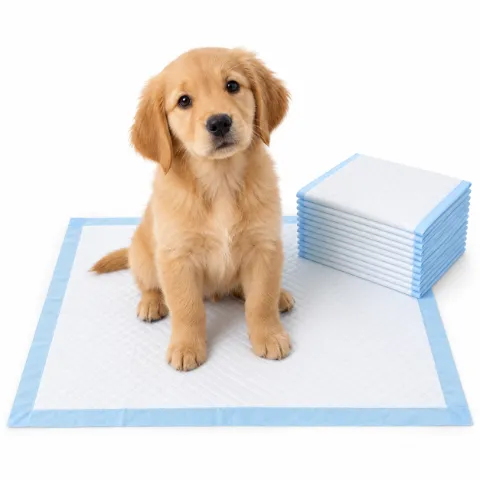
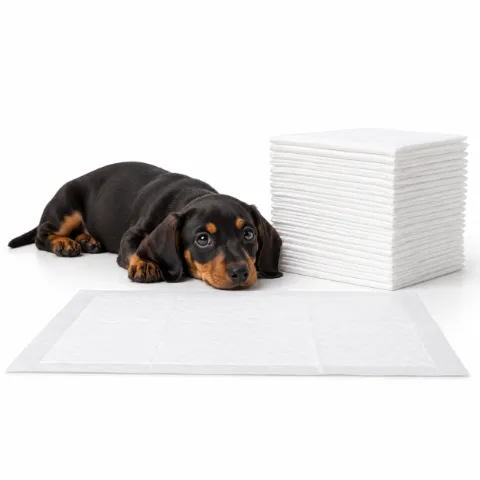
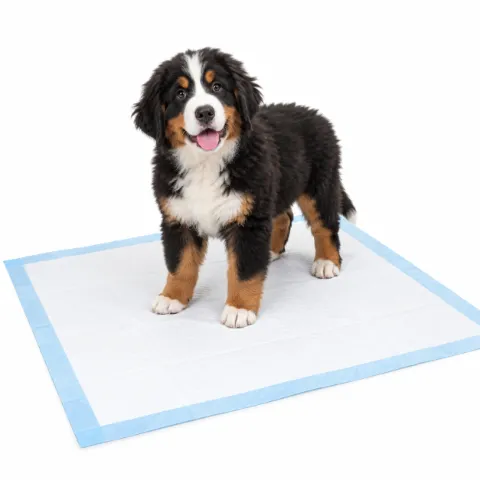
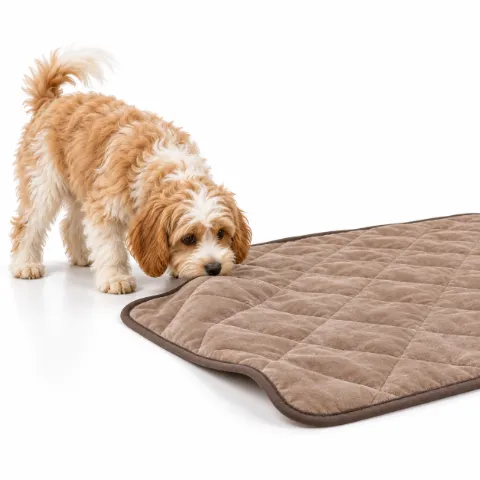
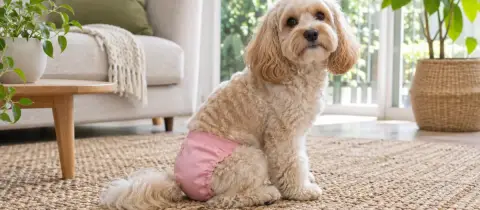
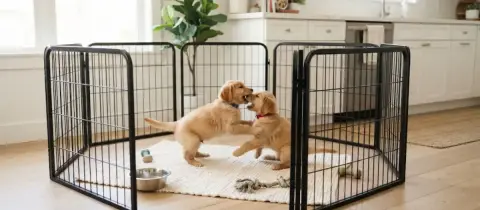
Illustration, not the actual product
Our top pickAmazon Basics Pee Pads, Heavy Duty, 50 pack
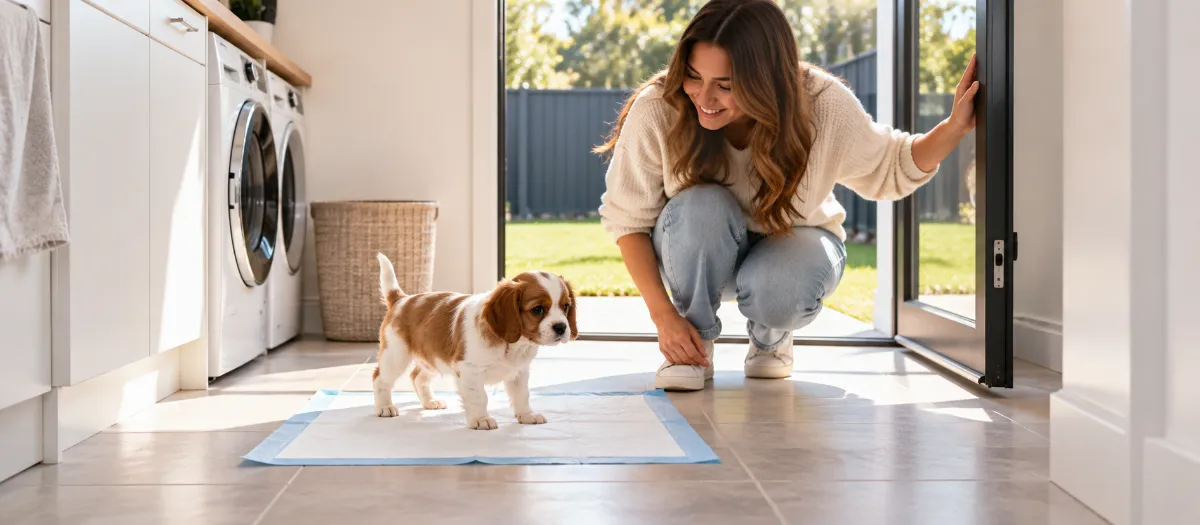
Pads are a handy tool, but they work best as a short-term step on the way to going outside. This guide compares four options on Amazon Australia, then explains how to use pads without slowing your puppy's toilet training. For the full routine, see our puppy training schedule.
Pads can help as a temporary tool, but the goal is for your puppy to toilet outside. RSPCA Australia says pads can be useful when you can't supervise your puppy or need to leave the house, and should be removed as your puppy gains bladder control (RSPCA Australia knowledge base).
Where pads can help:
Very young puppies who can't hold on until they reach the garden.
Homes where the outdoor toilet spot is far away, such as an upstairs unit.
The weeks before your vet says your puppy can visit public places. Ask your vet when your puppy can start going out.
Times you can't supervise, such as a short trip out.
Where pads can slow things down:
A pad that's left down all day may teach a puppy that toileting indoors is fine, which is why RSPCA Australia says to remove pads as your puppy gains bladder control.
The American Kennel Club's guide to potty pad training advises keeping the pad in one spot until your puppy clearly understands where to go (AKC, updated 15 October 2026).
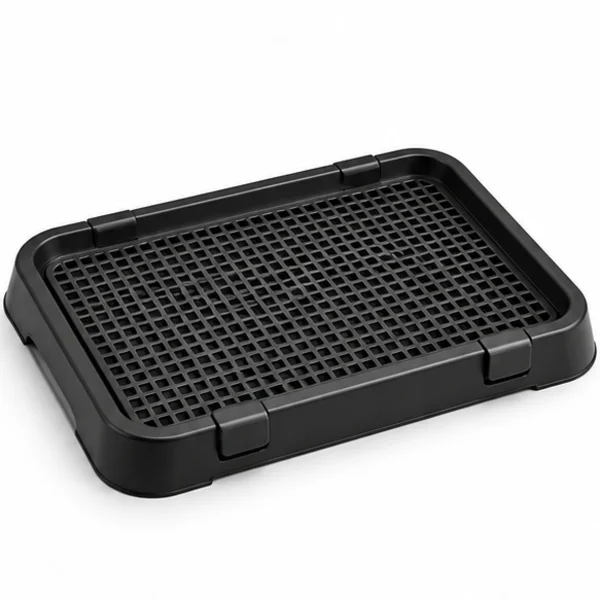
Puppies may chew, shred or play with pads (see the chewing section below). A framed tray with a cover over the pad makes shredding harder; our puppy pad holder guide compares them.
Whichever way you go, the basics stay the same. Take your puppy out after waking, after eating or drinking, after play and every couple of hours, and praise and reward straight after they go. RSPCA Australia says the reward should come within a second or two (RSPCA Australia knowledge base, updated 29 September 2025).
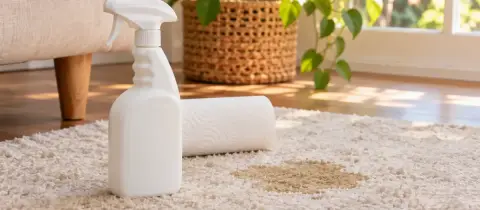
Accidents will happen. Clean the spot with an enzyme-based cleaner (RSPCA Australia advises a non-ammonia product, so the smell doesn't draw your puppy back) and never punish; punishment can make a puppy hide to toilet. RSPCA Australia calls rubbing a dog's nose in it outdated and harmful.
Should you choose disposable or washable pads?
Disposable pads suit most households while a puppy is learning, because you bin them and move on. Washable pads cost more to start and need laundering, but may suit you if you'll use pads for a long time, such as for an older dog or a small indoor dog. For a female dog in heat or a dog who leaks, dog nappies catch it at the source, and a belly band does the same for a male dog who marks. If you'd rather a grass surface your dog can use for years, see our fake grass for dogs guide.
Swipe sideways to see every column
Disposable
Washable
Cost over time
Lower to start, adds up with every pad used
Higher to start, usually less over a long period
Cleaning
Fold up and bin
Needs a wash after each use
Smell
Bin it straight away to keep smells down
Can hold smell if not washed soon
Travel
Easy to pack and throw out
Bulky once soiled, so bring a bag
Waste
Creates rubbish with every use
Little waste
Best for
Short-term use, young puppies, trips
Long-term use, regular home use
If your puppy goes through pads fast, a stack of disposables and one or two washables can work together.
Our picks in detail
1. Amazon Basics Pee Pads, Heavy Duty, 50 pack: best overall
A pack of 50 regular-size pads with heavy duty absorbency. The listing says each pad has five layers, an absorbent core that turns liquid into gel, a plastic lining and a quick-dry surface.
Pros: five layers; plastic lining; quick-dry surface; a good starting size for young puppies
Cons: regular size only, so a bigger pup may miss the edges; disposable, so it adds to your rubbish
Best for: most households with a small to medium puppy
Skip it if: your puppy is large and already overshoots a regular pad, or you want to avoid disposables
A pack of 100 regular-size pads at standard absorbency. The listing says they have five layers and are made with FSC-certified materials. The standard absorbency is the trade-off: it suits small puppies better than bigger ones.
Pros: big pack; five layers; FSC-certified materials, according to the listing
Cons: standard absorbency, so change often or choose the heavy duty version for bigger pups; regular size only
Best for: small puppies and homes that go through plenty of pads
Skip it if: your puppy has a big wee and you want more absorbency
An extra-large 90 x 90 cm pad with heavy absorbency. The listing says it suits small and large dogs and other pets, and mentions training, ageing or sick pets and travel. The big surface gives a growing puppy more room.
Pros: a very large 90 x 90 cm surface; heavy absorbency; handy for bigger pups, older dogs and travel
Cons: needs more floor space; the listing gives less layer detail than the Amazon Basics pads
Best for: large breed puppies, older or unwell dogs, and car trips
Skip it if: you have a small puppy and a small space, where a regular pad is easier to place
4. PIPCO Pets Washable Reusable Pee Pad, 45 x 60 cm: best washable
A reusable pad with a five-layer design. The listing says it's absorbent and leak proof. Other sizes are available on the listing. Having two or three means one can be in the wash while another is down.
Pros: reusable, so less rubbish; five-layer design; other sizes available; a good fit for a long-term indoor toilet spot
Cons: needs washing and drying after use; costs more up front; the leak-proof claim comes from the listing
Best for: owners who want less waste, older or small dogs, and long-term use
Skip it if: you don't want the extra laundry, or you only need pads for a few weeks
Are reusable puppy pads worth it?
Reusable puppy pads pay off when pads will be in use for months: an indoor toilet spot for a small dog, an older dog, or a unit without easy outdoor access. For a puppy who'll be outside within weeks, disposables are simpler. Two or three washable pads let one be in the wash while another is down.
Puppy pads compared
Details from each Amazon Australia listing, checked on 13 Nov 2026.
We searched Amazon Australia for puppy pads, then shortlisted pads that met all of these checks:
Well rated: a strong average rating with plenty of buyer reviews.
No red flags: no pattern of poor reviews, safety complaints or listing problems.
Available on Amazon Australia when we checked.
Size stated on the listing.
Absorbency level and layers or backing described on the listing.
These are researched picks, not products we've personally tested. We compared the specifications and features shown on each Amazon Australia listing, checked on 13 Nov 2026. We didn't accept payment from any brand, and no brand saw this page before it was published.
Left out this time: pads with added attractant scents and very thin extra-large pads. Pad holders now have their own page: see our puppy pad holder guide for the trays that passed our checks.
How do you use puppy pads?
Put the pad in one spot and keep it there, ideally close to the door you'll use to go outside. Take your puppy to it at the usual times and praise and reward straight after they go. The AKC advises picking a spot and avoiding moving the pad until your puppy clearly understands where to go (AKC, updated 15 October 2026).
A simple routine:
Pick a spot near the door, away from beds and food bowls.
Take your puppy to the pad after waking, after eating or drinking, after play and every couple of hours.
Praise and reward straight away when they go.
Swap a soiled pad for a fresh one, as a puppy may not want to use a dirty one.
Once your puppy is reliable, move the pad towards the door in small steps, then outside, as the AKC suggests.
Make the pad smaller over time, then stop using it.
Your puppy's age and bladder control will decide how quickly you move on, so go at their pace. Once your puppy is going outside, you can phase pads out, as RSPCA Australia suggests. A door bell gives a puppy a clear way to ask to go out once they prefer the garden; see our dog potty bells guide. Pick up the outdoor toilet spot every day with poop bags or a pooper scooper, which saves bending. Rewards like small treats from our best dog training treats guide help the new habit stick.
What if your puppy chews or shreds the pad?
Take the pad away and swap in something your puppy is allowed to chew. Puppies explore with their mouths, especially while teething, and pad material isn't safe to swallow. Supervise pad time, bin torn pads straight away, and offer a toy from our best puppy teething toys guide.
Chewing is common in puppies and doesn't mean something is wrong. Our guide on how to stop puppy biting covers mouthing and redirection.
If your puppy swallows a piece, treat it seriously. Cornell's vet school lists vomiting, loss of appetite, tummy pain, diarrhoea and lethargy as common signs of a blockage, and calls these emergencies that often need surgery (Cornell University College of Veterinary Medicine).
How do you wash reusable puppy pads?
Follow the care label on your pad. As a general rule, wash a soiled pad soon after use, rinse off any solids first, and dry it fully before using it again. Fabric softener can coat fibres and may reduce absorbency, so skip it unless the care label says it's fine. Check the label for bleach.
If a pad still smells after washing, wash it again rather than adding strong fragrances. Scented products may bother some dogs, so keep it simple.
When to see a vet
Book a vet visit if your puppy strains to wee, has blood in their urine, wees very often in small amounts, or starts having accidents after they were reliable. These can be signs of a urinary problem such as an infection, which won't improve with more training (WebVet, reviewed by Dr Pippa Elliott BVMS MRCVS). VCA Animal Hospitals calls a break in house training a red flag for a bladder problem. Diarrhoea is also worth a call.
Go to a vet or emergency clinic straight away if your puppy strains with little or no wee coming out, or if they have eaten pad material and are vomiting, off their food, or in pain. A swallowed piece can cause a blockage. For the full routine, see our puppy training schedule.
Frequently asked questions
Are puppy pads a good idea?
They can be, as a short-term tool. Pads suit very young puppies and times you can't supervise. Used all day for months, though, they may teach a puppy that indoors is fine. Plan the move outside from the start, and ask your vet if you're unsure how long to keep pads going.
How long should you use puppy pads?
There's no set time, and it depends on your puppy's age, bladder control and routine. RSPCA Australia says to remove pads as a puppy gains bladder control. Ask your vet when your puppy can go outside, then move the pad towards the door step by step.
Where should I put puppy pads?
Choose one spot and keep it there, ideally near the door you'll use to go outside. Keep it away from your puppy's bed and food bowls; in a puppy pen, that means the opposite end from the bed. Move it only in small steps once your puppy is using it reliably, rather than shifting it every day.
How do I stop my puppy chewing the pad?
Supervise pad time, remove torn pads straight away and offer a proper chew toy instead. Our teething toys guide has options. A pad holder with an anti-tear cover takes away the loose corner. Puppies explore with their mouths, so a pad on its own is a tempting target. If your puppy swallows pad material, call your vet.
How do I train my puppy to poo on the pad?
The same way as for wee: take your puppy to the pad after meals, which is when most puppies need to poo, wait quietly, and reward within a second or two of finishing, as RSPCA Australia advises. Keep the pad in one spot. If accidents land next to it, the pad may be too small.
What can I use instead of puppy pads?
A grass potty tray gives a surface that feels like the garden, which can make the move outside easier. More frequent trips outside are the real alternative for most puppies. Newspaper is cheap but soaks through, and towels teach a puppy that fabric is a toilet, so skip both.
How many puppy pads do I need a day?
It varies with your puppy's age and size, how much they drink and how often you pick up. Young puppies may toilet often, so keep a good stock and expect to change soiled pads promptly. A bigger pack will go quickly.
Product details from each linked Amazon Australia listing, checked on 13 Nov 2026.
This guide provides general information and isn't a substitute for veterinary advice. If you're concerned about your puppy's toileting or health, speak with your vet.