Best dog and puppy training treats (2026): small and soft
By Anish PuriUpdated 25 Nov 202614 min readResearched, not tested by us
Research guide. WhiskerFinds may earn a commission from links, at no extra cost to you.
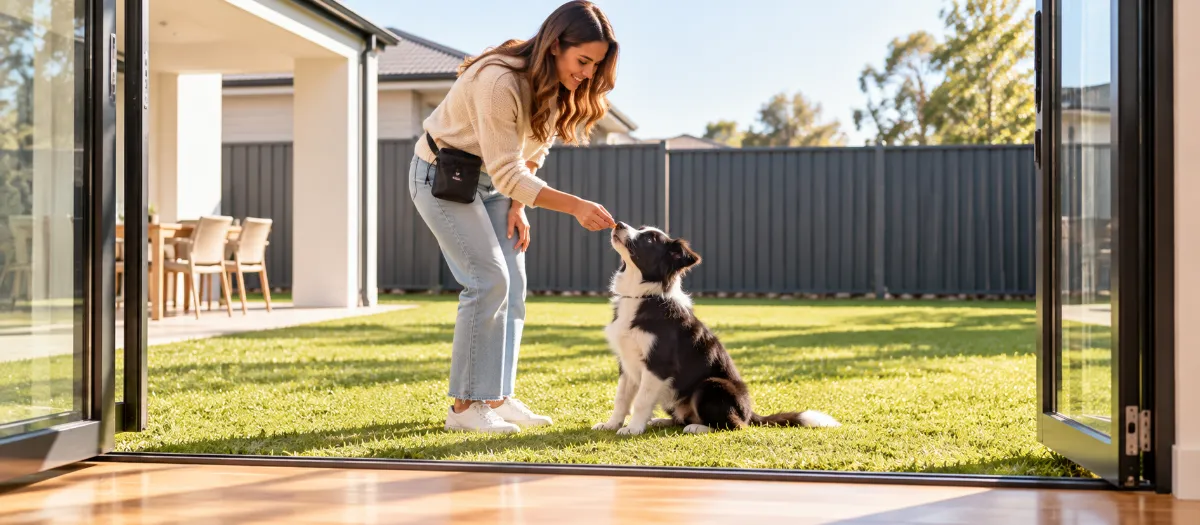
Quick answer: The best dog training treats are small, soft and quick to eat, so your dog stays focused. Our pick is SavourLife Dog Training Treats in Australian kangaroo, made as bite-size meaty chunks. For puppies, choose a puppy formula, and keep all treats to about 10% of daily food.
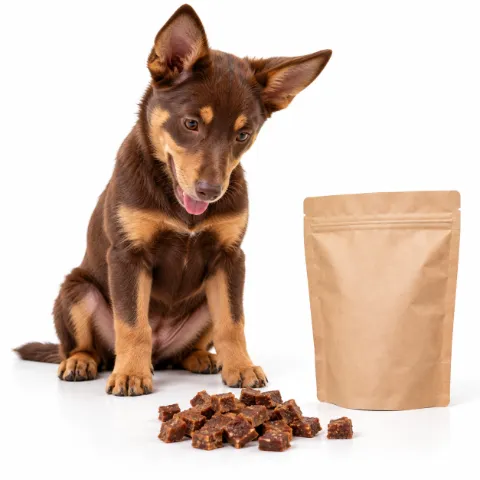
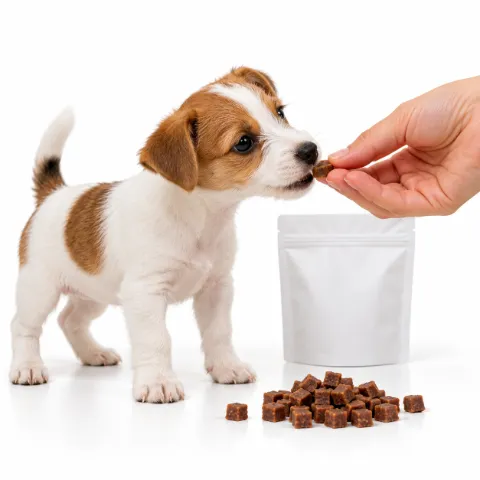
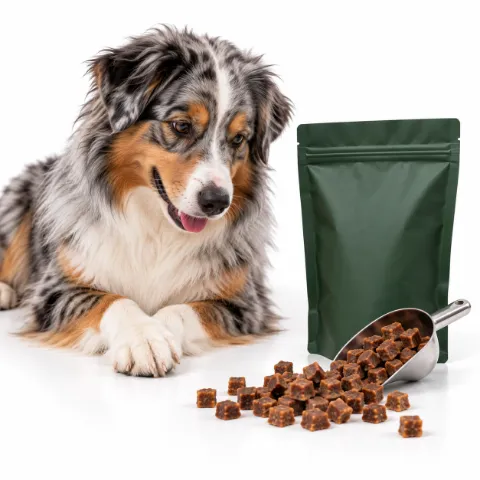
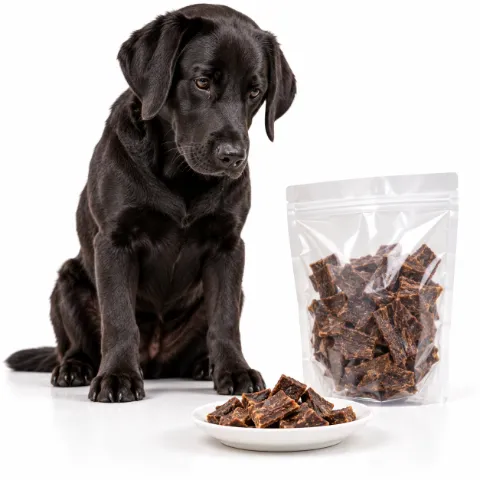
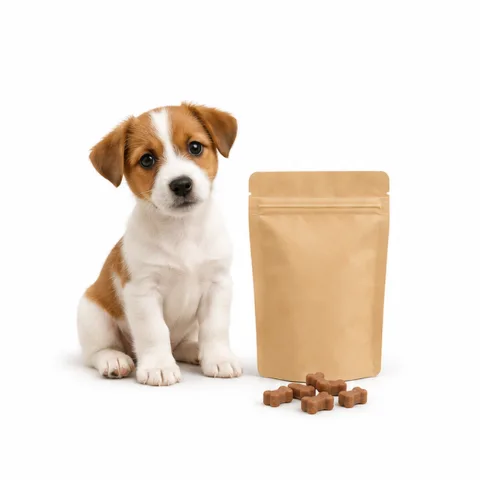
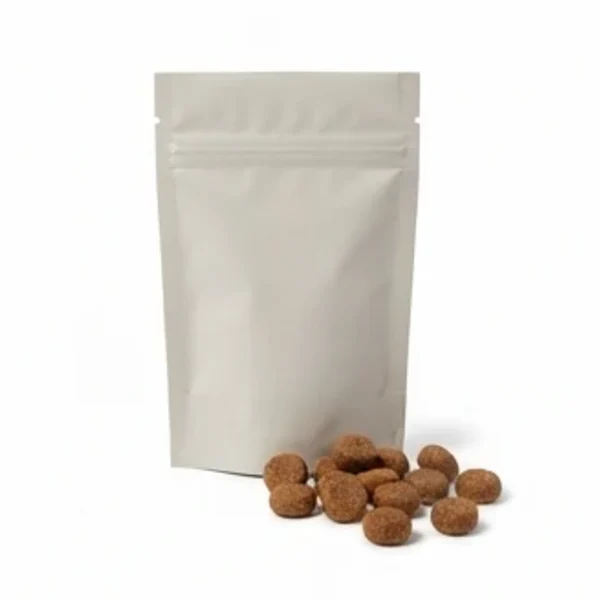
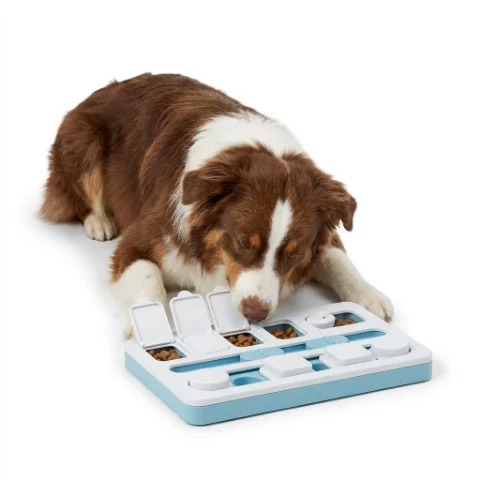
Illustration, not the actual product
Our top pickSavourLife Dog Training Treats, Australian Kangaroo, 165 g
This guide compares six training treats on Amazon Australia, explains how many to give and when to use a richer reward, and covers how to use them well. If you're starting with a young dog, our puppy training schedule shows where treats fit into the day.
Quick picks
Our top pickBest overall
SavourLife Dog Training Treats, Australian Kangaroo, 165 g
A good training treat is small, smelly enough to interest your dog and quick to swallow, so the lesson keeps moving. Soft treats that break easily into pea-sized pieces work well, and the meat should be named on the label. Treats that crumble into dust or need lots of chewing slow training down.
Look for these when you compare:
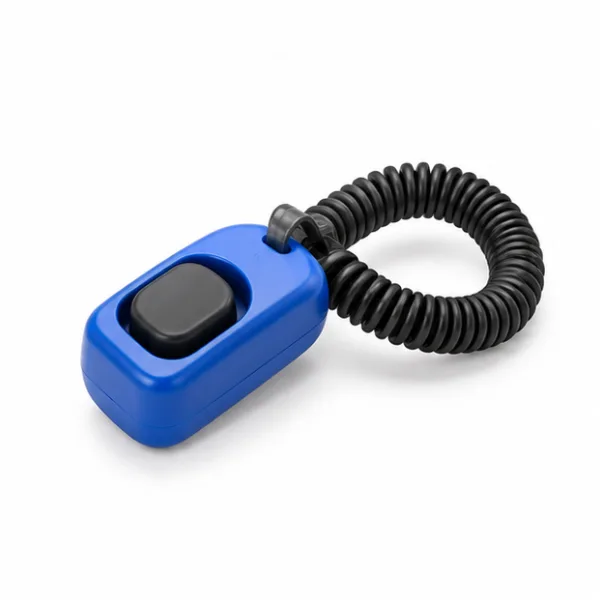
Size: training means dozens of rewards in a session, so tiny pieces keep calories down. Anything bigger than a pea can be broken up. A training clicker marks the exact moment, and the treat follows.
Soft: soft treats are easy to snap in half, and dogs can eat them without stopping to crunch. The listings call love'em Kangaroo "soft and chewy" and Wellness Soft Puppy Bites soft, while the SavourLife puppy lamb listing says biscuits and the puppy chicken listing says stick, so snap those smaller before a first lesson.
Smell: strong-smelling meat, like kangaroo, chicken or liver, tends to hold attention.
Calories: check the packet. VCA Animal Hospitals warns that treats labelled "light" or "lower calorie" often aren't much lower in calories (VCA Animal Hospitals, updated September 2024).
A named meat: it's easier to avoid ingredients your dog doesn't tolerate when the label says what the treat is made from.
Avoid anything on our toxic foods list, and check homemade treats against it.
How many training treats can a dog have?
Keep treats, training treats included, to about 10% of your dog's daily calories, with complete and balanced food making up the rest. VCA Animal Hospitals gives this rule and says treat calories add up fast, especially for dogs with a low calorie requirement. Cut meals back a little on heavy training days to make room.
The same VCA article suggests setting a treat budget of 10% of daily calories and feeding only 90% of calories from the regular food (VCA Animal Hospitals, updated September 2024). Using some of your dog's usual food as rewards is another option. If your dog has a medical condition or a special diet, ask your vet which treats are safe.
A simple way to work out your own treat budget:
Work out the day's calories from your dog or puppy food's feeding guide and the energy figure printed on the bag, or ask your vet for a number.
Take 10% of that number. That is the most the day's treats should add up to.
If the treat packet prints calories per treat, divide the budget by that number to see how many you can give.
Most of the listings here don't print calories per treat, so pea-sized pieces are the practical control. Break each treat small, count the pieces as you go, and trim the next meal if a training day ran long.
Our picks in detail
1. SavourLife Dog Training Treats, Australian Kangaroo: best overall
The listing describes bite-size meaty chunks made for training and rewards, enriched with vitamins and minerals. The main meat is Australian kangaroo, which makes a change for dogs who've had plenty of chicken or beef. The 165 g bag suits trying a treat before you commit to a bigger one.
Pros: made for training; kangaroo as the main meat; meaty chunks, per the listing
Cons: a small bag if you train every day; chunks may need breaking up for small dogs and puppies; the listing gives the age range as adult
Best for: adult dogs in everyday training who like meaty flavours (ask your vet about young puppies)
Skip it if: your dog has a kangaroo allergy, or you want one bag to last for months
2. SavourLife Puppy Training Treats, Australian Chicken: best for puppies
A puppy-specific version of the training treat, with Australian chicken as the flavour. The listing says it includes DHA, but treat that as the maker's claim. What matters for training is that it's meaty and made with young dogs in mind.
Two 400 g packs of kangaroo treats. The listing says they're 100% Australian meat, soft and chewy, and bite-sized. That makes it the biggest buy here, a good fit for a household that trains daily or has more than one dog.
Pros: larger packs; the listing says 100% Australian meat; soft and chewy per the listing
Cons: "bite-sized" may be too big for toy breeds and puppies, so plan to break pieces up; keep the bag sealed once open
Best for: busy trainers and multi-dog homes
Skip it if: you're only trying a new treat, or your dog can't have kangaroo
Air-dried beef liver strips, which the listing says are Australian made, high in protein and low in salt. Liver has a strong smell most dogs find hard to ignore, so it works for harder lessons. It's rich, so use tiny pieces and keep it occasional.
Pros: a strong smell for tough training moments; Australian made, per the listing; low salt, per the listing
Cons: rich, so not for every day; pieces are brittle and need breaking up small; a 150 g bag is best kept for special occasions
Best for: recall practice, busy places and difficult tasks
Skip it if: your dog has a sensitive stomach or a special diet (ask your vet first)
5. SavourLife Puppy Training Treats, Australian Lamb: best lamb option for puppies
The listing describes these as little cubes sized for puppy training and rewards, made with real Australian meat, with added vitamins and minerals. It lists DHA Gold and fish oil, which are the maker's claims about brain, eye and coat health. The listing also calls lamb a novel protein, so it may suit a puppy who has already had a lot of chicken or beef. It's sold as a pack of two 165 g bags.
Pros: little cubes made for puppy training, per the listing; a lamb alternative to chicken; two bags in the pack
Cons: the listing labels the item form as biscuits, so check how soft they are before a first lesson and snap them smaller if needed; the listing recommends it for small breeds, so it may not suit every puppy
Best for: small-breed puppies, or puppies who need a change from chicken
Skip it if: your puppy can't have lamb, or you want one bag to try first
6. Wellness Soft Puppy Bites, Lamb and Salmon: best soft puppy treat
The listing describes soft, bite-sized, grain free puppy training treats, and the description says they're made for puppies under 1 year. Lamb and salmon are the first two ingredients, and the listing prints the full ingredient list, with no xylitol in it. It also lists DHA, which is the maker's claim about brain development. The listing says it's made in the USA, and the bag is 85 g.
Pros: soft and bite-sized per the listing; made for puppies; full ingredient list on the listing, so it's easy to check against your puppy's needs
Cons: imported, so check the delivery details on Amazon before you order; a small bag; the ingredients include molasses and salt, so keep to tiny pieces; the listing gives no minimum age in weeks; the listing's item form says wafer, which doesn't match "soft", so check the bag when it arrives
Best for: young puppies and small mouths that need a soft treat that breaks easily
Skip it if: your puppy can't have fish or lamb, you train daily and need a big bag, or you want an Australian-made treat
Everyday treats or high-value treats: which one when?
High value treats are the ones your dog finds most exciting, usually soft, strong smelling and meaty. Save them for new, hard or distracting situations, and use everyday treats for easy repeats at home. VCA Animal Hospitals advises keeping high-calorie treats for occasional use.
A simple split:
Everyday treats: sit, name games and lead practice in the lounge room or a quiet backyard. SavourLife and love'em suit this job.
High-value treats: a first visit to a busy park, recall practice, or anything your dog finds hard. BLACKDOG Beef Liver fits here.
Liver is rich, so treat it as a special reward in very small pieces, not a daily snack. Our liver treats guide explains how much is safe.
What are the best puppy training treats?
The best puppy treats for training are soft, meaty and made for puppies, broken into pieces smaller than a pea so a long lesson still fits inside about 10% of the day's calories. Here that means Wellness Soft Puppy Bites or the SavourLife puppy cubes. Introduce one new treat at a time.
VCA Animal Hospitals applies the same 10% treat limit to growing puppies, with a complete puppy food making up the rest (VCA Animal Hospitals, updated February 2025). Adding one new treat at a time makes any tummy upset easy to spot, and your vet can advise on allergies or a sensitive stomach.
None of the listings give a minimum age in weeks, so don't guess from the packet.
We searched Amazon Australia for dog training treats, then shortlisted products that met all of these checks:
Well rated: a strong average rating with plenty of buyer reviews.
No red flags: no pattern of poor reviews, safety complaints or listing problems.
Available on Amazon Australia when we checked.
Small or easy to break into pea-sized pieces.
Made for dogs, with the meat named on the listing.
These are researched picks, not products we've personally tested. We compared the specifications and features shown on each Amazon Australia listing, checked on 25 November 2026. We didn't accept payment from any brand, and no brand saw this page before it was published.
Left out this time: multipacks that didn't pass our red flags check, overseas imports apart from the Wellness puppy treat (pick 6, marked as imported in its cons), crunchy treats that are slow to eat in training, and very hard treats. Chews such as nylon, antler or hoof products aren't training treats and fail our thumbnail test.
Related gear
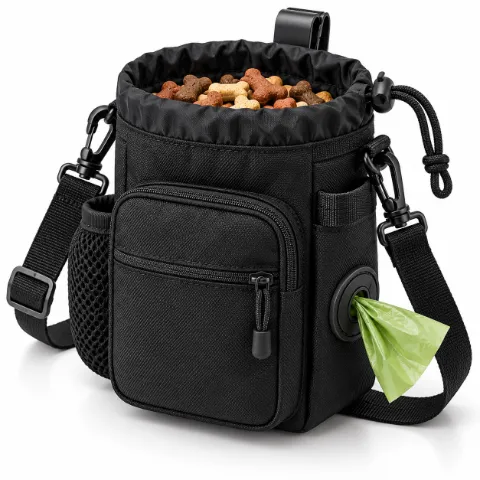
Pet N Pet treat pouch
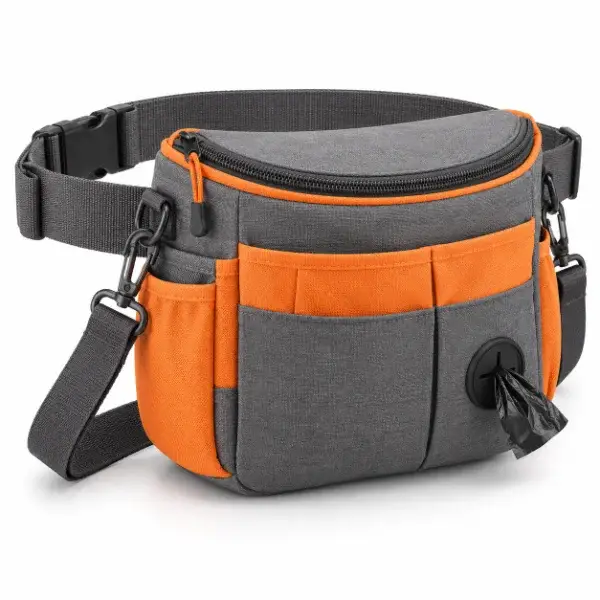
A treat pouch keeps rewards within reach so you can mark the right moment. Check the listing for how it fits and closes.
Break treats into pea-sized pieces, hold them ready, and give one the moment your dog does the right thing. Quick timing helps your dog connect the treat with the behaviour, as RSPCA Australia's toilet-training guide explains. Once the behaviour is reliable, reward only some repeats, mixing in praise and play.
Carry a pouch: it keeps treats close, so timing doesn't depend on a trip to the pantry.
Phase down: once your dog does the behaviour well, treat some repeats and use praise, a pat or a game for the rest.
Use life rewards: a sit before the lead goes on, or the door opening, is a reward too.
Use positive training only. Our puppy biting guide shows how to redirect mouthing with a toy and rewards, and our no-pull harness guide covers rewarding lead walking.
When to see your vet
Call your vet if your dog vomits, has diarrhoea or is itchy after a new treat, or if they're gaining weight despite adjusting meals. Ask for advice if your puppy won't eat, or refuses food they usually enjoy.
See a vet straight away if your dog is choking or gagging, or you think they've eaten something on our toxic foods list.
Frequently asked questions
Are training treats bad for puppies?
Not when they're small and kept to the 10% budget. Too many can crowd out balanced food and cause tummy upsets or weight gain. Check the ingredients, introduce new treats gradually, and ask your vet if your puppy has a sensitive stomach.
What are high value treats for dogs?
They're the treats your dog loves most, usually soft, strongly scented and meaty, like liver or kangaroo. Save them for hard or distracting moments, and use them sparingly so they keep their pull. See everyday treats or high-value treats above for how we'd split them.
Can I use kibble as training treats?
Yes, for easy tasks at home. VCA Animal Hospitals lists using part of your dog's regular food as treats as an option. Measure the kibble out of the daily meal, and see our dry dog food guide if you're choosing a kibble. Some dogs need something tastier when there are distractions, so keep a richer treat for those times. Small pieces of apple or cucumber also work as low-calorie rewards for dogs who like them.
When should I stop using treats in training?
You don't have to stop completely. Once your dog does a behaviour reliably, reward some repeats and swap the rest for praise, play or real-life rewards. Every dog learns differently, so watch how yours responds. New or harder skills usually need treats again.
Can an 8 week old puppy have training treats?
Usually yes, in tiny amounts. Choose a soft treat made for puppies, break it into pieces smaller than a pea so it's easy to swallow, and count it inside the daily food budget. Check with your vet at your puppy's first visit, as they know your puppy's health.
Are puppy snacks different from puppy training treats?
Mostly in size. A puppy snack is anything you give between meals, often a biscuit or a chew; a training treat is tiny and quick to eat so the lesson keeps moving. Both count in the 10% budget VCA Animal Hospitals gives for growing puppies, so if you use snacks, cut the training pieces smaller.
What is the 90/10 rule for dog treats?
It's the same idea as the 10% rule: about 90% of your dog's daily calories come from complete and balanced food and no more than 10% from treats, including training treats. VCA Animal Hospitals suggests feeding 90% of calories as the regular meal and keeping the rest as the treat budget.
How many treats can a puppy have a day?
There's no fixed number, because it depends on the treat's calories and your puppy's size. VCA Animal Hospitals applies the same limit to growing puppies as to adults: no more than 10% of daily calories from treats, with a complete puppy food making up the rest. Break pieces smaller than a pea so a long lesson still fits the budget.
Product details from each linked Amazon Australia listing, checked on 25 November 2026.
This guide provides general information and isn't a substitute for veterinary advice. If you're concerned about your puppy's diet or training, speak with your vet.