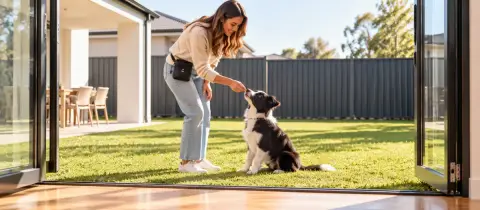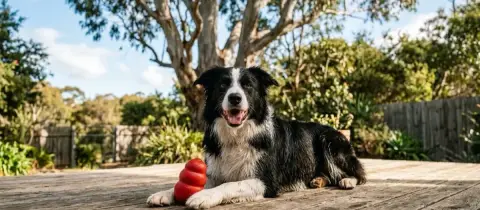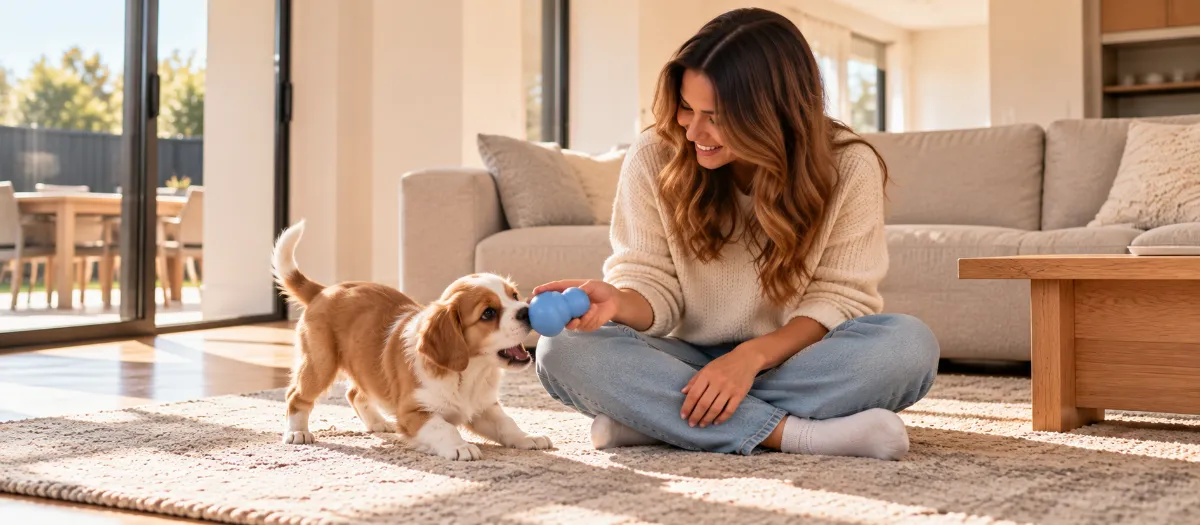
Quick answer: Stopping puppy biting comes down to staying calm, swapping your hands for a toy and quietly pausing play the moment teeth touch skin. It's usually normal mouthing rather than aggression, and it needs patience, not punishment. A soft, stuffable teething toy like the KONG Puppy gives them somewhere safe to chew instead.
Those needle-sharp teeth on your fingers, ankles and sleeves are a rite of passage for most new puppy owners. This guide explains why it happens, what to do in the moment, which common reactions make it worse, and when it's worth asking for help. It sits alongside our puppy training schedule, which shows where biting fits in the first few months.
Quick picks
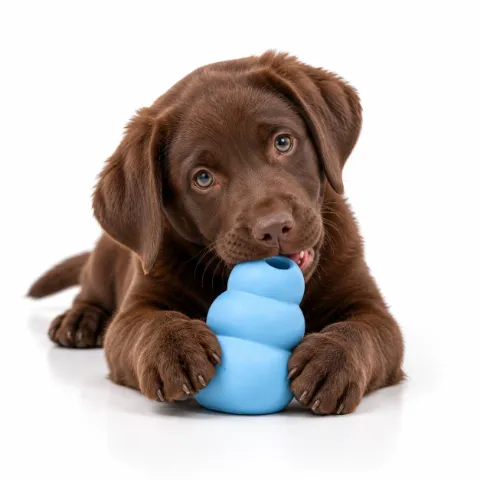
KONG Puppy, medium
Soft rubber made for puppy teeth and gums, and you can stuff it
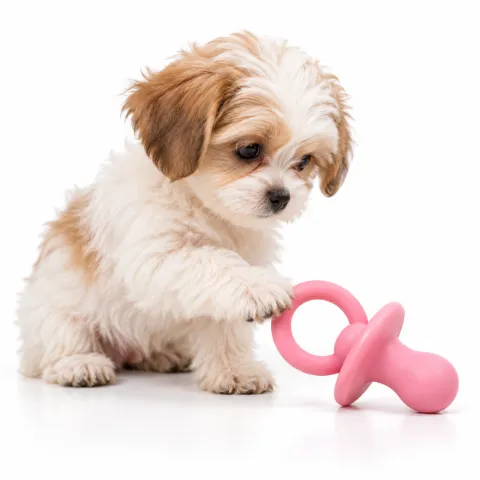
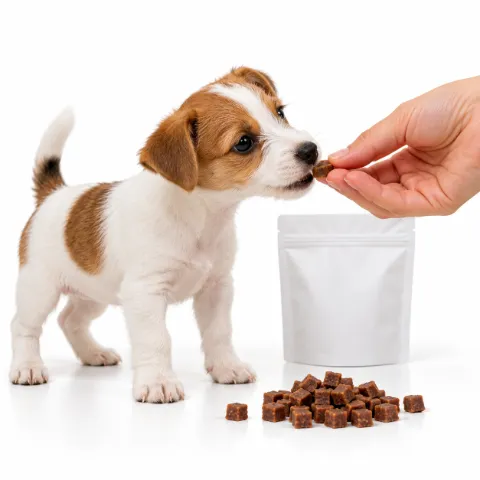
SavourLife Puppy Training Treats, Chicken
Small, puppy-specific treats for rewarding gentle mouths
Pictures are illustrations, not the actual products.
Toys and treats are tools, not fixes. What changes biting is your response, a good routine and time. For more choice, see our guides to puppy teething toys and dog training treats.
Why do puppies bite?
Puppies bite mainly because mouths are how they explore, play and learn. RSPCA Victoria describes mouthing as normal puppy behaviour that is rarely done with malice or aggression, and says puppies learn how hard is too hard through play with other dogs (RSPCA Victoria).
Teething adds to it. VCA says teething starts at about 3.5 to 4 months, when adult teeth begin pushing out the baby teeth, and most puppies have all their adult teeth by 6 to 7 months (VCA Animal Hospitals). Chewing can feel good on sore gums, so a puppy in this stage may look for something to bite on. Boredom can add to it too, which is why RSPCA Victoria also points to enrichment. Our enrichment guide has ideas for puppies.
How do you stop puppy biting in the moment?
Stay calm, swap your hand for a suitable toy, and pause play the moment teeth touch skin. RSPCA Victoria suggests leaving the room for about a minute if mouthing continues, then returning, and leaving again if play turns wild. It also stresses being consistent (RSPCA Victoria).
Here's a simple routine to follow every time:
- Keep a toy within reach so you can offer it the second a hand gets mouthed. A soft teething toy is a good place to start (see our puppy teething toys guide).
- Redirect to the toy and praise your puppy as soon as they chew it instead of you.
- Pause if teeth touch skin. Stop moving, take your hands away and stop the game for a few seconds. If it keeps happening, stand up and step out of the room for a minute, as RSPCA Victoria suggests.
- Offer a calm moment. Once your puppy settles, reward them with a quiet word and a tiny treat. Keep treats, including training treats, to about 10% of your puppy's daily food calories (VCA Animal Hospitals), and break them into pea-sized bits.
- Switch to games without hands. RSPCA Victoria suggests fetch and tug, where there's no skin to bite. Use a toy long enough that your hand stays well clear.
- Give plenty of chew outlets. Rotate several safe toys and supervise. A KONG stuffed with safe fillings gives a puppy something to work on. See our KONG and treat dispensing toys guide for sizes, and the safe filling recipes for what to use and what to avoid. For chewing furniture and shoes rather than hands, see how to stop a dog chewing.
What about yelping? VCA suggests a high-pitched yelp, then pulling your hand away and going to play elsewhere (VCA Animal Hospitals). RSPCA Victoria doesn't mention it, and it doesn't suit every puppy. If a yelp seems to wind yours up, skip it and simply go quiet and still instead.
Everyone in the house needs to respond the same way. VCA warns that rough play with hands, even with the odd nip, can teach a puppy that hands are toys, and says everyone, including children, should avoid rewarding biting with attention or play.
Why is my puppy biting more when tired or excited?
Puppies often get nippier when they are overtired or overexcited. A veterinarian and animal behaviourist answering on Dogster compared it to an overtired toddler, saying biting can peak at dawn and dusk, and that a puppy who is too wound up to engage properly probably needs a nap (Dr Paola Cuevas, Dogster Ask a Vet, 9 April 2026).
If your puppy is racing around, grabbing sleeves and can't settle, try a calm break rather than more training. Pop them somewhere quiet and safe, such as their bed or pen, with a safe chew or a stuffed toy, and let them wind down. Planned rest is part of the routine, not a punishment. After a nap, take them straight out for a toilet break, or head to their pads if you use indoor toileting (puppy pads guide).
The same vet suggests building calm behaviour by rewarding it, for example a "sit", rather than reacting to every nip. If you're using the stuffed toy as part of the wind-down, keep it short and supervised.
What shouldn't you do when your puppy bites?
Don't hit, flick, tap their nose, hold their mouth shut, shout or grab them. RSPCA Victoria says disciplining a puppy isn't the way to go, and the Dogster vet notes that saying "no" or reacting with confinement usually doesn't teach a puppy what to do instead, so the behaviour tends to come back (RSPCA Victoria; Dogster Ask a Vet).
These common reactions often make things worse:
- Physical punishment of any kind, including a tap on the nose. It can frighten a puppy and teach them to be wary of hands.
- Yelling or chasing. Loud, fast reactions often turn into a game.
- Rough play with hands, wrestling or waving fingers about, which VCA says can teach a puppy that hands are toys.
- Chasing games. Running away from a puppy who is chasing your ankles usually makes the chase more fun. Stop moving and stand still, or step behind a gate.
- Letting some people reward it. If one person plays rough, a puppy learns biting works sometimes.
- Using confinement as a punishment. Rest is helpful when planned, but not as a reaction to biting.
Puppies, kids and biting
Puppies and children need close supervision together. Whitehorse City Council advises never leaving children and dogs alone together, even briefly, and teaching children to recognise when a dog needs a break (Whitehorse City Council). A mouthy puppy and a small child can be a poor mix without an adult in charge.
Some practical habits help:
- Set up the room. Use a baby gate or pen so the puppy can have a break from kids, and so children can have a break from the puppy.
- Teach kids what to do if the puppy nips. The simple plan is to stop moving, stay quiet and call an adult, then let the adult redirect the puppy to a toy.
- Keep kids' games calm. Squealing, running and waving hands can wind a puppy up.
- Give kids a job. Younger children can help with feeding by dropping treats on the floor or rewarding a calm "sit", with an adult beside them.
If a bite breaks anyone's skin, clean it and see a doctor. Then talk to your vet about it.
When does puppy biting stop?
There isn't a set date, and every puppy is different. VCA says most puppies have all their adult teeth by 6 to 7 months (VCA), and that excessive chewing usually eases around 18 months, though some chewing carries on for life (VCA). So the goal is a gentle mouth, not no mouth.
Teething and bite inhibition are two different things. Teething is a stage that passes, but a puppy still needs to learn that skin is off limits. Consistent responses help that sink in. RSPCA Victoria also suggests supervised play with other puppies and friendly, vaccinated adult dogs, such as in puppy classes. Ask your vet when your puppy can start classes and outings. Our puppy vaccination schedule covers the timing, and our puppy toys guide has toys to redirect a mouthy puppy onto.
If biting seems to be getting harder or more frequent rather than easing, or you feel stuck, a qualified reward-based trainer can help. Look for one who uses rewards, not corrections, and ask what methods they use. A muzzle isn't a fix for puppy mouthing; if a trainer or vet ever suggests one for an older dog, our dog muzzle guide explains how to teach it kindly.
When is biting not just play?
Play biting is usually loose, bouncy and happens during games or when a puppy is excited. It is more likely to be something else when it comes with a stiff or frozen body, growling with fear or guarding food or toys. RSPCA Victoria separates normal mouthing from biting linked to aggression, which is a bigger concern (RSPCA Victoria).
Look at the context. A puppy who bites when cornered, or when something painful is touched, may be telling you they are scared or sore. A sudden change in behaviour can also be a sign of pain or illness. Book a vet check first, then ask your vet about a qualified reward-based trainer or veterinary behaviourist. Do not try to punish the behaviour away.
How we chose
These three picks come from our puppy teething toys and dog training treats guides. Each one met these checks:
- Well rated: a strong average rating with plenty of buyer reviews.
- No red flags: no pattern of poor reviews, safety complaints or listing problems.
- Available on Amazon Australia when we checked.
- Right for the job: a soft toy to redirect to, and a small treat to reward calm behaviour, with no hard chews that fail the thumbnail test.
These are researched picks, not products we've personally tested. We compared the specifications and features shown on each Amazon Australia listing, checked on 21 Oct 2026. We didn't accept payment from any brand, and no brand saw this page before it was published.
Left out this time: hard nylon and antler-type chews, which fail the thumbnail test (see our thumbnail test guide), and rope toys, which can shed strings.
Our picks in brief
1. KONG Puppy, medium: best to redirect to
The listing describes a soft rubber formula made for puppy baby teeth and gums, and says it can be stuffed. KONG advises supervising your puppy with it, so use it while you're watching and check it for damage. Check the listing's size guide to pick the right size for your puppy.
- Pros: soft rubber; can be stuffed to keep a puppy busy; easy to keep within reach for redirecting
- Cons: needs supervision; stuffing adds calories to count; the right size matters
- Best for: puppies who need something soft to chew when teeth touch skin
- Skip it if: your puppy swallows chunks of toys, or you can't supervise them with it
2. KONG Puppy Binkie: best for small puppies
A small pacifier-shaped teether in soft rubber, designed to be stuffed with treats. It's our pick for small puppies. It's a chew, not a tug toy, so don't pull on it with a puppy's teeth in it.
- Pros: small size; soft teething rubber; stuffable
- Cons: too small for bigger breeds; supervise and check for damage
- Best for: small breed puppies and young pups
- Skip it if: your puppy is a medium or large breed
3. SavourLife Puppy Training Treats, Chicken: best to reward calm, gentle behaviour
Chicken-flavoured treats made for puppies, in a 165 g pack. The listing says they include DHA, but treats are a reward, not a nutrition plan. Break them into pea-sized bits so you can reward calm behaviour often without overfeeding.
- Pros: puppy-specific; meaty; easy to break up
- Cons: they still count towards the daily 10%; check the ingredients if your puppy has a chicken allergy
- Best for: rewarding a calm moment, a gentle mouth or a "sit"
- Skip it if: your puppy has a chicken allergy
When to see your vet
See a vet first if your puppy's biting comes with any of these:
- a stiff or frozen body, or growling that looks fearful
- guarding food, toys or a space
- a sudden change in behaviour
- seeming sore or in pain when touched
- bites that are hard, frequent or getting worse rather than easing
Your vet can check for pain or illness, and then point you to a qualified reward-based trainer or a veterinary behaviourist. If a bite breaks a child's skin, see a doctor for the person too. See the puppy training schedule for how this fits with the rest of your puppy's early training.
Frequently asked questions
Should I tap my puppy on the nose when he bites?
No. RSPCA Victoria says disciplining a puppy isn't the route to take. A tap can frighten a puppy and make hands something to be wary of. Hands should only ever mean good things to a puppy. Swap your hand for a toy and pause play instead.
How do you discipline a puppy for biting?
You don't need to. Puppy mouthing is normal, and punishment doesn't teach a puppy what to do instead. Redirect to a toy, pause play when teeth touch skin, and reward gentle behaviour. Ask your vet or a reward-based trainer for help if it feels out of hand.
What is the fastest way to stop a puppy biting?
There's no quick fix, but being consistent gets results soonest. Redirect to a toy every time, pause play when teeth touch skin, keep your puppy well rested and make sure everyone at home does the same. Results vary, so watch how your puppy responds.
Is it normal for a puppy to bite hard?
Some hard mouthing is common while puppies learn how much pressure is too much, and teething can make it worse. Pause play when it hurts and redirect. If the bites seem aggressive, or come with stiffness or growling, see your vet.
Should I yelp when my puppy bites?
VCA suggests a high-pitched yelp, pulling your hand away and going to play elsewhere. RSPCA Victoria doesn't mention it and suggests stepping out of the room. If a yelp seems to excite your puppy, skip it and go still and quiet instead.
Why does my puppy bite my ankles?
Moving feet and trouser legs look like fun things to chase and grab, especially when a puppy is excited or tired. Stop moving, stand still and offer a toy, or step behind a gate. Keep a toy handy where you walk.
Related guides
- Dog side eye and whale eye: reading dog body language
- Puppy vaccination schedule in Australia
- Best puppy toys
- How to stop a dog chewing furniture and everything else
- Puppy training schedule
- Best puppy teething toys
- Best dog training treats
- Best puppy pads
- KONG and treat dispensing toys
- Dog enrichment ideas
Sources
- RSPCA Victoria: Play biting and mouthing, read 21 October 2026
- VCA Animal Hospitals: Retained deciduous teeth (baby teeth) in dogs, read 21 October 2026
- VCA Animal Hospitals: Teeth, teething and chewing in puppies, read 21 October 2026
- VCA Animal Hospitals: Dog treats, read 21 October 2026
- Dogster Ask a Vet: Dr Paola Cuevas, 9 April 2026
- Whitehorse City Council: Kids and dogs, read 21 October 2026
- Product details from each linked Amazon Australia listing, checked on 21 Oct 2026.
This guide provides general information and isn't a substitute for veterinary advice. If you're concerned about your puppy's behaviour, speak with your vet.