Quick answer: Dog side eye is when your dog looks at something with its head turned away, and whale eye is when the whites of its eyes show. Either can mean unease, but neither means much alone. Read the eyes together with the ears, mouth, tail and posture, and give your dog space if it looks tense.
Dogs talk with their whole bodies, and the quiet signals come long before a growl. This guide shows how to read those early signs, what to do in the moment, and why a growl is information you want to keep. If your dog already lunges or barks at things on walks, our reactive dog training guide explains the next steps.
What does it mean when a dog gives you side eye?
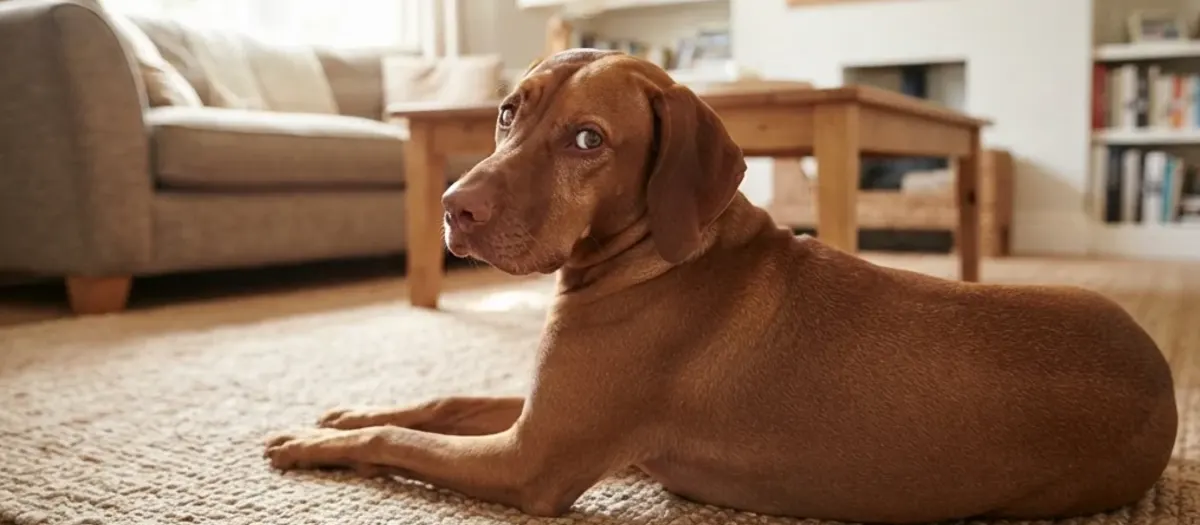
Side eye can mean many things, so look at the rest of your dog. A soft, loose body with a wagging tail is often just a dog checking on you. A dog that turns its head away, goes still and looks tense may be uncomfortable and asking for space.
RSPCA Australia lists avoiding eye contact or turning the head away among the signs of a fearful or anxious dog, alongside ears pulled back, lip licking, yawning, a tucked tail and a low body (RSPCA Australia Knowledgebase, updated 15 December 2023, page read 23 November 2026). Because one sign can have several meanings, compare it with how your dog looks when it is truly relaxed.
What is whale eye in dogs?
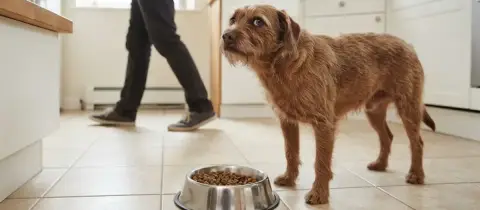
Whale eye is when you can see a crescent of white around the edge of the eye, usually because the dog is keeping its head still while its eyes look sideways at something. It can be an early sign of stress. Dogs Trust lists it with lip licking as an early sign in dogs that feel the need to guard something (Dogs Trust, page read 23 November 2026).
Some dogs show more eye white than others because of the shape of their eyes. So the question is whether this is your dog's usual face or something new. This table helps you read both:
| What you see | Body around it | More consistent with | What to do |
|---|---|---|---|
| Side glance, loose body, soft mouth, relaxed tail | Wiggly or settled | A dog checking in or watching something | Nothing needed |
| Side glance, then looking away, lip licking, yawning | Lower body, ears back | Worry or mild stress | Ease off, give space, stop what you were doing |
| Whites showing, head still, body stiff | Frozen, mouth closed, hard stare at an item or person | Strong unease, possibly guarding | Stop, don't reach, calmly move away or let your dog move away |
| Whites showing, lips drawn back, hair raised | Weight forward or cowering | A dog that feels very uncomfortable | Back off now and keep everyone away |
| Whites showing in a sleepy, drowsy dog | Limp, soft, eyes half closed | Usually relaxed | Nothing, unless the eyes look different from usual |
If your dog's eyes suddenly look different or move oddly, that's a question for your vet rather than a body language one.
What are the early stress signals before a growl?
Dogs often give a run of small signals before a growl, and the early ones are easy to miss. Think of it as a ladder: quiet signals first, then freezing, then a growl, and only then a snap. Each rung is your dog asking you to stop, and most dogs prefer to stay on the lower ones.
RSPCA Australia lists lip licking, yawning, pinned-back ears, walking low, a tense body and a tucked tail as signs of unease, and says growling, snapping, baring teeth and lunging are the more obvious signs (RSPCA Australia, 6 April 2021, page read 23 November 2026).
- Lip licking when no food is around.
- Yawning when your dog isn't tired.
- Looking away or turning the head away.
- Whale eye.
- Moving slowly or low to the ground.
- Freezing or going stiff.
A single yawn means very little. A cluster of these signs, in a setting where something is bothering your dog, is the pattern to take seriously.
What should you do in the moment?
Stop what you're doing, stay calm and give your dog room to move away. Don't stare, reach in, lean over, grab or move closer. If the trigger is a person, a toy or food, quietly step back and let your dog leave. Once it's calm, think about what led to that moment so you can avoid repeating it.
How do you read a dog's ears, mouth, tail and posture?
Read the whole dog, not one body part. The chart below is our own summary, built from the body-part descriptions in the RSPCA Australia Knowledgebase. It's a guide to patterns, and every dog has its own normal, so it helps to learn what yours looks like when relaxed.
| Body part | Relaxed | Worried | Very uncomfortable, back off |
|---|---|---|---|
| Eyes | Normal shape | Avoids eye contact, turns the head away | Staring, dark enlarged pupils |
| Ears | Natural position | Pulled back | Up and stiff when standing, or flat and back when cowering |
| Mouth | Open and relaxed | Licking lips, yawning | Lips drawn back, teeth showing, wrinkled nose or snarl |
| Tail | Wagging | Tucked under or away | Stiff and raised, or down between the legs |
| Posture | Relaxed, smooth hair, weight spread over all four paws | Head and body low, may lie down or raise a front paw | Stiff with weight forward and hair raised, or cowering low with weight back |
RSPCA Australia also says body language can be subtle and hard to read, and that changes in your dog's behaviour can signal something is wrong. If you're concerned, speak with your vet first, who may refer you to an animal behaviourist.
Does a wagging tail mean a dog is happy?
No. A wagging tail only tells you your dog is excited or engaged, and the feeling behind it can be good or bad. A loose, swinging tail on a wiggly body is a very different message from a stiff, raised tail on a frozen one.
RSPCA Australia lists a wagging tail for the relaxed dog but a stiff, raised tail for the very unhappy one. So look at the speed, the height and the stiffness, then at everything else. A tail held high and tight, wagging in short, quick movements, with a still body, is more consistent with tension than a friendly hello.
How can you tell dogs playing from dogs fighting?
Play usually looks loose, bouncy and a bit silly, and both dogs take turns. Tension looks stiff and silent, and one dog usually tries to leave. If you can't tell, calmly call the dogs apart and see what happens when they stop.
RSPCA Australia describes the play bow, where a dog lifts its bottom with its front end low, with smooth hair and a high wagging tail, as an invitation to play. Its dog park tips add that rough tumbling, chasing and barking can be read as threatening rather than fun. The other cues below are common general patterns rather than findings from one source, so treat them as clues:
| Cue | Usually play | Worth stepping in |
|---|---|---|
| Movement | Bouncy, loose, exaggerated | Stiff, slow, frozen or very fast and focused |
| Roles | Chaser and chased swap | One dog is always the target |
| Pauses | Breaks, shakes, play bows | No breaks, one dog keeps pinning or mobbing |
| Sound | Noisy, with open mouths | Quiet and still, or growling that grows deeper |
| Escape | Either dog can leave and return | One dog hides, hugs your legs or tries to leave |
If one dog keeps trying to get away, step in, calmly separate the dogs and let both settle.
Why should you never punish a growl?
A growl is your dog's warning, and punishing it removes the warning without fixing the feeling. Dogs Trust says telling a dog off can stop the growling but not the fear, so the next reaction may be a lunge or a bite with no warning (Dogs Trust, page read 23 November 2026).
VCA Animal Hospitals says much the same: punishing a subtle signal such as a growl can teach a dog to stop using it and move to stronger ones (VCA Animal Hospitals, page read 23 November 2026). Dogs Trust describes a growl as a normal way for a dog to ask for space. Say thanks by backing off.
Reactivity is usually fear, frustration or over-arousal, and pain can play a part. So when growling is new, see your vet first, then a qualified reward-based trainer or a veterinary behaviourist, which your vet can refer you to.
Reward calm behaviour when it happens. A small lick of soft food from a squeeze treat tube is a quick way to mark a relaxed moment. Use dog-safe fillings only (our toxic foods list has what to avoid), and count treats in your dog's daily allowance.
Useful guides
Gear doesn't change how your dog feels, so these guides are about managing and understanding, not fixing:
- Reactive dog training, for lunging, barking and a calm plan
- Dog food aggression, for dogs that stiffen or growl over bowls, bones and toys
- Give me space dog vests and leads, a polite signal to other walkers, not a training tool, and some people won't notice it
- Dog scared of storms and fireworks, for stress signals during noise
- Dog separation anxiety, for stress signals when you leave
- Thundershirt for dogs, a snug wrap some owners try for nervous dogs
When to see a vet
Book a vet visit if you notice any of these:
- new growling, snapping or hiding in a dog that didn't do this before
- a sudden change in how your dog looks, such as eyes that seem different, uneven or unusually red
- a dog that yelps or flinches when touched, or guards a sore spot
- a bite or a near miss, even a small one
- signs of stress that keep going for days with no obvious cause
Pain and illness can make a dog less tolerant, so a vet check comes first. Your vet can refer you to a veterinary behaviourist, or to a qualified reward-based trainer. If a dog has bitten anyone, ask for professional help straight away and keep children away from your dog. Learn more in our food aggression guide.
Frequently asked questions
Why does my dog look at me out of the corner of its eye?
Often it's simply your dog keeping track of you, especially at mealtimes or when you're holding something it wants. If it happens when you lean over it, reach for its bowl or toy, or after you've raised your voice, it's more consistent with unease. Ease off, give your dog room and let it choose to come back.
Why does my dog yawn when I cuddle it?
It may be tiredness, but yawning when it isn't sleepy can also be a stress signal. RSPCA Australia lists yawning among the signs of a worried dog. If your dog yawns, licks its lips or turns away during a cuddle, stop and see whether it comes back for more.
Why does my dog lick its lips when it isn't eating?
Lip licking away from food can be a sign of unease, listed by both RSPCA Australia and Dogs Trust as an early signal. Check what's happening around your dog: a hug, a stranger, a noise or a stare. If it only happens after meals, it's probably just tidying up.
What does it mean when a dog freezes?
Freezing can mean a dog is uncomfortable and may be close to its limit. Dogs Trust lists a stiff or frozen posture among the signs that a dog wants more space. Don't reach in or push on. Calmly step back, let your dog move away and think about what led to it.
Is it bad to hug your dog?
Many dogs tolerate hugs, but some find them confining. Watch for turning away, lip licking, yawning, a stiff body or whale eye, and stop if you see them. Be especially careful with children, who often hug a dog and put their face close to it. Teach gentle pats on the chest or shoulder instead.
What does a play bow mean?
A play bow, where your dog lifts its bottom with its front end low, is an invitation to play. RSPCA Australia describes it with smooth hair, a high wagging tail and sometimes excited barking. A relaxed, loose body is the clue that it's friendly.
Why does my dog show the whites of its eyes when sleeping?
It's often normal in a relaxed, drowsy dog, because eyes can roll or half close as it dozes. Context is everything: a soft, limp body is very different from a stiff, tense one. If the eyes look different from usual, or you see sudden changes, ask your vet.
How can I teach my children to read dog body language?
Start with a few simple signs: yawning, lip licking, turning away and freezing mean "give the dog space." Teach children to leave a dog that is eating, resting or holding a chew, and never to hug or approach a dog that looks worried. Always supervise, and see our food aggression guide for household rules.
Related guides
- Reactive dog training: a calm plan for lunging and barking
- Dog food aggression: why dogs guard bowls and what helps
- Give me space dog vests and leads
- Dog treat squeeze tubes
- Dog scared of fireworks or thunder? 7 things that help
- Dog separation anxiety: signs and what helps
- Thundershirt for dogs: does it work?
- Dog muzzles: basket muzzles that let dogs pant and drink
Sources
- RSPCA Australia Knowledgebase: What does my dog's body language mean?, updated 15 December 2023, read 23 November 2026
- RSPCA Australia: Top tips for dog park etiquette, 6 April 2021, read 23 November 2026
- Dogs Trust: Resource guarding in dogs, read 23 November 2026
- Dogs Trust: Reactive dogs, read 23 November 2026
- VCA Animal Hospitals: Treatment of aggression toward unfamiliar dogs, read 23 November 2026
This guide provides general information and isn't a substitute for veterinary advice. If you're concerned about your dog's behaviour or health, speak with your vet.