Research guide. WhiskerFinds may earn a commission from links, at no extra cost to you.
Quick answer: The best puppy teething toys are soft enough to dent with a fingernail, sized so they can't be swallowed, and used while you're watching. Our pick is the KONG Puppy, a soft rubber toy you can stuff and freeze. For small puppies, try the KONG Puppy Binkie. Older puppies can have a Greenies chew.
Teething makes puppies want to chew, and a good toy gives them something better to chew than your shoes. This guide compares four picks on Amazon Australia and covers teething ages, what makes a chew safe and what to skip. For the bigger picture, see our puppy training schedule. For the rest of the first toy kit (comfort plush, tug, fetch and a starter set), see our puppy toys guide.
Quick picks
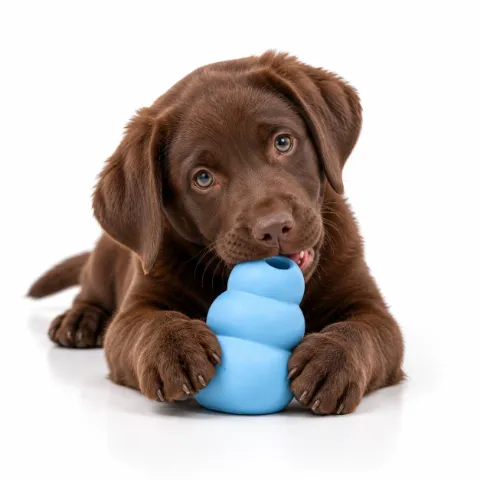
KONG Puppy (medium)
Soft rubber made for baby teeth and gums, stuffable, in three sizes
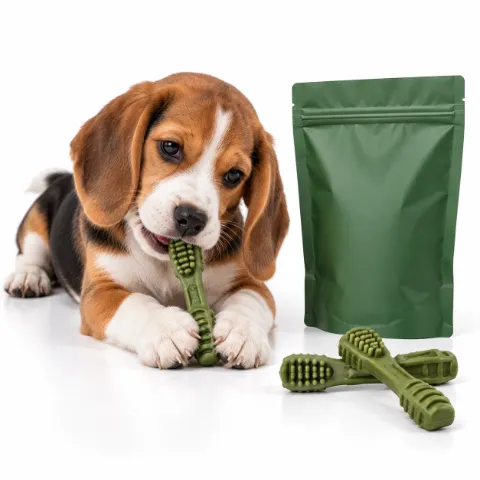
Greenies Puppy Dental Treats, Petite, 340 g
Soft, chewy treat for puppies 6 months and older
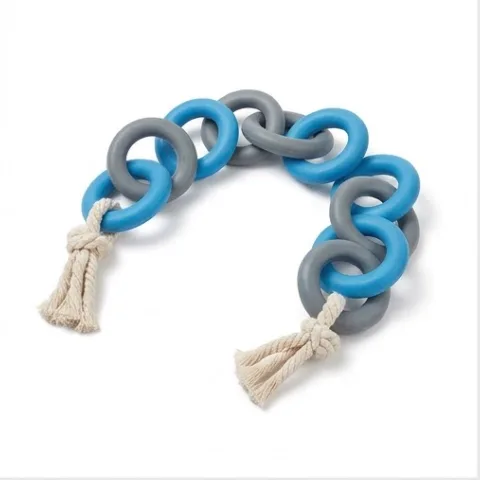
Petstages Orka Dental Links
Floppy synthetic rubber and rope links with a mix of textures, for supervised chewing and tossing
KONG Easy Treat chicken liver paste
A paste made for stuffing KONG toys, handy for a KONG Puppy you plan to fill and freeze.
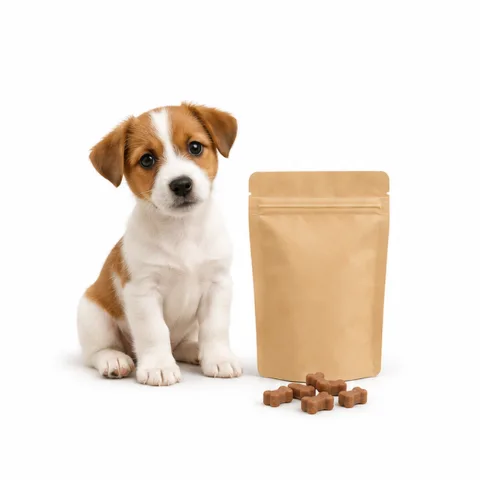
SavourLife Puppy Training Treats, Australian lamb
Small puppy treats for rewarding calm chewing on the right toy.
ALLSOPETS portable fabric playpen
A safe, puppy-proofed space with approved chews for the times you can't watch every chomp.
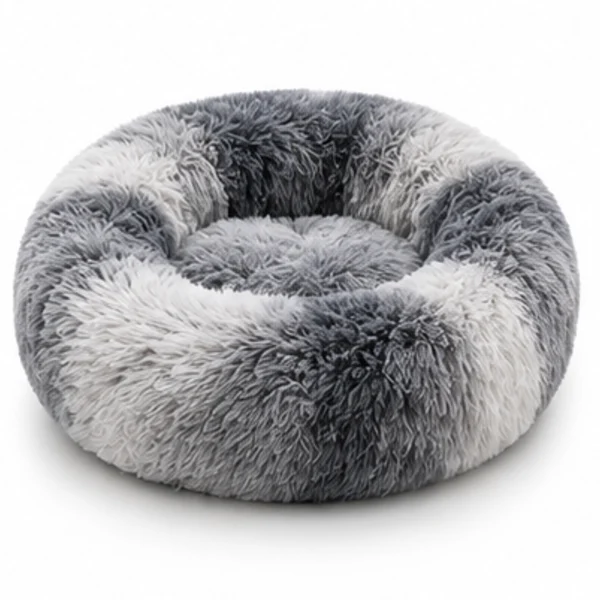
MidWest Ombré Swirl plush bed, 24 inch
A soft bed that gives a puppy somewhere cosy to settle with a chew.
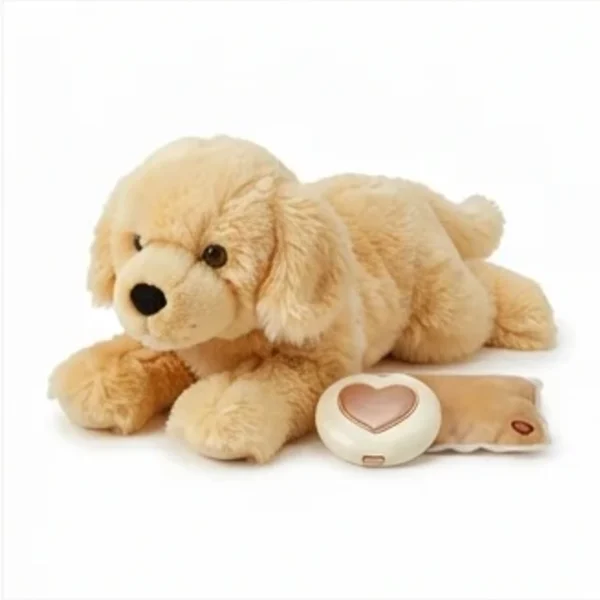
SmartPetLove Snuggle Puppy
A plush companion for rest time, kept separate from the chew toys.
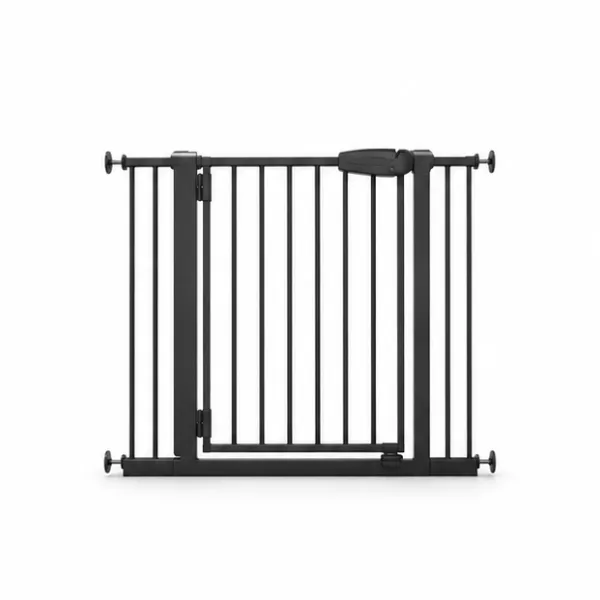
Dreambaby Chelsea Auto-Close Safety Gate
Closes off rooms with cords, shoes and furniture legs that a teething puppy may gnaw.
Pictures are illustrations, not the actual products.
The KONG Puppy also comes in small and large.
When do puppies start teething?
Puppies usually start teething at about 3.5 to 4 months, when adult teeth begin pushing out the baby teeth. Most have all their adult teeth by 6 to 7 months, according to VCA Animal Hospitals. Baby teeth themselves come through from about 3 weeks, so this second round is the one that makes puppies chew (VCA Animal Hospitals).
Puppies have 28 baby teeth and adult dogs have 42, so there are a lot of teeth on the move. Every puppy runs to their own timetable, and breed and size can make a difference, so treat these ages as a guide. Your vet can tell you what's normal for your puppy.
What are the signs your puppy is teething?
Teething can bring drooling, irritability, a smaller appetite and a strong urge to chew, according to VCA Animal Hospitals (VCA). A puppy who is suddenly gnawing table legs and your hands around 4 months is more consistent with teething than with naughtiness.
Chewing and mouthing are also normal puppy play, so look at the whole picture. If the nipping is the bigger problem, our guide on how to stop puppy biting covers it. A puppy who stops eating, or seems very sore, should see a vet (see the box below).
Our picks in detail
1. KONG Puppy: best overall
A soft rubber toy that the listing says is made for a puppy's baby teeth and gums. It has a hollow middle you can stuff with food, and it comes in small, medium and large, so you can match the size to your puppy. KONG advises supervising your dog with its toys (see our KONG guide), so use it while you're nearby. For more on picking a size and stuffing it, see our treat dispensing toys guide. Once the adult teeth are through, our KONG dog toys guide covers the move to the Classic or Extreme.
- Pros: soft rubber the listing says is made for baby teeth and gums; three sizes; can be stuffed and frozen; a familiar brand
- Cons: a strong chewer can still wear a puppy rubber down, so check it often; the wrong size can be a choking risk; stuffing adds calories
- Best for: most puppies, and owners who want one toy for both chewing and feeding
- Skip it if: your puppy already chews through soft rubber quickly (ask your vet which toy suits)
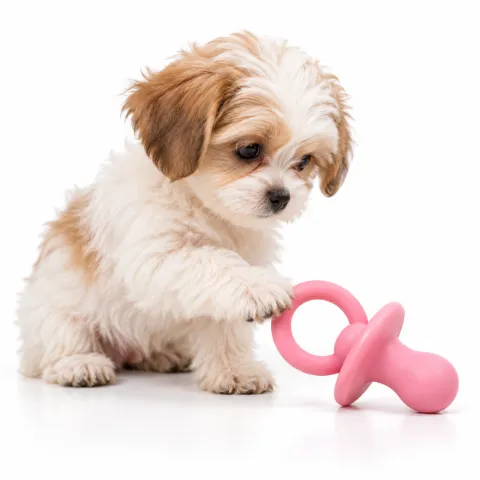
2. KONG Puppy Binkie: best for small puppies
A pacifier-shaped toy in soft natural rubber, which the listing says dispenses treats and can be stuffed. The shape gives small puppies a handle to carry and chew. We'd treat it as a chew toy, not a tug toy, because pulling hard on a toy isn't what it's made for, and we'd use it with supervision like any rubber toy.
- Pros: soft rubber; an easy shape for small mouths to hold; can be stuffed; same brand as the KONG Puppy
- Cons: the pacifier shape may be too small for a large breed; not a tug toy; check the size on the listing against your puppy's mouth before you buy
- Best for: small breed puppies and young puppies
- Skip it if: you have a large breed puppy (the KONG Puppy in a bigger size suits better)
3. Greenies Puppy Dental Treats, Petite: best edible chew for older puppies
A soft, chewy dental treat. The listing says it's for puppies 6 months and older, and for dogs of about 7 to 11 kg (15 to 25 lb). It also says the recipe includes DHA and calcium. This is a treat, not a toy, so it counts toward your puppy's daily treat allowance, which should be about 10% of daily calories (VCA Animal Hospitals). Our dog dental chews guide explains what the VOHC seal means.
- Pros: soft and chewy; labelled for puppies from 6 months
- Cons: not for young teethers under 6 months; it's eaten, so it won't last like a toy; adds calories
- Best for: puppies of 6 months and older, within the 7 to 11 kg weight range
- Skip it if: your puppy is younger than 6 months or outside the listed weight range
See our Greenies dental treats guide for the size chart and what changes when your puppy moves to the adult range.
4. Petstages Orka Dental Links: best floppy chew-and-fetch toy
A floppy chain of loops in synthetic rubber, with a rope section. The listing says the material is durable, with a variety of textures to help clean teeth and massage gums, and loop shapes to exercise jaw muscles. It describes a floppy feel for tossing, retrieving and chewing, and lists it for all life stages and all breed sizes. The listing gives about 10.8 x 10.2 x 22.9 cm and 136 g. It's a gentler, bendier shape than a solid rubber toy, so it suits supervised play as well as chewing. If your puppy is a small breed, check that size against their mouth first.
- Pros: bendy, floppy shape that's easy to toss and carry; a mix of textures for chewing; loop shapes that give a puppy plenty to grip; listed for all life stages
- Cons: the listing says it stands up to tough chewing, so do the thumbnail test on it yourself (see what makes a safe teething toy) rather than assuming it's soft enough; it has rope, so supervise and pull off any loose fibres before they can be swallowed; bin it once it cracks or shreds; the listing also says "Small" for breed size alongside "All Breed Sizes", so check the size suits your puppy
- Best for: supervised play and chewing with a puppy who likes carrying and tossing toys
- Skip it if: you can't supervise, or your puppy shreds rope
What makes a safe teething toy?
A safe teething toy is soft enough to dent with your fingernail, big enough that your puppy can't swallow it, and used while you watch. Check it often and bin it once it cracks. Cornell's canine health centre says most veterinary dentists use this "thumbnail test" (Cornell Riney Canine Health Center).
Use this checklist:
- Soft enough: if you can't dent it with a fingernail, it may be too hard for baby teeth. Cornell also advises avoiding antlers, hooves and bones, because they can break a tooth or splinter.
- Sized for your puppy: a toy should be too big to fit fully in the mouth, and Cornell notes larger chews are harder, so a very small puppy can be better with a soft, small toy.
- Supervised: the dvm360 veterinary team says never to offer a toy or other item without supervision (dvm360, 2015, last modified 2021). Check toys often and throw out any that are cracked or chewed into pieces.
- Right for your puppy's chewing style: AKC notes a strong chewer can tear apart a softer rubber toy, so ask your vet to help match a chew to your puppy (AKC, updated 27 October 2025).
Our toys for heavy chewers guide goes further on the thumbnail test.
What should I give my teething puppy?
Give your puppy a soft rubber toy that passes the thumbnail test, such as a KONG Puppy you can stuff and freeze, or a chew sized for their mouth, and stay nearby while they use it. Cold, soft toys can soothe sore gums, and a few toys on rotation keep things interesting.
- Keep two or three safe toys handy and swap them through the day.
- Offer a stuffed, frozen toy when your puppy seems sore (see frozen and stuffed teething ideas).
- Steer your puppy to a toy each time they grab a shoe or a hand, and praise them for taking it.
Puppy chew toys: which are safe while they teethe?
Soft rubber toys and stuffable rubber toys are the safest everyday chew toys for teething puppies, used while you watch. Rope and plush toys need closer supervision, and anything that fails the thumbnail test, such as nylon bones, antlers, hooves and real bones, is best skipped.
| Chew toy type | OK for teething puppies? | Why |
|---|---|---|
| Soft rubber toys | Yes, supervised | Soft enough to pass the thumbnail test; check often and bin when cracked |
| Stuffable rubber toys | Yes | Soft rubber that can be filled and frozen, which dvm360 and AKC mention for sore mouths |
| Edible dental chews | Older puppies, by the pack's age and weight | Follow the pack's age and weight range; they count toward the treat allowance |
| Rope toys | Supervised only | Loose fibres can be swallowed, so remove frayed strands |
| Plush toys | Supervised play, not a chew (see our squeaky and plush toys guide) | Bin when torn so stuffing and squeakers can't be swallowed |
| Water-filled or gel freezer rings | Only if your vet agrees | If one splits, the filling leaks and pieces can be swallowed; none passed our red flags check, so we left them out |
| Nylon bones, antlers, hooves, real bones | No | They fail the thumbnail test and can damage teeth |
Puppy teething toys compared
Details from each Amazon Australia listing, checked on 21 Oct 2026 (Petstages Orka Dental Links on 5 Nov 2026).
| Toy | Material | Sizes | Stuffable |
|---|---|---|---|
| KONG Puppy | Soft rubber | Small, medium, large | Yes |
| KONG Puppy Binkie | Soft natural rubber | One size (check the listing) | Yes |
| Greenies Puppy Dental Treats, Petite | Soft, chewy treat | 340 g pack, for 7 to 11 kg dogs | No, it's eaten |
| Petstages Orka Dental Links | Synthetic rubber with rope | One size, about 10.8 x 10.2 x 22.9 cm, 136 g | No |
How we chose
We searched Amazon Australia for puppy teething toys, then shortlisted products that met all of these checks:
- Well rated: a strong average rating with plenty of buyer reviews.
- No red flags: no pattern of poor reviews, safety complaints or listing problems.
- Available on Amazon Australia when we checked.
- Soft enough for puppy teeth (passes the thumbnail test) or made as a puppy chew.
- Sized or labelled for puppies.
These are researched picks, not products we've personally tested. We compared the specifications and features shown on each Amazon Australia listing, checked on 21 Oct 2026 (Petstages Orka Dental Links checked on 5 Nov 2026). We didn't accept payment from any brand, and no brand saw this page before it was published.
Left out this time: hard nylon-type chews, rope toys for unsupervised chewing, and freezable and other toys that didn't pass our red flags check.
Frozen and stuffed teething ideas
Cold can soothe a sore mouth. Puppy-specific toys, such as a KONG, can be frozen, according to dvm360, and AKC suggests freezing a puppy toy stuffed with mushy kibble or broth. Always supervise, and count the food as part of the daily meal or treat allowance (dvm360, AKC).
Some ideas:
- Soften some of your puppy's usual puppy food or kibble with water, spoon it into a KONG Puppy and freeze it.
- Use a little plain, unsalted broth with no onion or garlic.
- Check peanut butter labels, because some contain xylitol, which is toxic to dogs.
- Keep training treats tiny, since treats should be about 10% of daily calories (VCA). Our training treats guide has puppy-friendly options.
Our frozen KONG recipes page has safe fillings and the full list of foods dogs must never eat.
What should you avoid giving a teething puppy?
Avoid anything very hard, anything that splinters and anything small enough to swallow. Ice cubes are on that list too (see below). Vets advise against hard items like bones, nylon chews and hooves for puppies, because they can damage developing teeth (VCA Animal Hospitals). Rope toys are for supervised tug, not chewing, because swallowed strands can block the gut; see our tug toy guide.
- Nylon bones, antlers, hooves and real bones: they fail the thumbnail test.
- Ice cubes: VCA and dvm360 both say not to give ice cubes to puppies because they can damage fragile teeth; AKC lists them as an option. We skip them and use a frozen stuffed toy instead.
- Rope or string toys when you're not watching: loose fibres can be swallowed.
- Cooked bones and rawhide: both are on our no list.
- Pain medication from your cupboard: dvm360 says never to give over-the-counter pain medication without your vet's permission.
- Broken or chewed-up toys: throw them out.
Puppy teeth falling out: what's normal?
Losing baby teeth is normal. As adult teeth grow in, they push on the roots of the baby teeth, which dissolve, and the crowns fall out. VCA says you might find tiny hollow shells on the floor, but puppies often swallow them while eating, with no harm (VCA Animal Hospitals).
A small spot of blood on a toy can happen. A baby tooth that is still there when its adult tooth comes in is called a persistent tooth. VCA says to see your vet as soon as possible, and suggests checking your puppy's mouth weekly until about 7 to 8 months old. Small breeds are more prone to it.
When to see your vet
Book a vet visit if a baby tooth is still there when the adult tooth is coming through (VCA Animal Hospitals advises seeing your vet as soon as possible), if there is bleeding or swelling that doesn't settle, if a tooth looks broken, or if your puppy isn't eating or is drooling a lot.
Call your vet straight away if your puppy has swallowed pieces of a toy, or is gagging, vomiting or in distress.
Frequently asked questions
When do puppies stop teething?
Most puppies have all their adult teeth by 6 to 7 months, according to VCA Animal Hospitals, so teething usually wraps up around then. Some puppies finish a little earlier or later. VCA suggests checking your puppy's mouth weekly until about 7 to 8 months and asking your vet if something looks off.
Are frozen toys good for teething puppies?
They can be. Cold may soothe sore gums, and dvm360 says puppy-specific toys, such as a KONG, can be frozen. Use a soft toy made for puppies, fill it with puppy-safe food and watch your puppy while they chew. See our frozen KONG recipes for safe fillings.
Can puppies chew ice cubes?
Two vet sources say no. VCA and dvm360 both advise against ice cubes for puppies because their teeth are fragile and can break; AKC lists them as a cheap option. We'd skip them and offer a frozen, stuffed puppy toy instead. If you're unsure, ask your vet.
Are nylon chew bones safe for puppies?
We don't recommend hard nylon chews for puppies. If you can't dent one with a fingernail, it fails the thumbnail test, and VCA advises avoiding nylon chews, bones and hooves for teething puppies. Choose a soft rubber toy made for puppies and ask your vet about anything harder. See toys for heavy chewers.
Is it normal for puppies to swallow their baby teeth?
Yes. VCA says puppies often swallow their baby teeth while eating, with no harm. You may only spot the tiny hollow crowns on the floor or in bedding. If your puppy seems unwell, or has blood or swelling that doesn't settle, ask your vet.
How do I stop my puppy chewing furniture?
Watch your puppy while they're awake and offer a chew toy whenever they head for the furniture. AKC suggests a crate or dog-secure area with several chew toys when you can't watch. Chewing is also normal mouthing, so see how to stop puppy biting.
Related guides
- Best puppy toys
- Best puppy crates
- Best dog tug toys
- Best squeaky dog toys
- Greenies dental treats: which size, and do they work?
- How to stop a dog chewing furniture and everything else
- Puppy training schedule
- How to stop puppy biting
- Best dog training treats
- Best treat dispensing toys
- KONG dog toys: which KONG and what size
- Best toys for heavy chewers
- Best dog dental chews
- Best puppy harnesses
- Frozen KONG and lick mat recipes
Sources
- VCA Animal Hospitals: Retained (persistent) baby teeth in dogs
- VCA Animal Hospitals: Dog treats (updated 26 September 2024)
- Cornell Riney Canine Health Center: Risks of a fractured tooth
- dvm360: Top 5 tips for teething puppies (published 4 December 2015, last modified 28 January 2021)
- American Kennel Club: What can a puppy safely chew (updated 27 October 2025)
- Product details from each linked Amazon Australia listing, checked on 21 Oct 2026 (Petstages Orka Dental Links on 5 Nov 2026).
This guide provides general information and isn't a substitute for veterinary advice. If you're concerned about your puppy's teeth or health, speak with your vet.