Best puppy harness: sizing as your puppy grows (2026)
By Anish PuriUpdated 5 Nov 202615 min readResearched, not tested by us
Research guide. WhiskerFinds may earn a commission from links, at no extra cost to you.
Quick answer: The best puppy harness is a light, adjustable one that fits your puppy's chest now, with room for two fingers under the straps. Our top pick is the Julius-K9 IDC Powerharness, which has a handle on top and comes in sizes from a 29 cm chest. Recheck the fit often as your puppy grows, and take the harness off at home.
A puppy's first harness is mostly about comfort and a good fit, because a puppy can outgrow one quickly. This guide compares five harnesses on Amazon Australia, gives a sizing chart in centimetres and explains how to fit one. It sits beside our puppy collar guide, which covers the ID-tag collar, and our puppy training schedule for the bigger picture of those first months.
Quick picks
Our top pickBest overall
Julius-K9 IDC Powerharness, Mini-Mini
Chest strap harness with a top handle, reflective elements and a chest range of 39 to 52 cm
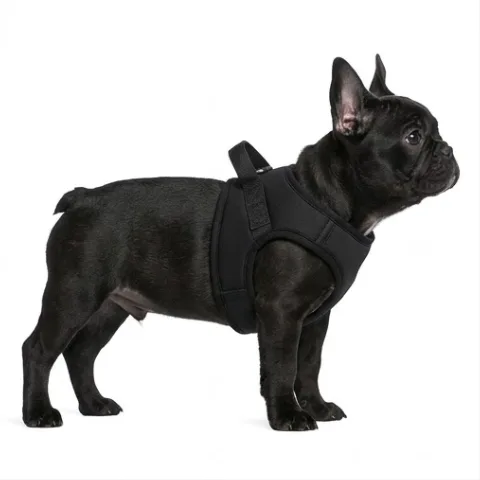
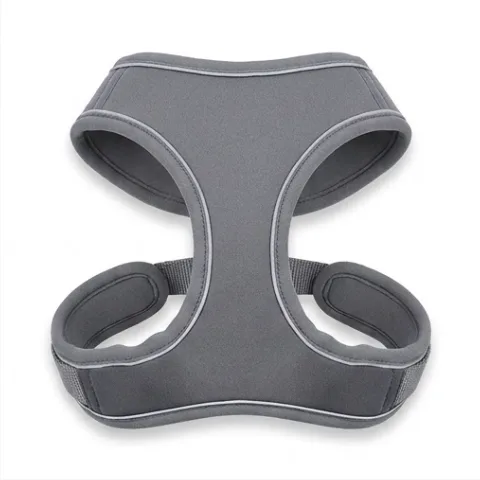
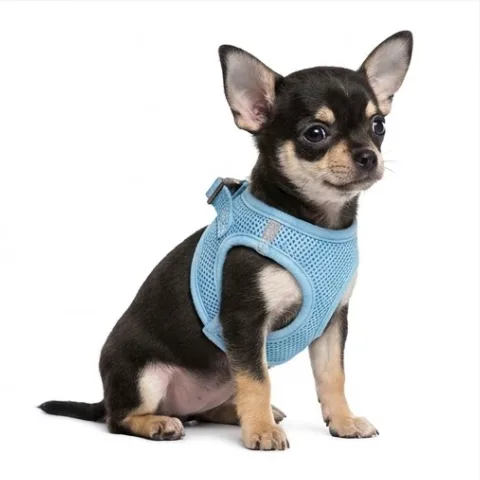
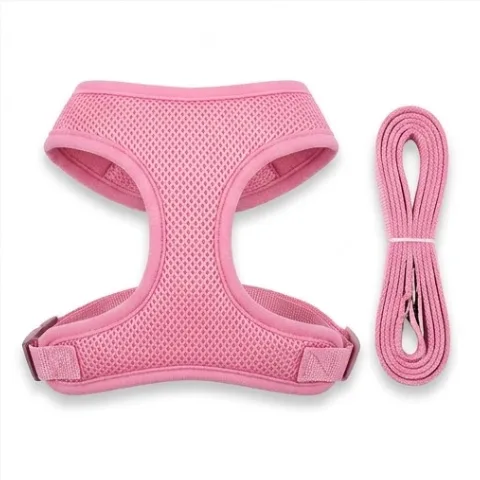
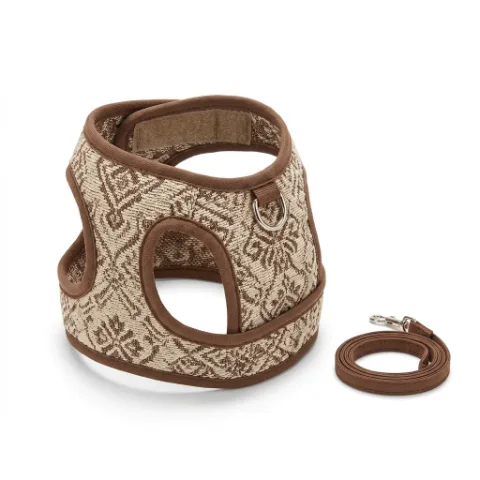
Pictures are illustrations, not the actual products.
Expect to buy a second size as your puppy grows. Pet shops, vets and discount department stores also sell puppy harnesses, so you can try sizes on your puppy there.
What age can a puppy wear a harness?
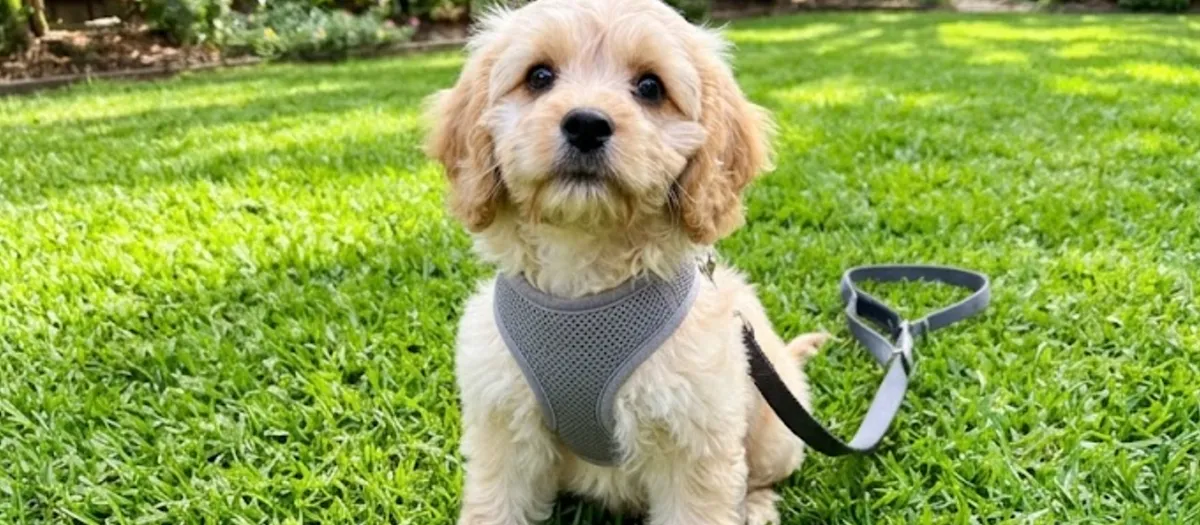
There's no single age. We couldn't find a vet or welfare source that sets one, so go by your puppy: start with short, calm, supervised sessions once they've settled in at home, and give a treat while you put it on. Check the fit more often than you'd think, because puppies change shape quickly.
RSPCA South Australia suggests giving a treat as you fit a harness so your dog links it with something good, carrying on only while they seem calm and happy, and getting help from a trainer if they still struggle (RSPCA South Australia, page read 5 November 2026). A simple first routine for a step-in harness:
Lay the harness open on the floor, drop a treat in the middle and let your puppy step over it a few times.
Lift the straps and fasten the buckle while they eat a treat, then play for a minute.
Take it off while they're still happy. Add a little time each day; some puppies take longer.
Four of our five picks are step-in styles, which skip the over-the-head moment many puppies dislike. Count the treats toward the day's food (see our dog training treats guide).
When can my puppy start walks outside?
Ask your vet. The answer depends on your puppy's vaccinations, so your vet will tell you when outings and puppy classes are safe for your puppy. RSPCA Australia notes that puppies need their full vaccination course because they're vulnerable to infectious diseases like parvovirus, which can be fatal (RSPCA Australia, 4 November 2021).
Until then, practise indoors and in the backyard: harness on, stand calmly, lead clipped on, so it's familiar before the first real walk. Our puppy training schedule covers puppy school and early outings.
Our picks in detail
1. Julius-K9 IDC Powerharness, Mini-Mini: best overall
A chest strap harness with a handle on top, reflective elements and a buckle the listing calls shatterproof, and hook and loop patches you can swap. The listing says it fits in one move. The Mini-Mini covers a chest of 39 to 52 cm (15.5 to 20.5 in) for dogs of 4 to 7 kg (9 to 16 lb); the Baby 1 and Mini sizes are in the chart on this page. The Mini listing's details table shows 0.8 to 3 kg, which clashes with its own bullet, so go by the chest measurement. Care is hand wash only. Our personalised dog harness guide covers custom name labels for the patch panel. Every Julius-K9 line and size on Amazon Australia is compared in our Julius-K9 harness guide.
The listing says the chest strap sits in a zone that leaves the neck free and the front legs moving. That's the brand's claim (see "Does harness design matter?" on this page), so treat fit as the real test.
Pros: top handle for lifting or guiding a small puppy; reflective elements; a clear chest range for every size; swappable patches
Cons: each size covers a narrow range, so a fast-growing puppy will likely need the next size up; a chest-strap design, which the research doesn't show to be better or worse; hand wash only
Best for: a puppy whose adult size you roughly know, and owners who want a handle
Skip it if: you want one harness to last from eight weeks to adulthood
2. HALTI Anatomy Puppy Harness, X-Small: best for growing puppies
A step-in harness the listing says is designed to grow with the puppy, with four points of adjustment, a scalloped chest pad, neoprene padding and 360-degree reflectivity. The lead clips to a back attachment. It's listed for miniature breeds and smaller adult dogs, and care is hand wash. The listing says the design gives unrestricted shoulder motion. That's the maker's claim (see "Does harness design matter?" on this page).
Pros: four points of adjustment for a longer fit; step-in, so no pulling over the head; padded chest; reflective all round
Cons: the listing gives no chest measurements, so check Halti's size chart before ordering; one lead point (the back); hand wash only
Best for: a small breed puppy where you want the harness to last as long as it can
Skip it if: you want a front lead ring, or you can't confirm the size from Halti's chart
3. Voyager Step-in Air Harness, XX-Small: best step-in for small puppies
An air mesh vest you step into, with a hook and loop fastener, a buckle and double D-rings working together, plus two reflective bands. The listing says the neckline is shaped to stop wiggling out. The XXS covers a chest of 27 to 33 cm (10.5 to 13 in), and the listing notes it also fits cats. It's machine washable.
The maker says sizing does not match breed or weight, so use their printed size guide and a tape measure.
Pros: light and breathable; small chest range; machine washable; reflective bands
Cons: hook and loop can collect fur and wear down over time; you have to measure carefully because sizes don't follow breed
Best for: small puppies, including those who dislike things going over the head
Skip it if: your puppy's chest is above 33 cm, or you want a handle on top
4. haapaw Harness and Lead Set, Small: best harness and lead set
A step-in harness and a lead in one box. The harness is thickened air mesh with a double D-ring and a buckle with a safety lock, and the listing mentions 360-degree reflective strips. The Small covers a chest of about 32 to 37 cm for dogs of 3.2 to 5 kg. Care is hand wash. The maker says sizing doesn't match breed or weight, so measure first.
The listing calls it no pull, but padding doesn't stop pulling by itself; reward-based lead training and, if needed, a front-clip harness from our no-pull dog harness guide do that.
Pros: lead included; padded mesh; safety-lock buckle; reflective strips
Cons: one narrow size range, so growth may outpace it; hand wash only; the "no pull" wording overpromises
Best for: a new puppy owner who wants a harness and lead in one go
Skip it if: you already have a lead you like, or your puppy pulls hard
5. AIITLE Tiny Dog Harness, XXXS: best for toy-breed puppies
The smallest harness in this guide. The XXXS covers a chest of 22 to 25 cm (8.5 to 10 in), and the listing gives the range across all sizes as 1.36 to 10 kg. It's a jacquard mesh step-in vest with a hook and loop (magic tape) fastener and a double D-ring buckle, and it comes with a 1.5 m (5 ft) lead. Care is machine wash. The maker says to measure the chest and neck, and to size up if you're between sizes.
The listing says the fabric can prevent chewing or tearing. We wouldn't count on that (see the FAQ on chewing).
Pros: very small chest range; lead included; machine washable; reflective strips
Cons: the smallest size will be outgrown fast; hook and loop can collect fur; the chew-resistance claim shouldn't be relied on
Best for: toy-breed puppies such as chihuahuas and Maltese
Skip it if: your puppy has a chest above 25 cm, or likes to chew gear
Harness or collar for a puppy?
Most puppies do best with both: a soft flat collar that carries the ID tag, and a harness for lead walks. RSPCA Australia prefers a harness for walking and training because it avoids pulling on the neck, and says a collar is fine if it fits well, with two fingers able to slide underneath (RSPCA Australia, page read 5 November 2026).
The collar stays your puppy's everyday ID, and the harness goes on for walks. We never recommend prong, choke, slip or shock collars, and we leave head halters out because RSPCA Australia says many dogs find them distressing and they shouldn't be considered before loose-lead training and a front-attach harness.
How to size and fit a puppy harness
Measure your puppy's chest with a soft tape around the widest part of the ribcage, just behind the front legs, and measure the neck where a collar sits. Match the chest number to the chest range on the listing, not to a breed or weight label. If you land between sizes, go up or pick an adjustable style.
The AKC says to keep the tape snug but not tight, with room for two fingers, and to size up when a dog falls between sizes (AKC, page read 5 November 2026). Several of our picks say the same thing in their own words: Voyager, haapaw and AIITLE all say their sizes don't match breed or weight, so measure.
Puppy harness sizes in cm
Our chart, built from the chest ranges on the listings. The Julius-K9 Mini row shows the next size up.
Swipe sideways to see every column
Chest girth
Listed size that covers it
Notes
About 22 to 25 cm
AIITLE XXXS (22 to 25 cm)
The smallest size listed in this guide
About 25 to 27 cm
None listed here
A gap between the AIITLE XXXS and the Voyager XXS
About 27 to 33 cm
Voyager XXS (27 to 33 cm)
The listing says this size also fits cats
About 29 to 36 cm
Julius-K9 Baby 1 (29 to 36 cm)
Listed for dogs of 0.8 to 3 kg; we cite it for sizing
About 32 to 37 cm
haapaw S (about 32 to 37 cm)
Listed for dogs of 3.2 to 5 kg
About 37 to 39 cm
None listed here
A gap between the haapaw S and the Julius-K9 Mini-Mini
About 39 to 52 cm
Julius-K9 Mini-Mini (39 to 52 cm)
Listed for dogs of 4 to 7 kg (9 to 16 lb)
About 51 to 67 cm
Julius-K9 Mini (51 to 67 cm)
Listed for dogs of 7 to 16 kg (15 to 35 lb)
The HALTI Anatomy Puppy Harness isn't in the chart because its listing gives no chest measurements. Check Halti's own size chart before you order the X-Small.
The fit check as your puppy grows
Re-measure every week or two while your puppy is growing, and recheck the straps each time you put the harness on. RSPCA Australia says puppies grow fast, so check the fit at least a few times a week, and that medium and large breed puppies start with a small harness and will outgrow it (RSPCA Australia, page read 5 November 2026). Step-by-step fitting for each harness type is in how to put on a dog harness.
Two-finger check. You should be able to slide two fingers under the straps. RSPCA South Australia describes the right fit as secure but not too tight.
Too tight: your puppy seems uncomfortable, or walks differently than without the harness. They should still take full strides with their front legs.
Too loose: your puppy could slip a leg through the straps and back out, which is a safety risk.
Check the skin behind the front legs and under the straps for redness or rubbing after the first few walks.
Hot days: put the back of your hand on the footpath for five seconds. If it's too hot for your hand, it's too hot for paws (RSPCA Australia, page read 5 November 2026).
Does harness design matter?
Not as much as fit. Several small studies found that harnesses can slightly reduce shoulder movement, but they disagree on which design restricts least. One found a Y-shaped harness restricted more than a chest-strap harness, and another found no difference between harnesses at all (Lafuente et al., Veterinary Record, 2019; Cavalli & Protopopova, 2025). No design is proven best, so focus on fit and watch how your puppy moves. Ask your vet if their gait looks off.
Choose by situation
Swipe sideways to see every column
Your situation
What to look for
Our pick
Tiny toy-breed puppy (chihuahua, Maltese)
A very small chest range and a light harness
AIITLE XXXS
Small breed puppy (cavoodle, spoodle, mini schnauzer)
A step-in, adjustable style that grows with them
HALTI Anatomy Puppy Harness
Puppy who wriggles out
A neckline shaped to stay on, plus a fastener and buckle
Voyager Step-in Air
You want a lead in the box
A set with a matching lead
haapaw set or AIITLE
You want room to adjust as they grow
Four points of adjustment
HALTI Anatomy Puppy Harness
You roughly know your puppy's adult size
A handle and sturdy build
Julius-K9 IDC Powerharness
Dachshund puppy
A vest that sits behind the front legs without rubbing
We searched Amazon Australia for puppy harnesses and small-dog harnesses, then shortlisted ones that met all of these checks:
Well rated: a strong average rating with plenty of buyer reviews.
No red flags: no pattern of poor reviews, safety complaints or listing problems.
Available on Amazon Australia when we checked.
Sizes small enough for puppies listed.
Adjustable or step-in fit, so it goes on without a fight.
Reflective trim for dusk and dawn walks.
Washable, with care instructions stated.
These are researched picks, not products we've personally tried. We compared the specifications and features shown on each Amazon Australia listing, checked on 5 Nov 2026. We didn't accept payment from any brand, and no brand saw this page before it was published.
Left out this time: head halters and no-pull training tools for young puppies, harnesses without size details in cm or inches, and products already featured as top picks on our no-pull dog harness guide.
Can a puppy sleep or stay in a harness?
No, take it off at home. A harness is for walks. Straps can catch on furniture or a crate, and a puppy can chew them when unsupervised. A flat collar carries the ID tag instead, which our puppy collar guide covers.
Taking it off lets you check the skin underneath, and after bushland or long-grass walks check under where the harness sat for ticks (see our paralysis tick guide). The same rule applies in the crate: harness and collar off, as our crate training guide explains for collars.
Why do some trainers not recommend harnesses?
Some trainers worry about fit and about movement. The research on harness design and shoulder movement is mixed (see "Does harness design matter?" above), so a poor fit or an ill-suited design may matter more than the harness itself. Others note that a harness alone doesn't teach a puppy to walk on a loose lead.
Both points are fair. A harness is a tool, and pulling is a training job. RSPCA Australia recommends reward-based loose-lead walking, and says choke chains, slip collars and prong collars must not be used (RSPCA Australia, page read 5 November 2026). Treats, short sessions and patience do the work; if your puppy pulls hard, see our no-pull dog harness guide.
Can my puppy wear a harness in the car?
A walking harness isn't a car restraint. Don't count on a lead clipped to a walking harness to protect your puppy in a crash or a hard stop. Use a harness made for car restraint, tethered to the seat belt in the back seat, and remember that any crash safety label is the brand's own claim.
See your vet if your puppy has rubbing, hair loss or sores under the straps, is limping or walking in an odd way, coughs or gags on walks, or suddenly won't walk. These can have many causes, and a harness that is too tight or sits wrongly is one of them, so take it off and check the fit first.
If your puppy is very distressed whenever the harness goes on, talk to your vet or a qualified, reward-based trainer. Our itchy skin guide covers skin signs.
Frequently asked questions
What harness is best for an 8 week old puppy, and can they wear one yet?
Yes, for short, supervised sessions, if it fits; we couldn't find a source that sets a minimum age. Choose a light step-in sized to the chest now, such as the HALTI Anatomy or Voyager Step-in Air, treat as it goes on, and ask your vet before outdoor walks.
What size harness for a cavoodle puppy?
There's no one size, because cavoodles range from toy to miniature crosses and grow at different rates. Measure the chest just behind the front legs, match that number to the listing's range in our chart, and expect to move up a size or two. Recheck every week or two. Our cavoodle guide explains the toy and miniature sizes.
Should I use a harness and lead from day one?
Get your puppy comfortable in the harness first, indoors, with treats, then add the lead for short sessions. Wait for your vet's go-ahead before public outings, because that depends on vaccinations. The haapaw and AIITLE picks both include a lead.
Can a puppy chew through a harness?
Yes. Puppies chew straps and webbing, whatever the listing claims. AIITLE's listing says its fabric can prevent chewing, but we wouldn't rely on that. Supervise, take the harness off when you can't watch, and give them proper chew toys from our puppy teething toys guide.
When should I size up?
Size up when the two-finger check gets tight, the strap adjusters are already at their widest, or you see rubbing. If your puppy is between sizes, the AKC suggests going up a size. Remeasure every week or two while they're growing and keep an eye on how they move.
Product details from each linked Amazon Australia listing, checked on 5 Nov 2026.
This guide provides general information and isn't a substitute for veterinary advice. If you're concerned about your puppy's walks or how a harness fits, speak with your vet.