Best dog harness in Australia: which type suits your dog, and how to size it
By Anish PuriUpdated 19 Nov 202616 min readResearched, not tested by us
Research guide. WhiskerFinds may earn a commission from links, at no extra cost to you.
Quick answer: The best dog harness depends on your dog's shape, size and walking habits, and for most dogs our top pick is the Eagloo No Pull harness, a padded dual-clip vest with metal rings and a handle. Choose the type first, then size by chest girth in centimetres. No harness works on its own: fit and training matter more.
Harness shopping goes wrong when people pick a product before a type. A tiny dog with a delicate throat, a sighthound that slips out and a labrador that hauls on the lead need different designs. This guide sorts the types, gives one pick for each, and puts the picks' chest sizes in centimetres side by side. If you already own a harness, how to put on a dog harness covers fitting step by step.
Quick picks
Our top pickBest overall
Eagloo No Pull Dog Harness, Medium
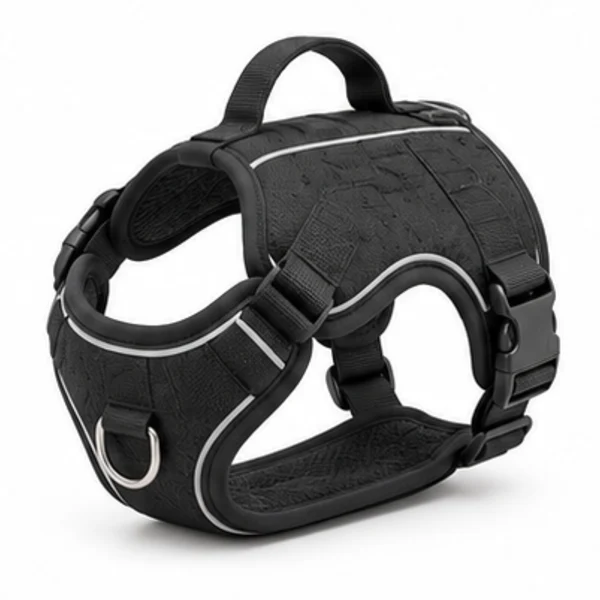
Dual-clip padded vest, two metal rings and a handle; chest 37 to 71 cm
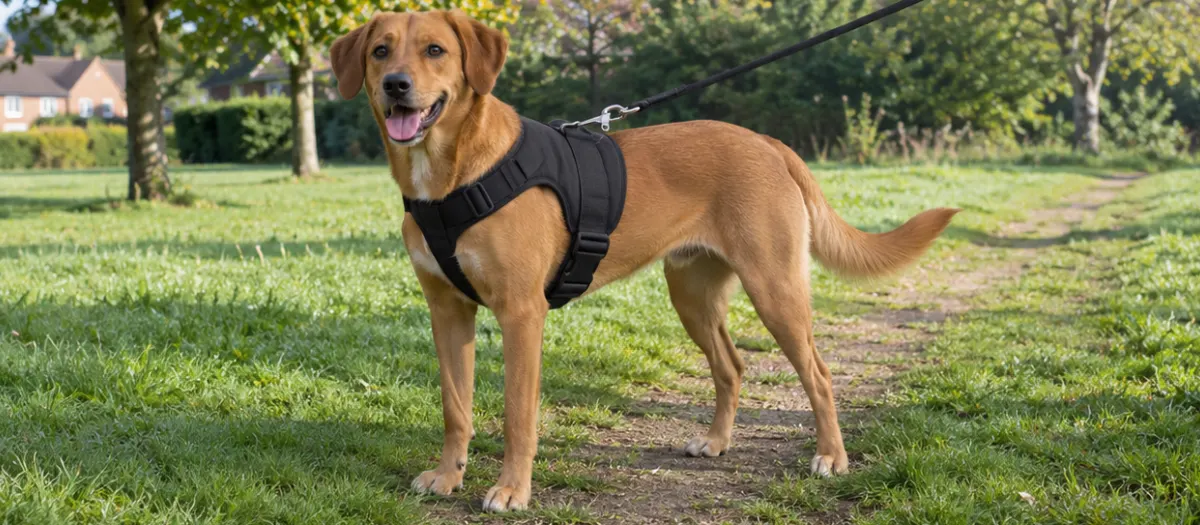
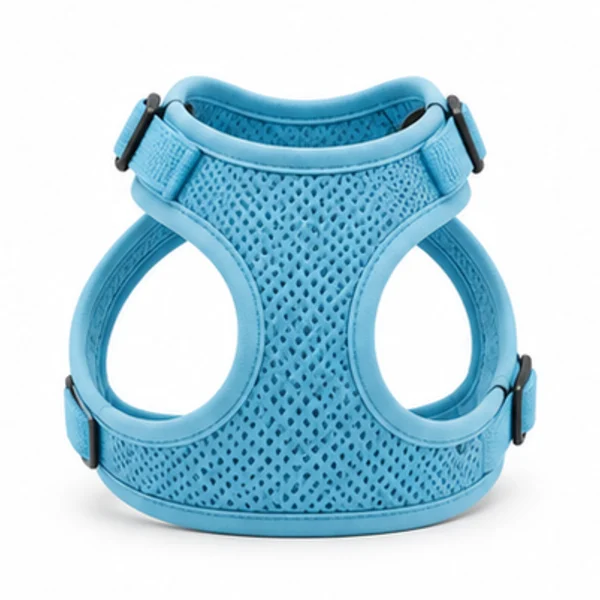
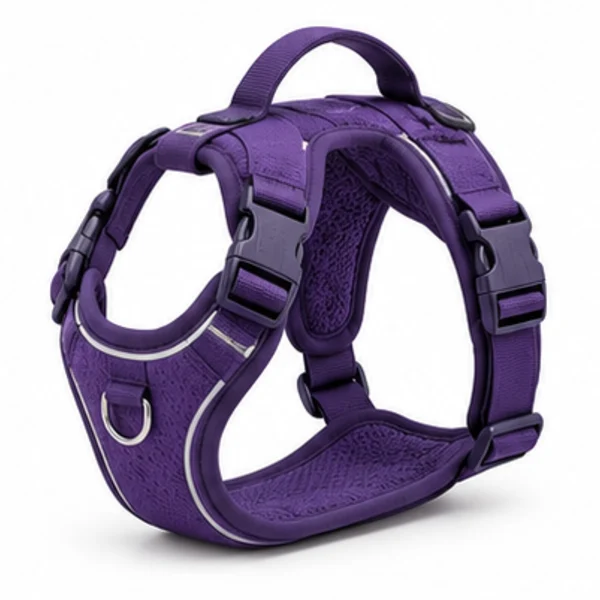
Pictures are illustrations, not the actual products.
Which type of dog harness is best?
No single type is best. The right one depends on whether your dog pulls, how small or deep-chested it is, and whether it backs out. In plain terms: a dual-clip vest suits most dogs, a step-in suits easy-going small dogs, and a chest-strap or Y design suits dogs that don't pull.
Swipe sideways to see every column
Type
How it goes on
Where the lead clips
Suits
Watch out for
Our pick
Deeper guide
Dual-clip padded vest
Over the head, buckles on the chest
Back ring, or chest ring for steering
Most dogs, mild pullers
Lead can tangle the legs if the chest ring sits low
For walking, usually yes. RSPCA Australia calls a harness ideal for walking and training because it helps stop a dog hurting its neck by pulling, and says it matters for dogs whose necks aren't much narrower than their heads, such as greyhounds and whippets (RSPCA Australia, page read 19 November 2026). VCA calls a body harness an excellent choice for dogs with tracheal disease or neck pain (VCA, "Collar and Harness Options for Dogs", page read 19 November 2026).
A collar still has a job: the ID tag. RSPCA South Australia suggests a comfortable flat collar for the tag, worn alongside the harness, and your council sets the registration and tag rules. Our dog collar guide and ID tag guide cover both. Slip, choke, prong and shock collars are not options: RSPCA Australia says check chains and prong collars must not be used.
Our picks in detail
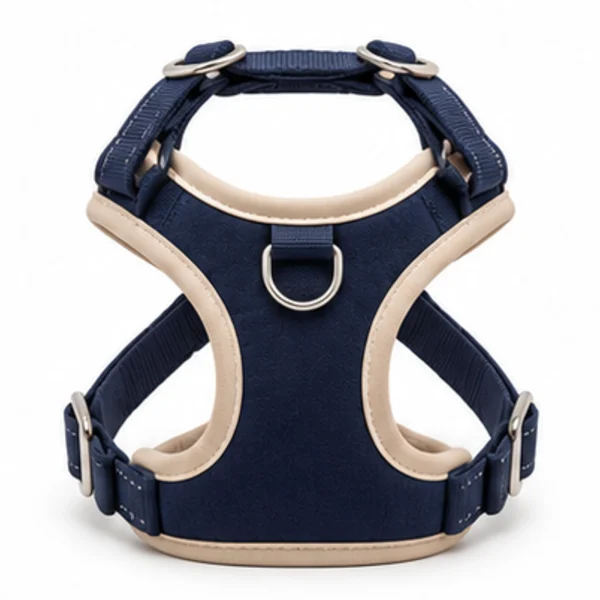
1. Eagloo No Pull Dog Harness, Medium: best overall
A padded vest with two metal rings: a V-ring on the back for easy walking and an O-ring on the chest for steering. The listing gives a chest range of 37 to 71 cm (14.6 to 28 in) for the Medium, with nylon reflective webbing and a mesh lining with sponge padding. It goes over the head, and has two quick-snap buckles plus four adjustment buckles.
The listing says the back handle loops a seat belt. Don't use a walking harness as a car restraint: our car harness guide explains why. The listing also says to choose the larger size if between sizes, which matches AKC advice, and to use a shorter lead if the lead tangles your dog's legs. The XL is the top pick on our large dog harness guide.
Pros: two metal rings, a handle and a cm range on the listing; padded; wide size range
Cons: goes over the head, so it's harder for a dog that dislikes that; the listing gives no washing instructions; no weight range listed
Best for: most dogs and mild pullers on a double-ended lead
Skip it if: your dog hates things over the head, or backs out of harnesses (see our escape resistant guide)
2. Voyager Step-in Air Dog Harness, Large: best step-in for small and medium dogs
Your dog steps into two holes and you clip it on the back. The listing says Large fits a chest of 46 to 52 cm (18 to 20.5 in), with air mesh that dries fast, two reflective bands, and a hook-and-loop fastener, buckle and double D-rings (the listing calls this triple security). It also says "not for large dogs" and that sizing doesn't correspond to breed or weight, so measure.
It is a back-ring design only, so there's no front ring for steering. A smaller size is on our puppy harness guide.
Pros: quick on and off; light and breathable; chest range in cm
Cons: back rings only; the listing's directions are in German; narrow size range
Best for: small and medium dogs that walk nicely
Skip it if: your dog pulls or is large
3. Julius-K9 IDC Powerharness, Size 0: best harness with a sturdy top handle
A chest-strap design with a handle on top. The listing gives chest 58 to 76 cm (23 to 30 in) and dog weight about 14 to 25 kg (30 to 55 lb), a one-click fit, interchangeable hook-and-loop patches and reflective elements. It says the buckle is shatterproof and the lining OEKO-TEX certified, which are the maker's claims. Care: hand wash only, up to 40°C, and store in a dry place away from direct sunlight.
The handle is for steadying your dog on steps or at the car door, not for lifting. We can only print the Size 0 figures from the listing. Our puppy harness guide has the smaller size and our large dog guide has Size 1.
Pros: quick on and off; sturdy handle; swappable patches
Cons: no front ring listed, so not a puller's harness; hand wash only; the other sizes aren't on this listing
Best for: medium to large dogs that walk on a loose lead
Skip it if: your dog pulls hard, or you want a machine-washable harness
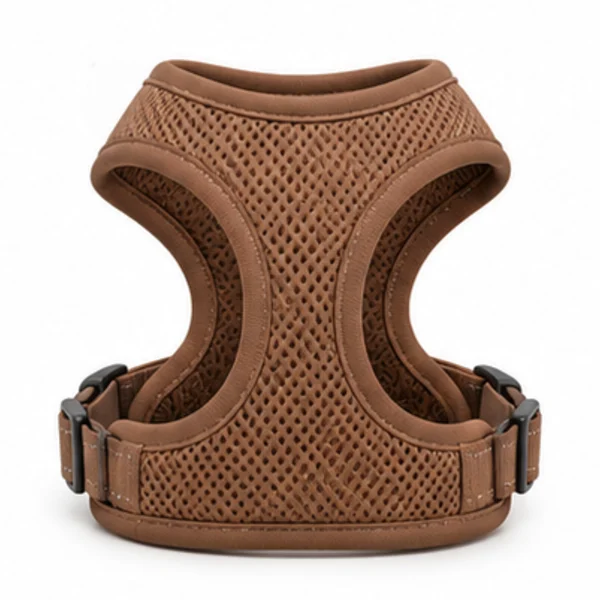
4. Puppia Soft Dog Harness, Medium: best soft mesh vest for small dogs
A light polyester mesh vest with a padded neck opening, adjustable chest belt and quick-release buckle. The listing gives chest 38 to 52 cm (15 to 20.5 in) and a neck opening of 33 cm (13 in). It says Puppia sizes were made with small and medium breeds in mind, so a larger size doesn't mean a larger breed. Measure the neck at its base and the chest behind the front legs, and check the head fits through.
The listing also says that if your dog tries to slide out, don't pull the lead. Other Puppia models are on our small dog and dachshund guides.
Pros: light and breathable; padded neck; machine washable per the listing
Cons: fixed neck opening, so a big head on a thin neck may not fit; back attachment only
Best for: small dogs on hot days
Skip it if: your dog has a big head and a slim neck, or backs out (see our escape resistant guide)
5. Gooby Comfort X Head-in Harness, Medium: best for tiny dogs with delicate throats
An X-shaped chest strap that, per the listing, sits below the usual neck area, with the D-ring on the back. The Medium fits a chest of 28 to 41 cm (11 to 16 in). The listing says the largest size suits dogs up to about 13.6 kg and gives its weights as estimates, so measure instead. Put it over the head, then one front paw through the opening and buckle up. Polyester mesh, machine wash cold.
Our small dog guide links a different listing of the Comfort X Medium whose chart gives 36 to 48 cm, so the two listings don't agree on the Medium. Measure your dog and check the size chart on the listing you order from. The Small is on our dachshund guide.
Pros: sits below the neck; light mesh; small chest range in cm
Cons: back ring only; limited to small breeds; the Medium's chest range differs between Gooby listings, so check the chart before ordering
Best for: toy and small dogs with delicate throats
Skip it if: your dog pulls, or weighs more than about 13 kg
Add-on: a double-ended lead
A dual-clip harness works best with a lead that clips to both rings. RSPCA Australia describes lead from the back ring, with the front clip for turning, and suggests a lead of about 2 metres.
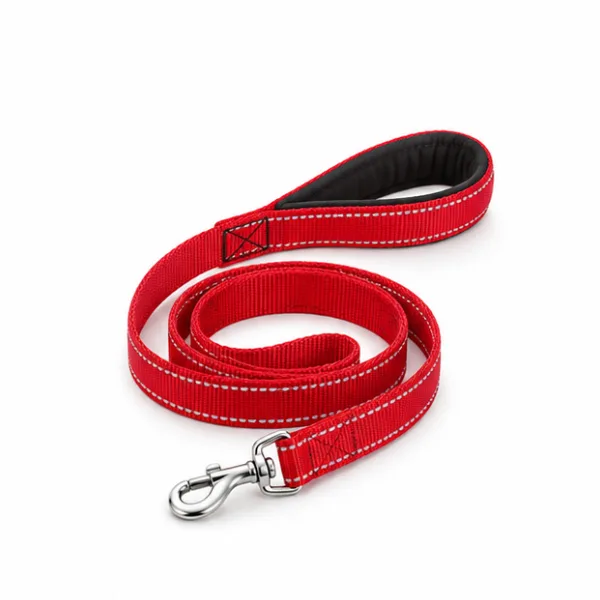
Halti Training Lead, Large, 2 m: double-ended lead for a dual-clip harness
The listing says two trigger clips for two points of connection, polyester webbing and a 2 m length. It is the lead we pair with the harnesses in our Halti harness guide.
Pros: two clips; 2 m length matches RSPCA Australia's suggestion
Cons: only useful with a harness that has a front ring
Best for: the Eagloo, or any harness with front and back rings
Look for two attachment points, including one on the chest. VCA's guidance on pulling suggests that, and warns that some no-pull styles can press on the front of the shoulder joint (VCA Animal Hospitals, "Controlling Pulling on Walks", page read 19 November 2026). RSPCA Australia calls a front-attach harness a gentle training aid, used with a double-ended lead.
Size by chest girth, not by breed or weight. Every figure below comes from the listing, with inches converted. Brand sizes don't line up, so a Medium from one maker can be a Small from another.
Your dog's chest girth
Picks whose listed range covers it (cm)
28 to 36 cm
Gooby Medium (28 to 41)
37 to 41 cm
Gooby Medium (28 to 41); Eagloo Medium (37 to 71); Puppia Medium from 38 (38 to 52)
42 to 45 cm
Eagloo Medium (37 to 71); Puppia Medium (38 to 52)
46 to 52 cm
Eagloo Medium (37 to 71); Puppia Medium (38 to 52); Voyager Large (46 to 52)
53 to 57 cm
Eagloo Medium (37 to 71)
58 to 71 cm
Eagloo Medium (37 to 71); Julius-K9 Size 0 (58 to 76, dog weight about 14 to 25 kg per the listing)
72 to 76 cm
Julius-K9 Size 0 (58 to 76)
Weights are listing estimates. The Gooby listing puts its sizes at about 2.3 to 4 kg (Small), 4 to 6.8 kg (Medium), 6.8 to 9 kg (Large) and 9 to 13.6 kg (X-Large), converted from pounds. For other sizes of these harnesses, check the size chart on the listing, or see our puppy, small dog and large dog guides.
How do you measure a dog for a harness?
Wrap a soft tape around the widest part of the ribcage, just behind the front legs, snug but with room for two fingers. Then measure the neck where a collar sits. If your dog falls between sizes, go up and adjust. The American Kennel Club adds that you should check whether a chart uses dog or harness measurements (AKC, "How to Measure Your Dog for Clothes and Gear", page read 19 November 2026).
Swipe sideways to see every column
Measurement
Where
Why it matters
Chest girth
Widest part of the ribcage, behind the front legs
Sets the size; most charts use it
Neck
Base of the neck, where the collar sits
Matters most for head-in harnesses
Head
Widest part of the skull
Puppia warns the neck opening must slide over the head
Once it's on, slide two fingers under every strap and watch your dog walk. RSPCA South Australia says a dog should take full strides on the front feet, and a loose harness lets a dog slip an elbow through and back out (RSPCA South Australia, "How to fit your dog's walking harness like a pro", 29 April 2019, page read 19 November 2026). VCA adds that a good harness shouldn't rub behind the elbow. Puppies outgrow harnesses fast, so RSPCA Australia suggests checking the fit at least a few times a week.
Dog harnesses compared
Details from each Amazon Australia listing, checked on 19 Nov 2026.
Swipe sideways to see every column
Harness
Chest range (cm)
Rings
How it closes
Handle
Material
Washing
Eagloo Medium
37 to 71
Metal V-ring on back, O-ring on chest
2 quick-snap buckles, 4 adjustment buckles; over the head
We searched Amazon Australia for dog harnesses across the main types, then shortlisted those that met all of these checks:
Well rated: a strong average rating with plenty of buyer reviews.
No red flags: no pattern of poor reviews, safety complaints or listing problems.
Available on Amazon Australia when we checked.
Chest range stated on the listing, so you can size by measurement.
Closure and rings described, so you know how it goes on and where the lead clips.
A type with a clear job, so each pick stands for a different design.
These are researched picks, not products we've personally tested. We compared the specifications and features on each Amazon Australia listing, checked on 19 Nov 2026, and we didn't accept payment from any brand.
Left out this time: PetSafe Easy Walk (its martingale loop tightens, so it's covered on our front clip guide with a caution), the PHOEPET and BARKBAY dual-clips (also on that page and the no pull guide), and duplicate colours and sizes of the picks below.
Where else can you buy a harness?
Pet shops and vet clinics stock harnesses and can size your dog with a tape, which helps if you're between sizes. Trying one on in person is the easiest way to check the neck opening and the stride, and a trainer who uses reward-based methods can help with fitting.
When to see a vet
Book a vet visit if your dog coughs, gags or has a changed bark when walking, has red, raw or hairless patches under the straps, limps or changes its stride after wearing a harness, or pulls so hard it seems distressed. These can have many causes, and a vet can work out which.
Go to a vet or emergency clinic straight away if your dog has trouble breathing, collapses or faints on a walk, or has a harness caught around a leg that won't come free. Take the harness off after bush walks and run your hands over your dog for ticks: see our paralysis tick guide. For hot weather, our summer guide covers heat and footpaths.
Frequently asked questions
What harness do vets recommend?
Vet sources describe features, not brands. VCA says a good harness fits well, doesn't restrict the front legs or rub behind the elbows, and suits a dog that pulls when it has two attachment points. RSPCA Australia suggests a front-attach harness as a gentle aid for pullers. Ask your own vet about your dog's neck and shoulders.
Is a Y harness or a vest harness better?
Research is mixed. A 2019 study of nine dogs on a treadmill found both harness types reduced shoulder extension, and the Y-shaped design reduced it slightly more than a restrictive chest-strap harness (Lafuente, Provis and Schmalz, Veterinary Record 2019). No design is proven best, so focus on fit and stride.
Do dogs pull more in a harness?
Not by design. A harness takes pressure off the neck, so a dog may seem to pull harder when it isn't uncomfortable. A back ring lets a dog lean in, which is why RSPCA Australia suggests a front-attach harness for pullers. Training matters most, and VCA says most dogs need months of regular practice.
What is a step-in dog harness?
A step-in harness lies flat on the floor with two leg holes. Your dog steps into them, and you pull the straps up and clip them on the back. There's nothing to pull over the head, so it suits dogs that dislike that. The Voyager is our pick, and AKC describes the steps.
Should a dog wear a collar and a harness?
Often yes, but for different jobs. RSPCA South Australia suggests a flat collar for ID tags only and a harness for the walking. The collar carries the tag if your dog gets lost. If your dog backs out of its harness, fix the fit or see our escape resistant guide rather than relying on the collar.
Which harness is best for an Australian summer?
A light mesh harness, such as the Puppia or Voyager, is more comfortable than thick padding. In hot weather, walk early or late, as our summer guide explains, and take any harness off once you're home. A harness doesn't make a hot footpath safer for paws.
Are cheap dog harnesses safe?
Price doesn't tell you. Look for metal rings, buckles that lock, stitching that holds when you tug at the seams, and a printed size chart in cm. Check the stitching and buckles before each walk, and replace any harness that frays. No harness is escape proof, and none is chew proof.
What size harness does a cavoodle or a Labrador need?
The one that matches the chest measurement, not the breed. Dogs of the same breed vary a lot, and brand sizes differ. Measure the chest behind the front legs, as AKC describes, then pick the size whose listed range covers it. If between sizes, go up and adjust to two fingers.
Lafuente, Provis and Schmalz, "Effects of restrictive and non-restrictive harnesses on shoulder extension in dogs at walk and trot", Veterinary Record 2019 (https://pubmed.ncbi.nlm.nih.gov/30455191/)
Product details from each linked Amazon Australia listing, checked on 19 Nov 2026.
This guide provides general information and isn't a substitute for veterinary advice. If you're concerned about your dog's walking, pulling or comfort in a harness, speak with your vet.