Research guide. WhiskerFinds may earn a commission from links, at no extra cost to you.
Quick answer: The Halti Walking Harness is our best overall Halti dog harness for most dogs and puppies: a plain harness with chest and back rings and a traffic handle. The No Pull and Front Control harnesses suit strong pullers, but the maker says not under nine months. Measure your dog's chest first, and remember no harness trains on its own.
Halti makes three body harnesses, and the names don't make the differences obvious. One is a plain walking harness, one has a lifting action that the maker says switches on when your dog pulls, and one steers from the chest with two rings. This guide compares them on listing specs, sets out sizing by chest in centimetres and shows which lead to pair with each. It is the body harnesses only: the head halters are on our dog head collar guide. If you're still choosing a harness type, start with our dog harness buying guide.
One thing to know up front: only the X-Small Walking Harness has a chest range in centimetres in its listing text. The other sizes are on the maker's size chart, which the listings show as an image, so we say "check the size chart on the listing" rather than guess.
Quick picks
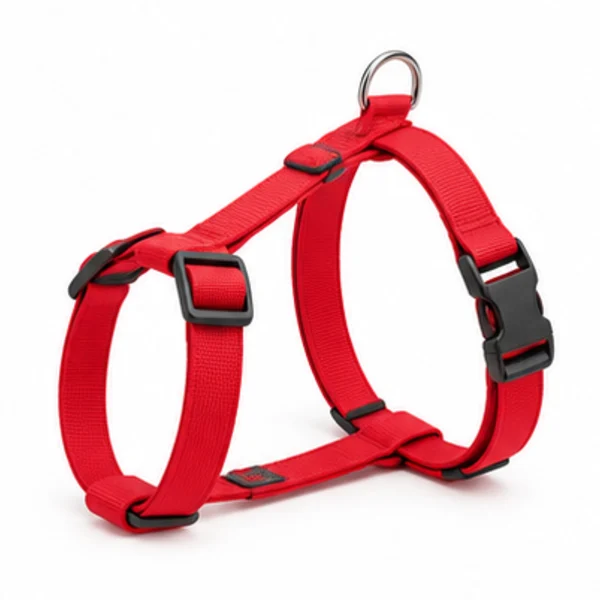
Halti Walking Harness, X-Small
Chest and back rings, traffic handle, and the one the maker points puppies to
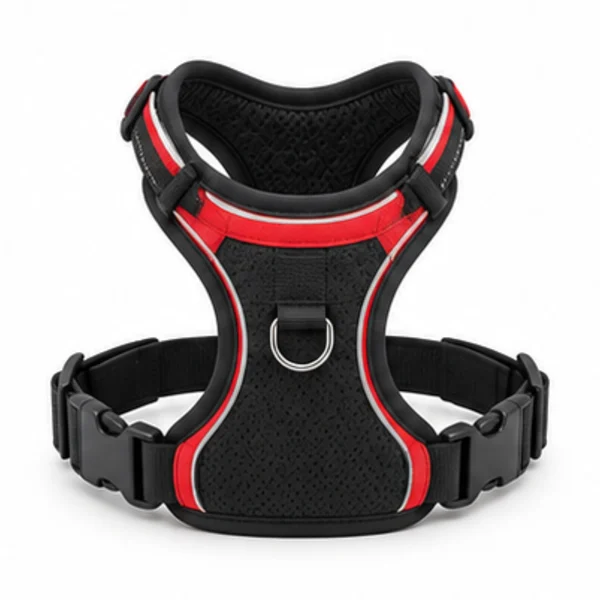
Halti No Pull Harness, X-Small
Lifting action plus a front control ring; read the limitation below
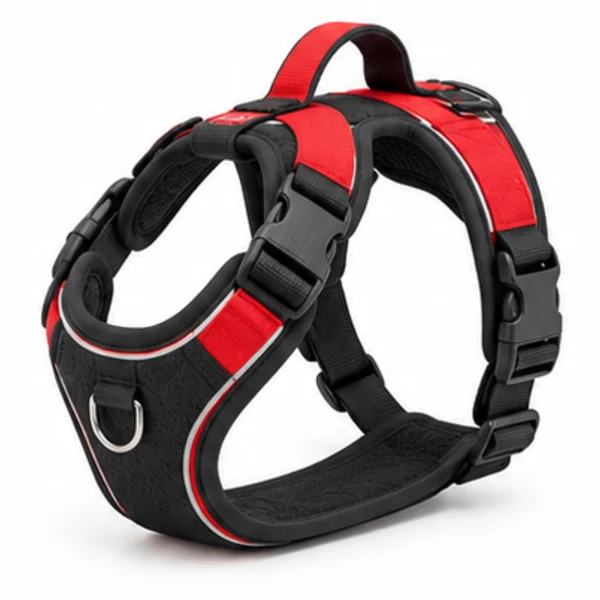
Halti Front Control Harness, Large
Two rings and a safety clip to the collar
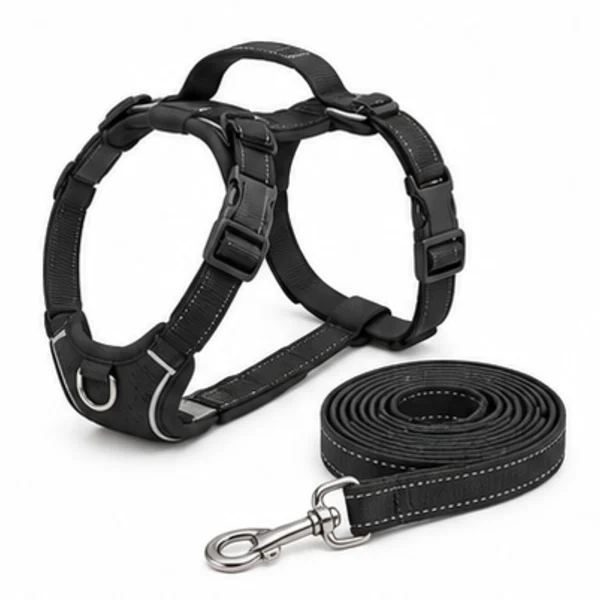
Halti No Pull Harness Medium with Training Lead Large
Harness and double-ended lead in one pack
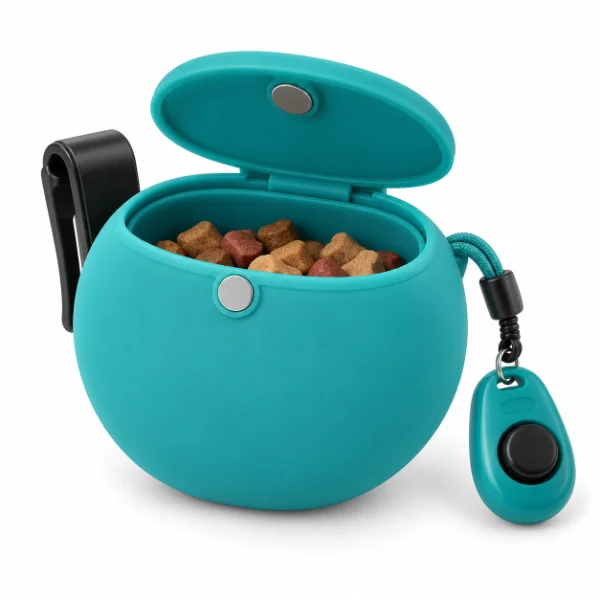
AUDWUD silicone treat pouch with clicker
Keeps rewards at hand for loose-lead walking.
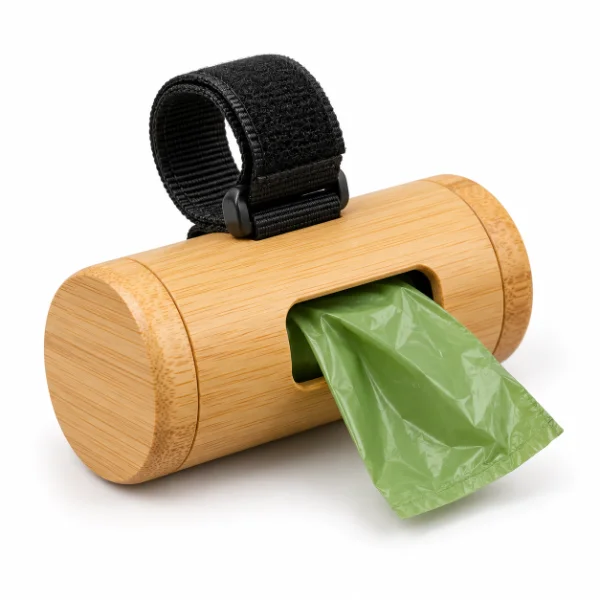
Tuff Pets bamboo poop bag holder
Clips onto the lead or bag so your hands stay free.
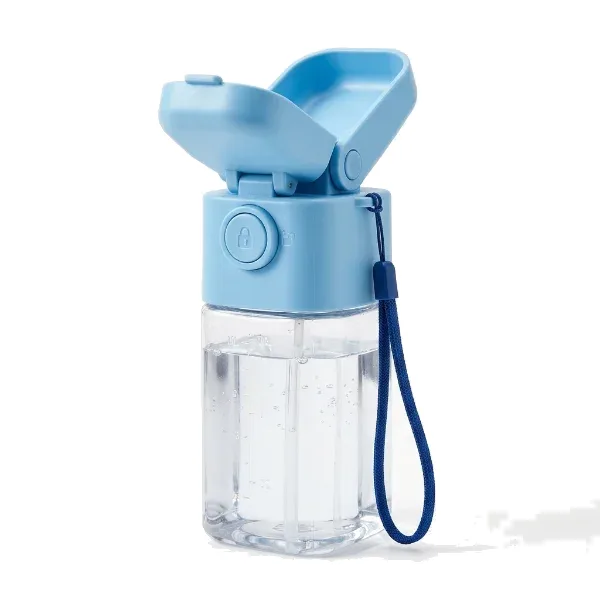
Cibaabo dog water bottle, 300 ml
A portable bottle so your dog can have a drink on longer walks.
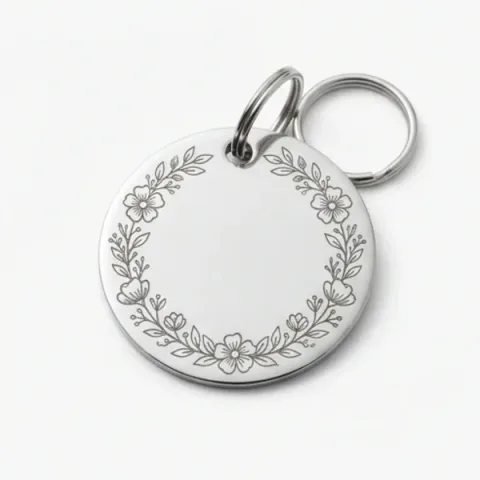
Meow the Woof engraved stainless steel ID tag
A tag for the flat collar, with your contact details.
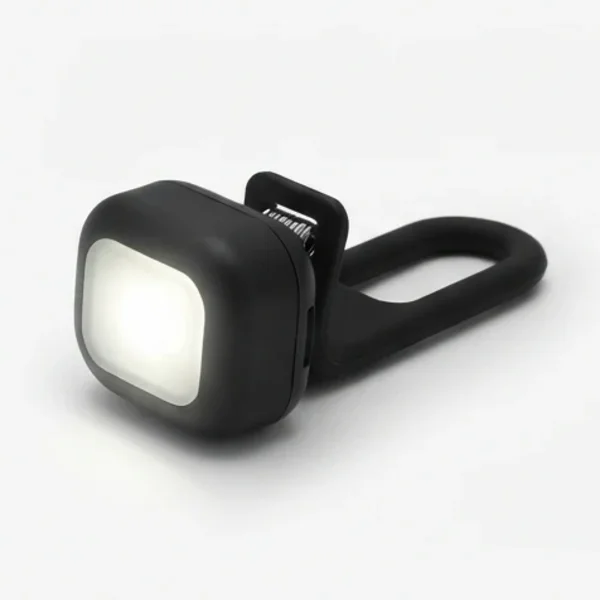
PAJ MINI clip-on light
A small light that makes your dog easier to see on dark mornings and evenings.
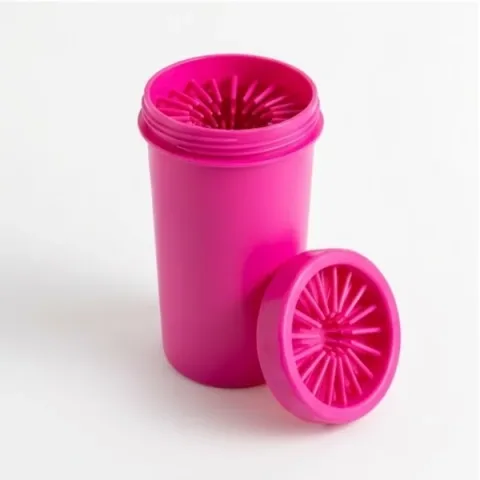
Dexas MudBuster paw washer, large
A quick way to rinse muddy paws after a walk.
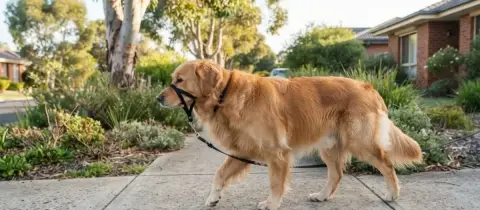
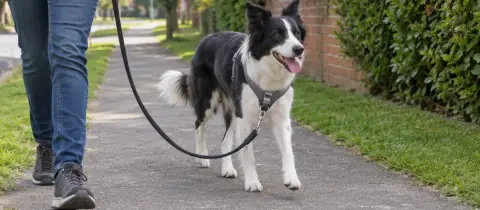
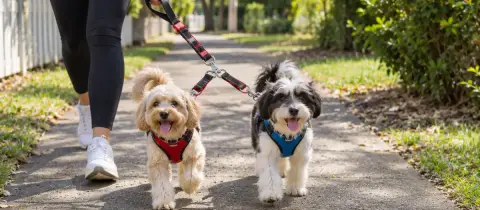
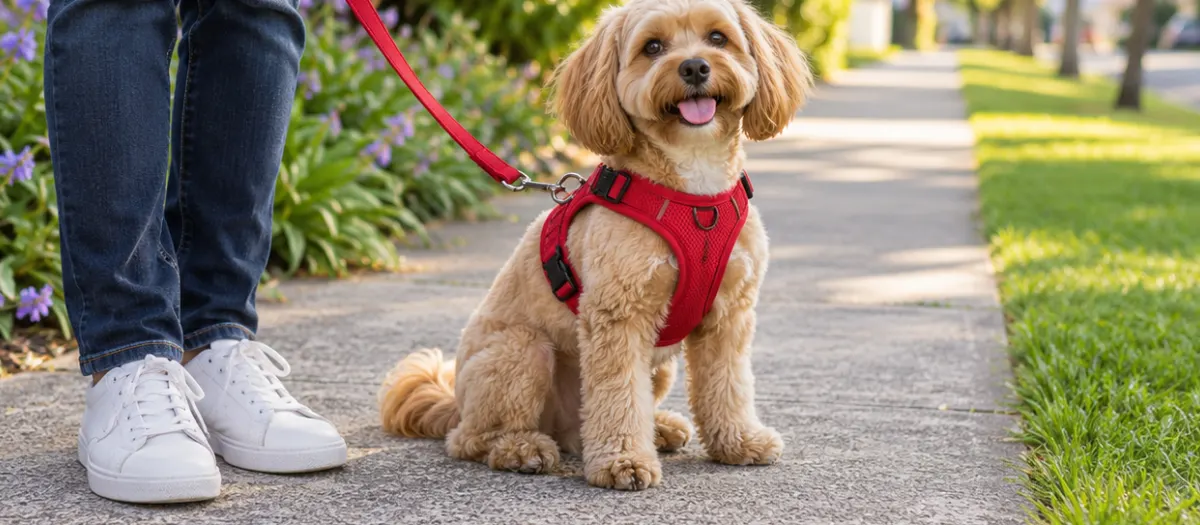
Pictures are illustrations, not the actual products.
Which Halti dog harness suits which dog?
Most dogs, and every puppy, are best matched to the Walking Harness. A strong adult puller is the job for the No Pull or Front Control. The maker pitches both of those at dogs that can't wear a headcollar, though for flat-faced dogs the research favours a plain back-clip design, so ask your vet first. The table below puts the three side by side, with the maker's minimum age.
| Model | What happens when your dog pulls | Rings | Handle | Padding | Minimum age (maker) | Best for |
|---|---|---|---|---|---|---|
| Walking Harness | Nothing is described; it's a plain harness | Chest and back | Close control traffic handle | Not stated; "open shoulder design" (maker) | Suitable for puppies, with a double-ended lead (maker) | Most dogs, puppies, everyday walks |
| No Pull Harness | Lifting action the maker says activates when your dog pulls | Front control ring (maker) | Not listed | Padded chest and leg straps | Not recommended under 9 months (maker) | A strong adult puller, with training |
| Front Control Harness | You steer from the chest; the back ring acts as a brake | Front and back | Not listed | Neoprene padding (maker) | Not under 9 months (maker) | A strong dog that can't wear a headcollar |
Sources for the table: the three Halti harness listings and the maker's own product pages (Company of Animals Australia, pages read 19 November 2026).
Halti No Pull or Walking harness: what's the difference?
The Walking Harness is a plain harness with rings on the chest and back, so your dog is steered and held but nothing on it is designed to react to pulling. The No Pull Harness adds a lifting action: the maker says its "stop-pull lifting feature" activates when your dog begins to pull. It also has a front control ring for steering.
That matters, and so does the name. The Walking Harness is not a no pull harness, and nothing on its listing says it stops pulling. The No Pull Harness is built to act on your dog when it pulls, which is what separates it from a plain front ring.
The 2025 research paper by Cavalli and Protopopova looked at the evidence on walking gear. It found that non-tightening front-clip harnesses "appear to offer the best balance between discomfort and reduction in pulling", and that "tightening harnesses, martingale collars, and head collars can pose greater discomfort and should be used with caution" (Cavalli and Protopopova, Animals, 2025, page read 19 November 2026). The maker doesn't describe the lifting action as tightening, and we can't say how it behaves on a given dog. But it is an action on your dog's body, so we include the No Pull picks with that limitation printed, and our no pull dog harness guide leaves tightening designs out for the same reason.
Our picks in detail
1. Halti Walking Harness, X-Small: best overall
The harness the maker itself points puppies to, and the plain one of the three. The listing says five adjustment points, three release buttons on each side so no leg lifting is needed, 3M Scotchlite reflective stitching, a close control traffic handle and nylon webbing. For the X-Small, the chest range is 25 to 40 cm. The maker's page adds lead rings on the chest and the back, an "open shoulder design" and the line to attach the lead to the harness, not the collar.
The honest limit is the one in the name: it's a walking harness, not a pulling fix. A strong puller still needs training, or a harness from picks 2 and 3. The X-Small suits only small chests, so measure and check the listing for larger sizes.
- Pros: side-release buttons so nothing goes over the head; five adjustment points; chest and back rings; traffic handle; reflective stitching
- Cons: only the X-Small chest range is in the listing text; larger sizes need the size chart image; no pulling feature, so it won't help a dog that hauls on its own
- Best for: most dogs, puppies and everyday walks
- Skip it if: your dog pulls hard and you want the lifting action (pick 2)
2. Halti No Pull Harness, X-Small: best for dogs that pull hard
The only one of the three with a lifting action. The listing says it has "no pull lifting action and front control steering", padded chest and leg straps, a reflective chest panel and four sizes, in polyester. It also calls it "a perfect option for flat nosed breeds who can't wear a headcollar", which is the maker's pitch, not something we've verified. The maker's page adds that the lifting feature activates when your dog begins to pull, that the front control ring is for stronger dogs and that it isn't recommended under 9 months.
A design that acts on your dog when it pulls is the type the 2025 research paper says should be used with caution. We include it for a strong adult puller with training, not as a first harness for most dogs. Keep the fit right, check the stride and take it off when you're home.
- Pros: lifting action and front ring; padded chest and leg straps; reflective panel and stitching
- Cons: an action-on-pulling design, so not a first harness for most dogs; not recommended under 9 months (maker); the listing says four sizes while the maker's page says three; no cm sizes in the listing text
- Best for: a strong adult puller whose owner is training too
- Skip it if: your dog is under 9 months, or you want a design that does nothing when your dog pulls (pick 1)
3. Halti Front Control Harness, Large: best for steering a strong dog from the chest
Two rings and a collar safety clip, with no lifting action described. The listing says you steer from the chest "rather than by his head", the back ring "acts as a brake while the front lead steers", and it's made for dogs that "don't like or cannot wear" a Halti headcollar. It's neoprene and nylon. The maker's page adds nylon webbing, neoprene padding, chrome rings and clips, and that it isn't for dogs under 9 months.
The listing says to use a double-ended lead for the most control, so budget for one (the Training Lead in the add-ons fits). It has no handle listed and no reflective detail in the listing text, and the padding is neoprene rather than the padded leg straps of pick 2.
- Pros: chest steering and a back ring; safety clip to the collar; neoprene padding
- Cons: no handle or reflective detail listed; Large only, so check the size chart on the listing; not under 9 months (maker)
- Best for: a strong dog that can't wear a headcollar, walked on a double-ended lead
- Skip it if: you want padding under the arms (pick 2) or a traffic handle (pick 1)
4. Halti No Pull Harness Medium with Halti Training Lead Large: best set for a medium puller
The No Pull Harness plus the lead it's designed to be used with. The listing says the harness has a no slip chest panel that doubles as a pocket for poo bags, with a lifting feature that activates when dogs start to pull. The Training Lead is a double-ended lead that the listing says works in seven different ways, with two clips for front and back attachment, in nylon.
The cautions for pick 2 apply: it's a tightening-type design in our reading, and the maker's 9-month minimum covers the harness. The listing's "stops pulling" wording is the brand's own.
- Pros: harness and double-ended lead in one pack; chest panel doubles as a poo bag pocket; two clips for front and back attachment
- Cons: same lifting action and 9-month limit as pick 2; no cm sizes in the listing text; the lead is useful only if you don't already own a double-ended one
- Best for: a medium adult dog that pulls, when you need the lead too
- Skip it if: you already own a double-ended lead (buy pick 2 or 3 on its own)
Add-ons: a lead and a collar
A harness is only half the kit. These two pair with any pick above.
Halti Training Lead, Large, 2 m: the two-clip lead
The double-ended lead for the two-point method. The listing says two trigger clips for two points of connection, polyester webbing and a 2 m length, with seven uses claimed by the maker. RSPCA Australia suggests a lead of about 2 m and says retractable and bungee leads aren't recommended, so the length suits. For the no pull and front control picks, clip one end to the back ring and the other to the front.
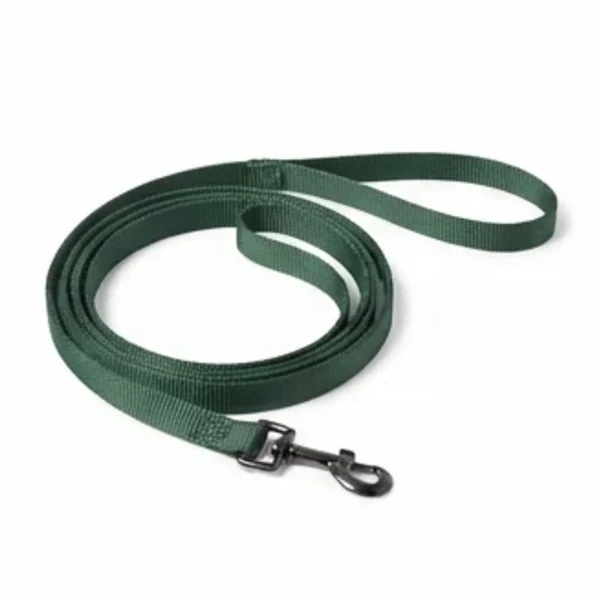
The Halti Double-Ended Lead is also on our double dog lead guide, and our dog lead guide compares everyday leads.
Halti Comfort Collar, X-Small: a flat collar for the ID tag
While the harness does the walking, your dog still needs a flat collar for the tag, as RSPCA South Australia says. The listing says neoprene-padded nylon, 3M Scotchlite reflective stitching and a metal D-ring for identification. Check the size chart on the listing, and see our dog collar guide and dog ID tags guide for what to engrave.
Halti harnesses compared
Specs below come from each Amazon Australia listing, checked on 19 Nov 2026. "Not stated" means the listing doesn't say.
| Harness | Adjustment | Closure | Rings | Reflective | Material | Sizes listed |
|---|---|---|---|---|---|---|
| Walking Harness XS | 5 adjustment points | 3 release buttons each side | Chest and back (maker) | 3M Scotchlite stitching | Nylon webbing | XS chest 25 to 40 cm; other sizes on the maker's chart |
| No Pull Harness XS | Fully adjustable | Not stated | Front control ring | Chest panel and stitching | Polyester | Listing says 4 sizes; maker page says 3 |
| Front Control Harness L | Chest and shoulder straps | Not stated; safety clip to the collar | Front and back | Not stated | Neoprene and nylon | Large; check the size chart on the listing |
| No Pull M plus Training Lead L | Not stated | Not stated | Front and back, per the lead's two clips | Not stated | Nylon | Medium; check the size chart on the listing |
What size Halti harness does my dog need?
Size by your dog's chest, not its weight or breed. Measure the widest part of the ribcage, just behind the front legs, with a soft tape. If your dog falls between two sizes, go up and adjust the straps down (AKC, "How to Measure Your Dog for Clothes and Gear", page read 19 November 2026). The maker sizes the Walking Harness by chest.
| Harness | What we can say from the listing | What to do |
|---|---|---|
| Walking Harness XS | Chest 25 to 40 cm | Use it if your dog measures inside that range |
| Walking Harness, other sizes | Chest ranges are on the maker's chart | Check the size chart on the listing |
| No Pull Harness | Listing says four sizes, the maker's page says three | Check the size chart on the listing before ordering |
| Front Control Harness | Fit is by adjusting the chest and shoulder straps | Check the size chart on the listing |
Puppies outgrow harnesses quickly. RSPCA Australia says to check the fit at least a few times a week and to expect to re-fit as a medium or large puppy grows (RSPCA Australia knowledgebase, "What equipment should I use when teaching my dog or puppy to walk on a leash?", updated 10 January 2023, page read 19 November 2026). Our puppy harness guide covers sizing as your puppy grows.
How do you fit a Halti harness?
Adjust the straps so two fingers slide under each one, clip the buttons, then watch your dog walk. These steps are written for a side-clip harness like the Walking Harness, which has three release buttons each side so you don't need to lift a leg or pull anything over the head. Our how to put on a dog harness guide covers the other types.
- Loosen the straps and lay the harness flat, handle side up.
- Position it with the chest piece across the breastbone and the back ring between the shoulder blades.
- Clip the side buttons on each side, treating your dog as the harness goes on.
- Tighten each strap to two fingers' room. RSPCA South Australia says a loose harness lets a dog "slip an elbow through the straps and back out" (RSPCA South Australia, "How to fit your dog's walking harness like a pro", 29 April 2019, page read 19 November 2026).
- Watch the stride. Your dog should take full strides on the front feet, the same as without the harness.
- Check behind the elbows for rubbing, and look again after a few walks.
For the No Pull and Front Control, follow the maker's instructions that come with the harness. The Front Control listing says to adjust the chest and shoulder straps, and to attach its safety clip to your dog's collar for added security.
Does the Halti No Pull Harness stop pulling?
On its own, no harness does. The listing says the No Pull Harness has a lifting action and front control steering, and the maker's page says its lifting feature activates when your dog starts to pull. What that can give you is something to work with. The habit changes through rewarding your dog for walking beside you, and results vary from dog to dog.
VCA Animal Hospitals says most dogs need months of practice, and lists two attachment points, one on the chest, as something to look for (VCA Animal Hospitals, "Controlling Pulling on Walks", updated 17 July 2024, page read 19 November 2026). It also warns that some no pull styles pressing on the front of the shoulder can injure the joint, which is one more reason to check the fit and the stride. If you're building the habit, our training treats guide covers small, soft rewards for walks.
To make the most of any of these, use the two-point method RSPCA Australia describes: a double-ended lead, clipped to the back ring for everyday walking and the front ring for turning. The Halti Training Lead in the add-ons does this. We cover the method step by step in our front clip dog harness guide.
Halti harness or Halti headcollar?
A harness holds your dog around the chest, while a headcollar steers the head and is a different piece of gear with its own fitting. They don't do the same job, and the experts disagree on headcollars: RSPCA Australia says to try a front-attach harness first, and RSPCA South Australia lists head collars among gear to avoid (RSPCA South Australia, "The best-ever walking harness for your dog", 11 September 2018, page read 19 November 2026). Our dog head collar guide covers Halti's headcollars and both positions.
Choose by situation
| Your situation | What to look for | Our pick |
|---|---|---|
| Puppy under 9 months | The harness the maker points puppies to | Walking Harness (1) |
| Most adult dogs on everyday walks | A plain harness with two rings and a handle | Walking Harness (1) |
| Strong adult puller, already training | A lifting action or chest steering | No Pull (2) or Front Control (3) |
| Flat-faced dog that can't wear a headcollar | The maker pitches the No Pull for this; the 2025 review and VCA favour back-clip chest-strap or Y designs for flat-faced dogs | Ask your vet first, and see our French bulldog harness guide; if you want a Halti, the Walking Harness (1) |
| Already own a headcollar | Check your lead has two clips | Front Control (3) or Walking Harness (1) |
| Want one pack with the lead | Harness and double-ended lead together | No Pull set (4) |
| Medium dog, need the lead too | Medium harness plus a 2 m lead | No Pull set (4) |
How we chose
We searched Amazon Australia for Halti's dog harnesses and shortlisted those that met all of these checks:
- Well rated: a strong average rating with plenty of buyer reviews.
- No red flags: no pattern of poor reviews, safety complaints or listing problems.
- Available on Amazon Australia when we checked.
- Maker's minimum age found on the maker's own product page.
- Ring positions and what the lead clips to described by the listing or the maker.
- Sizing stated by chest or by a size chart, with cm where the listing gives them.
Where a listing is thin or a design needs caution, we say so in the cons. These are researched picks, not products we've personally tried. We compared the specifications on each Amazon Australia listing, checked on 19 Nov 2026, and we didn't accept payment from any brand.
Left out this time: Halti headcollars (a different product, on our head collar guide), and Halti leads sold on their own beyond the add-ons below.
Where else can you buy a Halti harness?
Pet shops and vet clinics sell Halti harnesses, and the maker, The Company of Animals, has an Australian site with its own product pages. Fitting in person is useful for the harnesses where the cm range isn't on the listing, because staff can measure your dog and check the strap adjustment. Halti isn't an Australian brand, but its gear is sold here.
When to see a vet
Book a vet visit if your dog starts coughing, gagging or struggling to breathe on walks, has rubbed or sore skin where the harness sits, limps, or seems reluctant to walk after you start using a harness. A vet can work out whether the cause is the fit, the design or something else, and a flat-faced dog should have breathing concerns checked before you choose any gear.
Go to a vet or emergency clinic straight away if your dog collapses, has laboured or noisy breathing, or has gums that look blue or pale. Some of our paralysis tick guide's signs can also look like weakness on walks, so check that guide after bush or long-grass trips.
Frequently asked questions
Who makes Halti harnesses?
The Company of Animals makes Halti harnesses, according to the maker's own site, and it has an Australian site. Halti isn't an Australian brand. EzyDog is the Australian harness brand we've covered, and our EzyDog guide compares its range.
Can a puppy wear a Halti harness?
The maker says the Walking Harness is suitable for puppies, and suggests it with a double-ended lead for early puppy walks. It says the No Pull and Front Control harnesses aren't for dogs under 9 months. Those limits are the maker's, and your vet can advise on your own puppy.
Does the Halti No Pull Harness tighten when my dog pulls?
The maker says its "stop-pull lifting feature" activates when your dog begins to pull, and the listing describes a lifting action plus front control steering. It doesn't use the word tighten, and we can't say how it feels on a given dog. A plain front ring, like the Walking Harness's, does nothing when your dog pulls; the lead simply turns them.
Does the Halti Walking Harness have a front ring?
Yes. The maker's page says the Walking Harness has lead rings on the chest and on the back. A chest ring turns your dog back towards you for steering, while the back ring suits calm walking on a loose lead. Use a double-ended lead if you want both.
Can I use a Halti harness with an ordinary lead?
You can clip an ordinary lead to a ring, but the maker says to pair the No Pull Harness with a dual-clip lead and suggests a double-ended lead for the Front Control. About 2 m is right, and retractable leads aren't recommended by RSPCA Australia. The Training Lead in our add-ons fits.
Is a Halti harness good for small dogs?
Halti makes an X-Small, and the Walking Harness XS lists a chest range of 25 to 40 cm. Check your dog's chest first, and look at the size chart on the listing for the No Pull. For a very small dog, also compare our small dog harness guide.
Can a Halti harness be used in the car?
Not on these listings. None of them is listed as a car restraint, and we don't present any walking harness as one. See our dog car harness guide and the dog car restraint guide for gear that's made for it.
How long can my dog wear a Halti harness?
The maker says not to leave a body-worn training aid on for long periods, and never to leave your dog unattended in a headcollar, harness or muzzle. Put it on for the walk and take it off at home. No harness is escape proof either; see our escape proof harness guide.
Related guides
- Best dog head collars
- Best dog harness: which type suits your dog
- Front clip dog harness: how it works
- Rogz harness guide
- How to put on a dog harness
- Best no pull dog harness
- Best puppy harness
- Best double dog leads
- Best dog collars
- Dog guides
Sources
- Company of Animals Australia, Halti No Pull Harness, page read 19 November 2026 (https://companyofanimals.com/au/brand-product/halti-no-pull-harness/)
- Company of Animals Australia, Halti Walking Harness, page read 19 November 2026 (https://companyofanimals.com/au/brand-product/halti-walking-harness/)
- Company of Animals Australia, Halti Front Control Harness, page read 19 November 2026 (https://companyofanimals.com/au/brand-product/halti-front-control-harness/)
- Cavalli and Protopopova, "Review of Collars, Harnesses, and Head Collars for Walking Dogs", Animals 15(15):2162, 2025, page read 19 November 2026 (https://pmc.ncbi.nlm.nih.gov/articles/PMC12345489/)
- RSPCA Australia knowledgebase, "What equipment should I use when teaching my dog or puppy to walk on a leash?", updated 10 January 2023, page read 19 November 2026 (https://kb.rspca.org.au/knowledge-base/what-equipment-should-i-use-when-teaching-my-dog-or-puppy-to-walk-on-a-leash)
- RSPCA South Australia, "How to fit your dog's walking harness like a pro", 29 April 2019, page read 19 November 2026 (https://www.rspcasa.org.au/fitting-walking-harness-dogs/)
- RSPCA South Australia, "The best-ever walking harness for your dog (and the must-avoid collars and leads)", 11 September 2018, page read 19 November 2026 (https://www.rspcasa.org.au/best-walking-harness-dogs/)
- American Kennel Club, "How to Measure Your Dog for Clothes and Gear", updated 10 August 2026, page read 19 November 2026 (https://www.akc.org/expert-advice/lifestyle/measure-dog-gear/)
- VCA Animal Hospitals, "Controlling Pulling on Walks", updated 17 July 2024, page read 19 November 2026 (https://vcahospitals.com/know-your-pet/controlling-pulling-on-walks)
- Product details from each linked Amazon Australia listing, checked on 19 Nov 2026.
This guide provides general information and isn't a substitute for veterinary advice. If you're concerned about your dog's walking, pulling or comfort in a harness, speak with your vet.