Best escape proof dog harness for dogs that back out
By Anish PuriUpdated 8 Nov 202614 min readResearched, not tested by us
Research guide. WhiskerFinds may earn a commission from links, at no extra cost to you.
Quick answer: The best escape proof dog harness for small and medium dogs is the Gooby Escape Free Easy Fit, a step-in design that narrows the gap over the back when your dog backs away. Bigger dogs suit a belly-strap vest. Whatever you choose, a snug fit matters more than the label.
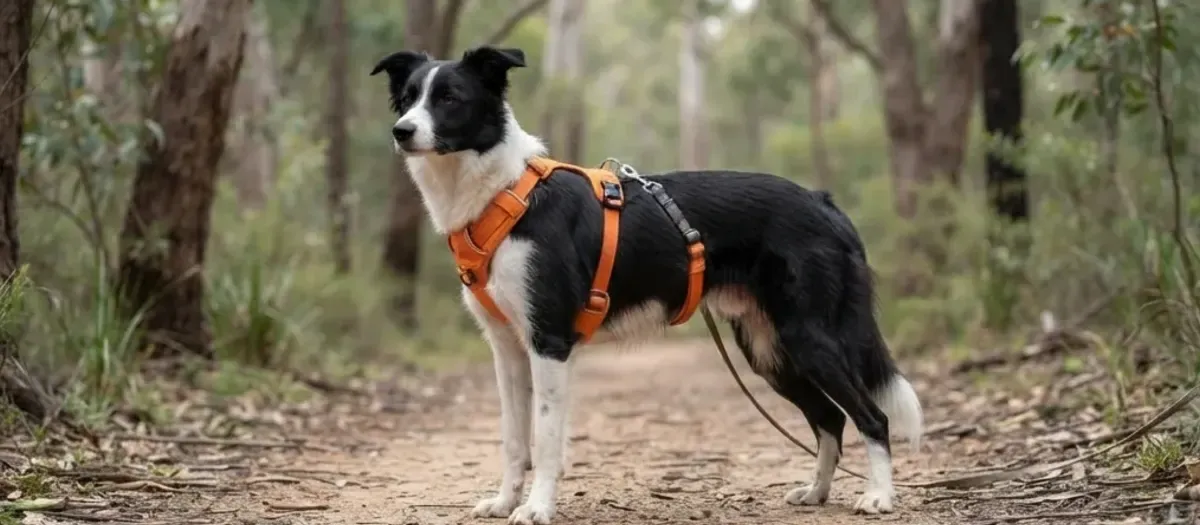
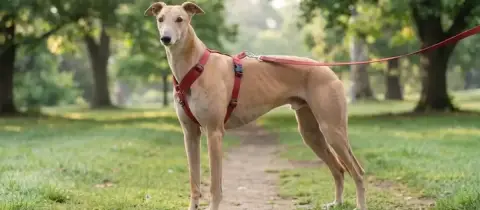
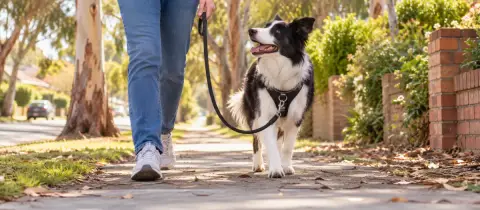
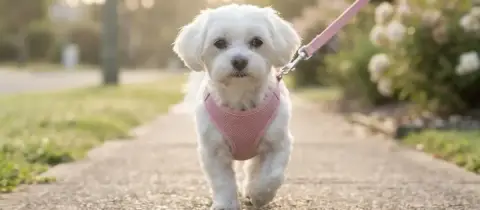
Illustration, not the actual product
Our top pickGooby Escape Free Easy Fit harness, Medium
If your dog reverses out of a harness the moment the lead tightens, this guide compares five harnesses on Amazon Australia that are built for it, with chest ranges in centimetres and honest cons. If pulling is the bigger problem, start with our no-pull dog harness guide. If you're weighing up the EzyDog Crosscheck, our EzyDog harness guide covers its sizes and how its chest loop works.
Quick picks
Our top pickBest overall for small and medium dogs
Gooby Escape Free Easy Fit harness, Medium
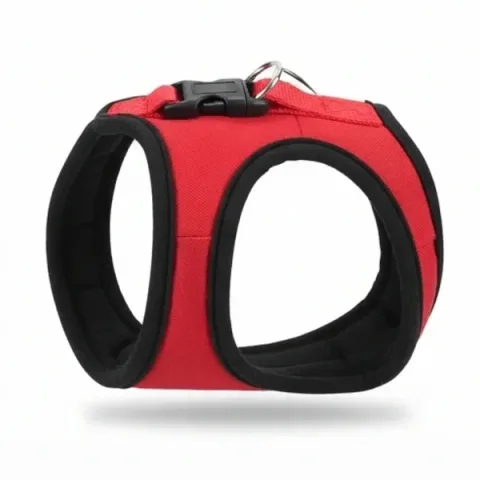
Step-in neoprene design that narrows the space around the back, chest 46 to 55 cm
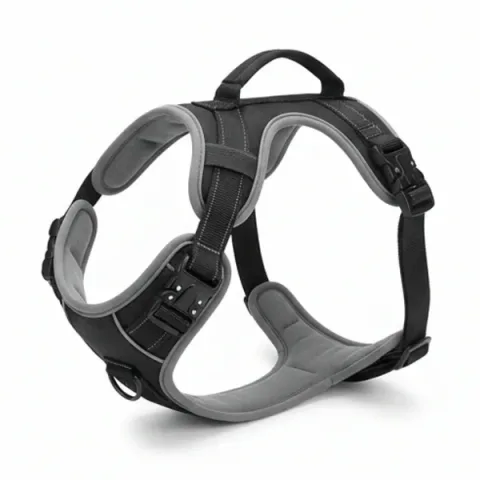
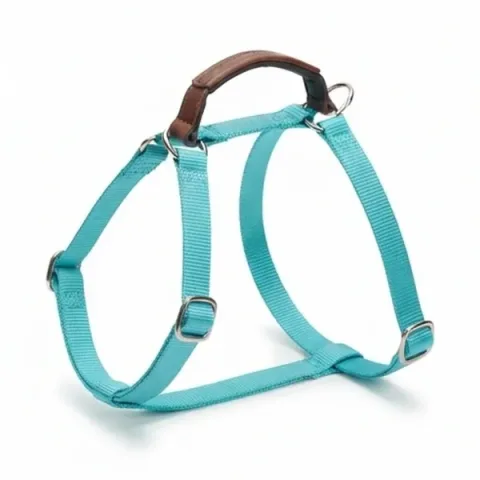
Pictures are illustrations, not the actual products.
Pet shops and some vet clinics also sell harnesses and can help with fitting, so you can try one on before you commit to a size.
What is the most escape proof dog harness?
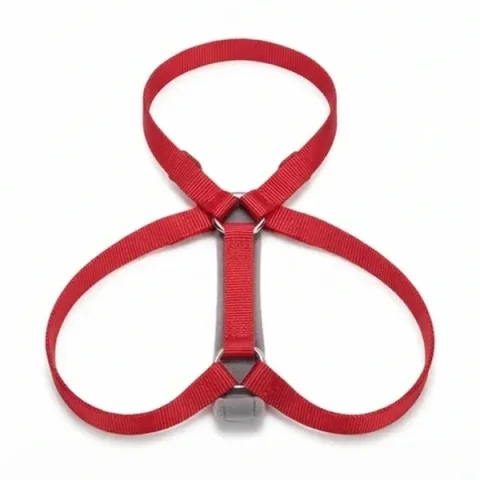
No harness is escape proof on its own. "Escape proof" is each listing's claim, and a loose fit defeats every design. The designs that make backing out harder are a step-in style that closes the gap over the back, a belly strap, and a figure-8 that tightens on the girth.
Why does my dog back out of its harness?
Most often the harness is too loose, was sized by weight instead of a tape measure, or has a front strap that lets the dog slide a shoulder free. Fear can play a part too. A backing-out dog is more consistent with a poor fit or a worried dog than with a "naughty" one.
RSPCA South Australia says a loose harness lets a dog slip a front leg through a strap and pull free (RSPCA South Australia, page read 8 November 2026). Some dogs also have a neck that is not much narrower than the head, and RSPCA Australia suggests a harness for those dogs, including to stop them slipping out (RSPCA Australia, page read 8 November 2026). If your dog backs out mainly in new places or near scary things, look at the context. A reward-based trainer can help.
Our picks in detail
1. Gooby Escape Free Easy Fit harness, Medium: best overall for small and medium dogs
A step-in neoprene harness. The listing says it reduces the space around the back, which makes it harder for a dog to escape by backing away. The Medium lists a chest of 46 to 55 cm (18 to 21.75 in) and a weight range of up to 15.9 kg. It weighs 72.6 g, has a strong plastic D ring and a buckle, and is machine washable in cold water. You step your dog's paws into the holes, pull it up and fasten it. Our dachshund harness guide covers a different Gooby, the Comfort X.
The listing warns that wrong sizing will lead to escaping, so measure exactly.
Pros: step-in, so nothing goes over the head; light at 72.6 g; chest range in the listing; machine washable
Cons: small and medium dogs only; a back ring only, so it doesn't redirect pulling; no handle listed; imported, so check the delivery details on Amazon before you order
Best for: small and medium dogs that reverse out of a standard vest
Skip it if: your dog is above the Medium's range, or you need a front ring or a handle
2. Huntboo escape proof harness, XL: best for large dogs
A vest-style harness for large dogs with a strap on the belly that the listing says holds the dog in place. The XL lists neck 45 to 64 cm, chest 68 to 83 cm (27 to 33 in), belly 66 to 81 cm and back length 28 cm, with breeds such as Golden Retrievers, German Shepherds and Saint Bernards named. It has five adjustment points, four quick-release buckles, an air mesh lining, a metal back ring and a padded handle. It weighs 349 g and is machine washable. Our no-pull dog harness guide features a different Huntboo listing.
The listing calls the handle a lift handle for older or disabled dogs. Treat it as a brief steadying aid, and ask your vet before you lift a dog with pain or an injury.
Pros: belly strap; full measurements in cm; four quick-release buckles; padded handle
Cons: one metal back ring and no front ring on this version; the oxford outer runs warmer than a mesh-only vest, even with the mesh lining; the listing says it isn't designed for prolonged wear; the listing mixes "nylon" and "oxford and polyester" in its materials
Best for: large dogs that twist out at the park
Skip it if: your dog needs a front ring to steer pulling, or you want all-day wear
3. Ledeak 3-point harness, M: best three-strap for dogs that pull and back out
A nylon and polyester harness with a neck, chest and belly strap. The listing says it has six adjustment points, two quick-release buckles and a padded handle. It has three metal D rings: one at the front, which the listing says can steer a pulling dog, and two at the back. It weighs 240 g.
There are no measurements in the listing text. It asks you to measure the neck, chest, forechest and back length, and add 2 to 3 cm, then use the chart image. The listed breeds for this Medium include German Shepherds, Rottweilers and Huskies, which are big dogs, so check the small end of the range before you order.
Pros: three straps; front and back rings; padded handle; adjustable at six points
Cons: no measurements in the listing text; the listed breeds suggest it runs large for a Medium; imported, so check the delivery details on Amazon before you order
Best for: medium dogs that both pull and back out
Skip it if: you can't check the size chart image, or your dog is small for a Medium
4. EzyDog Crosscheck harness, L: best figure-8 design
An Australian brand's nylon training harness. The listing credits its figure-8 layout for the escape-proof fit (its claim, not ours) and describes a "girth checking" system: the harness tightens around the ribcage when your dog pulls and eases when the dog stops. So this is a training-style harness, not a soft padded vest. A 2025 review of walking equipment rates tightening harnesses below non-tightening front-clip designs for comfort, so treat it as a training tool to use with a reward-based trainer rather than an everyday vest (Cavalli and Protopopova, Animals, 2025). The Large lists a girth of 55 to 74 cm, a silicone-lined neck, reflective webbing and several lead attachment points. It weighs 225 g and is hand wash only.
Some of the listing's directions are in German, and the closure field is in German too ("Schnalle", a buckle).
Pros: figure-8 that adjusts as the dog moves; girth range in cm; silicone-lined neck; reflective; several lead points
Cons: it squeezes the ribcage when the dog pulls, which some dogs won't like; hand wash only; part of the listing is in German; no handle listed
Best for: owners who want a figure-8 as a training tool, with a reward-based trainer
Skip it if: your dog has rib, chest or spine problems, is a deep-chested sighthound that needs a belly strap, or you want a passive, padded fit
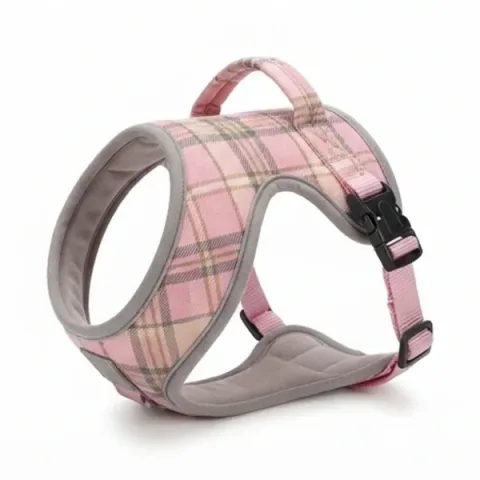
5. BELPRO padded harness with handle, M: best padded vest with handle
A padded vest with a polyester oxford outer, a mesh lining, reflective tape and five adjustment points. The listing says the chest and belly panels are padded, and the main photo shows a second strap around the belly behind the ribs and a top handle. The Medium lists a chest of 43 to 56 cm (17 to 22 in) and weighs 300 g. It's machine washable, and the listed colour is pink plaid. We don't call it three-strap, because the listing doesn't describe one.
The listing is mixed on size: it says "Big/Active dogs" in the title but "Medium" in the breed field. The listing doesn't name any lead ring, so check the photos. The same model is also listed in blue.
Pros: padded chest and belly panels; handle; reflective; chest range in cm
Cons: the listing doesn't name a lead ring and mentions no front ring; oxford runs warm; sizing wording is mixed; imported, so check the delivery details on Amazon before you order
Best for: active medium dogs that need a padded vest
Skip it if: you want a front ring, your dog overheats easily, or you need a clear size from the listing alone
Escape proof dog harness designs compared
All details come from each Amazon Australia listing, checked on 8 Nov 2026.
Should I clip the lead to the collar and the harness?
It's an option some owners and trainers use while they build trust in a new harness: the lead on the harness, and a short coupler from the lead to a snug flat collar as a backup. Treat it as a precaution, not a rule. The harness takes the pulling; the collar only catches a slip.
Keep the flat collar with the ID and registration tag on at all times (see our dog collar guide). RSPCA Australia says you should be able to slide two fingers under a collar, and warns against choke, slip and prong collars, which we never recommend (RSPCA Australia, page read 8 November 2026).
How to measure and fit
Use the size chart of the exact listing you buy, not breed or weight. For step-by-step fitting by harness type, see how to put on a dog harness, and for the full range of types, our dog harness buying guide.
Measure the chest at the widest point, just behind the front legs, with a soft tape. Note the neck where a collar sits too.
Match your numbers to the listing's chart. Between sizes, follow the listing's advice.
Fit the harness, then slide two fingers under every strap. RSPCA South Australia describes the right fit as snug but not tight.
Walk a few steps. Your dog should take full strides, and if the gait changes, adjust. Pull the lead gently backwards and check there's no gap for a shoulder to slip through.
Recheck after the first walks, after weight changes, and look under the front legs for rubbing.
Take the harness off at home and whenever your dog is unsupervised, so straps can't catch and your dog can't chew them. After bushland walks, check under the straps for ticks (see our paralysis tick guide). On hot days, RSPCA Australia suggests testing the footpath with the back of your hand for about five seconds (RSPCA Australia, page read 8 November 2026).
If your dog backs out on a walk
Stay calm and don't haul the lead forward. Lower the lead, step towards your dog and keep them beside you, then reward them for staying close. Move away from traffic before you refit anything. Never punish a dog that has bolted or backed out.
If your dog is scared, a tighter harness won't fix it. Introduce the harness gradually at home with treats, keep early walks short and quiet, and ask a reward-based trainer for help. RSPCA South Australia suggests a private trainer for dogs that struggle to accept a harness.
How we chose
We searched Amazon Australia for escape proof, three-strap and belly-strap harnesses, then shortlisted ones that met all of these checks:
Well rated: a strong average rating with plenty of buyer reviews.
No red flags: no pattern of poor reviews, safety complaints or listing problems.
Available on Amazon Australia when we checked.
Chest (and belly) ranges in cm stated in the listing, or the gap flagged.
A clear design for resisting back-outs: a step-in gap-closer, belly strap, or figure-8.
Rings and handle described in the listing.
Closures: buckles or hook-and-loop, as the listing states.
These are researched picks, not products we've personally tried. We compared the specifications and features shown on each Amazon Australia listing, checked on 8 Nov 2026. We didn't accept payment from any brand, and no brand saw this page before it was published.
Left out this time: step-in mesh vests that rely on hook-and-loop alone, the sighthound three-strap harnesses on our greyhound harness guide, and harnesses already on our puppy harness guide.
When to get help
See your vet if your dog suddenly starts backing out, limps, yelps, or seems sore in the shoulders or chest, or if you find redness, bare patches or sores under the straps. Our itchy skin guide covers skin signs.
If your dog panics on walks, shakes, freezes or tries to bolt, a reward-based trainer or your vet can help. A tighter harness won't fix fear. Remember that a walking harness is not a car restraint: see our dog car harness guide.
Frequently asked questions
What is a 3-strap harness?
A 3-strap harness has three points of contact: one around the neck, one around the chest and one around the belly, behind the ribs. The extra belly strap gives a second anchor that makes it harder for a dog to back out. Our Ledeak pick is one, and the Huntboo has chest and belly straps.
How do I stop my dog slipping out of its harness?
Start with fit: measure the chest, choose the size from the listing's chart, and make sure two fingers fit under every strap with no gap at the back. If it still slips, try a different design, such as a step-in or belly-strap style.
Are escape proof harnesses safe?
They're safe when they fit well and are used for walks, not left on. Take the harness off at home. Check buckles and stitching before each walk, and watch for rubbing. The figure-8 design tightens around the ribcage, so avoid it for dogs with rib or spine problems, and ask your vet if unsure.
What size escape proof harness does my dog need?
Measure the chest at the widest point behind the front legs, then match the number to the listing's chart in cm. Our picks range from a chest of 43 cm up to 83 cm. Between sizes, follow the listing's advice, and check Ledeak's chart image because its text gives no measurements.
Can a dog still escape an escape proof harness?
Yes. Escape proof is the listing's claim, and a loose fit, worn closures or a panicking dog can still beat any design. A third strap makes backing out harder, not impossible. A snug fit, a calm approach and rechecking often matter more than the label.
Are harnesses better for dogs than collars?
For walking, RSPCA Australia describes a harness as ideal because it keeps pulling pressure off the neck. A flat collar still carries the ID tag, so most dogs wear both. See our dog collar guide for collar options, and never use choke, slip or prong collars.
What is the best thing to stop a dog from pulling?
Reward-based lead training comes first, and RSPCA Australia suggests a front-attach harness with a double-ended lead if pulling continues. No harness fixes pulling alone. Our no-pull dog harness guide compares the options, and the Ledeak here has a front ring.
Product details from each linked Amazon Australia listing, checked on 8 Nov 2026.
This guide provides general information and isn't a substitute for veterinary advice. If you're concerned about your dog's fear on walks or how they move, speak with your vet.