Quick answer: To put on a dog harness, first work out which type you have: step-in, overhead or front-clip. Slip it over the head or step your dog into it, clip the buckle on the back or side, then check that two fingers fit under every strap and your dog's front legs still take full strides.
Most harness trouble comes down to a harness that's on the wrong way or fitted a bit loose. This guide walks through each type, shows where the rings should end up and covers fixes for twisting, rubbing and slipping. If you haven't bought one yet, start with our dog harness buying guide.
Quick picks
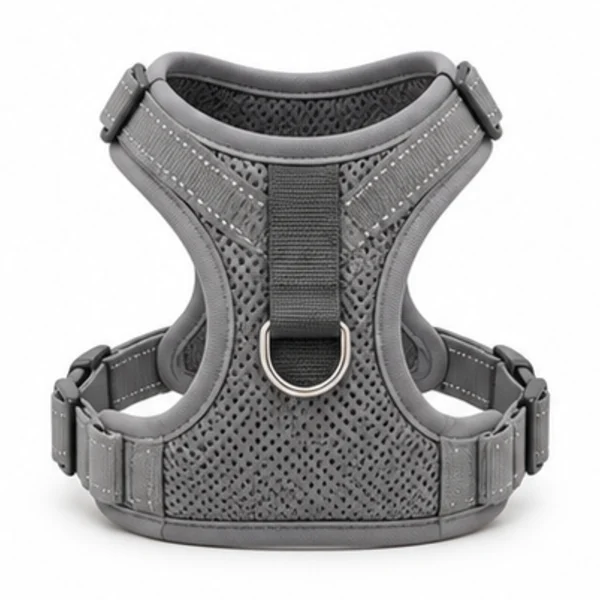
PHOEPET No Pull Harness, Medium
Three buckles, nothing over the head; measure your dog and check the size chart.
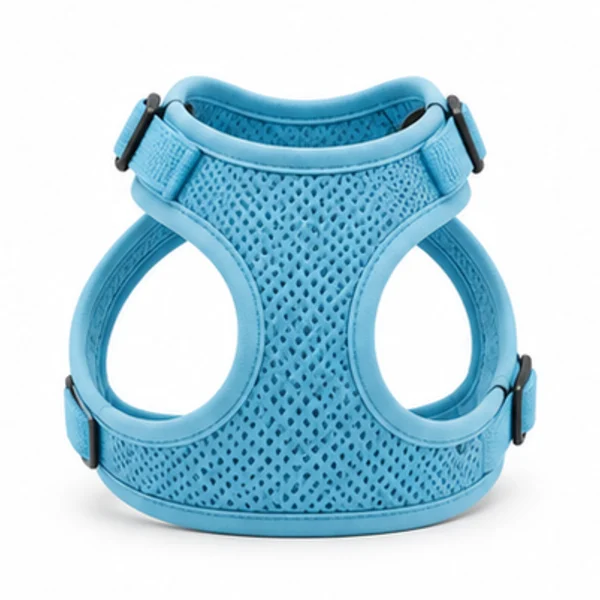
Voyager Step-in Air Dog Harness, Large
A step-in design for dogs that dislike things over the head.
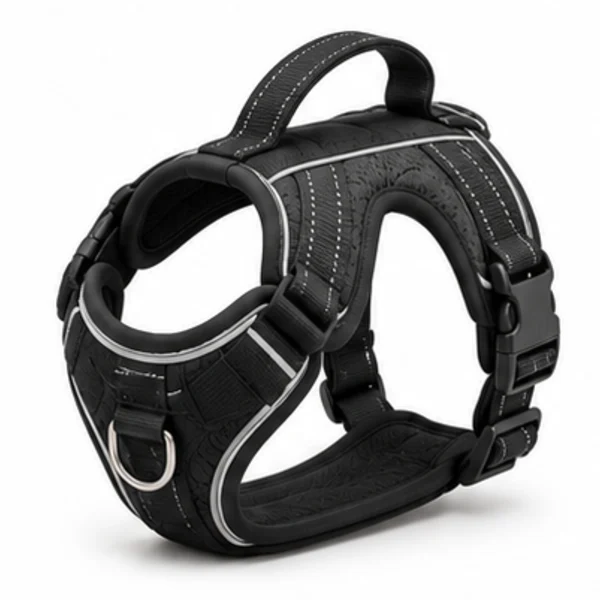
Eagloo No Pull Dog Harness, Large
A front-clip pick, which helps with pulling only when used with training.
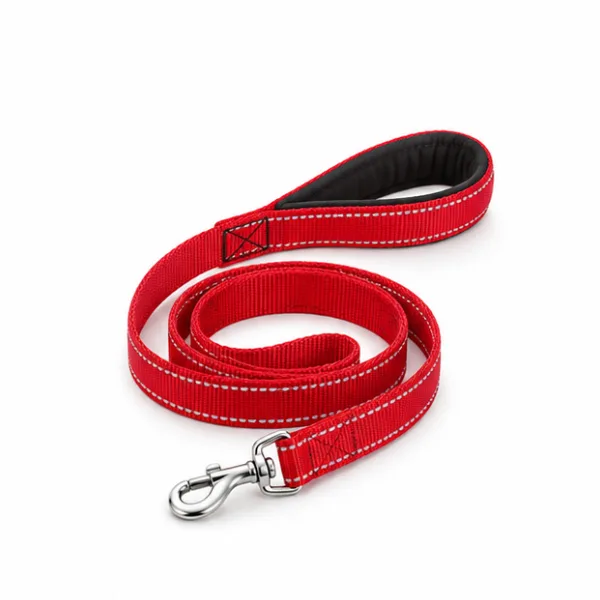
FunTags reflective padded dog lead, 1.8 m
A lead to clip to the back ring once the fit check is done.
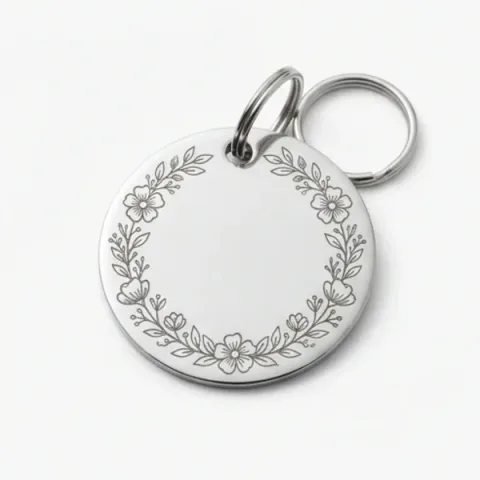
Meow the Woof deep-engraved 316L stainless tag
Keeps ID on a flat collar, as RSPCA South Australia advises.
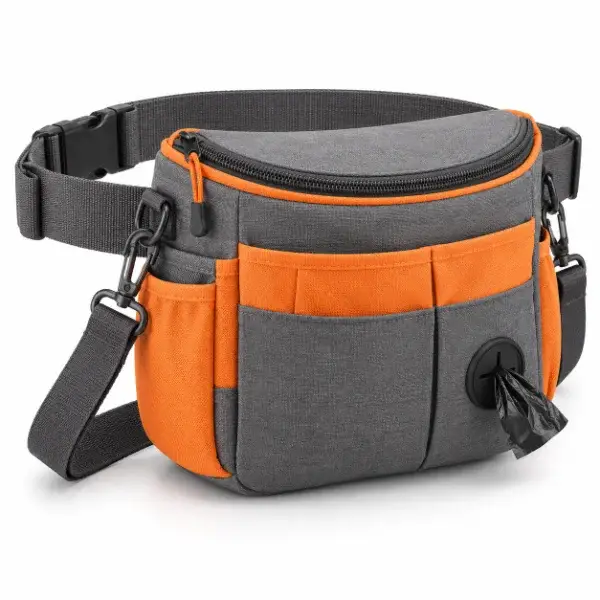
Gobeigo treat pouch
Keeps treats handy to pair the harness with something good.
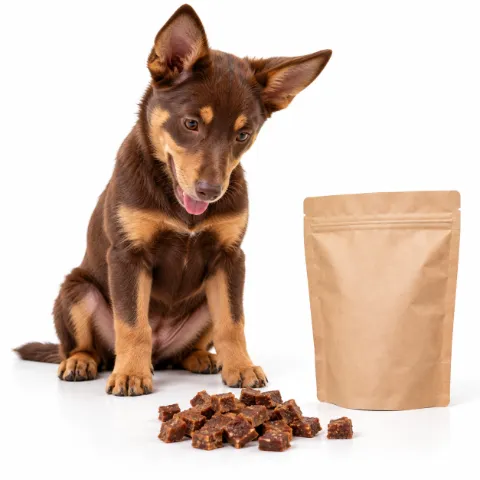
SavourLife Dog Training Treats, Australian Kangaroo, 165 g
Small treats for short, positive harness practice sessions.
Voyager Step-in Air Dog Harness, Large
A step-in design for dogs that dislike things over the head.
Eagloo No Pull Dog Harness, Large
A front-clip pick that reduces pulling only when used with training.
FunTags reflective padded dog lead, 1.8 m
A lead to clip on once the fit check is done.
Meow the Woof deep-engraved 316L stainless tag
Keep the ID tag on a flat collar, as RSPCA South Australia advises.
Gobeigo treat pouch
Keeps treats handy to pair the harness with something good.
SavourLife Dog Training Treats, Australian Kangaroo, 165 g
Small treats for short, positive harness sessions.
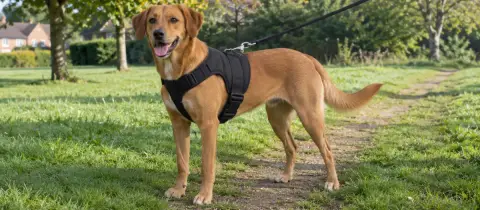
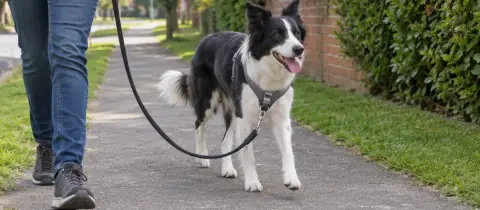
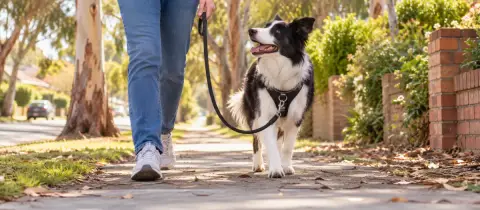
Pictures are illustrations, not the actual products.
More detail on the PHOEPET harness is in Useful gear below. A harness should never hurt; if you see rubbing or a changed stride, see your vet.
Which type of harness do you have?
Check how it closes and where the rings are. If your dog steps into it and you clip it on the back, it's a step-in. If it loops over the head, it's an overhead. A ring on the chest means a front-clip design, and a ring on the back only means back-clip. The table pairs each type with its steps.
| Type | How it goes on | Where the ring ends up | Tell-tale sign it's on wrong | Our guide |
|---|---|---|---|---|
| Step-in vest | Dog steps into two loops, you clip it over the back | On the back, between the shoulder blades | Buckles sit under the dog, or the vest is twisted | Small dog harnesses |
| Overhead H or vest | Neck loop over the head, one leg through, buckle at the side or back | On the back, sometimes also on the chest | Neck loop slides down onto the throat | Dog harness buying guide |
| Front-clip chest strap | Loop over the head, belly strap fastened behind the front legs | On the chest (and often on the back too) | Chest ring hangs low between the legs | Front clip dog harnesses |
| One-click handle harness | Chest strap clicks on in one move, with a handle on top | On the back, with a handle for steadying | Chest strap rides up toward the throat | Large dog harnesses |
Brand ranges work the same way: our Halti harness guide, Rogz harness guide and EzyDog harness guide each say which of their harnesses is which. Head halters, like the Halti headcollar, are a different product that goes on the nose, so they have their own page: dog head collars.
How do you put on a step-in harness?
Lay the harness flat on the floor with the buckles on top, so the two triangles line up with your dog's front legs. Guide one foot into each triangle, lift the harness up around the body, then clip the buckles on your dog's back, as the American Kennel Club (AKC, updated 18 February 2026) describes. Then adjust the straps until snug.
- Lay it flat and untwisted, with the buckles facing up and the neck end toward your dog's head.
- Hold a treat low so your dog steps forward into the loops, one foot at a time.
- Draw the harness up, clip the back buckles and check the straps lie flat.
- Run through the fit check below.
Step-ins suit dogs that dislike things over the head, and they're a common choice for small dogs. See our small dog harness guide and, for the youngest dogs, the puppy harness guide.
How do you put on an overhead harness?
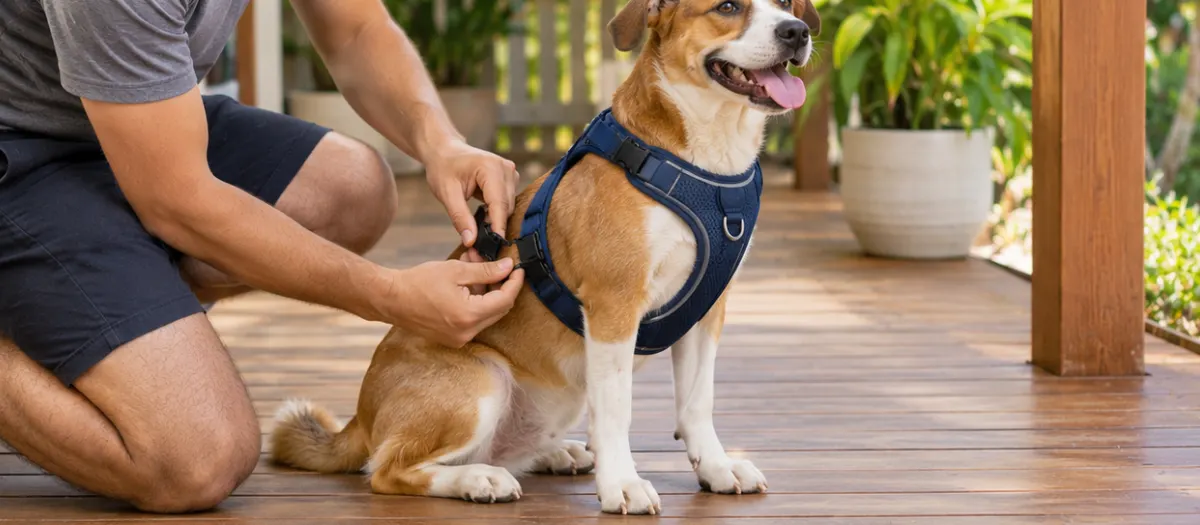
Slip the wider neck loop over your dog's head first, then lift one front leg through the narrower loop and fasten the buckle on the side or back. Finish by adjusting the neck and chest straps so two fingers fit under each. Do it when your dog is calm, and treat as the harness goes over the head (AKC; RSPCA South Australia).
- Open the harness out so you can see which loop is the neck and which is the chest.
- Slide the neck loop over the head, with the label or ring on the back.
- Lift one front leg through the second loop, then clip the buckle.
- Tighten or loosen one strap at a time, then run through the fit check.
RSPCA South Australia's version is a quick one: flip the head piece over, set the top and bottom straps to two fingers, clip up, then check your dog looks happy.
How do you put on a front-clip harness?
Slip the chest loop over your dog's head so the front ring sits centred on the chest, then fasten the belly strap behind the front legs. Check the ring isn't hanging low between the legs or riding up onto the throat. Clip the lead to the front ring, or to both rings with a double-ended lead.
RSPCA Australia describes a front-attach harness as a gentle training aid. Its two-point method has the lead running from the back ring, with the front ring used for turning your dog toward you. A double-ended lead of about 2 metres suits this, and RSPCA Australia doesn't recommend retractable or bungee leads (page read 19 November 2026).
A harness that attaches at the front only reduces pulling when it's used with training; it doesn't train your dog by itself. Some front-clip designs sit over the shoulder joints and can restrict movement, so VCA Animal Hospitals says to check that your dog's front legs move freely. For how it all works, see our front clip dog harness guide and our no pull harness guide.
How tight should a dog harness be?
Snug enough that you can slide two fingers flat under every strap, and loose enough that it doesn't squeeze or pinch. The harness shouldn't pull off over your dog's head, and your dog's front legs should still take full strides (RSPCA South Australia; AKC).
Run these checks every time:
- Two fingers under the neck strap, the chest strap and the belly strap.
- Elbows: a loose harness lets a dog slip an elbow through the straps and back out, says RSPCA South Australia, so check the gap behind the front legs.
- Stride: walk your dog with and without the harness and compare. Full strides on the front feet is what you want.
- No rubbing: the straps shouldn't restrict the front legs or rub behind the elbows (VCA Animal Hospitals).
- Head test: gently try to pull the harness forward over the head. It shouldn't come off.
A growing puppy needs the fit rechecked at least a few times a week, according to RSPCA Australia, and medium and large breeds often start in a smaller size and are refitted as they grow.
Where to measure
Size by the measurements, not by breed or weight. These are the AKC's measuring points.
| Measurement | Where | Why it matters |
|---|---|---|
| Chest girth | The widest part of the ribcage, just behind the front legs | Decides the size on almost every harness chart |
| Neck | The base of the neck, where a collar sits | Matters for overhead harnesses with a fixed neck opening |
| Dog or garment? | Check whether the chart lists your dog's measurements or the harness's own (AKC says both kinds exist) | The same number means a different fit on each kind of chart, so read the chart's note before comparing |
| Between sizes | Go up a size, then adjust the straps snug | A harness that's too small rubs and restricts movement |
How do you fix a harness that twists, rubs or slips?
Most fit problems come from one strap being too loose or the harness being the wrong size. Find your dog's problem in the table, adjust one strap at a time, then recheck the two-finger fit and stride. If a fix doesn't help, the harness may simply be the wrong size or shape for your dog.
| Problem | Likely cause | Fix |
|---|---|---|
| Twists to one side | Back strap too loose, or the ring is off-centre | Re-centre the ring on the back, tighten the back strap a notch, recheck two fingers |
| Rides up into the throat | Neck strap too loose, or the chest piece is too short | Shorten the neck strap a little; if it still rides up, try the next size or a different shape |
| Rubs behind the elbows | Girth strap sits too far forward or is too tight | Move the girth strap back toward the ribs and loosen it to two fingers (VCA Animal Hospitals) |
| Dog backs out | Too loose, so an elbow slips through | Tighten to the two-finger fit; see escape proof harnesses. No harness is escape proof |
| Lead tangles the legs | Front ring sits too low, or the lead is too long and slack | Raise the chest strap so the ring sits on the chest; see the front clip guide |
| Dog freezes when it comes out | Your dog may link it with something unpleasant, or dislike it going over the head | Pair it with treats in short sessions (RSPCA South Australia; VCA); if the head loop is the problem, try a buckle-on or step-in design |
Some body shapes need a different design altogether: see our dachshund harness, greyhound harness and French bulldog harness guides.
Harness off at home. Take the harness off when you can't supervise your dog, as VCA Animal Hospitals advises, and the maker Halti (Company of Animals) says not to leave body-worn training aids on for long periods. After bush or long-grass walks, take it off and run your hands over your dog, including under the straps, for ticks (see our paralysis tick guide). In summer, test the footpath with the back of your hand for five seconds before you walk, as in our heat guide. Keep the ID tag on a flat collar (RSPCA South Australia): see dog collars and dog ID tags.
How do you get a dog used to a harness?
Introduce the harness slowly and pair it with treats. Let your dog sniff it, reward calm behaviour, then put it on for a few seconds and build up in short sessions. Some dogs need conditioning to accept a harness (VCA Animal Hospitals). Never force it on, and stop if your dog seems distressed.
Halti's own advice (about its harnesses) is to introduce them gradually with positive associations. Small, soft treats work best here, so see our training treats guide if you need some. If your dog is a puppy that mouths the straps, our puppy biting guide may help.
Most dogs need practice. If your dog stays worried after a patient run of short sessions, a different harness shape, such as a buckle-on one with nothing over the head, may be easier, and a vet or qualified trainer can help work out whether something else is going on.
Which harness should you buy?
Choose by your dog's walking and body shape. For most dogs, a padded dual-clip vest is a sensible start. Pullers do better with a front ring plus training, dogs that hate things over the head do better with step-in or buckle-on designs, and brand ranges suit owners who already know what they want.
- Not sure of the type: best dog harness, one pick per type with sizes in cm.
- Pulls on walks: front clip dog harnesses and no pull harnesses.
- Halti fans: Halti harness guide, including which Halti harness suits puppies.
- Simple reflective harness: Rogz harness guide.
- Backs out or slips: escape proof harnesses.
- Tiny dogs, long backs, flat faces, big dogs: small, dachshund, French bulldog and large dog guides.
Useful gear
Two products help with the methods above. Both are specs from the Amazon Australia listings, checked on 19 Nov 2026. Our guides give the full detail.
- Halti Training Lead, Large, 2 m: a double-ended lead with two trigger clips, for the two-point method RSPCA Australia describes, with the lead from the back ring and the front ring for steering. The listing says it has seven uses, which is the maker's claim. Pairs with our Halti harness guide; our double-ended lead guide covers other options.
- PHOEPET No Pull Harness, Medium: three buckles, one lockable at the neck and two on the chest, so nothing goes over the head. The listing gives neck 36 to 51 cm and chest 41 to 71 cm for Medium. It's an example of a buckle-on design for dogs that dislike things over the head, and it's a dual-clip pick in our front clip harness guide. Measure your dog and check the size chart on the listing before ordering.
Harnesses and leads are also sold through pet shops and vet clinics, which can help if you'd like to try a fit in person.
When to see a vet
A harness should never hurt. See your vet if you notice:
- red, raw or broken skin, or hair loss, behind the elbows or under the straps
- limping, a changed stride or reluctance to walk after wearing a harness
- coughing, gagging or noisy breathing when your dog pulls
- yelping or flinching when you touch the chest, shoulders or neck
- a sudden change in how your dog reacts to the harness or lead
If pulling is a constant struggle, our dog lead guide and a qualified trainer can help, and a vet can check for pain that may be behind a change in behaviour.
Frequently asked questions
Which way does a dog harness go on?
The straps that close around the body sit behind the front legs, with the chest piece at the front and the back ring on top. If the buckles are under the belly, or the ring sits near the chest when it should be on the back, flip the harness and start again.
Where should the D-ring sit on a dog harness?
A back ring sits on the back, between the shoulder blades. A front ring sits centred on the chest. If a front ring hangs low between the legs, the lead can tangle; if it rides up toward the throat, the fit is too loose or the harness is too big or the wrong shape.
How do I know if my dog's harness is too loose?
You can slide more than two fingers under a strap, the harness shifts or twists as your dog walks, or it pulls forward over the head. Watch the gap behind the front legs too, because that's where a loose harness lets a dog back out. Tighten each strap a notch and recheck.
How do I put a harness on a puppy that wriggles?
Keep it short and calm. Pick a time when your puppy is relaxed, offer treats as the harness goes on, and use a step-in or buckle-on type if the head loop bothers them. Stop before they get upset. Puppies grow quickly, so recheck the fit a few times a week.
Why does my dog freeze when the harness comes out?
Your dog may link it with something unpleasant, dislike the head loop or find the straps uncomfortable. Go back to basics: let your dog sniff it, give treats, and build up in short sessions. If the harness still seems to worry your dog, try a different shape or ask a trainer or vet.
How often should I check the fit of a harness?
Check it each time you put it on, and a few times a week for a growing puppy, as RSPCA Australia advises. Also recheck after a coat change, weight change or a haircut, because the same harness can sit differently. Look for rubbing marks as well as the two-finger fit.
Can my dog sleep in a harness?
It's best not to. VCA Animal Hospitals suggests removing a harness when you can't supervise your dog, and Halti says not to leave body-worn training aids on for long periods or leave your dog unattended in one. A harness is for walks, so take it off when you're home.
How do I measure my dog for a harness without a tape measure?
Wrap a piece of string, or a phone charger cable, around the widest part of the chest just behind the front legs, mark where it meets, then hold it against a ruler. Do the same at the base of the neck. Those are the measuring points the AKC uses.
Related guides
- Best dog harness: which type suits your dog
- Front clip dog harness: how it works
- Halti harness guide
- Rogz harness guide
- Best no pull dog harness
- Best puppy harness
- Best escape proof dog harness
- Best dog head collars
Sources
- RSPCA Australia Knowledgebase, What equipment should I use when teaching my dog or puppy to walk on a leash?, updated 10 January 2023, page read 19 November 2026.
- RSPCA South Australia, How to fit your dog's walking harness like a pro, 29 April 2019, page read 19 November 2026.
- RSPCA South Australia, The best-ever walking harness for your dog, 11 September 2018, page read 19 November 2026.
- American Kennel Club, How to Put on a Dog Harness, updated 18 February 2026, page read 19 November 2026.
- American Kennel Club, How to Measure Your Dog for Clothes and Gear, updated 10 August 2026, page read 19 November 2026.
- VCA Animal Hospitals, Collar and Harness Options for Dogs, updated 10 April 2026, page read 19 November 2026.
- Company of Animals (Halti) Australia, Halti No Pull Harness, maker's page about its own products, page read 19 November 2026.
This guide provides general information and isn't a substitute for veterinary advice. If you're concerned about your dog's walking, pulling or comfort in a harness, speak with your vet.