Best dog head collars: Halti, Gentle Leader and Canny compared
By Anish PuriUpdated 15 Nov 202612 min readResearched, not tested by us
Research guide. WhiskerFinds may earn a commission from links, at no extra cost to you.
Quick answer: The best dog head collar for most medium dogs is the padded Halti Headcollar, Size 3, which has a padded nose band, reflective accents and a safety link to your dog's collar. Large dogs sized by weight suit the Gentle Leader, and dogs who paw at a nose loop suit the Canny Collar. Try a front-clip harness first.
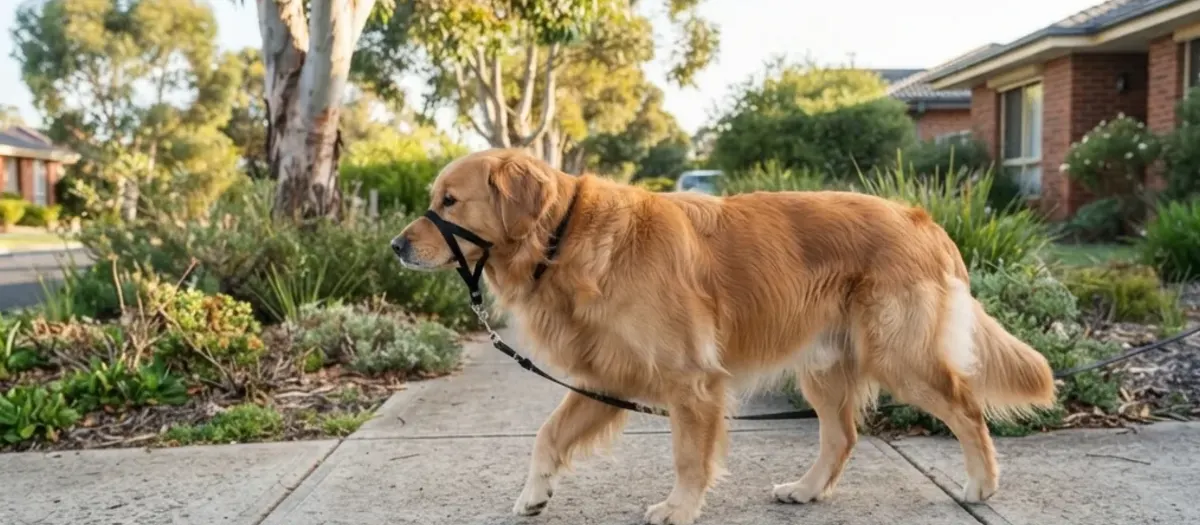
Illustration, not the actual product
Our top pickHalti Headcollar, padded design, Size 3
A head collar steers your dog's head so there's less pulling on the lead. It's a management aid, not a fix, and welfare groups say to try other options first. This guide compares the Halti, Gentle Leader and Canny designs on Amazon Australia by size, fit and how each attaches the lead, then shows how to introduce one gently and when a no pull harness is the better call.
Quick picks
Our top pickBest overall
Halti Headcollar, padded design, Size 3
Padded neoprene nose band, reflective accents and a safety link, about 80 g
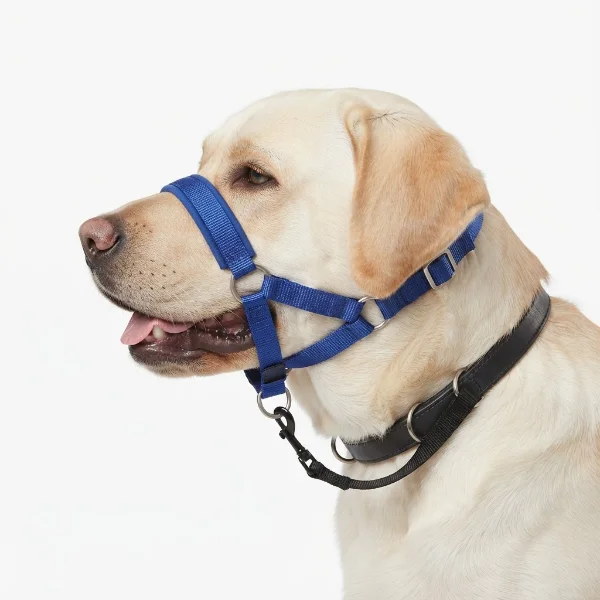
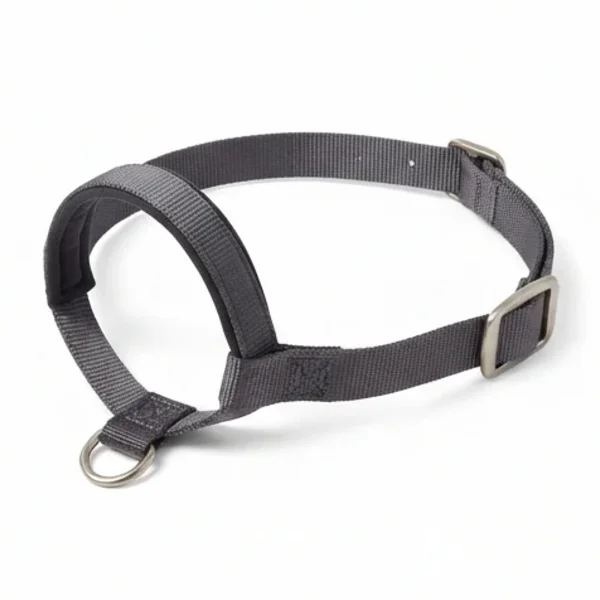
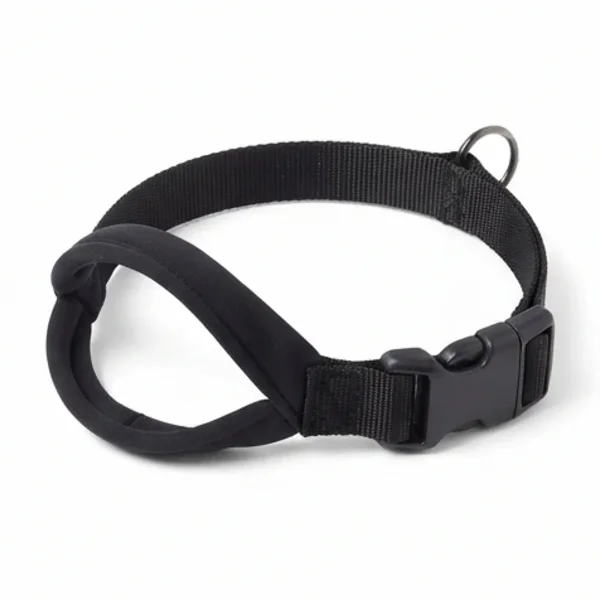
Pictures are illustrations, not the actual products.
What is a dog head collar and how does it work?
A dog head collar is a strap behind the ears with a loop around the muzzle. When your dog pulls, pressure on the nose loop turns the head back towards you, so the dog is steered rather than braced against the lead. VCA Animal Hospitals says it isn't a muzzle: the dog can still eat, pant, drink and hold a toy (VCA Animal Hospitals, page read 15 November 2026).
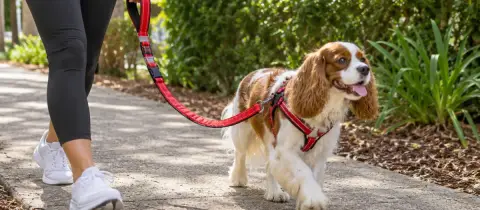
That steering is also the risk. RSPCA Australia says a head collar used inappropriately can cause discomfort or injury because the dog's head can be jerked to the side, and many dogs find them uncomfortable and distressing (RSPCA Australia, page read 15 November 2026). So the rules that matter most are: a gradual introduction, a loose lead you never jerk, and a good fit. A head collar gives control but doesn't change how a reactive dog feels; our reactive dog training guide covers the training.
Should you try a harness before a head collar?
Yes. RSPCA Australia says the place of head collars has largely been taken by front-attach harnesses, and that a head collar shouldn't be considered before loose-lead training and a front-attach harness have been tried. If a reward-based trainer recommends one, they should fit it and show you how to use it (RSPCA Australia, page read 15 November 2026).
A 2025 paper by Cavalli and Protopopova found head collars cut pulling by redirecting the dog, but have been associated with more stress. It ranked non-tightening front-clip harnesses first and said head collars should be a last resort (Animals, 2025, page read 15 November 2026). RSPCA South Australia goes further and lists head collars under gear to avoid, because they can jerk the head to the side (RSPCA South Australia, page read 15 November 2026). The two RSPCA positions differ, so we print both. Our no pull harness guide is the first step. Halti also makes body harnesses; our Halti harness guide compares the No Pull, Walking and Front Control designs.
Our picks in detail
1. Halti Headcollar, padded design, Size 3: best overall
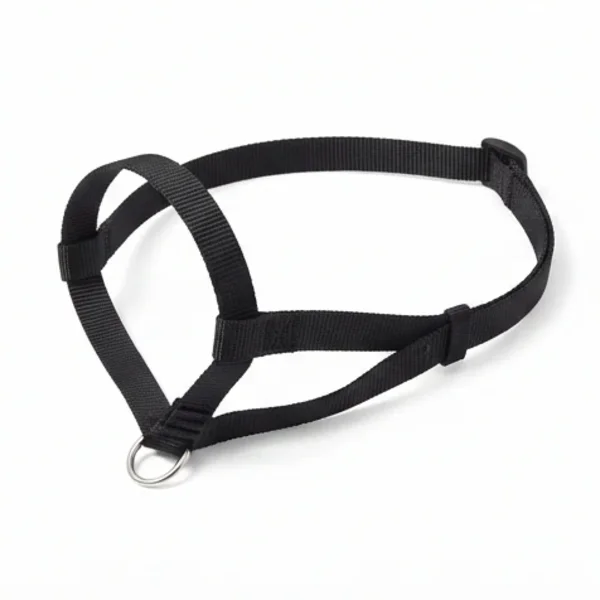
The newer padded Halti has a neoprene nose band, nylon webbing, reflective accents and a snap closure, in a Size 3 listed for medium dogs. It weighs about 80 g, is listed for adult dogs and is hand wash. The safety link clips onto your dog's collar.
Halti says it's not recommended for dogs under 9 months and that dogs should never be left unattended wearing it (Company of Animals, page read 15 November 2026). Other sizes and colours are sold on the same listing, so check the maker's chart before you choose.
Pros: padded nose band; reflective accents; safety link to the collar; light; widely known design
Cons: no neck or nose measurements on the listing, so you need the maker's size chart; the maker says not for dogs under 9 months
Best for: most medium dogs whose owner has tried a front-clip harness and training first
Skip it if: your dog is under 9 months, is flat-faced, or hasn't had a gradual introduction
2. PetSafe Gentle Leader Headcollar, Large: best for large dogs, sized by weight
The Gentle Leader uses minimal straps, a padded neoprene nose loop and a quick-snap neck strap, so there's less strap across your dog's face. The listing says a veterinary behaviourist designed it, and tells you to listen for the snap when you close the nose loop. The Large suits the maker's band of about 27 to 59 kg (its chart is in pounds).
The listing itself says it won't fit short-snouted dogs such as pugs or bulldogs. The listing says all life stages, while Halti says 9 months or older; see the puppy question in the FAQ. The Gentle Leader Medium is listed as an import, so check the delivery details on Amazon before you order.
Pros: minimal straps; padded nose loop; weight-based sizing is easy to match; the maker's page explains how to acclimatise a dog
Cons: won't fit flat-faced dogs, per the listing; the Large only suits dogs about 27 kg and over; the listing's age range is wider than Halti's, so check with a trainer for young dogs
Best for: large dogs whose owner has done the introduction and has a harness as a backup
Skip it if: you have a flat-faced breed or a dog under about 27 kg
3. Canny Collar, Size 3: best for dogs who paw a nose loop off
The Canny is a different design. The lead attaches behind the head rather than under the chin, and the listing says that stops the noseband riding up into the eyes. It has a steel buckle, weighs about 125 g and the nose band can be slipped off when not needed. Size 3 fits a neck of 33 to 38 cm, and there are seven sizes, 23 to 58 cm. The maker states a 2 year warranty.
The listing says your dog can't paw it off. That's the maker's claim, not ours, so don't treat the collar as escape-proof. Canny's fitting rules (yellow guider under the chin, gentle pressure then release, a lead of about 1.2 m, no extendable leads) are in the rules section on this page. The Size 4 (38 to 43 cm) is sold separately.
Pros: sized by neck in cm, which is easy to measure; lead behind the head; steel buckle; 2 year warranty
Cons: no lead point under the chin for steering; you must fit the yellow guider correctly; you need the neck measurement first
Best for: dogs who paw at a nose loop, and owners who prefer measuring in cm
Skip it if: your dog needs a lead point under the chin for steering
4. Halti Headcollar, classic design, Size 2: best for owners who want the original Halti
This is the original, lighter nylon Halti, in black, with a training guide included. The listing says it allows freedom to pant and yawn. It's listed for medium dogs and all stages. The listing gives no neck measurements, so use the maker's size guide.
It has no padding named on the listing, so the padded design above may suit a dog with a sensitive nose better.
Pros: the original, familiar design; a training guide is included; lighter nylon
Cons: imported, so check the delivery details on Amazon before you order; no neck or nose measurements on the listing, so use the maker's size guide; no padding named on the listing
Best for: owners who want the classic Halti and will follow the training guide
Skip it if: you want padding on the nose or a size that isn't an import
Add-ons worth a look
Two extras for the walk, not replacements for training.
A second clip point: Halti's listing suggests pairing the headcollar with a double-clip lead, and VCA says to pair a halter with a flat collar or harness and a safety clip. Our dog lead guide covers lead types.
Details from each Amazon Australia listing, checked on 15 Nov 2026. Brand claims are the listings' own. "Not stated" means the listing doesn't say.
Swipe sideways to see every column
Feature
Halti padded, Size 3
Gentle Leader, Large
Canny Collar, Size 3
Halti classic, Size 2
Where the lead attaches
Under the chin
Under the chin
Behind the head (listing)
Under the chin
Nose band
Padded neoprene (listing)
Padded neoprene nose loop (listing)
Soft nose loop that can be slipped off (listing)
Nylon, no padding named
Neck closure
Snap
Quick-snap neck strap
Steel buckle
Snap
Material
Nylon webbing
Neoprene and nylon
Alloy steel and polypropylene
Nylon
Weight
About 80 g
Not stated
125 g
About 60 g (listed as 0.13 lb)
Reflective
Yes (listing)
Not stated
Not stated
Not stated
Safety link to the collar
Yes (listing)
Not stated
Not stated
Not stated
Sized by
Maker's Halti chart
Dog weight (maker)
Neck in cm
Maker's Halti chart
Listed age
Adult (maker: not under 9 months)
All life stages (listing)
All life stages (listing)
All stages (listing)
Short-snouted dogs
Not stated
Listing says it won't fit pugs or bulldogs
Not stated
Not stated
Maker's warranty
Limited manufacturer
Not stated
2 year
Not stated
The main design difference is where the lead clips on. The Canny listing says its lead attaches behind the head instead of under the chin, which is how the Halti and Gentle Leader work, and that changes how the pressure feels to a dog.
Which size head collar does my dog need?
Size a head collar the way its maker says, not by breed. Canny sizes go by neck measurement, the Gentle Leader by weight, and the Halti by the maker's size chart. The three methods don't match, so a dog can be a Size 3 in one brand and a Medium in another. Check the chart for the exact brand before you buy.
Swipe sideways to see every column
Brand
How it's sized
Sizes
Canny
Neck in cm, measured snugly just behind the ears (not your usual collar size)
Size 1: 23 to 28 cm. Size 2: 28 to 33. Size 3: 33 to 38. Size 4: 38 to 43. Size 5: 43 to 48. Size 6: 48 to 53. Size 7: 53 to 58
Gentle Leader (PetSafe)
Dog weight (the maker's chart is in pounds)
Petite: under about 2.3 kg. Small: up to about 11 kg. Medium: about 11 to 27 kg. Large: about 27 to 59 kg. Extra Large: over about 59 kg
Canny says that if your dog falls between two sizes, choose the smaller, and not to size by breed or weight. The listing's Size 4 (38 to 43 cm) is also sold if your dog measures larger. Halti's chart is an image on the maker's page, so the table links to it rather than guessing (Company of Animals, page read 15 November 2026).
How do you introduce a head collar gently?
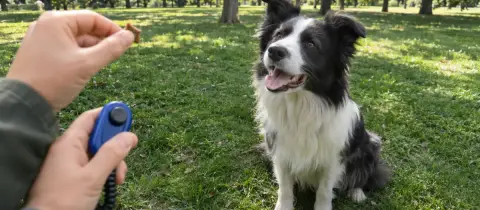
Introduce it slowly with treats, before you ever clip on a lead. VCA Animal Hospitals sets out a 14-step conditioning plan that starts with your dog just seeing the halter and ends with walking indoors, and says some dogs accept it in minutes while others need several weeks (VCA Animal Hospitals, page read 15 November 2026). Don't rush a step your dog isn't ready for.
Let your dog see and sniff the head collar, and give a treat each time
Your dog looks happy to see it
2. Nose in
Hold the nose loop open and give a treat for your dog putting their nose in. Don't fasten anything
Your dog pushes their nose in eagerly
3. Fasten briefly
Fasten it for a moment, treat, then take it off
Your dog stays relaxed while it's on
4. Wear it
Build up wearing time at home with treats and play, with no lead attached. The Gentle Leader maker says this is the quickest way to get a dog comfortable
Your dog ignores it
5. Indoor lead
Clip on a lead and walk around the house, keeping it loose
Your dog walks happily
6. Short outdoor walks
Short, calm outings, reward often
Your dog walks with a loose lead and no pawing
Stop and go back a stage if your dog crouches, paws at their face, tries to rub it off or refuses to walk. The 2025 paper links head collars with stress signs, removal attempts and refusal to walk, so these are signs to take seriously. If your dog stays unhappy, ask a reward-based trainer for help, or choose a harness.
What are the head collar rules you shouldn't skip?
Never jerk or snap the lead, never use a head collar with a long line or retractable lead, and never leave it on an unattended dog. Halti says dogs should never be left unattended wearing headcollars, harnesses or muzzles, and that the safety link should clip to the dog's collar (Company of Animals, page read 15 November 2026).
Keep the lead loose, never jerk it. VCA says a jerk could injure the neck. Stop and let your dog come back to you, rather than pulling the head round. RSPCA Australia suggests a lead of about 2 m, as a short lead sets a dog up to pull. Canny's fitting page suggests about 1.2 m.
Skip extendable leads. Canny says sudden force on an extendable lead could cause injury, and VCA says never to use a retractable or long line with a head collar.- Use a flat collar or harness as well. VCA says to pair a halter with a flat collar or harness and a safety clip. Our dog collar guide covers everyday collars.
Don't use it as an everyday collar. It's for walks, not for ID tags or wearing at home.
Never clip the lead to the Canny carabiners. Canny's fitting page says to clip it only to the lead ring.
Skip it for dogs with neck injuries. VCA says these dogs should use a body harness.
The Gentle Leader listing says it won't fit short snouts
Neck injury
A body harness
VCA says dogs with neck injuries shouldn't wear a head collar
Dog who paws it off or hates the nose loop
Canny, or a harness
The Canny listing says the lead attaches behind the head and the nose band can be slipped off
Dog under 9 months
A harness and reward-based training
Halti says not recommended under 9 months
Large dog
Gentle Leader Large, once introduced
Sized by weight, maker's Large band covers about 27 to 59 kg
Medium dog
Halti padded, Size 3
Padded and sized by the maker's chart
How we chose
We searched Amazon Australia for dog head collars, then shortlisted ones that met all of these checks:
Well rated: a strong average rating with plenty of buyer reviews.
No red flags: no pattern of poor reviews, safety complaints or listing problems.
Available on Amazon Australia when we checked.
Sizing is clear: a size by neck, weight or the maker's chart, and we say where it's missing.
Fit and safety features are stated: closure, safety link or buckle, and padding.
The maker's instructions are available, and we flag any age or breed limit the maker or listing gives.
We never include prong, choke or shock collars.
These are researched picks, not products we've personally tried. We compared the specifications and features on each Amazon Australia listing, checked on 15 Nov 2026, and read each maker's own instructions. We didn't accept payment from any brand.
Left out this time: other sizes and colours of these ranges (we mention them as variants only), an older Gentle Leader listing replaced by the newer one, any listing whose size information we couldn't confirm, and anything that is a muzzle rather than a head collar.
Where else can you buy a head collar?
Pet shops and vet clinics also sell head collars, and it's often easier to fit one in person.
When to see a vet
A head collar is not a treatment. See your vet if your dog has rubbed or sore skin on the nose or muzzle, red or weepy eyes, coughing or gagging, yelps when the head is turned, or suddenly won't walk. These can have several causes, and a vet can work out what's going on.
Neck, back or mobility problems: VCA says dogs with neck injuries should use a body harness, so ask your vet before using any head collar.
Pulling that comes with fear or reactivity: a head collar won't treat it. Ask your vet to rule out pain, and for a referral to a qualified reward-based trainer or veterinary behaviourist. Our puppy training schedule covers the basics for young dogs.
Frequently asked questions
Are dog head collars cruel?
They can cause discomfort or injury if used wrongly, and many dogs dislike them. RSPCA Australia says to try loose-lead training and a front-attach harness first, and RSPCA South Australia lists head collars as gear to avoid. A slow, reward-based introduction helps a dog accept one, but a harness is the safer first choice.
Can a dog wear a Halti all day?
No. Halti says dogs should never be left unattended wearing headcollars, harnesses or muzzles. A head collar is for walks with you holding the lead, and should come off afterwards. Wear it at home only during supervised introduction sessions, then remove it.
Can a puppy wear a head collar?
The makers differ. Halti says its headcollar isn't recommended under 9 months, while the PetSafe listing says all life stages. Neither is a rule for every head collar. RSPCA Australia suggests starting with loose-lead training and a harness, with a reward-based trainer fitting any head collar.
Why does my dog paw at the head collar?
Pawing and rubbing are common when a dog isn't used to one, and the 2025 paper links head collars with removal attempts. It may mean the introduction was too quick or the fit is off. Go back a step, use more treats, and ask a trainer to check the fit. Some dogs need several weeks.
Is a head collar the same as a muzzle?
No. VCA says a head halter is not a muzzle, and your dog can still eat, pant, drink and hold a toy while wearing one. It steers the head and doesn't stop biting. If your dog needs a muzzle, see our dog muzzle guide.
Can I use a retractable lead with a head collar?
No. VCA says never to use a head collar with a long line or retractable lead, and Canny says sudden force on an extendable lead could cause injury. Use a standard lead and keep it loose. Our retractable lead guide covers safer picks.
How tight should a head collar be?
Snug but comfortable. VCA says your dog must be able to open their mouth to eat, pant and drink. Canny says to measure snugly behind the ears, and the neck strap shouldn't slip forward over the head. Follow your brand's fitting steps, or ask a trainer to check.
Do head collars stop pulling for good?
No. A head collar manages pulling while it's on, but your dog still has to learn to walk on a loose lead. Results vary from dog to dog, so watch how yours responds. The training, using rewards and a calm pace, does the teaching, and our dog lead guide helps you pick a lead.
Product details from each linked Amazon Australia listing, checked on 15 Nov 2026.
This guide provides general information and isn't a substitute for veterinary advice. If you're concerned about your dog's walking or behaviour, speak with your vet.