Quick answer: A good puppy training schedule is several short sessions a day, a few minutes each, built around a steady toilet routine and rewards for what you want. Start with your puppy's name, toilet habits and gentle handling, then add sit, lead walking and short stretches alone. Puppy pads can help when you can't get outside, as a short-term tool.
Every puppy learns at their own pace, so think of this as a rough guide, not a deadline. This page covers what to teach and in what order, with links to our deeper guides on puppy pads, training treats, teething toys and puppy biting.
Quick picks
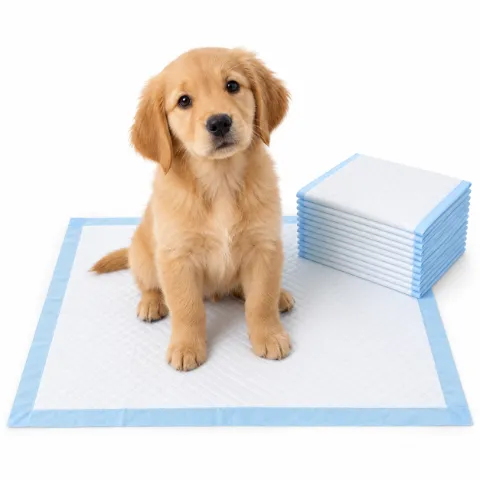
Amazon Basics Pee Pads, Heavy Duty
50 regular-size heavy absorbency pads
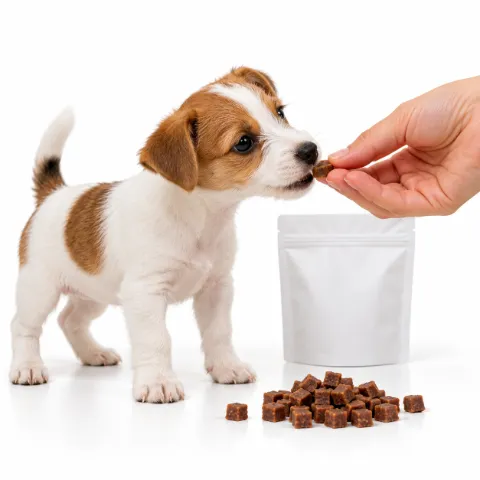
SavourLife Puppy Training Treats, Chicken
Puppy-specific, meaty treats made for training
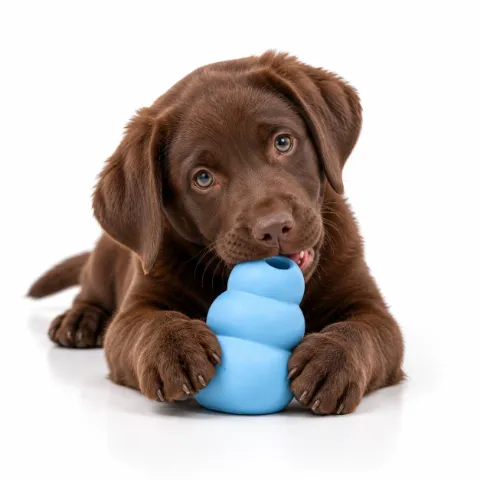
KONG Puppy (medium)
Soft rubber made for puppy teeth and gums; small and large sizes exist
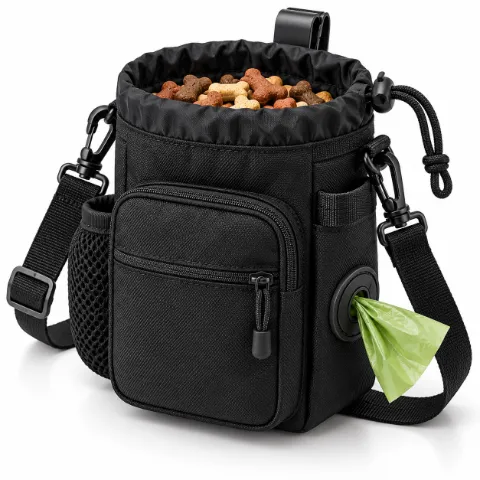
Pet N Pet treat pouch
Keeps rewards within reach when your hands are busy
Pictures are illustrations, not the actual products.
Full details for each of these are in the guides linked above, and in our picks in brief below.
What should a puppy training schedule include?
A puppy training schedule should include a toilet routine, short rewarded lessons, gentle handling practice, play with toys instead of hands, and slowly growing time alone. It should also leave room for sleep, because young puppies tire quickly. Keep sessions brief, positive and varied, and end while your puppy still wants more. Some owners add a training clicker to mark the moment a puppy gets it right.
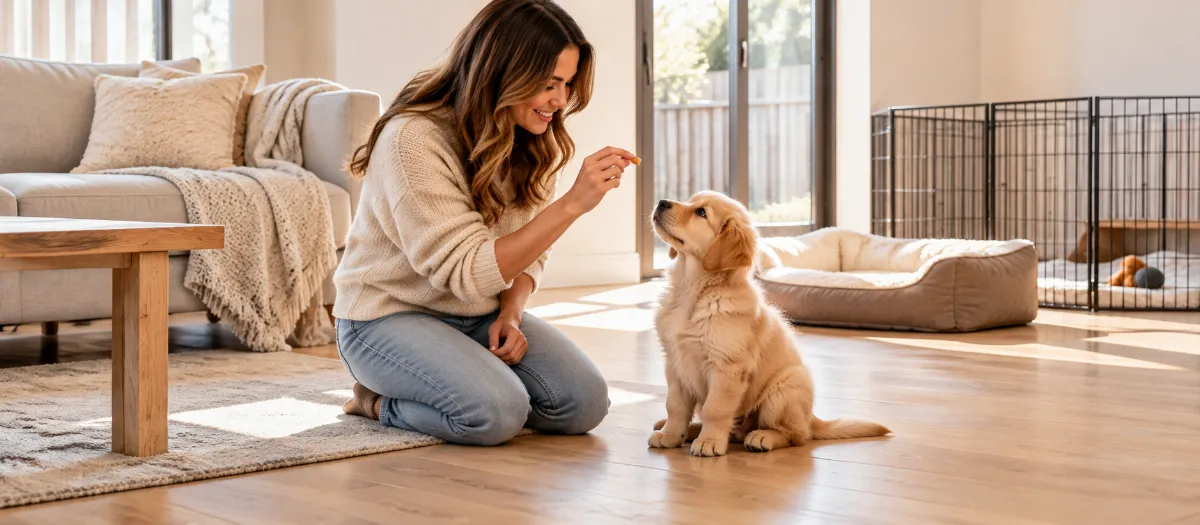
Reward-based training means giving your puppy something they like straight after they do what you asked. RSPCA Australia recommends reward-based methods for toilet training, with a treat and happy praise given within a second or two of the right behaviour (RSPCA Australia knowledge base, updated 29 September 2025). The same idea works for names, sit and everything else below.
Treats add up. Vets at VCA say about 90% of your dog's calories should come from complete and balanced food, with the remaining 10% from treats and snacks (VCA Animal Hospitals). So keep treats, including training treats, to about 10% of your puppy's daily food (calories), and break them into pea-sized bits. Ask your vet how much your puppy needs each day. Our training treats guide has more on choosing them. The meals themselves are covered in our puppy food guide.
A week-by-week guide by age
Here's a rough guide by age. Puppies vary a lot, so move at your puppy's pace and go back a step if they struggle. Use the table to see what to work on now, not what they "should" have mastered.
| Age (rough guide) | What to work on | Keep in mind |
|---|---|---|
| 8 to 10 weeks | Name, toilet routine, gentle touch, settling in a quiet spot | Very short sessions, lots of sleep, frequent toilet trips |
| 10 to 12 weeks | Sit, coming when called indoors, chew toys instead of hands, short practice alone | Ask your vet about puppy school and outings |
| 3 to 4 months | Drop, wait, collar and lead wearing, handling paws and ears | Teething begins at about 3.5 to 4 months |
| 4 to 6 months | Lead walking in quiet places, calm greetings, more time alone | Mouthing may linger; keep redirecting |
| 6 months plus | Practise everything in busier places, recall, longer walks | Adolescence can bring "forgotten" skills |
A few notes on the table
- Teething. VCA says teething begins at about 3.5 to 4 months, and by 6 to 7 months most puppies have all their adult teeth (VCA Animal Hospitals). Chewing is normal at this stage, so offer safe options. See our puppy teething toys guide.
- Adolescence. Dogs Queensland says adolescence generally starts somewhere between about six and 18 months, and that dogs may ignore commands they once knew (Dogs Queensland). It's usually a phase. Go back to basics, keep sessions short and keep rewarding.
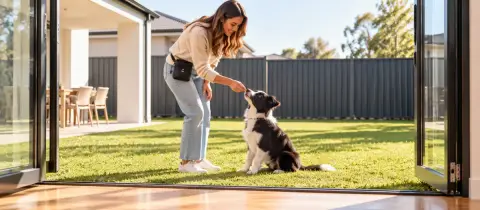
- Lead walking. Start indoors or in the yard with a comfortable collar or harness (our puppy harness guide covers sizing, and how to put on a dog harness shows the fitting steps). When you're ready for outings, our no-pull harness guide explains what to look for. Never use prong, choke or shock collars.
- Handling. Gently touch paws, ears and mouth for a second or two, then reward. It makes grooming and vet visits easier later.
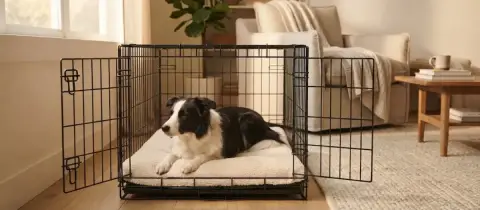
- Time alone. Build up slowly, starting with a minute or two while you're in another room. A crate or puppy pen can help if it's introduced as a calm den; see crate training a puppy. Our guide to keeping your dog busy while you're at work has ideas. Enrichment toys are tools in a routine, and they don't treat separation anxiety.
How long should you train a puppy each day?
Aim for several very short sessions, roughly 3 to 4 minutes each, spread through the day, rather than one long block. A trainer writing for Preventive Vet puts the magic number at about 3 to 4 minutes per skill session (Preventive Vet, 5 June 2023).
Fit practice into daily life: a quick sit before meals, a name game after a toilet trip, a minute of handling before bed. Stop if your puppy is sniffing about, yawning or wandering off. They're telling you they've had enough. Finish on an easy win and let them rest.
How do you toilet train a puppy?
Our how to toilet train a puppy guide has the full step-by-step. In short: Take your puppy to the toilet spot after waking, after eating or drinking, after play and every couple of hours, then praise and reward straight after they go (a potty bell can come later, once your puppy prefers going outside). Stay with them so you can reward the moment it happens. Accidents will happen, and they don't mean your puppy is being naughty.
RSPCA Australia says to take your puppy out first thing in the morning, after naps and meals, and often through the day, and to watch for sniffing or circling (RSPCA Australia knowledge base, updated 29 September 2025). Here's a simple routine:
- Go to the same spot each time. Use a short cue word as they go, if you like.
- Wait calmly. Keep it boring so they focus on the job.
- Reward within a second or two with a small treat and happy praise, not when you're back inside.
- Supervise between trips. If you can't watch your puppy, use a puppy pen or a pad area.
- Stay consistent. Puppies have small bladders, so mistakes are expected early on.
What about accidents?
Never punish accidents. RSPCA Australia says methods such as rubbing a dog's nose in it are outdated and harmful, and can lead to a dog avoiding toileting in front of you (RSPCA Australia knowledge base). If you catch them mid-accident, calmly take them to their spot. Otherwise, clean the spot with an enzyme-based cleaner (RSPCA Australia advises a non-ammonia product, so the smell doesn't draw your puppy back) and never punish; punishment can make a puppy hide to toilet.
Where do puppy pads fit?
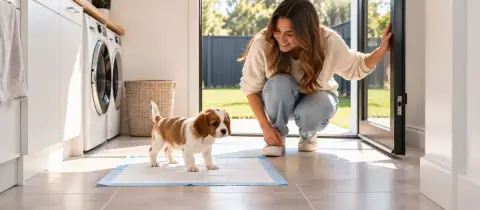
Pads are a tool for times you can't supervise or can't get outside quickly. RSPCA Australia says they're useful when you need to leave the house and should be removed as your puppy gains bladder control (RSPCA Australia knowledge base). Our puppy pads guide compares sizes and types.
What is the first thing to teach a puppy?
Start with your puppy's name, the toilet routine and being handled gently. These make everyday life easier and give you chances to reward from day one. Say their name in a happy voice, give a treat when they look at you, and repeat in short bursts. Sit comes easily after that.
RSPCA Australia's guide to settling in a new puppy lists toilet training with rewards, safe space to rest and a vet visit to plan vaccinations as early priorities (RSPCA Australia, 4 November 2021). A new-puppy checklist, in short: a quiet bed, puppy-proofed rooms, a toilet spot, a few chew toys, soft treats, a lead and, for later, a gentle puppy shampoo (see our puppy shampoo guide).
How do you stop puppy biting?
Puppy biting and mouthing is normal play behaviour, so redirect it rather than punishing it. Offer a toy when teeth find your hands, and pause the game if teeth touch skin. Never smack, flick or hold your puppy's mouth. Biting usually settles with patient, consistent teaching.
RSPCA Victoria describes mouthing as a normal developmental behaviour and a form of puppy social interaction, rarely done with malice, and says disciplining isn't the route to take. It suggests swapping your hand for a toy and, if play gets wild, leaving the room for a minute (RSPCA Victoria). Our full guide to stopping puppy biting goes step by step.
When should a puppy start puppy school?
Ask your vet when your puppy can start classes and outings, because the timing depends on their vaccinations. Our puppy vaccination schedule has the timeline. Look for a reward-based class run by a qualified trainer. Puppy school is widely offered by vet clinics and pet stores, and it helps your puppy meet new people and dogs in a controlled way.
RSPCA Australia recommends socialising your puppy while they're young, giving them exposure to different environments, and enrolling in a reward-based puppy school if you can. It also notes puppies need their full vaccination course because of diseases like parvovirus (RSPCA Australia, 4 November 2021). Your vet will tell you what's safe for your puppy.
How we chose
We looked for products that match what the schedule asks of you, then shortlisted ones that met all of these checks:
- Well rated: a strong average rating with plenty of buyer reviews.
- No red flags: no pattern of poor reviews, safety complaints or listing problems.
- Available on Amazon Australia when we checked.
Each guide adds its own checks, which you'll find in the linked guides.
These are researched picks, not products we've personally tested. We compared the specifications shown on each Amazon Australia listing on 21 Oct 2026. We didn't accept payment from any brand, and no brand saw this page before it was published.
Our picks in brief
1. Amazon Basics Pee Pads, Heavy Duty: for toilet training
A pack of 50 regular-size pads. The listing says they have heavy absorbency and a five-layer design, with a plastic lining. Pads work best as a back-up during toilet training, not a replacement for trips to your puppy's spot. See our puppy pads guide for other sizes and washable options.
2. SavourLife Puppy Training Treats, Chicken: for rewards
A 165 g bag of meaty treats made for puppies. The listing says it includes DHA. Break them into pea-sized bits and count them toward your puppy's 10% treat allowance. See our training treats guide for more options.
3. KONG Puppy: for teething
A soft rubber toy made for puppy baby teeth and gums. The medium size is linked here; small and large sizes also exist (see the teething toys guide for links). It can be stuffed with puppy-safe fillings. KONG advises supervision, so use it while you're watching, and check it for damage. See our puppy teething toys guide.
4. Pet N Pet treat pouch: for walks and training sessions
A treat pouch keeps rewards close, so you can reward at the right moment instead of fumbling in a pocket. Check the size and how it carries on the listing to see whether it suits you.
When to see your vet
Book a vet visit soon if your puppy has:
- blood in their urine, or strains or cries when they toilet
- sudden accidents after they were reliably toilet trained, which may point to a urinary infection
- diarrhoea or vomiting, or isn't eating
- aggression that isn't play, or fear that stops them coping with everyday life
See a vet straight away if a young puppy is lethargic, weak or unwell, because small puppies can get sick quickly. For behaviour help, talk to your vet or a qualified reward-based trainer. Learn more from RSPCA Australia on toilet training.
Frequently asked questions
How long should you train a puppy daily?
Several short sessions of about 3 to 4 minutes, spread through the day, work better than one long one. A trainer writing for Preventive Vet suggests that length per skill. Add them up through the day and let your puppy rest. See how long to train.
What is the 10-10-10 rule for puppies?
We couldn't find a vet or welfare source that explains it, so treat it as an informal tip that varies between trainers. The evidence-based version is simpler: short, frequent sessions, regular toilet trips and treats kept to about 10% of daily food.
What month is hardest with a puppy?
It varies. The early weeks can be tiring because of toilet trips, broken sleep and biting. Dogs Queensland says adolescence generally starts between about six and 18 months and can bring ignored commands. If your puppy's behaviour changes suddenly, check with your vet.
Can you train an 8 week old puppy?
Yes, with very short, gentle sessions. At about eight weeks, focus on their name, the toilet routine, gentle touch and settling. Keep rewards small and play simple. Ask your vet when your puppy can start classes and outings. See our age guide.
What is the 3-3-3 rule for puppies?
It's an informal timeline for rescue dogs: roughly three days, three weeks and three months to settle in. Cavalier Rescue USA says each dog is an individual and may take longer than expected, so let them progress at their own pace. Puppies vary, so go at your puppy's pace and talk to your vet if you're worried.
Should I use puppy pads or go straight outside?
Both work. Taking your puppy straight outside teaches the final habit directly, while pads help when you can't supervise or can't get outside quickly. RSPCA Australia says to phase pads out as bladder control grows. Our puppy pads guide has more.
Related guides
- Puppy vaccination schedule in Australia
- Best puppy toys
- Best puppy crates
- How much exercise does a dog need?
- Best puppy food
- Best puppy pads
- Best dog training treats
- Best puppy teething toys
- How to stop puppy biting
- Best no-pull dog harnesses
- How to keep your dog busy while you're at work
- Is my dog bored?
Sources
- RSPCA Australia knowledge base: How can I toilet train my puppy or adult dog? (updated 29 September 2025)
- RSPCA Australia: How do I care for my new dog or puppy? (4 November 2021)
- RSPCA Victoria: Play biting and mouthing
- VCA Animal Hospitals: Dog treats (updated 26 September 2024)
- VCA Animal Hospitals: Retained baby teeth in dogs
- Preventive Vet: Short and sweet training sessions (trainer Cathy Madson, 5 June 2023)
- Dogs Queensland: Bringing up pup, from adolescent to adult
- Cavalier Rescue USA: The 3-3-3 rule
This guide provides general information and isn't a substitute for veterinary advice. If you're concerned about your puppy's health or behaviour, speak with your vet.