Quick answer: How to toilet train a puppy comes down to routine: take them to the same spot after waking, eating, drinking and play, and every hour or two while they're awake. Reward within a second or two of them going, stay patient with accidents and never punish them. Some puppies catch on within days, others take months.
Toilet training is mostly about routine, supervision and rewards, so this page walks through each step in order. For the wider picture of what to teach and when, see our puppy training schedule, and if you're still setting up, our new puppy checklist covers the basics.
How do you toilet train a puppy step by step?
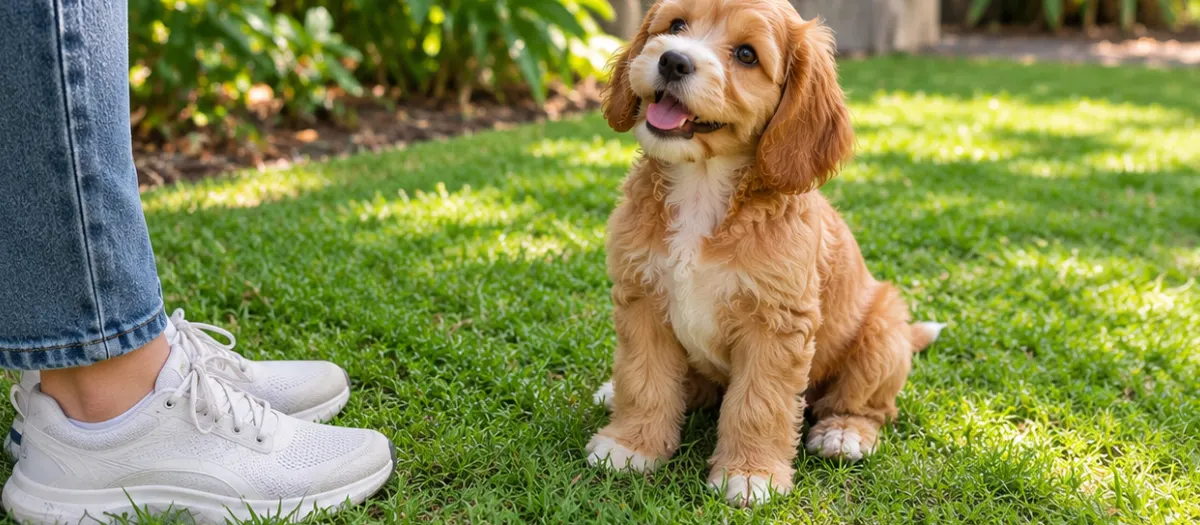
Pick one toilet spot, take your puppy there on a regular schedule, wait calmly and reward within a second or two of them finishing. Supervise between trips so accidents are rare, and use a pen or crate when you can't watch. RSPCA Australia recommends reward-based methods and says every dog learns at its own pace.
Here's a simple routine to follow:
- Choose a spot and keep going back to it. The familiar smell helps your puppy get the idea.
- Take them out at the right times. First thing in the morning, after naps, after meals and often through the day (RSPCA Australia, page read 6 November 2026, kb.rspca.org.au).
- Stay with them and keep it boring. Wait quietly so they can focus. Many owners add a short cue phrase, such as "go toilet", while the puppy is going. RSPCA Australia says that with repetition, your dog can learn to toilet on cue.
- Reward straight away. A small, tasty treat and happy praise within a second or two, not once you're back inside. Our training treats guide has ideas for pea-sized rewards.
- Watch between trips. Sniffing the ground and circling are common signs they're about to go, so head out straight away.
- Contain when you can't watch. A puppy playpen or crate keeps accidents in a small, easy-to-clean area.
If your puppy hasn't finished their vaccinations (see our puppy vaccination schedule), ask your vet where it's safe for them to toilet and when they can go to public places.
How often should a puppy go out to toilet?
Very young puppies may need to go out a dozen or more times a day, roughly every one to two hours while awake, plus after waking, eating, drinking and play. The AKC says puppies can generally hold on for about as many hours as their age in months, though every puppy differs.
The AKC (updated 31 July 2026) lists the key trip times as first thing in the morning, last thing at night, after naps, after crate time, after meals, after drinking, after chewing and after indoor play (AKC). That sounds like a lot, but the aim is to be outside before your puppy has an accident, so every trip becomes a chance to reward. As bladder control grows, you can stretch the gaps.
How do you toilet train a puppy with a crate?
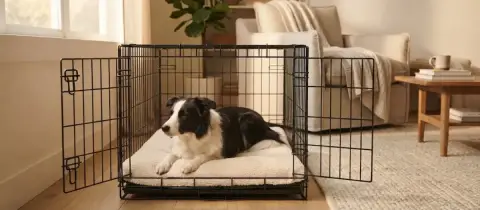
A crate can help because dogs generally avoid soiling where they sleep, but it should be just big enough for your puppy to stand, turn and lie down. Take them straight outside when they come out, and never leave a puppy shut in for longer than they can hold on.
The AKC says a crate that's too big lets a puppy use one corner as a toilet and sleep in another, and that adjustable dividers suit a growing puppy. A crate is a routine tool, and it doesn't treat separation anxiety. If your puppy cries or panics, stop and ask your vet. Our crate training guide covers setting it up as a calm den.
What should you do when your puppy has an accident?
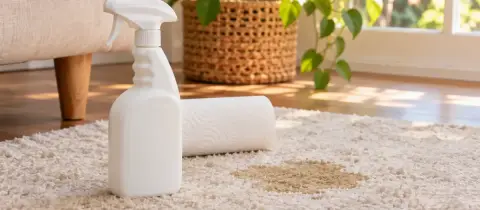
Stay calm, don't scold and never rub their nose in it. If you catch them mid-accident, calmly take them to their spot. Otherwise, clean up without fuss using a non-ammonia cleaner so the smell doesn't draw them back. RSPCA Australia says punishment can make a dog avoid toileting in front of you.
RSPCA Australia describes punishing accidents as harmful to welfare and the relationship, and says it teaches nothing. The AKC also says not to scold and suggests an odour-neutralising or enzyme-based cleaner. Our enzyme cleaner guide compares options. Accidents are expected early on, because very young puppies can't fully control their bladder yet, even when they're trying.
Should you use puppy pads or train outside?
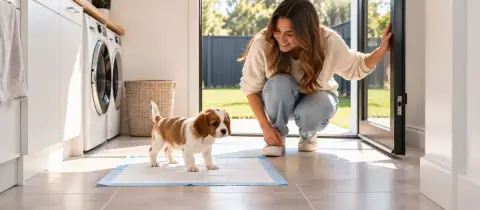
Pads suit times you can't supervise or can't get outside quickly, such as a long day away. Both RSPCA Australia and the AKC say they're a short-term tool: RSPCA Australia says to remove them as bladder control grows, and the AKC notes they can slow the move to going outside. Our indoor dog toilet guide compares the tray types if you need an indoor spot for a flat or a balcony.
If you do use them, keep the pad in one spot and move it gradually towards the door or the yard as your puppy improves. Whichever you choose, rewarding the right spot is the same. Our puppy pads guide compares sizes and washable options. If the pad slides or your puppy shreds it, a puppy pad holder keeps it in one place.
How do you handle toilet training at night?
Take your puppy out last thing before bed and first thing in the morning, which the AKC lists as key parts of the routine. If they wake, whine or seem restless, take them out quietly, then straight back to bed without play. Most puppies need fewer night trips as bladder control grows.
Keep night trips calm: low light, no chat, a quick reward, then bed. Playing at 3 am can teach a puppy that waking you is fun. If you're using a crate, our crate training guide has tips for settling at night.
How long does it take to toilet train a puppy?
There's no fixed timeline. The AKC says some puppies learn within days while others take several months, especially if earlier routines were inconsistent, and RSPCA Australia gives no overall timeframe. Steady routines help most. Watch your puppy, and if progress stalls, ask your vet.
Progress is rarely a straight line. A puppy may seem reliable for a week and then have a few mistakes, often when the routine slips, they're distracted or they've had too long between trips. Go back a step, take them out more often and keep rewarding.
Once your puppy clearly prefers going outside, you can teach a door bell so they can ask to go out. Our dog potty bells guide compares hanging, press and wireless bells and covers the training steps.
Choose by situation
| Situation | What to try | Keep in mind |
|---|---|---|
| New puppy, just home | Start on day one: frequent trips, a single spot, quick rewards | Bladder control is weakest in the early weeks, so mistakes are normal |
| No garden or yard | Use a pad or grass potty tray near the door, then move towards outdoors | Phase pads out gradually, as RSPCA Australia advises |
| You're away for long stretches | Arrange a break from a trusted person or pet sitter; use a playpen with a pad area | Puppies can't hold on all day, so don't expect it |
| Wet or hot weather | Go out with your puppy, keep trips short, reward quickly | Check shade and water in the heat, and keep paws off hot ground |
| Reliable puppy suddenly has accidents | Book a vet check | A sudden change can have a medical cause, such as a urinary problem |
When to see a vet
Book a vet visit soon if your puppy:
- has blood in their urine, or strains or cries when they toilet
- toilets very often or passes large amounts of urine
- suddenly has accidents after being reliably toilet trained
- has diarrhoea, vomits or isn't eating
- makes little progress despite a steady routine
See a vet straight away if a young puppy seems lethargic, weak or unwell, because small puppies can get sick quickly. Learn more from RSPCA Australia on toilet training.
Frequently asked questions
Can you toilet train an 8 week old puppy?
Yes. The AKC says to start the day your puppy comes home, and most arrive around eight weeks, when bladder control is weakest. Expect lots of trips, quick rewards and a few accidents. Keep sessions short and gentle, and ask your vet about vaccinations before outings.
Why does my puppy have an accident straight after coming inside?
It's common. The trip may have been short, or your puppy may have been too distracted to go. Stay out a bit longer, keep it calm and reward when they finish. When you go back in, supervise closely or use a pen, so there's no chance for a slip.
Do I need to give a treat every time my puppy toilets?
Reward every time at first, within a second or two. RSPCA Australia says that once your dog is trained, you can keep the toileting area accessible and occasionally reward correct toileting to maintain it. Count treats toward your puppy's daily food, and ask your vet how much they need.
What's the best way to clean up puppy accidents?
Blot up what you can, then clean with a non-ammonia, enzyme-based product. RSPCA Australia advises a non-ammonia cleaner to remove the scent, and the AKC recommends an odour-neutralising or enzyme-based one. RSPCA Australia says the scent left behind can lead to repeat accidents in the same spot, which is why the cleaner matters. See our enzyme cleaner guide.
What signs show a puppy needs to go?
RSPCA Australia mentions sniffing the ground and circling. The AKC adds restlessness. Watch for these after waking, eating, drinking and play, and head to the toilet spot straight away. Not every puppy gives clear signs, so rely on your schedule as well as watching.
Can I toilet train an older dog the same way?
The same reward-based steps apply. RSPCA Australia's toilet training page covers puppies and adult dogs: give plenty of chances to go in the right spot, reward when they do and don't punish mistakes. Adult dogs may hold on longer, but if accidents are new for them, check with your vet.
Is it normal for toilet training to take months?
Yes, it can be. The AKC says some puppies take several months, especially if earlier routines were inconsistent. That doesn't mean you're doing it wrong. Keep the routine steady, avoid punishment and talk to your vet if progress stalls or your puppy shows signs of a urinary problem.
Related guides
- Puppy vaccination schedule in Australia
- Best puppy crates
- Best puppy beds
- Indoor dog toilets
- Best small dog crates
- Best dog potty bells
- Fake grass for dogs
- Puppy training schedule: what to teach and when
- New puppy checklist
- Crate training a puppy
- Best puppy pads
- Best puppy pad holders
- Best enzyme cleaner for dog urine
- How to stop puppy biting
- Best dog training treats
Sources
- RSPCA Australia knowledge base: How can I toilet train my puppy or adult dog? (page read 6 November 2026)
- American Kennel Club: How to potty train a puppy (updated 31 July 2026)
This guide provides general information and isn't a substitute for veterinary advice. If you're concerned about your puppy's toilet habits or health, speak with your vet.