Fake grass for dogs: the best grass potty trays, plus what to know about yard turf
By Anish PuriUpdated 12 Nov 202616 min readResearched, not tested by us
Research guide. WhiskerFinds may earn a commission from links, at no extra cost to you.
Quick answer: Fake grass for dogs means two things: a grass-topped potty tray for a balcony or apartment, or synthetic turf laid across the yard. This guide compares the trays sold on Amazon Australia and explains what to check before laying turf. For most medium and large dogs, the MEEXPAWS Large tray (85 x 59 cm) is our top pick.
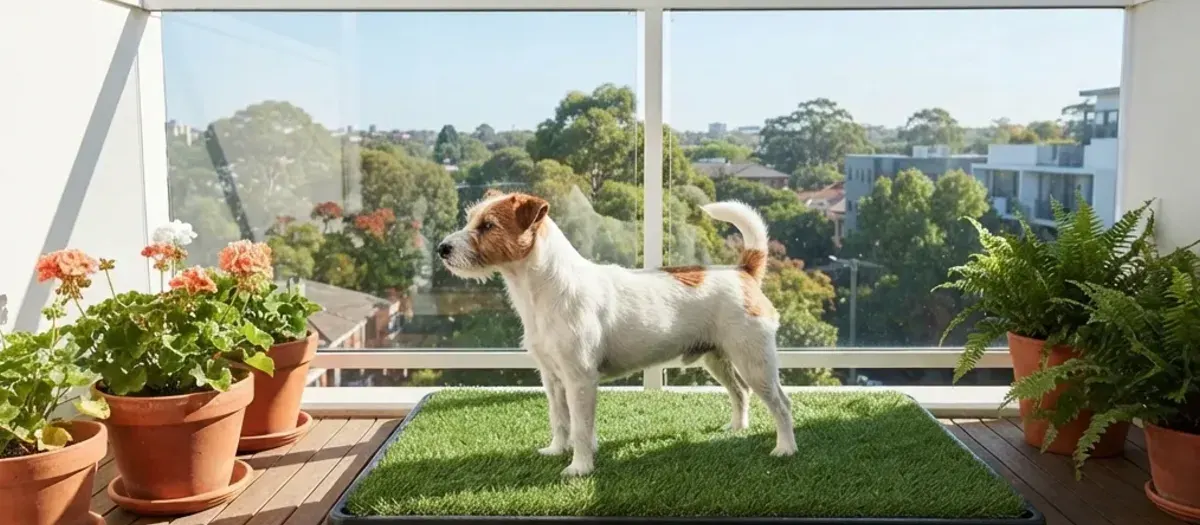
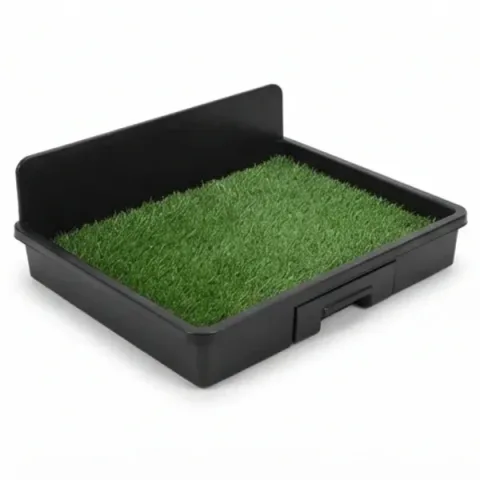
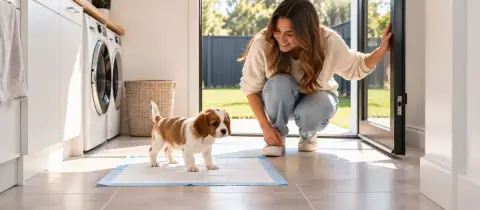
Illustration, not the actual product
Our top pickMEEXPAWS Large grass toilet with tray, 85 x 59 cm
For toilet training steps, our puppy toilet training guide has the routine, and we don't repeat it here. If you're not sure a grass tray is the right type, our indoor dog toilet guide compares pad trays, high-walled toilets, litter pans and grass trays first.
Quick picks
Our top pickBest overall (medium and large dogs)
MEEXPAWS Large grass toilet with tray, 85 x 59 cm
The largest tray here, with two grass pads so one can dry while the other is in use
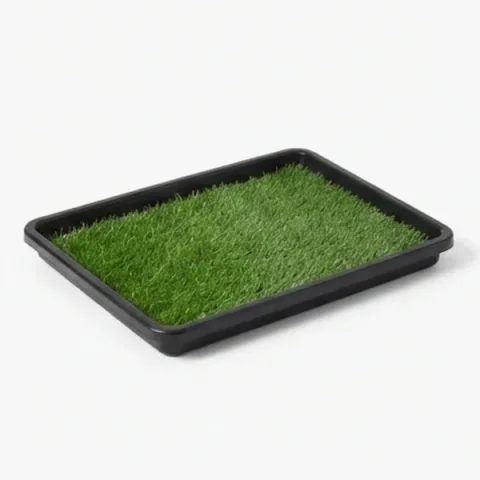
Pictures are illustrations, not the actual products.
What does "fake grass for dogs" mean?
It means one of two different products, and the searches mix them up. A grass potty tray is a small, reusable toilet with a grass-topped mat that you keep indoors or on a balcony. Yard turf is synthetic lawn laid across a garden.
This page is a product guide for the first kind, because that is what Amazon Australia sells. A third thing that looks similar is the washable fabric pad, which our puppy pads guide covers. Here we stick to grass trays, and the yard turf questions live in their own section below.
Grass potty trays compared
Details come from each Amazon Australia listing, checked on 12 Nov 2026. Brand claims are the listings' own. "Not stated" means the listing gives no figure.
Swipe sideways to see every column
Item
MEEXPAWS Large
BRIAN & DANY
PetSafe Pet Loo Medium
PaWz Large
PETMAKER
Footprint
85 x 59 cm
76 x 51 cm
About 62 x 62 cm (maker's page)
Not stated
50.8 x 40.6 cm (20 x 16 in)
Layers
4
3
Grass, tray, waste container
3
3
Grass mats included
2
2
1 grass pad
2
1
Needs a disposable pad
Yes, 2 included
No
Optional liner, 1 included
No
No
Waste container
Tray under the pad
Removable box
Sealed 2 L container
Removable drawer
Collection tray
Weight
4.55 kg
3.33 kg
3.96 kg
4.28 kg
1.11 kg
The Amazon listing gives the Pet Loo as 63 x 63 cm, and the maker's own page gives 62.2 x 62.2 x 12.7 cm. We've printed the maker's figure. The BRIAN & DANY listing also has a clearly mistaken height field, so we've given the footprint only.
Our picks in detail
1. MEEXPAWS Large grass toilet with tray, 85 x 59 cm: best overall
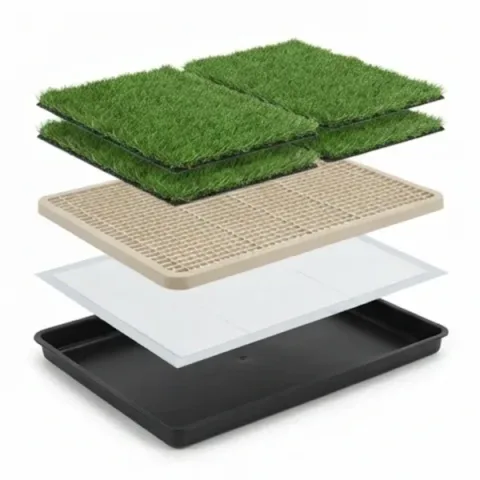
A four-layer tray: artificial grass on top, a grid that lifts the grass, a disposable pee pad, and the tray itself. The listing gives 85 x 59 x 5 cm and 4.55 kg, and says it comes with two grass pads with rubber backing and drainage holes, and two disposable pads of 90 x 60 cm. Its directions say "for large dogs".
A smaller Medium version is 79 x 53 x 5 cm and 2.72 kg, with the same layers.
Pros: the largest tray here; two grass pads; a stated size for each variant
Cons: it relies on a disposable pad under the grass, so there is an ongoing pad cost, and the listing points to the brand's own pads (our puppy pads guide covers other options); 4.55 kg; "perfect for all dog breeds" and "rapid drainage" are the maker's words
Best for: medium and large dogs, and two-dog homes
Skip it if: you don't want to keep buying disposable pads
2. BRIAN & DANY dog toilet with two grass mats and waste tray, 76 x 51 cm: best mid-size tray, no pads needed
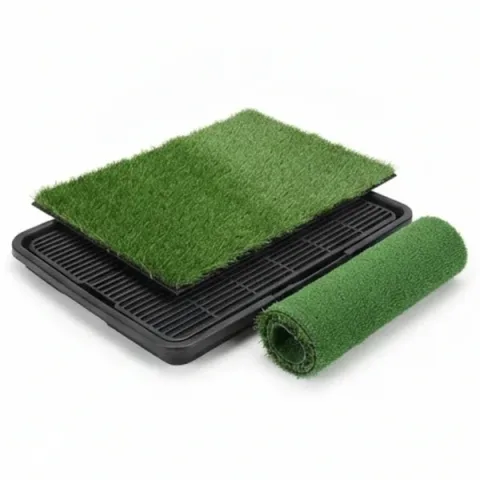
A three-layer tray: grass mat, a ridged grid tray and a collecting box. The listing gives a footprint of 76 x 51 cm, two grass mats and 3.33 kg, made of plastic and Oxford cloth. Liquid drains through the mat into a removable box, so there is no disposable pad to buy.
Pros: no disposable pads; two grass mats; sits between the small trays and the MEEXPAWS Large
Cons: a less established listing than the MEEXPAWS; the line that liquid drains "without staining the pet's claws" is the maker's claim; the bottom box must be emptied and rinsed, and there is no sealed container; the height field on the listing is clearly a catalogue error, so ignore it
Best for: small to medium dogs in a flat or on a balcony
Skip it if: you want a sealed container
3. PetSafe Pet Loo, Medium: best sealed-container system
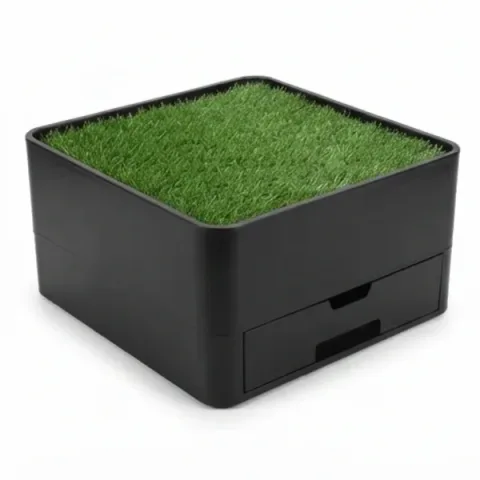
The Pet Loo's directions describe a removable 2 L waste container with an optional Pee Pod liner (one included) lined with powder that gels on contact, a daily warm-water flush and a weekly hose-down. The Amazon listing gives 63 x 63 x 14 cm, 3.96 kg and a 2-year warranty; PetSafe's own page gives 62.2 x 62.2 x 12.7 cm, an angled base that drains into the container, and no dog weight limit.
Pros: a sealed, removable 2 L container; a stated 2-year warranty; a known brand
Cons: the liners are a consumable you buy separately; the Amazon listing's "included components" field wrongly lists a dental treat, so buy from the title and directions; the two size figures differ by about a centimetre; the maker gives no dog weight limit
Best for: small dogs on a balcony or in a flat, where a sealed container matters
Skip it if: you want the biggest surface for the size, or you don't want to buy liners
4. PaWz dog potty pad with grass mat and tray, Large: best for dogs that cock a leg
The listing says it has three layers in PE and PP, two grass mats, a "splash proof wall" and a removable waste drawer, at 4.28 kg. The wall is what sets it apart for male dogs. The listing's only dimension field reads 20.5 x 3.2 x 30.7 cm, which cannot be the tray, so we've printed no tray size.
A single-mat Medium version exists, and its size field is also unusable.
Pros: the only pick with a raised splash wall; two grass mats; a removable drawer
Cons: the listing states no usable tray size, so check the size in the product images before buying; "odourless", "anti-microbial" and "non-toxic" are the maker's claims
Best for: male dogs that cock a leg
Skip it if: you need a stated size, or you have a large dog
5. PETMAKER artificial grass puppy pad with tray, 51 x 41 cm: best for toy breeds and young puppies
A compact three-layer tray: grass mat, drainage insert and tray. The listing gives 50.8 x 40.6 x 3.2 cm (20 x 16 x 1.25 in) and 1.11 kg, says it is for small-sized pets, and says to rinse with soapy water.
It's the lightest and most compact tray here, which suits a puppy by the door or a toy breed on a balcony. It outgrows a bigger dog fast.
Pros: the lightest at 1.11 kg; compact; no disposable pad needed
Cons: about 40 x 50 cm of grass, for small dogs only; one grass mat, so nothing to rotate while it dries; the listing gives no cleaning routine beyond rinsing with soapy water
Best for: toy breeds and young puppies
Skip it if: your dog is over about 7 kg (our figure, not the listing's), or you want something that lasts for years
What size grass tray does your dog need?
Pick a tray whose grass is at least as long as your dog from chest to tail base, with room to turn around. That is our own rule of thumb, not a standard or a maker's figure, so measure your dog before you buy. A tray that is too small is the most likely way for it to miss.
Swipe sideways to see every column
Your dog
Weight (our guide)
Trays that fit the size
Toy breed or young puppy
Under about 5 kg
PETMAKER, 51 x 41 cm
Small dog
5 to 10 kg
Pet Loo, about 62 x 62 cm, or BRIAN & DANY, 76 x 51 cm
The PaWz listing gives no tray size, so we haven't placed it in the table. Check the size in its product images first.
Choose by situation
Swipe sideways to see every column
Your situation
What to look for
Pick
New puppy before vaccinations
A small tray by the door, or inside a playpen, then moved gradually as the AKC describes
PETMAKER or BRIAN & DANY
Apartment or balcony
A sealed container or a box you can empty and rinse, in shade
Pet Loo or BRIAN & DANY
Male dog that cocks a leg
A raised wall around the grass
PaWz
Senior dog with mobility limits
Vet check first, then the largest, lowest tray
MEEXPAWS Large
Two dogs
Two trays, or the largest one
MEEXPAWS Large
Whole-yard owner asking about turf
No tray pick, read the turf section
Turf section below
How do you train a dog to use a grass potty tray?
Treat the tray like a pad. Put it in one spot, reward your dog straight away when they use it, and don't move it until they understand. Then move it gradually towards the door, and later outside, in small steps.
The American Kennel Club (updated 15 October 2026) says pads suit very young puppies, apartment dwellers who can't get outside quickly, and owners waiting for vaccinations. It lists "disposable pads, reusable pads, or an indoor potty station" as the indoor options. Its advice is to pick one spot, and that moving the spot confuses a puppy and slows training. It also says to clean accidents with an odour-destroying cleaner, because dogs are drawn to the smell of earlier toilet trips.
RSPCA Australia says to reward within a second or two, that punishment teaches nothing and harms the bond, and that puppy pads should be removed as the puppy gains bladder control and learns to toilet on cue (page read 12 November 2026). Our toilet training guide has the full routine.
No listing or source we read shows that a grass tray toilet trains a dog by itself, or that dogs prefer fake grass; that is the listings' wording. A tray is a tool inside your routine, and results vary.
How do you clean a grass toilet and stop it smelling?
Rinse the grass and tray often, let them dry completely, and use an enzyme cleaner on anything that has soaked through. We found no independent study on odour or bacteria in artificial grass, so this is maintenance advice built from the makers' directions, not research.
PetSafe says to pour warm water over the grass daily to flush out extra urine, empty the 2 L container, and hose down the whole unit weekly, letting it dry completely.
MEEXPAWS says to rinse the tray and let it dry in the shade. Its second grass pad lets you use one while the other is washed.
PETMAKER says to rinse the three layers with soapy water.
BRIAN & DANY says to separate the bottom tray from the grid and wash with soap and water.
Our enzyme cleaner guide covers what to use on tiles and floors around the tray, and lists a spray that names turf and artificial grass on its label. For solids, use a scoop or bag: see our pooper scooper guide.
Is an indoor dog toilet a good idea?
It can be, for the right dog. The AKC says indoor options suit very young puppies, apartment owners and puppies waiting on vaccinations, and for older dogs only "when behavioral concerns or physical limitations make it difficult" to go outside. It isn't a replacement for walks or time outdoors.
If an adult dog that was toilet trained starts having accidents, a tray isn't the first step. The AKC says repeated accidents in a previously house-trained dog should prompt a vet visit, because medical, physical or cognitive issues are common causes. Once your vet has ruled things out, the AKC says artificial grass stations can help some dogs manage accidents, and many seniors simply need more frequent access to a toilet area. For leaks that a tray won't solve, see our dog nappies guide.
Pads and trays are for when you can't supervise (RSPCA Australia) or can't get outside quickly (AKC). Puppies still need frequent breaks. We don't suggest a tray as a way to leave a dog alone all day.
Is artificial turf in the yard good for dogs?
It depends on the product, the sun and the installer, and we can't give you a yes or no. The research we found says the heat is the main concern, while drainage and odour are things to ask about.
Heat. Tom Serensits, from the Penn State Center for Sports Surface Research, wrote in SportsField Management (6 June 2011) that natural grass rarely reaches about 38 °C (100 °F) even on the hottest clear days. Synthetic turf often passed about 66 °C (150 °F), and 79 °C (175 °F) was recorded on Penn State plots. Hot, bright, low-humidity days were the worst. Watering cooled the surface, but temperatures rebounded about 20 minutes after the irrigation stopped. Changing fibre colour made about a 6 °C (10 °F) difference and infill type somewhat more, and the author concluded there is no "magic bullet" for cooling it.
Surface in the Penn State research
Temperature
Natural grass, hottest clear days
Rarely above about 38 °C (100 °F)
Synthetic turf, typical hot day
Often above about 66 °C (150 °F)
Synthetic turf, highest recorded
About 79 °C (175 °F)
Those are sports fields in full sun, not backyards, and we haven't measured any pet turf ourselves. Test your own surface with the hand test on our burnt paws page, where the FAQ "Is artificial grass hot for dogs?" explains it. For timing, RSPCA South Australia suggests walking early or late in the day (page read 12 November 2026). Shade, water and our keep your dog cool guide help on hot days.
Why do some people get rid of artificial grass? Heat is the complaint the research supports. We found no statistics on other reasons, so we won't give any.
Drainage and smell. We found no source showing that pet-specific turf is cooler, drains better or smells less than other turf. Ask the installer for the drainage layer, the infill and how pet urine is meant to be managed, and what the maker says about cleaning.
We don't pick a yard turf product on this page: turf is an installation job, not an Amazon tray, and we haven't shortlisted one. If a patch of real lawn is the problem, our Dog Rocks guide covers other ways to manage lawn burn and a non-lawn toilet area.
How we chose
We searched Amazon Australia for grass potty trays and dog grass toilets, then shortlisted ones that met all of these checks:
Well rated: a strong average rating with plenty of buyer reviews.
No red flags: no pattern of poor reviews, safety complaints or listing problems.
Available on Amazon Australia when we checked.
A tray and drainage layer: a grass mat that sits on a grid or insert with a collection tray, box or container underneath.
A stated size, or a clear note where the listing leaves it out.
Cleaning directions from the maker, or a removable waste box or drawer you can rinse.
These are researched picks, not products we've personally tried. We compared the specifications and features on each Amazon Australia listing, checked on 12 Nov 2026, and the PetSafe maker page. We didn't accept payment from any brand. Where a brand claims something ("odourless", "anti-microbial", "non-toxic", "rapid drainage"), we've written it as the listing's claim, not as fact.
Left out this time: a tray whose listing described a generic grass rug rather than the tray, the smaller Pet Loo, replacement grass pads that don't fit any tray here, and a tray from an overseas listing with few buyers.
Where else can you buy a grass potty tray?
Pet shops and vet clinics sometimes stock grass toilets. Check the tray size, layers and what you'll need to buy again, such as pads or liners, wherever you buy.
When to see a vet
A tray is not a treatment. If an adult dog that was toilet trained starts having accidents, drinking more, straining, passing blood, or seems unaware of leaking urine, see your vet before buying a tray. The AKC and VCA Animal Hospitals both say a vet should check repeated accidents in a previously house-trained dog.
Heat: if your dog is limping, licking their paws, or has red or blistered pads after time on turf or any hot surface, see your vet and move them to shade. See our burnt paws guide.
Chewing the grass: if your dog swallowed pieces of fake grass or the tray and is vomiting, retching or off their food, call your vet straight away.
Frequently asked questions
Will my dog actually pee on fake grass?
Many dogs will, with training, but we can't promise yours will. The listings say dogs like grass, and we found no source showing it. Put the tray in one spot, reward straight away, and ask a trainer if your dog refuses.
Can I keep a grass potty tray on the balcony in rain and sun?
The listings describe balcony use, and MEEXPAWS says the tray dries in the shade. Keep it out of direct sun where you can, empty the container often, and bring it in or cover it in heavy rain so the container doesn't overflow. Check the maker's directions.
How often do I replace the grass pad?
No source we read gives a lifespan, so we can't give a figure. Replace the grass if it flattens, tears, lifts at the edges or still smells after washing. Two pads, as in the MEEXPAWS and BRIAN & DANY sets, let you rotate them and spread the wear.
Can two dogs share one grass toilet?
Possibly, if the tray is big enough for both to use in turn. The MEEXPAWS Large has the most room here. Dogs often prefer their own spot, so two trays may suit better. Whichever you choose, rinse it often.
Grass tray or puppy pads for a new puppy?
Either can work. A grass tray is reusable and you rinse it, while disposable pads are thrown away after use. Our puppy pads guide compares disposable and washable pads. A puppy pad holder gives a disposable pad a tray of its own. Pick one spot and stay consistent, as the AKC advises.
Can an older or incontinent dog use an indoor grass toilet?
Possibly, but see your vet first. The AKC says accidents in an older dog are often linked to a medical, physical or cognitive problem. Once your vet has checked, a low, large tray can help some dogs. VCA says urinary incontinence is managed with medication and monitoring.
Does dog urine wreck artificial turf in the yard?
We found no independent source on that, so we can't say. Ask the installer how the base drains and what they advise for pet urine. Rinse your turf regularly with water, and see our enzyme cleaner guide for sprays that list turf.
What if my dog chews the fake grass?
Stop them and take the tray away. Swallowed grass fibre or tray pieces can cause a blockage, so call your vet if your dog has eaten any and is vomiting or off their food. Chewers may suit a pad, or a supervised routine, better.
RSPCA South Australia, Paws on the pavement: walking your dog during summer, 9 November 2021, page read 12 November 2026 (https://www.rspcasa.org.au/?p=112423)
Product details from each linked Amazon Australia listing, checked on 12 Nov 2026.
This guide provides general information and isn't a substitute for veterinary advice. If you're concerned about your dog's toileting or paws, speak with your vet.