Quick answer: Burnt dog paws come from ground that's far hotter than the air feels, so test it first. Press the back of your hand on the footpath for 5 seconds. If it's too hot for your hand, it's too hot for your dog's paws. Walk early or after sunset, stay on grass and shade, and see a vet if you suspect a burn.
Hot footpaths, sand and artificial turf can hurt paw pads long before the day feels dangerous to us. This guide covers how to check the ground, the signs of a burn, first aid, and when to call the vet. For the wider picture on heat, see how to keep your dog cool in summer.
How hot is too hot for a dog's paws?
There's no single safe temperature, because humidity, breed, age, fitness and coat all matter. The easy check is your own hand. Press the back of it on the surface for 5 seconds. If it's too hot for your hand, it's too hot for your dog's paws (RSPCA Australia, page read 31 October 2026).
If you're unsure, skip the walk. Grass and shade are the safe default.
Don't judge by the air alone. The ground can be much hotter than the air above it. Four Paws lists asphalt at about 52°C when the air is 25°C, and about 62°C when the air is 31°C (Four Paws, 27 June 2022). Those figures come from overseas, but the point holds on a mild-looking Australian day too.
Which surfaces get hottest?
Dark, sealed surfaces and anything that bounces heat back, with no shade, tend to get hottest. RSPCA Australia says to avoid hot sand, concrete and asphalt, or any area where heat is reflected and there's no shade (RSPCA Australia). Here's a rough guide, and the hand test beats any chart:
- Asphalt (roads, dark car parks): usually the hottest of the common walking surfaces. Four Paws reports a university comparison where asphalt reached about 51°C while concrete reached about 40°C (Four Paws).
- Concrete footpaths: cooler than asphalt in that comparison, but still able to burn in full sun.
- Artificial turf: holds heat and can get much hotter than real grass in full sun, with no shade to cool it. Test it with the back of your hand before letting your dog onto it, and keep a shaded or watered patch of real grass for hot days.
- Beach sand: hot sand is on RSPCA Australia's list of surfaces to avoid in the heat (RSPCA Australia), and it can burn paws too. Test it the same way, and stay near the wet edge or shade.
- Metal, such as a ute tray: can burn feet and body, so don't leave a dog on one (RSPCA Australia).
- Grass and shade: usually much cooler than sealed ground. PetPlace advises sticking to grass on hot days (PetPlace).
Signs of burnt dog paws
A burn may not show straight away. Vetster says dogs often show no obvious signs at first, but may lick their feet, limp or refuse to walk, and severe burns can bleed or lose pad tissue, leaving open wounds at risk of infection (Vetster, updated 14 March 2024).
Signs of a paw burn can include:
- limping, or holding a paw up
- refusing to walk or pulling towards the grass
- licking or chewing the paws
- darker or red pads, swelling or blisters
- missing skin, loose flaps of pad or bleeding (PetPlace)
These signs can have other causes, such as a cut, a grass seed or an allergy, so they don't confirm a burn on their own. If you aren't sure, a vet can tell.
What to do if your dog burns their paws
Act quickly and keep it simple:
- Get off the hot surface. Carry your dog to shade or grass if you can (PetPlace).
- Cool the paw with cool, not ice-cold, running water for several minutes. Don't put ice directly on the skin (PetPlace; Four Paws).
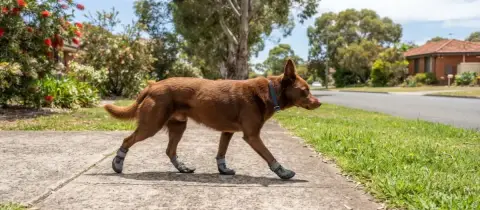
- Keep it clean and stop licking. A clean sock over the paw can help on the way to the vet if your dog tolerates it (Four Paws). Stay with your dog while they wear it.
- Call your vet the same day. Vetster says a physical exam is usually needed to judge how serious a burn is (Vetster).
Don't use human creams, butter or ointments on a burn, and don't put paw balm on a burn or open wound. 1st Pet Veterinary Centers advises against butter, oils, essential oils, human burn creams and any ointment your vet hasn't recommended (1st Pet Veterinary Centers). PetPlace also says not to use hydrogen peroxide or alcohol unless your vet tells you to (PetPlace).
When to see the vet
If you think your dog has a burn, call your vet the same day, even if it looks mild. Go sooner, or to an emergency vet, if your dog can't put weight on the paw, there are blisters, bleeding or a torn pad, or the paw smells, oozes or swells.
PetPlace lists a deep injury, bleeding that won't stop, a large torn part of the pad, blisters, signs of infection and a dog who can't bear weight as reasons to see a vet (PetPlace). Vets may give pain relief, clean and bandage the paw, or ask you to rest your dog. Healing time varies with how deep the burn is, so ask your vet what to expect.
How to protect your dog's paws in summer
Timing and surface do most of the work. Gear helps at the edges.
- Walk early or after sunset, when the ground has cooled (RSPCA Australia). Stay on grass and in shade where you can.
- Do the 5-second hand test before every walk on a warm day, and again if you stop for a while in the sun.
- Consider boots for days when you can't avoid hard ground. Our best dog boots guide covers sizing and which styles suit hot pavement and bindis. Fit them by the listing's size chart, measuring your dog's paws while they stand. Introduce them slowly indoors with treats, take them off after walks, and don't leave a dog in boots unsupervised or overnight. A dog who chews boots shouldn't be left with them.
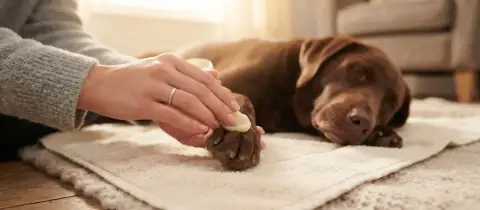
- Check paws after every walk. Look at the pads, between the toes and around the dewclaws for rubbing, swelling or redness, especially after wearing boots.
- Keep pads comfortable. A lick-safe balm can help dry or cracked pads, but it isn't for burns, deep cracks, bleeding or infection. See our best dog paw balm guide for what to look for.
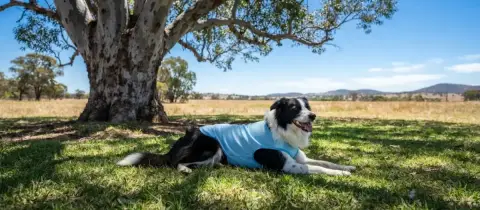
- Keep the rest of your dog cool. A wet-and-wear cooling vest or a cooling mat for resting afterwards can help, but neither replaces shade, water and skipping the heat of the day. Our do cooling mats work? guide explains the limits.
- Think about sun and shade at home. If your dog lies on a deck, paving or artificial turf, test it too. A dog pool in the shade gives paws a cool place to stand, with supervision.
Products are tools, not cures. Boots and balm don't make a burning-hot footpath safe.
Other paw problems in summer
Heat isn't the only thing that can trouble paws at this time of year.
Bindis and grass seeds. Grass seeds can enter through the paws, with signs that can include pain, swelling, licking, oozing or bloody discharge and limping (SASH, page read 31 October 2026). Check between the toes after walks through long grass, brush long coats, and see a vet if your dog is limping or licking one paw over and over. Don't dig at a seed that has gone under the skin: SASH says a seed often needs imaging to find and surgery to remove (SASH).
Slippery floors for older dogs. Slipping can be linked to pain, arthritis or weakness, so a vet check is worth it if it's new or getting worse (dvm360, 4 April 2025). One emergency referral centre suggests asking your vet about medication, supplements or exercises, and notes that long toenails and hair on the underside of the feet make slipping more likely (AERC Minnesota). Keep nails and paw hair trimmed (see our dog nail clippers guide). Grippy socks can help on tiles and timber while you sort out the cause. See our dog socks with grip guide, and our dog stairs for bed guide if jumping is the problem.
If a dog is licking the paws a lot without any burn, itchy skin may be the cause. See dog itchy skin. Constant licking has other causes too; see why dogs lick their paws.
When to get help
Heatstroke is an emergency. Heavy panting, drooling, weakness, vomiting or collapse need action now. Cool first with cool (not ice-cold) tap water over the body, neck, belly and legs, keep air moving, then call your vet and go straight there, even if your dog seems better. Our dog cooling guide has the full steps.
Call your vet the same day if you think your dog has burnt paws: limping, refusing to walk, licking or chewing the paws, red or darker pads, blisters or missing skin. Go to an emergency vet if your dog can't bear weight, the pad is torn or bleeding, or the paw is swollen, smelly or oozing. Don't put creams, butter, ointments or paw balm on a burn or open wound. See your vet too if your dog is limping or licking one paw after walking through long grass, as a grass seed can be the cause.
Frequently asked questions
How long does a burnt paw take to heal?
It depends on how deep the burn is, so there's no reliable timeline. Mild burns are uncomfortable, while deeper ones can take much longer and risk infection. Ask your vet to look at the paw and tell you what to expect, and keep your dog off hot ground meanwhile (Vetster).
Can I put paw balm on a burnt paw?
No. Balm is for dry or cracked pads, not burns, deep cracks, bleeding or infection. Cool the paw with cool running water, keep it clean, stop licking, and call your vet the same day. Vets advise against butter, oils and human burn creams, and against any ointment your vet hasn't recommended (1st Pet Veterinary Centers). See what to look for in a paw balm.
Are dog boots worth it?
They can be, if the fit is right and you use them as a back-up to good timing. They help when you can't avoid hard or rough ground, but a boot that slips or rubs causes new problems. Our dog boots guide explains sizing, and PetPlace suggests introducing boots gradually.
Is artificial grass hot for dogs?
It can be. Artificial turf sits in full sun with nothing to cool it, so on a hot afternoon it can be far hotter than real grass or the air. Do the 5-second hand test on turf, decks and pavers, and keep a shaded or watered patch of real grass for hot days. Our fake grass for dogs guide has the research figures and what to ask before laying turf.
Can dogs get burnt on sand?
Yes. RSPCA Australia lists hot sand among the surfaces to avoid in the heat (RSPCA Australia). Test the sand with the back of your hand, go early or late, and rest in shade. Wet sand near the water is usually cooler, but check it as well.
What temperature is too hot to walk a dog on pavement?
There's no single number. Sealed ground can be far hotter than the air, and breed, age, coat and humidity change the risk. Use the 5-second hand test, and if the pavement fails it, walk on grass, wait until after sunset or play indoors instead.
Can I walk my dog in the morning in summer?
Early morning is usually cooler, and RSPCA Australia suggests walking early or in the late evening (RSPCA Australia). Still do the hand test, because pavement and sand can hold heat. On very hot or humid days, indoor sniffing games are a fine swap.
Why is my dog licking their paws in summer?
It can have many causes, including a burn, a grass seed, a cut or itchy skin, so don't guess. Check the pads and between the toes for redness, swelling or something stuck. If your dog is limping or licks one paw over and over, call your vet. See dog itchy skin.
Related guides
- Why does my dog keep licking their paws?
- Why is my dog limping?
- Taking your dog to the beach
- How to trim the fur on your dog's paws
- How much exercise does a dog need?
- Best dog boots for hot pavement and bindis
- Best dog paw balm (lick-safe)
- Dog socks with grip for slippery floors
- Best dog cooling vests
- How to keep your dog cool in summer
- Do dog cooling mats work?
- Best dog nail clippers
- Is it illegal to leave a dog in a car in Australia?
- All our dog guides
Sources
- RSPCA Australia, 4 ways to keep your dog cool this summer, page read 31 October 2026 (https://rspca.org.au/blog/2022/4-ways-keep-your-dog-cool-summer)
- Four Paws, Hot asphalt: a danger to your dog's paws, 27 June 2022 (https://fourpawsusa.org/our-stories/publications-guides/hot-asphalt-a-danger-to-your-dogs-paws)
- Vetster, Burned paw pads in dogs, updated 14 March 2024 (https://vetster.com/en/conditions/dog/burned-paw-pads-in-dogs)
- PetPlace, Summer paw pad burns in dogs: warning signs, first aid and prevention, Dr Laci Schaible, 27 May 2026, read 31 October 2026 (https://www.petplace.com/article/dogs/pet-health/summer-paw-pad-injuries-paw-pad-care-for-dogs?reduced=true)
- SASH (Small Animal Specialist Hospital), Grass seeds in dogs (https://sashvets.com/pet-advice/grass-seeds-in-dogs/)
- 1st Pet Veterinary Centers, Burned Paws & Burn Injuries: Signs, Prevention, and When to Call a Vet, read 31 October 2026 (https://1stpetvet.com/?p=13897)
- dvm360, Home hacks for geriatric dogs and cats, 4 April 2025 (https://www.dvm360.com/view/home-hacks-for-geriatric-dogs-and-cats)
- Animal Emergency & Referral Center of Minnesota, Five tips for keeping your senior dog slip-free (https://www.aercmn.com/blog/?p=1744)
This guide provides general information and isn't a substitute for veterinary advice. If you're concerned about your dog's paws, speak with your vet.