Quick answer: Taking your dog to the beach starts with checking the council's dog rules for that exact beach, because many beaches limit dogs by area or time of day. Then plan for hot sand, shade and fresh water, stop your dog drinking seawater or eating sand, steer clear of rips and stingers, and rinse them off afterwards.
A beach day is a treat for most dogs, but the sea brings a few risks that a park doesn't. This guide covers the rules first, then the things that make dogs sick or hurt, and what to do when you get home. Looking for somewhere to go? See our city-by-city guide to dog-friendly beaches. If your dog has never swum, start with our guide to teaching a dog to swim.
Quick picks
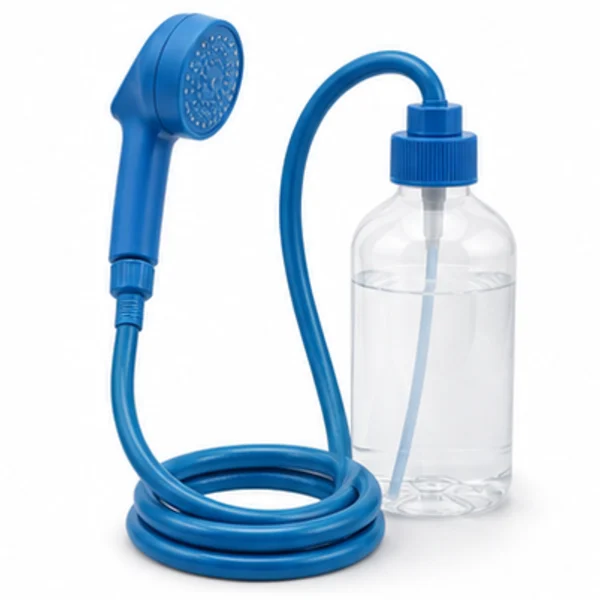
Kurgo Mud Dog travel shower
Fits a drink bottle (not included) for a fresh-water rinse, with no battery.
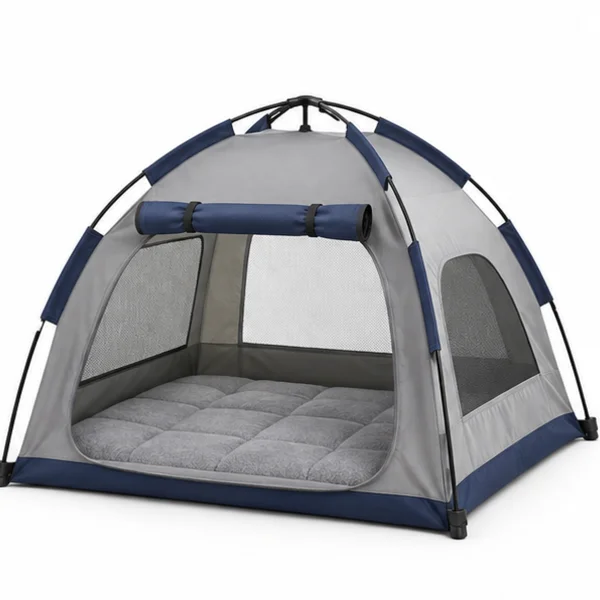
QWORK outdoor dog tent, 80 x 77 x 62 cm
Gives your dog shade while you sit right there.
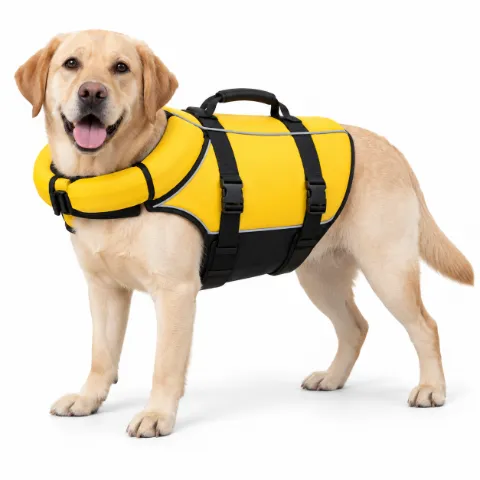
EzyDog DFD X2 Boost
A life jacket helps a weak swimmer float, but it doesn't replace watching.
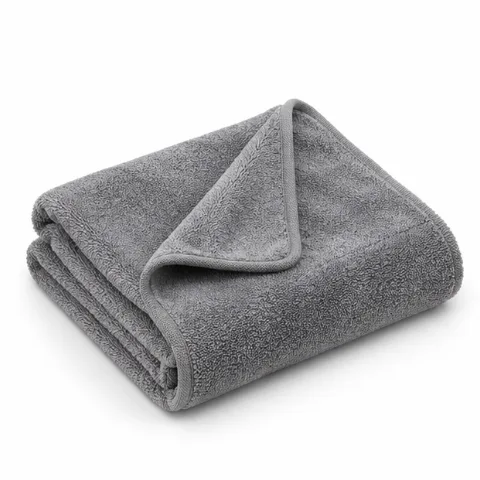
Lucky Paws Dog Towel, Extra Large 140 x 70 cm
A big towel for drying your dog after the rinse.
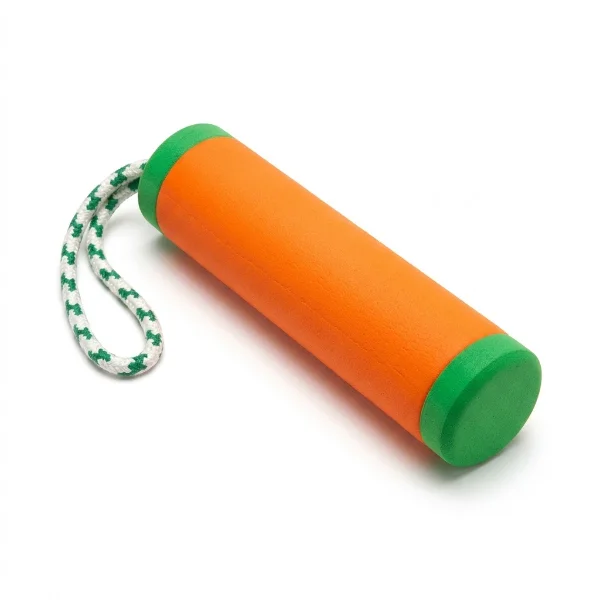
Chuckit Amphibious Bumper
A floating toy, as tennis balls soak up sand.
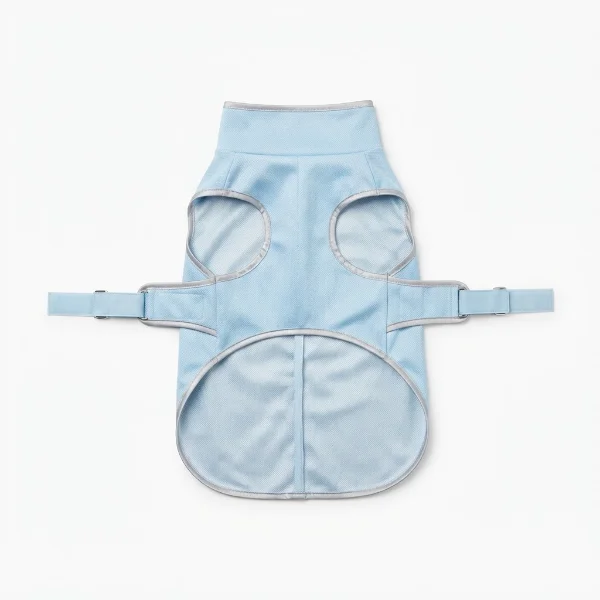
Kurgo Core cooling vest
Can help on warm days, alongside shade, water and a short trip.
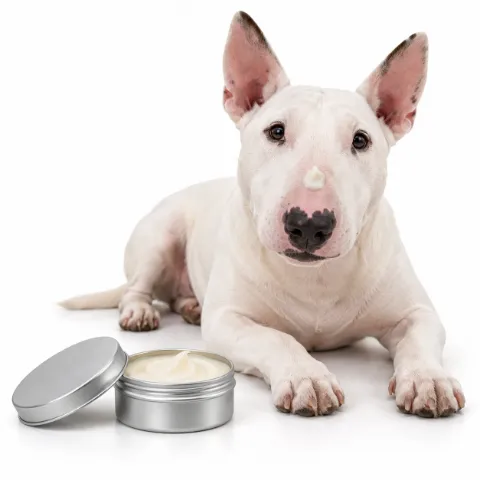
Noseprint Pet Sun Protection Balm (30 ml)
Dog-specific sun protection for pale or exposed skin. Ask your vet first.
QWORK outdoor dog tent, 80 x 77 x 62 cm
Shade for your dog while you're sitting right there.
EzyDog DFD X2 Boost
A life jacket helps a weak swimmer float in waves.
Lucky Paws Dog Towel, Extra Large 140 x 70 cm
A quick dry after you've rinsed the sand and salt off.
Chuckit Amphibious Bumper
A floating toy to use instead of a tennis ball, which soaks up sand.
Kurgo Core cooling vest
Can help on warm days, with shade, fresh water and a short trip.
Noseprint Pet Sun Protection Balm (30 ml)
Dogs with pale or exposed skin may need extra UV protection.
Pictures are illustrations, not the actual products.
More detail on each is in Useful gear for a beach day below. Gear helps with the day, but it doesn't replace shade, fresh water and watching your dog.
How do I find out if dogs are allowed on a beach?
Check the local council's website before you go. Councils set the dog rules for their beaches, and they differ from one beach to the next, so a beach that allowed dogs last summer may not allow them now. Treat the council page and the signs at the entrance as the final word, not a list from a blog.
| Step | What to look for | Where to find it |
|---|---|---|
| 1. Search the council | The council name plus "dog exercise areas" or "dogs on beaches" | The council's own website |
| 2. Open the map | Which areas are off-leash, time-share, on-lead or prohibited | The council's dog exercise area map |
| 3. Read the beach signs | The rules for that stretch of sand today | The sign at the beach entrance (signs on the ground win over anything online) |
| 4. Look for flags | Patrolled and flagged swimming areas, which often keep dogs out | Council rules and the lifesavers on the day |
| 5. Check for a national park | Beaches inside national parks are often dog-free | Our camping with a dog guide |
| 6. Ask the lifesavers | If they advise against swimming, keep your dog out of the water too | The patrol tower or the AVA's water safety advice |
| 7. Check conditions | Stinger and algae warning signs | Beach and lake signs |
Two council examples show how it works. The City of Gold Coast says dogs may be on a lead on most of its beaches except designated dog-prohibited areas, and names a few off-leash beach areas (page read 23 November 2026, City of Gold Coast). North Sydney Council says dogs are barred from public bathing areas it has declared off-limits, and that every dog in a public place must be under the control of a competent person (North Sydney Council). Those are examples only. Your beach has its own rules.
What do off-leash, on-lead and time-share beach rules mean?
On-lead means your dog stays on a lead the whole time. Off-leash means a marked area where a dog may run free, under your control. Time-share or time-restricted means dogs are only allowed at certain hours or seasons. Prohibited means no dogs at all. Councils use these labels on their maps, so look for them.
The words are less important than the detail. Two beaches both called off-leash can have different hours, boundaries and rules about getting there. The Gold Coast page lists some areas as off-leash, some as time-restricted and some as closed to dogs, and the council's designations now sit in an Animal Control Area Register (City of Gold Coast). Read the exact wording on the map for your beach, and take a photo of the sign so you remember the hours.
Why can't dogs drink seawater?
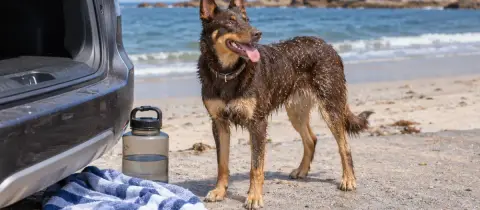
Seawater can make a dog sick. The American Kennel Club says a few mouthfuls may cause diarrhoea, and drinking more than that can be serious, with signs including diarrhoea, vomiting, weakness and seizures. It advises giving your dog fresh water and calling your vet if they act oddly after a beach day (page read 23 November 2026, American Kennel Club).
The easy habit is to carry more fresh water than you think you need, and offer it often, especially to a dog who is chasing a ball in the surf and gulping as they go. Don't try to treat a sick dog at home. Phone your vet.
Can a dog get sick from eating sand?
Yes, though a little is usually harmless. The AKC says dogs swallow sand from wet, sandy toys, digging, licking their paws and coat, and gulping sandy water. Small amounts usually cause no trouble, but they can add up, and wet sand can pack together and block the gut (page read 23 November 2026, American Kennel Club).
Signs the AKC lists after a beach visit are restlessness, panting, vomiting, dehydration, belly pain, a hard lump in the belly area and constipation. If you see them, it says to see a vet straight away. A vet may examine the belly, use an X-ray or ultrasound, and treat with fluids and sometimes a hospital stay. To cut the risk, watch your dog, teach "leave it", pick a flying disc over a tennis ball (balls soak up sand), and rinse your dog off afterwards.
How do I keep my dog cool on the beach?
Bring shade, fresh water and a bowl, and keep the beach trip short in the heat of the day. The Australian Veterinary Association says off-leash dogs can overheat quickly on the beach. Its sand test is simple: if it's too hot for you to walk on barefoot, it's too hot for your dog's paws (Australian Veterinary Association).
Go early or late, and walk on the wet sand near the water, where it's cooler underfoot. A pop-up dog tent gives your dog shade while you're sitting right there. A cooling vest can help on warm days. We don't list heatstroke signs here, because our summer guide does it properly. For hot-surface injuries, see our burnt dog paws guide.
Are rips and waves dangerous for dogs?
Yes. Rips pull water back out to sea, and a dog can be dragged out as easily as a swimmer. Northern Beaches Council says a rip often looks like deeper, darker water with fewer breaking waves, and that heading for calm-looking water is a common mistake (Northern Beaches Council, page read 23 November 2026).
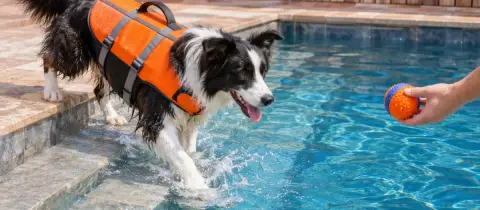
That advice is written for people, but it makes sense for dogs too: keep yours where the waves break evenly, never throw a toy into calm-looking water between the waves, and skip the water on rough days. Some dogs struggle even in gentle surf. The AVA names flat-faced breeds, short-legged breeds, Greyhounds, and older and very young dogs as the ones more likely to have trouble. A life jacket helps a weak swimmer float, but it doesn't replace watching your dog.
If your dog gets into trouble, never swim out after them: Australian researchers recommend non-contact rescue (Pearn, Peden and Franklin). Call your dog towards the shore and get the lifesavers. Our swimming guide explains what to do.
What should I do about bluebottles and other stingers?
Keep your dog away from anything that stings, and read the warning signs. The AVA says stingers and jellyfish are a concern in northern Australia from October to May. If your dog mouths or swallows a bluebottle or jellyfish, don't try home remedies: phone your vet or the Animal Poisons Helpline (1300 869 738, 24/7).
Drooling or pawing at the mouth after a beach walk is a reason to call, not to wait. The sensible habits are to scan the shoreline, keep your dog on a lead near washed-up marine life, and respect stinger signs and lifesaver advice.
What changes in northern Australia?
Crocodiles, stinger season and cane toads change the plan. In crocodile country, the Queensland Government says to keep pets on a lead and away from the water's edge, to stay at least 5 metres back, and to take extra care at dusk, dawn and night, when crocodiles are harder to spot (Queensland Government, page read 23 November 2026).
The AVA adds that many dogs have been lost to crocodiles at the water's edge, so "it looks calm" is no reason to let your dog paddle. Where there are cane toads, know what to do before you need it: see our cane toad poisoning guide. Snakes can be near the dunes and tracks too, and our snake bite guide covers that.
What should I do after the beach?
Rinse your dog with fresh water. The AKC says to bathe or hose your dog off after the beach to remove sand from the coat and paws. The Victorian Department of Health says that after contact with water that may have blue-green algae, you should wash a pet thoroughly with fresh water before drying, so they don't swallow algae while grooming (Victorian Department of Health).
Algae blooms are usually in warm, still water in summer and autumn, so think lakes and estuaries more than surf beaches. Keep your dog out of water with visible scum, and follow the signs. For bigger rinses, see our portable dog showers guide. Then dry your dog with a dog towel, check the paws (our paw cleaner guide helps with grit), and call your vet if your dog's ears look red or smell, or your dog keeps shaking their head.
Beach risks at a glance
| Risk | Signs to watch for | What to do |
|---|---|---|
| Salt water | Vomiting, diarrhoea, weakness, seizures (AKC) | Offer fresh water and call your vet |
| Sand | Restlessness, panting, vomiting, dehydration, belly pain, a hard lump in the belly area, constipation (AKC) | See a vet right away |
| Bluebottle or jellyfish in the mouth | Drooling, pawing at the mouth | Phone your vet or the Animal Poisons Helpline |
| Heat | See our summer guide | Shade, water, rest; follow that guide |
| Blue-green algae (lakes, estuaries) | Scum or discoloured water | Keep out, wash off with fresh water, see a vet if worried (Vic Health) |
| Crocodiles (north) | None, it's about distance | Lead, 5 metres back, extra care at dawn, dusk and night (Queensland Government) |
Useful gear for a beach day
A few things make a beach day easier. Our guides compare the options:
- Kurgo Mud Dog travel shower: fits onto a drink bottle (not included) for a quick fresh-water rinse of paws and legs at the car, with no battery to charge. See our portable dog showers guide.
- Dog life jackets for weak swimmers and waves.
- Dog tents for shade at the beach.
- Dog towels for a quick dry.
- Water toys: flat floating toys pick up less sand than balls.
- Cooling vests and dog sunscreen for hot, bright days.
- Staying overnight? See our dog sleeping bag guide for cool beachside nights.
When to see a vet
See a vet straight away (phone ahead on the way) if your dog has any of these after the beach:
- vomiting, diarrhoea, weakness, wobbliness or seizures after swallowing seawater
- vomiting, belly pain or swelling, straining, or restlessness in the hours to a day after the beach, which may be sand
- drooling or pawing at the mouth after mouthing a bluebottle or jellyfish
- a swim in, or a drink from, water with algae scum
- a near-drowning or any water breathed in, even if they seem fine, because life-threatening breathing problems can develop hours later (PetMD)
- signs of heatstroke (see our summer guide)
For algae, stingers or a cane toad, you can also call the Animal Poisons Helpline on 1300 869 738 (24/7). Our cane toad guide and snake bite guide have the first-aid steps. Don't give human medicines or try to make your dog vomit.
Frequently asked questions
Are dogs allowed between the flags on patrolled beaches?
Usually not. Dogs are commonly kept out of flagged swimming areas, and the City of Gold Coast says dogs aren't permitted within 200 metres of flagged areas. Rules vary by council, so check your beach's page and signs, and ask the lifesavers if you're unsure.
Do dog beach hours change in summer?
They can. Councils that run time-share areas set specific hours or seasons for dogs, and those can change over the year. Check the current wording on the council's page for your beach and read the sign when you arrive, and don't assume last summer's hours still apply.
Do I need to keep my dog on a lead at an off-leash beach?
Only inside the marked off-leash area. The City of Gold Coast says dogs must be on a lead before entering and after leaving an off-leash area. Keep a lead handy, make sure your dog comes when called, and stay within the area's boundary.
What should I pack for a beach day with my dog?
Pack fresh water and a bowl, shade, a towel, a lead, poo bags and a flat floating toy. Add a bottle for rinsing paws, a first aid kit and your vet's number. Leave tennis balls at home, because they soak up sand.
Is it safe to throw a ball into the waves for my dog?
It's risky. Waves hide rips, and a dog chasing a ball may follow it out of their depth. Wet, sandy balls also add to the sand your dog swallows. Throw on the sand or in shallow water where your dog can stand, and use a flat disc.
Can dogs get sunburnt at the beach?
They can. As our dog sunscreen guide explains, dogs with pale or exposed skin may need extra UV protection, especially on the nose, ear tips and belly. Shade and less time in the midday sun come first, then a dog-specific sunscreen. Don't use human or baby sunscreen unless your vet says yes.
Should my dog wear a life jacket at the beach?
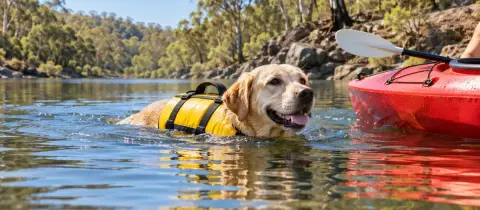
For a weak swimmer, a dog in waves, or any boat or paddleboard trip, yes. The AVA advises life jackets on boats and boards. It doesn't replace supervision. Our life jackets guide covers fit and sizes.
Related guides
- Dog-friendly beaches in Australia, with city guides for Sydney, the Gold Coast, Perth, the Sunshine Coast and Noosa and Wollongong
- How to teach a dog to swim
- Best portable dog showers
- Best dog sleeping bags
- Camping with a dog
- How to keep your dog cool in summer
- Burnt dog paws: how hot is too hot?
- Best dog life jackets
- Best dog towels
- Best water toys for dogs
- Cane toad poisoning in dogs
- Snake bite in dogs
Sources
- Australian Veterinary Association, Vet Voice: Water safety for dogs, published 29 January 2019, page read 23 November 2026
- American Kennel Club: Dogs drinking pool water, dangers of chlorine (seawater section), page read 23 November 2026
- American Kennel Club: What if my dog eats sand?, page read 23 November 2026
- Queensland Government: Be Crocwise top tips, page read 23 November 2026
- Victorian Department of Health: Health effects of blue-green algae, page read 23 November 2026
- Northern Beaches Council: How to spot a rip, page read 23 November 2026
- North Sydney Council: Dogs in public places, page read 23 November 2026
- City of Gold Coast: What's allowed on Gold Coast beaches and Dog exercise areas, page read 23 November 2026
- Pearn, Peden and Franklin (2020): Drowning of pet owners during attempted animal rescues, page read 23 November 2026
- PetMD: Drowning in dogs, page read 23 November 2026
- Kurgo Mud Dog travel shower details from the Amazon Australia listing, checked 23 November 2026
This guide provides general information and isn't a substitute for veterinary advice. If you're concerned about your dog's health at the beach, speak with your vet.