Quick answer: Snake bite symptoms in dogs can include sudden weakness or collapse, wobbly back legs, dilated pupils, vomiting and drooling, often with no bite mark you can see. If your dog may have been bitten, keep them still, carry them if you can, phone ahead and go to the vet now.
A suspected snake bite is an emergency, and the first minutes matter more than anything you can buy or do at home. This guide covers the signs, a step-by-step checklist, what vets advise you never to do, and how to make your yard less inviting. It sits alongside our paralysis tick guide and bee sting guide, the other summer emergencies.
What are the symptoms of snake bite in dogs?
Symptoms can include sudden weakness, wobbly back legs, collapse, vomiting, drooling, dilated pupils and changes in breathing. Bite marks are often hard to find, and a dog may not yelp, so the absence of a wound doesn't rule a bite out. A vet can work out what is going on.
Lort Smith Animal Hospital and RSPCA Australia describe a wider set of signs that can occur, in different combinations:
- puncture wounds or bruising (often hard to see), and swelling of the face
- a wobbly gait in the back legs that can progress to paralysis
- pupils that are dilated and may become fixed, and reduced blinking
- drooling, vomiting, and shaking or twitching
- loss of bladder or bowel control, and dark or bloody urine
- laboured breathing, and pale to bluish gums
- bleeding from the nose, mouth or bite site (Greencross Vets note bleeding is a late sign)
- not eating, which RSPCA Australia says is especially worth noticing in cats
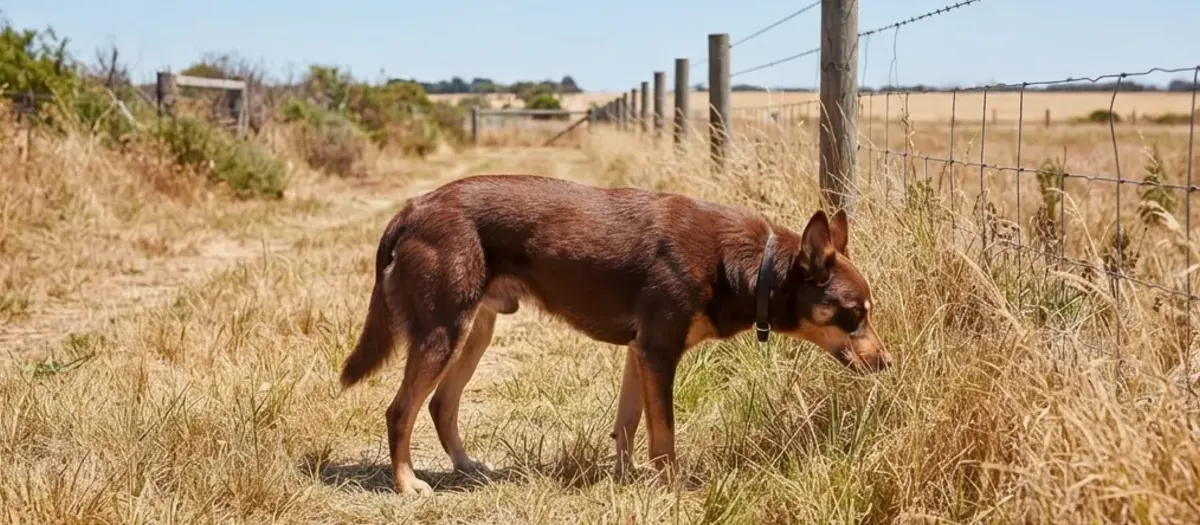
Look at the pattern and the context. Sudden weakness, wobbliness or vomiting after time in the yard, the bush or long grass, especially in warm weather, is a reason to go now, even if you didn't see a snake.
Why can a dog collapse and then seem fine?
A dog can collapse or vomit soon after a bite and then appear to recover. Lort Smith calls this a pre-paralytic sign. It is a reason to go to the vet, not to wait. Signs usually start within minutes, but can take up to 25 hours, so a dog who seems fine still needs checking.
| When | What you might see | What to do |
|---|---|---|
| Within minutes | Sudden weakness, vomiting, drooling, shaking, a wobbly back end, collapse | Keep your dog still, carry them, phone ahead and go to the vet |
| Collapse, then seeming to recover | Your dog gets up and acts normally | Still go to the vet now. Don't take recovery as the all-clear |
| At any point after a bite | Worsening weakness, dilated pupils, laboured breathing, pale gums, dark urine | Emergency. If you aren't already at the vet, go now |
| Up to 25 hours | Signs can still appear this late | Go to the vet even if your dog seems well. Lort Smith says a bitten dog should be watched closely for at least 25 hours, so your vet may keep them in or tell you what to watch for |
Lort Smith and RSPCA Australia are the sources for this table. Results vary between dogs, so don't use it to decide whether to wait.
What should I do if my dog is bitten by a snake?
Keep your dog calm and still, carry them to the car rather than letting them walk, phone the clinic from the road and go straight to the nearest vet. Fast treatment makes a real difference to recovery (RSPCA Australia). Everything below is first aid to use while you get going, never instead of going.
- Move away from the snake and keep calm. Take your dog out of reach, and keep other pets and children back.
- Keep your dog still. Carry them to the car, even if they seem well. Greencross Vets advise against letting a bitten dog walk.
- Phone ahead so the clinic can get antivenom and staff ready. Make the call on the way, or ask someone else to.
- Remove the collar if the bite looks to be on the face or neck (RSPCA Australia).
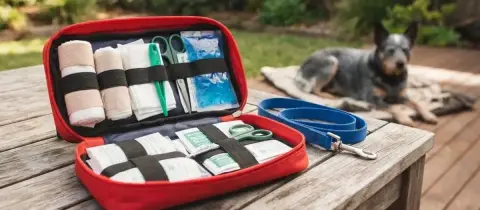
- If the bite is on a leg and you know exactly where it is, RSPCA Australia describes a firm bandage above, over and below the bite, and Lort Smith adds a splint to keep the limb still. Use a wide crepe or elastic bandage, as our dog first aid kit guide explains. Don't spend time on it if you aren't sure where the bite is, and never let it delay leaving.
- Take a photo of the snake only if it is safe and from a distance (RSPCA Australia). It isn't essential, because the vet can test.
- Drive straight to the vet. If someone else can drive, they can keep your dog still on the way.
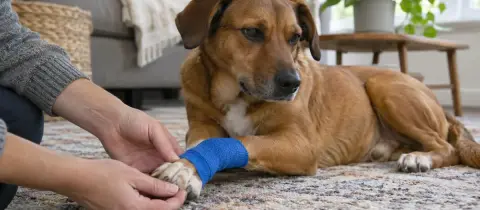
A cohesive vet wrap is for holding a dressing on a paw or leg. It is not the snake bite bandage, as our vet wrap guide explains.
What should you never do after a snake bite?
Don't cut, suck, wash or ice the bite, don't use a tourniquet, and never try to catch, kill or touch the snake, even one that looks dead. None of the Australian vet sources we read suggests cutting, sucking or icing a bite; they say to get to the vet instead. The table shows what they do say.
| Do | Don't | Why |
|---|---|---|
| Keep your dog calm and still, and carry them | Let them walk or run around | Greencross Vets advise carrying the pet to the car rather than letting it walk |
| Phone ahead and go straight to the vet | Wait to see whether signs develop | Early treatment improves recovery chances (RSPCA Australia) |
| Leave the wound alone | Wash the wound, look for it or clean it | RSPCA Australia says not to wash it, and Greencross Vets say not to look for or clean it |
| Apply a firm bandage only if you know where the bite is | Use a tourniquet | Both RSPCA Australia and Greencross Vets advise against a tourniquet |
| Photograph the snake from a distance if safe | Catch, kill or touch the snake | Lort Smith and RSPCA Australia say to leave it alone, even one that looks dead |
Snakes are protected in Australia, and killing them is illegal (Greencross Vets), so chasing one is also a poor use of the minutes that count.
What happens at the vet?
The vet checks your dog, may start a drip, and gives antivenom once they know which type of snake is involved. Lort Smith says a test kit can help work that out. Severe cases may need more than one round of antivenom, plus oxygen or breathing support. Costs vary, so ask your vet.
Your dog will probably stay for monitoring, because signs can change over hours. It helps to tell the clinic when the bite may have happened, whether your dog collapsed, and anything you noticed in the yard. Not every clinic stocks antivenom, which is one more reason to phone ahead. Greencross Vets suggest asking your vet now whether they stock it, and saving the emergency vet's number in your phone.
Can cats get snake bites too?
Yes. Cats are at risk because they hunt (Greencross Vets). The signs are similar, and RSPCA Australia says not eating is especially worth noticing in cats. Cats can hide when unwell and bites are easy to miss, so a cat that is wobbly, drooling or suddenly off needs a vet straight away, and the first aid above applies. Our cat flap guide covers snakes too.
How can I make my yard less inviting to snakes?
Keep grass short, tidy the garden, remove food sources like rats and mice, and keep your dog away from long grass, holes and rocks. These steps can make a yard less appealing, but nothing guarantees that snakes stay out, so stay alert.
| Spot | Why snakes like it | What to do |
|---|---|---|
| Long grass and garden edges | Cover to hide in | Keep grass short and the garden tidy (Greencross Vets) |
| Holes and rocks | Shelter | Keep your dog away from them (Greencross Vets) |
| Rats and mice | Food | Reduce rats and mice around the property (Greencross Vets) |
| Bushland and tracks | Snakes live there | Keep your dog on a lead (Greencross Vets). See our guides to hiking and camping with a dog |
| Fence lines | Gaps can let animals in | Greencross Vets suggest considering snake-proof fencing |
Useful guides
No product treats a snake bite, so we don't recommend gear here. These guides help you be ready.
- Dog first aid kits: a kit steadies your dog until a vet takes over. Add a wide crepe or elastic pressure bandage yourself, as that page explains.
- Vet wrap for dogs: useful for holding a dressing on a paw or leg, but not the snake bite bandage.
- Dog wound sprays: for minor scrapes only. Bites and punctures always need a vet.
- Cane toad poisoning in dogs: the other summer emergency in warm northern areas.
- How to take your dog's temperature: useful for other illness, but never a reason to delay the vet after a suspected bite.
When to see a vet: now
Go to a vet straight away if your dog:
- may have been bitten by a snake, even if you saw no snake and no bite mark
- collapsed, wobbled or vomited after being outdoors, even if they then seemed to recover
- has dilated pupils, drooling, shaking, trouble breathing or pale gums
Keep your dog still, carry them to the car and phone ahead. Don't wait to see whether signs develop, as they can take up to 25 hours to show. Cats need the same urgent care, so see snake bites in cats above. Don't give any human medicine, and ask your vet before giving anything.
Frequently asked questions
How long after a snake bite will a dog show symptoms?
Signs usually start within minutes, but Lort Smith says they can take up to 25 hours to appear. A dog can also collapse early, seem to recover, and then get worse. If you suspect a bite, don't wait for signs. Go to the vet now, and ask them how long to watch your dog.
Can a dog survive a snake bite without antivenom?
Some do, but it is a gamble. University of Queensland research reported by RACQ found about 31% of dogs survived an eastern brown snake bite without antivenom, compared with 66% of cats. Early veterinary treatment gives a much better chance (RSPCA Australia), so never plan around luck.
Do I need to know what kind of snake bit my dog?
No. Don't chase or catch the snake to find out. Lort Smith says the vet gives antivenom once the snake type is known, and a test kit can help work that out. If it is safe, a photo from a distance can help, but getting to the vet matters more.
Can I treat a snake bite at home?
No. The Australian vet sources we read name antivenom and hospital care as treatment, and none suggest home remedies. First aid is only to keep your dog calm and still while you get to the vet. Don't give any human medicine, and ask your vet before giving anything.
How much does snake bite treatment cost?
It varies a lot with how much antivenom is needed, how long your dog stays in hospital and the care they need, so there is no single figure. Ask the clinic when you phone, but don't let cost questions delay getting your dog seen. Your vet can talk through options.
Which snakes bite dogs in Australia?
Greencross Vets list the eastern brown, red-bellied black, taipan and tiger snake among the common ones. You can't reliably work out the snake from a bite mark, so don't try. Treat any suspected bite as an emergency and let the vet work out the next step.
What time of year are snakes most active?
RSPCA Australia says snakes become more active as the weather warms. Bites can still happen outside the warmer months, so don't rely on the season. Where you live matters too, so ask your local vet about snake activity in your area.
Should I take my dog to the vet if I only think it was bitten?
Yes. Bites are often unseen, a dog may not yelp, and signs can be delayed, so waiting for proof can cost time. A vet can check your dog and decide what's needed. Phone ahead on the way so the clinic is ready.
Related guides
- Dog first aid kits
- Vet wrap for dogs
- Dog wound sprays
- Cane toad poisoning in dogs
- How to take your dog's temperature
- Paralysis tick in dogs and cats
- Dog stung by a bee
- Camping with a dog
- Hiking with a dog
Sources
- Lort Smith Animal Hospital, Snake bites, Dogs, page read 23 November 2026 (https://lortsmith.com/need-help-now/dog/bites-stings/snake-bite/)
- RSPCA Australia Knowledgebase, My pet has been bitten by a snake, what should I do? (updated 14 November 2023), page read 23 November 2026 (https://kb.rspca.org.au/knowledge-base/my-pet-has-been-bitten-by-a-snake-what-should-i-do/)
- Greencross Vets, What To Do If Your Pet Has Been Bitten By A Snake, page read 23 November 2026 (https://greencrossvets.com.au/pet-library/articles-of-interest/snake-bites-and-your-pet)
- RACQ, Cats more likely to survive snake bites than dogs (29 May 2020), page read 23 November 2026 (https://www.racq.com.au/articles/pets/2020/5/cats-more-likely-to-survive-snake-bites-than-dogs)
This guide provides general information and isn't a substitute for veterinary advice. If you're concerned about your dog's health after a possible snake bite, speak with your vet.