Vet wrap for dogs: self-adhesive bandages by width, and how to wrap safely
By Anish PuriUpdated 23 Nov 202611 min readResearched, not tested by us
Research guide. WhiskerFinds may earn a commission from links, at no extra cost to you.
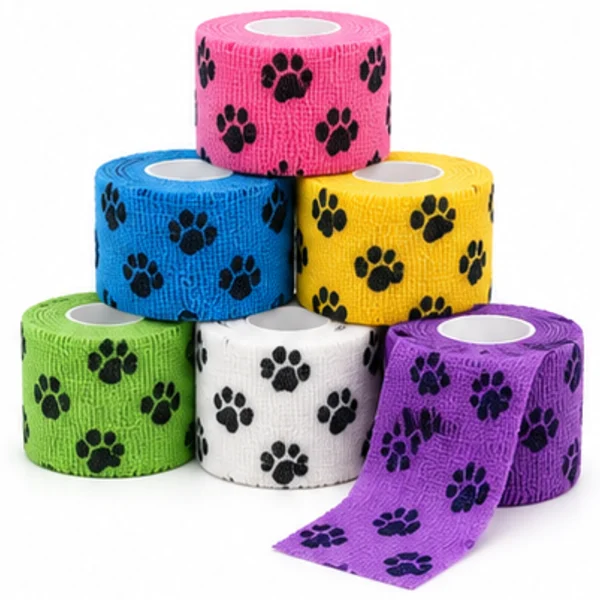
Quick answer: Vet wrap for dogs is a self-adhesive stretch bandage that sticks to itself, not to fur. For most households the Eco-Fused 6-roll pack is our top pick, because it has 2.5 cm and 5 cm rolls for small paws and bigger legs. Wrap snugly, never tightly, and check the toes at least twice a day.
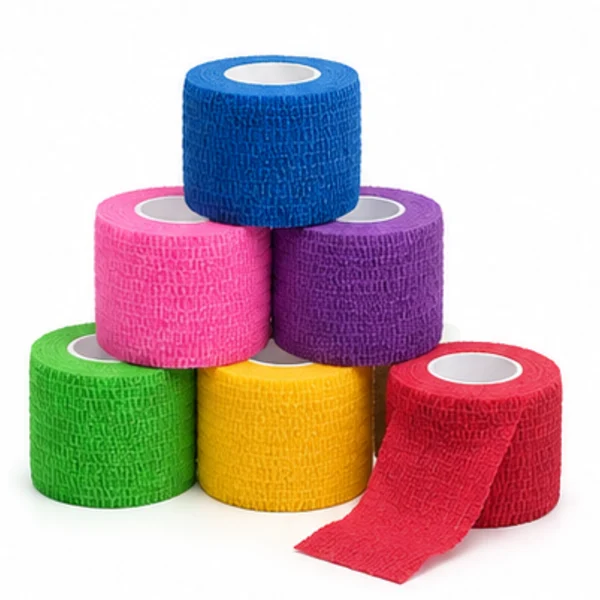
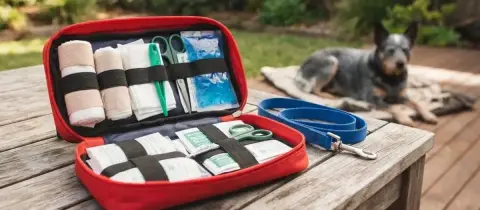
Illustration, not the actual product
Our top pickEco-Fused self-adhering bandage, 6 rolls
Vet wrap holds a clean dressing in place on a paw or leg until you can get to the vet, or while the vet's plan runs its course. It isn't a treatment, and it never replaces a vet visit. This guide compares five packs on Amazon Australia by width and roll length in centimetres, then covers how to wrap, how to spot a bandage that's too tight and which wounds shouldn't be wrapped at home at all.
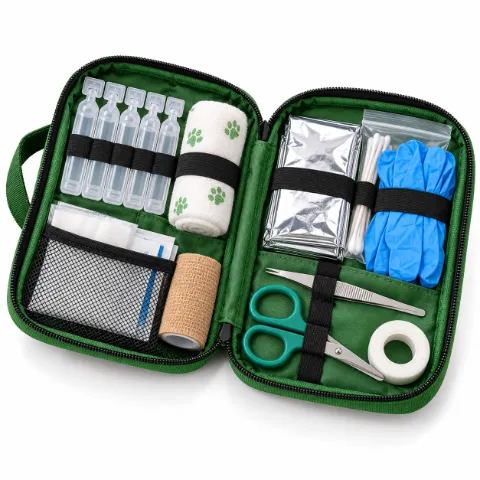
Looking for a full kit rather than a single supply? See our dog first aid kit guide, which lists a similar Eco-Fused 6-roll pack as an add-on. This page is about the wrap itself: width, length, quantity and technique.
Quick picks
Our top pickBest overall
Eco-Fused self-adhering bandage, 6 rolls
Two widths in one pack, 2.5 cm and 5 cm, labelled for dogs and cats
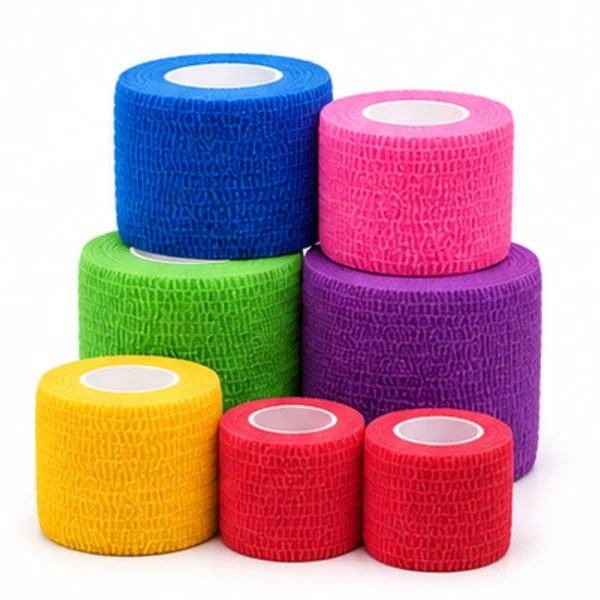
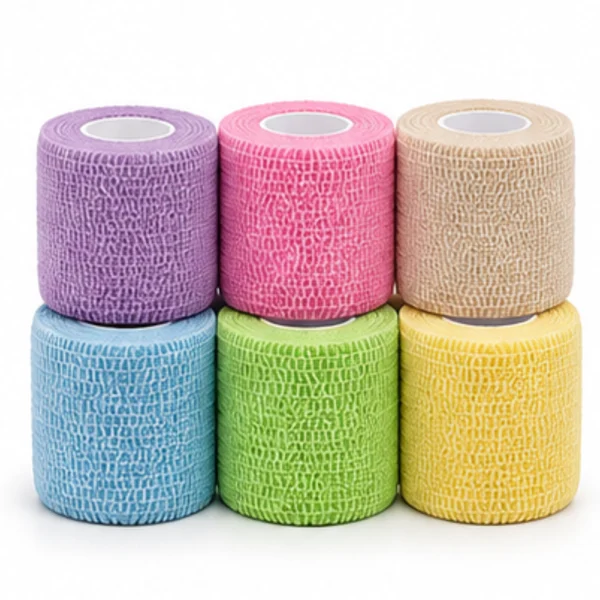
Pictures are illustrations, not the actual products.
Vet wrap compared
Details from each Amazon Australia listing, checked on 23 Nov 2026. Where the listing gives inches, we've converted to centimetres.
Swipe sideways to see every column
Product
Widths (cm)
Roll length
Rolls
Pack weight
Eco-Fused
5 and 2.5
4.57 m
6 (3 of each)
80 g
8-roll set
5 and 2.5
4.5 m
8 (4 of each)
80 g
Pet Vet Wrap
5
4.5 m
6
100 g
Prairie 6-pack
10
4.57 m (5 yards)
6, individually wrapped
249 g
Prairie bulk (add-on)
10
4.57 m (5 yards)
24
930 g
What is vet wrap and what is it for?
Vet wrap, also called cohesive or self-adhering bandage, is a stretchy non-woven tape that sticks to itself but not to hair or skin. It's used as the outer layer of a bandage, to hold a clean dressing over a paw or leg. It isn't designed to sit directly on a wound.
Not a snake bite bandage. Even the 10 cm wrap here isn't what our first aid kit page recommends for a bite. That page recommends a wide crepe or elastic bandage, and our snake bite guide has the full steps. A bite is a drive-to-the-vet emergency, so never let bandaging delay it.
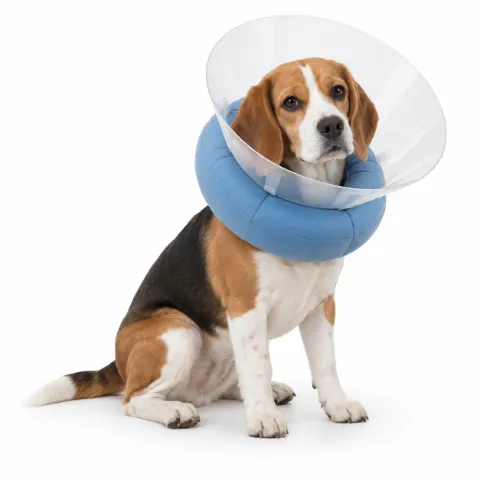
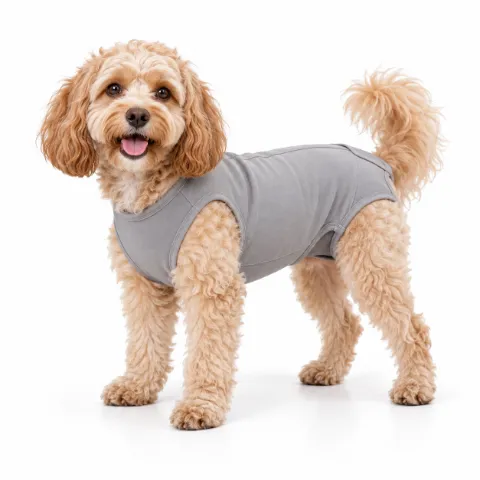
Not a licking stopper. Some listings say a wrap can prevent licking. A determined dog can chew through it, and PDSA's suggestions for stopping licking are a cone, a body suit or a protective sock. See our dog cone guide and dog recovery suit guide.
Not for deep or large wounds. Those go to a vet, as the section on wounds below explains.
Our picks in detail
1. Eco-Fused self-adhering bandage, 6 rolls: best overall
One of two picks with both widths in one pack: three 5 cm rolls and three 2.5 cm rolls, each 457 cm long. That covers a small paw and a bigger lower leg without buying twice. The listing says it's for dogs, cats and horses, doesn't stick to hair, and is breathable and water repellent. It also says a wrap can help stop licking, but we'd rely on a cone or recovery suit for that. Pack size is 19.8 x 15.1 x 6 cm and it weighs 80 g.
This is the pet-labelled version of the Eco-Fused pack on our first aid kit guide, with the same widths and roll length. We don't repeat the listing's pain-relief wording, because a wrap holds a dressing and doesn't treat anything.
Pros: two widths in one pack; labelled for dogs and cats; 4.57 m rolls; light pack for a car or kit
Cons: made in China; the 5 cm rolls are narrow for a large dog's thigh; listing wording promises more than a bandage can
Best for: a home with a small dog or cat and a larger dog, or anyone who wants one first aid supply
Skip it if: you have a giant breed and need 10 cm, or you want a bulk stock
2. Self-adhesive bandage, 8 rolls, 5 cm and 2.5 cm: best for more than one dog
The most rolls of both widths here: four rolls 5 cm x 4.5 m and four rolls 2.5 cm x 4.5 m, in non-woven material and four colours (two each of red, blue, green and orange). Colour can help in a multi-dog home, since you can keep one colour for each dog's bandage. The pack is 21.8 x 16.8 x 5.4 cm and weighs 80 g. The listing says it sticks to itself and not to hair, and tears by hand.
The listing is written for dogs, horses and people, with wrist and ankle wording, so it's a general cohesive bandage that happens to suit pets. The listing gives the roll length as both 4.5 m and 457 cm, so treat it as about 4.5 m.
Pros: four rolls of each width; four colours; tears by hand; room for a spare set
Cons: general-purpose listing rather than pet-first; the listing gives two slightly different roll lengths; no 10 cm width
Best for: more than one dog, or a spare set for the house and the car
Skip it if: you want a listing written for pets, or a wide roll for a large dog's leg
3. Pet Vet Wrap, 6 rolls, 5 cm x 4.5 m: best for one medium dog
A single width, six rolls, and nothing to decide. The listing says non-woven, breathable, doesn't stick to skin or hair, and can double in length when stretched, which helps it follow the curve of a leg. The pack is 16.6 x 11.4 x 5.6 cm and weighs 100 g.
The 5 cm width suits most paws and lower legs on a medium dog. It's a plain pick for an owner who already knows what size they use. We leave out the listing's healing claims, because a wrap holds a dressing and doesn't heal.
Pros: six rolls of the most useful width for a medium dog; stretches to follow a leg; compact pack
Cons: one width only; no wide roll for a large dog's leg
Best for: one medium dog, or a kit where you know the width you need
Skip it if: you have a small dog or a cat, where 2.5 cm suits better
4. Prairie Horse Supply vet wrap, 6 rolls, 10 cm, paw prints: best for large dogs and legs
The widest wrap on this page: six rolls of 10 cm x 4.57 m (4 in x 5 yards), each individually wrapped, so rolls stay clean in a kit. The listing says it tears by hand at an angle and doesn't stick to fur. The pack is 18.59 x 13.11 x 11.4 cm and weighs 249 g. The paw print design is just a colour choice.
The width is the point. A large dog's leg is wider than the 5 cm rolls cope with comfortably, and the extra width lets you cover a dressing in fewer turns. Even so, it's cohesive wrap, and it isn't the bandage for a snake bite. The listing covers several pack sizes and designs, so check that you've selected the 6-roll paw print pack before you order. It's sold for pets, horses and people.
Pros: 10 cm width for large legs; individually wrapped rolls; fun print; tears by hand
Cons: too wide for small paws; the listing covers several pack sizes, so check the selection before ordering; made for horses and people as well
Best for: large dogs, and covering a dressing on a lower leg
Skip it if: you have a small dog or a cat
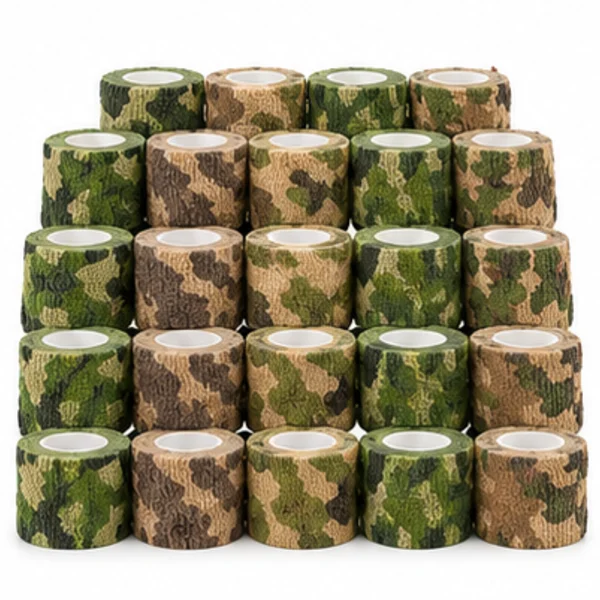
Add-on: Prairie Horse Supply vet wrap bulk, 24 rolls, 10 cm, camo
The same 10 cm wrap in a 24-roll box, in assorted camo colours, weighing 930 g. It's for breeders, rescues and multi-dog homes that go through a lot of wrap. A single household will never use this many, so skip it unless you're stocking a kennel or a rescue first aid cupboard.
Choose by body part first, then dog size. As a rough guide, 2.5 cm suits small paws and cat legs, 5 cm suits most paws and lower legs on small to medium dogs, and 10 cm suits the leg of a large dog. These are our suggestions from the roll widths, so your vet may advise differently.
Swipe sideways to see every column
Where
Small dog or cat
Medium dog
Large dog
Paw and toes
2.5 cm
5 cm
5 cm
Lower leg
2.5 cm or 5 cm
5 cm
5 cm or 10 cm
Upper leg or joint
Ask your vet first
Ask your vet first
Ask your vet first
A wider roll isn't automatically better. A 10 cm roll on a small paw bunches into a thick, stiff lump that's hard to keep snug, so match the roll to the limb. If you share your home with dogs of different sizes, a pack with two widths saves you buying twice, which is why the first two picks have both.
Pack length matters less than it looks. At about 4.5 m a roll, one wrap on a small paw uses a fraction of a roll, while a large dog's leg may take most of one. Because each wrap is single use, a six or eight roll pack is a few bandage changes, not a year's supply.
How do you wrap a paw without wrapping it too tight?
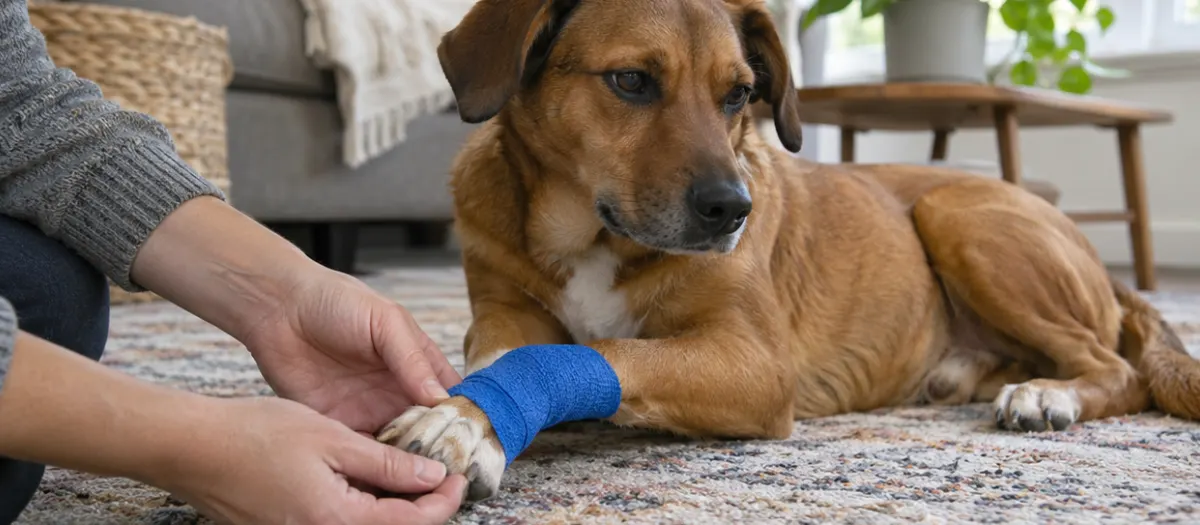
Put a clean, non-stick dressing on the wound, hold it with a light layer of padding, then lay the vet wrap over it with little stretch, overlapping each turn by about half. Keep it snug, never tight, leave the toes showing so you can check them, and ask your vet to show you the first time.
These steps are our practical suggestions, built around the checks the vets below describe:
Stop and think. If the wound is deep, a bite or a puncture, or bleeding heavily, go to the vet instead of bandaging.
Dressing first. Place a clean, dry, non-stick dressing over the wound. Never lay vet wrap straight on it.
Work from the toes up. Start at the paw and wrap upward in overlapping turns. Let the roll lie on the leg rather than pulling it, because the stretch in the wrap does the tightening.
Leave the toes out where you can. Exposed toes are your warning system, since swelling or a colour change shows up there first.
Finish and press. Press the end down so it sticks to itself, then check again a few minutes later, once your dog has stood and walked a little.
If it's bleeding, press firmly with a clean cloth for 5 to 10 minutes, and go to the vet if it hasn't stopped after 10 to 15 minutes (Sydney Animal Hospitals). Our dog wound spray guide covers cleaning a minor scrape.
Bites and punctures always go to the vet: Sydney Animal Hospitals says they often look minor on the surface but can cause serious infection and hidden damage.
Wet, soiled, smelly, bloody, slipped, too loose or too tight
Exposed toes
Normal colour and temperature, no puffiness
Swelling, redness, heat or cold, discharge or smell
Skin above or below the bandage
Looks normal
Swelling or a change in colour
Your dog
Leaves it alone
Chewing it, or suddenly starting to chew one it had ignored
VCA also says to keep the bandage dry, using a plastic bag or bootie over it for toilet trips outside, to limit exercise, and to leave removal to the vet. The vet sets the change schedule, so don't guess how long a wrap can stay on. Ask when you leave the clinic.
If your dog starts to chew a bandage it had been ignoring, treat that as a reason to call, not a habit to wait out. VCA says a problem may be developing.
When does a wound need a vet, not a wrap?
Go to a vet for bites, punctures, deep or large wounds, heavy bleeding, missing skin or anything stuck in the wound. A wrap is for a clean, minor injury you're covering on the way to care, or for a vet's bandage plan. PDSA says deep or large wounds should always be checked by a vet.
Our vet box below lists the red flags. Two points sit just outside this page's scope:
Pet-labelled wrap suits a bandaged paw, not a dog with a possible snake bite or toad poisoning. Those are emergencies, covered in our snake bite guide and cane toad poisoning guide.
A bandage doesn't tell you how your dog is. If your dog is hot, lethargic or off their food, see how to take your dog's temperature and call your vet.
Where else can you buy vet wrap?
Pet shops and vet clinics sell cohesive wrap, and your vet may send a bandage home with you after a visit. Pharmacies sell it for people, usually in sports widths, so check the width in centimetres before you buy. Cohesive wrap made for horses uses the same idea, and most of the picks here are sold for horses too.
Choose by situation
Swipe sideways to see every column
Your situation
What to look for
Our pick
One home, mixed sizes (a small dog and a larger one, or a cat)
We searched Amazon Australia for vet wrap, cohesive bandage and pet bandage packs, then shortlisted those that met all of these checks:
Well rated: a strong average rating with plenty of buyer reviews.
No red flags: no pattern of poor reviews, safety complaints or listing problems.
Available on Amazon Australia when we checked.
Width and roll length stated on the listing, so we can compare in centimetres.
Pack contents clear: the number of rolls and widths match the title and description.
Wrap type matches the job: a cohesive wrap that sticks to itself and not to hair.
These are researched picks, not products we've personally tested. We compared the specifications and features on each Amazon Australia listing, checked on 23 Nov 2026, and we didn't accept payment from any brand.
Left out this time: a listing that didn't clearly say how many rolls were in the pack, one whose title and contents gave different widths, one that described a foam hair pre-wrap rather than a bandage, a tattoo-grip tape sold mainly for machines and sport, and a pack whose listing details pointed to a different product.
When to see a vet
Go to a vet straight away for a bite or puncture, a deep or gaping wound, heavy bleeding, bleeding that hasn't stopped after 10 to 15 minutes of firm pressure, missing skin, or anything stuck in the wound. Leave anything embedded where it is. A suspected snake bite is an emergency: see our snake bite guide and call ahead.
Call your vet if a bandage is wet, smelly, bloody, slipped, too loose or too tight, if the toes are swollen, red, hot or cold, or if your dog is chewing the bandage. Some human medicines are dangerous for dogs, so ask a vet before giving anything. A wrap supports first aid until your vet sees your dog and doesn't replace that visit.
Frequently asked questions
Does vet wrap stick to a dog's fur?
Cohesive wrap is designed to stick to itself, not to hair or skin, and each listing here says so. On a long or matted coat, smooth the fur flat before you wrap, and peel the wrap back gently when it comes off rather than tugging. Ask your vet if it's caught in a tangle.
Can vet wrap go directly on a wound?
No. Put a clean, dry, non-stick dressing on the wound and use the wrap only to hold it in place. PDSA's first aid advice for an area of missing skin is to cover it with a clean, dry dressing and call your vet. The dressing is the layer that touches the wound, and the wrap goes over it.
How long can vet wrap stay on a dog?
There's no safe general number of hours or days, so the vet sets it. VCA says the vet decides the change schedule, and to check the bandage at least twice a day. If you've bandaged something yourself in an emergency, you're heading to the vet anyway, so ask them to look at it.
Can I use vet wrap as a snake bite bandage?
No. Our kit page recommends a wide crepe or elastic bandage for a snake bite, and RSPCA Australia describes a firm bandage above, over and below the bite, only if you know where it is. Bandaging is never a reason to delay. Go straight to the vet and call ahead.
Is vet wrap safe to use on cats?
The Eco-Fused listing says it suits cats, and 2.5 cm is the width to look at. Cats are small and can groom or chew a bandage off, so use only what your vet advises, check toes at least twice a day and call your vet if your cat chews it. We'd ask before wrapping a cat on your own.
How do I stop my dog chewing the bandage?
Use a cone or a recovery suit, because vet wrap alone won't stop a determined dog. PDSA suggests a buster collar, body suit or protective sock. Keep the bandage dry, distract your dog with a chew toy and, if a dog that had left it alone suddenly starts chewing it, call your vet. Our dog cone guide compares options.
Can you reuse vet wrap?
We wouldn't. Our suggestion is a fresh length each time, because a wrap that has been near a wound or been wet or soiled isn't clean, and VCA says to call the clinic about a soiled or wet bandage. None of the listings here promises reuse, which is a good reason to keep a multi-roll pack.
What's the difference between vet wrap and a crepe bandage?
Vet wrap sticks to itself and stretches, so it needs no clips or tape. A crepe or elastic bandage is a woven stretch bandage held by a clip or tape. Our kit page recommends a wide crepe or elastic one for a snake bite, and vet wrap for holding a dressing on a paw.
Product details from each linked Amazon Australia listing, checked on 23 Nov 2026.
This guide provides general information and isn't a substitute for veterinary advice. If you're concerned about your dog's wound or bandage, speak with your vet.