Dog wound spray: antiseptic sprays for minor cuts and scrapes, and when it's a vet job
By Anish PuriUpdated 23 Nov 202612 min readResearched, not tested by us
Research guide. WhiskerFinds may earn a commission from links, at no extra cost to you.
Quick answer: A dog wound spray is a no-rinse cleanser for minor grazes and shallow cuts only, and Vetericyn Plus Dog Wound Care Spray is our top pick. Bites, punctures, deep or gaping cuts, bleeding that won't stop and anything near the eye need a vet, not a spray. For a small scrape, clean salt water can do the same job.
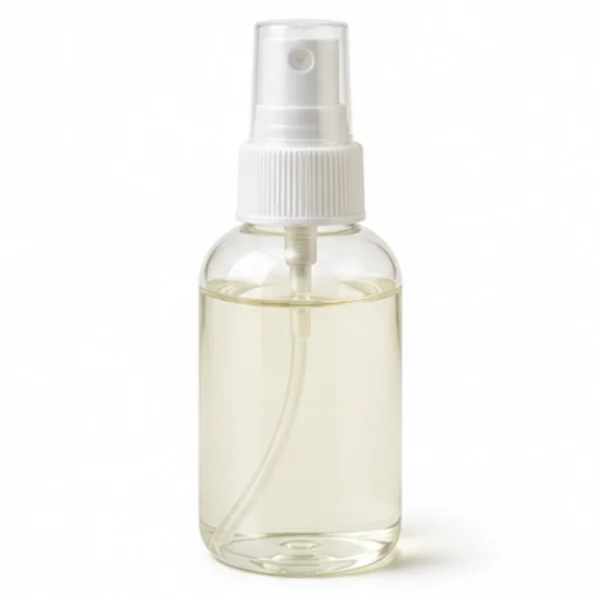
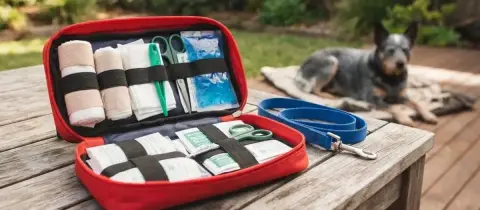
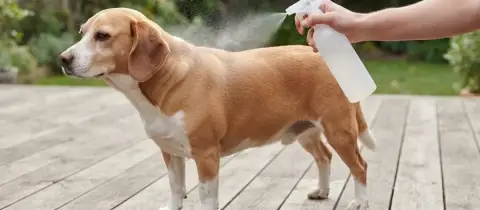
Illustration, not the actual product
Our top pickVetericyn Plus Dog Wound Care Spray, 89 ml
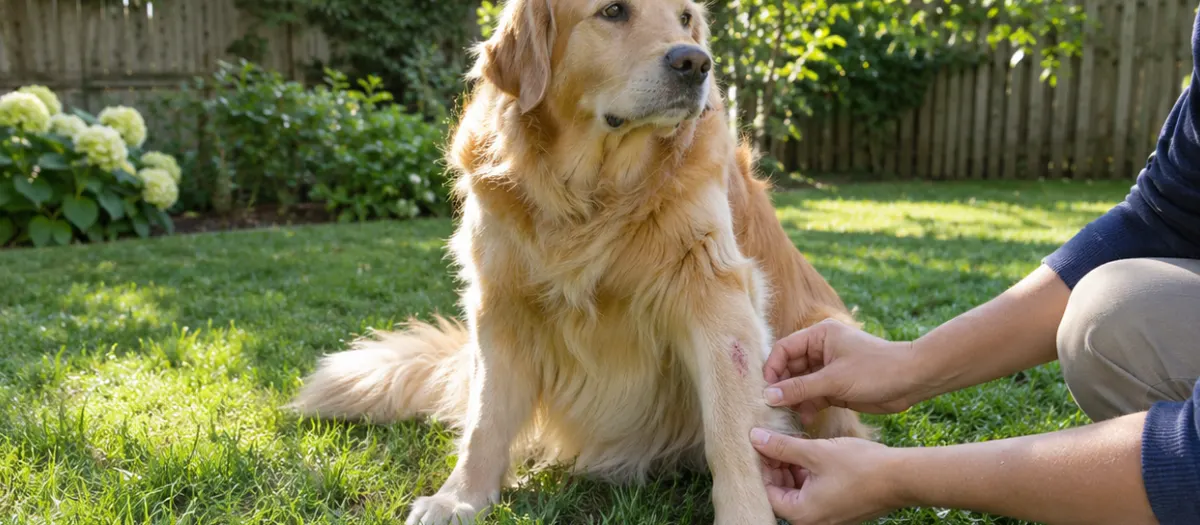
Dogs scrape themselves on fences, rocks and bindi patches, and a small graze on the elbow is usually a home job. This guide covers four sprays on Amazon Australia by active ingredient and size, but first it helps you decide whether a wound is a home job at all. Pair it with our dog first aid kit guide, which covers the rest of the kit, and our vet wrap guide for covering a scrape.
The range is thin. Only four sprays passed our checks, all four are imports, and two of them overlap, so we've kept this to four picks. Two Vetericyn products also appear on our dog itch relief spray guide, where the Hot Spot spray is covered.
Quick picks
Our top pickBest overall
Vetericyn Plus Dog Wound Care Spray, 89 ml
No-rinse hypochlorous acid cleanser with the clearest ingredient list here
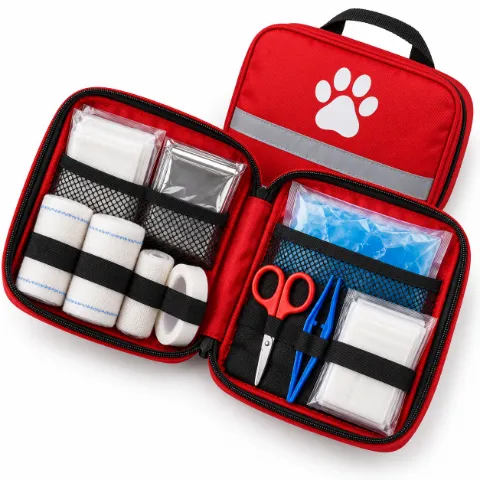
Pictures are illustrations, not the actual products.
Which dog wounds can you treat at home, and which need a vet?
Treat only a graze or a small, shallow cut at home. Bites, punctures, deep or gaping wounds, heavy bleeding, an object stuck in the wound, or anything near the eye, chest or belly need a vet. Sydney Animal Hospitals says a bite or puncture can look minor on the surface and still hide serious infection and damage under the fur.
If it hasn't healed within a few days or looks infected
Small, shallow cut
Press with a clean cloth if it bleeds, then clean
If it is large, or hasn't healed within a few days (PDSA)
Bleeding that won't stop
Firm pressure with a clean cloth for 5 to 10 minutes; add layers rather than lifting a soaked one
Go if it hasn't stopped after 10 to 15 minutes
Bite or puncture
Don't treat it yourself
Always, even if it looks tiny
Deep or gaping, or tissue showing
Pressure while you travel; no tourniquet
Straight away
Something stuck in it
Leave it in place and wrap around it
Straight away
Near the eye
Don't spray
Straight away
Sydney Animal Hospitals also lists signs of shock as a reason to go at once: pale gums, fast breathing, weakness or disorientation. If your dog was bitten by a snake, that's a different emergency, and our snake bite guide covers it. For a toad in the mouth, see our cane toad guide.
Do you need a dog wound spray at all?
Not strictly. PDSA says to clean a minor wound two to three times a day with salt water, about a teaspoon of salt in 570 ml (1 pint) of boiled, cooled water. It also says not to use other products unless your vet advises, because even veterinary antiseptics can slow healing.
So a spray is a convenience: it's pre-mixed, it needs no rinsing per the labels, and it travels in a first aid kit or a walking bag. It isn't a better treatment than clean salt water, and it never replaces a vet visit. If you want a spray, your vet can also supply an antiseptic suited to your dog, and pet shops and vet clinics both stock wound sprays.
None of the sprays here treats or heals a wound. They are cleaning tools within the routine your vet would give you.
Our picks in detail
1. Vetericyn Plus Dog Wound Care Spray, 89 ml: best overall
The clearest ingredient list here: hypochlorous acid 0.0120%, with electrolysed water, sodium chloride, phosphates and sodium hypochlorite. The directions say to spray the area a few times a day, to clean it and keep it moist. It's a small 113 g bottle that fits a first aid kit, and the listing's description says it's made in the USA. A 473 ml bottle of the same spray (522 g) suits a multi-dog home or a car box. This 89 ml bottle is our pick for most people.
The listing says it is "safe if licked" and "vet recommended". We don't repeat those as fact, and we'd still use a cone. This one is for scrapes and small cuts, not hot spots (see our itch relief guide and hot spots guide).
Pros: strength and ingredients stated; no rinsing needed per the label; small bottle plus a big one; clear directions
Cons: imported, so check the delivery details on Amazon before you order; a cleaner, not a treatment
Best for: minor grazes and shallow cuts, kept in the first aid kit
Skip it if: the wound is a bite, puncture or deep cut, or you want a gel that stays put (pick 3)
2. Felisept Wound Spray, 75 ml: best if you also have a cat
A different antiseptic from the Vetericyn picks: polyhexanide, with water and undecylenamidopropyl betaine (a cleansing agent), and no fragrance. The listing calls it a wound spray for cats, and the directions say it is also ideal for other pets, so it suits a home with a dog and a cat. The directions say to spray 2 to 3 times a day, up to 4 to 5 for heavier soiling, not to rinse it off, and to use it only on superficial wounds. Safety text says external use only, avoid the eyes, and use within 6 months of opening. It is made in Germany by Ardap Care GmbH, 110 g.
The listing says "recommended by veterinarians". That's the brand's claim. If it's a cat wound and you're unsure, ask your vet first.
Pros: a different active ingredient; labelled for cats; no fragrance; clear directions
Cons: a small bottle with a 6-month limit once opened; imported, so check the delivery details on Amazon before you order
Best for: a home with both a dog and a cat
Skip it if: you want a large bottle, or a spray labelled mainly for dogs
3. Vetericyn Plus Dog Wound Care Hydrogel Spray, 89 ml: best gel that stays where you put it
The listing calls it a sprayable hypochlorous gel. A gel should stay put better than a liquid (our reasoning from the form, not a claim on the listing), which can help on fluffy fur or on a spot that would otherwise run, such as an elbow. The Australian listing doesn't give the strength or an ingredient list, so we can't say how it compares with pick 1. It measures 12.7 x 5.08 x 5.08 cm and weighs 86 g.
Because it overlaps pick 1, you rarely need both. Choose the gel if the liquid runs off, or the liquid if you want the stated strength. It is also on our itch relief guide.
Pros: gel form, so less likely to run; same brand as pick 1; compact
Cons: strength and ingredients not given on the listing; overlaps pick 1; imported, so check the delivery details on Amazon before you order
Best for: a scrape on a fluffy dog or a spot that drips
Skip it if: you want the strength stated, or you already have pick 1
4. Zymox Topical Spray, hydrocortisone-free, 59 ml: best non-hypochlorous option
An enzyme system (lactoperoxidase, lysozyme, lactoferrin and glucose oxidase) with aloe vera, and no hydrocortisone. The label says no pre-cleaning is needed, external use only, avoid the eyes, and stop and see a vet if the condition gets worse or a reaction develops. It's labelled for dogs and cats, and it's the pick if you'd rather not use hypochlorous acid.
It's sold mainly as a hot spot spray, and the listing makes broad treatment claims we don't repeat. We'd use it only on minor scrapes. The listing details are also untidy, so check that the bottle you order is the hydrocortisone-free spray. The listing says "proven effective" and "vet recommended": those are the brand's claims.
Pros: enzyme formula with aloe; hydrocortisone-free; for dogs and cats; label says no pre-cleaning
Cons: untidy listing details; sold mainly as a hot spot spray; a long ingredient list with several preservatives and solvents; imported, so check the delivery details on Amazon before you order
Best for: a minor scrape where you want a non-hypochlorous spray
Skip it if: you'd rather have a short ingredient list, or the area is red, inflamed or weeping and you're not sure what it is (ask your vet)
What's in a dog wound spray?
Three of our four picks rely on a single antiseptic idea, and the fourth uses enzymes. All details come from each listing's ingredient text, and the brands' claims are attributed to the listing.
Aloe vera, glycerin and several preservatives and solvents; hydrocortisone-free
None of the three ingredient lists we could read includes essential oils (the hydrogel's Australian listing gives no ingredients), and never use essential oils on cats.
How do you clean a minor scrape on your dog?
Stop any bleeding first, then flush the scrape, clean it gently and stop your dog licking it. If it won't stay clean, keeps oozing or looks worse, ring your vet. These steps follow PDSA and Sydney Animal Hospitals, with the product directions where we mention a spray.
Check the wound is a home one. Use the table above. A bite, puncture or deep cut goes to a vet.
Stop any bleeding. Press firmly with a clean cloth for 5 to 10 minutes without lifting it to peek. Add layers on top if it soaks through. Don't use a tourniquet.
Move the hair away. The directions on the 473 ml Vetericyn listing say to move excess hair from the area, clipping if necessary, so the spray reaches the skin.
Flush and clean. PDSA suggests lukewarm tap water or cooled salt water. If you use a spray, follow the label: the Vetericyn Plus spray says to spray the area a few times a day, and the Felisept says 2 to 3 times a day, up to 4 or 5 for heavier soiling, without rinsing off.
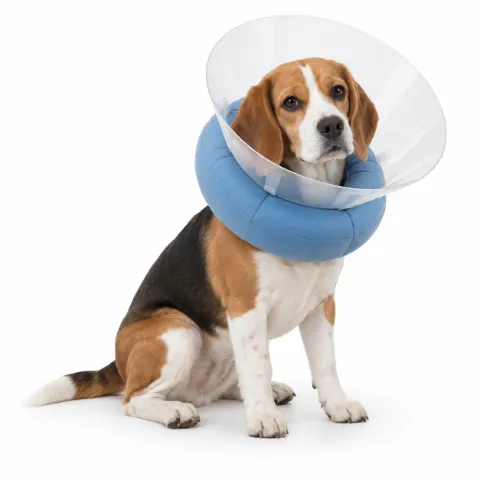
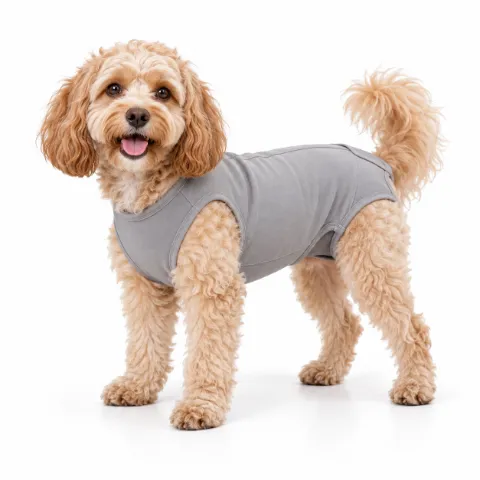
Stop licking. PDSA warns that licking, chewing and scratching can cause serious damage and infection, and suggests a cone, a body suit or a protective sock. We never call any spray lick-safe, even where a listing says so: use a dog cone or a recovery suit instead.
Cover it only if it helps. See the FAQ below, and our vet wrap guide for how to wrap without cutting off circulation.
Watch it daily. Heat, swelling, redness, discharge or a smell mean a vet visit. If your dog also seems flat or feverish, our guide to taking your dog's temperature explains when a reading helps.
Some human medicines and creams are dangerous for dogs, so ask your vet before using any human product on a wound.
Dog wound sprays compared
Specs are from each Amazon Australia listing, checked on 23 Nov 2026. Sizes are converted from the listing's ounces where needed.
Swipe sideways to see every column
Spray
Active ingredient
Size (ml)
Form
Label says
Vetericyn Plus spray
Hypochlorous acid 0.0120%
89 (473 ml bottle also sold)
Spray
For dogs; spray a few times a day to clean and keep moist
Felisept
Polyhexanide
75
Spray
Labelled for cats; directions say it also suits other pets; superficial wounds only; use within 6 months of opening
Vetericyn Plus hydrogel
Not given
89
Sprayable gel
Listing says for cuts, wounds and sores; no directions on the Australian listing
Zymox
Enzyme system
59
Spray
Dogs and cats; no pre-cleaning needed; external use only; avoid the eyes
We searched Amazon Australia for dog and pet wound sprays and shortlisted those that met all of these checks:
Well rated: a strong average rating with plenty of buyer reviews.
No red flags: no pattern of poor reviews, safety complaints or listing problems.
Available on Amazon Australia when we checked.
Active ingredient stated on the listing, or the gap disclosed.
Made for dogs or cats, not for horses or livestock.
No essential oils in any ingredient list we could read. Where a listing makes treatment claims, we leave them out.
Where a listing is imported or missing a detail, we say so in the cons. These are researched picks, not products we've personally tested. We compared the specifications and features on each Amazon Australia listing, checked on 23 Nov 2026, and we didn't accept payment from any brand.
Left out this time: the Vetericyn Hot Spot spray (it's on our itch guide), horse and poultry versions, silver sprays whose listings made claims we couldn't check, a colloidal silver liquid promoted for the eyes and ears, and a "liquid bandage" gel with no ingredient list.
When to see a vet
Go to a vet straight away for any bite or puncture, a deep or gaping cut, bleeding that hasn't stopped after 10 to 15 minutes of pressure, an object stuck in the wound, or a wound near the eye, chest or belly. Also go if your dog seems weak, has pale gums or is breathing fast. Our first aid kit guide covers what to carry, and a snake bite is its own emergency.
Ring your vet if a scrape is still sore, hot, swollen, red, weeping or smelly after a few days, if your dog keeps licking it, or if it hasn't healed. Some human medicines and creams are dangerous for dogs, so ask a vet before giving or applying anything. A spray supports first aid until the vet; it doesn't replace one.
Frequently asked questions
Can I use a human antiseptic on my dog?
Ask your vet first. PDSA says not to use other cleaners or antiseptics unless your vet advises, because even veterinary ones can slow healing. Some human medicines and creams are also dangerous for dogs. For a small graze, clean salt water or a dog-labelled spray from our list is the safer starting point.
Is it OK if my dog licks the wound spray?
Don't rely on it. Some listings say a spray is safe if licked, but that's the brand's claim, and PDSA warns that licking can cause damage and infection to a wound. Use a cone or recovery suit to stop licking, and ask your vet if you're worried about what your dog has licked.
Can I clean my dog's cut with salt water?
Yes, for a minor wound. PDSA suggests a teaspoon of salt in about 570 ml (1 pint) of boiled, cooled water, used two to three times a day, or lukewarm tap water to flush. A deep, dirty or bleeding wound still needs a vet.
How often should I spray a scrape?
Follow the label. The Vetericyn Plus spray says a few times a day and the Felisept says 2 to 3 times a day, up to 4 or 5 for heavier soiling. If the scrape isn't improving within a few days, or looks worse, stop and ring your vet.
How can I tell if my dog's wound is getting infected?
Sometimes. PDSA says that where skin is missing you should cover the area with a clean, dry dressing and call your vet, and leave it uncovered if your dog is uncomfortable with it or you have no dressing. Never wrap tightly: Sydney Animal Hospitals says you should fit two fingers between the bandage and the skin. A dressing goes under any vet wrap, as our vet wrap guide explains.
Can I use a dog wound spray on my cat?
Only if the label says so. The Felisept listing is for cats and says it suits other pets, and the Zymox listing names dogs and cats. The Vetericyn listing says it's for all animals, but for a cat wound, ask your vet. Never use essential oil products on cats.
Why does a small bite wound need a vet?
Bites and punctures always go to the vet: Sydney Animal Hospitals says they often look minor on the surface but can cause serious infection and hidden damage. A vet can clean, check and treat it properly, which a spray can't do.
Product details from each linked Amazon Australia listing, checked on 23 Nov 2026.
This guide provides general information and isn't a substitute for veterinary advice. If you're concerned about your dog's wound or health, speak with your vet.