Quick answer: Cane toad poisoning in dogs is an emergency when your dog has bitten or mouthed a toad. Wipe the gums, tongue and roof of the mouth with a wet cloth, never a hose, then call your vet or the Animal Poisons Helpline (1300 869 738, 24/7). Frothing, tremors or collapse mean go now.
Cane toads turn up on warm, wet nights, and dogs find them fast. This guide covers the signs, the first aid vets describe, a straight answer on the water question, and how to toad-proof your yard. Snakes are the other summer emergency, and our snake bite guide covers those.
What are the signs of cane toad poisoning in dogs?
Signs can include heavy drooling or frothing, very red and slimy gums, pawing at the mouth and vomiting. In more serious cases there can be disorientation, tremors, stiffness, seizures and a very fast or irregular heartbeat. A vet needs to work out how serious it is.
Greencross Vets lists these signs and says they usually appear within 30 to 60 minutes of contact, though they can start within minutes or take hours (Greencross Vets, page read 23 November 2026). RSPCA Queensland adds that signs can show up even if you never saw your dog with a toad, so sudden drooling or odd behaviour after time in the yard is worth taking seriously (RSPCA Queensland, 15 December 2020, page read 23 November 2026). Walkerville Vet also mentions head shaking, eye irritation and trouble breathing (Walkerville Vet, updated 26 March 2021, page read 23 November 2026).
What should I do if my dog licked or bit a cane toad?
Wipe your dog's mouth with a wet cloth, then phone your vet or the Animal Poisons Helpline (1300 869 738, 24/7). Wiping lifts toxin off the gums and tongue before it is absorbed. If your dog is seizing or unconscious, skip the wiping and go straight to an emergency vet, calling ahead.
- Stop more contact. Move your dog away from the toad. Keep children away from it too, and don't handle it bare-handed.
- Wipe the mouth. Greencross Vets says to wipe the gums, tongue, roof of the mouth and outside of the lips with a wet cloth for 10 to 15 minutes, rinsing the cloth after each wipe. Walkerville Vet suggests a fresh cloth or paper towel each time so you don't wipe toxin back on.
- Wipe from the back towards the front. This is our practical tip, not something we've seen written in a source. It lifts the toxin out rather than pushing it towards the throat.
- Phone the vet while you wipe. Ask someone else to ring, or put the phone on speaker. Greencross Vets says a second person can keep wiping on the way to the clinic.
- Watch closely. Greencross Vets says that in mild cases first aid may be all that's needed, with close watching for a few hours. Anything beyond drooling, such as disorientation, shivers, tremors or stiffness, means an emergency vet.
Don't try to make your dog vomit. Some human medicines are also dangerous for dogs, so ask a vet before giving anything. You don't need to stop and take a temperature first either. If you want to know when a reading helps, see how to take your dog's temperature.
Should you rinse your dog's mouth with water?
Don't hose or run tap water into the mouth. Water can run towards the throat and into the lungs, and wiping does the job more safely. Some vets describe a gentle rinse, but only with the head held down and no water aimed at the throat. If in doubt, wipe.
This is where the sources disagree, so here is the honest picture. Greencross Vets says not to wash the mouth with a hose or tap because water may enter the lungs. Walkerville Vet says vets differ on rinsing, and sees little risk if you're careful, your dog isn't struggling and you don't aim water at the throat. RSPCA Queensland describes gently flushing the mouth with the head tilted down so your dog doesn't choke, plus wiping with a damp towel several times. A frightened, drooling dog in the dark is a hard patient to rinse safely. We lean towards the cautious approach: wiping, with no water towards the throat. Ask your vet what they prefer, and ring while you wipe.
When is cane toad poisoning an emergency?
It is an emergency if your dog bit or ate a toad, has more than mild drooling, or shows tremors, seizures, collapse or breathing trouble. Eating a toad absorbs the toxin much faster than licking one (Greencross Vets). Even when your dog seems fine, a quick call to a vet is the safe move.
Walkerville Vet says dogs aren't poisoned by licking alone: the danger comes from mouthing or biting the poison gland behind the toad's eye. You often can't tell which happened, so treat any contact seriously. It also says severe cases can be fatal within an hour. RSPCA Queensland says a small amount of toxin is unlikely to be fatal, but that's no reason to skip the call.
| What you see | What it may mean | What to do |
|---|---|---|
| Mild drooling, your dog seems bright and alert | A small amount of toxin, as may happen with a lick or brief mouthing | Wipe the mouth, ring your vet, and watch closely for a few hours as Greencross Vets advises |
| Your dog bit, chewed or ate the toad | Faster absorption, so more risk | Wipe on the way and see a vet now |
| Heavy drooling, frothing, very red gums, pawing at the mouth, vomiting | More toxin absorbed | Emergency vet now, keep wiping if you can |
| Disorientation, shivers, tremors, stiffness | Toxin affecting the nervous system | Emergency vet now, call ahead |
| Seizure, collapse, unconsciousness | Severe poisoning | Don't wipe. Go straight to an emergency vet and call ahead |
| Very fast or irregular heartbeat, trouble breathing | The heart or lungs may be affected | Emergency vet now |
Why are some dogs more at risk?
Dogs that chase and mouth things are more at risk, including puppies and terriers. Greencross Vets says they are drawn to the toad's movement. Time outdoors on warm, wet nights raises the odds for any dog, because that's when toads are out.
Walkerville Vet says toads are drawn to warmth, water and night, especially in the wet season, and that sprinklers, water bowls, pools and outdoor lights draw them in. Greencross Vets adds that toads are most common in warmer months, though in tropical north Queensland they are around all year. We can't give you a map of where cane toads live, so ask your council if you're unsure about your suburb.
How can I keep cane toads out of my yard?
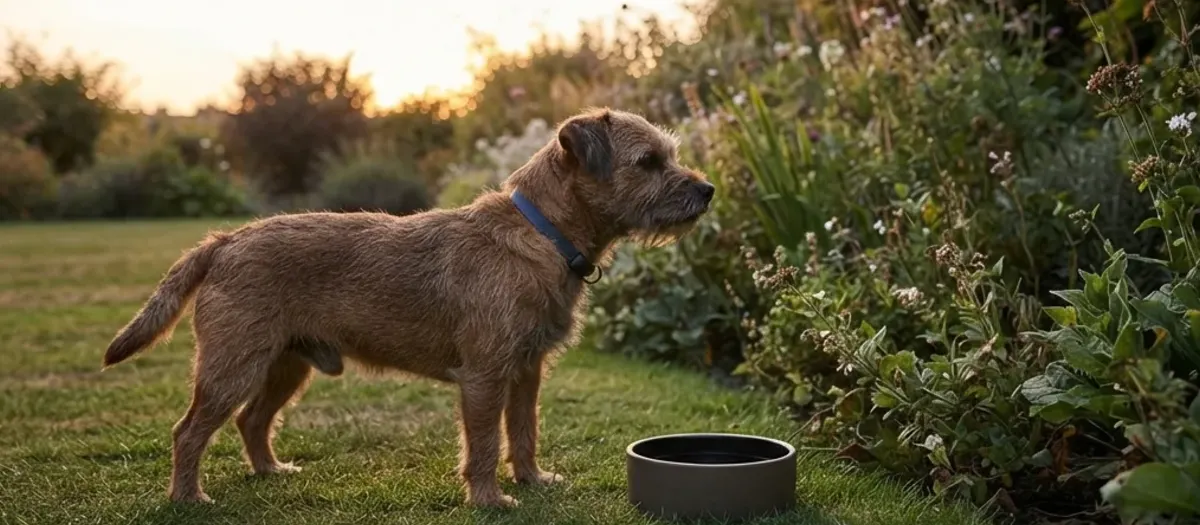
Make the yard less appealing at night: raise or move water and food bowls, switch off outdoor lights, seal compost and fix fence gaps. Keep your dog inside on warm, wet nights. None of this guarantees a toad-free yard, so a night-time check before letting your dog out helps too.
The table below pulls together the advice from Walkerville Vet and the City of Moreton Bay (a Queensland council).
| Spot | Why toads come | Fix |
|---|---|---|
| Water bowls and food bowls outside | Water and pet food attract toads | Raise or move bowls, bring food in after meals, or feed indoors |
| Pool | Water, especially at night | Cover it when not in use |
| Sprinklers and wet lawn | Damp ground on warm nights | Check the lawn before letting your dog out after watering |
| Outdoor lights | Walkerville Vet lists them as an attractant | Turn them off when not needed |
| Compost and kitchen scraps | Scraps can draw toads in | Use sealed bins that toads can't get into |
| Fence gaps | An easy way in | Fix holes bigger than 25 mm (Walkerville Vet) |
| Ponds | Water draws toads | Fence at least 50 cm high, holes no wider than 1 cm, buried at least 10 cm (City of Moreton Bay) |
Check an animal really is a cane toad before you act on it, because some native frogs look similar (City of Moreton Bay). The FAQs below cover tadpoles, telling toads from frogs, and humane removal.
Useful guides
We don't recommend any product for cane toad poisoning, because no product treats it. These guides help with the wider first aid picture.
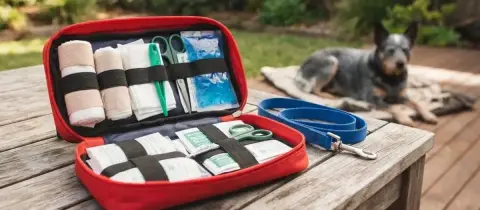
- Dog first aid kits: what to pack so you can act fast.
- Snake bite in dogs: the other summer emergency, with its own steps.
When to see a vet
See a vet now, and call ahead, if your dog has bitten, chewed or eaten a cane toad. You can also call the Animal Poisons Helpline (1300 869 738, 24/7).
- Frothing or heavy drooling
- Very red, slimy gums
- Tremors, stiffness or seizures
- Collapse or unconsciousness
- A very fast or irregular heartbeat, or trouble breathing
- Any mouthing of a toad, even if your dog seems fine
Don't wipe the mouth of a dog that is seizing or unconscious. If someone else can drive, they can keep wiping on the way; if you're alone, focus on getting there safely. For other poisons, see our dog poisoning guide, and for bites and stings, our bee sting guide.
Frequently asked questions
Can a dog die from licking a cane toad?
Walkerville Vet says licking alone doesn't poison a dog, but mouthing or biting a toad can, and severe cases can be fatal. Because you can't tell how much toxin your dog took in, wipe the mouth and ring your vet or the Animal Poisons Helpline (1300 869 738, 24/7).
How long after touching a cane toad will a dog show signs?
Greencross Vets says signs usually appear within 30 to 60 minutes, but can start within minutes or take hours, depending on how much toxin was absorbed. Walkerville Vet says signs can begin almost immediately after mouthing. Wipe the mouth straight away and ring your vet, rather than waiting to see what happens.
Are cane toads poisonous to cats?
Yes, they can be, but cats are poisoned much less often. Greencross Vets calls it rare, and Walkerville Vet says cats are more cautious. Walkerville Vet adds that cat signs can include hind leg weakness and a fixed, vacant stare. If your cat has mouthed a toad, call a vet.
Are cane toad eggs and tadpoles poisonous to dogs?
Cane toads are poisonous at every life stage, according to the City of Moreton Bay, so eggs and tadpoles in a pond or water bowl count too. Keep your dog away from ponds where toads breed, and call your vet if your dog has eaten eggs or tadpoles, or drunk from a pond where toads are breeding, even if they seem fine.
How do I tell a cane toad from a native frog?
RSPCA Queensland says native frogs have smooth skin, while cane toads are rough and warty with large glands on the shoulders. Some young toads are about the size of an adult native frog, which is usually around 4 cm. If you aren't certain, leave it alone, and ask your council or a local wildlife group.
What will the vet do for cane toad poisoning?
There's no antidote, so treatment supports your dog while the toxin wears off. Walkerville Vet says that can mean a drip, heart rhythm drugs, sedation or oxygen. The toxin's effects last a few hours, but recovery can take days. Your vet will explain what your dog needs.
How do I humanely get rid of cane toads in my yard?
RSPCA Queensland describes a spray made for cane toads, used as the can directs, or stepped cooling in the fridge for 12 hours then the freezer for 24 hours, wearing gloves. Be sure it's not a native frog first. Keep your dog away, confirm the toad is dead, then put it in the wheelie bin or bury it deep enough that your dog can't dig it up.
My dog seems fine after mouthing a toad. Do I still need the vet?
Yes, ring your vet. Greencross Vets says a dog that has bitten or eaten a toad needs a vet immediately, and signs can take hours to appear. For a lick with only mild drooling, it describes watching closely after first aid. Your vet can tell you which applies.
Related guides
- Dog beaches on the Gold Coast and dog beaches on the Sunshine Coast and Noosa
- Dog first aid kits: what to pack
- Snake bite in dogs
- How to take your dog's temperature
- Vet wrap for dogs
- Dog wound spray
- Dog stung by a bee
- Foods you must never use: the toxic foods list
- All our dog guides
Sources
- Greencross Vets, Cane toad poisoning in dogs: treatment and prevention, no date shown, page read 23 November 2026 (https://www.greencrossvets.com.au/pet-library/articles-of-interest/cane-toad-poisoning/)
- Walkerville Vet, Help! My dog was poisoned by a cane toad, updated 26 March 2021, page read 23 November 2026 (https://www.walkervillevet.com.au/blog/cane-toad-poisoning/)
- RSPCA Queensland, Cane toads: an introduced menace, 15 December 2020, page read 23 November 2026 (https://rspcaqld.org.au/blog/wildlife-conservation/cane-toads-an-introduced-menace)
- City of Moreton Bay, Cane toads, page read 23 November 2026 (https://www.moretonbay.qld.gov.au/Services/Environment/Invasive-Plants-Pest-Animals/Cane-Toads)
This guide provides general information and isn't a substitute for veterinary advice. If you're concerned about your dog's health or a possible cane toad poisoning, speak with your vet.