Quick answer: Dog poisoning symptoms depend on the poison, and some are slow to show, so don't wait for them. If your dog may have eaten something harmful, take the packet away, then call your vet or the Animal Poisons Helpline (1300 869 738, 24/7) straight away. Never make your dog vomit at home.
This guide covers the signs, what to do in the first hour, how fast different poisons act and how to dog-proof each room. For chocolate in detail, see can dogs eat chocolate.
What are the signs of poisoning in a dog?
Signs can include drooling, vomiting, diarrhoea, restlessness, tremors, unusual tiredness or bleeding, but they vary with the poison and some don't show for hours or days. A dog with no signs may still need a vet, so act on what your dog could have eaten, not only on how they look.
Look at the whole picture. Drooling and panting after a garden walk is more consistent with one problem, while slow tiredness and bruising is more consistent with another, and only a vet can work out which. Many of these signs also have everyday causes, such as a dog vomiting yellow bile or diarrhoea, so the context matters: did your dog get into the shed, the bin or the handbag?
What should I do if my dog ate something poisonous?
Move your dog away, remove what's left, then call your vet or the Animal Poisons Helpline (1300 869 738, 24/7) and follow their advice. Have the packet or label ready. Don't wait for signs, and don't try home remedies.
First hour checklist
- Move your dog away and pick up whatever is left, including wrappers and spilled pellets.
- Don't make your dog vomit and don't give milk, salt, oil or anything else to "settle" them.
- Call your vet or the Animal Poisons Helpline (1300 869 738, 24/7). Calling first means you'll be told whether to come in.
- Have the details ready: what it was (the packet or label), your best guess of how much, when, and your dog's weight.
- Keep other pets and children away from the area and the leftovers.
- Go to the vet if told to, and call ahead so the team is ready. Take the packet with you.
The helpline may charge a consultation fee, so ask when you call, or ask your vet which service they prefer.
Should I make my dog vomit at home?
No. Don't try to make your dog vomit at home unless a vet tells you to. Some poisons do more harm coming back up, and home methods can hurt your dog, so the decision belongs to a vet who knows what was eaten and when.
For grapes, the AKC warns against using hydrogen peroxide at home because of the risk of lung damage (AKC, as cited on our grapes guide). If a vet does decide vomiting is right, they do it in the clinic with the tools to manage it. Some human medicines are also dangerous for dogs, so ask a vet before giving anything at all.
What are the signs for each type of poison?
Snail bait acts within minutes to hours, anticoagulant rat bait can be slow, and chocolate usually takes several hours. This table sets out where each poison hides at home and the first signs sources describe, so you can tell the vet what you suspect.
| Poison | Where it hides | Typical first signs | How fast |
|---|---|---|---|
| Snail and slug bait | Garden beds, sheds, spring planting | Drooling, vomiting, panting, anxiety, then tremors and seizures | VCA: minutes to 3 hours. RSPCA: sometimes within an hour |
| Rat and mouse bait (anticoagulant type) | Shed, garage, roof space | Slow, uncontrolled bleeding (RSPCA) | Signs may be delayed, so don't wait |
| Chocolate | Pantry, handbags, Easter and Christmas | Thirst, vomiting, diarrhoea, restlessness | Usually 6 to 12 hours (Merck). See our chocolate guide |
| Grapes, raisins, sultanas | Fruit bowl, hot cross buns, puddings | Vomiting, diarrhoea, tiredness, thirst | Hours; see our grapes guide |
| Macadamia nuts | Biscuits, nut mixes | See our macadamia guide | See guide |
| Onion, garlic, xylitol | Cooked meals, sugar-free gum, some spreads | Call straight away without waiting for signs | See toxic foods list |
| Human medicines | Handbags, bedside tables, bathrooms | Varies a lot by medicine | Ask a vet; don't wait |
| Cocoa mulch and fertilisers | Garden, shed | Mulch contains theobromine, though the RSPCA says it is generally not available in Australia (see our chocolate guide); fertilisers range from tummy upset to serious harm (RSPCA) | Call a vet straight away |
| Lilies (cats) | Bunches and vases | Lethal to cats: see our lilies guide | Emergency |
How long after eating something toxic will a dog show signs?
It depends on the poison. Snail bait can act within minutes to a few hours, chocolate usually takes 6 to 12 hours, and some poisons, including anticoagulant rat bait, may take longer to show. Because timing varies, call your vet or the helpline at once rather than waiting.
The VCA says signs of metaldehyde (snail bait) poisoning usually appear within minutes to three hours (VCA Animal Hospitals, updated 7 August 2026). The Merck Veterinary Manual says chocolate signs usually start 6 to 12 hours after eating and can last up to 72 hours in severe cases (Merck Veterinary Manual). Other chocolate sources give slightly different windows, which we explain on the chocolate guide.
What are the most common poisons in Australian homes and yards?
Garden baits and fertilisers, human medicines, chocolate, grapes and raisins, and sugar-free products with xylitol come up again and again. Rat and snail baits matter most outside, while medicines and foods matter most inside, especially around Easter and Christmas.
The RSPCA says most rat and mouse baits contain warfarin-like anticoagulants that cause slow, uncontrolled bleeding, and that baits are designed to attract animals. It also says snail and slug bait can be fatal even in small amounts, and the pellets can look like dry dog food (RSPCA Australia Knowledgebase, updated 25 February 2022). Spring planting is when many people put snail bait down, so check beds and sheds then, and ask neighbours what they use if your dog roams.
For medicines, the best figures are American. The ASPCA's 2025 call data (US only) put over-the-counter medicines and supplements at the top of its categories, ahead of food and drink, with chocolate and rodenticides also on the list. The ASPCA advises keeping medicines in closed cabinets, and notes that vitamins and pain relievers are often left in bags and purses (ASPCA, 15 March 2026). We don't have Australian figures, but the lesson transfers: handbags on the floor are a risk.
Foods are the other big group. Our toxic foods list has the full list, so we won't repeat it here. Christmas brings its own traps, covered in our Christmas food guide.
How do I dog-proof my house room by room?
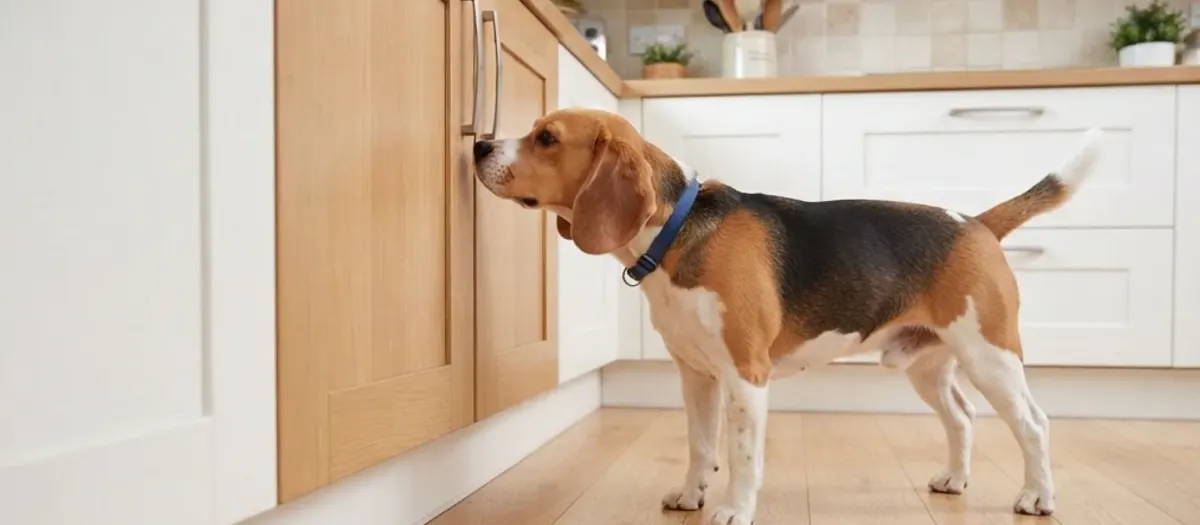
Put dangerous things behind a closed door, in a lockable box or up high, and plan for a clever dog. Locks and bins are management, not guarantees: strong dogs can beat adhesive locks, so keep medicines and baits both locked and out of reach.
| Room | Main risk | What helps |
|---|---|---|
| Kitchen and pantry | Chocolate, grapes, bin scraps | A lidded bin (dog proof bin guide), cupboard and fridge locks (cabinet locks guide) |
| Laundry | Detergent pods, cleaners | Locks on low cupboards (cabinet locks guide), products stored up high |
| Bathroom and bedroom | Medicines, handbags | A lockable medicine box, bags hung up, not left on the floor |
| Lounge and bedroom | Chewed cords | Unplug where you can, and cover the rest (cord protector guide) |
| Garden and shed | Baits, mulch, fertiliser | Keep packets and bags shut away in the shed. The RSPCA says hiding baits in hard-to-reach places often fails, and suggests more humane pest control instead |
A chewed live cord is an injury rather than a poisoning, but it belongs on this list. PetMD says to switch off the power before touching your dog, and to see a vet even if your dog seems fine, because lung fluid can take 12 to 36 hours to appear (PetMD, 19 July 2026). Our cord guide covers this in full.
A dog gate across the kitchen doorway can also keep your dog out while shopping is unpacked or a feast is on the bench.
Useful guides
These are links to our own buying guides, not single products. None of them makes a home dog-proof on its own.
- Dog proof bins: lid locks and cupboard bins compared, with capacity in litres and size in cm.
- Pet proof cabinet locks: magnetic, latch, strap and fridge locks, plus a lockable medicine box.
- Cord protectors for pets: tubing and sleeves for cords you can't move.
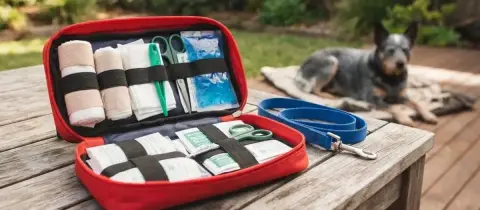
- Dog first aid kits: what to pack, so the packet, a towel and your vet's number are in one place.
When to see a vet
Call your vet or the Animal Poisons Helpline (1300 869 738, 24/7) now if your dog may have eaten something poisonous, even if they seem fine.
- Drooling, vomiting or retching, especially with panting or anxiety
- Tremors, twitching, a wobbly walk or seizures
- Bleeding, bruising, pale gums or unusual tiredness
- Collapse, trouble breathing or blue-tinged gums
- Any bite on a live cord, or burns in the mouth
Take the packet or label with you and call ahead. Don't make your dog vomit at home. See our chocolate guide, grapes guide and toxic foods list.
Frequently asked questions
Can a dog be poisoned and still seem fine at first?
Yes. Some poisons take hours or days to show. The Merck Veterinary Manual says chocolate signs usually start 6 to 12 hours after eating, and the RSPCA says anticoagulant baits cause slow bleeding. Call your vet or the Animal Poisons Helpline (1300 869 738, 24/7) even if your dog looks well.
Who should I call first, my vet or the Animal Poisons Helpline?
Either is a sound first call. Your vet knows your dog and can tell you to come in at once, while the helpline can advise on the poison itself. If it's after hours, call the helpline or your nearest emergency clinic. Confirm hours and fees when you ring.
What if I didn't see my dog eat it but I suspect poison?
Treat it as a possible poisoning and call your vet. Look for torn packets, chewed bottles, missing pellets or a dog who got into the shed or garden. Take whatever you find with you. Sources suggest not waiting for signs, so describe where your dog was and what was within reach.
Can poisoning cause problems days later?
Yes, with some poisons. The RSPCA says anticoagulant baits cause slow, uncontrolled bleeding, and VCA says some dogs that survive snail bait poisoning develop liver failure two to three days later. That is why a vet may want to monitor your dog even after the first signs settle.
Should I give my dog milk, salt water or oil after it eats poison?
No. Don't give milk, salt water, oil or anything else, and don't make your dog vomit. Home remedies can delay proper treatment, and only a vet should decide what your dog needs. Call your vet or the helpline and do exactly what they advise.
Can a dog recover from poisoning?
Many dogs do, but it depends on the poison, the amount and how quickly treatment starts. The RSPCA says quick veterinary care gives the best chance with chocolate (as cited on our chocolate guide), and the same applies in general. Treatment is a vet's job, so call at once rather than waiting to see how your dog goes.
Is the garden more dangerous for dogs in spring?
It can be, because many gardeners put down snail bait, fertiliser and mulch when they plant in spring. The RSPCA says snail pellets can look like dry dog food and can be fatal in small amounts. Keep dogs away from treated beds, store products in closed containers, and call a vet straight away if you suspect your dog got into any.
Are cats poisoned by the same things?
Many poisons overlap, and chocolate and baits are a risk for cats too. Lilies are lethal to cats, so keep them out of the home. Our lily guide explains why, and what cats can eat lists safe and toxic foods.
Related guides
- Can dogs eat chocolate? Poisoning symptoms and what to do
- Can dogs eat grapes? Why any amount is an emergency
- Can dogs eat macadamia nuts?
- Foods you must never use: the toxic foods list
- Can dogs eat ham? Christmas food and what to avoid
- Dog proof bins
- Pet proof cabinet locks
- Cord protectors for pets
- Best dog first aid kits
- Are lilies poisonous to cats?
Sources
- RSPCA Australia Knowledgebase, What garden dangers must I protect my pet from? updated 25 February 2022, page read 23 November 2026 (https://kb.rspca.org.au/knowledge-base/what-garden-dangers-must-i-protect-my-pet-from/)
- VCA Animal Hospitals, Metaldehyde (slug and snail bait) poisoning, updated 7 August 2026, page read 23 November 2026 (https://vcahospitals.com/know-your-pet/metaldehyde-toxicity-slug-bait-poisoning)
- Merck Veterinary Manual, Chocolate toxicosis in animals, page read 23 November 2026 (https://www.merckvetmanual.com/toxicology/food-hazards/chocolate-toxicosis-in-animals)
- ASPCA, The Top 10 Toxins of 2025, 15 March 2026, page read 23 November 2026 (https://www.aspca.org/news/top-10-toxins-2025)
- PetMD, Electrocution in dogs, by Rhiannon Koehler, DVM, 19 July 2026, page read 23 November 2026 (https://www.petmd.com/dog/conditions/cardiovascular/electrocution-dogs)
This guide provides general information and isn't a substitute for veterinary advice. If you're concerned about your dog's health or something they've eaten, speak with your vet.