Quick answer: Yes, lilies are poisonous to cats. True lilies and daylilies are extremely toxic, and even pollen on fur or water from a vase can be enough to harm the kidneys. Treat any contact as an emergency: call your vet or an emergency vet straight away, before your cat shows any signs.
Lilies turn up in Christmas bouquets, supermarket buckets and gifts from well-meaning friends, and most people have no idea how dangerous they are to cats. This guide explains which lilies matter, what to do if your cat gets near one, and how to keep your home safe. It sits alongside our cat Christmas tree guide, which covers the other festive hazards.
Are all lilies poisonous to cats?
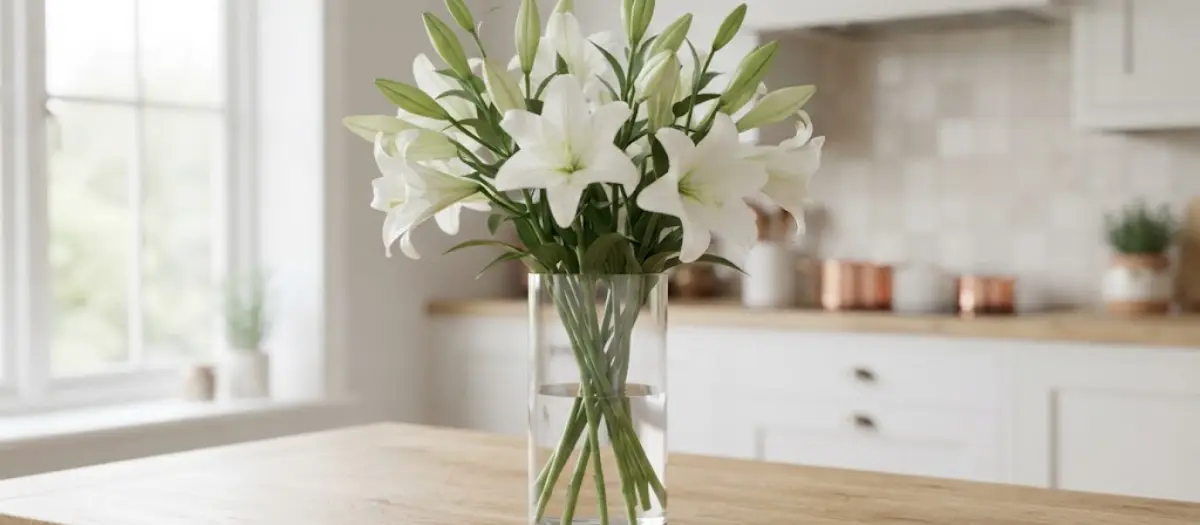
No, but the dangerous ones are common. RSPCA Australia says true lilies (Lilium) and daylilies (Hemerocallis) are extremely toxic to cats. Every part is toxic, including petals, stems, leaves and pollen. Even a small amount may cause kidney failure, which can be fatal (RSPCA Australia Knowledgebase, updated 18 December 2024, page read 1 November 2026).
The RSPCA page names Easter, Asiatic, Tiger, Stargazer, Calla, Leopard, Panther, Yellow, Trumpet, White and Day lilies. The ASPCA adds Oriental lilies to the list of Lilium names and says small amounts can cause severe kidney injury (ASPCA, Which lilies are toxic to pets?, 6 April 2022, page read 1 November 2026).
Pollen matters because cats groom. RSPCA Australia says pollen can land on a cat's fur and be swallowed when they clean themselves, and that the water in a vase of cut lilies is thought to be toxic. UC Davis veterinarians also list licking pollen from paws and drinking vase water as dangers (UC Davis, 3 April 2009, page read 1 November 2026). So a cat doesn't have to chew the flower.
Is the Christmas lily poisonous to cats?
Treat it as dangerous. "Christmas lily" isn't one clearly defined plant in the sources we opened, and shops don't always give the botanical name, so we can't tell you which species is in your bouquet. The safe rule is simple: any lily-type flower may be a true lily, and true lilies are the ones that can cause kidney failure in cats.
Ask the florist or shop for the plant's botanical name, or skip lilies altogether. If a name ends in "lily" and nobody can confirm it isn't Lilium or Hemerocallis, keep it out of the house. Christmas bouquets, centrepieces and gift arrangements are the usual way lilies sneak in, so check what's in them before they come through the door.
What happens if a cat eats or touches a lily?
A cat may start with vomiting and drooling, then go quiet and stop eating. RSPCA Australia lists vomiting, heavy drooling, loss of appetite, low mood, lethargy, dehydration and changes in urination, and says kidney failure generally develops within 12 to 72 hours of ingestion.
Timing is the important part. The ASPCA says kidney injury can be prevented with aggressive treatment at a veterinary hospital, but is often fatal if treatment is delayed more than 18 hours after the cat ate the plant. UC Davis vets say a poisoned cat very likely faces kidney failure within 36 to 72 hours without treatment. Outcomes vary: some cats recover with minimal therapy, while others need weeks of dialysis.
Signs may not show early, so don't wait for them. If your cat has been near a lily, go to the vet while your cat still seems fine.
What to do if your cat touches a lily
Call your vet or an emergency vet straight away and say your cat has been near a lily. RSPCA Australia describes lily poisoning as an emergency needing immediate veterinary care. Don't wait to see whether signs appear.
Here is a sensible order, using the steps the sources give:
- Phone your vet or after-hours emergency vet now. Tell them it's a lily and how much of the plant, pollen or water your cat may have had.
- Take the plant, or a photo of it, so the vet can identify what it was.
- Remove the lilies from the house, including the vase water, so no other animal can get to them. Wear gloves if there's pollen.
- Don't try to make your cat vomit at home unless a vet tells you to. Home remedies can cost time or cause harm.
- Travel safely. Use a secure cat carrier and stay calm.
The ASPCA also advises calling your veterinarian or its poison control line if you think your pet was exposed. Its line is a US number, so in Australia your vet or an emergency vet is the place to start.
When to see a vet
This is an emergency. Go to your vet or the nearest emergency vet straight away if your cat has chewed, licked or swallowed any part of a lily, has pollen on their coat, or has drunk vase water. Go even if your cat seems well.
- vomiting or heavy drooling
- not eating, hiding, or unusually quiet and tired
- drinking or urinating much more or much less than usual
RSPCA Australia says kidney failure can follow even small amounts and treatment depends on acting early (RSPCA Australia Knowledgebase, page read 1 November 2026). Don't wait for signs, and don't induce vomiting unless your vet tells you to.
Are peace lilies and other lilies poisonous to cats?
Peace lilies, calla lilies and Peruvian lilies are not Lilium, so they carry a different risk, but they are not all harmless. Peace and calla lilies can irritate the mouth, and lily of the valley can affect the heart. The table below shows what the ASPCA says for each.
| Plant | Same group as true lilies? | Risk to cats, per source |
|---|---|---|
| Easter lily (Lilium longiflorum) | Yes, Lilium | Toxic. Vomiting, poor appetite, lethargy and kidney failure possible |
| Daylily (Hemerocallis) | No, but just as dangerous | Can cause severe kidney injury |
| Peace lily (Spathiphyllum) | No | Toxic: mouth irritation, drooling, vomiting, trouble swallowing |
| Calla lily (Zantedeschia) | No, but RSPCA Australia lists it with the dangerous lilies | Toxic per ASPCA: mouth irritation, drooling, vomiting. Keep it away from cats |
| Peruvian lily (Alstroemeria) | No | ASPCA lists as non-toxic to cats and dogs |
| Lily of the valley (Convallaria) | No | Toxic: vomiting, irregular heartbeat, seizures possible |
Sources disagree a little. UC Davis veterinarians describe peace and calla lilies as harmless to cats, the ASPCA lists both as toxic because of mouth irritation, and RSPCA Australia includes calla lilies in its list of lilies to keep away from cats. The ASPCA article says peace lily is rarely serious, and that Peruvian lily may cause vomiting or diarrhoea but is not expected to cause life-threatening organ injury. Our advice: don't rely on a plant being "milder", and call your vet if your cat chews any of them (ASPCA peace lily, calla lily, Peruvian lily, lily of the valley, all read 1 November 2026).
Are lilies poisonous to dogs?
Sources give a mixed picture, so ask your vet. The ASPCA says Asiatic lilies and daylilies are toxic to both dogs and cats, but the effects are much more severe in cats. Its Easter lily page lists that lily as non-toxic to dogs and says cats are the sole species known to be affected (ASPCA Easter lily, page read 1 November 2026).
If you share a home with both, keep lilies out of reach of both. A dog that eats a bouquet may still get an upset stomach, and a dog can carry pollen or petals to where a cat finds them. If your dog has eaten any lily, call your vet.
How do I keep lilies out of a cat home at Christmas?
Skip lilies completely and ask others to do the same. RSPCA Australia says to keep lilies of any kind away from cats, including cut flowers, potted plants and garden beds, and the ASPCA says to identify any lily before bringing it home.
Practical steps for the festive season:
- Tell family and friends before they arrive with flowers. A short message avoids an awkward moment on the day.
- Ask the florist for a lily-free bouquet and check each stem by name.
- Choose a flower-free gift instead. Our gifts for cat lovers and Christmas gifts for cats guides have ideas that are safe in a home with a cat.
- Give your cat something safe to chew. A pot of cat grass is a better plant to have around.
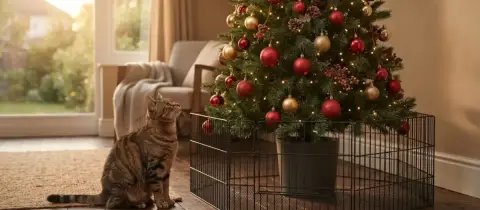
- Cat-proof the rest of the tree. Our cat Christmas tree guide covers placement, and a Christmas tree fence or a cat Christmas tree tower can help. Pick cat Christmas ornaments that don't dangle or shatter, and keep tinsel and ribbon away (see kitten proofing).
Frequently asked questions
What is the most toxic flower to cats?
True lilies and daylilies are the flowers RSPCA Australia singles out, because even a small amount, including pollen, can cause fatal kidney failure. Other flowers can poison cats too, so check any plant against the ASPCA list before it comes home, and treat lilies as the one to never allow in a cat home.
Is the Christmas lily poisonous to cats?
Treat it as dangerous. "Christmas lily" isn't a single plant we could confirm, and a bouquet sold under that name may be a true lily. True lilies can cause kidney failure in cats, so ask for the botanical name or choose different flowers and keep your cat clear.
What happens if my cat sniffs or touches a lily?
Even a sniff can leave pollen on the nose and fur, and RSPCA Australia says pollen can be swallowed during grooming, and all parts of the plant, including pollen, are toxic. Treat any contact as an emergency: call your vet, say it was a lily and describe what happened, rather than waiting for signs.
How long after eating a lily does a cat get sick?
Vomiting and drooling can start early, and RSPCA Australia says kidney failure generally develops within 12 to 72 hours. The ASPCA says treatment is often too late after about 18 hours, so don't wait for signs. Phone a vet as soon as you know.
Are peace lilies poisonous to cats?
The ASPCA lists the peace lily as toxic to cats, mainly causing mouth irritation, drooling and vomiting. It is not a true lily and doesn't carry the same kidney risk, but it's still best kept away from cats. Call your vet if your cat chews one.
Are white lilies poisonous to cats?
Yes, if they are true lilies. RSPCA Australia names White lilies alongside Easter, Asiatic and Stargazer lilies in its list of lilies that are extremely toxic to cats. Colour tells you nothing about safety, so ask for the botanical name or keep the bouquet out of the house.
Can cats survive lily poisoning?
Some do, when treatment starts early. RSPCA Australia says the chance of successful treatment depends on recognising the toxicity early and managing kidney failure promptly. UC Davis vets say outcomes vary, from minimal therapy to weeks of dialysis. Speed is what matters, so go to a vet immediately.
Related guides
- Cat-safe indoor plants: what's safe and what to keep out
- What can cats eat?
- Cat Christmas tree: how to cat-proof your tree
- Christmas tree fences
- Cat Christmas ornaments
- Christmas cat tree towers
- Christmas gifts for cats
- Gifts for cat lovers
- Kitten proofing your home
- Cat grass: a safe plant for cats
- All our cat guides
Sources
- RSPCA Australia Knowledgebase, Are lilies toxic to cats? updated 18 December 2024, page read 1 November 2026 (https://kb.rspca.org.au/knowledge-base/are-lilies-toxic-to-cats/)
- ASPCA, Which lilies are toxic to pets? 6 April 2022, page read 1 November 2026 (https://www.aspca.org/news/which-lilies-are-toxic-pets)
- ASPCA, Easter lily (https://www.aspca.org/pet-care/animal-poison-control/toxic-and-non-toxic-plants/easter-lily)
- ASPCA, Peace lily (https://www.aspca.org/pet-care/animal-poison-control/toxic-and-non-toxic-plants/peace-lily)
- ASPCA, Calla lily (https://www.aspca.org/pet-care/animal-poison-control/toxic-and-non-toxic-plants/calla-lily)
- ASPCA, Peruvian lily (https://www.aspca.org/pet-care/animal-poison-control/toxic-and-non-toxic-plants/peruvian-lily)
- ASPCA, Lily of the valley (https://www.aspca.org/pet-care/animal-poison-control/toxic-and-non-toxic-plants/lily-valley)
- UC Davis, Lilies deadly to cats, veterinarians warn, 3 April 2009, page read 1 November 2026 (https://www.ucdavis.edu/news/lilies-deadly-cats-veterinarians-warn/)
This guide provides general information and isn't a substitute for veterinary advice. If you're concerned about your cat's health, speak with your vet.