Quick answer: Kitten proofing your home starts with getting down to kitten height and looking: dangling cords, open cupboards, toxic plants, gaps and open windows. Fix those first, then set up one safe room. For cupboards holding cleaners or medicines, our pick is the vmaisi magnetic cabinet locks.
Kittens explore with their mouths, paws and claws, and they fit into places you'd never think to check. This guide walks through your home room by room, covers plants, cords and the first days, and lists what to have ready before day one. If you already have a cat, read it alongside our guide to introducing a kitten to an older cat.
Quick picks

vmaisi magnetic cabinet locks, 20 locks + 2 keys
Fit inside the cupboard, invisible from outside, no drilling needed; imported
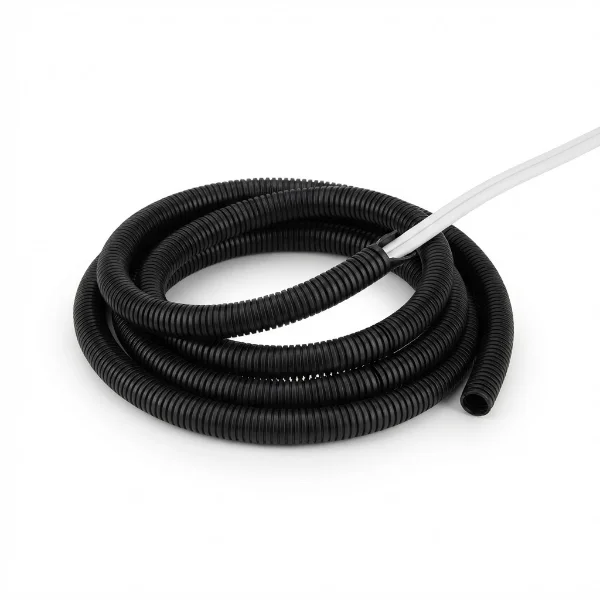
Cacovedo cord protector split tubing, about 9 m
Split tubing you cut to length and push cords into
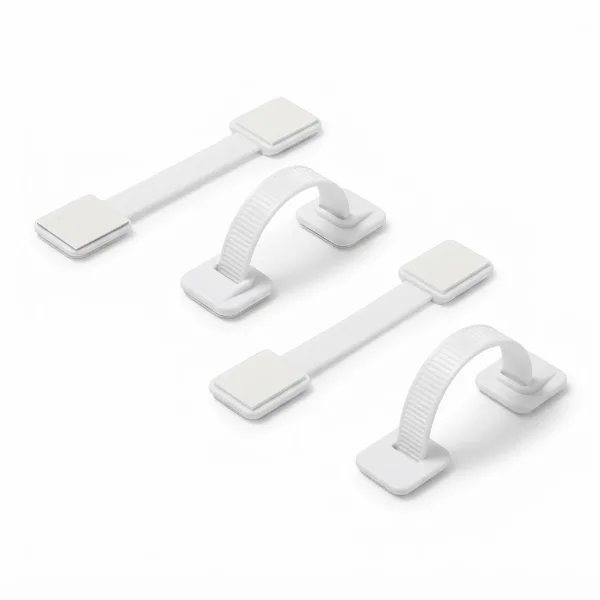
Jool Baby strap locks, 8 pack
Adjustable adhesive straps, no drilling
Pictures are illustrations, not the actual products.
These are small, cheap tools. They help, but they don't replace supervision, shutting doors and putting dangerous things away.
What does kitten proofing your home mean?
Kitten proofing means looking at your home from a kitten's point of view and removing or blocking anything it could chew, swallow, climb, squeeze into or fall from. It's mostly tidying and shutting things, not buying gadgets. Start the day before your kitten arrives, then check again after the first week.
Vets give the same core advice. VCA Animal Hospitals suggests securing blind cords, unplugging or hiding electrical cords, keeping washer and dryer doors closed and checking inside before starting a machine, storing medicines out of reach, putting away thread, yarn and rubber bands, and keeping toxic plants, including lilies, out of reach (VCA Animal Hospitals, undated page read 30 October 2026). The checklist below turns that into a walk-through.
Do I need to do all of it? You don't need to padlock your home. You do need to shut the risky spots and use one safe room while your kitten learns the house. The RSPCA also encourages keeping cats contained to their property (RSPCA Australia knowledgebase, updated 30 May 2024), and containment rules vary by council, so see our cat curfew rules guide.
Kitten proofing checklist, room by room
Walk through each room on your hands and knees. Anything you can reach, pull, chew or squeeze behind, a kitten can too. Put the dangerous things away, block the gaps and shut the doors you don't need open.
Lounge room
- Cords and power boards. Tidy them behind furniture or into tubing (see the cords section below).
- Blind and curtain cords. Tie them up high or fit a cord wind-up. VCA flags blind cords as a strangling risk.
- Recliners and fold-out sofas. A kitten can climb into the mechanism and get caught when the footrest closes. Check underneath before you move one.
- Plants and vases. Remove anything toxic (see the plants section) and cut flowers you haven't checked.
- Small things. Hair ties, rubber bands, thread, elastic, ribbon and string belong in a closed drawer. VCA says swallowing threads, yarn and rubber bands can be life-threatening.
- Gaps behind the TV unit and under the couch. Block them with a board or tidy them up so your kitten can't get wedged.
- Heaters. Keep portable heaters out of reach and unplugged when you're out of the room.
- Christmas tree. A first Christmas with a kitten needs a stable tree, unbreakable decorations and no tinsel. See our cat Christmas tree guide.
Kitchen
- Cupboards with cleaners, dishwasher tablets and bin bags. Use locks inside the door (see our picks below); our cabinet locks guide also compares fridge and strap locks.
- Bins. Use a lidded bin or a strap lock, since kitten-sized heads fit into open ones.
- Appliances. Check inside the oven, dishwasher and washing machine before you shut the door and switch them on.
- Counters. Keep knives, foil, plastic bags and food scraps put away. Never offer chocolate, grapes, raisins, onion or garlic, which are not safe for cats.
- Food and water bowls. Place them away from the litter tray. Wide, shallow bowls suit small faces; our raised cat bowls guide compares sizes.
Bathroom and laundry
- Washer and dryer. VCA suggests keeping doors closed when not in use and checking inside before every cycle. Make it a habit.
- Toilet lids. Keep them down, or use a strap lock. A kitten can fall in or play with the water.
- Cleaning products, bleach and medicines. Lock them away. Many human medicines are toxic to cats, according to VCA, and that includes multivitamins.
- Razors, hair ties, cotton buds and dental floss. Bin them in a closed bin.
- Bath and bucket water. Empty them. A small kitten can't always climb out.
Bedroom and wardrobes
- Wardrobes and drawers. Check before you close them. Kittens love a dark nook.
- Jewellery, hair ties, sewing kits and charger cables. Keep them in a drawer.
- Under the bed. Block any gaps to hidden spots you can't easily reach, especially in the first days.
- Bedroom door. Decide now whether your kitten sleeps with you. If not, shut it, because a kitten under the bed at 3am can be hard to find.
Windows, balconies and outdoors
- Windows. The ASPCA recommends snug, sturdy screens on every window that is opened, tightly wedged into the frame, and says childproof window guards don't protect pets because cats can slip through them (ASPCA, 6 July 2023). Flyscreens that pop out easily are a risk in summer, when windows stay open. Our window restrictor and adjustable window screen guides compare the options by window type.
- Balconies. Don't let a kitten onto a balcony unsupervised. Netting makes it safer; see our cat netting for balconies guide.
- Doors. Watch front and back doors. A kitten can shoot out between your legs. A hallway door or a baby gate between the front door and the living area helps.
- Outdoors. Kittens shouldn't roam. If you want to give your kitten fresh air, a window catio or catio is a safer way.
- Garden. Check for toxic plants, snail bait, rat bait and garden chemicals. Store them in a locked shed.
Which plants and household items are toxic to kittens?
Lilies are the biggest danger: all parts of true lilies (Lilium) and daylilies (Hemerocallis), including pollen and vase water, can cause kidney failure in cats, so keep them out of the home entirely. Other plants, medicines and cleaners can also poison kittens. When in doubt, don't have it.
The ASPCA says any part of an Easter lily can be dangerous, that cats can be exposed by licking pollen off their fur or drinking vase water, and that it's often fatal if treatment is delayed (ASPCA, 27 March 2019). RACQ, quoting a Cat Protection Society of Victoria warning, names both Lilium and Hemerocallis and says even a couple of leaves can be harmful (RACQ, 27 September 2021). Ask friends and family not to bring lilies as a gift.
Other plants to remove or check:
- Aloe vera is listed by the ASPCA as toxic to cats (ASPCA plant database, page read 30 October 2026).
- Sago palm is listed as toxic to cats, with liver damage among the risks (ASPCA, page read 30 October 2026).
- Anything else: search the ASPCA toxic and non-toxic plant list, which has a "toxic to cats" filter, before you bring a plant home. "Pet safe" plants can still upset a kitten's stomach, so put plants up high or in a room your kitten can't enter. Our cat-safe indoor plants guide has a safe, keep-out and check-first table.
Beyond plants: store human medicines, multivitamins, cleaning products, antifreeze, rat bait and snail bait in closed cupboards. Never give your kitten human medicines. Don't use essential oils, oil diffusers or perfumed deodorisers around kittens. If you suspect your kitten has chewed or swallowed something, see the box below.
How do you kitten proof cords and wires?
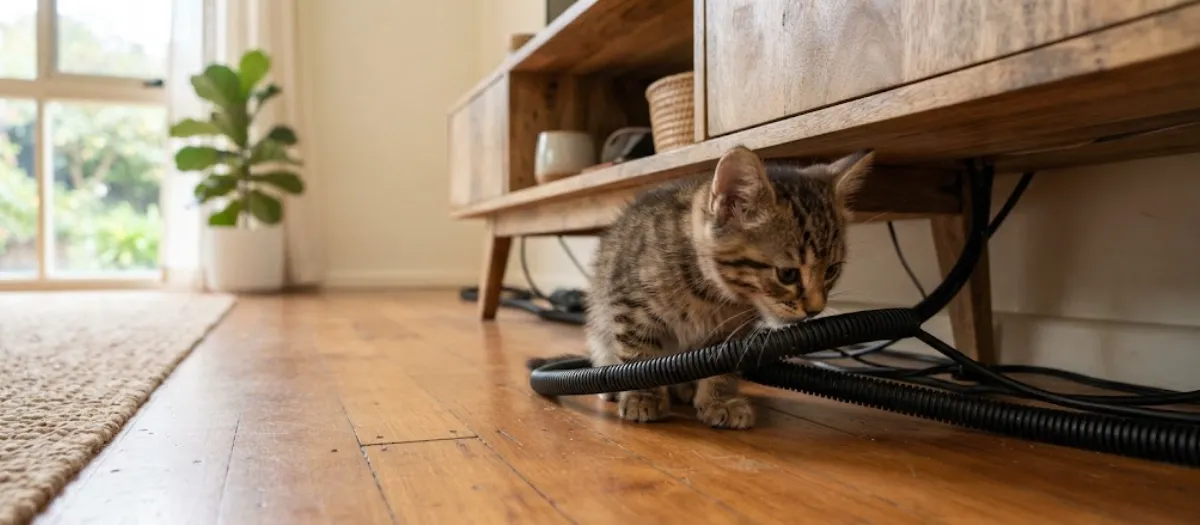
Unplug cords you aren't using, hide the rest behind furniture, and cover what's left with split tubing. Tubing makes a cord less tempting and harder to bite, but it isn't chew-proof. Keep checking cords for bite marks, and switch off at the wall when you're out.
VCA says kittens chew cords and could get a shock, so unplug or hide them. Practical steps:
- Shorten and tidy. Use shorter leads, cable clips and a power board mounted off the floor.
- Cover what you can't hide. Push the cord into split tubing, like the Cacovedo one in our picks. Our cord protector guide compares tubing, sleeves and spiral wrap.
- Block access. Slide furniture against the wall so the gap behind is too narrow for a kitten.
- Unplug chargers. Put phone and laptop chargers away when not in use.
- Check regularly. If a cord shows bite marks, unplug it and replace it.
Chewing can also be a sign your kitten needs something safer to chew. A kitten toy you can supervise and a kitten scratching post give them another outlet. Don't shout at or punish your kitten for chewing, and don't use sprays you haven't checked are safe for cats.
What to buy before your kitten comes home
You don't need everything on day one. A safe room, a litter tray, food, water, a bed or hideaway, a scratcher, a few toys and a carrier cover the basics. Add the rest as you learn your kitten's habits.
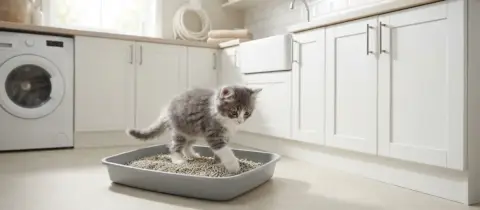
- Litter and tray. Follow the common guideline of one litter tray per cat plus one extra, in different places. The RSPCA knowledgebase says the same (RSPCA Australia, updated 30 May 2024). Many vets and shelters suggest a non-clumping litter for very young kittens; see our best litter for kittens guide. Don't flush litter or poo, even if the pack says "flushable"; see our tofu cat litter guide for why.
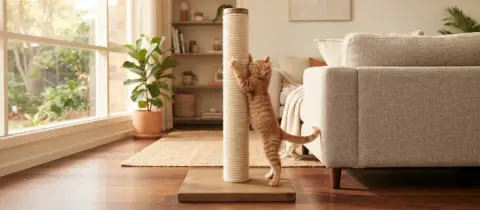
- Scratching post. Get one before the sofa becomes the scratcher: best kitten scratching posts.
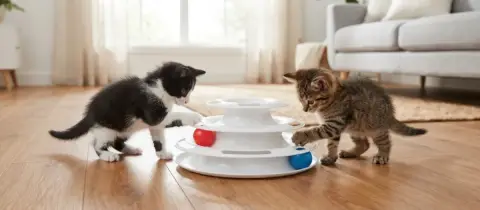
- Toys. Choose a few safe ones, and put wand toys away after play: best kitten toys.
- Carrier. You'll need it for the first vet trip: best cat carriers.
- Food and water bowls. Shallow, easy to clean, and away from the litter tray.
- Bed or hideaway. A cardboard box with a blanket works. Kittens like to feel hidden.
- ID and vet. Book a vet check soon after you bring your kitten home. Your vet will advise on vaccinations, parasite control, microchipping and desexing. After desexing, your vet may send your kitten home in a cone; our cat cone guide covers eating, drinking and the litter tray.
Bringing your kitten home: the first days
Start with one safe room with food, water, a litter tray, a bed and a scratcher. Let your kitten settle, then open more of the house gradually, one room at a time, supervised. Keep doors and windows shut on arrival. Every kitten settles at its own pace.
The RSPCA Australia knowledgebase suggests confining your cat to one room for a couple of days with bedding, a favourite blanket and toys, then making more areas available gradually over the following days (RSPCA Australia, updated 30 May 2024). There's no set timeline, so watch your kitten's body language and slow down if they hide or seem unsure.
When can a kitten roam the house? When it's confident in the safe room, eating and using the tray reliably, and you've proofed the next room. Open one room at a time and supervise at first. Close it off again if you're out.
If you already have a cat, keep the kitten in its own room first and go slowly, as our guide to introducing a kitten to an older cat explains. Never force cats together.
For a keepsake of your kitten's tiny paws, see our paw print kit guide; an ink pad is the easiest way with a cat.
Kitten proofing products compared
Details from each Amazon Australia listing, checked on 30 Oct 2026.
| Product | Best for | Fits | Install |
|---|---|---|---|
| vmaisi magnetic cabinet locks | Cupboards and drawers | Doors up to about 5 cm thick | 3M adhesive or screws, magnet key |
| Cacovedo cord protector tubing | Loose cords | 10 mm inner, 13 mm outer diameter | Cut to length, push cord in |
| Jool Baby strap locks | Bins, toilet lids, appliances | Straps adjust about 7.5 to 18 cm | 3M adhesive |
How we chose
We searched Amazon Australia for cabinet locks, cord protectors and strap locks, then shortlisted ones that met all of these checks:
- Well rated: a strong average rating with plenty of buyer reviews.
- No red flags: no pattern of poor reviews, safety complaints or listing problems.
- Available on Amazon Australia when we checked.
- Suits a curious kitten: no small loose parts once fitted.
- Fits common Australian cupboards and cords: sizes are stated on the listing.
- No drilling needed: adhesive or push-in fitting, so it suits renters (check your lease for adhesive).
These are researched picks, not products we've personally used. We compared the specifications and features shown on each Amazon Australia listing, checked on 30 Oct 2026. We didn't accept payment from any brand, and no brand saw this page before it was published.
Left out this time: bitter anti-chew sprays (some contain essential oils or aren't labelled for cats), plug-in deterrents, and anything that punishes a kitten.
Our picks in detail
1. vmaisi magnetic cabinet locks, 20 locks + 2 keys: best for cupboards with cleaners and medicines
These locks fit inside the cupboard or drawer, so nothing shows from outside, and a magnet key opens them. The listing says you can fit them with 3M adhesive or screws, and that they work on doors up to about 5 cm thick. It also says hidden metal screws or nails in the door can affect the magnet, so test the position before you stick anything down.
- Pros: hidden once fitted; no drilling needed with the adhesive; lots of locks in one pack; magnet key
- Cons: imported, so check the delivery details on Amazon before you order; the key has to be kept handy and away from kittens; hidden screws or nails can interfere with the magnet, so test the position first
- Best for: cupboards holding cleaning products, medicines and the bin
- Skip it if: you need a lock that works on thick cupboard doors, or you'd rather have a locally sold product
2. Cacovedo cord protector split tubing, about 9 m: best for cords you can't hide
Split loom tubing with a 10 mm inner and 13 mm outer diameter. You cut it to length and push the cord in through the slit. It makes a cord less tempting and harder to bite, but it isn't chew-proof, so unplug and hide cords where you can, and check them.
- Pros: cut to the length you need; covers cords you can't move; plenty in one roll
- Cons: hard plastic tubing that has to be opened along the slit to fit each cord; not chew-proof, so still unplug and hide cords where you can
- Best for: TV, lamp and charger cords that sit in the open
- Skip it if: you can unplug and hide the cord, or your kitten has already started biting the tubing
3. Jool Baby strap locks, 8 pack: best for bins, toilet lids and appliances
Adhesive strap locks with 3M adhesive. The straps adjust to about 7.5 to 18 cm, so they suit bins, cabinets, appliances and toilet lids, and the listing mentions washer and dryer doors. The surface must be clean, dry and free of oils. The listing mentions a 10-year manufacturer warranty.
- Pros: adjustable; no drilling; several in a pack for bins, toilet lids and the fridge
- Cons: stick-on, so press them on firmly and check they still hold; the surface has to be clean, dry and free of oils before you stick them on
- Best for: bins, toilet lids and appliance doors
- Skip it if: the surface is textured or greasy, or you'd rather use a lidded bin
When to get help
See a vet promptly if your kitten stops eating, is very sleepy or weak, vomits repeatedly, has diarrhoea for more than a day, or strains in the tray. Very young kittens can go downhill fast.
A cat straining to pee with little or nothing coming out is an emergency. The University of Illinois veterinary college calls a urinary blockage a true emergency. Go to a vet or after-hours emergency vet straight away.
Suspected poisoning (lilies, medicines, chemicals) is an emergency: call your vet or after-hours emergency vet straight away.
If your kitten has swallowed string, thread or a rubber band, or you see something hanging from the mouth or bottom, call your vet straight away and don't pull on it. A kitten that falls from a window or balcony also needs a vet the same day, even if they seem fine.
Frequently asked questions
Do I need to kitten proof my house?
Yes, at least the basics. Kittens chew, climb and squeeze into small spaces you'd never think to check. Secure cords, cupboards, bins, windows and toxic plants before your kitten arrives, and use one safe room at first. You don't need to proof every room on day one, just the rooms your kitten can reach.
When can a kitten roam the house?
When it's confident in its safe room, eating well and using the tray reliably, and you've proofed the next room. Open one room at a time with supervision, and close it off again when you go out. RSPCA Australia suggests widening a cat's space gradually. See the first days.
How do I stop my kitten chewing cords?
Unplug and hide the cords you can, cover the rest with split tubing, and give your kitten something safer to chew while you watch. Don't punish or shout, because that doesn't teach a kitten anything useful. Tubing isn't chew-proof, so check cords often for bite marks. See our cords section.
Are any houseplants safe for kittens?
Some are listed as non-toxic by the ASPCA, but even a safe plant can upset a kitten's stomach if it's chewed. Check the ASPCA list before you buy any plant, and keep plants up high. Never keep lilies, aloe or sago palm in the home. Our plants section has more.
Should kittens go outside?
Kittens shouldn't roam. RSPCA Australia encourages keeping cats contained to their property, and local containment rules vary by council and state. A balcony with netting, a window catio or a supervised harness walk are safer ways to give a kitten fresh air. Check our cat curfew rules guide for your area.
How long does kitten proofing take?
Most people can do a first pass in an afternoon: a walk-through of each room on your hands and knees, some cord tidying and a few locks. Stick-on products need clean, dry surfaces and a little time to set. Plan to recheck after the first week, as your kitten gets bolder and reaches higher.
What do I need for a new kitten checklist?
A safe room, a litter tray and litter, food and water bowls, a bed or hideaway, a scratcher, a few safe toys, a carrier and a vet booking for a check soon after arrival. Add the rest once you know your kitten's habits. Our what to buy section links each one.
Related guides
- Cat-safe indoor plants: what's safe and what to keep out
- High-rise syndrome in cats
- Cord protectors for pets
- Pet proof cabinet locks
- Paw print kits
- Best cat trees for kittens
- Best kitten food
- What can cats eat?
- Best kitten scratching post
- Best kitten toys
- Best litter for kittens
- How to introduce a kitten to an older cat
- Best cat carriers
- Cat netting for balconies
- Best window catio
- Cat curfew rules in Australia
- All our cat guides
Sources
- VCA Animal Hospitals, How to kitten proof your home, undated, page read 30 October 2026 (https://vcahospitals.com/pediatric/kitten/prep-supplies/how-to-kitten-proof-your-home)
- RSPCA Australia knowledgebase, How can I help my cat adjust to a new home?, updated 30 May 2024 (https://kb.rspca.org.au/knowledge-base/how-can-i-help-my-cat-adjust-to-a-new-home)
- RSPCA Australia knowledgebase, How do I encourage my cat to use a litter tray?, updated 30 May 2024 (https://kb.rspca.org.au/knowledge-base/how-do-i-encourage-my-cat-to-use-a-litter-tray/)
- ASPCA, Getting to the bottom of the dangers of Easter lilies, 27 March 2019 (https://www.aspca.org/news/getting-bottom-dangers-easter-lilies)
- RACQ, Deadly lily danger, 27 September 2021 (https://racq.com.au/articles/pets/2021/9/deadly-lily-danger)
- ASPCA, Aloe (toxic and non-toxic plants), page read 30 October 2026 (https://www.aspca.org/pet-care/animal-poison-control/toxic-and-non-toxic-plants/aloe)
- ASPCA, Sago palm (toxic and non-toxic plants), page read 30 October 2026 (https://www.aspca.org/pet-care/animal-poison-control/toxic-and-non-toxic-plants/sago-palm)
- ASPCA, Toxic and non-toxic plants (https://www.aspca.org/pet-care/animal-poison-control/toxic-and-non-toxic-plants)
- ASPCA, High-rise syndrome: lifesaving tips for cat parents, 6 July 2023 (https://www.aspca.org/news/high-rise-syndrome-lifesaving-tips-cat-parents)
- University of Illinois College of Veterinary Medicine, Blocked cats: an emergency for male cats (https://vetmed.illinois.edu/pet-health-columns/blocked-cats-an-emergency-for-male-cats/)
- Product details from each linked Amazon Australia listing, checked on 30 October 2026.
This guide provides general information and isn't a substitute for veterinary advice. If you're concerned about your kitten's safety at home, speak with your vet.