Best kitten food in Australia: wet, dry and how much to feed
By Anish PuriUpdated 19 Nov 202614 min readResearched, not tested by us
Research guide. WhiskerFinds may earn a commission from links, at no extra cost to you.
Quick answer: The best kitten food is a complete food made for growth, and for most kittens our top pick is Royal Canin Kitten thin slices in gravy, which the listing also labels for pregnant cats. Start with wet food, add dry as your kitten grows, and feed several small meals a day. Switch to adult food at about 12 months.
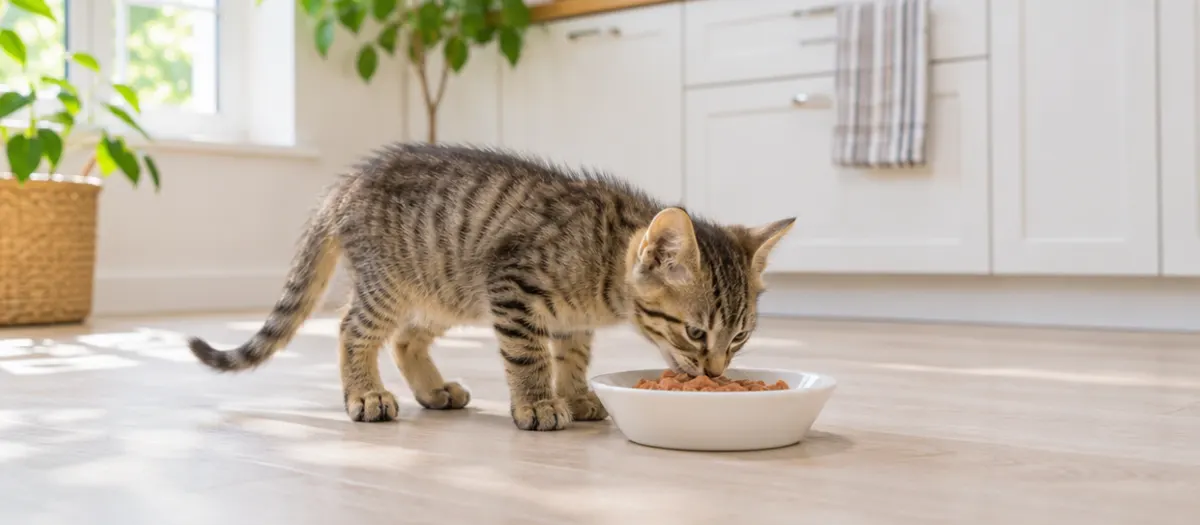
Illustration, not the actual product
Our top pickRoyal Canin Kitten thin slices in gravy, 12 x 85 g pouches
A kitten food is a growth food: more energy and nutrients per bite than an adult diet, in portions small enough for a tiny stomach. This guide compares five wet and dry kitten foods on Amazon Australia, shows Royal Canin's feeding amounts by age, and sets out what three Australian and US vet sources say about meals a day. If you're still sorting out the basics, our kitten proofing checklist covers the rest of the home.
One honest limit up front: four of the five picks are Royal Canin, because those listings passed our checks. The fifth is an Australian-made alternative. Most of the Royal Canin range is explained in our Royal Canin cat food guide.
Quick picks
Our top pickBest overall
Royal Canin Kitten thin slices in gravy, 12 x 85 g pouches
Listing calls it a complete feed for kittens to 12 months, and also for pregnant cats
Either can work, and both sources below describe feeding the two together. RSPCA Australia suggests starting with wet kitten food and adding dry as your kitten grows, and including moist food regularly. Greencross Vets says wet or dry is a matter of preference and mixed feeding is common (Greencross Vets, "Kitten Feeding Guide", page read 19 November 2026).
The catch with mixing: Greencross notes that pack feeding guides assume one food, so when you feed both you reduce each. Advance's listing says the same, to halve the recommended amounts of its wet and dry. Our wet cat food guide and dry cat food guide cover adult cats.
Which texture for which stage?
The age wording below is each listing's own. Where we say a food is soft enough for weaning, that is our view, not the listing's.
Swipe sideways to see every column
Food
Texture
Age wording on the listing
Where it fits
Mother and Babycat dry
Dry kibble
Queens and kittens 1 to 4 months, during weaning
Weaning, alongside a wet food
Kitten loaf
Soft pate
Kittens up to 12 months
Soft enough for a first wet food, our view
Kitten in gravy
Thin slices in gravy
Up to 12 months, and gestating cats
Everyday wet food
Kitten Instinctive in jelly
Small chunks in jelly
Up to 12 months
Kittens who like a jelly bite
Advance in jelly
Jelly
Suitable for kittens
Australian-made wet alternative
Our picks in detail
1. Royal Canin Kitten thin slices in gravy: best overall
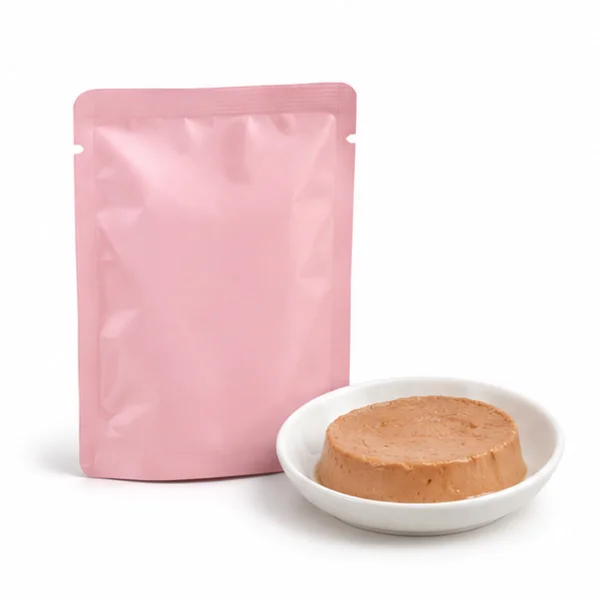
The listing calls it a "complete feed for cats", made specially for kittens up to 12 months, with thin slices in gravy. It is also the only wet pick whose listing labels it for gestating (pregnant) cats. The listing says it supports the immune system, which is the maker's wording, and the ingredients start with meat and animal derivatives. It gives no protein or fat figures, so check the pack.
It's one of three Royal Canin kitten textures (loaf, gravy, jelly), so you can rotate if your kitten gets bored. Gravy is often the easiest wet texture to start with, in our view, not a claim from the listing.
Pros: "complete feed" wording; kittens to 12 months; also labelled for pregnant cats; part of a three-texture range
Cons: no analysis figures on the listing; ingredients include cereals and vegetable protein extracts; pouches, so opened portions need storing
Best for: most kittens from weaning to 12 months, and a household with a pregnant cat
Skip it if: your kitten dislikes slices in gravy (try the loaf or jelly), or your vet has put them on a special diet
2. Royal Canin Kitten Instinctive in jelly: best for a jelly texture
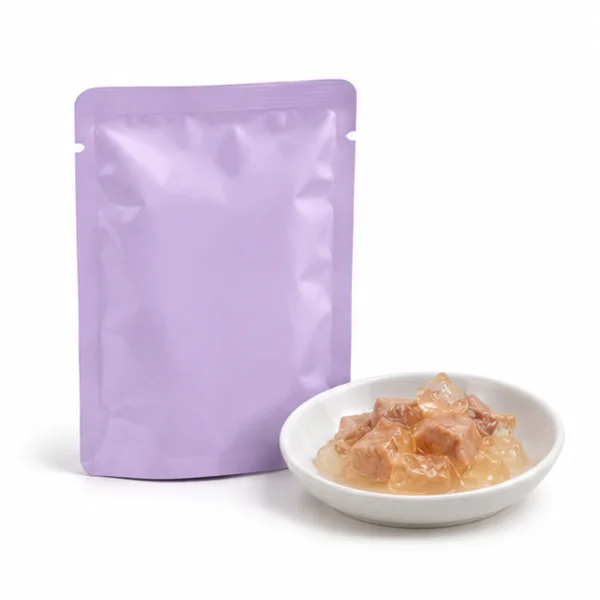
Small chunks in jelly for a kitten's small mouth, and the only pick whose listing carries analysis figures: protein 12%, fat 4%, crude ash 1.7% and crude fibre 0.7%. The listing says "ideal for kittens up to 12 months" and to keep it cool after opening. Its description says kittens instinctively prefer its macronutrient balance, which is Royal Canin's claim.
The ingredients include milk and milk derivatives and various sugars. That doesn't make it unsuitable, but it's worth knowing if your vet has asked you to watch either.
Pros: analysis figures on the listing; small chunks; to 12 months
Cons: no complete statement on the listing text; milk derivatives and various sugars are in the ingredients
Best for: kittens who like chunks in jelly, and owners who want figures to compare
Skip it if: your kitten needs a very soft texture, or your vet has advised avoiding dairy-derived ingredients
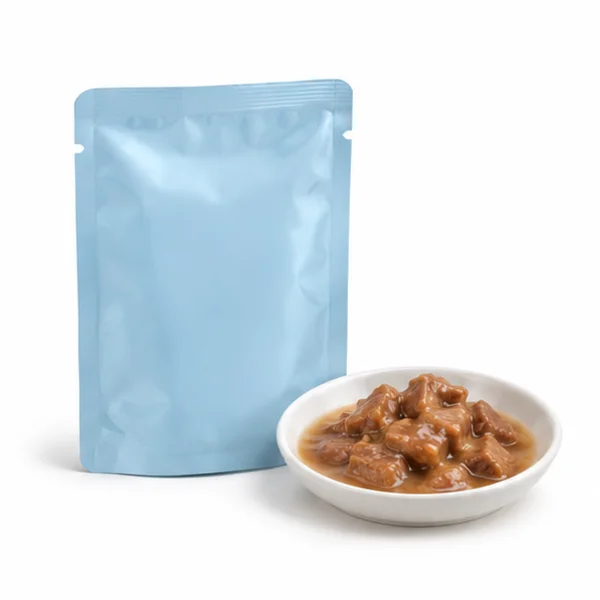
The listing describes a soft loaf texture that is easy for kittens to chew and digest, made for kittens up to 12 months. It says to serve 1 bag per meal, and after opening to refrigerate and use within 24 hours. The listing doesn't say it suits kittens under 4 months, so for a very young kitten ask your vet. A loaf is the texture most easily thinned or mashed for a weaning kitten, in our view, not the listing's.
The ingredients list "various sugars", and the listing gives no complete statement or analysis, so read the pack.
Pros: soft loaf; clear storage line (refrigerate, use within 24 hours); easy to mash
Cons: "various sugars" in the composition; no analysis figures on the listing
Best for: kittens who struggle with chunks, and weaning with your vet's advice (the listing says up to 12 months, not from what age)
Skip it if: your kitten prefers a gravy or jelly bite
4. Royal Canin Mother and Babycat dry: best for 1 to 4 months and nursing queens
The listing's directions are for gestating and lactating queens and kittens from 1 to 4 months old during weaning. Dehydrated poultry meat is the first ingredient, with fish oil, taurine and L-carnitine further down. The listing also says vitamins C and E support the immune system and DHA supports brain development and vision, which are the maker's words.
Take care with this listing: its bullet points describe a book, so only the title, details and directions are reliable. Check the pack for the analysis and feeding amounts. Royal Canin's own Kitten dry is for 4 to 12 months, which is the step after this one.
Pros: named for queens and kittens from 1 to 4 months; taurine in the ingredients; a dry option for weaning
Cons: the listing's text is partly mismatched, so check the pack; no complete statement or figures shown
Best for: weaning kittens and pregnant or nursing cats, with your vet's advice
Skip it if: your kitten is over 4 months (move to a Kitten food) or you only want wet
5. Advance Chicken in jelly kitten wet food: best Australian-made alternative
A complete and balanced wet food for kittens, according to the listing, which also says it is made in Australia with Australian ingredients and is free from artificial flavours and preservatives. Taurine appears in the ingredients. The calcium, choline and antioxidant lines are Advance's claims.
The listing gives no feeding amounts, so follow the pack; its one feeding line is the halving rule for mixed feeding mentioned on this page.
Pros: "complete and balanced" wording; taurine listed; Australian-made per the listing; a jelly texture
Cons: no feeding amounts or analysis on the listing; contains colouring agents per the ingredients
Best for: an Australian-made wet food, or a second brand to rotate with Royal Canin
Skip it if: you want figures on the listing to compare
Add-on: a raised bowl set for a growing kitten
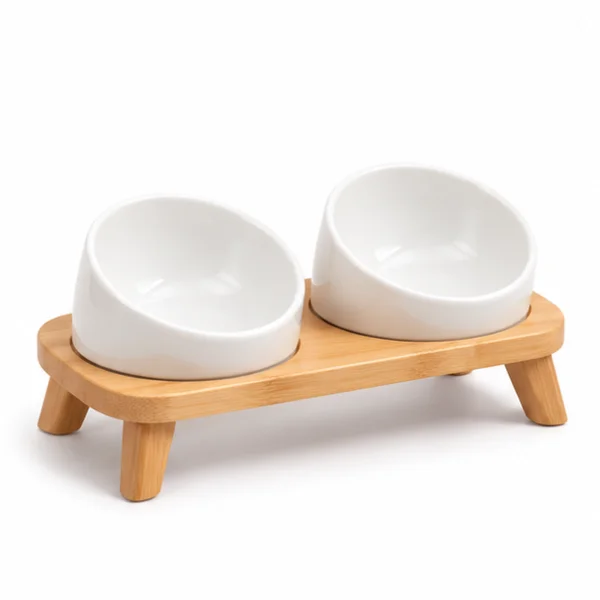
The MateeyLife elevated cat bowls come as a pack of two, each about 170 ml; the listing gives dimensions of 14.5 x 14.3 x 11.5 cm and a weight of 386 g, with a 15 degree tilt to the bowl. The listing says to use the bowl alone at first for kittens and attach the base as your cat grows, and that it is top-rack dishwasher safe and made from BPA-free plastic. The listing also makes digestion and "anti vomit" claims, which we don't repeat. Our raised cat bowls guide explains what whisker fatigue is and isn't.
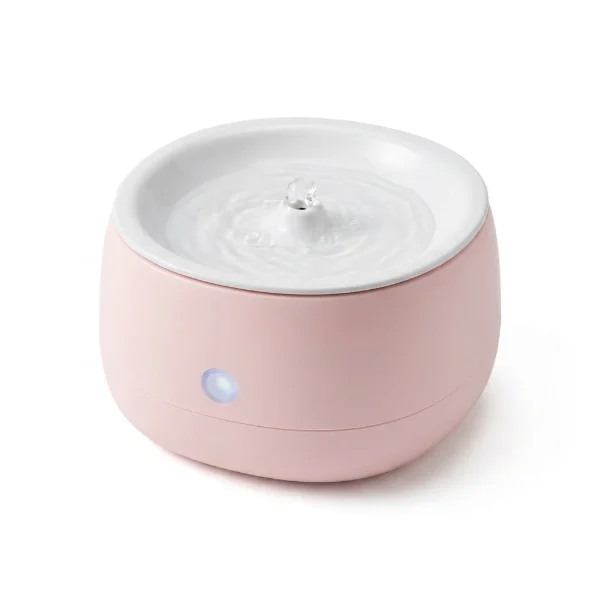
Keep fresh water out all day, as RSPCA advises; a cat water fountain is one way to make it appealing.
How much should I feed my kitten?
Follow the pack for your chosen food, because amounts differ between brands. Royal Canin's Australian guide gives the figures below for its Kitten range. They are Royal Canin's amounts for its own food, per day, and other brands will differ (Royal Canin Australia, "Kitten Kibble - Dry Cat Food", page read 19 November 2026).
Swipe sideways to see every column
Age (months)
Weight (kg)
Dry only (g a day)
Dry plus wet
1
0.48 to 0.9
29
Not listed
2
0.8 to 1.2
48
1 pouch + 27 g
3
1.4 to 2.1
61
1 pouch + 40 g
4
1.8 to 2.75
66
1 pouch + 45 g
5
2.1 to 3
69
1 pouch + 48 g
6
2.4 to 3.9
67
1 pouch + 46 g
7
2.4 to 3.9
64
1 pouch + 43 g
8
2.7 to 4
61
1 pouch + 40 g
9
2.9 to 5
58
1 pouch + 37 g
10
2.9 to 5
55
1 pouch + 34 g
11
2.9 to 5
53
1 pouch + 31 g
12
2.9 to 5
51
1 pouch + 30 g
Royal Canin says this Kitten dry food is for kittens from 4 to 12 months, even though its guide starts at month 1; for a younger kitten, see Mother and Babycat below. Notice the dry amount peaks around month 5 and then eases. Growth slows as a kitten nears adult size: VCA says kittens reach about 80% of adult size at around 30 weeks and adult size at about 40 weeks (VCA Animal Hospitals, "Feeding Growing Kittens", page read 19 November 2026). Weigh your kitten, watch their body shape, and ask your vet to check weight and body condition, as RSPCA suggests. Greencross says to ease portions back if a kitten becomes overweight.
VCA prefers portion feeding over leaving food out, because it gives the best chance of stopping a kitten becoming overweight; free-choice feeding, it says, raises that risk.
How often should a kitten eat?
Several small meals a day, and more for the youngest. Greencross Vets says growing kittens need frequent mealtimes, and the reason is simple: a kitten's stomach is small, so a day's food won't fit into one or two sittings (our words, not theirs). The three Australian and US vet sources we read don't agree on an exact number, so here they are side by side, with the source named.
Source
What it says
RSPCA Australia
At least 4 times a day
Greencross Vets
3 meals a day up to about 12 to 14 weeks, then 2
VCA Animal Hospitals
The day's food split into 3 to 4 small meals or more
Our reading: very young kittens need more, smaller meals, and the safest approach is the higher end for the first few months, then settling to two or three as your vet advises. Greencross adds that a kitten who grazes is fine if they eat only the right amount and stay lean. Our automatic cat feeders guide covers timed meals for when you're out.
What should the kitten food label say?
Look for a statement that the food is complete for growth, or for all life stages. VCA says a food labelled for all life stages is also suitable for a growing kitten, and to check the label's nutritional adequacy statement for growth.
RSPCA Australia says to choose food that meets the Australian Standard AS 5812, or an equivalent international standard confirmed by independent audit. CHOICE notes AS 5812 is voluntary and no authority enforces it, so check the pack for the statement rather than assuming (CHOICE, "Pet food regulation", last updated 9 July 2018, page read 19 November 2026). We can't tell you any pick below is certified. Only the pack can.
Kitten foods compared
Details from each Amazon Australia listing, checked on 18 Nov 2026. "Not shown" means the listing text doesn't say.
Swipe sideways to see every column
Food
Pack
Form
Complete statement on the listing
Figures on the listing
Kitten in gravy
12 x 85 g pouches
Thin slices in gravy
"Complete feed for cats"
Vitamins and minerals only
Kitten Instinctive
12 x 85 g
Small chunks in jelly
Not shown
Protein 12%, fat 4%, ash 1.7%, fibre 0.7%
Kitten loaf
12 x 85 g pouches
Soft loaf
Not shown
Vitamins and minerals only
Mother and Babycat
4 kg
Dry
Not shown
None
Advance in jelly
12 x 85 g
Jelly
"Complete and balanced"
None
Choose by situation
Swipe sideways to see every column
Your situation
What to look for
Our pick
Most kittens at 8 weeks to 12 months
A complete wet food, with a texture they eat well
Kitten in gravy (1)
Weaning kitten, or one fussy about chunks
Soft loaf
Kitten loaf (3)
Kitten who likes jelly
Small chunks in jelly
Kitten Instinctive (2)
Kitten 1 to 4 months, or a pregnant or nursing cat
Dry food named for queens and young kittens
Mother and Babycat (4); ask your vet
Wanting an Australian-made wet food
Complete and balanced wording
Advance (5)
Mixing wet and dry
Reduce each so the day's total matches the pack
Any wet pick plus a kitten dry
Soft stools or a kitten who seems unwell
Vet first, before changing food again
Book a vet visit
How we chose
We searched Amazon Australia for kitten wet and dry foods and shortlisted those that met all of these checks:
Well rated: a strong average rating with plenty of buyer reviews.
No red flags: no pattern of poor reviews, safety complaints or listing problems.
Available on Amazon Australia when we checked.
Made for kittens or growth: the listing names kittens, growth or young cats.
Ingredients shown: the listing gives an ingredient list, so you can compare it with the pack.
Format and pack size clear on the listing.
We're upfront where a listing is missing something: a few don't show a complete statement or analysis figures, and we only quote figures that appear. These are researched picks, not products we've personally tested. We compared the specifications and features on each Amazon Australia listing, checked on 18 Nov 2026, and we didn't accept payment from any brand.
Left out this time: a bulk Royal Canin Kitten multipack with a confusing European-style listing that duplicates pick 1, and a listing that turned out to be a book.
Where else can you buy kitten food?
Pet shops and vet clinics stock kitten foods, and vets can recommend one for your kitten's age and weight. Compare the pack's life stage wording whichever way you buy.
When to see a vet
Book a vet visit if your kitten has soft stools or diarrhoea that doesn't settle after a food change, vomits more than once, is losing weight or isn't gaining, or is a fussy eater who skips meals. These can have many causes, and a vet can work out which.
Go to a vet or emergency clinic straight away if your kitten is very quiet or floppy, refuses food, or has repeated vomiting or diarrhoea. Young kittens can become unwell quickly. Don't give human medicines or home remedies without asking your vet.
Frequently asked questions
When can kittens start eating wet food?
Kittens typically start on solid food around 8 weeks while still nursing, according to RSPCA Australia, which suggests beginning with wet kitten food. VCA says kittens are fully weaned at about 8 weeks. For a kitten younger than that, or an orphan, ask your vet before offering anything.
Can kittens eat adult cat food?
It isn't ideal. Adult food isn't made for growth, and the RSPCA says to choose food for the life stage. VCA says a food labelled for all life stages is also suitable for growth, so check the label. Dog food is never suitable, because it lacks taurine.
How many pouches a day should a kitten have?
It depends on the food and your kitten's age and weight, so use the pack. Royal Canin's guide for mixed feeding shows one pouch plus dry food each day, for example one pouch plus 40 g of dry at 3 months. Divide the day's total across several small meals.
Should kittens drink milk?
No. RSPCA Australia says not to give milk, because it can upset the digestive system. Fresh water should always be available. If you're caring for an orphan or a kitten who needs a replacer, see our cat milk guide and ask your vet.
When should I switch my kitten to adult food?
At about 12 months, according to Greencross Vets, and Royal Canin's Kitten foods are for kittens up to 12 months. Large or slow-maturing breeds may differ, so ask your vet if you're unsure. Weight and body condition checks help you decide.
Can a pregnant or nursing cat eat kitten food?
Some can. The Royal Canin gravy listing says it is also for gestating cats, and the Mother and Babycat directions name gestating and lactating queens. Ask your vet to plan the diet for a pregnant or nursing cat, because needs vary.
How do I change my kitten's food?
Do it gradually. PetMD suggests moving from old to new over about seven to 10 days, the same advice we give in our hairball remedies guide. Greencross gives a 13-day schedule (20% new food on days 1 to 4, then 40%, 60% and 80%), so some vets stretch it. Slow down if stools loosen.
Can kittens eat raw meat?
RSPCA Australia doesn't recommend it because of bacteria. If you do feed it, it advises human-grade, fresh meat and nothing before about 20 weeks. It also warns against pet mince and sausages, whose sulphite preservatives are linked to thiamine deficiency. Ask your vet before trying it.
Product details from each linked Amazon Australia listing, checked on 18 Nov 2026.
This guide provides general information and isn't a substitute for veterinary advice. If you're concerned about your kitten's feeding or health, speak with your vet.