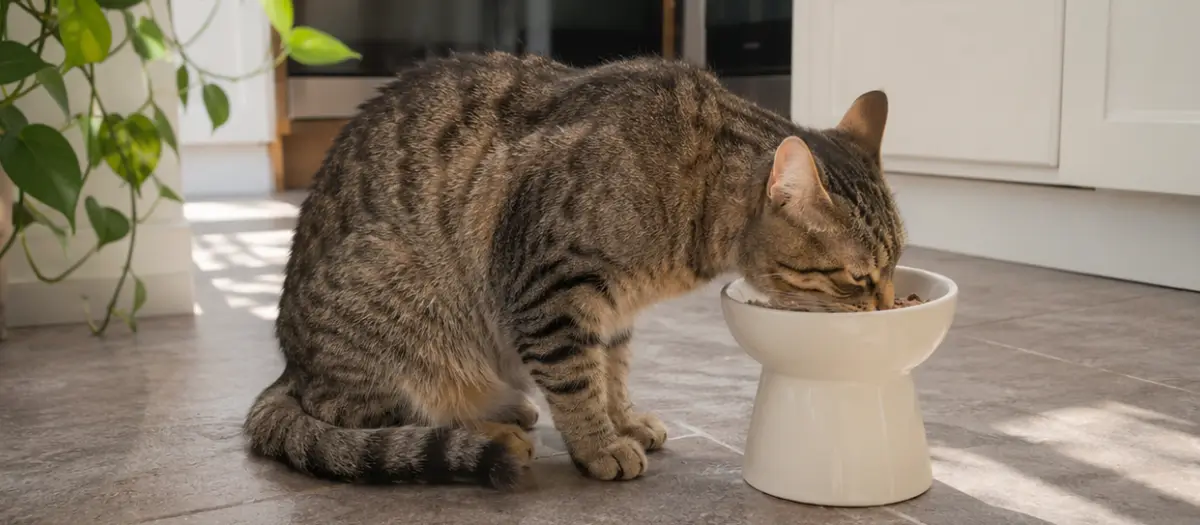
Raised cat bowls: wide, shallow picks and whisker fatigue
By Anish PuriUpdated 4 Nov 202614 min readResearched, not tested by us
Research guide. WhiskerFinds may earn a commission from links, at no extra cost to you.
Quick answer: Raised cat bowls lift food a few centimetres off the floor, and the best ones are also wide and shallow. Our top pick is the Kitty City raised bowl 2 pack. Raised bowls may suit older or flat-faced cats, but the evidence for them is thin, so watch how your own cat eats.
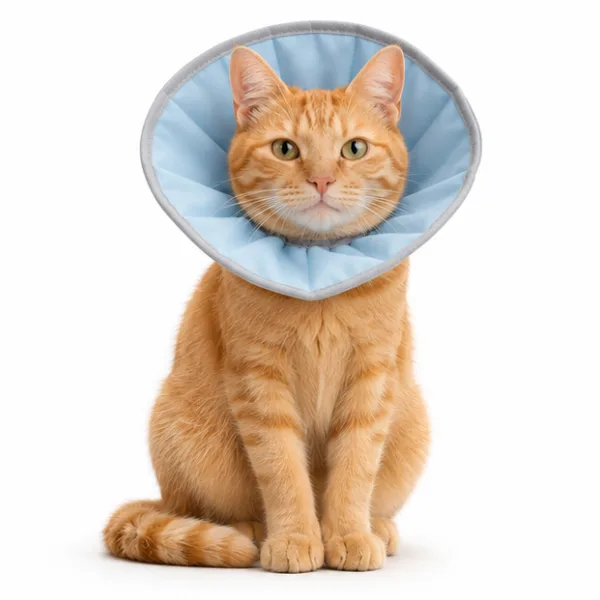
Most cats are fine with any clean bowl, so this guide is about the cats who might eat more comfortably from a raised, wide or tilted one. We compare five options on Amazon Australia by size and material, and explain what "whisker fatigue" does and doesn't mean. Raised bowls also help a cat in a recovery collar, so see our cat cone guide, and our cat water fountain guide covers drinking.
Quick picks
Our top pickBest overall
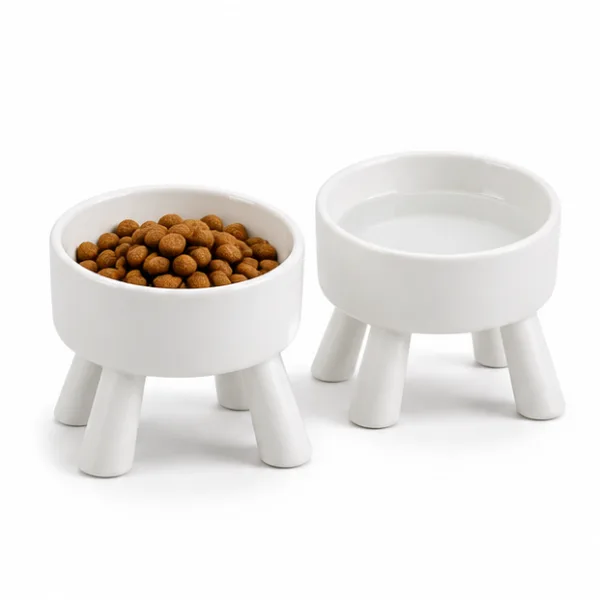
Kitty City raised cat bowls, 2 pack
Two small oval pedestal bowls in white and grey, dishwasher safe per the listing
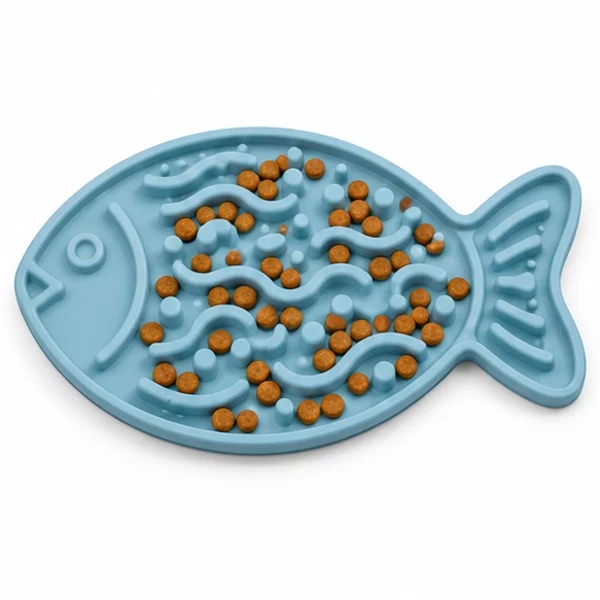
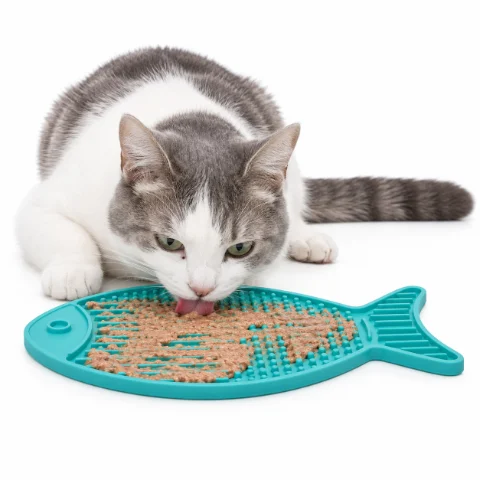
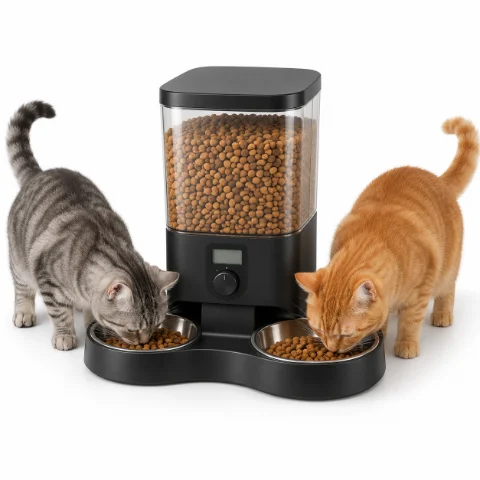
Pictures are illustrations, not the actual products.
Which one suits you?
Choose by your cat and your kitchen. Wide and shallow suits most cats, a tilt suits cats who chase kibble round the bowl, and a taller stand suits cats who struggle to bend. Ceramic is heavier and easy to wash. If you are unsure, start with one bowl before buying a set.
Swipe sideways to see every column
Your situation
Type to look for
Our pick
Healthy cat, you want an easy first raised bowl
Small pedestal bowls, light and dishwasher safe
Kitty City
Cat's whiskers touch the sides, or food gets pushed out
Extra-wide, tilted lip
Necoichi
Food and water for one cat, heavy and stable
Ceramic pair, shallow plus deeper
CEEFU
Cat chases kibble to the edge
Tilted bowl
Tilted ceramic bowl
Flat-faced cat (Persian, Exotic, Himalayan types)
Wide, flat plate
Lusifaco
Stiff or older cat who struggles to bend
Taller stand, check with your vet
Lusifaco (10 cm stand) or CEEFU
Do cats need raised bowls?
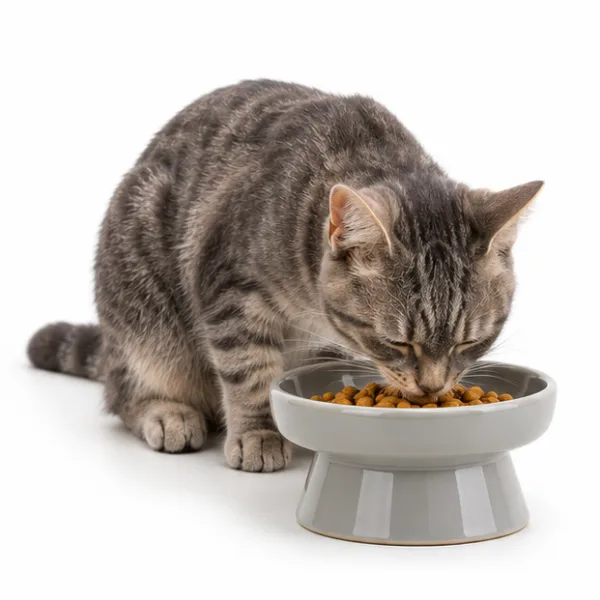
No, most cats don't need them. Cats have eaten from floor-level bowls for a long time without trouble. A raised bowl is worth trying if your cat seems stiff, struggles to bend, or has a flat face. We found no vet source that says every cat benefits, and the digestion claims come from product listings.
The claims you see on listings are the makers' own. The Kitty City, CEEFU and Lusifaco listings all say a raised bowl supports a more natural posture or comfort for older or stiff cats, and the Lusifaco listing also says it may help with occasional vomiting. We couldn't confirm these with a vet or cat-welfare source, so treat them as claims, not facts. If your cat is stiff, ask your vet about joint pain rather than relying on a bowl.
Our picks in detail
1. Kitty City raised cat bowls, 2 pack: best overall
Two small oval bowls on pedestals, one white and one grey. The listing gives the bowl size as 13.7 x 8.3 x 10.2 cm (5.4 x 3.3 x 4 in), says each holds about 184 g (6.5 oz), and says it is made of PET plastic and top rack dishwasher safe. The brand calls the oval shape whisker-friendly with an easy-access front, which is its claim.
Pros: two bowls for food and water; easy to wash; light; no stand to assemble
Cons: plastic can scratch, so replace a scored bowl; small, so it may be tight for a large or flat-faced cat; the listing doesn't give the bowl's depth
Best for: an average cat and a first raised bowl
Skip it if: you want heavy ceramic, or your cat has a very flat face and needs a wide plate
2. Necoichi extra wide raised cat bowl: best extra-wide bowl
A single porcelain ceramic bowl. The listing says it is 15.5 x 14.5 cm (6.1 x 5.7 in) across, 4.6 cm (1.8 in) deep and 13.5 cm (5.3 in) tall, with a tilted lip and a removable non-slip silicone ring. The listing says it is microwave and dishwasher safe, though its care field also says hand wash only. It weighs 590 g.
Pros: wide and fairly shallow; tilted lip; silicone ring keeps it from sliding; ceramic
Cons: one bowl, so buy a second for water; the listing gives both dishwasher and hand wash instructions; fragile ceramic can chip
Best for: cats with whiskers that brush the sides, and cats who push food out
Skip it if: you want a set, or you want to put it straight in the dishwasher without checking
3. CEEFU extra wide ceramic raised bowls, 2 pack: best ceramic pair
Two ceramic bowls, one shallow and wide for food and one deeper for water. The listing says they stand 12.7 cm (5 in) tall and are 15.8 cm (6.2 in) wide, weigh 1.64 kg (3.62 lb) for the set and are dishwasher safe. It says the ceramic is lead and cadmium free, which is the maker's claim.
Pros: food and water pair; heavy and stable; dishwasher safe per the listing; shallow food bowl
Cons: the listing gives no depth in centimetres; the height may be more than a small kitten needs; fragile
Best for: a healthy adult cat or a cat that is a little stiff
Skip it if: you want a tilt, or you have a kitten or very small cat
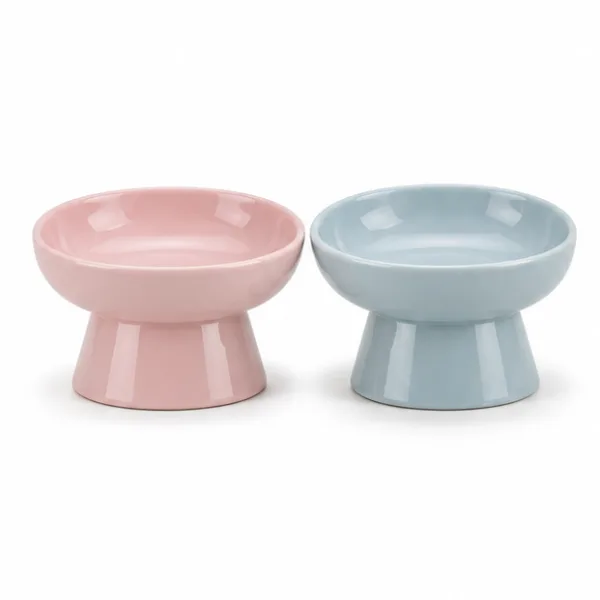
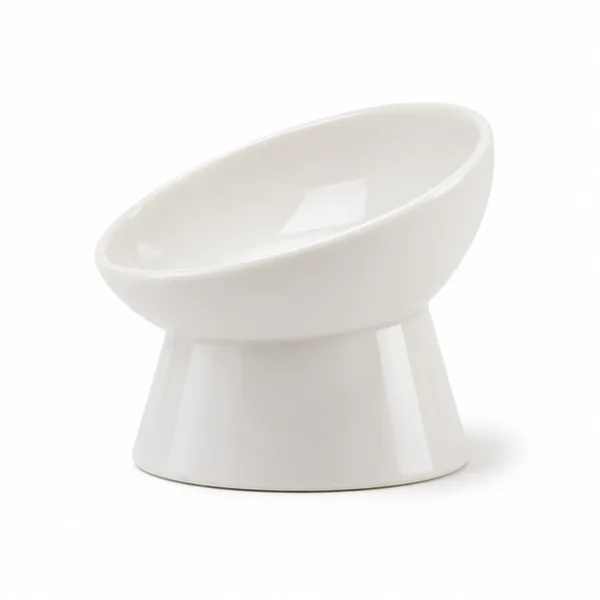
4. White ceramic tilted raised cat bowl: best tilted bowl
A single ceramic bowl with a 15 degree tilt. The listing says the height runs from 7.9 cm to 11.9 cm (3.1 to 4.7 in) and the width is 14 cm (5.5 in), and that the tilt keeps food in the centre. It lists lead and cadmium free ceramic, and says it is microwave and dishwasher safe, while the care field says hand wash only. It weighs 170 g.
Pros: the tilt keeps kibble within reach; ceramic; a lower edge at the front
Cons: the listing conflicts on dishwasher use; one bowl only; the narrowest pick; the listing's age and breed fields look inconsistent, so we rely on the stated sizes
Best for: cats who chase kibble round the bowl
Skip it if: your cat has long whiskers or a very flat face and wants a wider plate
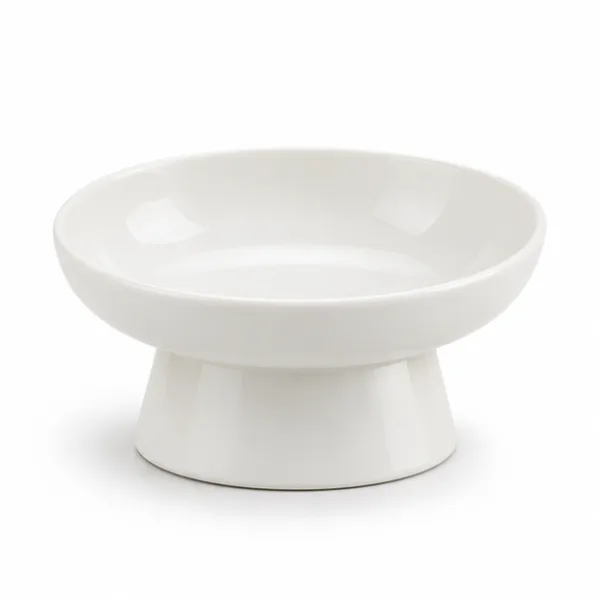
5. Lusifaco shallow raised ceramic bowls, 15 cm: best for flat-faced cats
Two flat ceramic plates, 15 cm wide, that sit in a bamboo stand with anti-slip feet. The listing says the stand comes in two heights, 7 and 10 cm, and the plates are about 3 cm high. It says the plates are dishwasher safe, but the care field says hand wash only. The listing also claims it may ease occasional vomiting, which we can't confirm.
Pros: wide flat plates; two stand heights; non-slip feet; a lower option for kittens and small cats
Cons: the listing conflicts on dishwasher use and mentions three plates in the description, so check what arrives; we'd hand wash the bamboo stand rather than put it through a dishwasher; flat plates let wet food slide
Best for: flat-faced cats and cats who prefer a plate
Skip it if: you need one sturdy, heavy ceramic bowl, or you serve a lot of gravy
Is whisker fatigue real?
It isn't a proven condition. PetMD, in an article written by one vet and reviewed by another (updated 23 February 2026), says whisker fatigue is not a disease and its existence is still debated among vets. A 2020 study it cites found no difference in eating time, amount eaten or food dropped, though some cats preferred whisker-friendly bowls (PetMD).
PetsRadar (written by a vet, updated 7 March 2024) describes it as a theory, and says it is thought by some to explain why certain cats avoid bowls (PetsRadar). So the honest summary is that a wide, shallow bowl is a low-risk thing to try, not a proven fix. PetMD also advises against trimming whiskers.
Do raised bowls stop cats vomiting?
Not reliably, and we couldn't find a vet source that says they do. Some listings claim better digestion or fewer episodes of vomiting, but those are the brand's claims. Cats vomit for many reasons, including eating too fast, hairballs and illness. Regular vomiting is a reason to call your vet, not to buy a bowl. Eating too fast is one cause; our slow feeder cat bowl guide compares shallow maze bowls for cats that gulp.
If your cat gulps food and brings it back up, a slower approach is often worth discussing with your vet first. Our cat puzzle feeder guide and automatic cat feeder guide cover ways to slow meals or split them into smaller portions. PetMD says to see a vet if your cat's eating habits change significantly, if changing bowls doesn't help, or if they lose weight.
Wide, shallow bowls for flat-faced cats?
They may help. Flat-faced cats can have trouble getting food out of a deep bowl, and the Necoichi, tilted and Lusifaco listings all describe their shape as suiting flat-faced cats. That is the brands' claim, but a wide, shallow plate is a sensible shape to try, since it asks less of a short muzzle.
Lone Tree Veterinary Hospital (a clinic blog post dated 15 May 2019) describes whisker-friendly bowls as wide and shallow, so cats can eat without their whiskers touching the sides (Lone Tree Vet). The Lusifaco plates are 15 cm wide and flat, the Necoichi bowl is 4.6 cm deep, and the tilted bowl is the narrowest at 14 cm, so check these numbers against your cat's face.
Ceramic, stainless steel or plastic?
Ceramic and stainless steel are the easy-clean choices, and ceramic is heavy enough not to slide. Plastic is lighter, but scratches can be hard to wash out, so replace a plastic bowl if the surface becomes scored. Four of our five picks are ceramic, and Kitty City is plastic.
International Cat Care says cats in general prefer glass and ceramic bowls to plastic, and most prefer a wide, shallow bowl (International Cat Care, How to encourage your cat to drink, updated 26 September 2025, page read 4 November 2026, International Cat Care). The listings say Kitty City is PET plastic, top rack dishwasher safe. The ceramic picks are described as lead and cadmium free by their listings, which is the maker's claim. If your cat gets chin spots, ask your vet before blaming the bowl. Some listings claim ceramic prevents chin acne, and we don't repeat that as fact.
Raised cat bowls compared
All numbers are from each Amazon Australia listing, checked on 4 Nov 2026. Dimensions are the listing's own, converted from inches where needed.
Swipe sideways to see every column
Bowl
Width
Height
Material
Dishwasher
Kitty City (2)
13.7 x 8.3 cm
10.2 cm
PET plastic
Top rack, per listing
Necoichi
15.5 x 14.5 cm
13.5 cm
Porcelain ceramic
Listing conflicts
CEEFU (2)
15.8 cm
12.7 cm
Ceramic
Yes, per listing
Tilted ceramic
14 cm
8 to 12 cm
Ceramic
Listing conflicts
Lusifaco (2)
15 cm
Stand 7 or 10 cm
Ceramic, bamboo stand
Listing conflicts
How we chose
We searched Amazon Australia for raised cat bowls and shortlisted ones that met all of these checks:
Well rated: a strong average rating with plenty of buyer reviews.
No red flags: no pattern of poor reviews, safety complaints or listing problems.
Available on Amazon Australia when we checked.
Width and height stated on the listing in centimetres or inches, and depth where the listing gives it.
Material stated, and tilt where the bowl has one.
Dishwasher information given on the listing (and noted where it conflicts).
These are researched picks, not products we've personally tested. We compared the specifications and features shown on each Amazon Australia listing, checked on 4 Nov 2026. We didn't accept payment from any brand, and no brand saw this page before it was published.
Left out this time: plastic bowls with no stated size, and bowl stands sold without bowls.
Where else can you buy raised cat bowls?
Pet shops, discount department stores and homewares shops sell raised and tilted cat bowls, and seeing one in person helps you judge the width against your cat's face. Whichever you choose, compare the width, height and depth with the numbers in this guide, and check the care label for dishwasher use.
How to choose bowl height and width
Match the height to your cat. Most healthy cats are fine with a bowl a few centimetres high. For a stiff or older cat, a higher bowl may be easier, but there is no agreed ideal height. Choose a width wider than your cat's face and a shallow depth, then watch whether they eat comfortably.
Swipe sideways to see every column
Pick
Width
Height
Good for
Lusifaco, low stand
15 cm
7 cm stand
Kittens, small cats
Tilted ceramic
14 cm
8 to 12 cm
Average cats
Lusifaco, tall stand
15 cm
10 cm stand
Cats who prefer a higher plate
Kitty City
13.7 x 8.3 cm
10.2 cm
Average cats
CEEFU
15.8 cm
12.7 cm
Larger or stiffer cats
Necoichi
15.5 x 14.5 cm
13.5 cm
Larger cats, wide faces
Put the bowl where your cat feels safe, and keep food away from the water and the litter tray. Many cats drink more from a separate water spot, and our cat water fountain guide covers more options. For other ways to make mealtime interesting, see our cats enrichment page.
Keeping bowls clean
Wash cat bowls daily with hot soapy water, rinse well and dry them, because food and saliva leave a film that can hold germs. Ceramic and stainless steel are the easiest to clean. Where a listing conflicts on dishwasher use, hand wash to be safe.
Check plastic and glazed ceramic for scratches and chips, and replace any bowl that is damaged. Wash the bowl and the area around it, and wipe up spilled wet food. Don't use essential oils or scented cleaners near your cat. For grooming a long-haired cat, see our cat brush guide and cat hair clippers guide.
When to see a vet
See your vet if your cat vomits often, loses weight, eats less than usual, paces at the bowl, or seems hungry but won't eat. PetMD says to rule out medical causes such as dental disease or kidney disease before blaming the bowl (PetMD, updated 23 February 2026).
Ask about joint pain if your cat struggles to bend, jump or reach the bowl. A raised bowl won't treat a painful joint.
Don't trim whiskers. PetMD advises against it.
Frequently asked questions
What are the best raised cat bowls?
Our top pick is the Kitty City raised bowl 2 pack, which is light, small and easy to wash. For ceramic, the CEEFU pair is a stable set, and for a very wide bowl the Necoichi is the pick. Choose by your cat's face, size and any stiffness.
Is whisker fatigue a real thing?
It isn't a proven disease. PetMD (updated 23 February 2026) says its existence is still debated among vets, and one 2020 study it mentions found no difference in eating, though some cats preferred whisker-friendly bowls. A wide, shallow bowl is a harmless thing to try.
What height should a cat bowl be?
There is no agreed height. The raised bowls here range from about 7 cm to 13.5 cm. For a healthy cat a low bowl is fine. For a stiff cat try a slightly higher one, and ask your vet about joint pain if they struggle to bend.
Are raised bowls good for older cats?
They may help some older cats who find bending uncomfortable, and several listings say so, but that is a brand claim. We found no vet source confirming it. If your older cat is stiff or eating less, see your vet first, because a bowl won't treat pain.
How often should I wash cat bowls?
Wash them daily with hot soapy water, rinse and dry. Ceramic and stainless steel are easiest to keep clean. Replace any plastic bowl that is scratched, and any ceramic one that is chipped or cracked. Where a listing conflicts on dishwasher use, hand wash.
Should cat food and water bowls be apart?
Yes, where you can. International Cat Care says cats prefer not to drink next to their food, and suggests several water bowls around the home, one per cat plus one extra. Keep both well away from the litter tray. If your cat drinks less than usual or seems thirsty all the time, mention it to your vet.
Are ceramic or stainless steel bowls better than plastic?
Ceramic and stainless steel are easier to keep clean and don't scratch as easily as plastic. Ceramic is heavy and stable but can chip. Plastic is light and can work if you replace it when scored. Choose the material that you will wash every day.
Product details from each linked Amazon Australia listing, checked on 4 Nov 2026.
This guide provides general information and isn't a substitute for veterinary advice. If you're concerned about your cat's eating, vomiting or weight, speak with your vet.