Best cat puzzle feeders for wet food in Australia (2026)
By Anish PuriUpdated 15 Oct 202610 min readResearched, not tested by us
Research guide. WhiskerFinds may earn a commission from links, at no extra cost to you.
Quick answer: Most cat puzzle feeders are built for dry food, so wet food clogs them or won't come out. The designs that genuinely work with wet food are flat ones your cat licks or paws at: a lick mat, a ceramic maze plate (also sold as a slow feeder bowl), or a shallow silicone puzzle bowl. Skip balls, tubes and flip-lid puzzles for wet food. Our top pick is the PTOBER ceramic flower maze plate: wide, shallow, food grade ceramic and dishwasher safe. Use part of your cat's normal daily ration, wash the feeder after every wet meal, and start on the easiest setting so your cat wins early.
If your cat inhales their wet food in thirty seconds, or you'd like to give an indoor cat something to do at mealtimes, a puzzle feeder is the usual advice. The catch is that almost every puzzle feeder on the shelf was designed around kibble. This guide covers which designs work with wet food, which don't, and the best options sold on Amazon Australia.
Quick picks
Our top pickBest overall
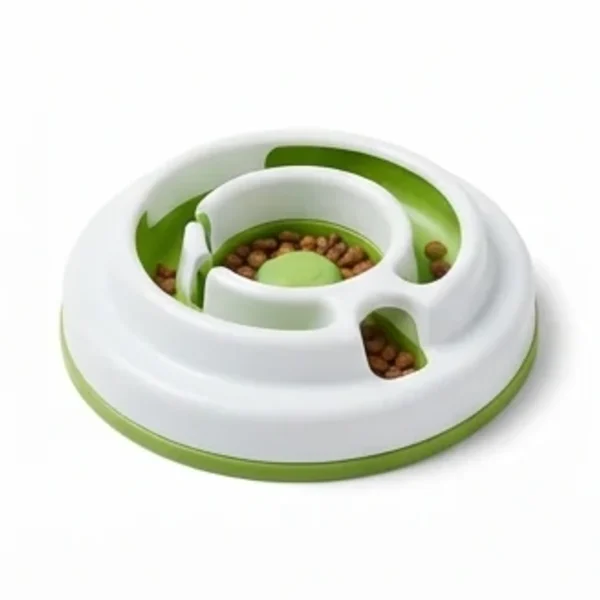
PTOBER ceramic flower maze plate
Food grade ceramic, wide and shallow, dishwasher safe
Pictures are illustrations, not the actual products.
Is a wet food puzzle feeder right for your cat?
It can help fast eaters, cats who vomit soon after gulping a meal, indoor cats who need more to do, and cats on a wet-only diet who've missed out on puzzle feeding.
It may suit most cats, including kittens and older cats, because the wet food designs are flat and easy. International Cat Care's review of puzzle feeding found that all cats can use puzzle feeders, including seniors, kittens and cats with disabilities (International Cat Care).
It may not suit cats who are already underweight or fussy, until they've got the hang of it. Keep a bowl available at first; a wide, shallow raised cat bowl suits many cats.
It's a tool, not a fix. A puzzle feeder works best alongside daily play, places to climb and time with you. See our guide to cat boredom and enrichment.
Which puzzle feeders work with wet food?
International Cat Care puts it simply: wet food won't dispense well from puzzle-feeding balls, but works well in flat, open designs (International Cat Care). Here's how the common types stack up.
Swipe sideways to see every column
Type
Works with wet food?
Why
Lick mat
Yes
You spread food into the grooves and your cat licks it out
Ceramic maze plate ("slow feeder bowl")
Yes
Raised bumps make your cat eat around obstacles; smooth ceramic washes clean
Silicone puzzle bowl
Yes
Same idea in a bendy, unbreakable material
Flat "activity board" with open cups
Mostly
Open cups hold pâté; narrow channels and pegs get clogged
Layered spinning puzzle (like the Kitty Lickin' Layers)
Yes, with care
Open compartments hold wet food, but there are more parts to wash
Flip-lid and sliding puzzles (like the Petstages Buggin' Out)
Not really
Made for treats and kibble; wet food gets stuck under the pieces and is hard to clean out
Treat balls and rolling dispensers
No
Wet food won't fall out, and it goes off inside
Tube "diggers" (like the Catit Food Digger)
No
Designed for dry food your cat scoops out
So the field is narrower than the shops suggest, which makes choosing easier.
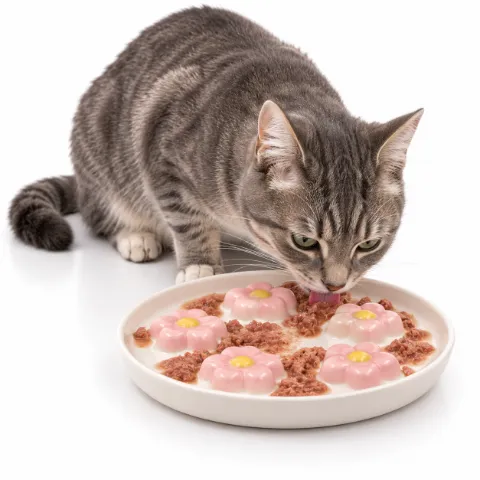
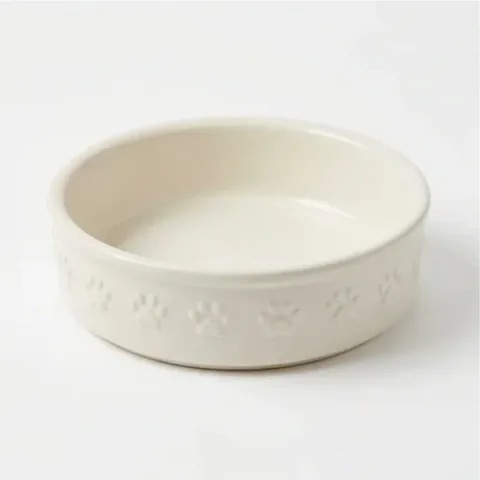
A wide, shallow ceramic plate from PTOBER with raised flower-shaped bumps that your cat has to eat around. The listing says it's food grade ceramic, free of lead and cadmium, about 16 cm across and 3 cm deep, and safe in both the dishwasher and the microwave. The width matters for wet food: your cat can reach everything without pushing their whiskers into the sides.
Pros: dishwasher safe, which matters with wet food; wide and shallow; the listing names wet, canned and raw food
Cons: ceramic can chip or crack if dropped; a light plate can be nudged across the floor by a determined cat
Best for: most cats, and anyone trying a puzzle plate for the first time
2. S&Q's Ceramics raised slow feeder: best raised plate
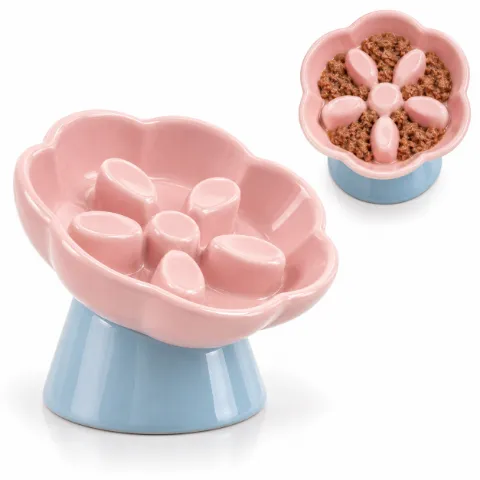
A ceramic maze plate on a stand, about 10.5 cm tall and tilted towards your cat. The listing says the raised, tilted design is more comfortable for the neck and encourages slower eating, and that it cleans by hand or in the dishwasher.
Pros: raised and tilted towards your cat; stable and heavy; hand or dishwasher cleaning
Cons: the listing names small dogs as well as cats, so the plate is on the larger side; the stand and plate add up to more to wash; some cats simply prefer eating from the floor
Best for: older cats, flat-faced breeds such as Persians, and anyone who wants a plate that won't slide
3. PTOBER 2-pack ceramic maze plates: best for two cats
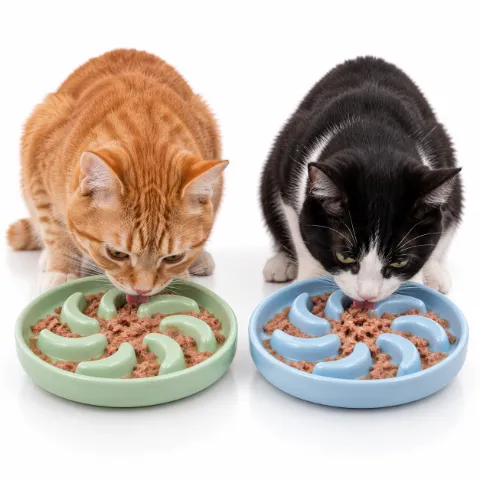
The same brand as our top pick, with curved banana-shaped bumps, sold as a pair. The listing says the plates are food grade ceramic, free of lead and cadmium, about 16 cm wide, and come with non-slip pads to stick underneath. Two plates lets you give each cat their own, apart, which RSPCA Australia recommends in multi-cat homes (RSPCA Australia).
Pros: two plates; non-slip pads included; dishwasher and microwave safe; same food grade ceramic as our top pick
Cons: ceramic can chip or crack if dropped; two plates to wash
Best for: two-cat homes, or one cat with a spare plate in the dishwasher
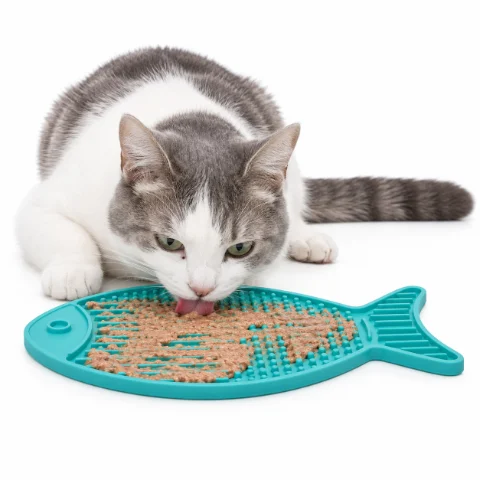
A fish-shaped rubber mat made for cats, about 22 × 16 cm, with four textures and deep pockets that hold pâté and wet food. The listing says it's made of food safe rubber with no BPA, PVC, phthalates or silicone, was developed in Australia, and is freezer friendly, so you can spread a meal and freeze it for a longer, cooler activity on hot days. It isn't a chew toy, so stay nearby and take it away once it's licked clean.
Pros: made for cats; developed in Australia; freezes well; suits wet food, pâté and purées
Cons: the listing gives mixed cleaning advice (hand wash only in one place, dishwasher safe in another), so hand washing is the safe choice; soft rubber, so supervise cats who chew
Best for: cats on pâté or wet food, calm time after play, and hot afternoons. It's also our lick mat pick in best cat toys, and our lick mats guide compares the dog versions.
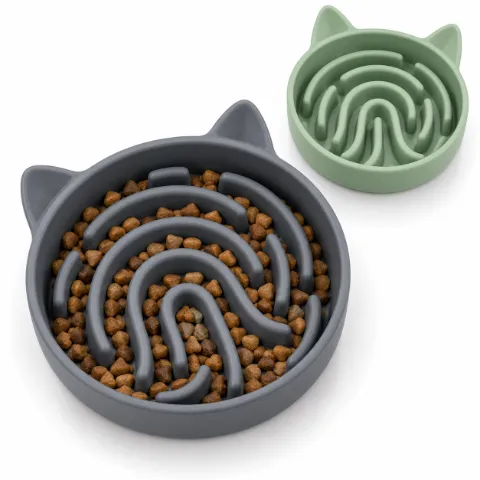
A bendy silicone bowl with a "fingerprint" maze in the base, sold in several sizes from about 0.8 to 3.4 cups. The listing says it's food safe silicone, dishwasher safe, and that the larger sizes have a suction cup underneath to stop sliding. It's sold for both dogs and cats, so pick a small size for a cat.
Pros: can't chip or break; dishwasher safe; suction base on the larger sizes; several sizes to choose from
Cons: the smallest sizes don't have the suction cup; silicone can hold smells if wet food is left to dry on it
Best for: households where a ceramic plate would get knocked off a bench, and cats who paw their food around
6. Catstages Kitty Lickin' Layers: best spinning puzzle (wet or dry)
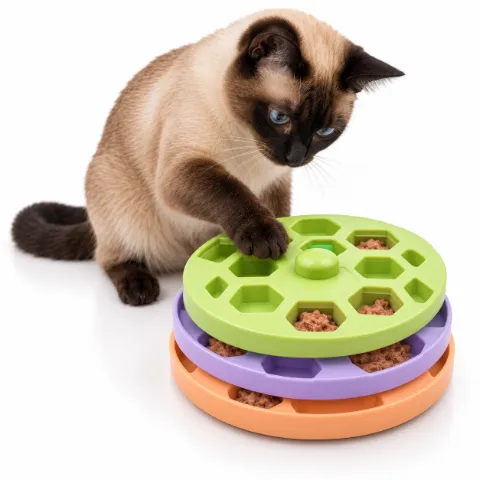
A round puzzle with three spinning layers and over 80 small compartments. Your cat turns the layers to uncover food. The listing says it holds up to 1 cup of wet food or ½ cup of dry. It's the one moving-parts puzzle we'd use for wet food, because the compartments are open cups rather than hidden tunnels.
Pros: a harder brain game than a plate; works with wet or dry food; open cups rather than hidden tunnels
Cons: lots of little cups to scrub after a wet meal; plastic; more parts to wash than a plate
Best for: clever cats who've mastered a maze plate and need more of a challenge
Wash any feeder after every wet meal. Supervise lick mats and put them away once they're clean.
Side by side comparison
Details checked on Amazon Australia on 15 Oct 2026.
Holds up to 1 cup of wet food or ½ cup of dry (listing)
Lots of small cups to wash
Tap "Check price on Amazon" for today's price. Prices change often, so we don't print them.
How we chose
We searched Amazon Australia for cat puzzle feeders, slow feeders and lick mats, then shortlisted products that met all of these checks:
Well rated: a strong average rating with plenty of buyer reviews.
No red flags: no pattern of poor reviews or safety complaints.
Available on Amazon Australia when we checked.
Works with wet food: a flat, open design, with the listing naming wet food, canned food or pâté.
Food safe materials stated in the listing, and no small removable parts.
These are researched picks, not products we've personally tested. We compared the specifications and features shown on each Amazon Australia listing, checked on 15 Oct 2026. Availability and prices can change. We didn't accept payment from any brand, and no brand saw this page before it was published.
Left out this time: the Catit Food Digger and the Petstages Buggin' Out and Rainy Day puzzles, which are excellent for dry food but not made for wet. One raised ceramic bowl claimed to "prevent vomiting", which no bowl can promise, so we left it out. Automatic timer feeders aren't puzzles; for those, see our automatic cat feeders guide, which includes one made for wet food (the Cat Mate C500).
How to choose a puzzle feeder for wet food
Swipe sideways to see every column
Your cat
Try first
Our pick
Gulps wet food and sometimes brings it back up
A maze plate
PTOBER ceramic flower maze plate
Older, or a flat-faced breed
A raised, tilted plate
S&Q's raised slow feeder
Two cats
A plate each
PTOBER 2-pack ceramic maze plates
Eats pâté, or needs calm time
A lick mat
LickiMat Felix
Knocks bowls around
A silicone bowl with suction
Coomazy silicone bowl (larger sizes)
Finds plates too easy
A spinning puzzle
Catstages Kitty Lickin' Layers
Shallow beats deep. Wet food sits in grooves, and your cat has to reach it with their tongue. Deep, narrow channels frustrate cats and are hard to clean.
Wide beats narrow. A plate about 15 cm or wider lets your cat eat without pressing their whiskers into the sides.
Smooth materials clean easier. Glazed ceramic and silicone wipe clean. Textured rubber lick mats hold food well but need a brush.
Start easy. International Cat Care suggests keeping some bowl feeding going while you introduce a puzzle, and making the first attempts very easy so your cat succeeds (International Cat Care). For a maze plate, that means a thin layer spread across the top, not pushed into every groove.
Keeping wet food puzzles clean
Wet food dries hard and goes off quickly, so hygiene is the main difference between a wet food puzzle and a kibble one.
Wash after every meal, not every few days. Rinse straight away so food doesn't dry in the grooves.
Use the dishwasher where the listing allows it. That rules out some lick mats.
Don't leave wet food out all day. Put out one portion, let your cat work on it, then clear what's left within an hour or so, sooner in summer.
Check for damage. Replace a chipped ceramic plate or a torn mat.
Keep water handy. Put fresh water near the feeding spot. Some cats drink more from a running cat water fountain.
Homemade wet food puzzles (DIY)
International Cat Care suggests everyday items for wet food puzzles (International Cat Care). Three easy ones:
Egg carton: spread a little wet food into a few of the cups. Throw the carton away after one use.
Muffin tray: a teaspoon of food in some cups, nothing in others. Wash it after every meal.
Silicone ice cube tray: shallow cups are easy for a tongue to reach, and you can freeze it for a cool summer activity.
Stay nearby, take cardboard away once it's empty, and count the food as part of the day's ration.
Store-brand cat feeders: what to check
Store-brand slow feeders and lick mats can work well with wet food. Before you buy, check that it's:
Flat and open: no tunnels, balls or lids for wet food to get stuck in.
Wide and shallow: about 15 cm or wider, so whiskers don't press on the sides.
Food safe: the material is listed as food safe (and BPA-free if it's plastic).
Easy to wash after every meal: dishwasher safe is a big help.
We haven't compared store-brand feeders yet, as this guide covers products on Amazon Australia.
Count anything from a puzzle or lick mat as part of your cat's daily ration, not an extra, so they don't gain weight. International Cat Care notes that, where it suits the cat, all of a cat's food can be given through puzzle feeders once they're confident (International Cat Care). Start with part of one meal and build up as your cat gets the hang of it. Cats naturally prefer several small meals a day, so splitting a tin across two or three sittings suits them well.
Safe foods only. Stick to your cat's usual food. Never use onion, garlic, leeks or chives; chocolate; grapes, raisins, sultanas or currants; alcohol; caffeine; or cooked bones. See the safety section in our cat enrichment guide.
When to see your vet
Slowing a fast eater can reduce vomiting straight after meals, but a puzzle feeder isn't a treatment. See your vet if your cat vomits regularly, loses weight, eats much more or much less than usual, or seems in pain. Straining in the litter tray with little or no urine is an emergency, especially in male cats, so call a vet straight away. Also see your vet before changing how you feed a cat with diabetes, kidney disease or another condition that needs a set diet.
Frequently asked questions
What is the best puzzle feeder for wet food?
Our top pick is the PTOBER ceramic flower maze plate: wide, shallow, food grade ceramic and dishwasher safe. For pâté or calm time, the LickiMat Felix lick mat is a good alternative, and the Kitty Lickin' Layers suits cats who want a harder puzzle.
What is the best lick mat for cats?
Our pick is the LickiMat Felix. The listing says it's made for cats, developed in Australia, free of BPA, PVC, phthalates and silicone, and freezer friendly, with deep pockets for wet food. It isn't a chew toy, so supervise.
Can you put wet food in a puzzle feeder?
Yes, in the right kind. Flat, open designs work: lick mats, ceramic maze plates and shallow silicone puzzle bowls. Balls, tubes and flip-lid puzzles are made for kibble, and wet food clogs them.
Slow feeder or puzzle feeder for wet food: what's the difference?
For wet food, they're mostly the same thing. A "slow feeder bowl" with bumps or a maze is a simple puzzle, and it's the type that handles wet food best. True puzzle toys with moving parts are built for dry food.
Are store-brand cat puzzle feeders OK for wet food?
They can be, if the design is flat and open. Check that the material is food safe, the plate is wide and shallow (about 15 cm or more), and that you can wash it after every meal. We haven't compared store-brand feeders yet; see our checklist above.
Can I make a DIY wet food puzzle for my cat?
Yes. International Cat Care suggests egg cartons, cardboard tubes and silicone ice cube trays for wet food. Spread a little food into the cups, supervise, and throw cardboard away after one use. A clean muffin tray works the same way.
How do I get my cat to use a puzzle feeder?
Make the first attempts very easy, keep a bowl available at first, and feed from the puzzle when your cat is hungry. Spread wet food thinly over the top of a maze plate rather than packing the grooves. Most cats get the idea within a few meals, but every cat is different, so go at your cat's pace.
My cat won't use it. What should I do?
Go back a step. Use less food, spread it thinner, and try a different style: some cats who ignore a maze plate love a lick mat, and vice versa. If your cat still refuses, there's no harm in feeding from a bowl and getting enrichment from play instead.
Do raised or tilted bowls help cats?
Some owners find older or flat-faced cats eat more comfortably from a raised plate, and a heavy stand stops the plate sliding. There's no need for one if your cat is happy eating from the floor.
Can kittens use a wet food puzzle feeder?
Yes. Kittens take to lick mats and maze plates easily. Keep it simple, supervise, and make sure they're still eating their full daily amount.
How often should I clean a wet food puzzle feeder?
After every meal. Wet food dries hard and spoils quickly, so rinse straight away and wash properly before the next use.
Can cats use dog puzzle feeders?
Some can, but many dog puzzles are too deep, too big or too hard for cats, and most are designed for kibble. A cat-sized design is usually easier and kinder to whiskers. For wet food, stick to the flat, open designs in this guide.
Are slow feeders good for cats?
Yes, if they're made for cats. A cat slow feeder is usually a wide, shallow plate with raised bumps, which slows fast eaters and suits wet food. Dog slow feeders are often too deep for cats. Start with an easy pattern and check your cat still finishes their meal.
Do slow feeders cause whisker fatigue?
"Whisker fatigue" isn't well proven, but some cats do seem to dislike deep bowls that press on their whiskers. Wide, shallow plates like the ones on this page keep whiskers clear, which is one reason they suit cats better than deep bowls.
Can cats have frozen lick mats?
Yes. Spread a thin layer of your cat's usual wet food on a cat lick mat and freeze it for a cooler, longer activity on hot days. Count it as part of their daily food, supervise, and pick the mat up once it's licked clean.
Product details from each linked Amazon Australia listing, checked on 15 Oct 2026.
This guide provides general information and isn't a substitute for veterinary advice. If you're concerned about your cat's eating, health or safety, speak with your vet.