Research guide. WhiskerFinds may earn a commission from links, at no extra cost to you.
Quick answer: A slow feeder cat bowl is a shallow plate with low ridges or a maze that makes your cat take smaller mouthfuls. It may help a cat who gulps dry food and brings it back up soon after. Our top pick is the Catstages Fishie Fun Feed Mat, a flat mat made for cats. A bowl won't fix repeated vomiting.
Most slow feeders on Amazon Australia are built for dogs, with deep ridges that a cat's face can't reach into. This guide compares six that suit cats, by width and depth in centimetres, and focuses on dry food. For wet food, see our cat puzzle feeders for wet food guide.
Three picks give a width we trust, so we say "not listed" where a listing doesn't give one. One pick is imported and its listing gives two sizes, and two list no size at all; we flag each.
Quick picks
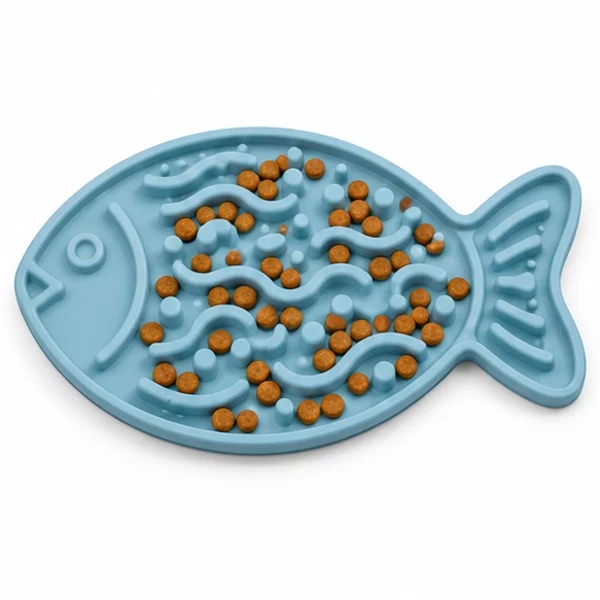
Catstages Fishie Fun Feed Mat
Flat mat made for cats, takes dry or wet food, no wall for whiskers to touch
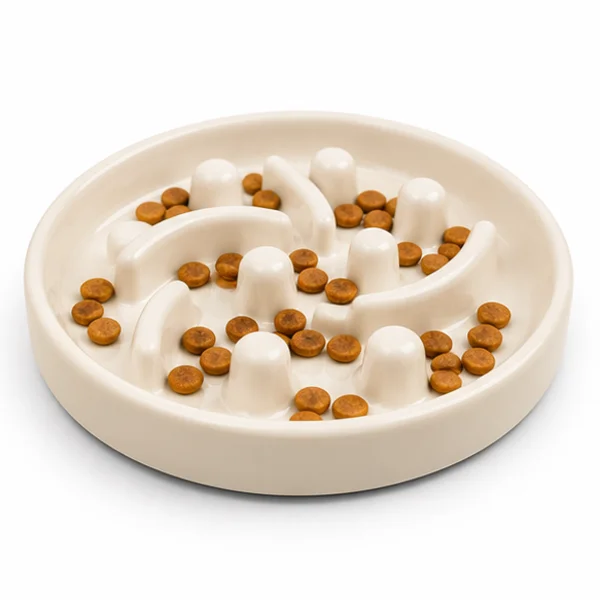
PTOBER Pastel ceramic slow feeder plate, ivory white
16 cm wide and 3 cm high, the clearest whisker-friendly numbers here
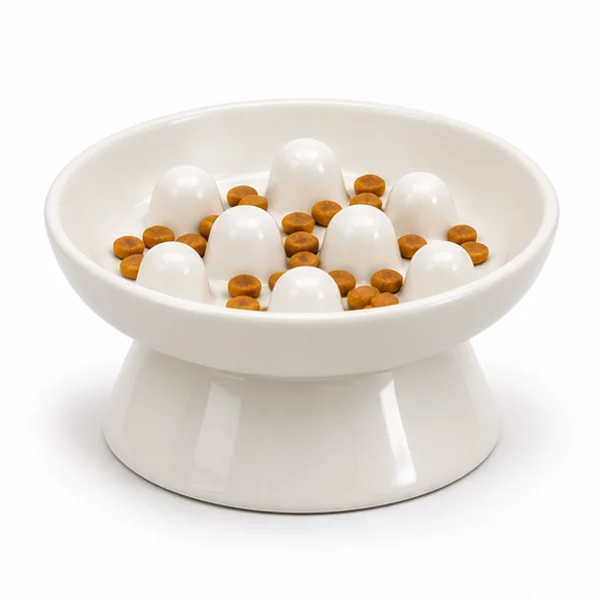
Kopmath raised ceramic slow feeder
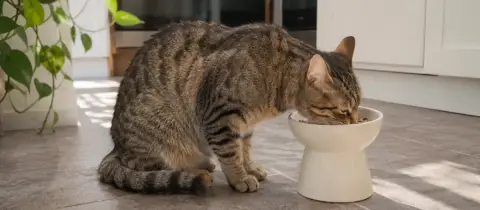
About 15 cm wide dish on a heavy ceramic base, for cats who stoop
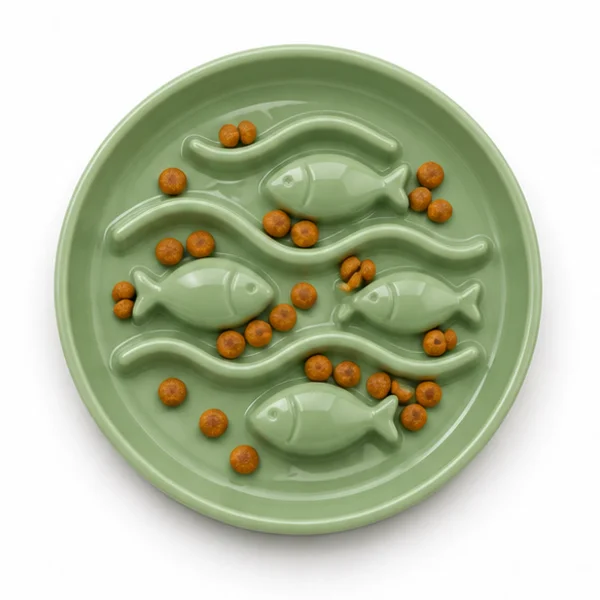
Cilkus fish-pool melamine slow feeder
Possibly the widest shallow maze here, but the listing gives two sizes (about 16 or 22 cm)
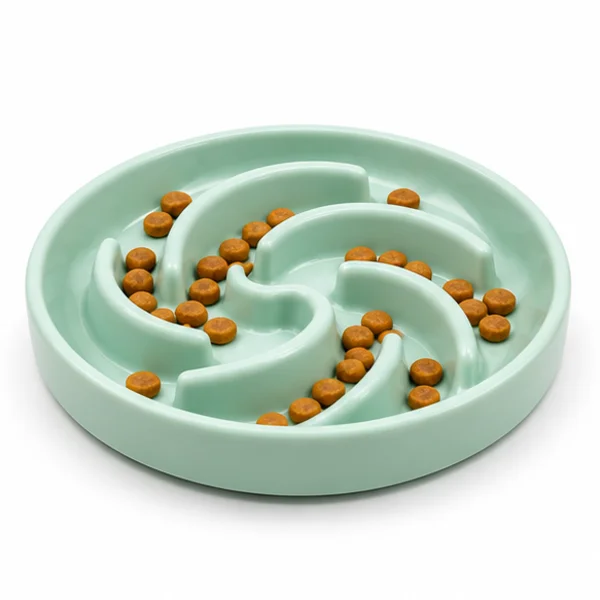
PTOBER Pastel melamine slow feeder, mint green
The ceramic plate's 16 by 3 cm shape without the breakage
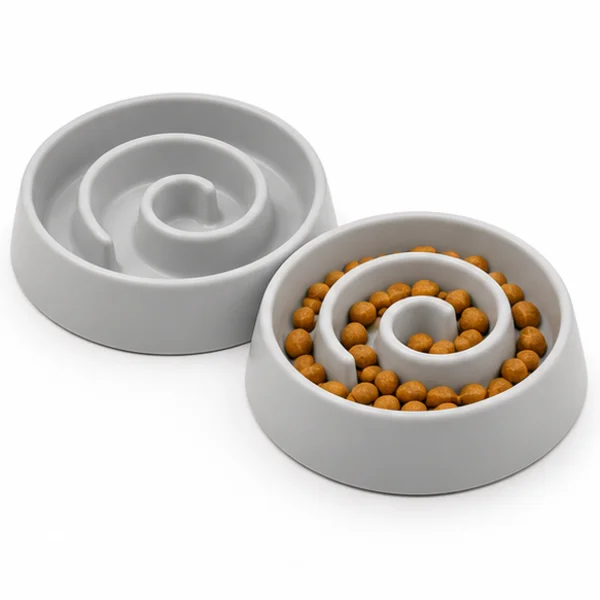
MateeyLife 2-pack slow feeder bowls, 1 cup
Two bowls so each cat eats apart, but made for small dogs
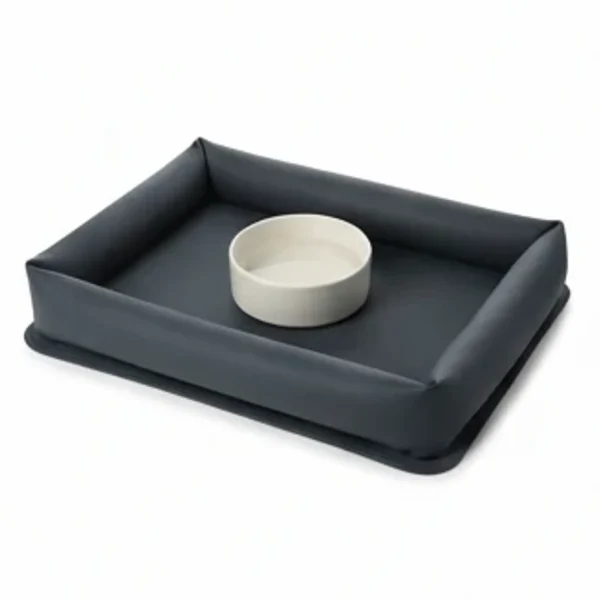
Reopet silicone feeding mat with raised edge, 47 x 29.2 cm
Sits under the bowl to catch crumbs and spills.
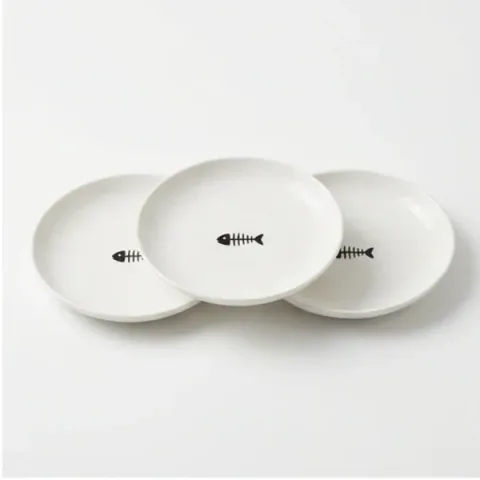
Wide shallow ceramic cat dishes, 15 cm, 3 pack
Wide, shallow dishes for water or a plain meal.
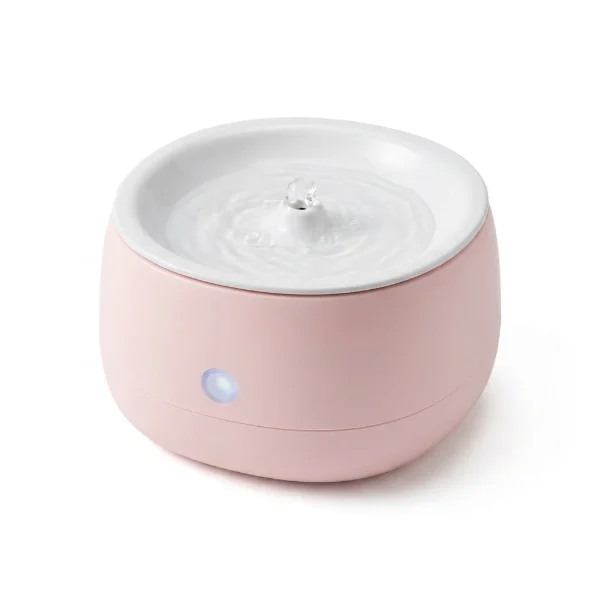
Catit Pixi fountain
A water fountain to sit beside the food, for cats who like moving water.
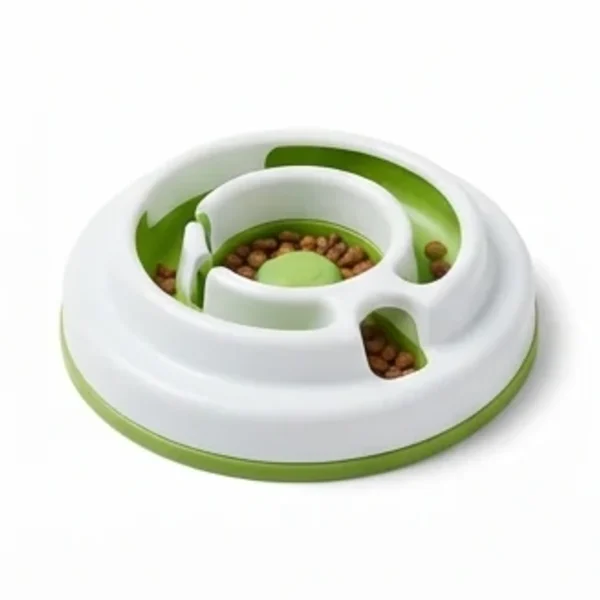
Catit Senses 2.0 Food Digger
A puzzle feeder that spreads dry food out so a cat works for it.
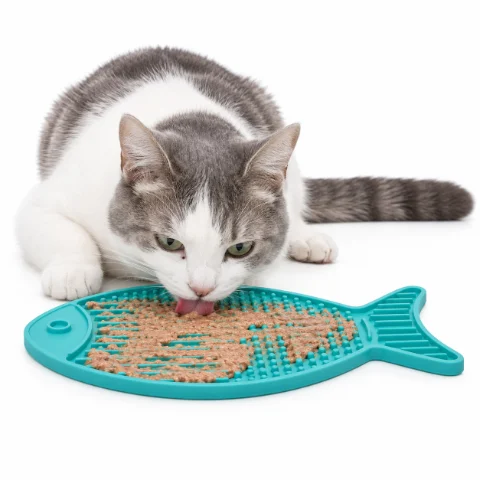
LickiMat Felix
A lick mat for spreading wet food thinly, an alternative way to slow down mealtimes.
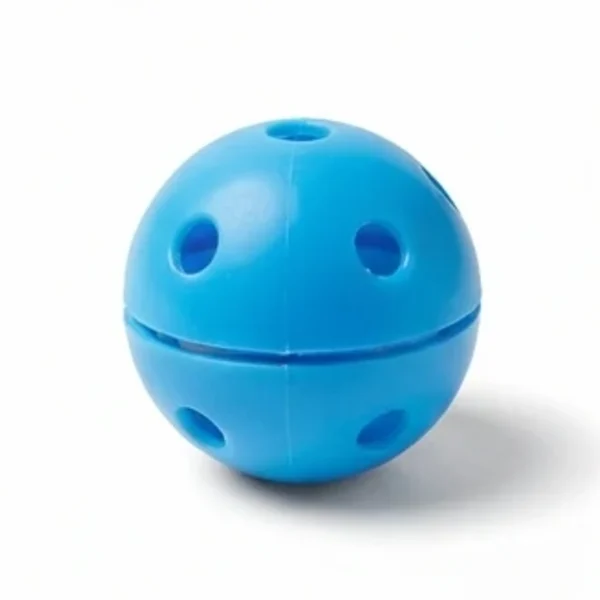
PetSafe SlimCat food-dispensing ball
A ball that releases dry food as a cat rolls it, adding play to mealtime.
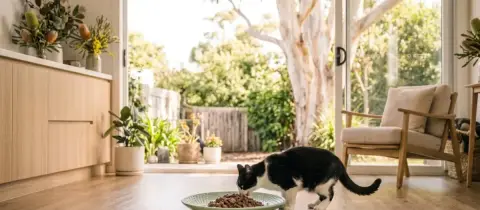
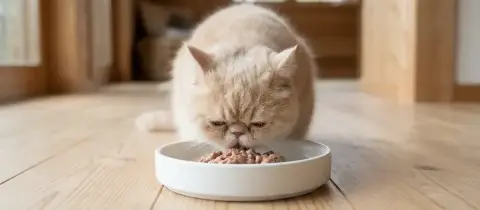
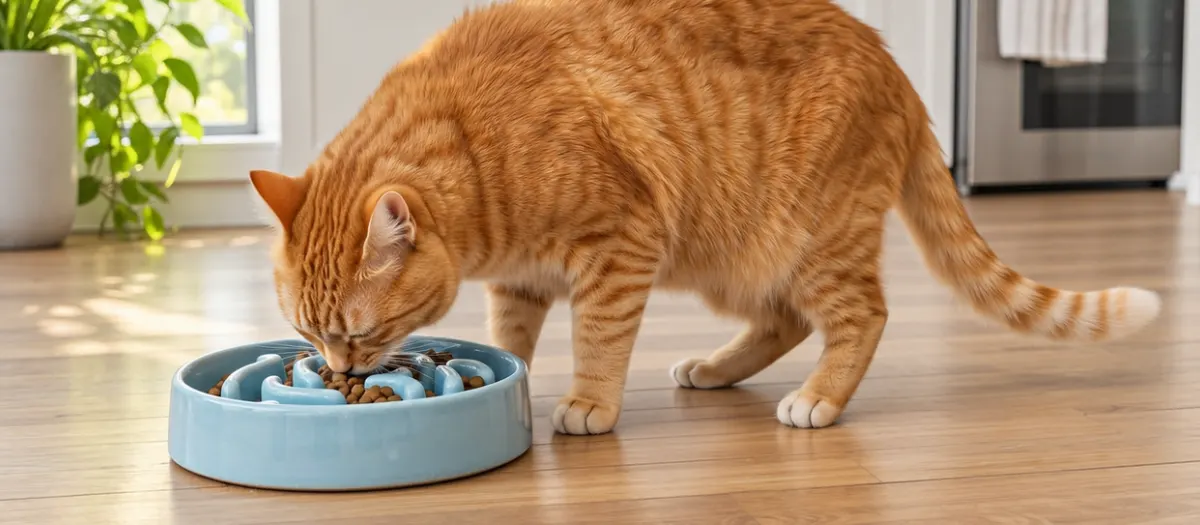
Pictures are illustrations, not the actual products.
Why does my cat eat so fast, and why does it come back up?
Dry food is a common culprit. PetMD (written by Sandra C. Mitchell, DVM, DABVP, published 6 December 2018) explains that dry food absorbs water and swells in the stomach, and a cat who eats quickly can trigger the regurgitation reflex (PetMD, "How to slow down a cat who is eating too fast", page read 18 November 2026).
Gulping isn't always about hunger. International Cat Care says cats are natural small-meal eaters and dislike sharing bowls or being watched while they eat, so competition with a housemate can speed things up (International Cat Care, "Feeding your cat or kitten", updated 26 September 2025, page read 18 November 2026). Medical causes can also be involved, which the vet box below covers.
Is it vomiting or regurgitation?
Regurgitation is food coming back up soon after eating, with little effort; vomiting usually involves heaving first and can bring up partly digested food or fluid. That is the general distinction vets use, and PetMD says vomiting can be the more concerning of the two. Telling them apart isn't always easy, so film it on your phone for your vet.
Our rule of thumb follows Cornell Feline Health Center, which says a cat who vomits more than once a week should be seen promptly, as should a cat who also seems lethargic, weak, off their food, thirstier than usual or has blood in the vomit (Cornell Feline Health Center, "Vomiting", page read 18 November 2026). Cornell also says a hairball every week or two is not unusual, which matches our hairball remedies guide.
Our picks in detail
1. Catstages Fishie Fun Feed Mat: best overall
A flat soft-plastic mat made for cats, with meal-lengthening ridges and mazes. Because it has no wall, whiskers have nothing to brush against. The listing says it holds up to 1/2 cup (about 120 ml) of wet or dry food, has a non-slip base, and is BPA, PVC and phthalate free. It says it is for cats only, not a chew toy, to be replaced if damaged, not for the microwave, and for supervised use only. Care is hand wash, though the description also says top-rack dishwasher safe.
It suits one meal at a time, not free-feeding a day's kibble.
- Pros: made for cats; flat, so no sides for whiskers; takes dry or wet food; non-slip base per the listing
- Cons: width and depth not reliably listed; soft plastic can scratch over time and needs replacing if damaged; small capacity
- Best for: one cat who gulps a measured dry meal
- Skip it if: your cat bats light mats around, since a heavy ceramic plate is steadier
2. PTOBER Pastel ceramic slow feeder plate, ivory white: best ceramic plate
A 16 x 16 x 3 cm ceramic plate (6.3 in wide, 1.2 in high) with raised banana-shaped bumps. The listing says it holds about 200 g (7 oz), takes dry, wet, canned or raw food, and is food-grade ceramic that is lead and cadmium free, with rounded ridges. It's dishwasher and microwave safe, and the box includes anti-slip stickers.
It has the same brand and shape family as the top pick on our wet food puzzle feeder guide, so it suits a household that feeds both.
- Pros: 16 cm wide and 3 cm shallow; ceramic weight; dishwasher and microwave safe
- Cons: ceramic chips if dropped; stickers are the only grip
- Best for: cats who prefer ceramic, and mixed dry and wet feeding
- Skip it if: you want unbreakable
3. Kopmath raised ceramic slow feeder: best raised slow feeder
A shallow dish about 15 cm (6 in) wide on a wider, heavier ceramic base, with small obstacles the listing says aren't sharp or hard against a cat's teeth. The listing says the ceramic is lead and cadmium free, dishwasher and microwave safe, and suits wet or dry food. Height isn't listed.
International Cat Care's arthritis advice says older arthritic cats may benefit from raised food and water bowls (International Cat Care, "Arthritis in cats", updated 26 September 2025, page read 18 November 2026). See our raised cat bowls guide.
- Pros: the only raised pick; about 15 cm wide; heavy base; dishwasher and microwave safe
- Cons: height not listed; capacity not listed
- Best for: an older or stiff cat who stoops to eat
- Skip it if: your cat is comfortable at floor level
4. Cilkus fish-pool melamine slow feeder: best for a big cat or big appetite
A melamine fish-pool maze, about 284 g, with smooth rounded ridges. The listing gives two sizes: about 15.7 x 2.2 cm in the bullets and 22 x 3.5 cm in the description, so we print about 16 to 22 cm wide and 2 to 3.5 cm deep. It says hand wash or dishwasher and for supervised use only. The title says green, while the description says white, so check the colour shown before you order.
At either size it clears our 15 cm guide, and the larger figure suits a big cat. Don't microwave melamine. The listing names cats and small dogs.
- Pros: wide, shallow maze; light to wash; won't shatter like ceramic
- Cons: imported, so check the delivery details on Amazon before you order; two conflicting sizes; colour wording conflicts
- Best for: a larger cat with a big appetite
- Skip it if: you want the exact width guaranteed
5. PTOBER Pastel melamine slow feeder, mint green: best unbreakable
The ceramic plate's shape without the breakage: 16 cm wide and 3 cm high (160 x 30 mm), holding about 200 g (7 oz). The listing says food-grade A5 melamine, rounded ridges, anti-slip stickers included, dishwasher safe or hand wash, and dry, wet, canned or raw food.
A cat who pushes bowls around may do better with the ceramic plate.
- Pros: 16 x 3 cm; won't shatter like ceramic; stickers included
- Cons: light, so it needs the stickers; melamine isn't for the microwave
- Best for: a clumsy household or a cat who knocks bowls
- Skip it if: you warm food in the bowl
6. MateeyLife 2-pack slow feeder bowls, 1 cup: best pair for two cats on a budget
Two polypropylene bowls, up to 1 cup (about 240 ml) each, with a non-slip base and a widened rim to stop tipping. The listing says dry, wet or raw food, top-rack dishwasher safe, and "not a chew toy, supervise". It's made for small dogs, but the listing text names cats and dry food.
Two bowls means each cat can eat apart, which International Cat Care says cats prefer. The limitation: this is a dog-style maze with no width or depth listed. Check that your cat's whiskers clear the ridges, and try an easier plate if your cat paws food out.
- Pros: two bowls; wider rim; non-slip base; top-rack dishwasher safe
- Cons: made for small dogs, with a deeper maze; width and depth not listed; plastic can hold odours
- Best for: two cats who need separate bowls, with a size check first
- Skip it if: your cat is flat-faced
Is it gulping, competition, boredom or something medical?
Work through the four in order, because a bowl only helps the first two. A cat who empties the bowl in under a minute is eating too fast. A cat who only races when another cat is near is competing. Begging between meals with a healthy weight points to routine. Anything in the last row needs a vet before a new bowl.
| What you see | More consistent with | A sensible first step |
|---|---|---|
| Food is gone in under a minute, then a tube of kibble appears soon after | Eating too fast | A shallow slow feeder, or smaller meals more often (PetMD, International Cat Care) |
| Your cat eats fast only when another cat is near | Competition | Separate bowls out of sight of each other (International Cat Care) |
| Your cat paces or begs between meals, but is a healthy weight | Routine or boredom | Little-and-often meals and puzzle feeders (International Cat Care), plus play |
| Vomiting more than once a week, weight loss, lethargy, less eating, more thirst | Something a vet should check | Book a vet visit before buying anything (Cornell, PetMD) |
What width is whisker-friendly?
International Cat Care says most cats prefer a wide, shallow bowl and usually dislike their whiskers touching the sides (International Cat Care, "How to encourage your cat to drink", updated 26 September 2025, page read 18 November 2026). We use about 15 cm or wider and shallow, the same as our raised cat bowls guide.
Whisker fatigue itself isn't a proven condition and is debated among vets (PetMD, "Whisker fatigue in cats", updated 23 February 2026); our raised cat bowls guide covers the evidence. A wide, shallow plate is a low-risk thing to try, not a proven cure. Never trim whiskers.
Slow feeder cat bowls compared
Details from each Amazon Australia listing, checked on 18 Nov 2026. Inches and ounces are converted to cm and grams. "Check" means the listing gives no usable size, so look at the listing's size chart and photos. "Lead and cadmium free", "BPA free" and "food grade" are the listings' own claims.
| Bowl | Width x depth (cm) | Capacity | Material | Whisker clearance | Raised or flat |
|---|---|---|---|---|---|
| Catstages | Not listed | About 120 ml (1/2 cup) | Soft plastic | Check | Flat mat |
| PTOBER ceramic | 16 x 3 | About 200 g (7 oz) | Ceramic | Yes | Flat |
| Kopmath | About 15 wide, height not listed | Not listed | Ceramic | Yes | Raised base |
| Cilkus | About 16 to 22 x 2 to 3.5 (the listing gives two sizes) | Not listed | Melamine | Yes at either size | Flat |
| PTOBER melamine | 16 x 3 | About 200 g (7 oz) | Melamine | Yes | Flat |
| MateeyLife (x2) | Not listed | About 240 ml (1 cup) each | Polypropylene | Check | Flat |
Cleaning and use, again from the listings:
| Bowl | Dry food | Wet food | Dishwasher | Microwave |
|---|---|---|---|---|
| Catstages | Yes | Yes | Hand wash; the description also says top rack | No |
| PTOBER ceramic | Yes | Yes | Yes | Yes |
| Kopmath | Yes | Yes | Yes | Yes |
| Cilkus | Not stated | Not stated | Yes, or hand wash | Don't microwave melamine |
| PTOBER melamine | Yes | Yes | Yes, or hand wash | Don't microwave melamine |
| MateeyLife | Yes | Yes | Top rack | Not stated |
The Catstages listing's own product-information block gives a very small size, 10.9 x 7.2 x 0.7 cm, which can't hold half a cup, so we treat it as unreliable and say "not listed".
Where else can you buy a slow feeder?
Pet shops and vet clinics also sell slow feeder bowls and plates, and many are sized for dogs. Wherever you buy, check the width in cm against our 15 cm guide and look for low, rounded ridges rather than deep channels. A vet can also tell you how much your cat should eat each day.
Choose by situation
| Your situation | What to look for | Our pick |
|---|---|---|
| One cat gulping dry food | A flat, shallow maze for dry food | Catstages (1), or PTOBER ceramic (2) |
| Two cats who eat side by side | Two bowls, fed apart and out of sight | MateeyLife (6), or two PTOBER plates (2 or 5) |
| Big cat or big appetite | The widest dish | Cilkus (4), after checking the size shown |
| Older, stiff cat | A raised dish, plus a vet check for arthritis | Kopmath (3) |
| Wet food as well | A plate that takes wet food, or our wet food guide | PTOBER (2), or the wet food guide |
| You want unbreakable | Melamine or soft plastic | PTOBER melamine (5), or Catstages (1) |
Other ways to slow a fast eater
PetMD suggests spreading food thin across a large baking pan, putting large non-edible obstacles such as ping pong or golf balls in a bowl, or using treat toys. International Cat Care suggests splitting the daily food into at least five portions across the day, using timed or puzzle feeders, and giving each cat two or three feeding spots away from litter trays and busy areas. A food tree or treat ball makes a cat work for dry food too; see our cat puzzle feeder guide.
Our suggestions: measure the daily amount so extra small meals don't add up to overeating, and for a cat on a schedule, our automatic cat feeders guide compares timed options. A silicone mat under any bowl catches scattered kibble; our dog food mat guide covers cats too. Our cat bowls guide covers plain bowls, and our cat enrichment ideas cover play that isn't about food (wand toys you hold, never string or ribbon left out).
How we chose
We searched Amazon Australia for slow feeder bowls and plates that suit cats, then shortlisted those that met all of these checks:
- Well rated: a strong average rating with plenty of buyer reviews.
- No red flags: no pattern of poor reviews, safety complaints or listing problems.
- Available on Amazon Australia when we checked.
- Shallow and open, with a flat or low-ridge design a cat's face can reach.
- Width and depth in cm on the listing, or we say it's not listed.
- Cleaning details stated on the listing, with microwave use noted where the listing gives it.
Where a listing is imported, has a size conflict or is made for dogs, we say so in the cons. These are researched picks, not products we've personally tested. We compared the specifications and features on each Amazon Australia listing, checked on 18 Nov 2026, and we didn't accept payment from any brand.
Left out this time: a dog slow feeder with deep ridges (see our dog slow feeder guide instead), a petal-shaped bowl sized for dogs, a stainless bowl aimed at dogs, and the raised plate and colour variants already on our wet food guide.
When to see a vet
Book a vet visit if your cat vomits more than once a week, regurgitates often, loses weight, eats less than usual, seems lethargic, drinks more than usual or has blood in the vomit (Cornell Feline Health Center, PetMD). A vet can work out whether it's speed, diet or something medical. A bowl won't fix those.
Go to a vet or emergency clinic straight away if your cat is vomiting repeatedly, can't keep water down, seems in pain or has a swollen belly. If your cat chews or swallows a piece of a damaged bowl, see a vet.
Frequently asked questions
Do slow feeder bowls work for cats?
They may help a cat who gulps dry food, because maze ridges make each mouthful smaller. PetMD lists maze feeders among the options. We found no cat-specific study that gives a figure, so results vary, and a bowl doesn't help if the cause is medical. Watch your cat for a few weeks and tell your vet if the vomiting continues.
Why does my cat throw up after eating dry food?
Often it's regurgitation after gulping, as dry food swells in the stomach (PetMD). It can also be hairballs, a food change or a health problem. A hairball every week or two is not unusual (Cornell), but more often than that, or with other signs, needs a vet.
Ceramic, melamine or plastic: which slow feeder is best for a cat?
International Cat Care says cats prefer glass or ceramic, and plastic can pick up odours, so try ceramic first if your cat sniffs at a plastic bowl. Bin a chipped plate. Melamine won't shatter but isn't for the microwave. Soft plastic suits a cat who bats bowls around. Pick on width first: about 15 cm or wider and shallow.
How do I know if my cat is eating too fast?
Signs include the bowl being empty within a minute or two, gulping noises, and food coming back up soon afterwards. Timing a meal on your phone helps. If a healthy cat inhales food only when another cat is nearby, it's more consistent with competition, so feed them apart before changing bowls.
Will a slow feeder frustrate my cat or put them off food?
It can, if the maze is too hard. Start with a flat, easy plate, and put a few kibbles in the open areas so your cat wins early. If your cat stops eating, paws food out or walks away, go back to the old bowl. A cat eating less than usual is a reason to call your vet.
How much dry food fits in a cat slow feeder?
It depends on the bowl. The listings give about 120 ml for the Catstages, about 200 g for each PTOBER plate and about 240 ml for each MateeyLife bowl. The Kopmath and Cilkus listings give no capacity. Your cat's daily amount depends on the food and your cat, so ask your vet or follow the pack.
Can I use a cat slow feeder for wet food?
Yes, five of these six list wet food, and the Cilkus doesn't say. Wet food sticks in ridges, so wash promptly. For puzzle toys and plates built around wet food, see our cat puzzle feeders for wet food guide.
Does my cat need a raised slow feeder?
Probably not. Most cats are fine at floor level, and raised bowls aren't proven to stop vomiting. They may suit a stiff older cat, as International Cat Care's arthritis page says, and our raised cat bowls guide covers who benefits. If your cat has stopped jumping or seems sore, see your vet.
Related guides
- Cat puzzle feeders for dry food
- Best dry cat food
- Best cat puzzle feeders for wet food
- Best cat bowls
- Raised cat bowls
- Best slow feeder dog bowls
- Best automatic cat feeders
- Best dog food mats (for cats too)
- Cat hairball remedies
- Cat enrichment ideas
- Cat guides
Sources
- PetMD, "How to slow down a cat who is eating too fast", Sandra C. Mitchell DVM DABVP, published 6 December 2018, page read 18 November 2026 (https://www.petmd.com/cat/general-health/how-slow-down-cat-who-eating-too-fast)
- International Cat Care, "Feeding your cat or kitten", updated 26 September 2025, page read 18 November 2026 (https://icatcare.org/advice/feeding-your-cat-or-kitten/)
- International Cat Care, "How to encourage your cat to drink", updated 26 September 2025, page read 18 November 2026 (https://icatcare.org/articles/how-to-encourage-your-cat-to-drink)
- Cornell Feline Health Center, "Vomiting", page read 18 November 2026 (https://www.vet.cornell.edu/departments-centers-and-institutes/cornell-feline-health-center/health-information/feline-health-topics/vomiting)
- International Cat Care, "Arthritis in cats", updated 26 September 2025, page read 18 November 2026 (https://icatcare.org/articles/arthritis-in-cats)
- PetMD, "Whisker fatigue in cats", updated 23 February 2026 (https://petmd.com/general-health/whisker-fatigue-cats-what-it-and-how-help)
- Product details from each linked Amazon Australia listing, checked on 18 Nov 2026.
This guide provides general information and isn't a substitute for veterinary advice. If you're concerned about your cat's eating, vomiting or weight, speak with your vet.