Best cat bowls: ceramic, stainless steel and shallow picks
By Anish PuriUpdated 7 Nov 202613 min readResearched, not tested by us
Research guide. WhiskerFinds may earn a commission from links, at no extra cost to you.
Quick answer: The best cat bowls are wide, shallow and easy to wash, and ceramic or stainless steel suit most cats. Our top pick is the Mason Cash Cat Saucer, a 13 cm stoneware dish that the listing says is dishwasher safe. Plastic can scratch and may be linked to chin acne, so it's worth avoiding.
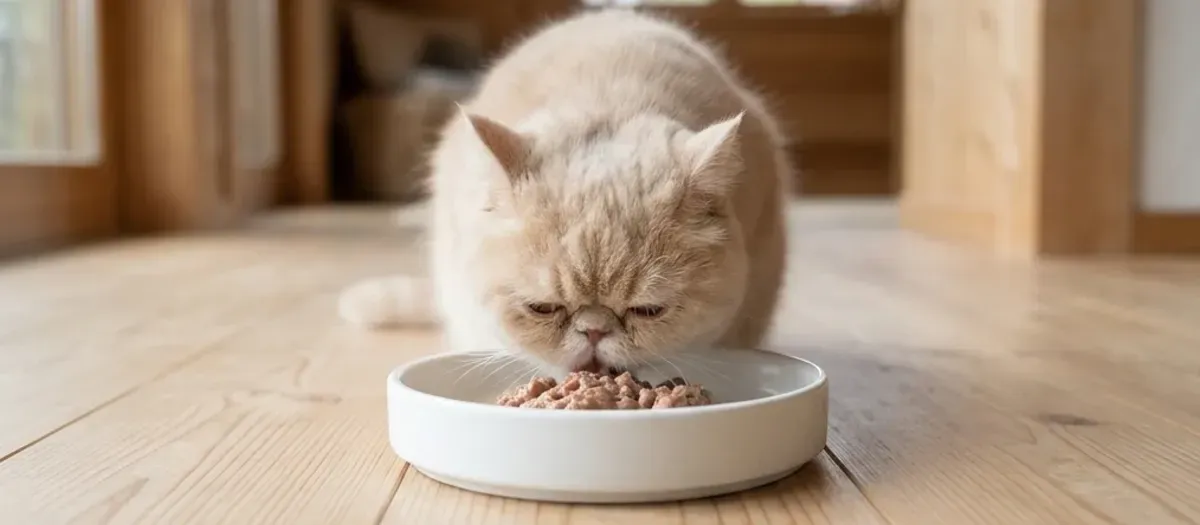
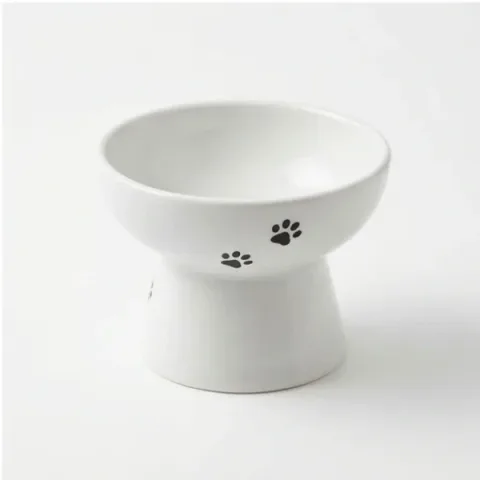
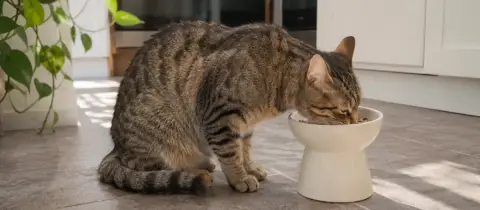
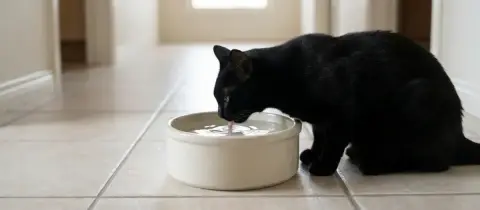
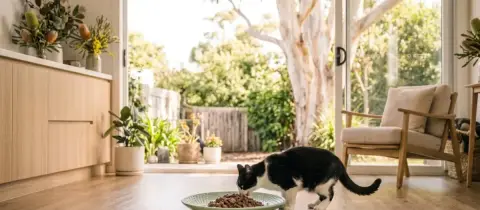
Illustration, not the actual product
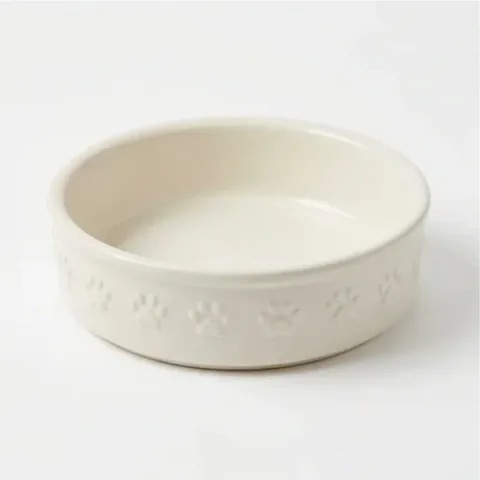
Our top pickMason Cash Cat Saucer, stoneware, 13 cm
Most cats will eat from almost any clean dish, but the material, width and weight of a bowl can make mealtimes tidier and easier to keep clean. This guide compares five food bowls on Amazon Australia by size, capacity and care. For other feeding gear, see our Cats page.
Quick picks
Our top pickBest overall
Mason Cash Cat Saucer, stoneware, 13 cm
Heavy stoneware saucer with embossed paws, dishwasher, microwave and freezer safe per the listing
Pictures are illustrations, not the actual products.
Supermarkets, pet shops and vet clinics also sell cat bowls, so you can hold one and check the size before you buy.
What type of bowl is best for a cat?
A wide, shallow bowl in ceramic, glass or stainless steel is a safe starting point for most cats. International Cat Care says cats in general prefer glass and ceramic to plastic, and most like a wide, shallow bowl so they don't have to put their head inside it (International Cat Care, page read 7 November 2026).
Ceramic or stainless steel cat bowls: which is better?
Neither wins outright. Ceramic is heavy, so it slides less and suits cats who push their bowl around, but it can chip if dropped. Stainless steel is light, hard to break and easy to wash, but it can skate across a floor unless it has a non-slip base.
PetMD (updated 29 March 2024, page read 7 November 2026) names stainless steel, glass and ceramic as alternatives to plastic for cats who get chin acne (PetMD). All Feline Hospital says stainless steel, glass and ceramic bowls haven't been shown to cause it (All Feline Hospital).
Our picks in detail
1. Mason Cash Cat Saucer, stoneware, 13 cm: best overall
A heavy stoneware saucer in cream with embossed paws. The listing says it's 13 cm across, holds 200 ml and weighs 0.29 kg, and calls it difficult to tip over. It says the bowl is dishwasher, microwave and freezer safe, and suits small cats. The listing's dimension line (5.5 x 0.5 x 5.5 cm) doesn't match the 13 cm title, so the measurements are unclear and we go by the 13 cm diameter.
Pros: heavy and steady; dishwasher, microwave and freezer safe per the listing; simple shape that's easy to wash
Cons: the listed dimensions are unclear and no height is given; stoneware can chip if dropped; 13 cm is smallish for a big cat; imported, so check the delivery details on Amazon before you order
Best for: wet or dry food for a small to average cat, and cats who push bowls around
Skip it if: your cat has a very flat face and wants a wider dish, or you drop things a lot
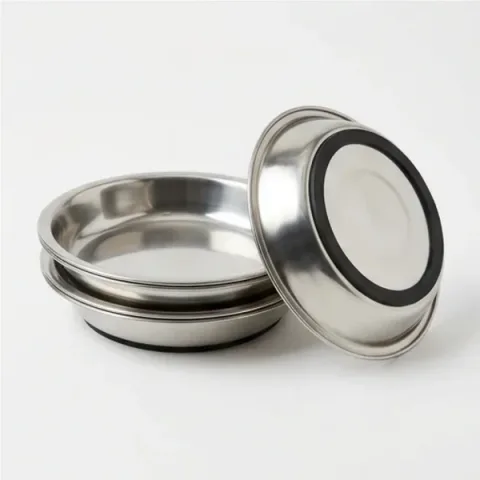
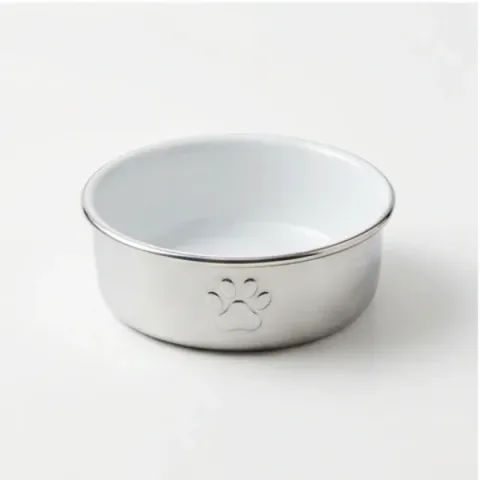
Wide, shallow dishes that the listing says use 304 stainless steel, with stick-on silicone pads to reduce slipping. It gives a 6.7 in (17 cm) diameter, says the bowls are dishwasher safe, and suits wet food, dry food or water. The title names a pack of 4, while the listing says packs of 2, 4, 8 or 10 are available. Capacity is given as 369 grams (13 oz).
The details table says alloy steel and shows 25 x 51 x 51 mm, which doesn't match the bullets, so go by the bullets and check the pack.
Pros: non-slip pads included; light and hard to break; several pack sizes; dishwasher safe per the listing
Cons: the details table conflicts with the 304 stainless claim and the 17 cm size; capacity is given in grams, not ml; the pads are stick-on, so check they stay put; imported, so check the delivery details on Amazon before you order
Best for: owners who want a light, easy-clean bowl in a multi-pack
Skip it if: your cat pushes light bowls around or you'd rather have ceramic
3. CatGuru Whisker Stress Free cat bowl, 16.8 cm: best wide, shallow bowl for flat-faced cats
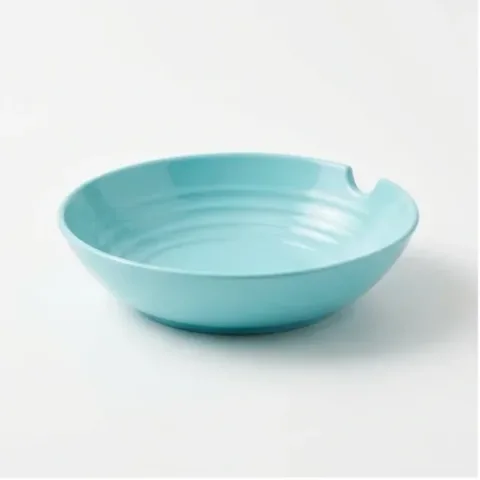
A melamine saucer, 16.8 x 16.8 x 3.1 cm, with a rippled base and non-slip legs. The listing says it holds 5 oz (142 g), is dishwasher safe, and relieves whisker fatigue. That is the brand's claim, and as explained on this page, whisker fatigue isn't proven. Still, a wide, shallow dish like this can ask less of a short muzzle, which is our reasoning rather than a vet finding.
The listing says do not microwave, and its breed field says medium and large breeds, which doesn't fit a saucer this size, so treat that as a listing quirk.
Pros: very shallow; wide; non-slip legs; dishwasher safe per the listing
Cons: melamine can't go in the microwave; small capacity of 142 g; the durability and noise comparisons are the brand's claims; imported, so check the delivery details on Amazon before you order
Best for: flat-faced cats, and cats who seem to avoid deep bowls
Skip it if: you want a heavy bowl or need to warm food in the dish
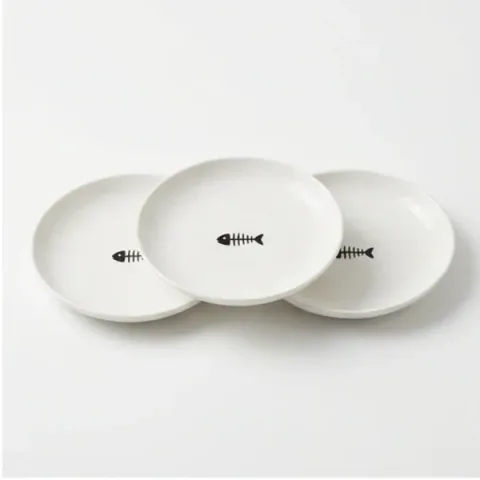
4. Wide shallow ceramic cat dishes, 15 cm, 3 pack: best ceramic set for more than one cat
Three white ceramic dishes, each 15 x 15 x 4.1 cm, holding 10 oz (about 280 ml). The listing says they're dishwasher safe, fired at high temperature and coated with food-safe glazes that are lead and cadmium free, which is the maker's claim. It lists them for dry, wet and soft food and for kittens and small breeds.
The listing has some mismatches. The bullets give a depth of 0.98 in (2.5 cm) while the details give a 4.1 cm height, and the details say 2 plates for a 3 pack. Go by the pack.
Pros: a set for several cats or for food and water; wide and shallow; dishwasher safe per the listing
Cons: the depth and plate count conflict across the listing; ceramic can chip; the listing is light on detail; imported, so check the delivery details on Amazon before you order
Best for: homes with more than one cat, or owners who want spare bowls for the dishwasher
Skip it if: you need a non-slip base, or your cat is fine with one bowl
5. Trixie Ceramic Cat Bowl, 11 cm: best small bowl for dry food
A plain ceramic bowl, 11 cm across, holding 300 ml and weighing 0.33 kg. The listing says it's dishwasher safe and harder to tip over. It's narrower than the other four and, going by its 300 ml capacity, probably deeper, so it suits dry food and cats who don't mind a smaller bowl.
The listing contradicts itself on care (dishwasher safe, yet hand wash only) and has some German in the details table, so follow the pack's instructions.
Pros: compact and heavy for its size; dry food friendly; ceramic
Cons: care instructions conflict; no height given; narrow for a flat-faced cat; imported, so the pack's label may not be in English
Best for: dry food for a cat who eats happily from a smaller bowl
Skip it if: your cat has a flat face or avoids deep bowls
Ceramic, stainless steel, melamine or plastic?
Swipe sideways to see every column
Material
Good points
Watch-outs
Ceramic or stoneware
Heavy and steady; cats in general prefer it to plastic per International Cat Care; dishwasher safe on our picks
Can chip or break if dropped; check the glaze is food-safe (the Wellbro listing says lead and cadmium free)
Stainless steel
Light; no scratch-trapping surface like plastic; the Supet listing says 304 stainless and dishwasher safe
Can slide without a non-slip base; not for the microwave
Melamine
Light; the CatGuru listing says it's dishwasher safe, with non-slip legs
The listing says do not microwave; the durability and noise comparisons are the brand's claims
Plastic
Light and easy to replace
Scratches can trap bacteria, and plastic bowls are linked with chin acne, so we left them out
Are plastic bowls bad for cats?
Plastic isn't dangerous on its own, but it can be a poor choice. All Feline Hospital explains that scratches and flaws in plastic can hold bacteria that rub onto the chin and may lead to infected oil glands. PetMD says cats eating from plastic may be at risk of acne and suggests changing to stainless steel. Switch if your cat has chin spots, and see your vet.
Do cats prefer deep or shallow bowls?
Most cats seem to prefer shallow, wide bowls. International Cat Care says most cats like a wide, shallow bowl, and that they usually dislike their whiskers touching the sides. International Cat Care's page says this about water and food bowls alike. If your cat gulps dry food and brings it back up, a shallow maze plate may help; see our slow feeder cat bowl guide.
The CatGuru saucer is 3.1 cm tall and the Wellbro dishes are 4.1 cm tall per the details table. The Trixie bowl is narrower at 11 cm across, and the listing gives no height, though its 300 ml capacity suggests it is deeper, so it's better for a cat who is happy eating dry food from a smaller bowl.
Do cats need whisker-friendly bowls?
Not necessarily. Whisker fatigue isn't a proven condition. PetMD (updated 23 February 2026) says it's debated among vets, and a 2020 study it cites found no difference in eating, though some cats preferred whisker-friendly bowls (PetMD). A wide, shallow bowl is a low-risk thing to try, not a proven fix.
PetMD also advises against trimming whiskers. Our raised cat bowls guide covers the whisker question in full.
Should cats have raised bowls?
Most healthy cats don't need them. A raised bowl may be worth trying for an older, stiff or flat-faced cat, but the evidence is thin, so watch how your cat eats and ask your vet about stiffness. Our raised cat bowls guide compares tilted and raised options.
How often should I wash my cat's bowls?
Wash bowls regularly, and daily for wet food and water. We couldn't find a vet source that gives an exact number, but PetMD says to clean food and water dishes more often when a cat gets chin acne. Wet food spoils faster and leaves a film, so don't top up a dirty bowl. The routine is the same as for dogs; our dog bowl washing guide explains the slime and the hot-water study.
Replace any bowl that is chipped, cracked or scratched. In hot weather, wash and refill water bowls more often, and see our keep your cat cool in summer guide for the rest of the hot-day routine.
Cat bowls compared
Details from each Amazon Australia listing, checked on 7 Nov 2026. Inches and ounces are converted, and several listings give figures that don't agree.
Switch from plastic to ceramic or stainless, and see your vet
Any ceramic or stainless pick
How we chose
We searched Amazon Australia for cat food bowls and shortlisted ones that met all of these checks:
Well rated: a strong average rating with plenty of buyer reviews.
No red flags: no pattern of poor reviews, safety complaints or listing problems.
Available on Amazon Australia when we checked.
Material stated, including whether the listing says food-safe glaze or 304 stainless.
Diameter, height and capacity in cm and ml where the listing gives them.
Dishwasher and microwave safety per the listing.
Non-slip base or weight to keep the bowl steady.
These are researched picks, not products we've personally tried. We compared the specifications and features shown on each Amazon Australia listing, checked on 7 Nov 2026. We didn't accept payment from any brand, and no brand saw this page before it was published.
Left out this time: raised and tilted bowls (see our raised cat bowls guide), slow feeders (see our cat puzzle feeders guide), a bowl whose listing gave two different sizes, a stainless pair and a ceramic pair that didn't pass our checks, and plastic bowls.
When to see a vet
See your vet if your cat paces at the bowl, paws food onto the floor, acts hungry but doesn't eat, or loses weight. PetMD says painful dental disease can cause the same signs as whisker fatigue, and other illnesses can cause eating problems, so a new bowl won't fix those.
Also see your vet for chin blackheads or spots that swell or scab, and if your cat suddenly drinks much more or less than usual. Never pick at chin acne.
Frequently asked questions
Should a cat's food and water bowls be together?
No, it's better to keep them apart. International Cat Care says cats prefer not to drink next to their food and suggests avoiding double bowls, because cats tend to drink more when the two are separate. See our cat water bowl guide for drinking dishes. If ants find the food bowl in summer, a moat bowl helps; see our ant proof pet bowl guide.
How many bowls do I need for two cats?
One food bowl per cat is the simple answer, and a spare is handy for washing days. Placing them apart can help if one cat guards food or eats faster. Watch how your cats behave at mealtimes.
What size cat bowl do I need?
For most cats, a bowl about 11 to 17 cm across is a good guide, going by our picks. A small cat or kitten can use a smaller dish, while a big or flat-faced cat may like a wider one. Check the capacity too, from 142 g to 369 g on these listings.
Do cats like cat bowls?
Cats have preferences, so one that ignores a bowl may just dislike its shape. International Cat Care says cats in general prefer glass and ceramic to plastic and usually dislike whiskers touching the sides. If your cat suddenly goes off food, though, that's a reason to ring the vet, not to buy a bowl.
Can I put a cat bowl in the dishwasher or microwave?
Check each listing. All five of our picks are listed as dishwasher safe, though the Trixie listing also says hand wash only. The Mason Cash listing alone says microwave safe, and the CatGuru listing says do not microwave. The others don't say, so follow the pack's instructions.
Why does my cat push food out of the bowl?
It can be habit, a bowl that's too deep or a sign of something else. Pawing food onto the floor can have several causes, including mouth pain. Try a wider, shallower dish and see whether it settles. If it carries on after changing bowls, book a vet visit.
Do kittens need a special bowl?
No special bowl, but a small, shallow dish with a low rim helps a kitten reach the food. The Wellbro listing names kittens and small breeds, and the 13 cm Mason Cash saucer suits a small cat. Move to a wider dish as your cat grows if whiskers start brushing the sides.
Product details from each linked Amazon Australia listing, checked on 7 Nov 2026.
This guide provides general information and isn't a substitute for veterinary advice. If you're concerned about your cat's eating, speak with your vet.